
Emsi Certification MODULE 3 REALTIME LABOR MARKET INFORMATION
Emsi Certification MODULE 3: REAL-TIME LABOR MARKET INFORMATION
I. Two Types of Data II. Traditional LMI I. Occupations II. Industries III. Programs III. Real-Time LMI I. Job Postings II. Alumni Data Analyst & Data OUTLINE
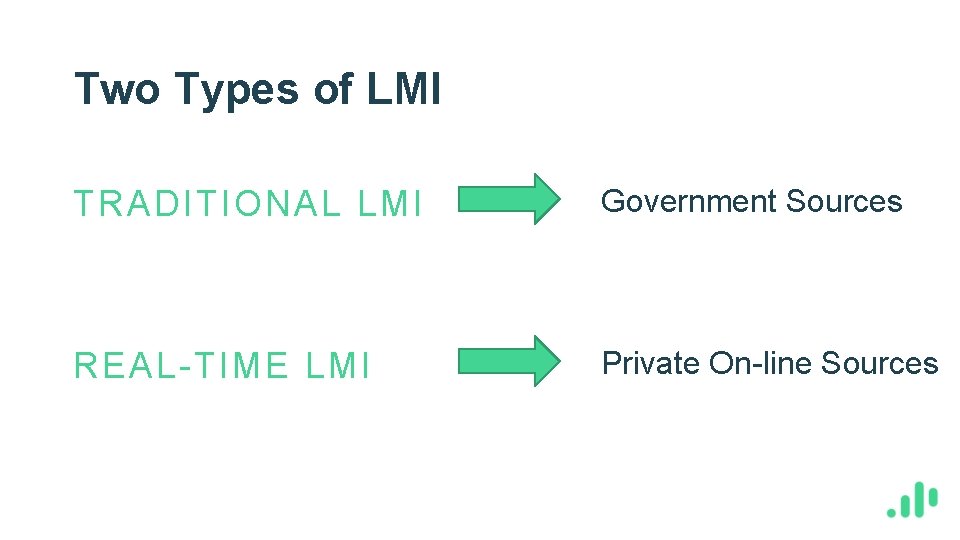
Two Types of LMI TRADITIONAL LMI Government Sources REAL-TIME LMI Private On-line Sources
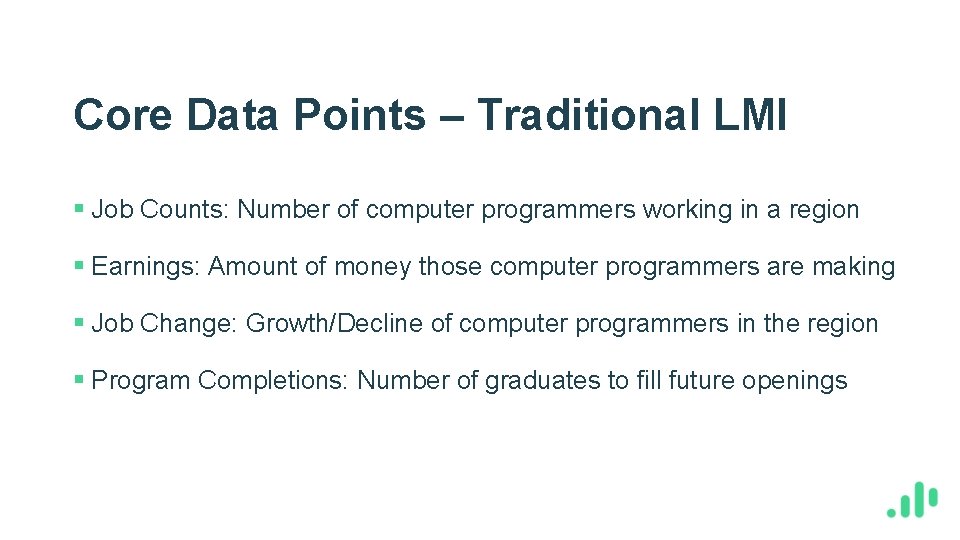
Core Data Points – Traditional LMI § Job Counts: Number of computer programmers working in a region § Earnings: Amount of money those computer programmers are making § Job Change: Growth/Decline of computer programmers in the region § Program Completions: Number of graduates to fill future openings
Traditional LMI Strengths Traditional LMI Weaknesses § Highly Structured § Lack of Detail § Projections & Trends § No Localized Skills Information § Total Coverage § Outdated (maybe) § No Employer Data
Core Data Points – Real-Time LMI § Skills sought after by potential employers § Employers who are advertising for the position § Specific job titles requested by the employer § Total Postings: Count of all postings § Unique Postings: Unduplicated count of job postings
Real-Time LMI Strengths Real-Time LMI Weaknesses § Provides Details on Job Descriptions § Small Portion of Economy Represented § Connects Jobs to Specific Businesses § Non-Standardized Structure § Reflects Current Outlook & Demand § Unable to Produce Projections
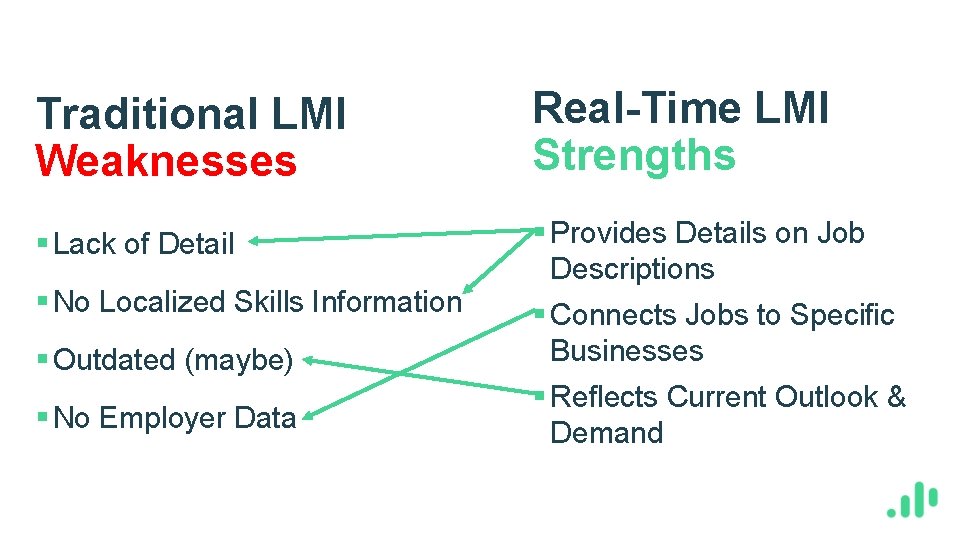
Traditional LMI Weaknesses Real-Time LMI Strengths § Lack of Detail § Provides Details on Job Descriptions § No Localized Skills Information § Outdated (maybe) § Connects Jobs to Specific Businesses § No Employer Data § Reflects Current Outlook & Demand
Regions Types of geographical regions
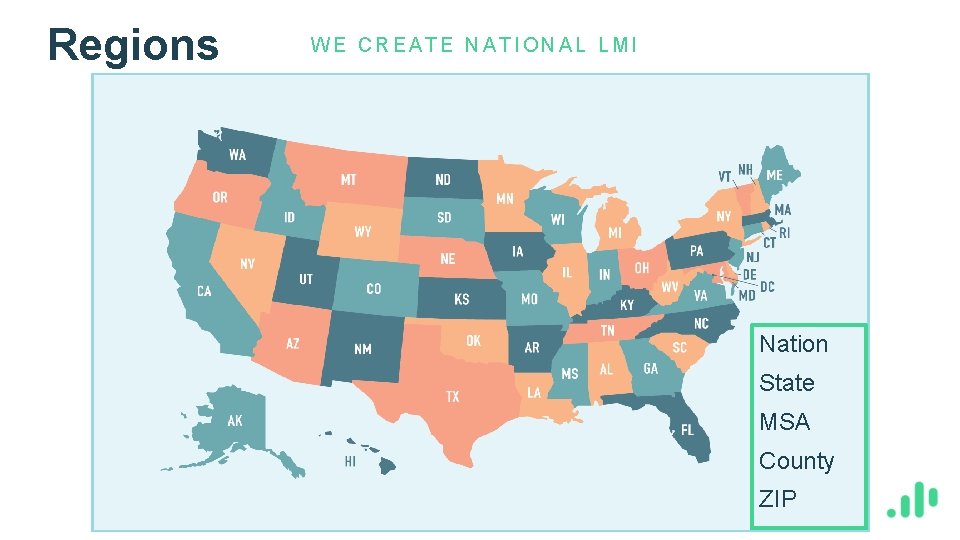
Regions WE CREATE NATIONAL LMI Nation State MSA County ZIP
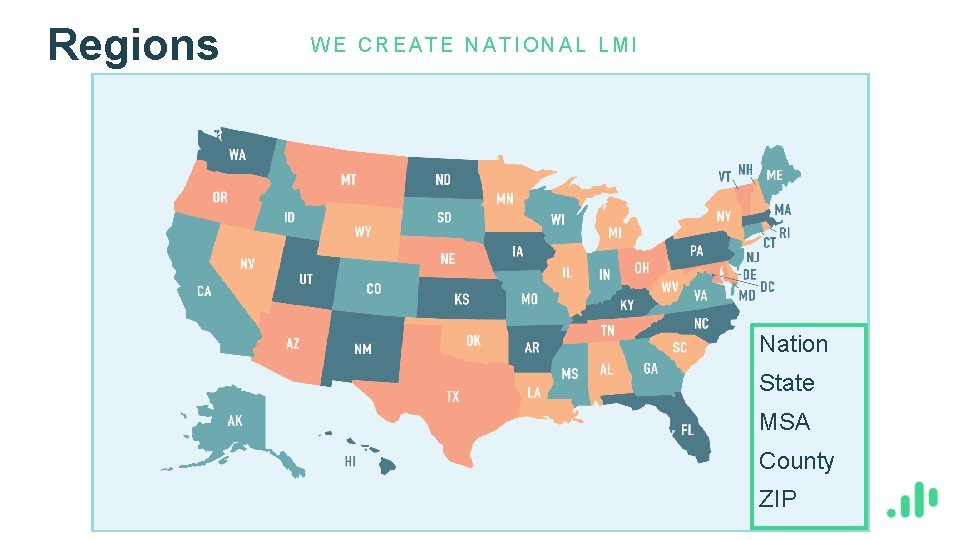
Regions WE CREATE NATIONAL LMI Nation State MSA County ZIP
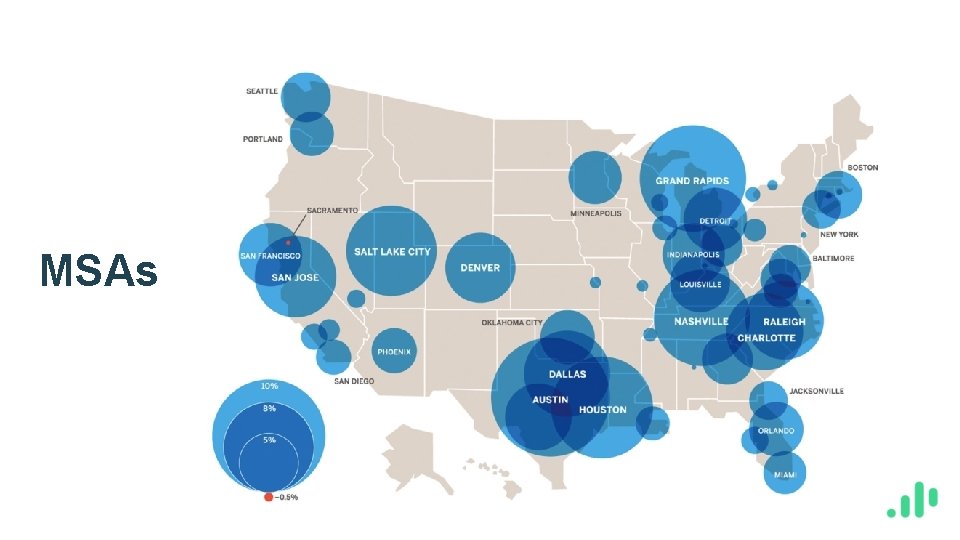
MSA Metropolitan Statistical Area and Micropolitan Statistical Area MSAs µSAs § Population 50 K+ § Population 10 -50 K+ § 374 MSAs § 581 µSAs
MSAs § Larger, multi-county regions § Describe major economies well. § Shouldn’t be combined to create larger regions. § Shouldn’t be broken up into individual counties. § Powerful for national comparisons.
MSAs
Counties § Can simply be a single county. § Many users focus on one or two counties. § Easy to break out into component counties and analyze. § Combine to build larger regions
ZIPs § Regions within counties § Describe regions that cross county boundaries § Can be combined to build larger regions § Best when combined § Weak when used one at a time

Projections

Projections
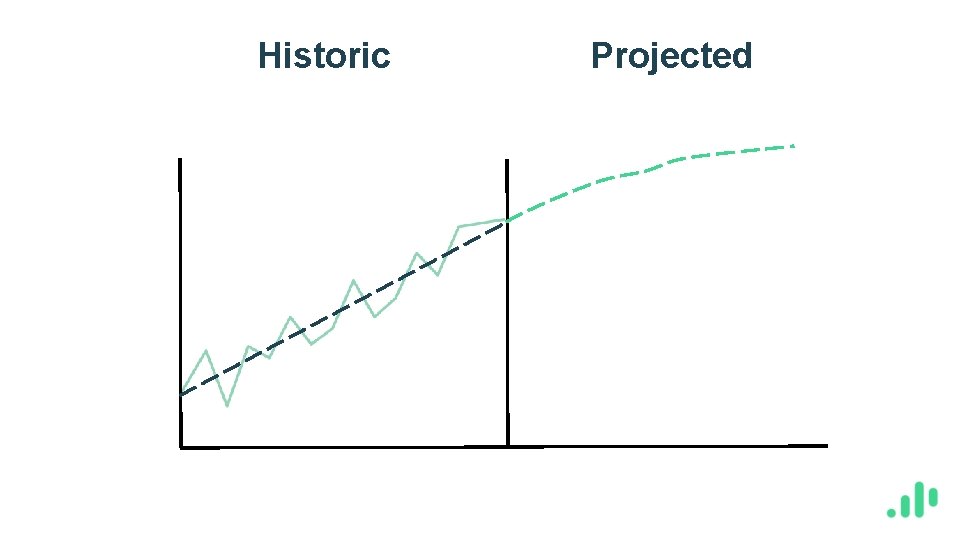
Historic Projected
Projections don’t take unexpected things into account – because they’re unexpected
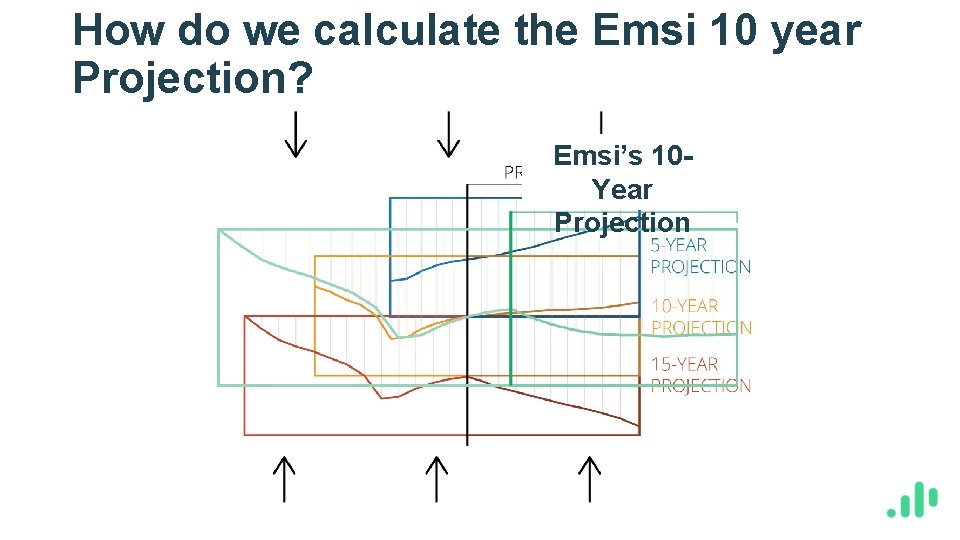
How do we calculate the Emsi 10 year Projection? Emsi’s 10 Year Projection
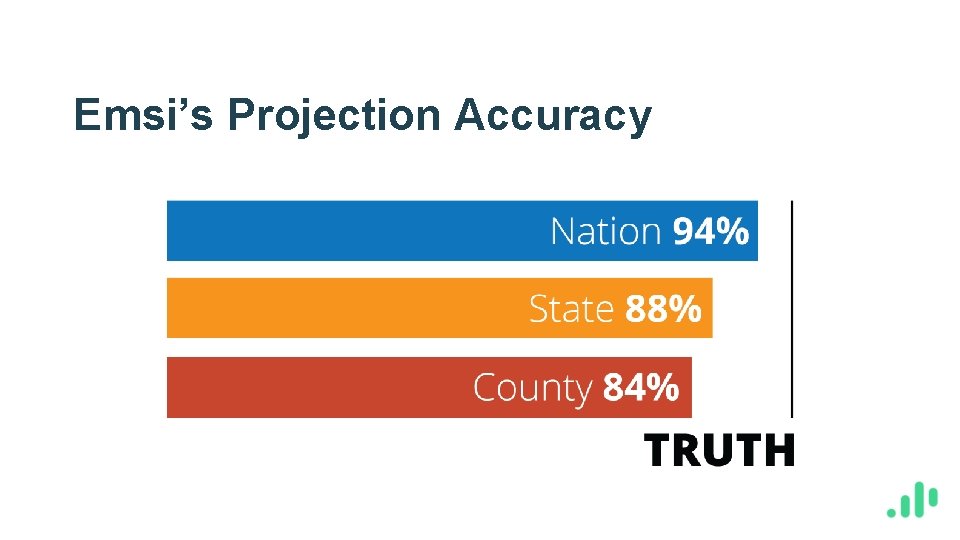
Emsi’s Projection Accuracy
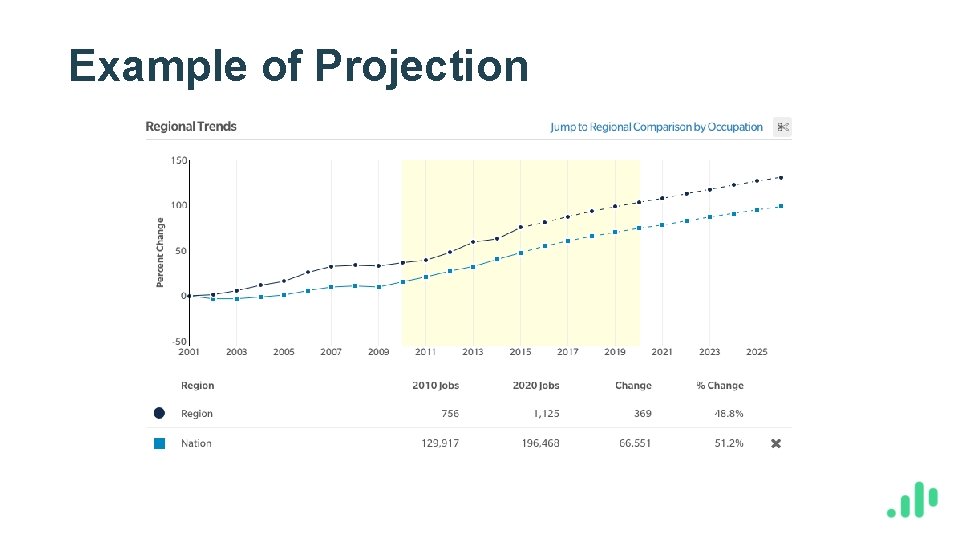
Example of Projection

Industries
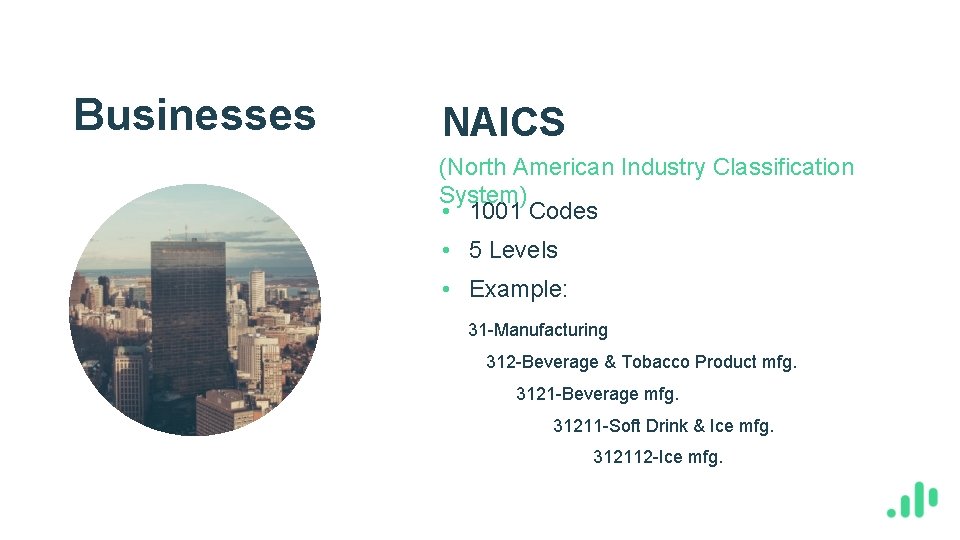
Businesses NAICS (North American Industry Classification System) • 1001 Codes • 5 Levels • Example: 31 -Manufacturing 312 -Beverage & Tobacco Product mfg. 3121 -Beverage mfg. 31211 -Soft Drink & Ice mfg. 312112 -Ice mfg.
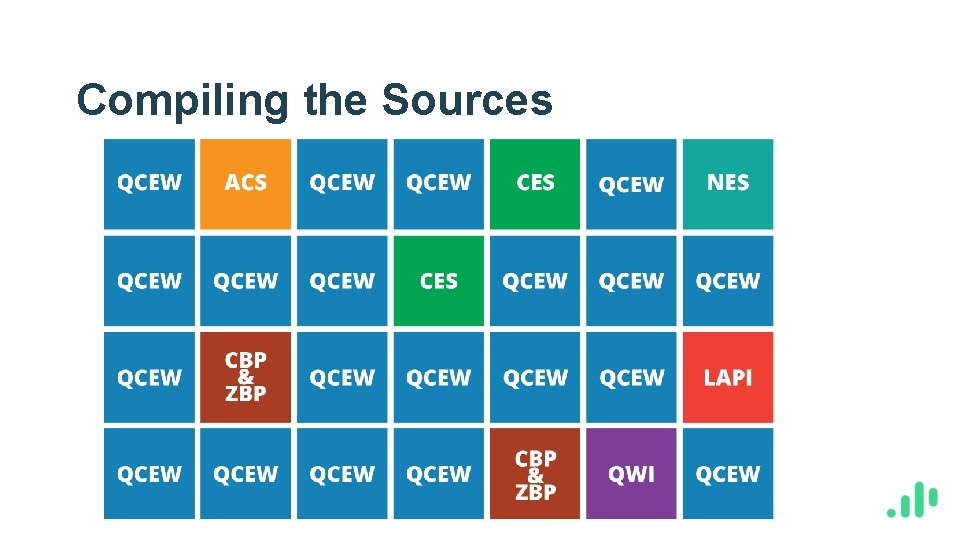
QCEW (Quarterly Census of Employment and Wages) § Crucial dataset § County level data § Includes: § Job Counts § Annual Earnings § # of Establishments Strength: § Basis of our employee industry data due to job counts and annual earnings data Weaknesses: § Lots of suppressions § Doesn’t cover the self-employed
CBP & ZBP (County and ZIP Business Patterns) § CBP publishes employment ranges for industries in counties § ZBP publishes employment ranges for industries in ZIPs Strength: § Ranges provide a starting point in dealing with suppressions in other data Weaknesses: § Not entirely consistent with QCEW § Numbers are ranges
ACS (American Community Survey) § Huge data set with many interesting data points Strength: § Publishes industry and occupation demographics Weakness: § Sample-size survey § Not a complete picture of the nation
QWI (Quarterly Workforce Indicators) § Publishes industry: § Demographics § Hires § Separations Strengths: § Very accurate count of hirings & separations by industry § Demographic breakouts of industries Weaknesses: § Significant lag time § Suppressions
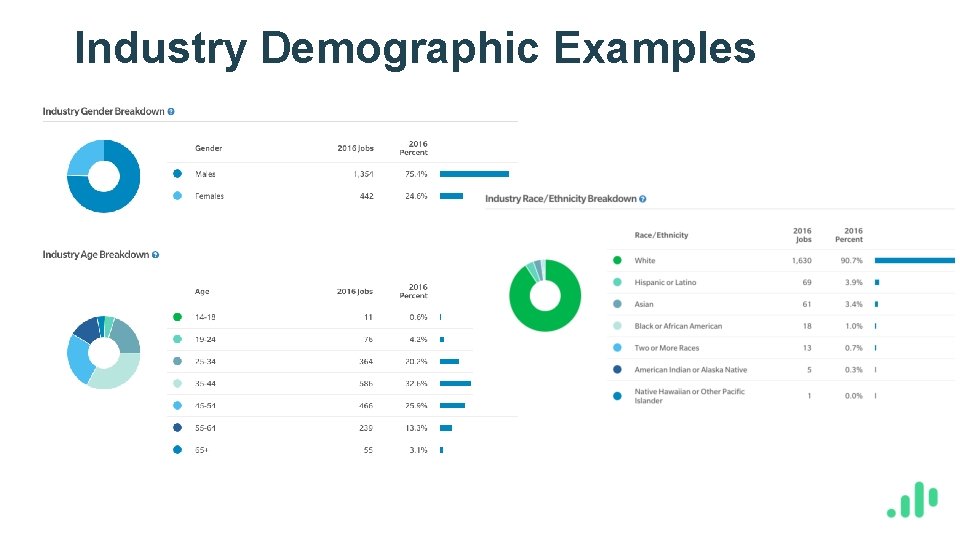
Industry Demographic Examples
Emsi Analyst Application (scenario)

Occupations
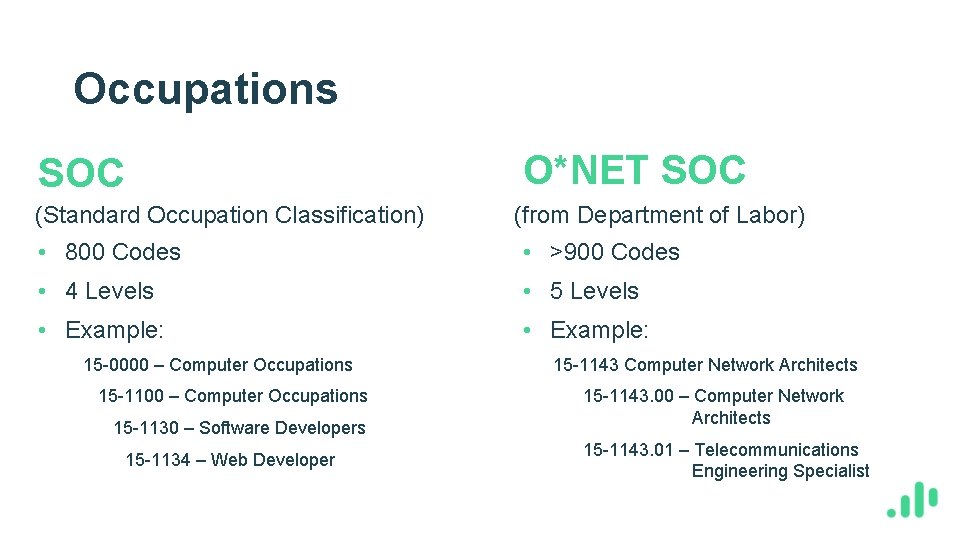
Occupations O*NET SOC (Standard Occupation Classification) (from Department of Labor) • 800 Codes • >900 Codes • 4 Levels • 5 Levels • Example: 15 -0000 – Computer Occupations 15 -1130 – Software Developers 15 -1134 – Web Developer 15 -1143 Computer Network Architects 15 -1143. 00 – Computer Network Architects 15 -1143. 01 – Telecommunications Engineering Specialist
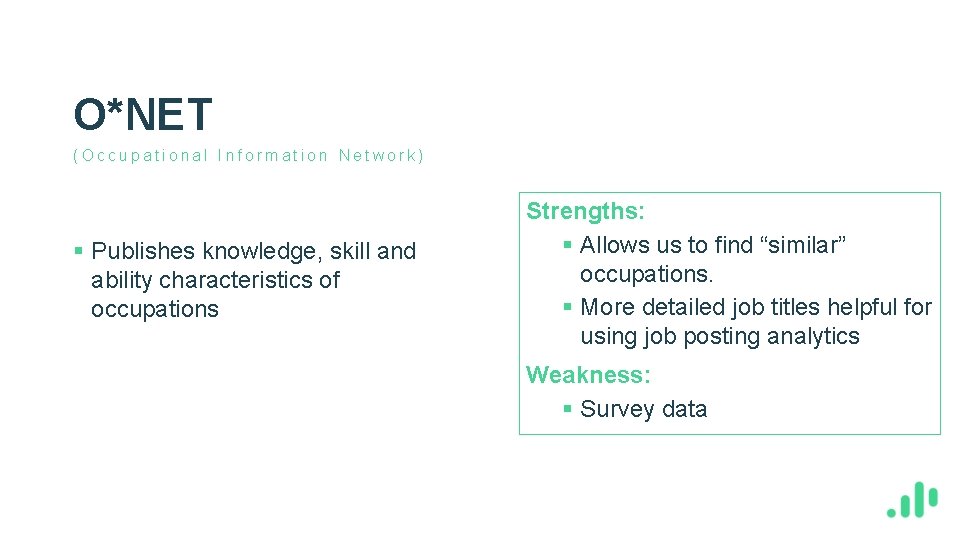
O*NET (Occupational Information Network) § Publishes knowledge, skill and ability characteristics of occupations Strengths: § Allows us to find “similar” occupations. § More detailed job titles helpful for using job posting analytics Weakness: § Survey data
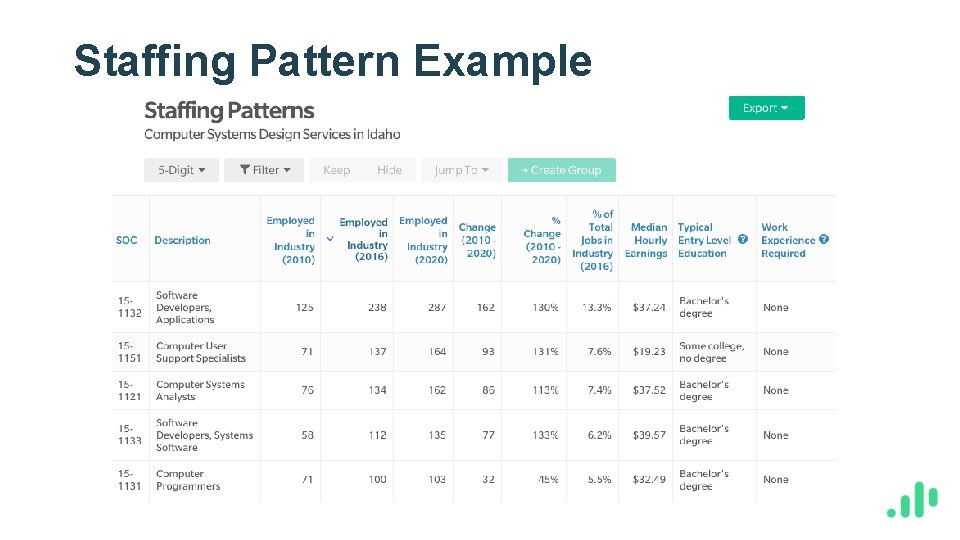
Staffing Pattern CONNECTION BETWEEN BUSINESSES & WORKERS
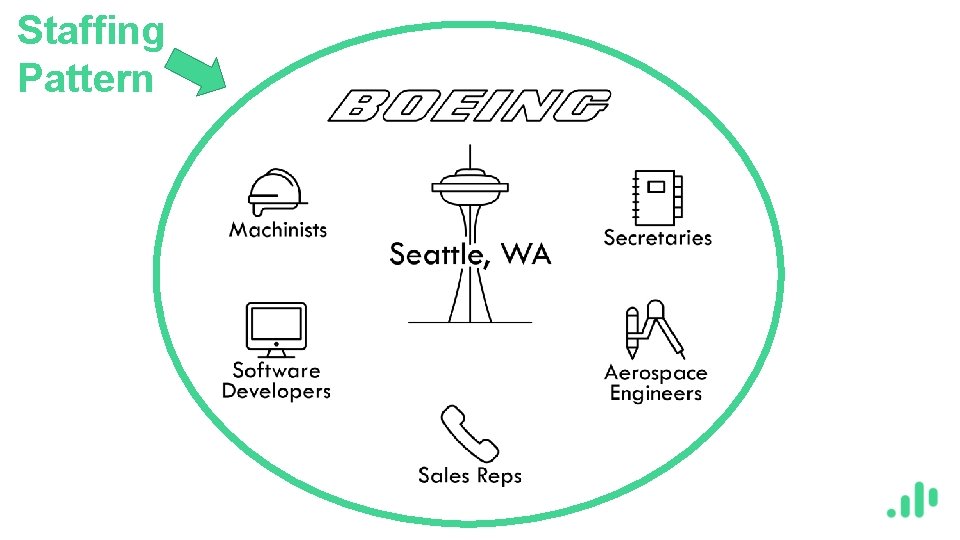
Staffing Pattern
Staffing Pattern Example
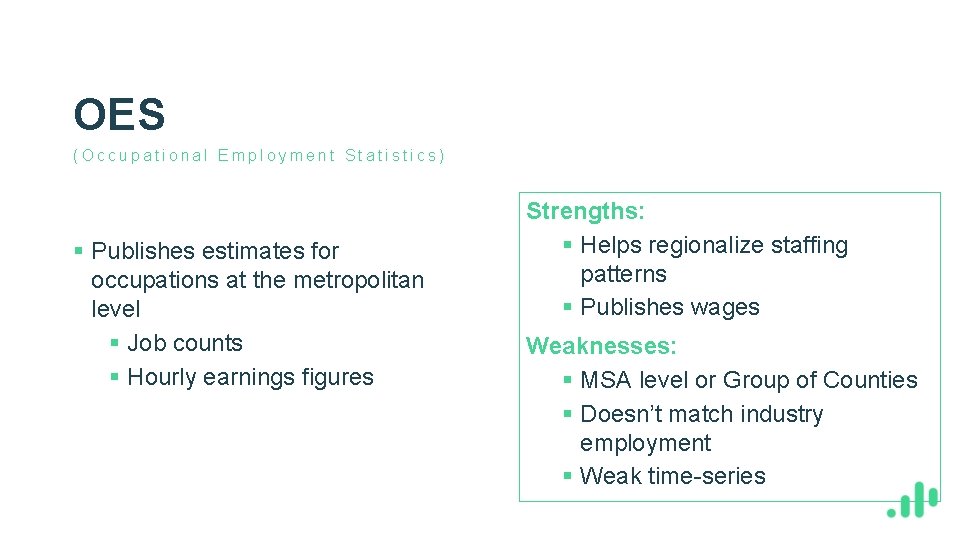
OES (Occupational Employment Statistics) § Publishes estimates for occupations at the metropolitan level § Job counts § Hourly earnings figures Strengths: § Helps regionalize staffing patterns § Publishes wages Weaknesses: § MSA level or Group of Counties § Doesn’t match industry employment § Weak time-series
Emsi Analyst Application (scenario)

Programs
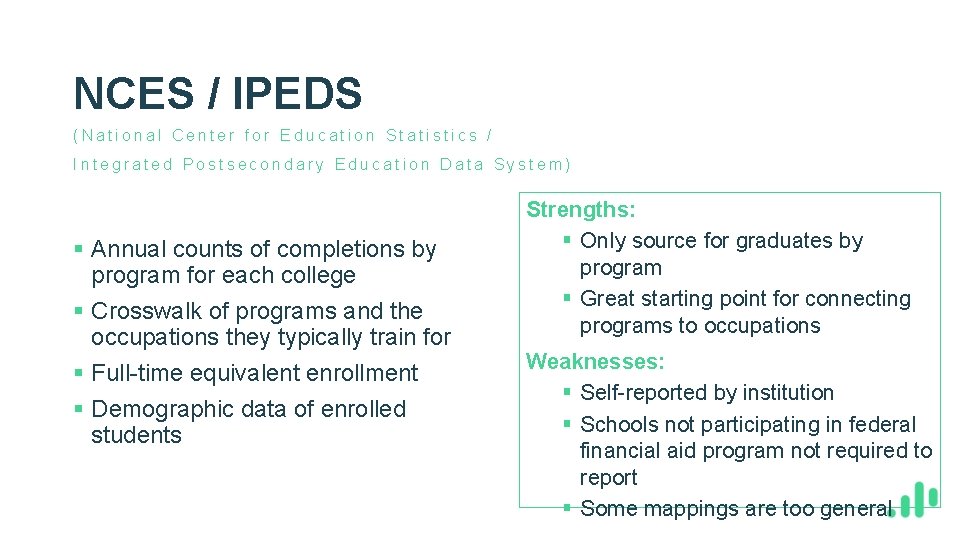
NCES / IPEDS (National Center for Education Statistics / Integrated Postsecondary Education Data System) § Annual counts of completions by program for each college § Crosswalk of programs and the occupations they typically train for § Full-time equivalent enrollment § Demographic data of enrolled students Strengths: § Only source for graduates by program § Great starting point for connecting programs to occupations Weaknesses: § Self-reported by institution § Schools not participating in federal financial aid program not required to report § Some mappings are too general
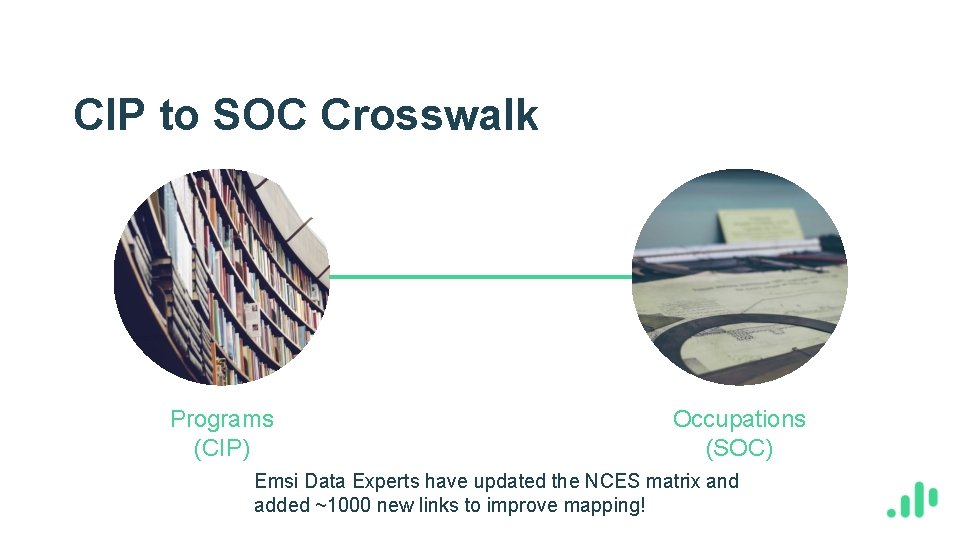
CIP to SOC Crosswalk Programs (CIP) Occupations (SOC) Emsi Data Experts have updated the NCES matrix and added ~1000 new links to improve mapping!
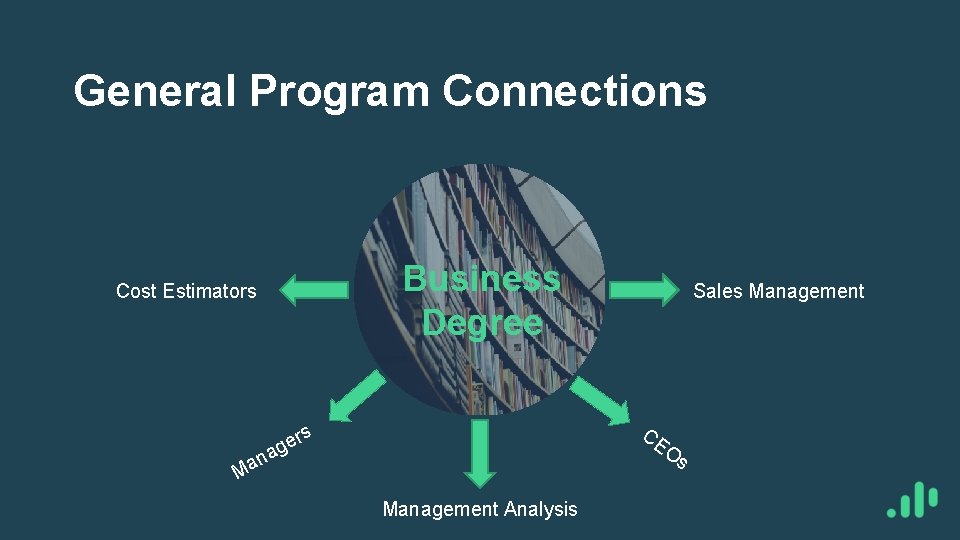
General Program Connections Business Degree Cost Estimators Sales Management CE O ers g a s n Ma Management Analysis
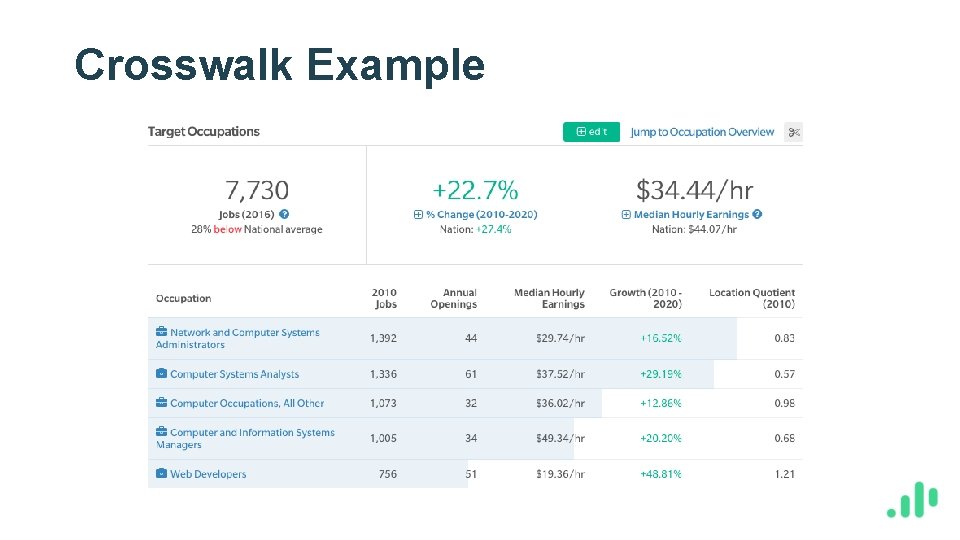
Crosswalk Example

Release Schedules & Suppressions
Suppressions § Data not disclosed by the government § When one business in a region makes up the majority of employment in that industry § When there are not many businesses in an industry § How does Emsi account for these? § CBP & ZBP ranges create a starting point § Data Processing to fill in the rest
Is our method reliable?
Compiling the Sources
Release Schedules: Traditional LMI
Lag Time: Traditional LMI
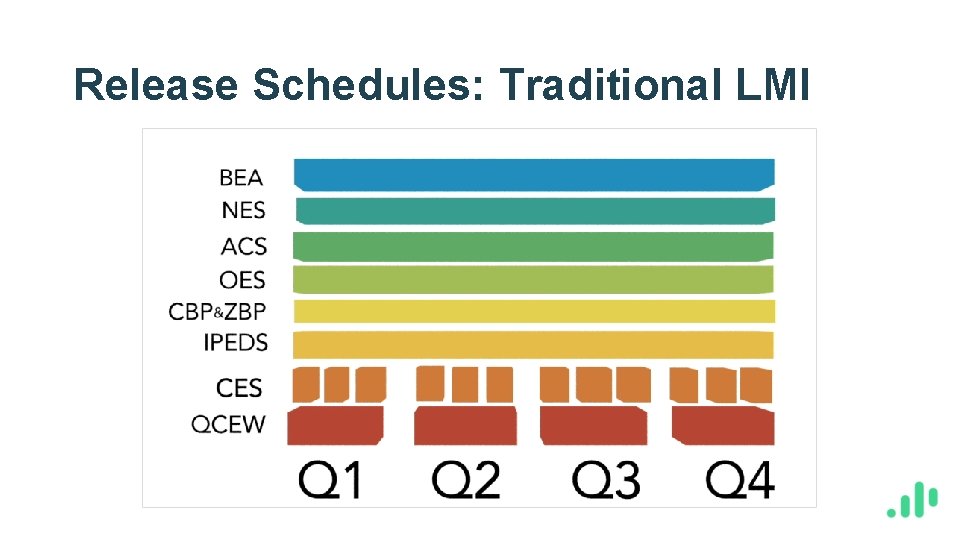
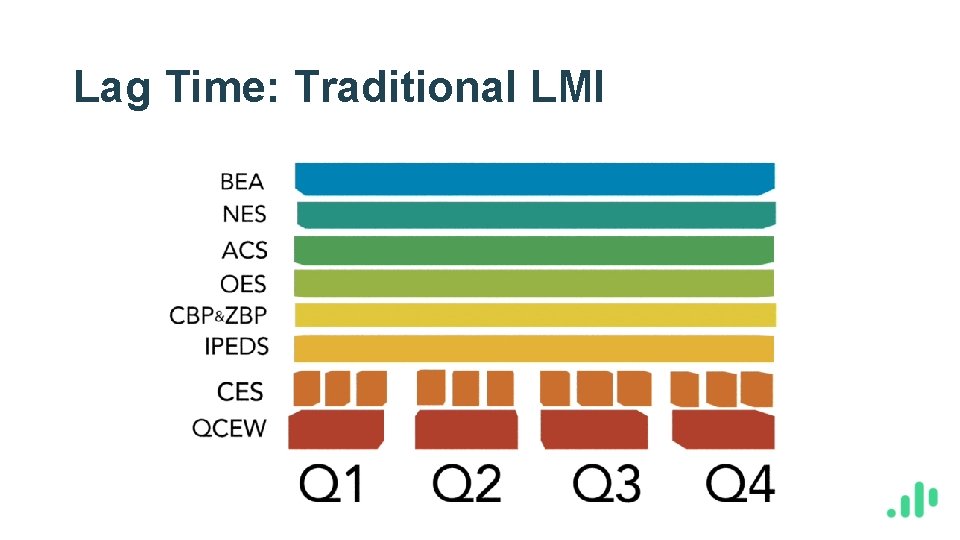
Emsi Traditional LMI Data Updates To account for release differences, we update Emsi Traditional LMI Data quarterly!
Real-Time LMI JOB POSTING ANALYTICS & PROFILE DATA

Job Postings
Job Postings § Used to get information about businesses and the potential employees § Comprised of 300 million unique job postings collected § Job boards, recruiting temp agencies & individual company’s career pages
Job Postings § 15, 000 sources/month OR § 6 -8 million unique active posts/month § ~400, 000 unique businesses over the last 5 years, with >90, 000 unique companies/month
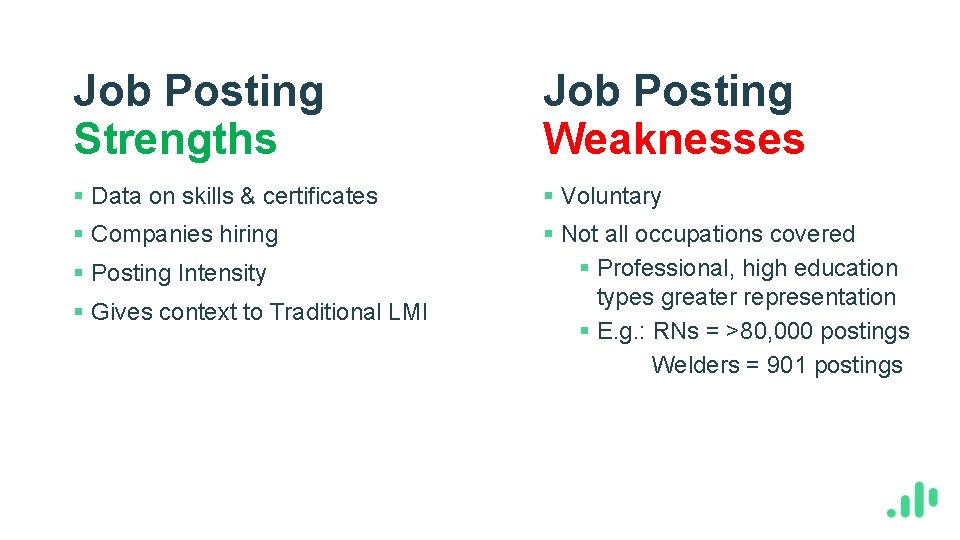
Job Posting Strengths Job Posting Weaknesses § Data on skills & certificates § Voluntary § Companies hiring § Not all occupations covered § Professional, high education types greater representation § E. g. : RNs = >80, 000 postings Welders = 901 postings § Posting Intensity § Gives context to Traditional LMI
Deduplication § One of the most critical processes § Unique Job Postings § April 2016: 90% of postings were duplicates § 2 Step process: § Exact Matching Step § Fuzzy Matching Step
Job Postings: Updates § Updated Monthly § Lag time of ~1. 5 months

Profile / Alumni Data
Profiles / Alumni Data § Used to get information about an institution’s Alumni § Comprised of 106. 4 million unique profiles collected from publicly sourced online professional profiles and resumes.
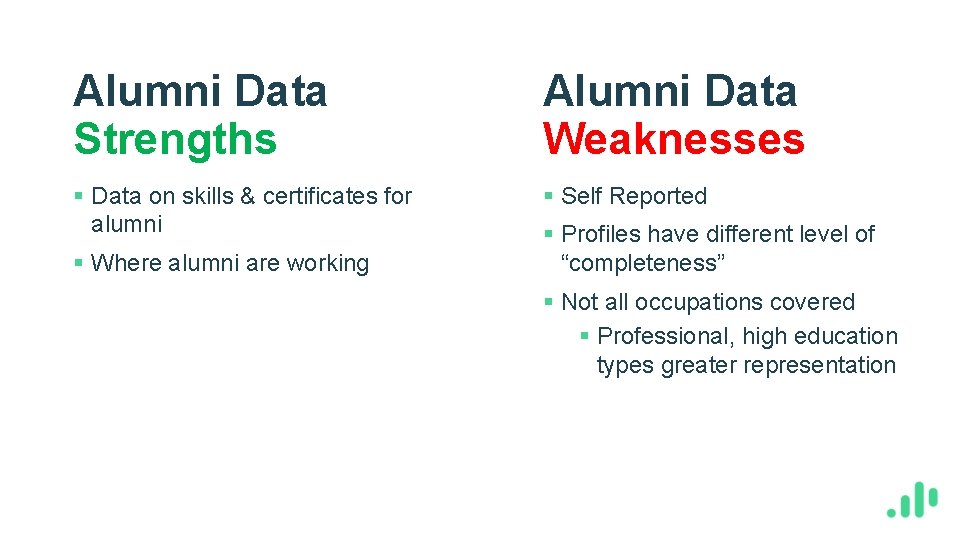
Alumni Data Strengths Alumni Data Weaknesses § Data on skills & certificates for alumni § Self Reported § Where alumni are working § Profiles have different level of “completeness” § Not all occupations covered § Professional, high education types greater representation
Emsi Analyst Application (scenario)

Thank You For more information, please visit our website: economicmodeling. com
- Slides: 63