
Employment Relations The Paradigm shift The Assumptions Conditions
- Slides: 14
Employment Relations The Paradigm shift
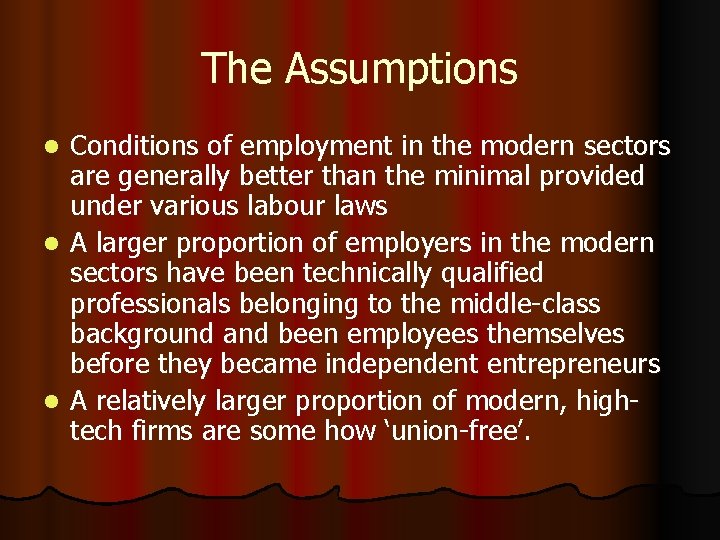
The Assumptions Conditions of employment in the modern sectors are generally better than the minimal provided under various labour laws l A larger proportion of employers in the modern sectors have been technically qualified professionals belonging to the middle-class background and been employees themselves before they became independent entrepreneurs l A relatively larger proportion of modern, hightech firms are some how ‘union-free’. l
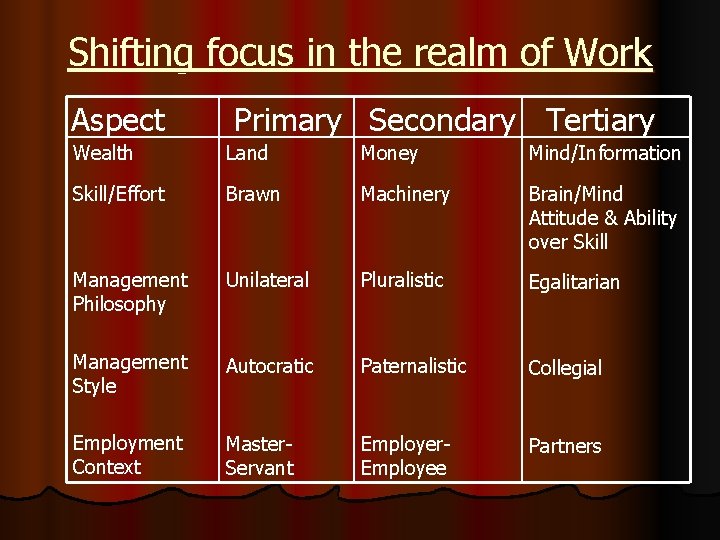
Shifting focus in the realm of Work Aspect Primary Secondary Tertiary Wealth Land Money Mind/Information Skill/Effort Brawn Machinery Brain/Mind Attitude & Ability over Skill Management Philosophy Unilateral Pluralistic Egalitarian Management Style Autocratic Paternalistic Collegial Employment Context Master. Servant Employer. Employee Partners
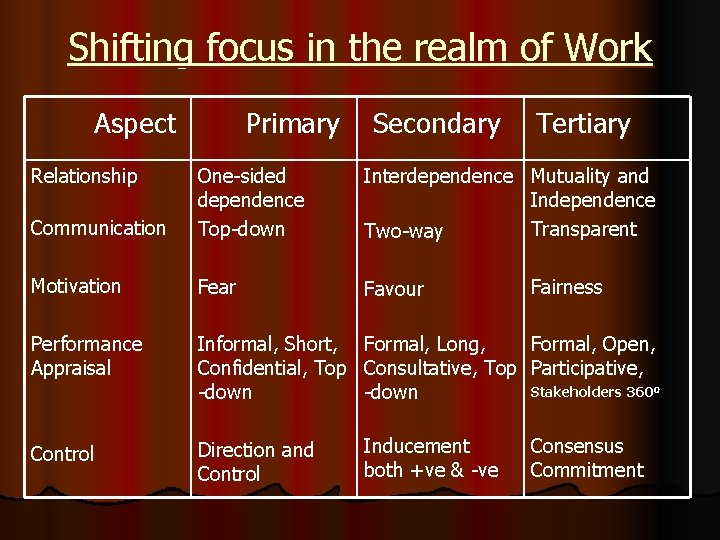
Shifting focus in the realm of Work Aspect Relationship Primary Secondary Tertiary Communication One-sided dependence Top-down Interdependence Mutuality and Independence Transparent Two-way Motivation Fear Favour Performance Appraisal Informal, Short, Formal, Long, Confidential, Top Consultative, Top -down Control Direction and Control Inducement both +ve & -ve Fairness Formal, Open, Participative, Stakeholders 3600 Consensus Commitment
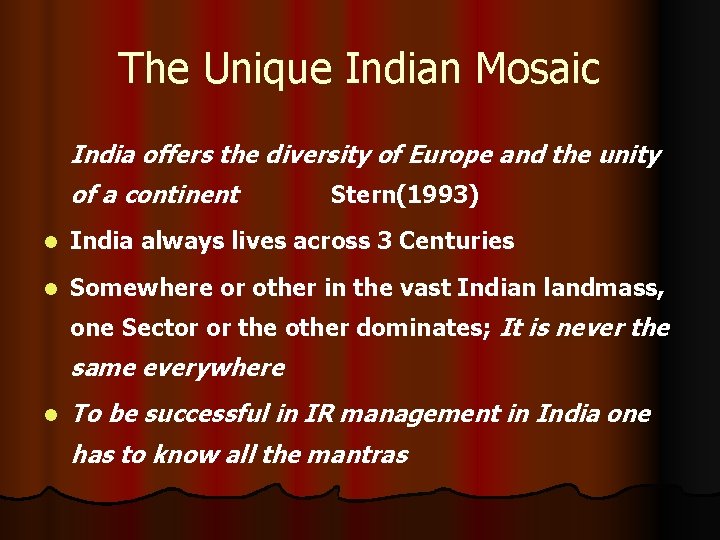
The Unique Indian Mosaic India offers the diversity of Europe and the unity of a continent Stern(1993) l India always lives across 3 Centuries l Somewhere or other in the vast Indian landmass, one Sector or the other dominates; It is never the same everywhere l To be successful in IR management in India one has to know all the mantras
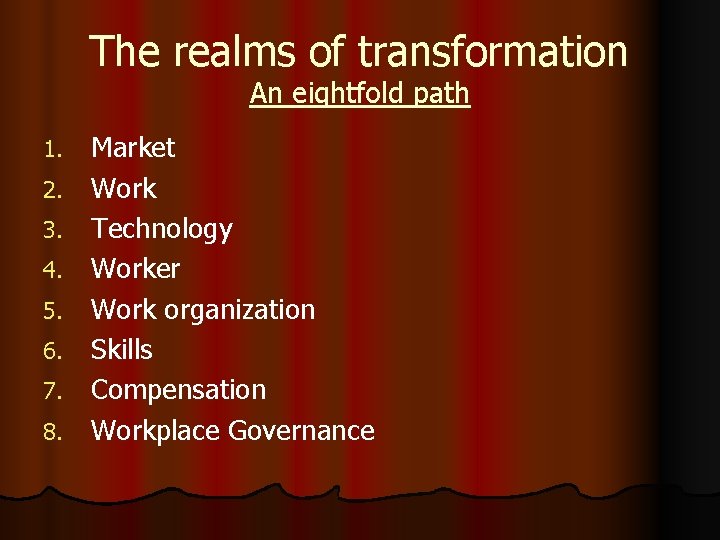
The realms of transformation An eightfold path 1. 2. 3. 4. 5. 6. 7. 8. Market Work Technology Worker Work organization Skills Compensation Workplace Governance
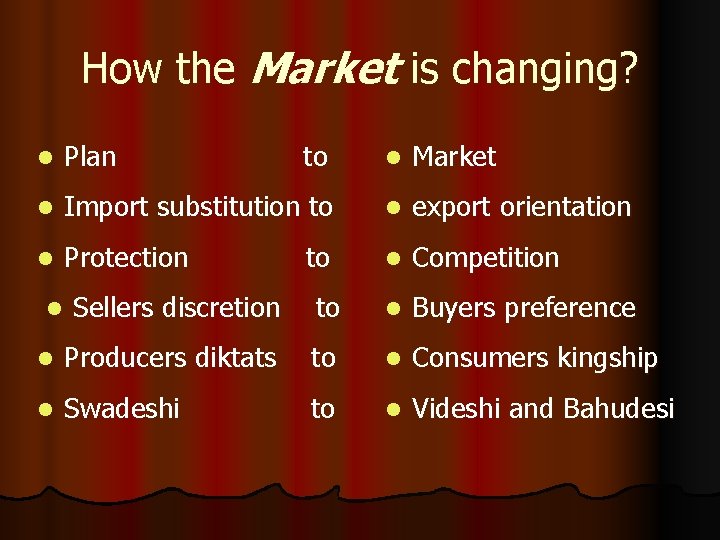
How the Market is changing? l Plan to l Market l Import substitution to l export orientation l Protection l Competition to Sellers discretion to l Buyers preference l Producers diktats to l Consumers kingship l Swadeshi to l Videshi and Bahudesi l
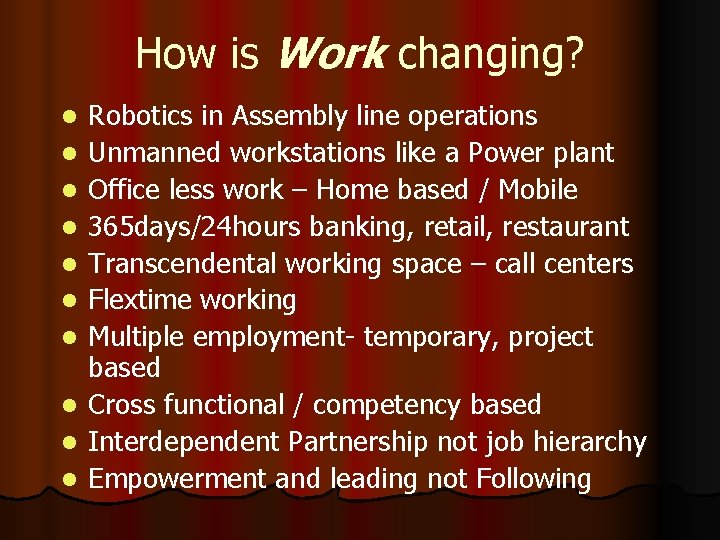
How is Work changing? l l l l l Robotics in Assembly line operations Unmanned workstations like a Power plant Office less work – Home based / Mobile 365 days/24 hours banking, retail, restaurant Transcendental working space – call centers Flextime working Multiple employment- temporary, project based Cross functional / competency based Interdependent Partnership not job hierarchy Empowerment and leading not Following
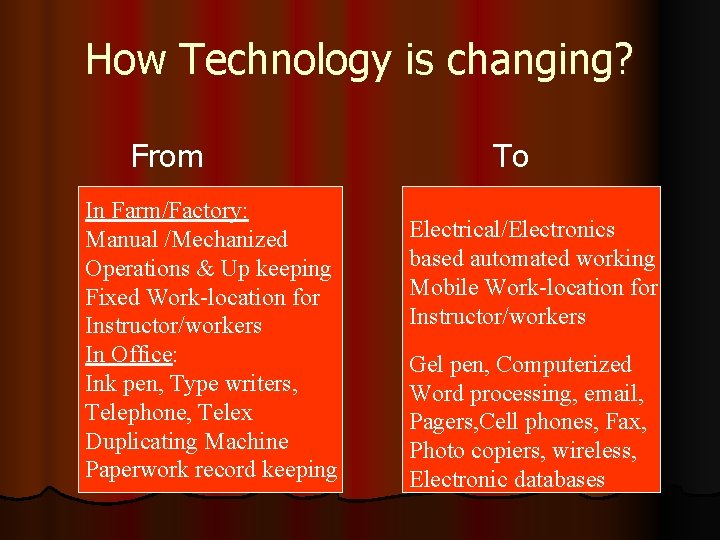
How Technology is changing? From In Farm/Factory: Manual /Mechanized Operations & Up keeping Fixed Work-location for Instructor/workers In Office: Ink pen, Type writers, Telephone, Telex Duplicating Machine Paperwork record keeping To Electrical/Electronics based automated working Mobile Work-location for Instructor/workers Gel pen, Computerized Word processing, email, Pagers, Cell phones, Fax, Photo copiers, wireless, Electronic databases
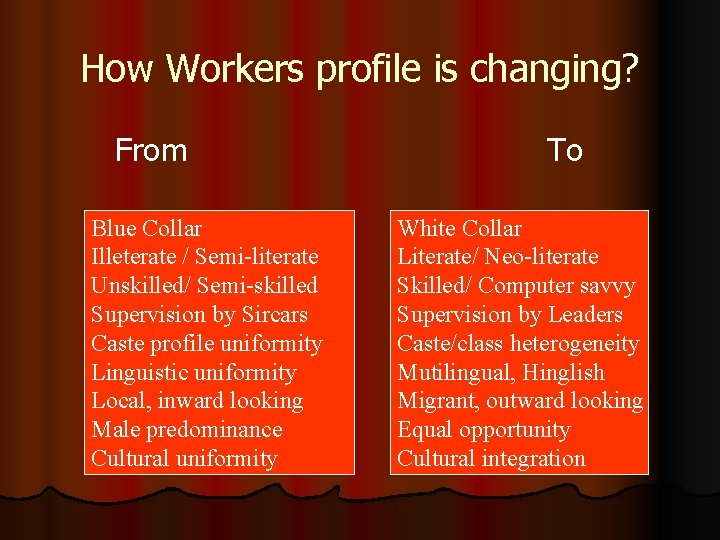
How Workers profile is changing? From Blue Collar Illeterate / Semi-literate Unskilled/ Semi-skilled Supervision by Sircars Caste profile uniformity Linguistic uniformity Local, inward looking Male predominance Cultural uniformity To White Collar Literate/ Neo-literate Skilled/ Computer savvy Supervision by Leaders Caste/class heterogeneity Mutilingual, Hinglish Migrant, outward looking Equal opportunity Cultural integration
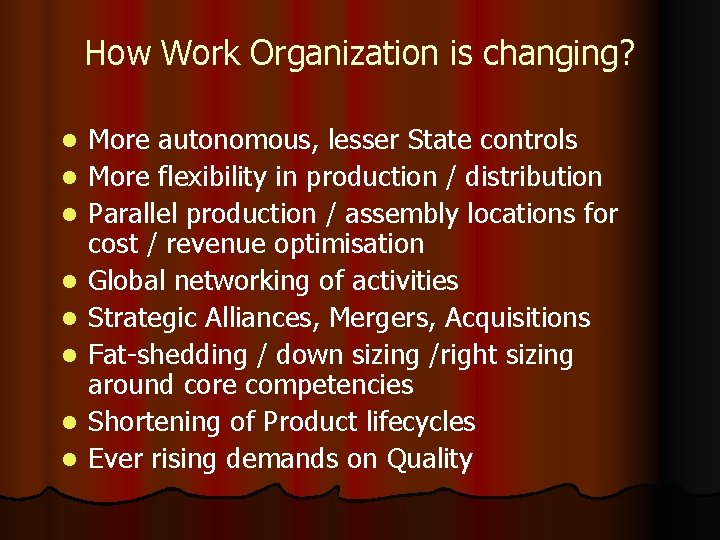
How Work Organization is changing? l l l l More autonomous, lesser State controls More flexibility in production / distribution Parallel production / assembly locations for cost / revenue optimisation Global networking of activities Strategic Alliances, Mergers, Acquisitions Fat-shedding / down sizing /right sizing around core competencies Shortening of Product lifecycles Ever rising demands on Quality
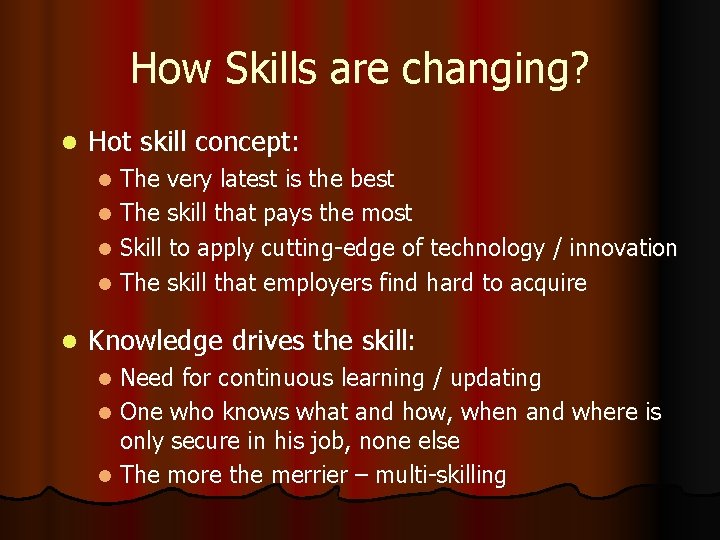
How Skills are changing? l Hot skill concept: The very latest is the best l The skill that pays the most l Skill to apply cutting-edge of technology / innovation l The skill that employers find hard to acquire l l Knowledge drives the skill: Need for continuous learning / updating l One who knows what and how, when and where is only secure in his job, none else l The more the merrier – multi-skilling l
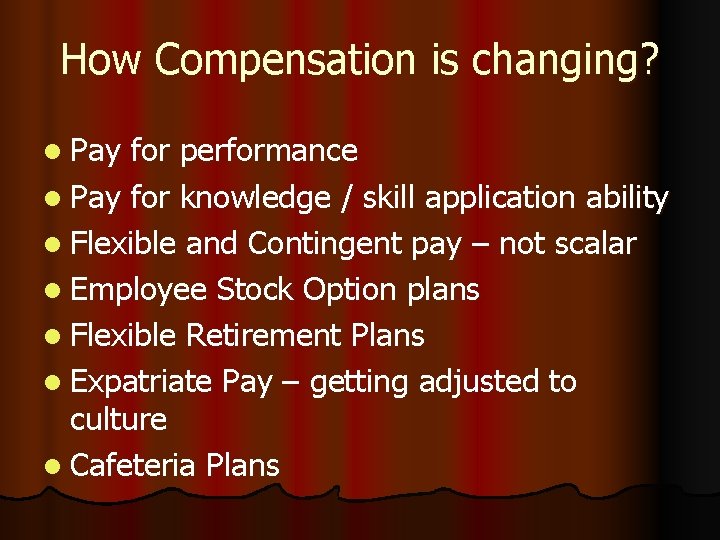
How Compensation is changing? l Pay for performance l Pay for knowledge / skill application ability l Flexible and Contingent pay – not scalar l Employee Stock Option plans l Flexible Retirement Plans l Expatriate Pay – getting adjusted to culture l Cafeteria Plans
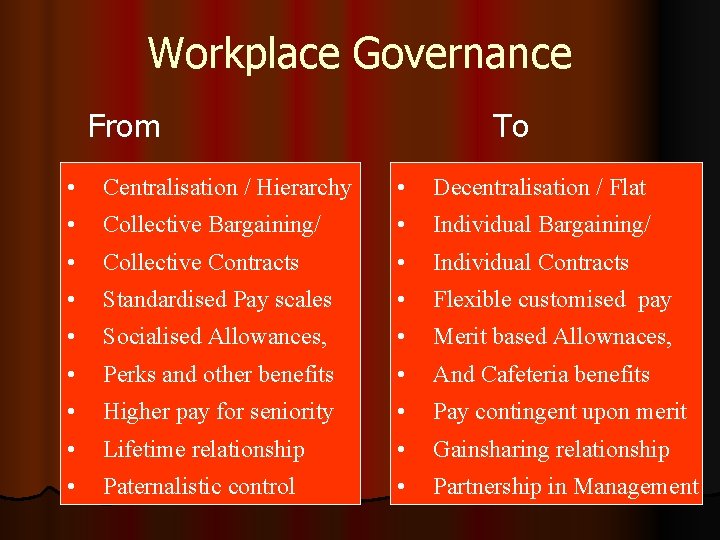
Workplace Governance From To • Centralisation / Hierarchy • Decentralisation / Flat • Collective Bargaining/ • Individual Bargaining/ • Collective Contracts • Individual Contracts • Standardised Pay scales • Flexible customised pay • Socialised Allowances, • Merit based Allownaces, • Perks and other benefits • And Cafeteria benefits • Higher pay for seniority • Pay contingent upon merit • Lifetime relationship • Gainsharing relationship • Paternalistic control • Partnership in Management