
Employment opportunities distribution and gender participation in renewable
Employment opportunities, distribution, and gender participation in renewable energy sector Madhura Joshi, NRDC Shaily Jha, CEEW Session Partners Energy Horizons 2019 New Delhi, India 18 July 2019 © Council on Energy, Environment and Water, 2019, Power For All, Skill Council for Green Jobs and Natural Resources Defense Council
Powering Jobs Growth with Green Energy Employment in the Solar and Wind Sectors 2|
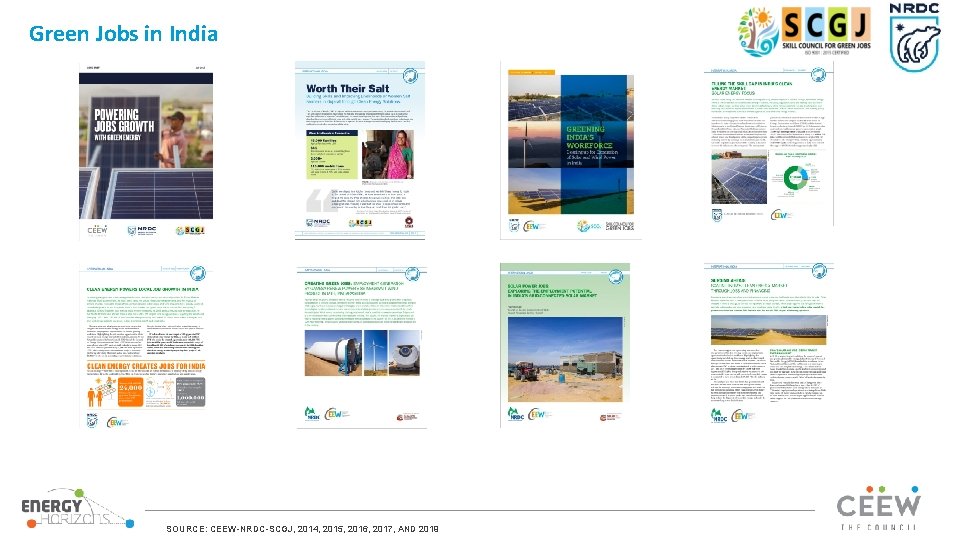
Green Jobs in India SOURCE: CEEW-NRDC-SCGJ, 2014, 2015, 2016, 2017, AND 2019
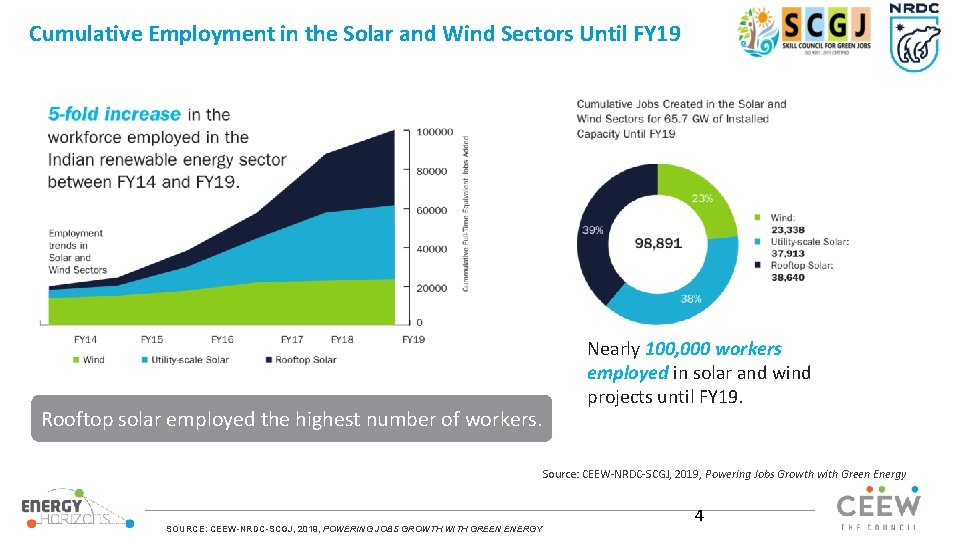
Cumulative Employment in the Solar and Wind Sectors Until FY 19 Rooftop solar employed the highest number of workers. Nearly 100, 000 workers employed in solar and wind projects until FY 19. Source: CEEW-NRDC-SCGJ, 2019, Powering Jobs Growth with Green Energy SOURCE: CEEW-NRDC-SCGJ, 2019, POWERING JOBS GROWTH WITH GREEN ENERGY 4
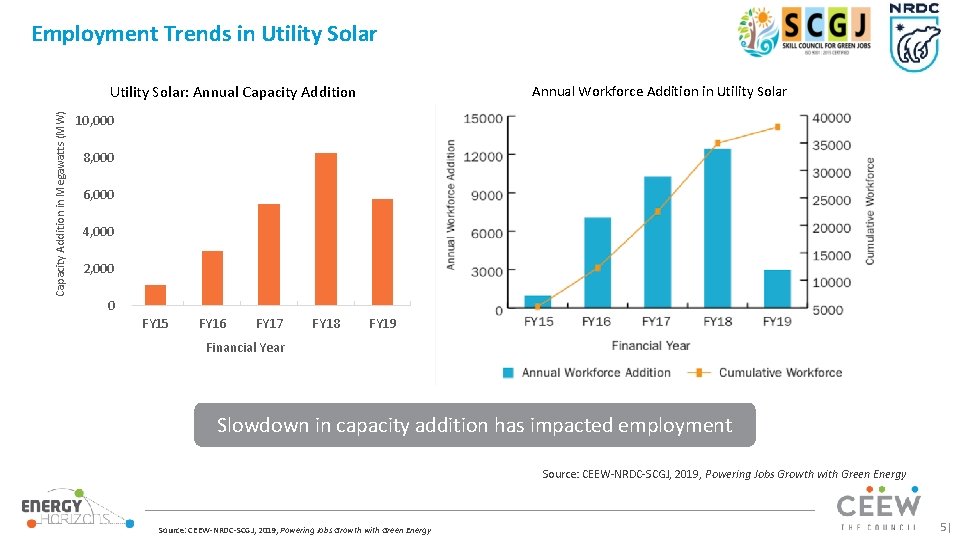
Employment Trends in Utility Solar Capacity Addition in Megawatts (MW) Utility Solar: Annual Capacity Addition Annual Workforce Addition in Utility Solar 10, 000 8, 000 6, 000 4, 000 2, 000 0 FY 15 FY 16 FY 17 FY 18 FY 19 Financial Year Slowdown in capacity addition has impacted employment Source: CEEW-NRDC-SCGJ, 2019, Powering Jobs Growth with Green Energy 5|
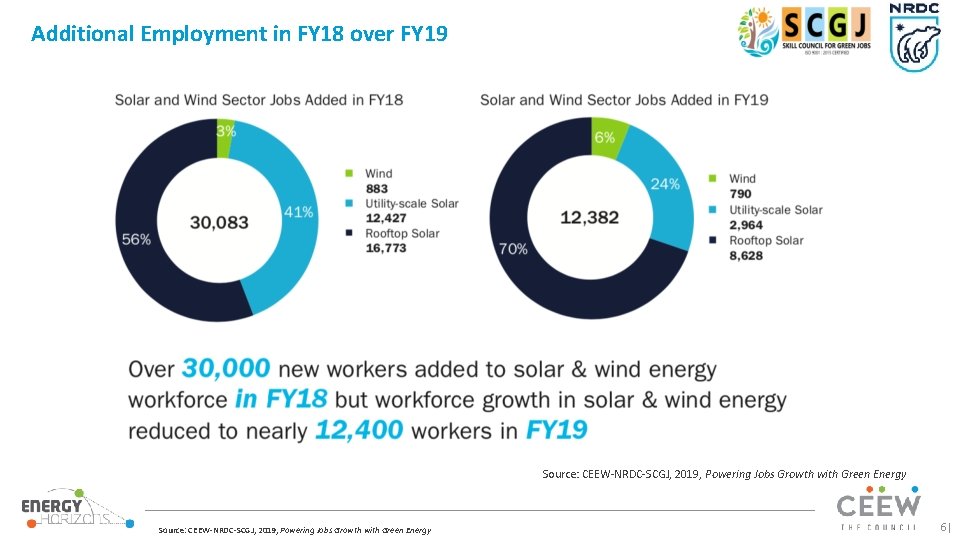
Additional Employment in FY 18 over FY 19 Source: CEEW-NRDC-SCGJ, 2019, Powering Jobs Growth with Green Energy 6|
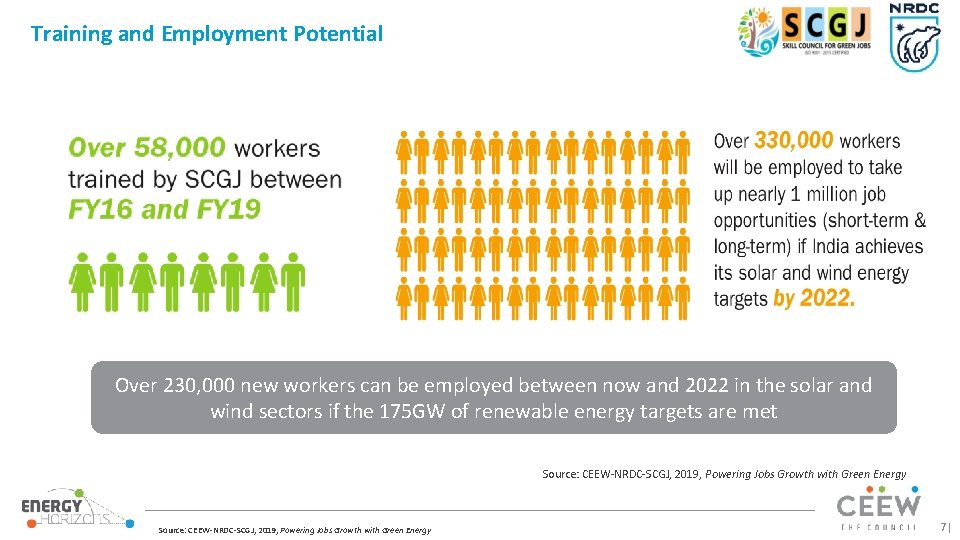
Training and Employment Potential Over 230, 000 new workers can be employed between now and 2022 in the solar and wind sectors if the 175 GW of renewable energy targets are met Source: CEEW-NRDC-SCGJ, 2019, Powering Jobs Growth with Green Energy 7|
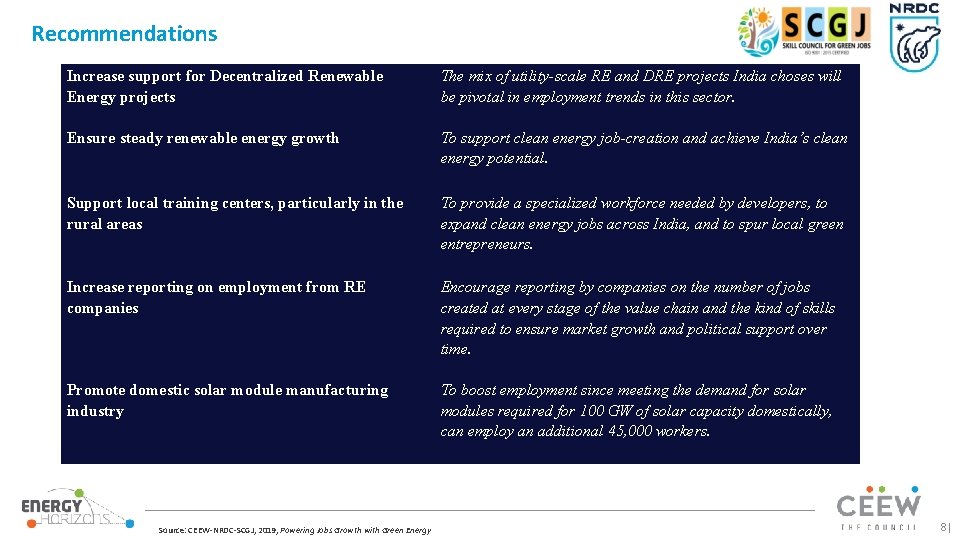
Recommendations Increase support for Decentralized Renewable Energy projects Ensure steady renewable energy growth Support local training centers, particularly in the rural areas Increase reporting on employment from RE companies Promote domestic solar module manufacturing industry Source: CEEW-NRDC-SCGJ, 2019, Powering Jobs Growth with Green Energy The mix of utility-scale RE and DRE projects India choses will be pivotal in employment trends in this sector. To support clean energy job-creation and achieve India’s clean energy potential. To provide a specialized workforce needed by developers, to expand clean energy jobs across India, and to spur local green entrepreneurs. Encourage reporting by companies on the number of jobs created at every stage of the value chain and the kind of skills required to ensure market growth and political support over time. To boost employment since meeting the demand for solar modules required for 100 GW of solar capacity domestically, can employ an additional 45, 000 workers. 8|
Net Employment in the Power Sector 9|
Three scenarios for assessing demand employment within each energy sector Reference Scenario Source: TERI (2018) *INDC: India Nationally Determined Contribution INDC* Scenario Ambition Scenario 10|
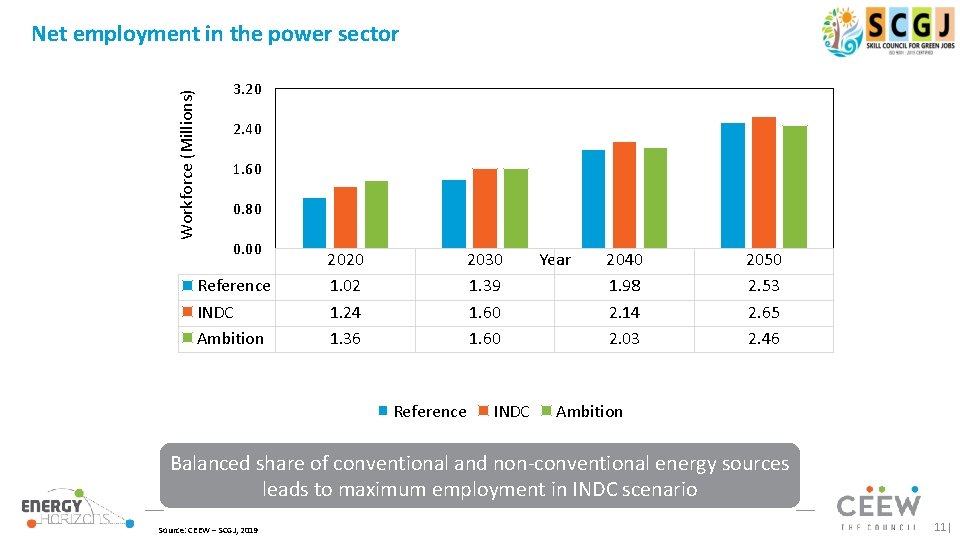
Workforce (Millions) Net employment in the power sector 3. 20 2. 40 1. 60 0. 80 0. 00 Reference INDC Ambition 2020 1. 02 1. 24 1. 36 2030 1. 39 1. 60 Reference INDC Year 2040 1. 98 2. 14 2. 03 2050 2. 53 2. 65 2. 46 Ambition Balanced share of conventional and non-conventional energy sources leads to maximum employment in INDC scenario Source: CEEW – SCGJ, 2019 11|
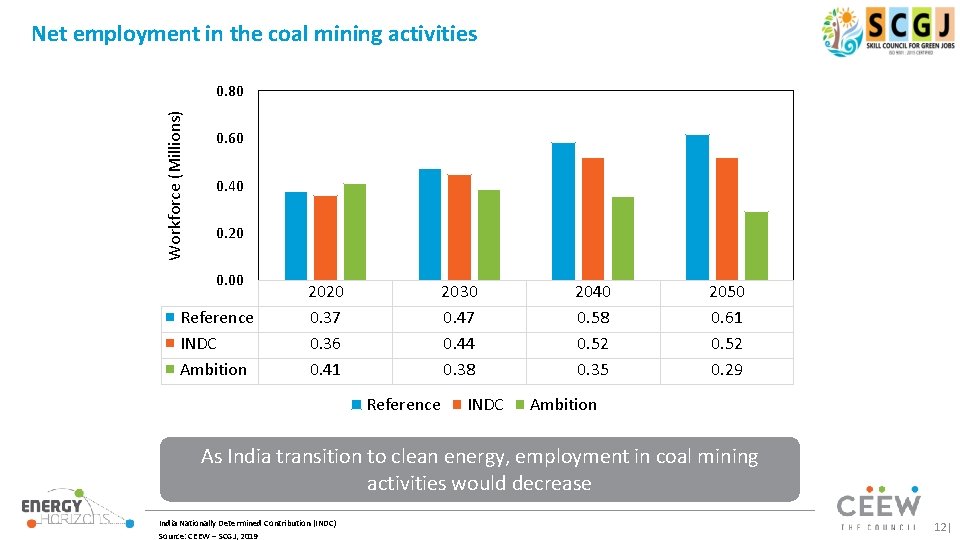
Net employment in the coal mining activities Workforce (Millions) 0. 80 0. 60 0. 40 0. 20 0. 00 Reference INDC Ambition 2020 0. 37 0. 36 0. 41 2030 0. 47 0. 44 0. 38 Reference INDC 2040 0. 58 0. 52 0. 35 2050 0. 61 0. 52 0. 29 Ambition As India transition to clean energy, employment in coal mining activities would decrease India Nationally Determined Contribution (INDC) Source: CEEW – SCGJ, 2019 12|
Women working in rooftop solar sector: A look at India’s clean energy transition 13|
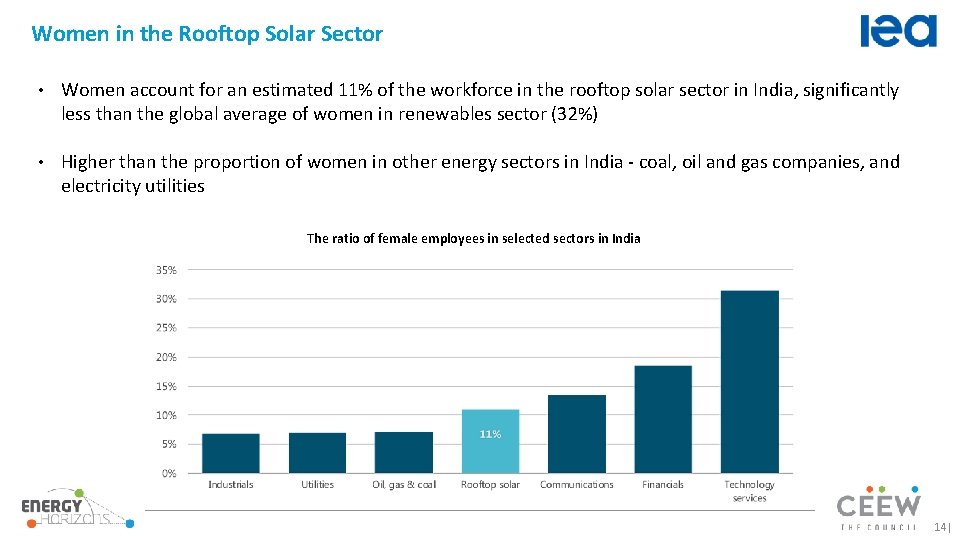
Women in the Rooftop Solar Sector • Women account for an estimated 11% of the workforce in the rooftop solar sector in India, significantly less than the global average of women in renewables sector (32%) • Higher than the proportion of women in other energy sectors in India - coal, oil and gas companies, and electricity utilities The ratio of female employees in selected sectors in India 14|
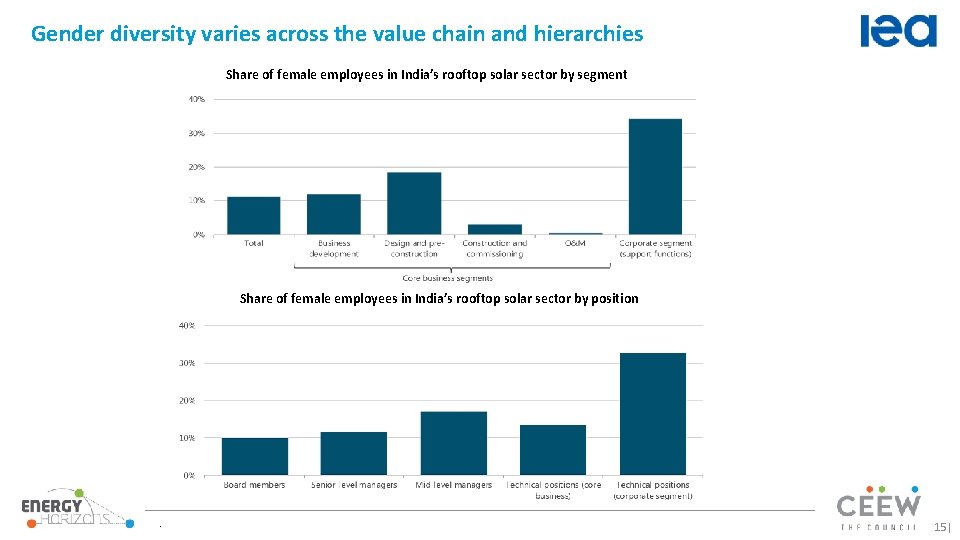
Gender diversity varies across the value chain and hierarchies Share of female employees in India’s rooftop solar sector by segment Share of female employees in India’s rooftop solar sector by position . 15|
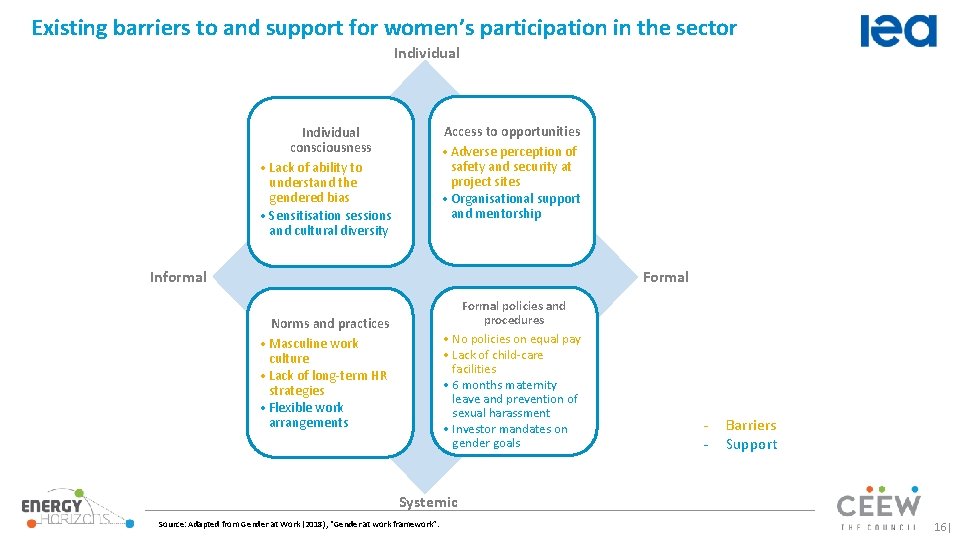
Existing barriers to and support for women’s participation in the sector Individual Access to opportunities • Adverse perception of safety and security at project sites • Organisational support and mentorship Individual consciousness • Lack of ability to understand the gendered bias • Sensitisation sessions and cultural diversity Formal Informal Formal policies and procedures • No policies on equal pay • Lack of child-care facilities • 6 months maternity leave and prevention of sexual harassment • Investor mandates on gender goals Norms and practices • Masculine work culture • Lack of long-term HR strategies • Flexible work arrangements - Barriers Support Systemic Source: Adapted from Gender at Work (2018), “Gender at work framework”. 16|
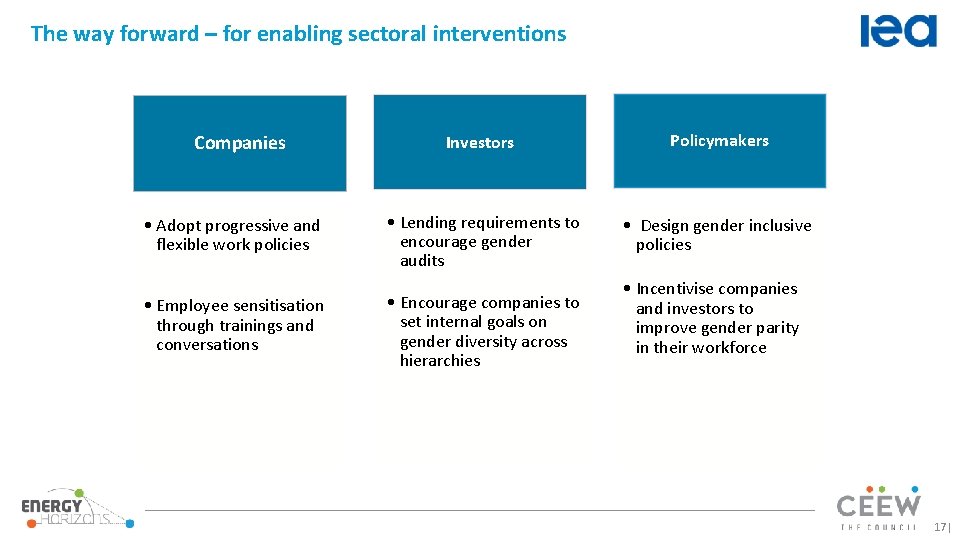
The way forward – for enabling sectoral interventions Investors Policymakers • Adopt progressive and flexible work policies • Lending requirements to encourage gender audits • Design gender inclusive policies • Employee sensitisation through trainings and conversations • Encourage companies to set internal goals on gender diversity across hierarchies Companies • Incentivise companies and investors to improve gender parity in their workforce 17|
Points for Discussion • What are the challenges that exist in shaping gender inclusive policies and culture? • What are some of the best practices from within or outside the sector that companies can learn from? • What support do companies need from investors/policymakers to formulate policies and work culture that promotes greater participation of women in the sector? 18|
Thank you Join the conversation by using #Energy. Horizons ceew. in | @CEEWIndia 19|
- Slides: 19