
Employment Labor Wages Chapter 8 Unions Unions negotiate
Employment, Labor, Wages Chapter 8
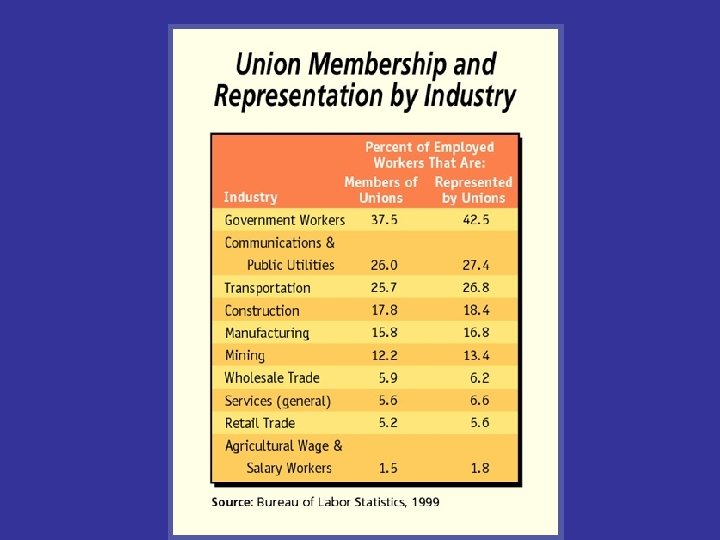
Unions • Unions negotiate for higher pay, better hours and working conditions, and job security. • Unions are important for two reasons – played a major role in promoting legislation that affects pay levels and working conditions today – unions are a force in the economy, with membership of nearly 16. 2 million people
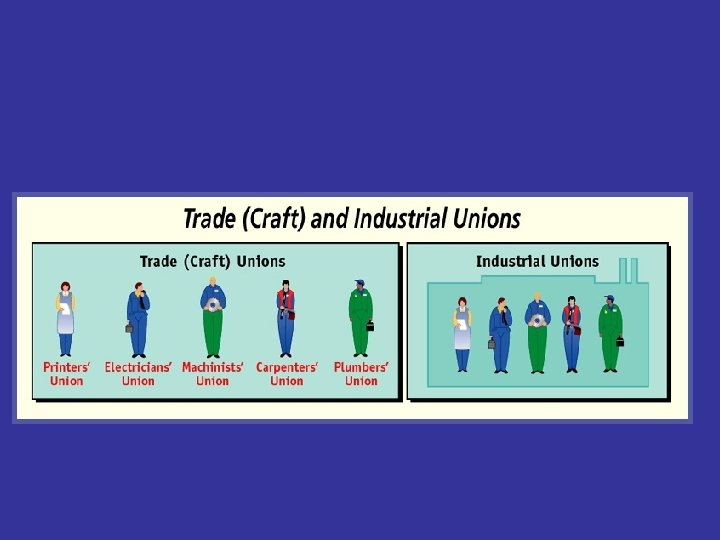
Types of Unions • craft union, or trade union – an association of skilled workers who perform the same kind of work. – Craft unions in the United States include the International Brotherhood of Electrical Workers, the United Auto Workers, and the International Association of Machinists.
• industrial union – an association of all workers in the same industry, regardless of the job each worker performs.

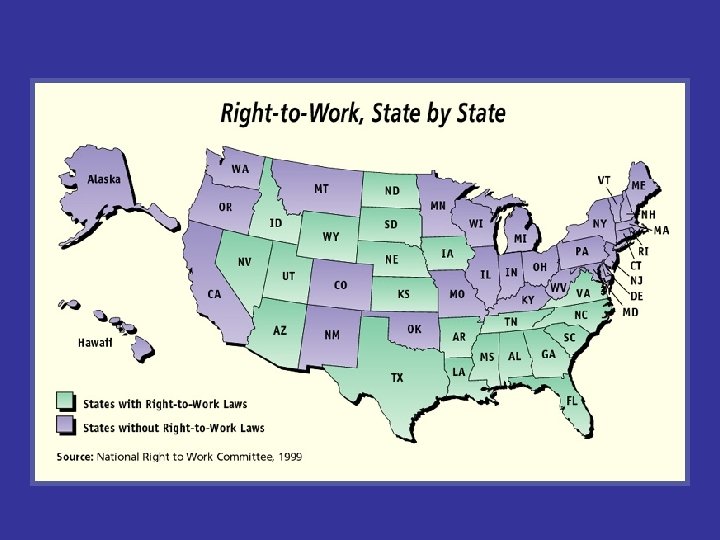
Types of Unions • Closed Shops – employer agrees to hire only union members. – this allows the union to determine who is hired – Taft-Hartley Act of 1947 made the closed shop illegal Union Shops – You don’t have to be a member but must join when hired – 21 states have right-to-work laws that prohibit mandatory union membership
Types of Unions • Modified Union Shops – workers do not have to belong to a union to be hired and cannot be made to join one – If workers voluntarily join the union, however, they must remain members for as long as they hold their jobs
Types of Unions • Agency Shops – does not require a worker to join a union – but does require the worker to pay union dues – Nonunion workers are also subject to the contract negotiated by the union,
Key Terms – macroeconomics – civilian labor force – company union – union shop – trade union – mediation – industrial union – arbitration – strike – injunction – picket – boycott – seizure – glass ceiling – lockout – comparable worth – part-time worker – minimum wage
Collective Bargaining • Representatives from both sides meet. • Collective bargaining requires compromise from both parties • Methods are available to resolve the differences
Collective Bargaining • Mediation – the mediator recommends a compromise to both sides. – Neither side has to accept a mediator’s decision • Arbitration – place their differences before a third party whose decision will be accepted as final
Collective Bargaining • Injunction – a court order not to act. • Seizure – a temporary takeover of operations • Presidential Intervention – The president of the United States may enter a labor-management dispute – The president also can fire federal workers
Categories of Labor • Four major categories of labor – Unskilled – Semi-skilled – Skilled – Professional • Based on the general level of knowledge and skills
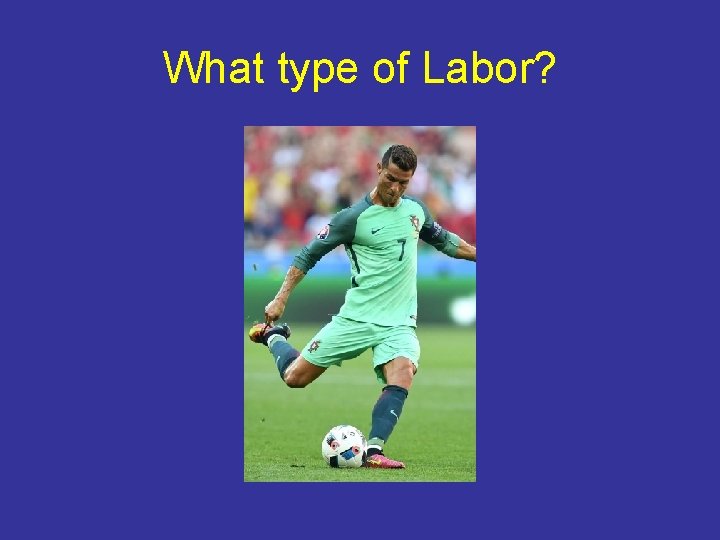
What type of Labor?
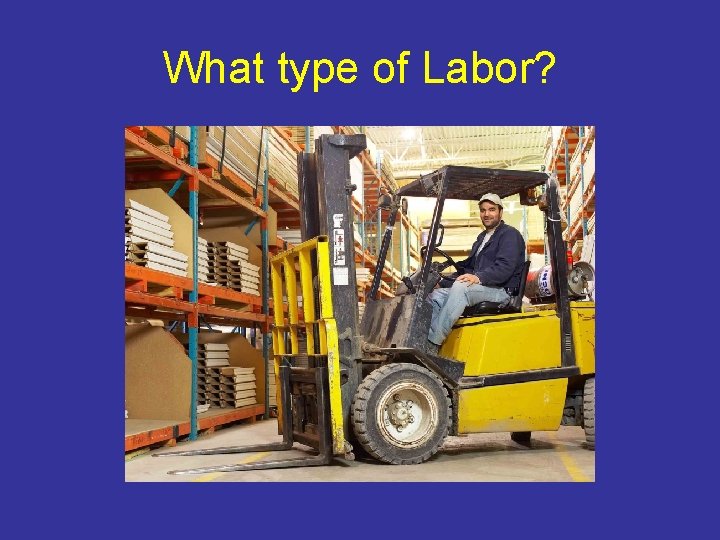
What type of Labor?
What type of Labor?
What type of Labor?
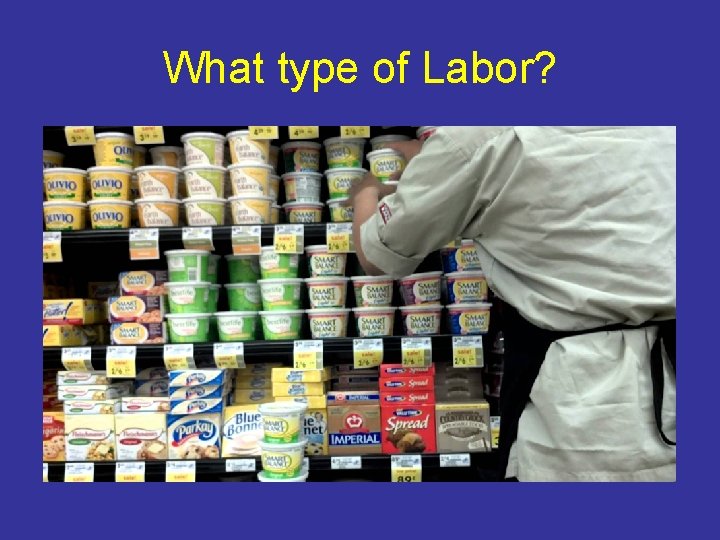
Unskilled Labor • Those who work primarily with their hands • Unskilled workers are likely to have the least amount of human capital invested in them • Therefore they often earn the lowest wages • Example: A Stock Clerk at Trader Joe’s
Semiskilled Labor • Workers with enough mechanical abilities and skills to operate machines • These workers may operate basic equipment that call for a minimal amount of training. • Example: The Fork Lift Operator.
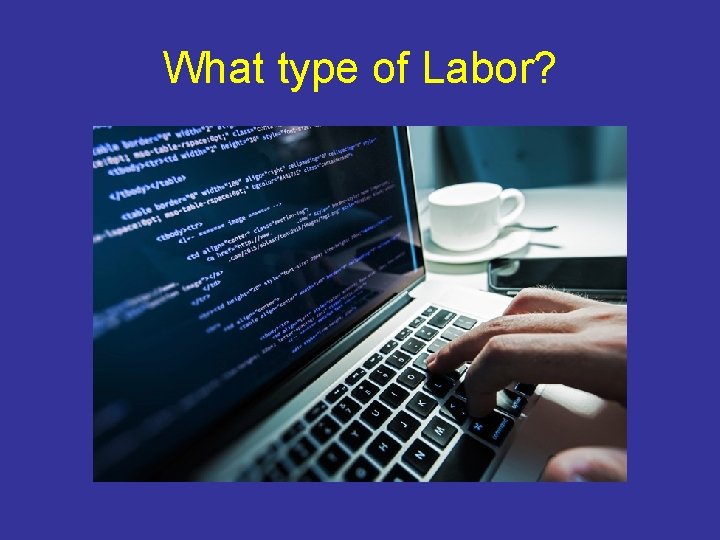
Skilled Labor • Able to operate complex equipment and can perform their tasks with little supervision • These workers represent a higher investment of human capital • Examples include carpenters, computer technicians, chefs, and computer programmers.
Professional Labor • Highest level of knowledge-based education and managerial skills • Doctors, scientists, lawyers, and corporate executives • These people have invested the most in their human capital and earn some of the highest incomes.
Noncompeting Labor Grades • Categories of labor do not directly compete with one another • Does not mean that some people in one category can never make it to a higher category • Some individuals have the ability and initiative to obtain additional technical skills
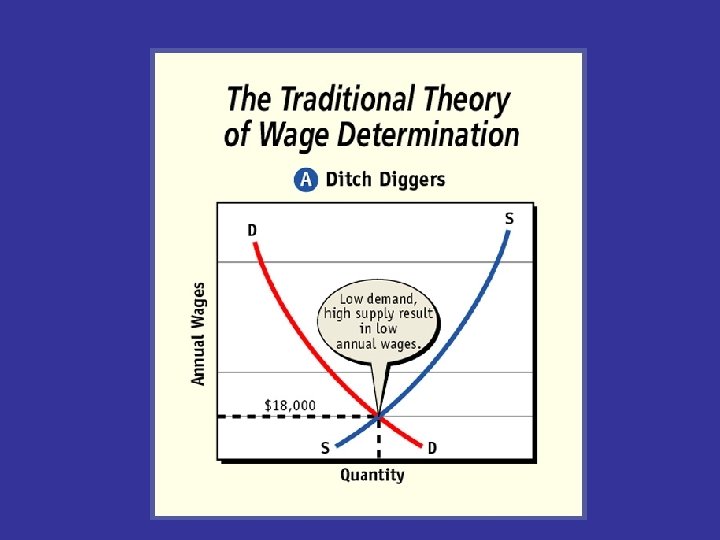
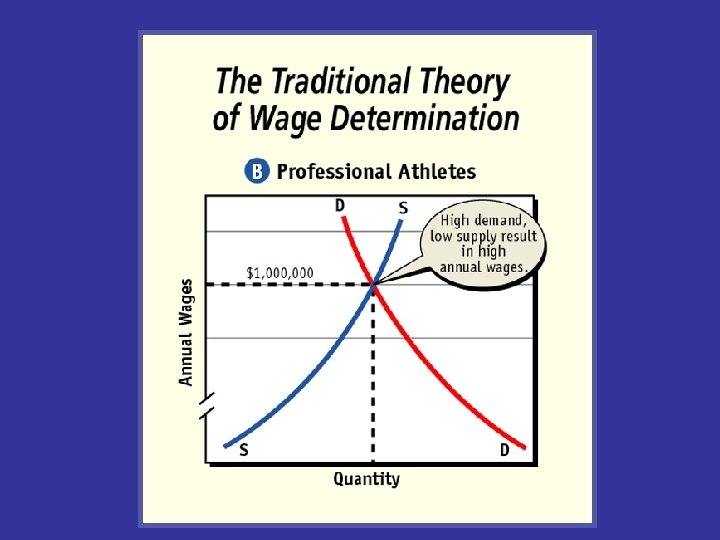
Wage Determination • Wage rates usually differ from one occupation to the next • Wages are sometimes different even within the same occupation.
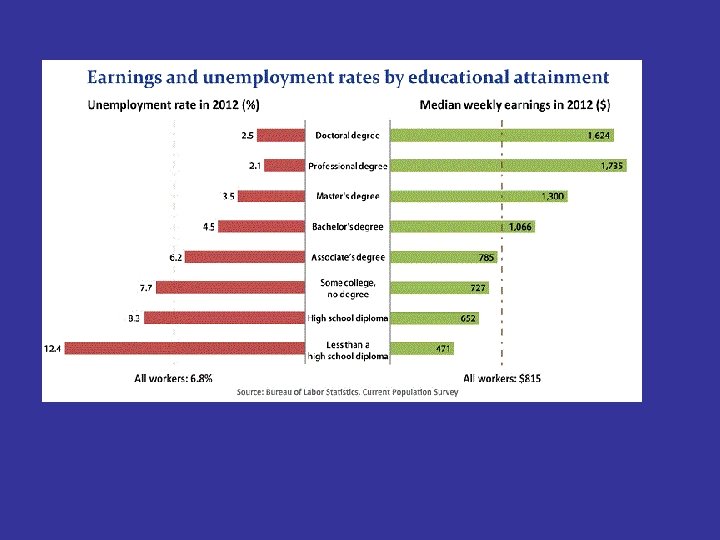
Traditional Theory of Wages • Supply and demand for worker’s skills and services determine the wage or salary • Some of the highest paid people are the professional athletes with skills so exceptional that they are above and beyond the norm • In most cases, the higher the level of human capital the higher the average wage rate
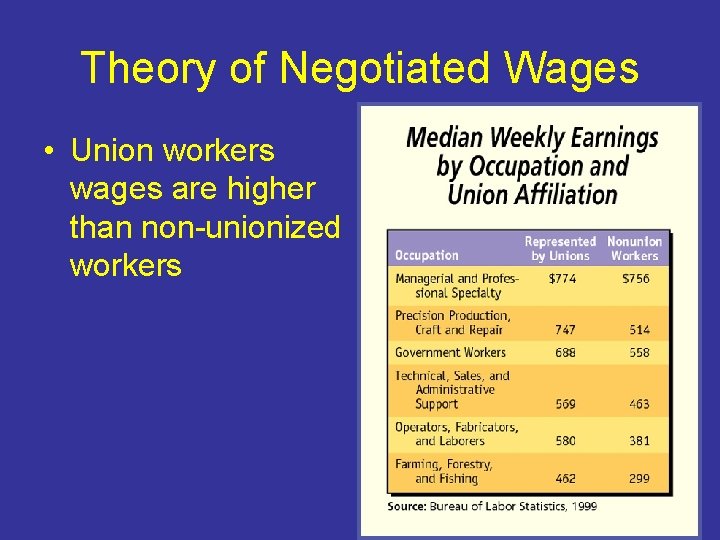
Theory of Negotiated Wages • Union workers wages are higher than non-unionized workers
Theory of Negotiated Wages • Because of seniority, some workers receive higher wages than others who perform similar tasks
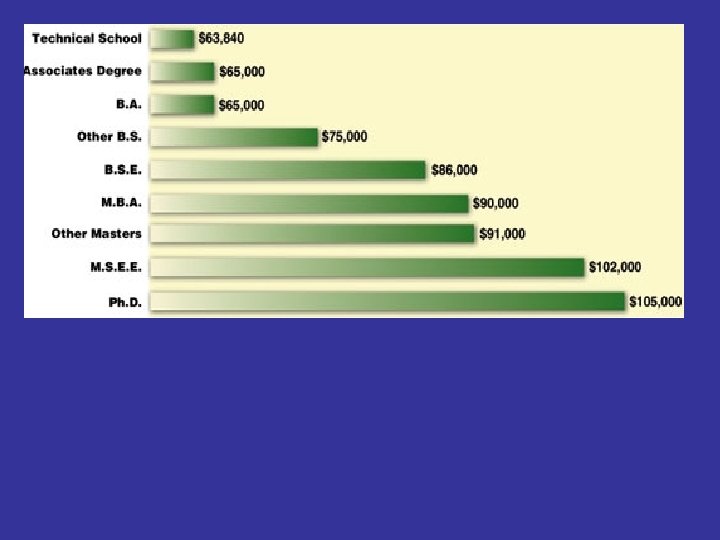
Signaling Theory • employers are willing to pay more for certificates, diplomas, degrees – “signals” of superior ability.
Regional Wage Differences • Skilled workers often are scarce in some parts of the country and abundant in others – causes differences in wage rates. • These differences can be minimized by labor mobility – the ability and willingness of workers to relocate.
Key Terms – macroeconomics – civilian labor force – company union – union shop – trade union – mediation – industrial union – arbitration – strike – injunction – picket – boycott – seizure – glass ceiling – lockout – comparable worth – part-time worker – minimum wage
- Slides: 35