
Employee Success Toolkit Tool 9 Active Listening Copyright
- Slides: 25
Employee Success Toolkit Tool #9: Active Listening Copyright Harriet Meyerson 2008 • www. Confidence. Center. com
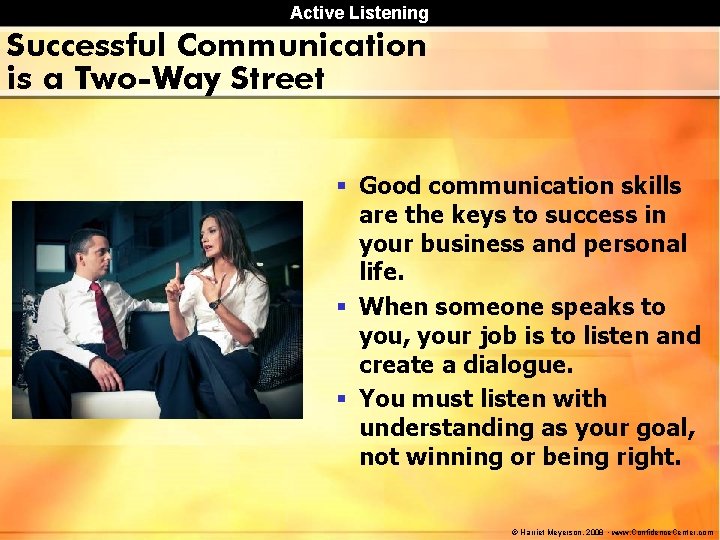
Active Listening Successful Communication is a Two-Way Street § Good communication skills are the keys to success in your business and personal life. § When someone speaks to you, your job is to listen and create a dialogue. § You must listen with understanding as your goal, not winning or being right. © Harriet Meyerson, 2008 • www. Confidence. Center. com
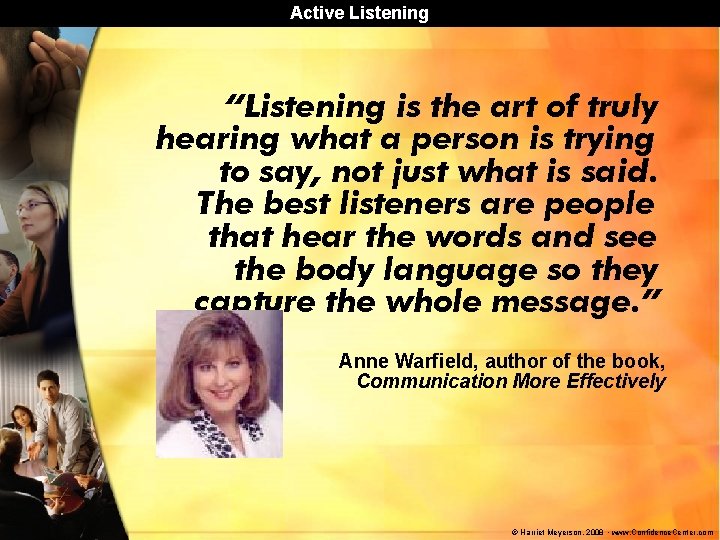
Active Listening “Listening is the art of truly hearing what a person is trying to say, not just what is said. The best listeners are people that hear the words and see the body language so they capture the whole message. ” Anne Warfield, author of the book, Communication More Effectively © Harriet Meyerson, 2008 • www. Confidence. Center. com
Active Listening Be an Active Listener § We think 7 times faster than we speak. § So. . when we are listening, there is plenty of time for our minds to wander. § Hearing is not the same as listening. § Hearingis merely using your ears to acknowledge sounds. § Listeningmeans understanding the other person’s point of view. § You’re processing information based on your own experiences, while listening to someone who is talking based on their experiences. © Harriet Meyerson, 2008 • www. Confidence. Center. com
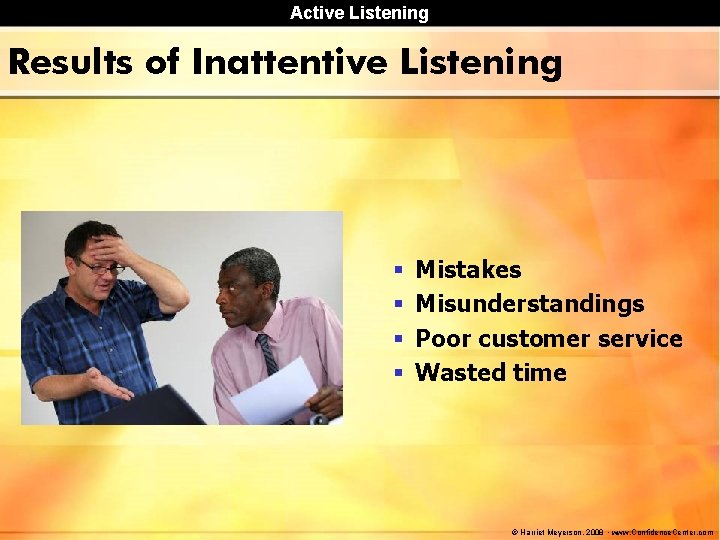
Active Listening Results of Inattentive Listening § § Mistakes Misunderstandings Poor customer service Wasted time © Harriet Meyerson, 2008 • www. Confidence. Center. com
Active Listening Give Your Full Attention to the Speaker § § § Lean forward. Look directly at the other person. Nod your head. Make appropriate comments. Tilt your head slightly to one side while you listen. © Harriet Meyerson, 2008 • www. Confidence. Center. com
Active Listening and Effective Speaking Elements are the Same § § § § Words Tone of Voice Pitch Pace Eye Contact Body Position Gestures Facial Expression © Harriet Meyerson, 2008 • www. Confidence. Center. com
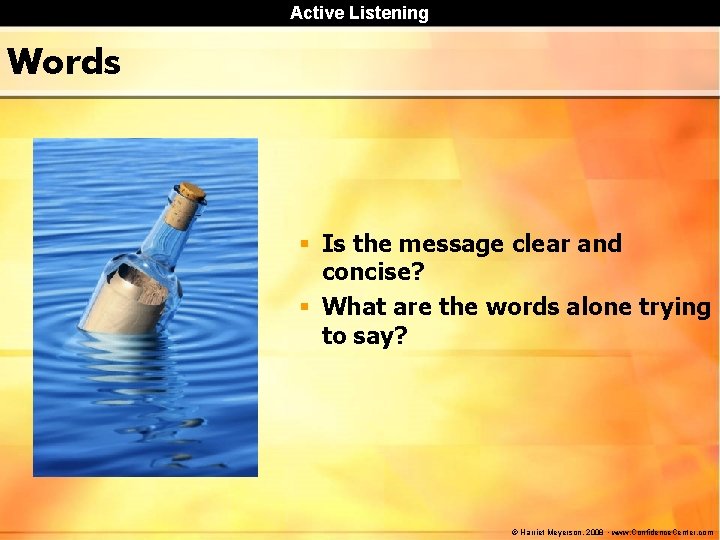
Active Listening Words § Is the message clear and concise? § What are the words alone trying to say? © Harriet Meyerson, 2008 • www. Confidence. Center. com
Active Listening Tone of Voice § The tone of voice reflects the person’s emotional state. § Does it sound hostile or nervous, or does it sound friendly, relaxed and sincere? § Does it match the meaning of the words? § When there are mixed messages, the tone of voice reflects the true meaning. © Harriet Meyerson, 2008 • www. Confidence. Center. com
Active Listening Pitch § A lower pitch voice signifies confidence. § A high pitched voice can be a sign of: § Nervousness § Fear § Anxiety © Harriet Meyerson, 2008 • www. Confidence. Center. com
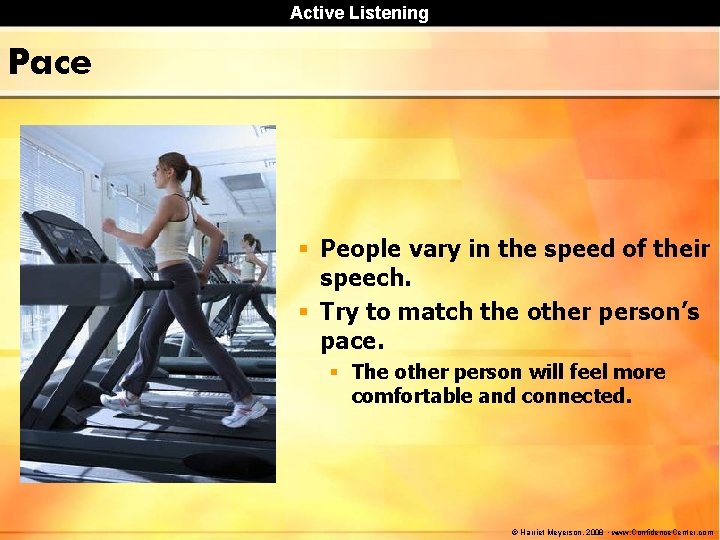
Active Listening Pace § People vary in the speed of their speech. § Try to match the other person’s pace. § The other person will feel more comfortable and connected. © Harriet Meyerson, 2008 • www. Confidence. Center. com
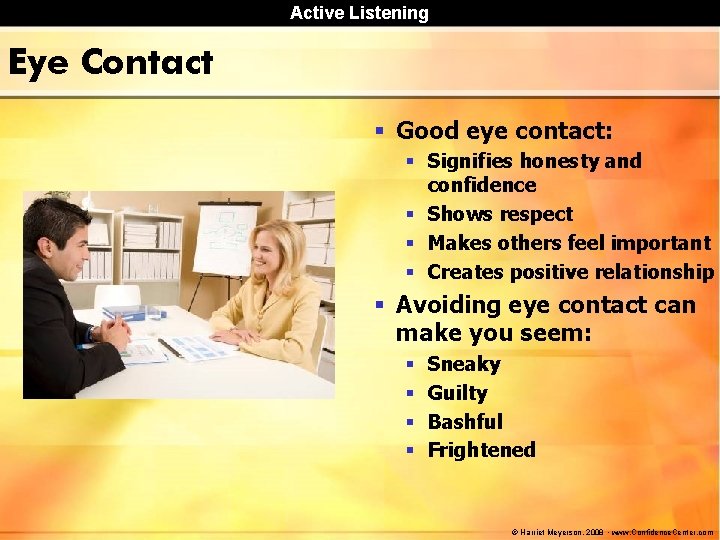
Active Listening Eye Contact § Good eye contact: § Signifies honesty and confidence § Shows respect § Makes others feel important § Creates positive relationship § Avoiding eye contact can make you seem: § § Sneaky Guilty Bashful Frightened © Harriet Meyerson, 2008 • www. Confidence. Center. com
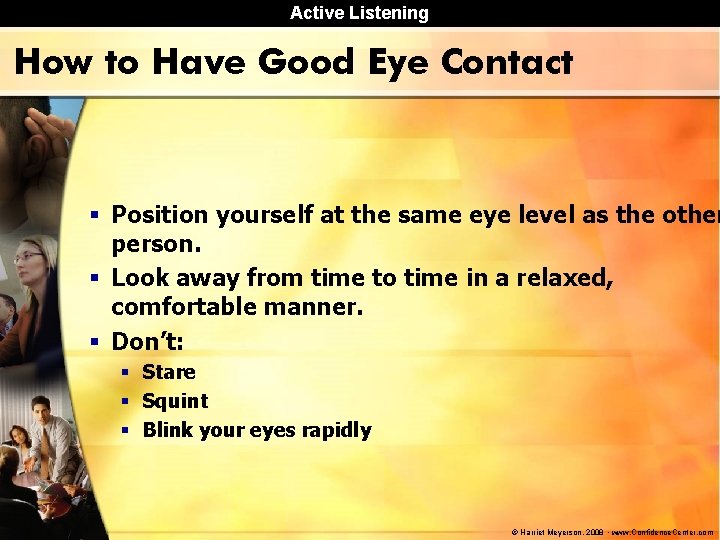
Active Listening How to Have Good Eye Contact § Position yourself at the same eye level as the other person. § Look away from time to time in a relaxed, comfortable manner. § Don’t: § Stare § Squint § Blink your eyes rapidly © Harriet Meyerson, 2008 • www. Confidence. Center. com
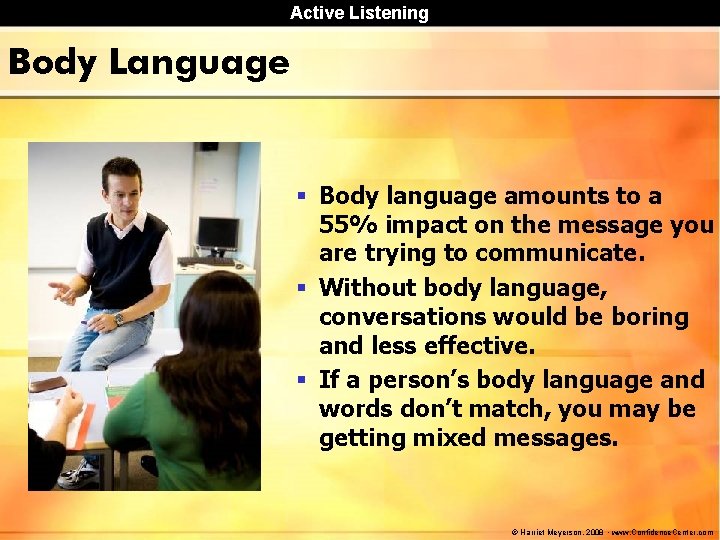
Active Listening Body Language § Body language amounts to a 55% impact on the message you are trying to communicate. § Without body language, conversations would be boring and less effective. § If a person’s body language and words don’t match, you may be getting mixed messages. © Harriet Meyerson, 2008 • www. Confidence. Center. com
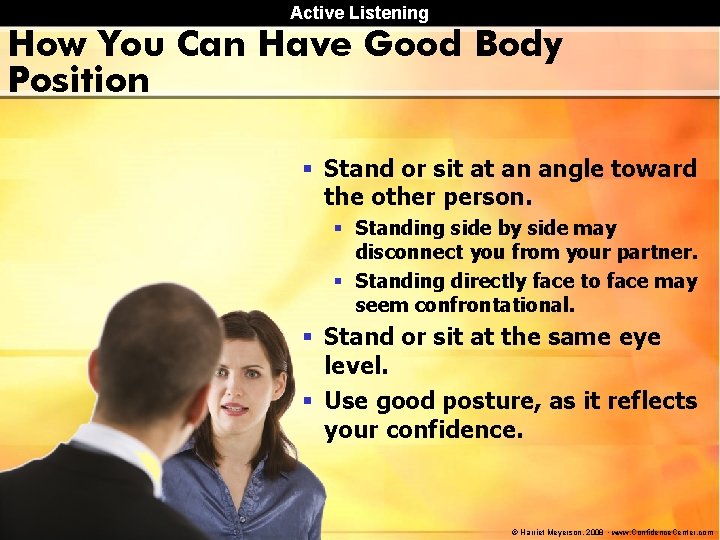
Active Listening How You Can Have Good Body Position § Stand or sit at an angle toward the other person. § Standing side by side may disconnect you from your partner. § Standing directly face to face may seem confrontational. § Stand or sit at the same eye level. § Use good posture, as it reflects your confidence. © Harriet Meyerson, 2008 • www. Confidence. Center. com
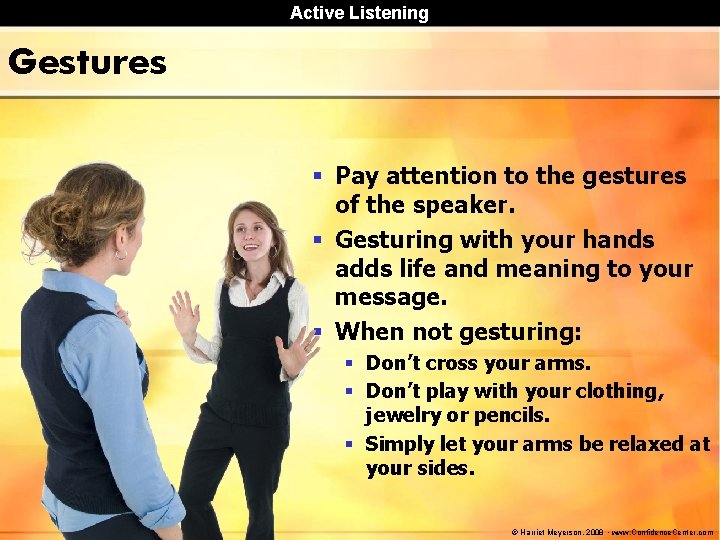
Active Listening Gestures § Pay attention to the gestures of the speaker. § Gesturing with your hands adds life and meaning to your message. § When not gesturing: § Don’t cross your arms. § Don’t play with your clothing, jewelry or pencils. § Simply let your arms be relaxed at your sides. © Harriet Meyerson, 2008 • www. Confidence. Center. com
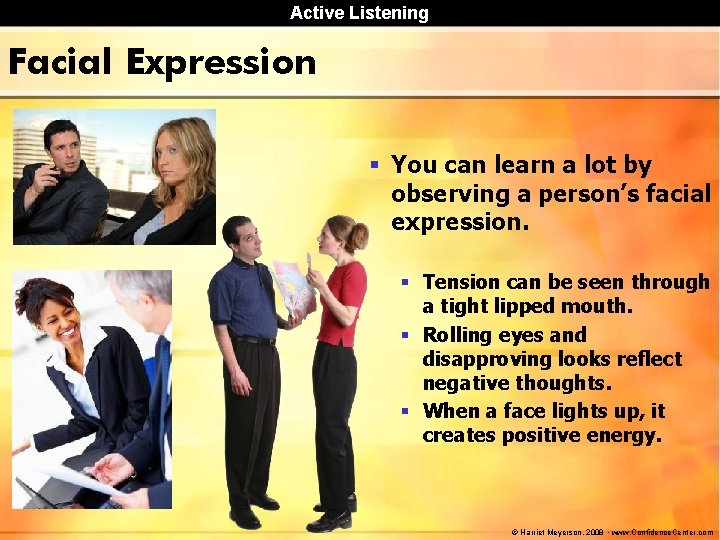
Active Listening Facial Expression § You can learn a lot by observing a person’s facial expression. § Tension can be seen through a tight lipped mouth. § Rolling eyes and disapproving looks reflect negative thoughts. § When a face lights up, it creates positive energy. © Harriet Meyerson, 2008 • www. Confidence. Center. com
Active Listening Are You Listening? § To be sure you understand what you are hearing: § Repeat back what you heard. Say, “I think what you said was…” § Ask, “Help me understand…” § Continual practice of active listening skills will help you succeed at work and in your personal life. © Harriet Meyerson, 2008 • www. Confidence. Center. com
Active Listening Quiz & Discussion Questions © Harriet Meyerson, 2008 • www. Confidence. Center. com
Active Listening Question 1 What is the best body position to assume when speaking to another person? © Harriet Meyerson, 2008 • www. Confidence. Center. com
Active Listening Question 2 Why is the pace of someone’s speaking so important? © Harriet Meyerson, 2008 • www. Confidence. Center. com
Active Listening Question 3 How can you know the gestures you use are effective? © Harriet Meyerson, 2008 • www. Confidence. Center. com
Active Listening Question 4 How can you determine how well you listen? © Harriet Meyerson, 2008 • www. Confidence. Center. com
Active Listening Question 5 Name 3 aspects of active listening. © Harriet Meyerson, 2008 • www. Confidence. Center. com
Active Listening Set Your Goals What are your three main goals for active listening? © Harriet Meyerson, 2008 • www. Confidence. Center. com