
EMPLOYEE RETENTION ENGAGEMENT CAREERS CHAPTER 10 MGT 351


- Slides: 13
EMPLOYEE RETENTION, ENGAGEMENT, & CAREERS CHAPTER 10 MGT 351
MANAGING EMPLOYEE TURNOVER & RETENTION ✤ Turnover, which is the rate at which employees leave the firm -varies markedly among industries. ✤ The costs to employers of turnover are high. ✤ Reducing turnover requires identifying and managing the reasons for both voluntary and involuntary turnover.
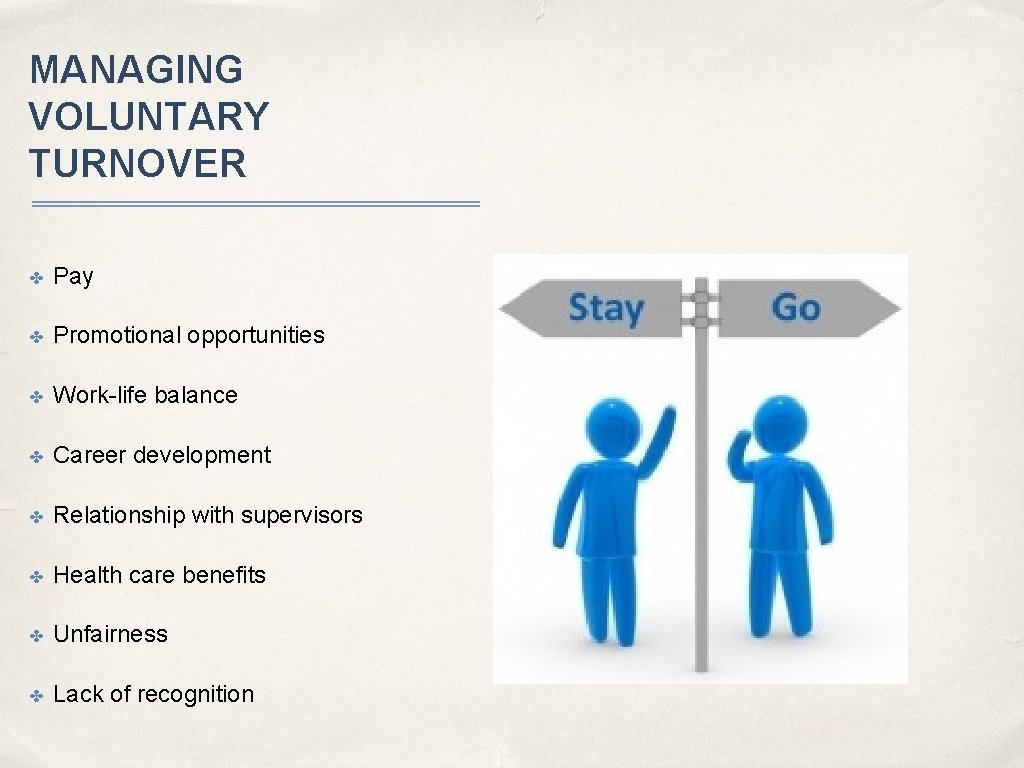
MANAGING VOLUNTARY TURNOVER ✤ Pay ✤ Promotional opportunities ✤ Work-life balance ✤ Career development ✤ Relationship with supervisors ✤ Health care benefits ✤ Unfairness ✤ Lack of recognition
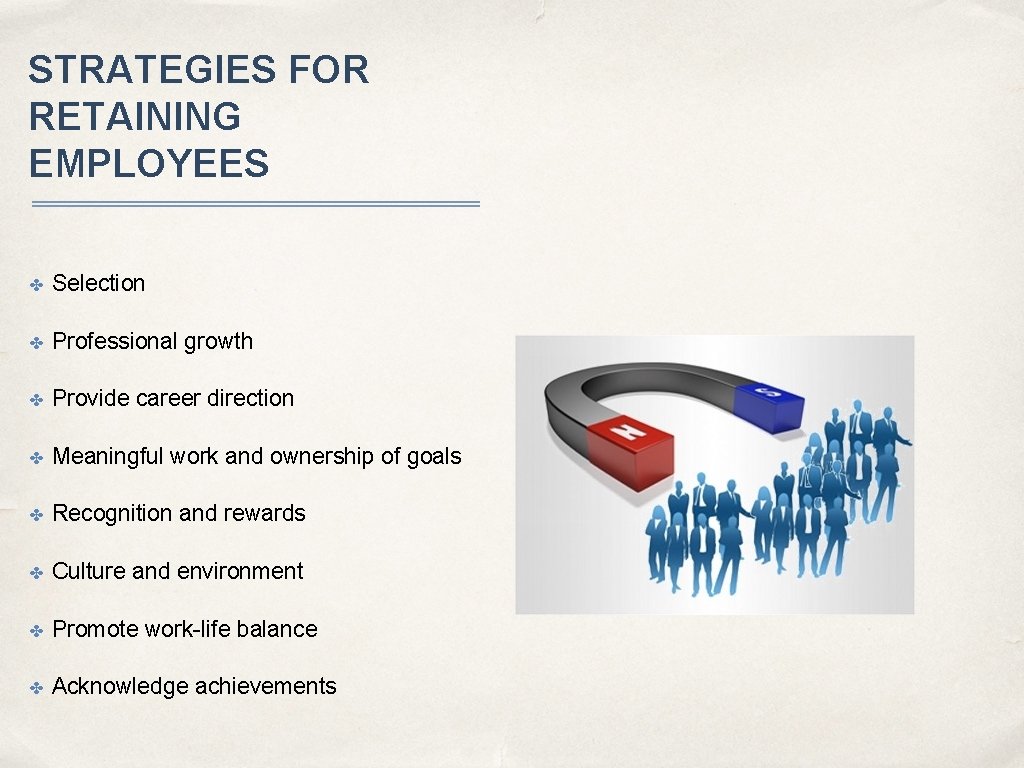
STRATEGIES FOR RETAINING EMPLOYEES ✤ Selection ✤ Professional growth ✤ Provide career direction ✤ Meaningful work and ownership of goals ✤ Recognition and rewards ✤ Culture and environment ✤ Promote work-life balance ✤ Acknowledge achievements
EMPLOYEE ENGAGEMENT Engagement refers to being psychologically involved in, connected to, and committed to getting one’s jobs done. Why engagement is important? ✤Reduce employee turnover
CAREER PLANNING, DEVELOPMENT & MANAGEMENT ✤ Career Planning- The deliberate process through which someone becomes aware of personal skills, interests, knowledge, motivation and other characteristics and establishes action plans to attain specific goals. ✤ Career Management- process for enabling employees to better understand develop their career skills and interests, and to use these skills and interests more effectively. ✤ Career Development- is the lifelong series of activities that contribute to a person’s career exploration, establishment, success, and fulfillment.
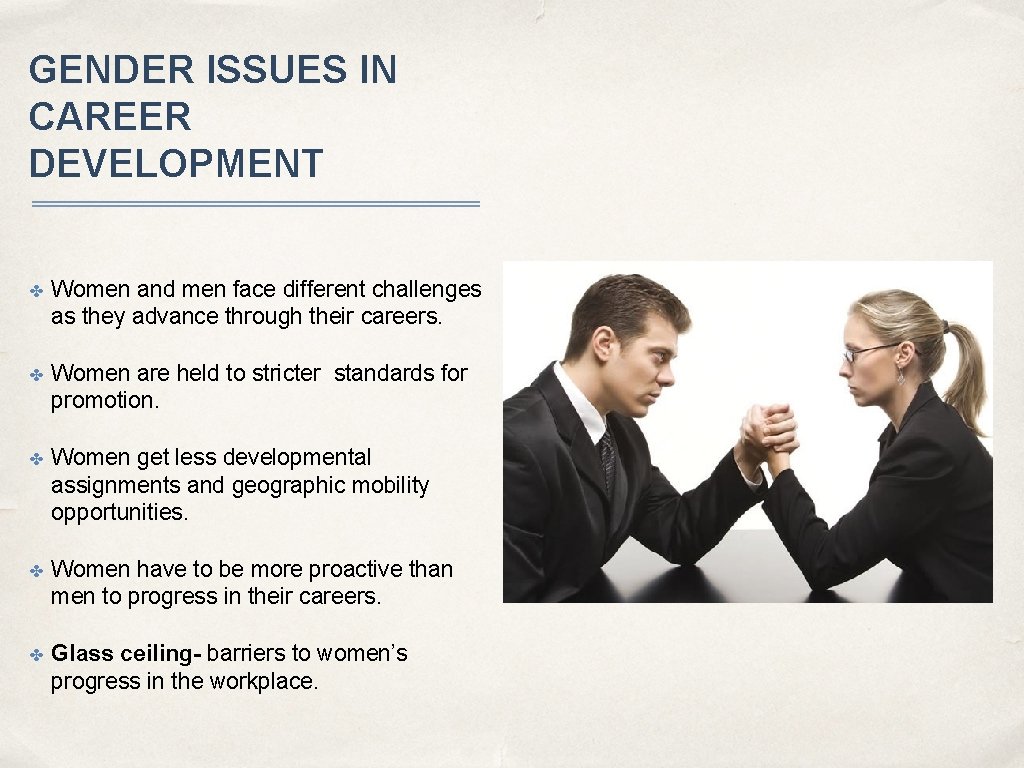
GENDER ISSUES IN CAREER DEVELOPMENT ✤ Women and men face different challenges as they advance through their careers. ✤ Women are held to stricter standards for promotion. ✤ Women get less developmental assignments and geographic mobility opportunities. ✤ Women have to be more proactive than men to progress in their careers. ✤ Glass ceiling- barriers to women’s progress in the workplace.
IMPROVING COACHING SKILLS ✤ Coaching means educating, instructing, and training subordinates. ✤ Teaching short-term job related skills ✤ Analytical skills- it’s futile to teach or advise someone if you don’t know what the problem is. ✤ Interpersonal skills- it’s futile to know the problem if you can’t get the person to listen or change.
COACHING: 4 STEP PROCESS 1. Preparation 2. Planning 3. Active coaching 4. Follow-up
BUILDING YOUR MENTORING SKILLS ✤ Experienced senior people advising, counseling and guiding employees’ long-term career development. ✤ May be formal or informal. ✤ Focus is on hard-to-reverse, longerterm issues. ✤ Effective mentoring requires trust, professional competence, consistency, and ability to communicate.
THE PROTEGE’S RESPONSIBILITIES ✤ Choose an appropriate potential mentor. ✤ Don’t be surprised if you’re turned down. ✤ Make it easier for a potential mentor to agree to your request. ✤ Respect the mentor’s time.
MAKING PROMOTION DECISIONS ✤ Decision 1: Is seniority or competence the rule? ✤ Decision 2: How should we measure competence? ✤ Decision 3: Is the process formal or informal? ✤ Decision 4: Vertical, Horizontal, or other?
PRACTICAL CONSIDERATIONS ✤ Sources of bias in promotion decisions. ✤ Promotions and the law ✤ Managing transfers ✤ Managing retirements