
Empirical Study on the Risk Regulation of Block
Empirical Study on the Risk Regulation of Block Chain Prof. Xiaojing Chen Director, Center of American Studies Shanghai University of International Business and Economics chenxjxj@126. com Sep. 27, 2018
Abstract • Based on the analysis of the risk regulation strategies at home and abroad, the risk assessment models such as the SMART Chain model, and other capital market risk management models, this paper uses R language and OLS multiple regression method to build the modified model to discuss the important factors affecting the risks of block chain application projects. This paper provides a solid foundation and creative thinking for the regulation of the application of Block China via highlighting the importance of systematic risk management, technological regulation evaluation and market price fluctuation prediction.
Outline 01 Current International Regulation Models 02 Empirical Study 03 Strategies for Risk Management of Block Chain
Introduction • Application of block chain in the capital market reduces some risks, however, it brings some uncontrollable risks as well, for example,chain information can be obtained by hacker, appearance of financing leverage forbidden by law, fraud risk and so on.

1 Current International Regulation Models 1. 1 Credit Risk Model Credit risk is still the main risk for the financial institutions. Expert Score, Credit Evaluation, KMV Model, Credit Metrics are widely used for assessing credit. KMV model can observe the movement of default rate of the enterprises. Credit Metrics was put forward by J. P. Morgan in 1997, which measures firms’ default risk based on Asset Portfolio Theory and Va. R. In recent years, with the wide usage of machine study and neural network in risk management, Bayes Model and Logistic Regression Model start to be used in measuring credit risk.
1. 2 SMART Chain Model • SMART Chain Model is composed of Smart Analysis and Smart Quantity. Among which, Smart Analysis evaluates block chain from aspect of strategy, market and product; Smart Quantity Model assesses the block chain from the perspective of strategy, marketing, activity, risk and technology.
1. 3 Ajusted Model of SMART Chain • Based on the previous model and features of the risk of capital market, we choose market focus, marketing, technology stability, market price and future development to measure the risk of block chain application. • X 1 (market focus): Mean of Google index in the past 12 months (starting from February 21, 2018), the figure is from the surfing data. The higher of the data, the higher of the market focus. • X 2(marketing) :Comprehensive consideration of the transaction market, public offering, turnover rate of daily settlement and turnover rate of daily transaction, marketing score is based on mean value, which is between 0 -9. The higher the score, the better the market flow.
1. 3 Ajusted Model of SMART Chain • X 3(technology stability):Assesses from three perspectives including project application stability, code advantage and code alliance, which is between 0 -9. The higher the score, the more stability of the block chain application. • X 4(market price):Derived from KMV credit risk model, the variance is determined by the daily transaction price of Feb. 21, 2018( unit: $). • X 5(future development): It includes community construction and financing support, each accounts 5 points. Community construction covers the score of official forum activity, relevant discussion, participation, website and maintain of Wiki; financing measures project financing status, early investor, outsider supporter, advertise input &output. The score is between 0 -10, the higher, the brighter of the future development.
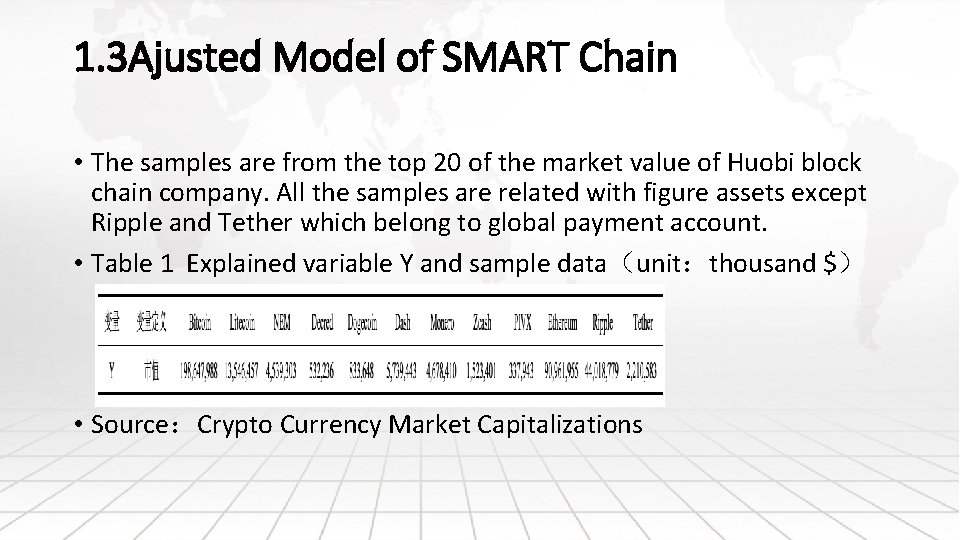
1. 3 Ajusted Model of SMART Chain • The samples are from the top 20 of the market value of Huobi block chain company. All the samples are related with figure assets except Ripple and Tether which belong to global payment account. • Table 1 Explained variable Y and sample data(unit:thousand $) • Source:Crypto Currency Market Capitalizations
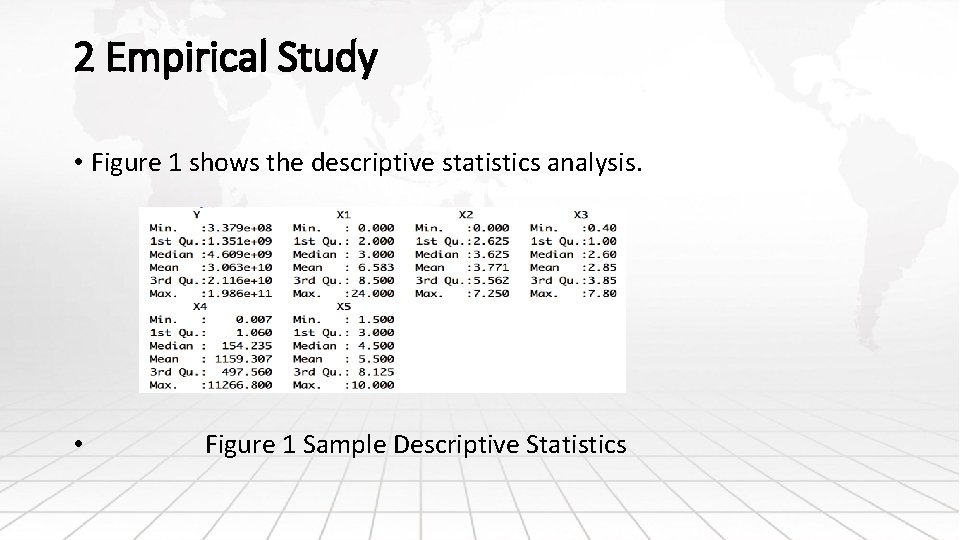
2 Empirical Study • Figure 1 shows the descriptive statistics analysis. • Figure 1 Sample Descriptive Statistics
2 Empirical Study • Via R language, based on OLS least square method, this paper constructs multi-linear regression model, which defines Y as dependent variable, X 1(market focusing), X 2 ( transaction activity), X 3(technology stability), X 4( market price) and X 5(future development) as independent variable. Fitted model displays as figure 2.
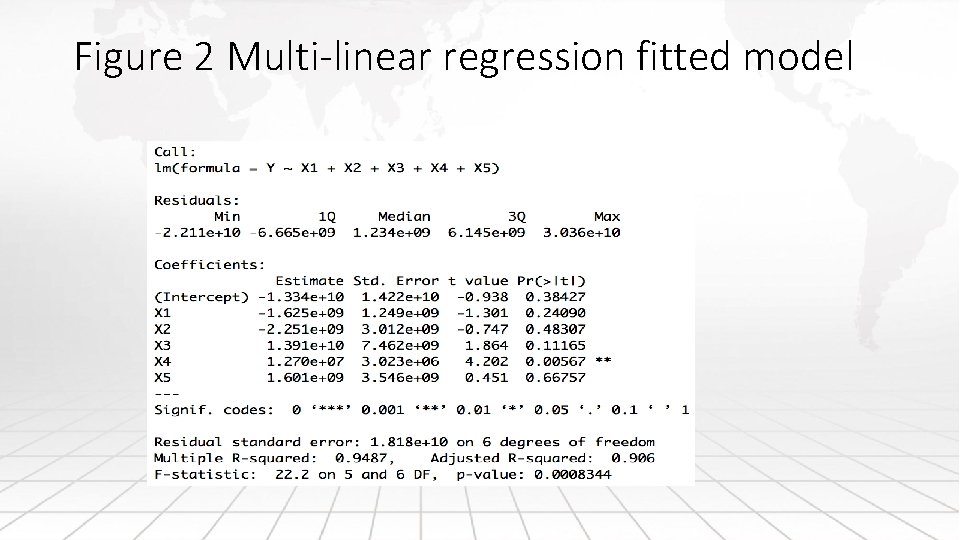
Figure 2 Multi-linear regression fitted model
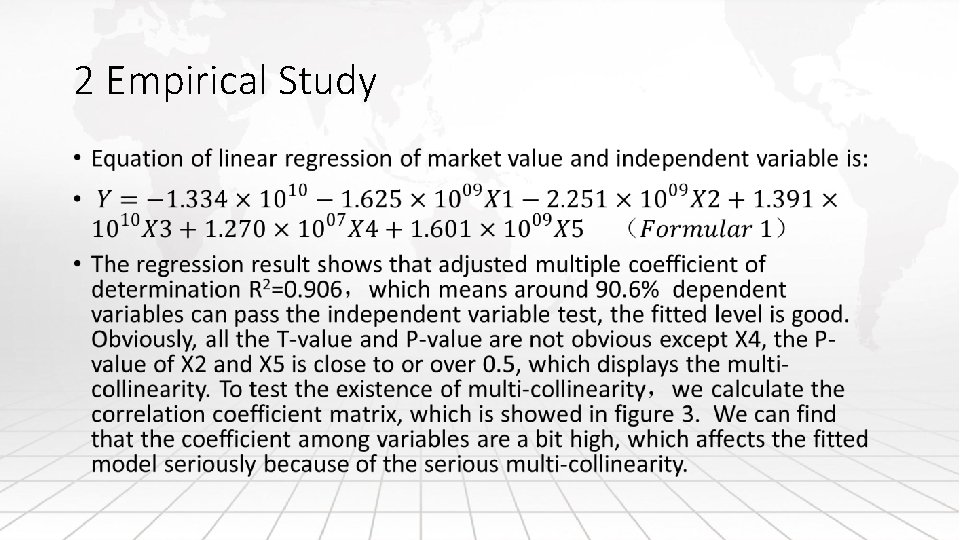
2 Empirical Study •
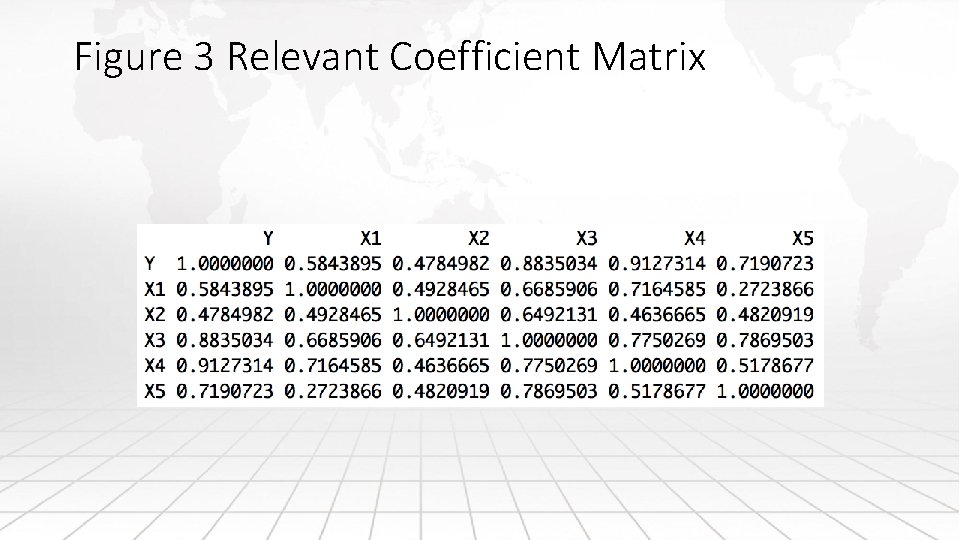
Figure 3 Relevant Coefficient Matrix
2 Empirical Study • We use AIC(Akaike information criterion)to measure the difference of adjusted model with deleting partial variable and original model. With step–by-step regression, AIC reaches 568. 09 from 570. 65, the fitted status goes better. More importantly, step-bystep regression eliminates X 2(transaction activity) and X 5(future development). We rebuild the model showed as Figure 4.
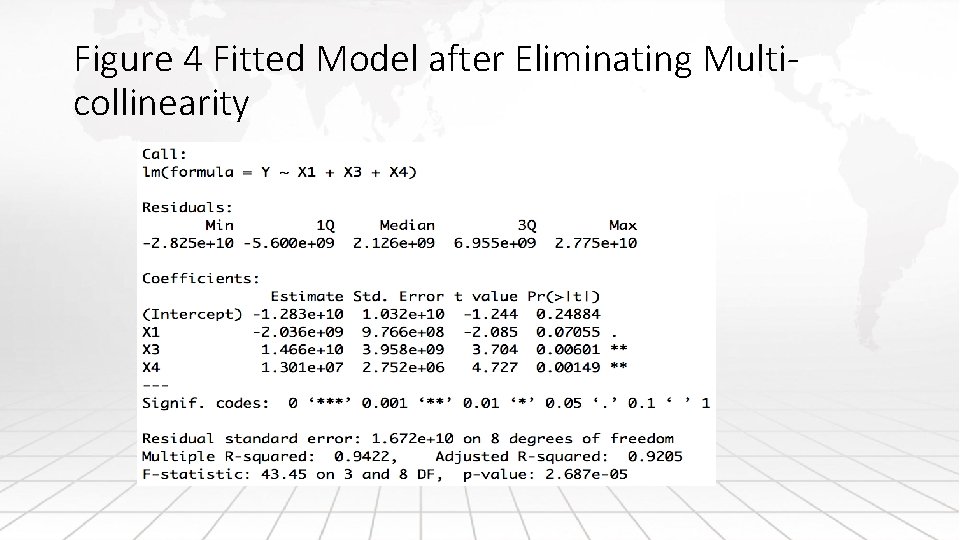
Figure 4 Fitted Model after Eliminating Multicollinearity
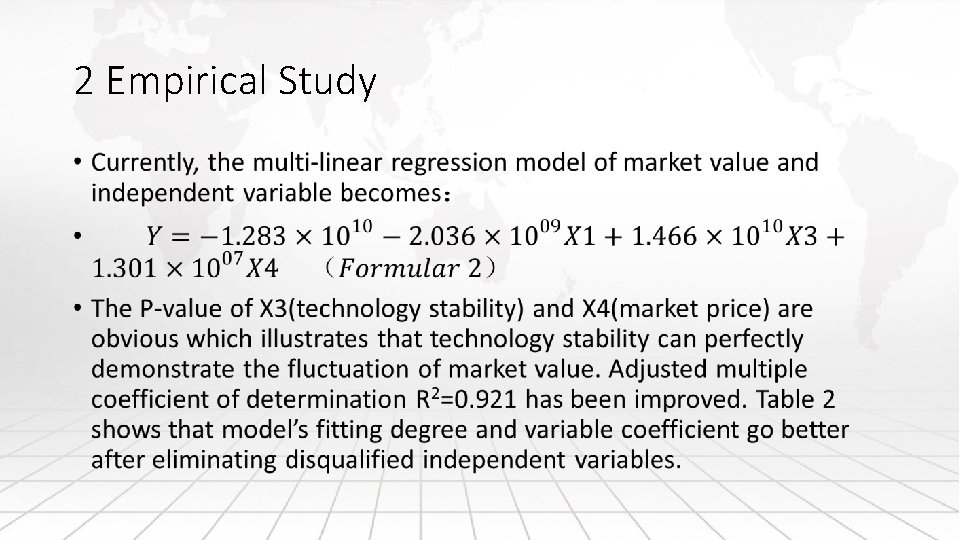
2 Empirical Study •
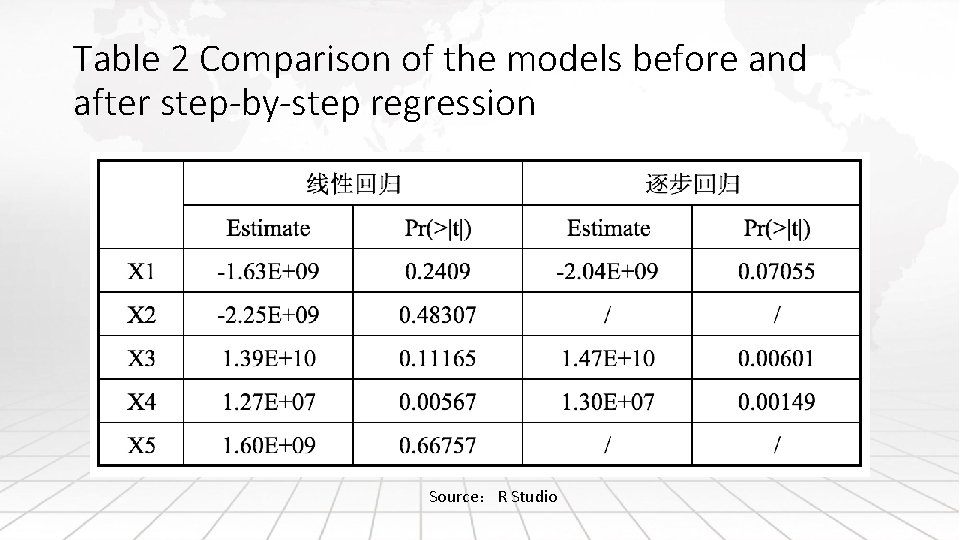
Table 2 Comparison of the models before and after step-by-step regression Source:R Studio
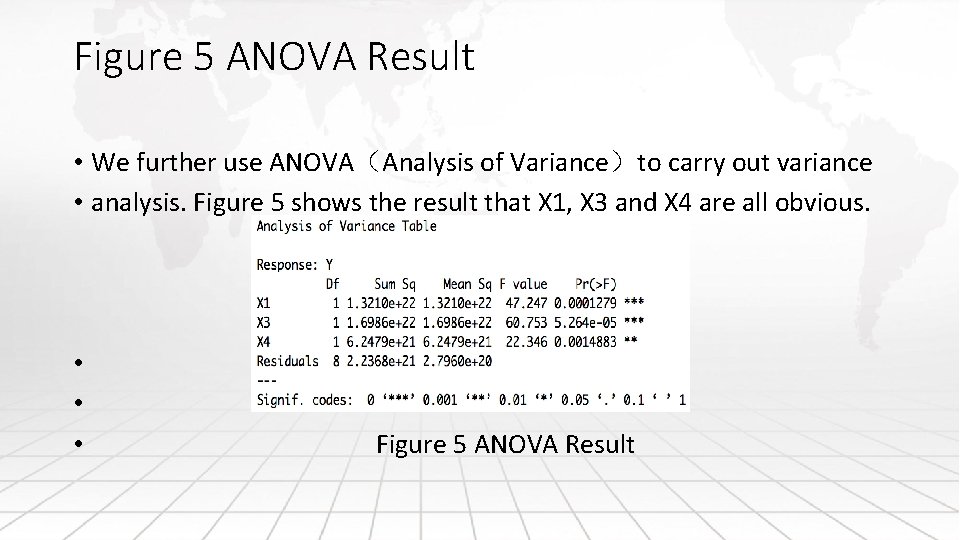
Figure 5 ANOVA Result • We further use ANOVA(Analysis of Variance)to carry out variance • analysis. Figure 5 shows the result that X 1, X 3 and X 4 are all obvious. • • • Figure 5 ANOVA Result
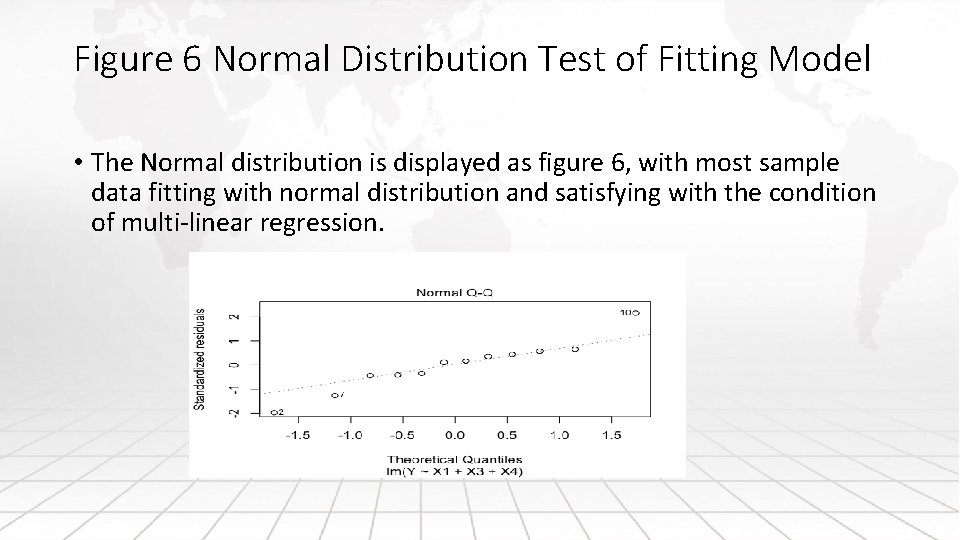
Figure 6 Normal Distribution Test of Fitting Model • The Normal distribution is displayed as figure 6, with most sample data fitting with normal distribution and satisfying with the condition of multi-linear regression.
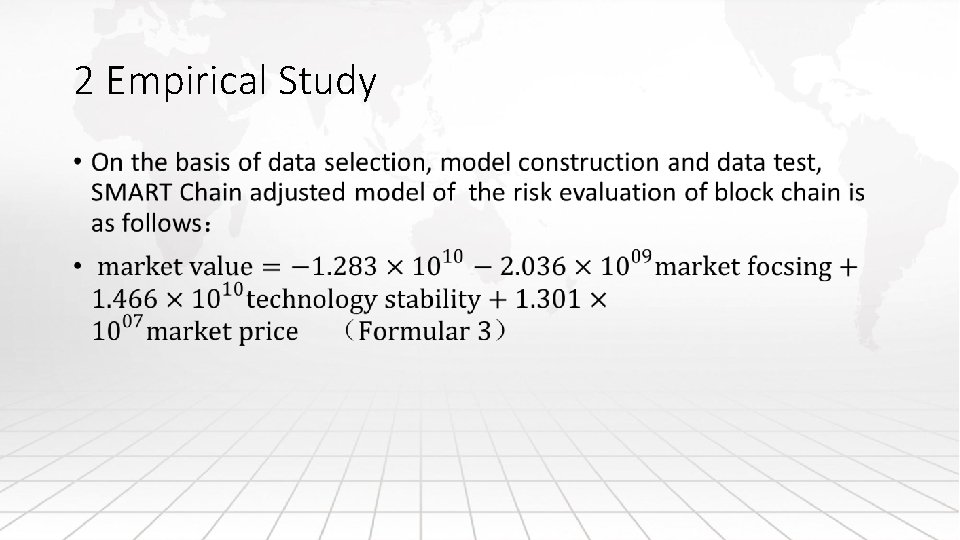
2 Empirical Study •
3 Strategies for Risk Management of Block Chain • Firstly, establish risk pre-warning mechanism to maintain the safety of the block chain to contribute to the smooth development of the capital market. Secondly, regulators should spare no efforts in avoiding the sharp fluctuation of the market price during the application of the block chain. Thirdly, relevant institutions should strengthen the technology regulation and evaluation to maintain the stability of the market. Meanwhile, to nurture the talents to meet the requirements of Fintech.

Director Center of American Studies Prof. Xiaojing Chen Thank you! Comments are Welcome!
- Slides: 23