
Empires of the South Maya Aztec and Inca
- Slides: 37
Empires of the South Maya, Aztec, and Inca Chapter 2 Section 3
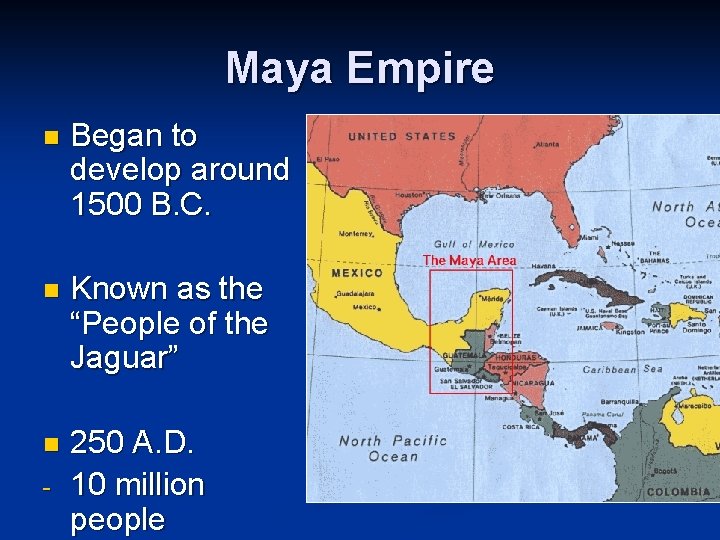
Maya Empire n Began to develop around 1500 B. C. n Known as the “People of the Jaguar” n 250 A. D. 10 million people -
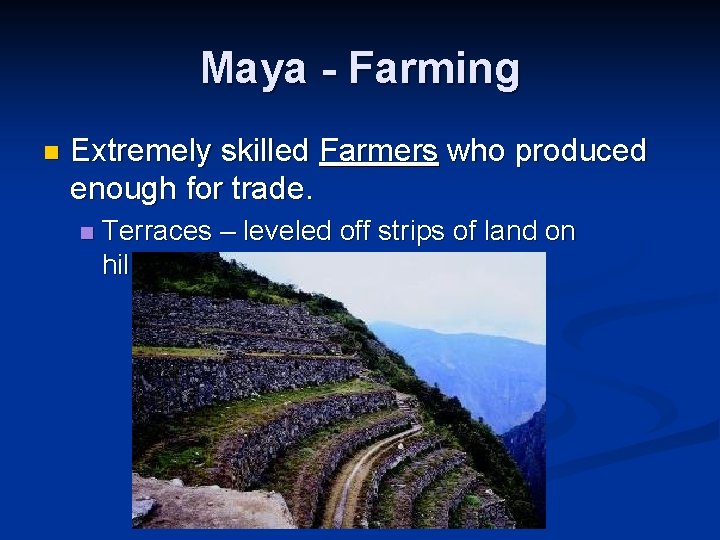
Maya - Farming n Extremely skilled Farmers who produced enough for trade. n Terraces – leveled off strips of land on hillsides.
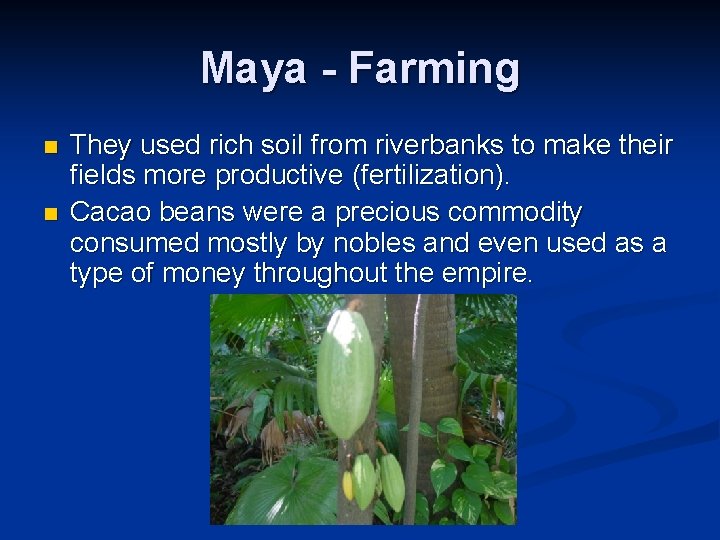
Maya - Farming n n They used rich soil from riverbanks to make their fields more productive (fertilization). Cacao beans were a precious commodity consumed mostly by nobles and even used as a type of money throughout the empire.
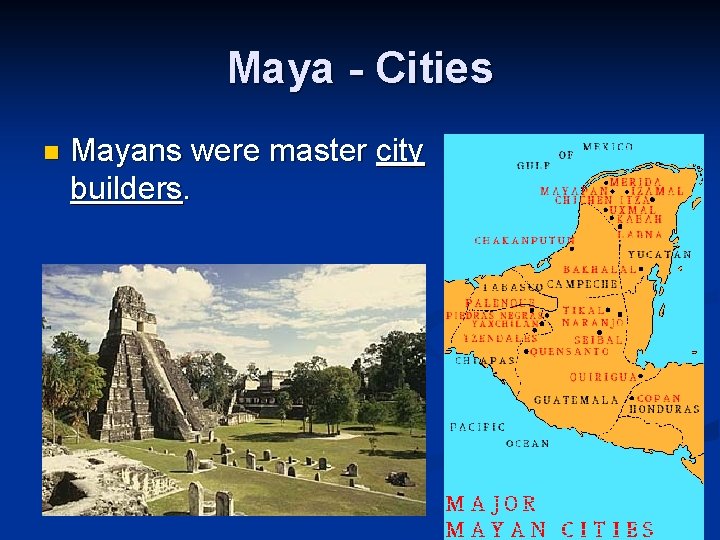
Maya - Cities n Mayans were master city builders.
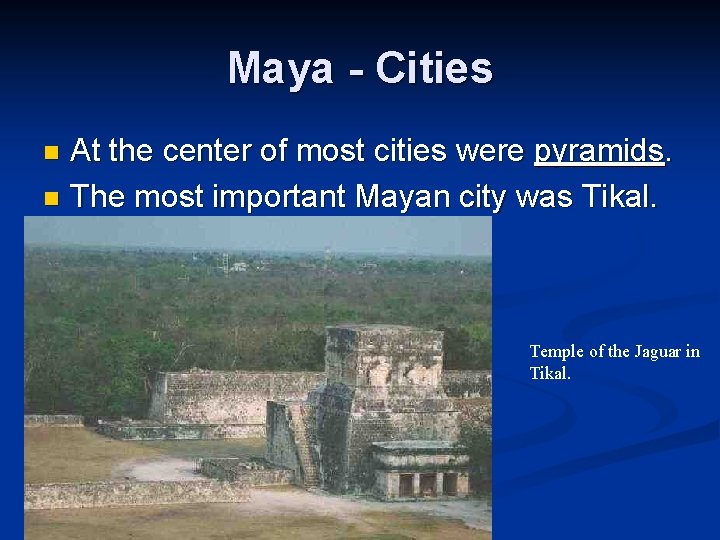
Maya - Cities At the center of most cities were pyramids. n The most important Mayan city was Tikal. n Temple of the Jaguar in Tikal.
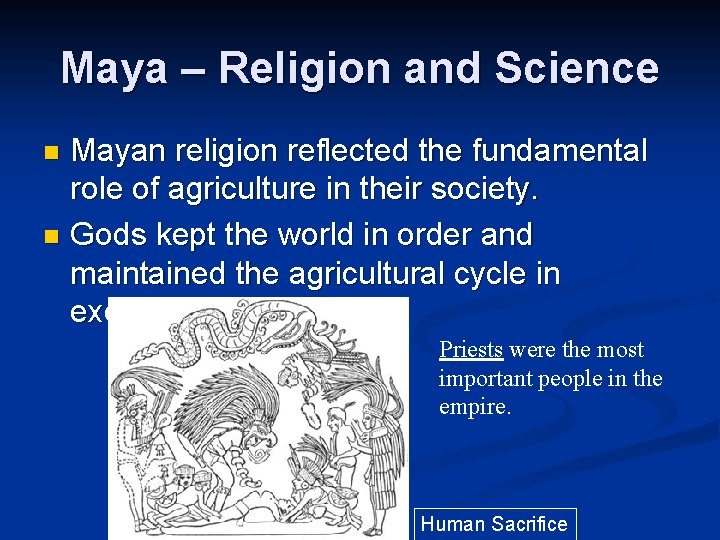
Maya – Religion and Science Mayan religion reflected the fundamental role of agriculture in their society. n Gods kept the world in order and maintained the agricultural cycle in exchange for sacrifices. n Priests were the most important people in the empire. Human Sacrifice
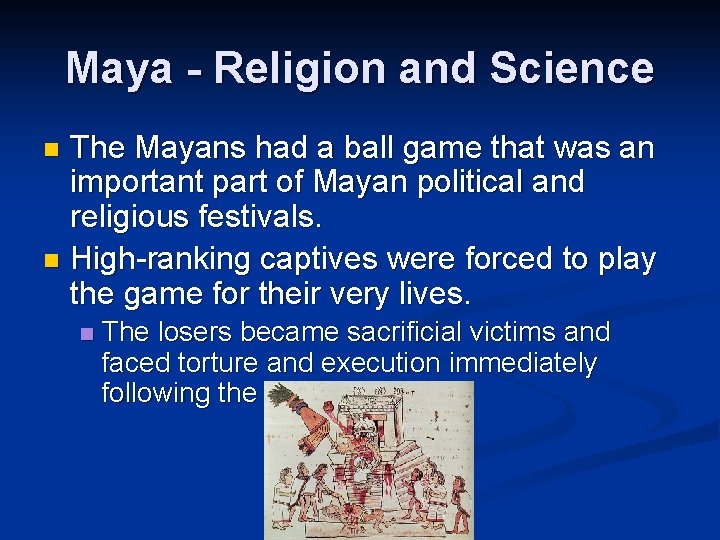
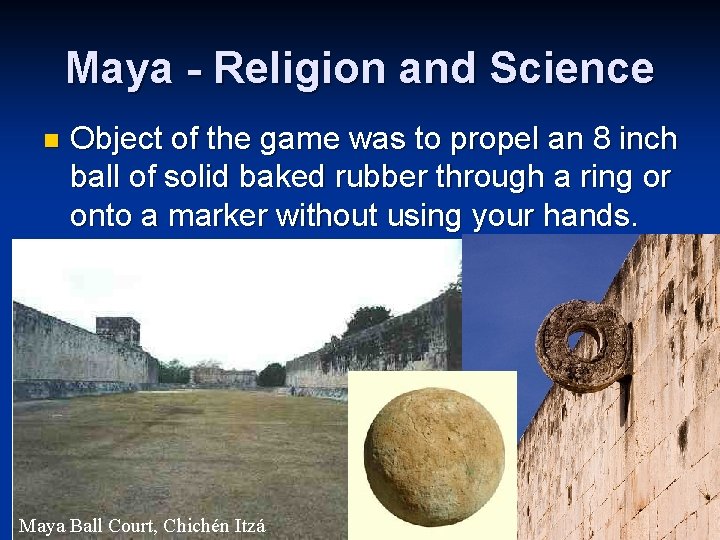
Maya - Religion and Science The Mayans had a ball game that was an important part of Mayan political and religious festivals. n High-ranking captives were forced to play the game for their very lives. n n The losers became sacrificial victims and faced torture and execution immediately following the match.
Maya - Religion and Science n Object of the game was to propel an 8 inch ball of solid baked rubber through a ring or onto a marker without using your hands. Maya Ball Court, Chichén Itzá
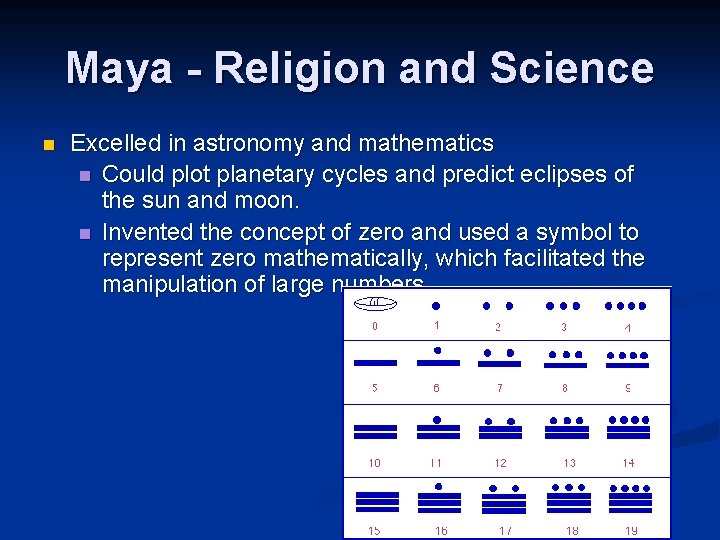
Maya - Religion and Science n Excelled in astronomy and mathematics n Could plot planetary cycles and predict eclipses of the sun and moon. n Invented the concept of zero and used a symbol to represent zero mathematically, which facilitated the manipulation of large numbers.
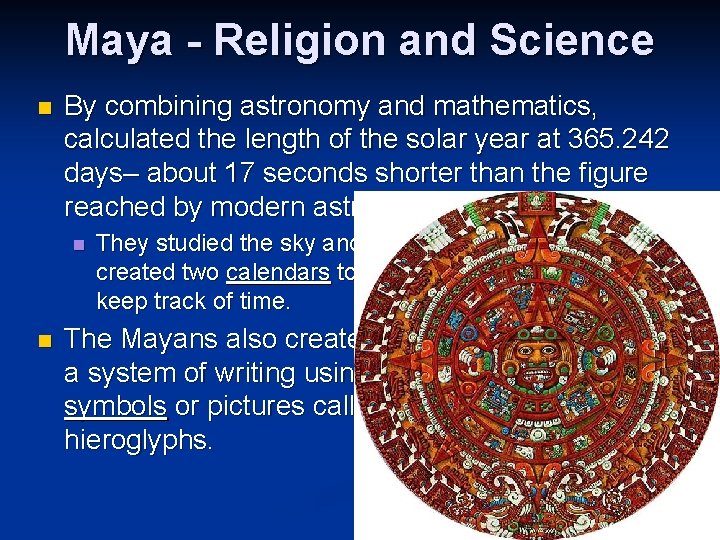
Maya - Religion and Science n By combining astronomy and mathematics, calculated the length of the solar year at 365. 242 days– about 17 seconds shorter than the figure reached by modern astronomers. n n They studied the sky and created two calendars to keep track of time. The Mayans also created a system of writing using symbols or pictures called hieroglyphs.
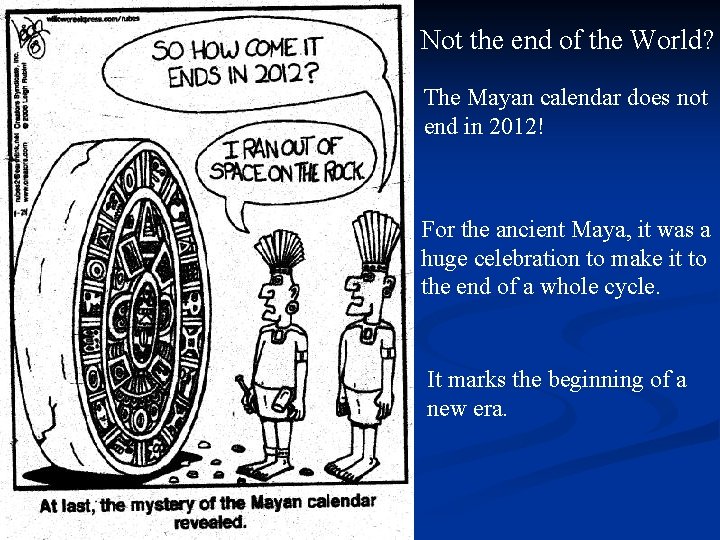
Not the end of the World? The Mayan calendar does not end in 2012! For the ancient Maya, it was a huge celebration to make it to the end of a whole cycle. It marks the beginning of a new era.
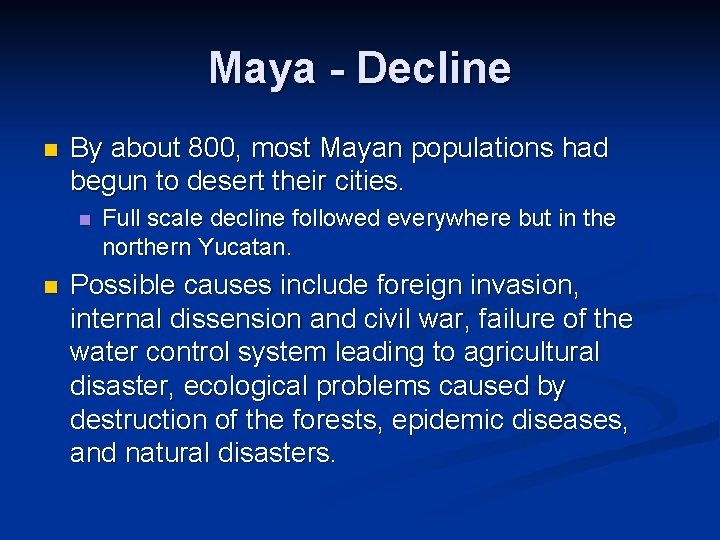
Maya - Decline n By about 800, most Mayan populations had begun to desert their cities. n n Full scale decline followed everywhere but in the northern Yucatan. Possible causes include foreign invasion, internal dissension and civil war, failure of the water control system leading to agricultural disaster, ecological problems caused by destruction of the forests, epidemic diseases, and natural disasters.
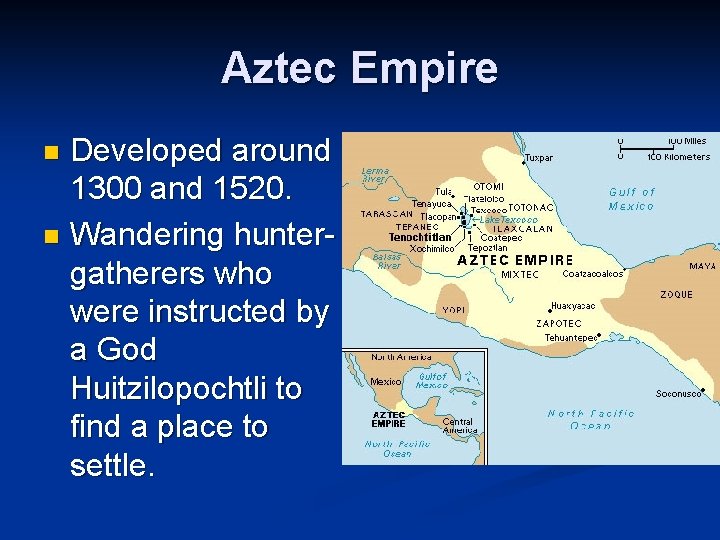
Aztec Empire Developed around 1300 and 1520. n Wandering huntergatherers who were instructed by a God Huitzilopochtli to find a place to settle. n
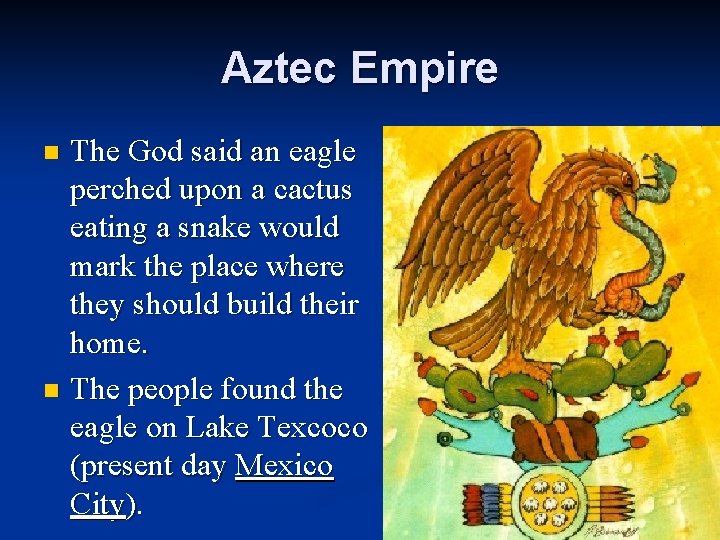
Aztec Empire The God said an eagle perched upon a cactus eating a snake would mark the place where they should build their home. n The people found the eagle on Lake Texcoco (present day Mexico City). n
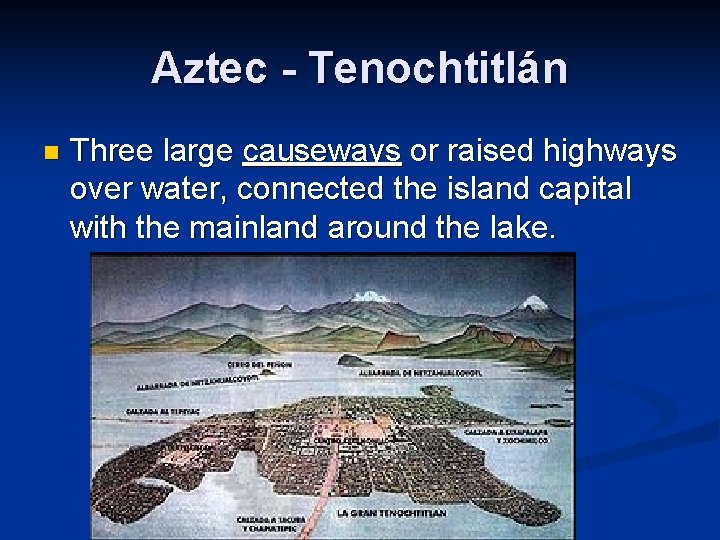
Aztec - Tenochtitlán n Three large causeways or raised highways over water, connected the island capital with the mainland around the lake.
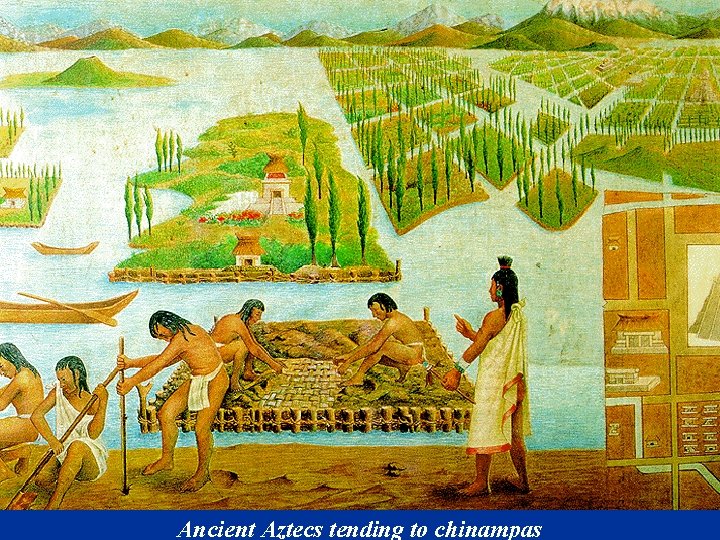
Ancient Aztecs tending to chinampas
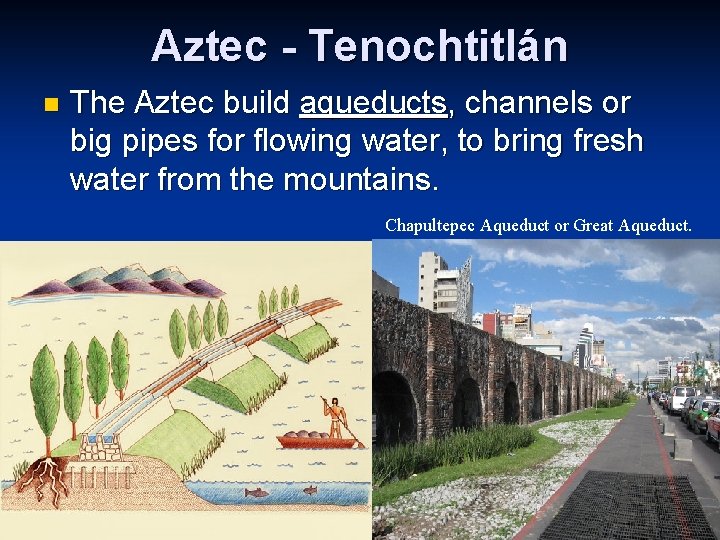
Aztec - Tenochtitlán n The Aztec build aqueducts, channels or big pipes for flowing water, to bring fresh water from the mountains. Chapultepec Aqueduct or Great Aqueduct.
Aztec – Conquest and Trade Conquered people became members of Aztec society and were forced to pay tribute. n Aztec society had a rigid social system with nobles at the top. All classes except for the nobles had to pay tribute. n The Aztec traveled great distances to trade. n
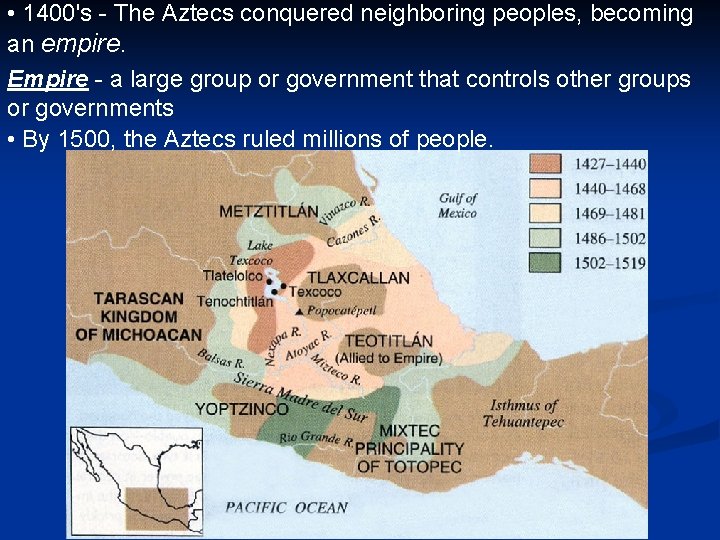
• 1400's - The Aztecs conquered neighboring peoples, becoming an empire. Empire - a large group or government that controls other groups or governments • By 1500, the Aztecs ruled millions of people.
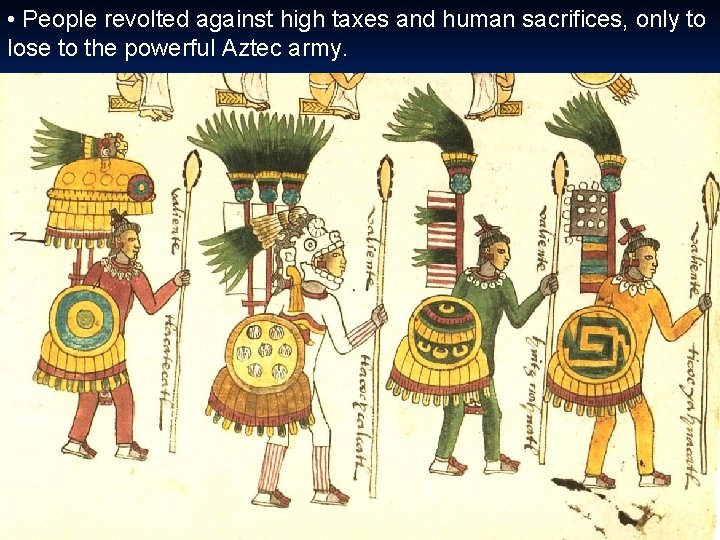
• People revolted against high taxes and human sacrifices, only to lose to the powerful Aztec army.
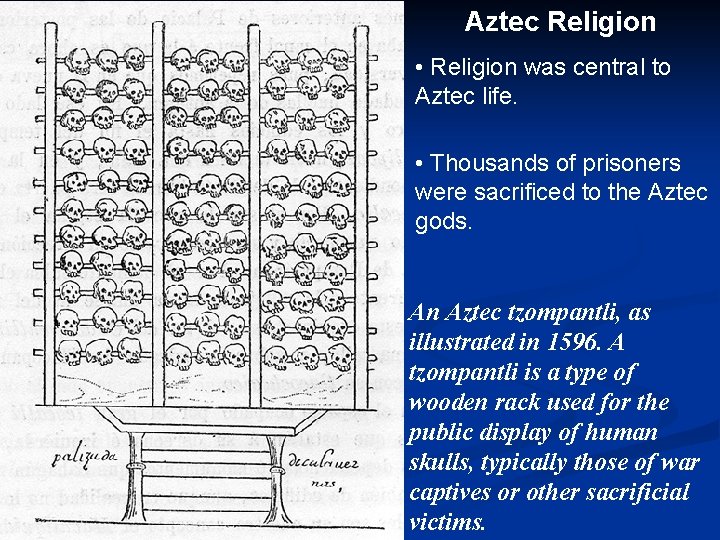
Aztec Religion • Religion was central to Aztec life. • Thousands of prisoners were sacrificed to the Aztec gods. An Aztec tzompantli, as illustrated in 1596. A tzompantli is a type of wooden rack used for the public display of human skulls, typically those of war captives or other sacrificial victims.
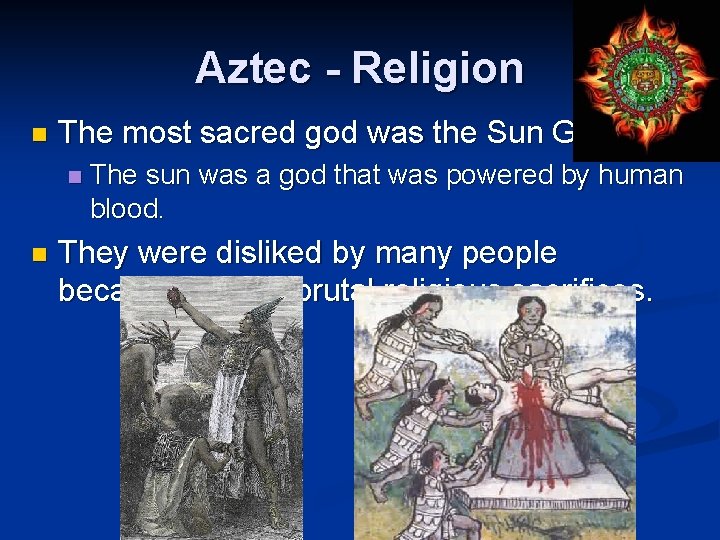
Aztec - Religion n The most sacred god was the Sun God. n n The sun was a god that was powered by human blood. They were disliked by many people because of their brutal religious sacrifices.
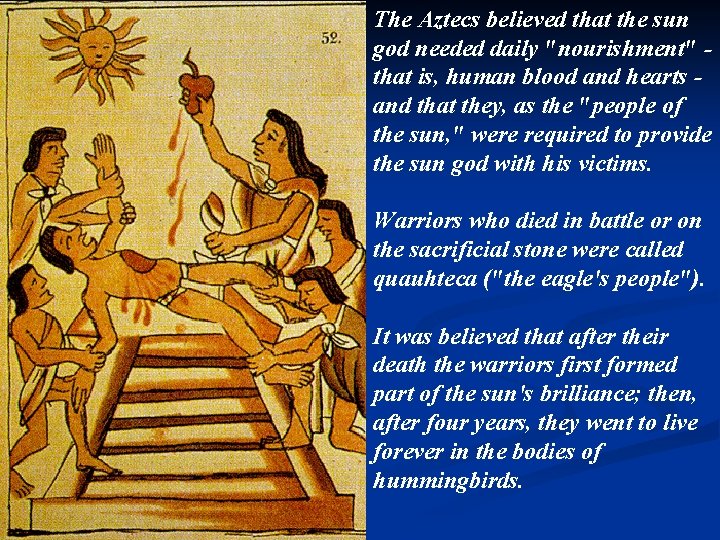
The Aztecs believed that the sun god needed daily "nourishment" that is, human blood and hearts and that they, as the "people of the sun, " were required to provide the sun god with his victims. Warriors who died in battle or on the sacrificial stone were called quauhteca ("the eagle's people"). It was believed that after their death the warriors first formed part of the sun's brilliance; then, after four years, they went to live forever in the bodies of hummingbirds.
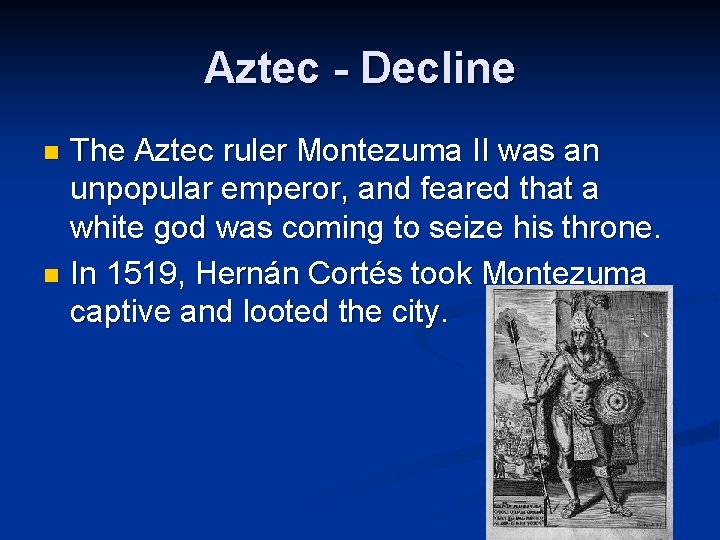
Aztec - Decline The Aztec ruler Montezuma II was an unpopular emperor, and feared that a white god was coming to seize his throne. n In 1519, Hernán Cortés took Montezuma captive and looted the city. n
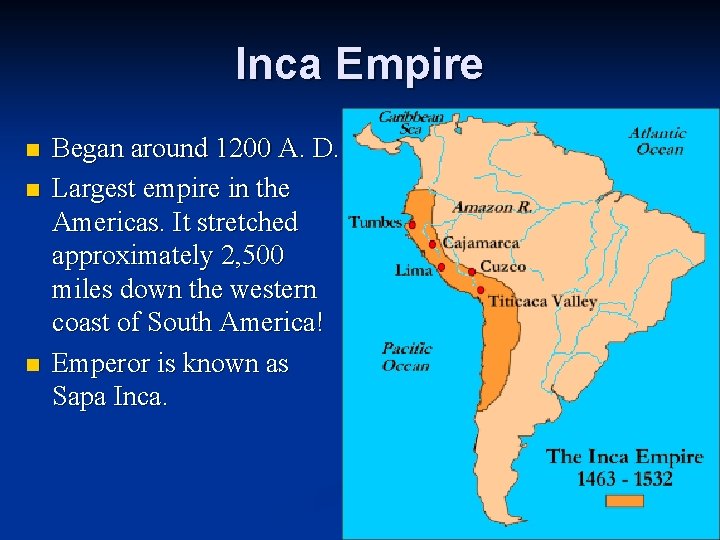
Inca Empire n n n Began around 1200 A. D. Largest empire in the Americas. It stretched approximately 2, 500 miles down the western coast of South America! Emperor is known as Sapa Inca.
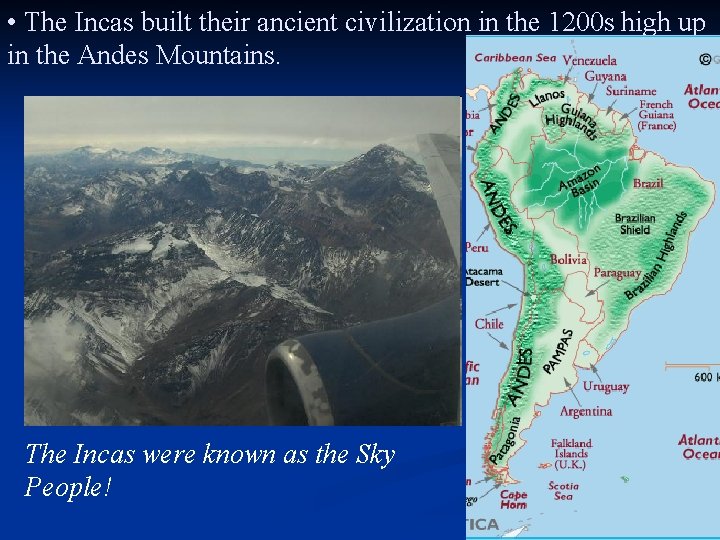
• The Incas built their ancient civilization in the 1200 s high up in the Andes Mountains. The Incas were known as the Sky People!
Inca - Conquest n Unlike the Aztec, the Inca conquered many of their subjects by peaceful means. They would send ambassadors to persuade the people to surrender. n Those who surrendered were often allowed to keep their own rulers. n Newly conquered people were required to learn Incan religion and language. n
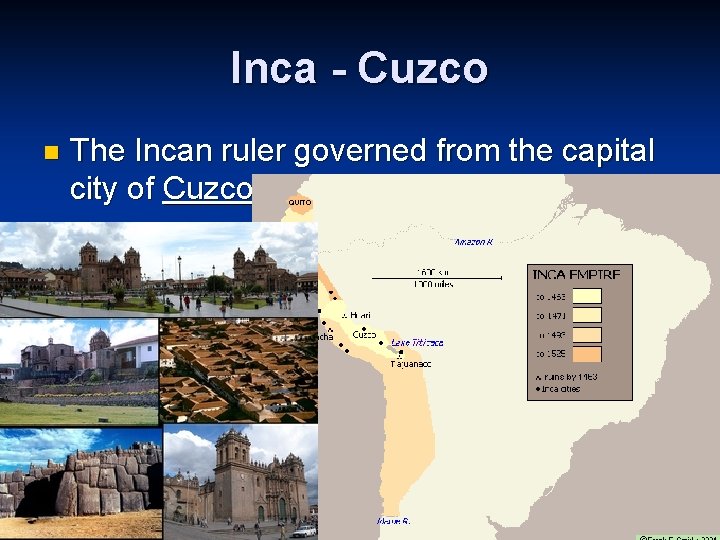
Inca - Cuzco n The Incan ruler governed from the capital city of Cuzco.
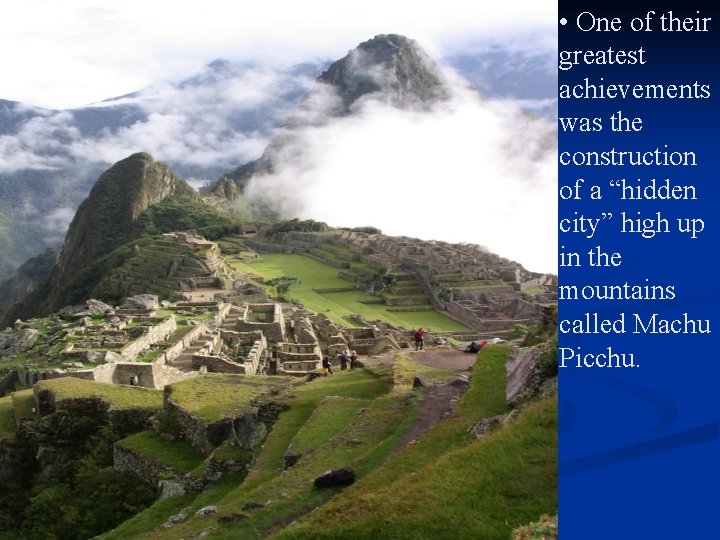
• One of their greatest achievements was the construction of a “hidden city” high up in the mountains called Machu Picchu.
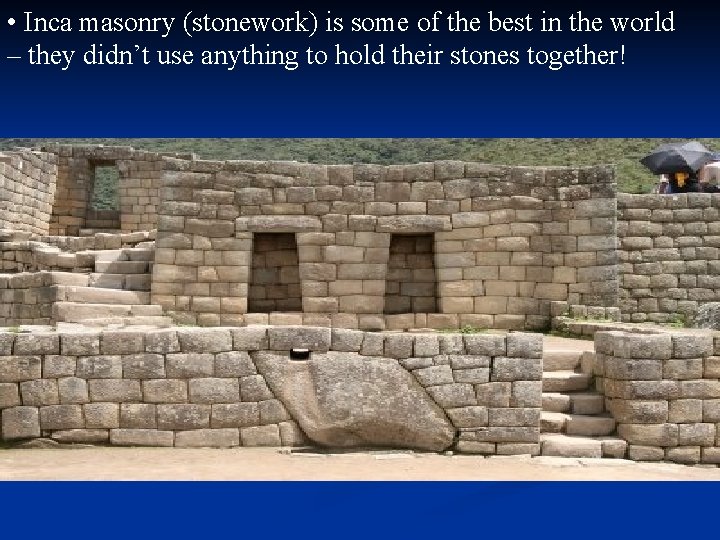
• Inca masonry (stonework) is some of the best in the world – they didn’t use anything to hold their stones together!
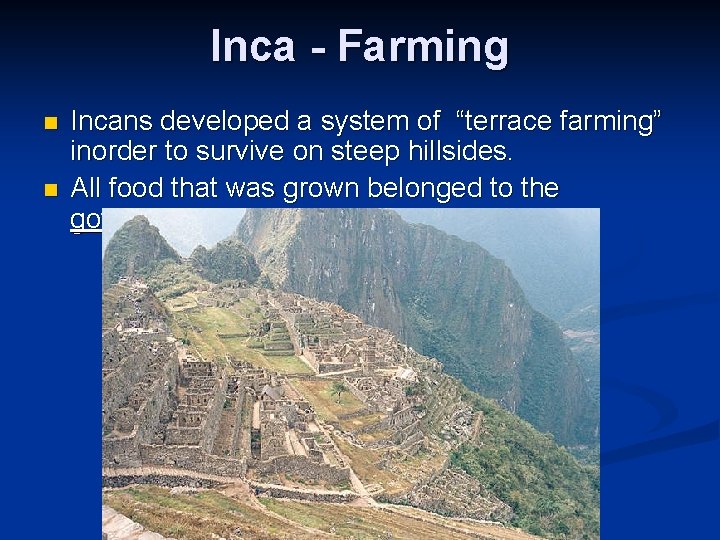
Inca - Farming n n Incans developed a system of “terrace farming” inorder to survive on steep hillsides. All food that was grown belonged to the government.
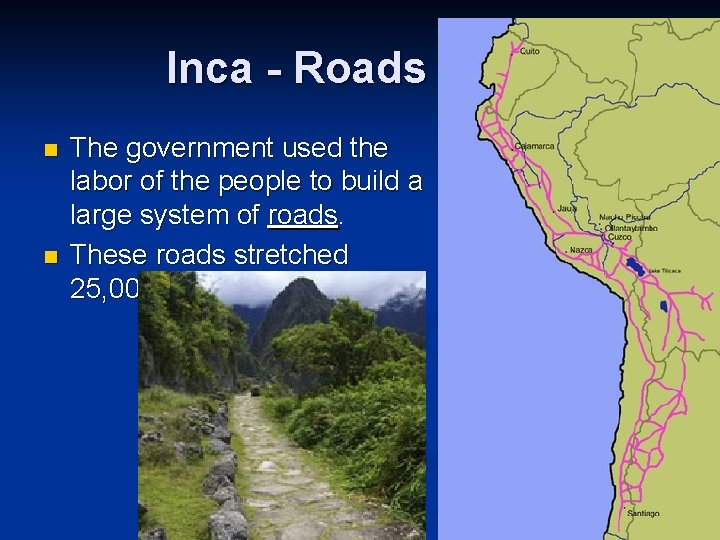
Inca - Roads n n The government used the labor of the people to build a large system of roads. These roads stretched 25, 000 km.
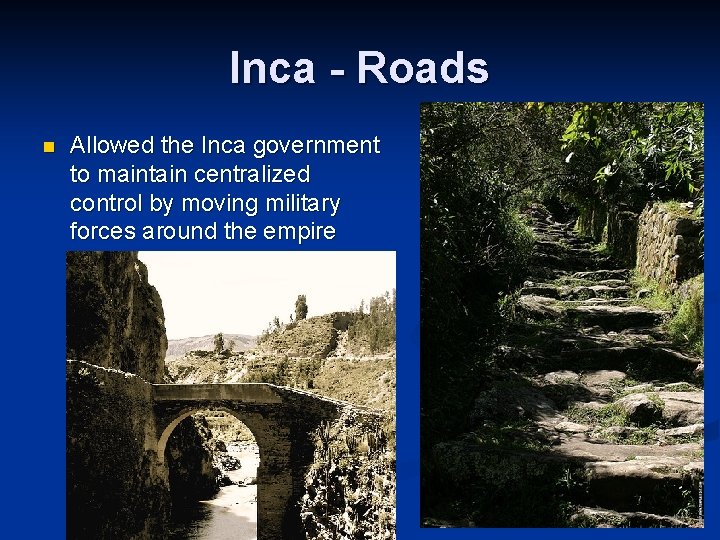
Inca - Roads n Allowed the Inca government to maintain centralized control by moving military forces around the empire quickly.
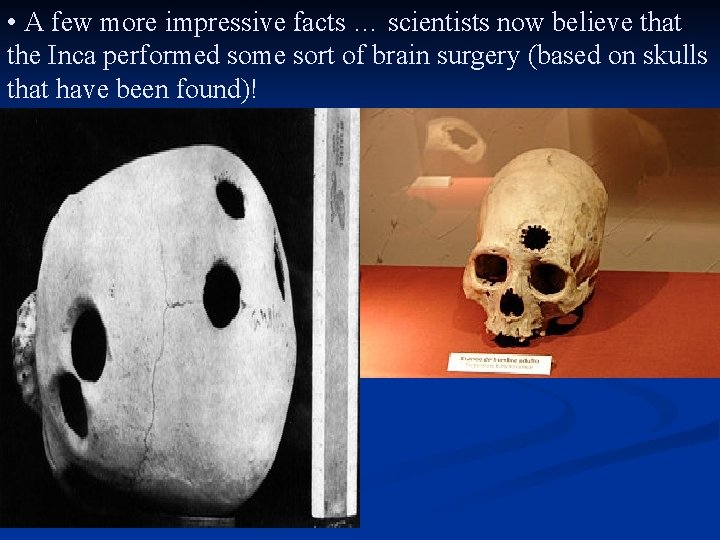
• A few more impressive facts … scientists now believe that the Inca performed some sort of brain surgery (based on skulls that have been found)!
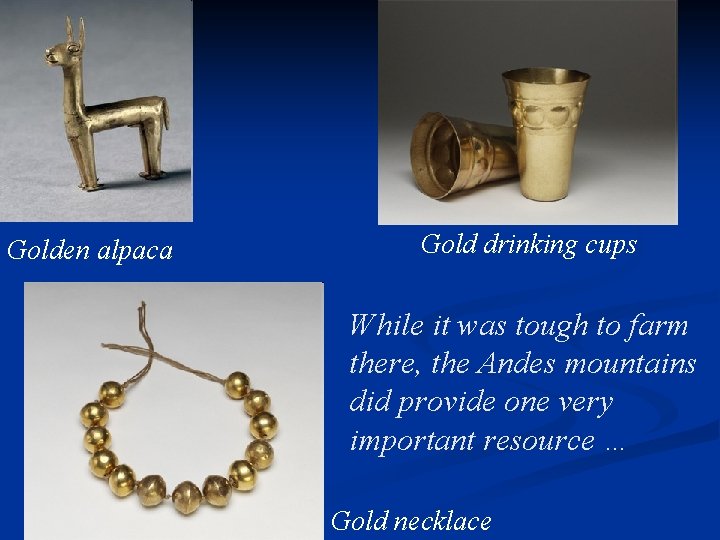
Golden alpaca Gold drinking cups While it was tough to farm there, the Andes mountains did provide one very important resource … Gold necklace
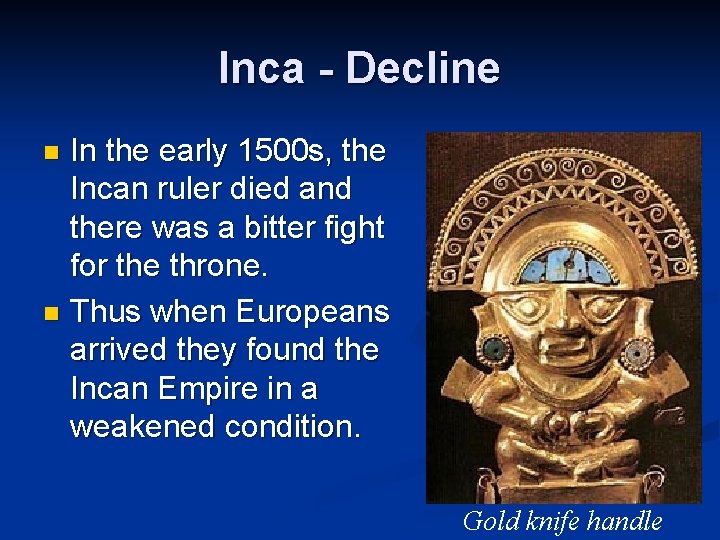
Inca - Decline In the early 1500 s, the Incan ruler died and there was a bitter fight for the throne. n Thus when Europeans arrived they found the Incan Empire in a weakened condition. n Gold knife handle