
EMOTIVE LANGUAGE STARTER RECAP Definition verb adjective noun
EMOTIVE LANGUAGE
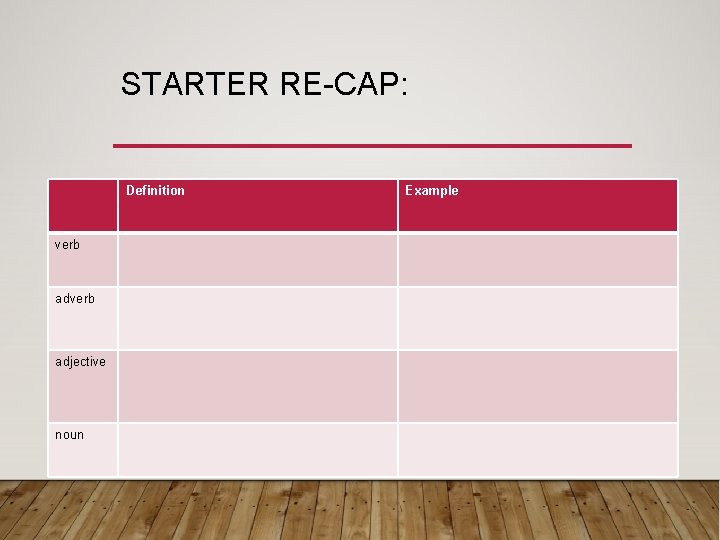
STARTER RE-CAP: Definition verb adjective noun Example

EMOTIVE WORDS These are used to make us feel something. It could be: • Pity / sympathy – “That poor boy!” • Anger – “That’s awful!” • Hope – “We might win!”
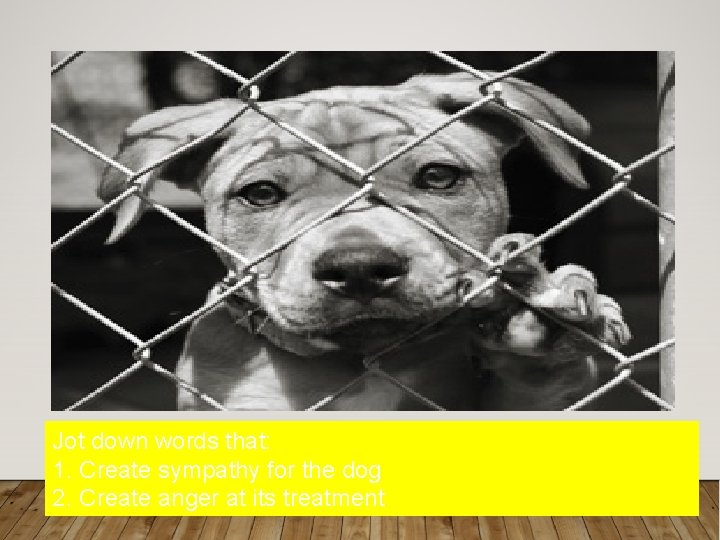
Jot down words that: 1. Create sympathy for the dog 2. Create anger at its treatment

BEING EMOTIVE… The easiest way to be emotive is to add adjectives to describe a noun, or adverbs to describe a verb: • The dog had been left by its owners • The dog had been left owners. neglectful innocent by its cruelly - Can you think of some alternatives for the adjectives innocent and neglectful and the adverb cruelly?
OR…. • A more subtle way to be emotive is to choose nouns or verbs that will influence the reader. • The dog had been left by its owners. • The puppy had been by its owners. abandoned
CAN YOU RE-WRITE PASSAGE TO ADD EMOTIVE LANGUAGE? Will you give £ 2 a month to help an animal? Take the example of Smitty. He’s a young dog, only 6 months old. He was found tied up in the garden, waiting for his owners to return. He had been waiting for two weeks. His owners had left him, with no food, and no water, while they went on holiday. When we took him in, Smitty was too weak to stand. This kind of treatment happens to too many animals. £ 2 a month allows us to look after dogs like Smitty, to give them food, water and love. Will you help us to look after these creatures?
PLENARY • Think of emotive synonyms for these common words: • Cruel • Wrong • Sad
- Slides: 8