
Emotions Emotions are signals that tell your mind
- Slides: 13
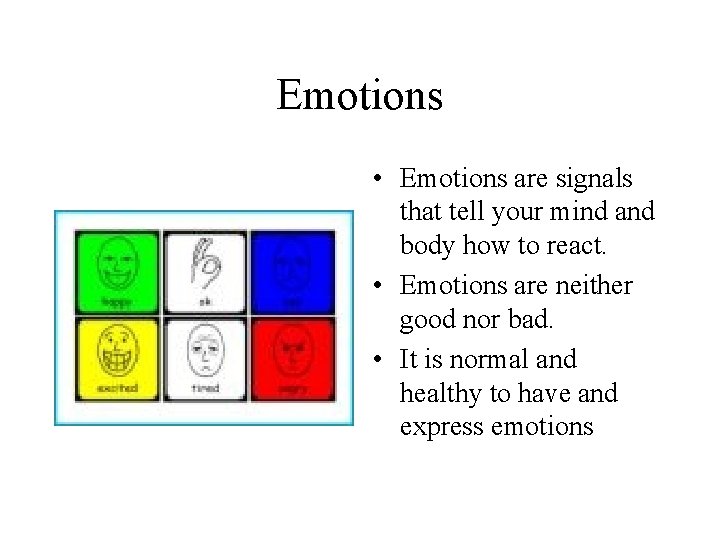
Emotions • Emotions are signals that tell your mind and body how to react. • Emotions are neither good nor bad. • It is normal and healthy to have and express emotions
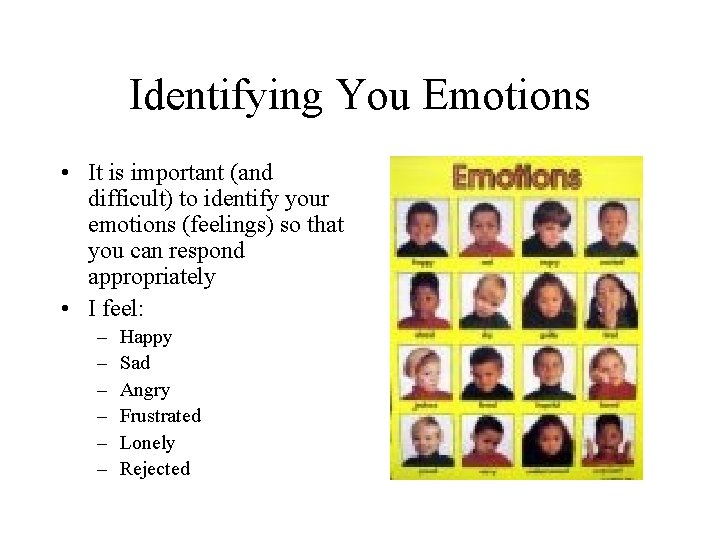
Identifying You Emotions • It is important (and difficult) to identify your emotions (feelings) so that you can respond appropriately • I feel: – – – Happy Sad Angry Frustrated Lonely Rejected
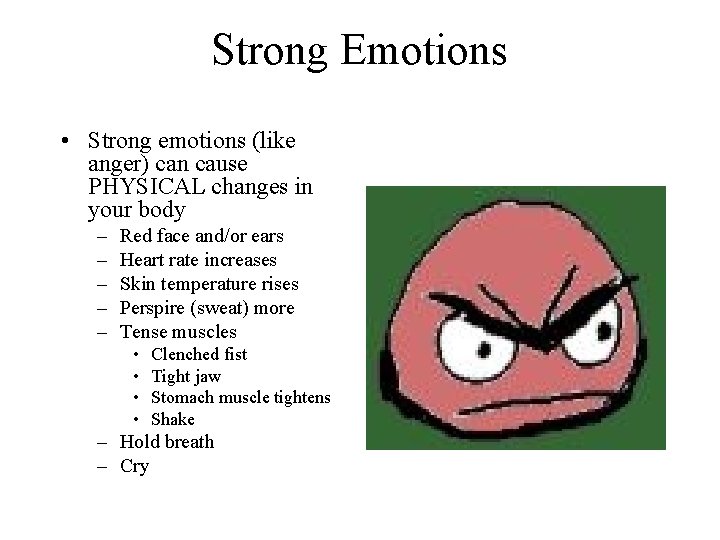
Strong Emotions • Strong emotions (like anger) can cause PHYSICAL changes in your body – – – Red face and/or ears Heart rate increases Skin temperature rises Perspire (sweat) more Tense muscles • • Clenched fist Tight jaw Stomach muscle tightens Shake – Hold breath – Cry
Anger • Anger is how people react to an insult, pain, rejection or frustration. • It can help you stand up for yourself in an unfair situation. However, it may cause problems if you don’t know how to express it appropriately.
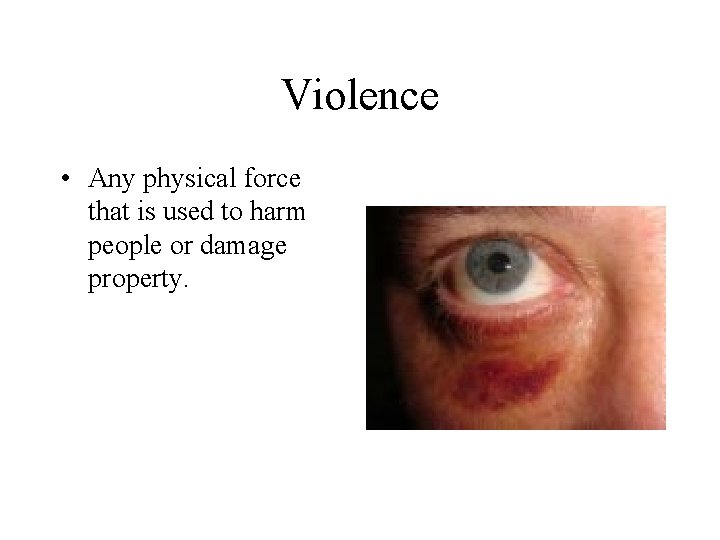
Violence • Any physical force that is used to harm people or damage property.
Factors That Lead To Violence • Violence is viewed as a reasonable option – Children as young as 2 begin copying behavior and communication patters that they are exposed to at home – Studies show that you will watch approximately 18, 000 hours of TV by the time you are seniors in high school • 83% of children under 6 use “screen media” for an average of 120 min/day • 61% of babies under 1 are put in front of a TV for an average of 80 min/day – TV violence is up 75% since 1998 – Sexual content has doubled
Factor That Lead To Violence Continued • • Feeling threatened: Fight or Flight Lack of respect Peer pressure Unmanaged anger: 4 C’s of Anger Management • Lack of self control
The 4 C’s Of Anger Management • CONTROL – Deep breathing, count to 10, walk away • CHANNEL – Exercise, listen to music, cry, write in a journal • COMMUNICATE – Talk about it • CONFRONT – Talk to the person that you are having issues with
Self Control • The ability to control your behavior REGARDLESS of what you are thinking or feeling
How Can You Avoid A Fight? • • Treat others with respect Recognize the signs Keep calm Think past the situation (“Big Picture”) Walk away Give the person a way out Tell an adult Agree to disagree
What Is So Bad About Fighting? • Most often it does not solve the problem and creates new ones • If blood is involved there is a risk of contracting a blood-borne disease (HIV, Hepatitis) • You may get hurt • You may be suspended, transferred (OT) or expelled • There may be legal action taken against you • You may disappoint your family • A counter-attack may occur
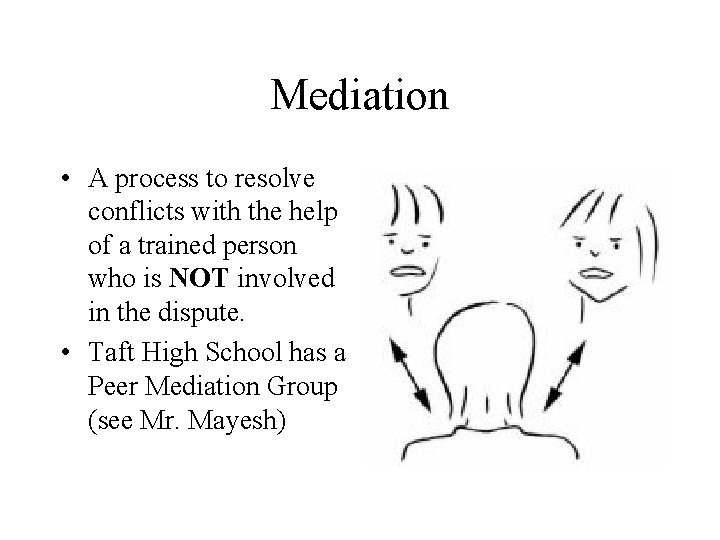
Mediation • A process to resolve conflicts with the help of a trained person who is NOT involved in the dispute. • Taft High School has a Peer Mediation Group (see Mr. Mayesh)
Signs Of Maturity • • Delay personal gratification Self-control Walking your talk Having empathy for others