
Emotions Definition Feelings that generally have both physiological
Emotions

Definition � Feelings that generally have both physiological and cognitive elements and that influence behavior.
� Components of emotions: � Emotion involves (1) a subjective conscious experience (the cognitive component) accompanied by (2) bodily arousal (the physiological component) and by (3) characteristic overt expressions (the behavioral component).
James Lange theory � The belief that emotional experience is a reaction to bodily events occurring as a result of an external situation
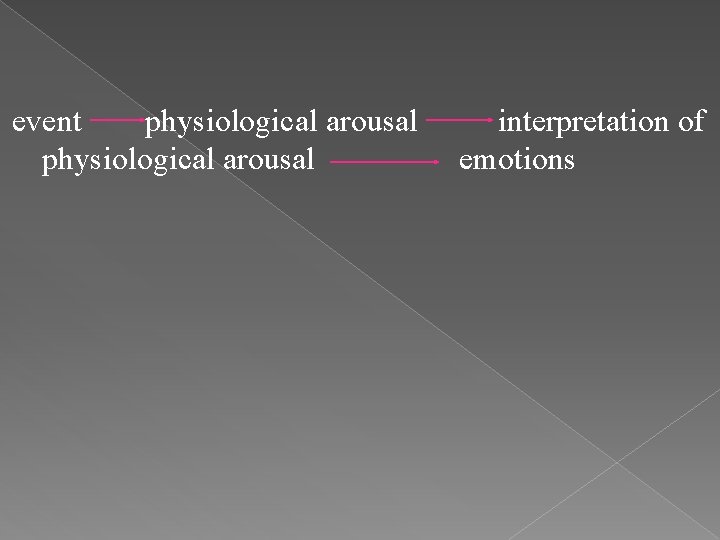
event physiological arousal interpretation of emotions
Example � event = you are walking down a dark alley late at night. You hear footsteps behind you. � Physiological arousal = you begin to tremble, your heart beats faster and your breathing deepens � Interpretation = you notice these physiological changes. � Emotions = fearful
Criticism � It is against common sense because we assume that our pulse is racing because we are fearful, James and Lange argued that we are fearful because our pulse is racing. � People experiencing very different emotions, such as fear, joy, and anger, share similar physiological arousal.
Cannon-Bard theory � The belief that both physiological arousal and emotional experience are produced simultaneously.
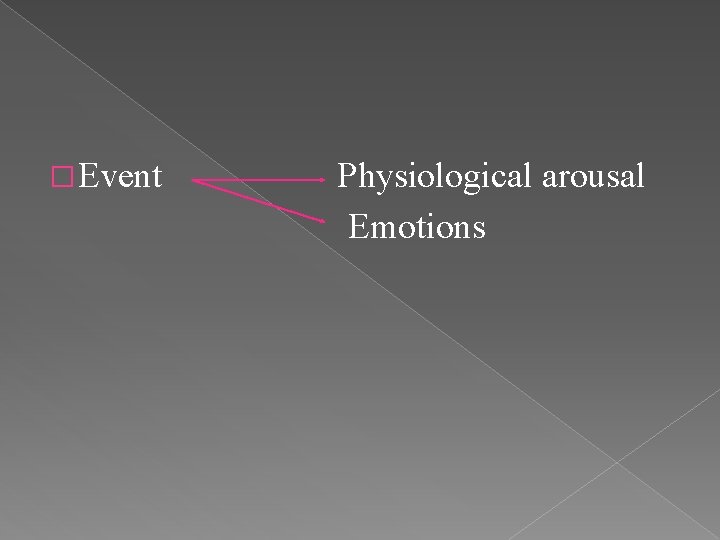
� Event Physiological arousal Emotions
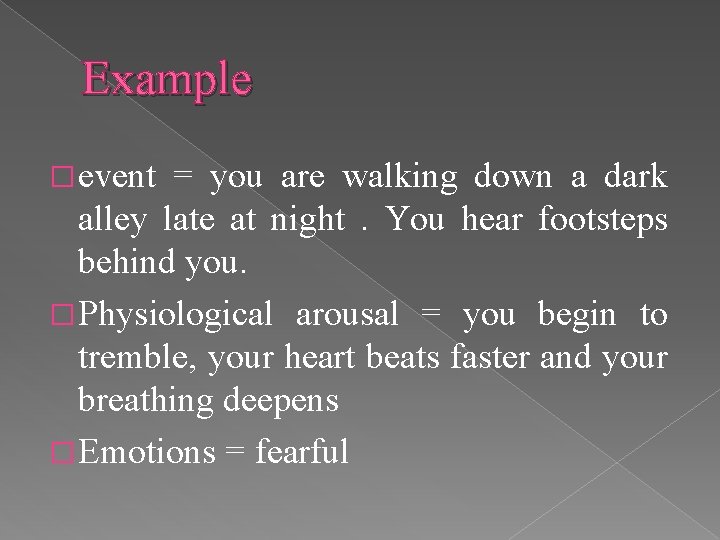
Example � event = you are walking down a dark alley late at night. You hear footsteps behind you. � Physiological arousal = you begin to tremble, your heart beats faster and your breathing deepens � Emotions = fearful
Schachter- Singer theory � The belief that an event causes physiological arousal first which leads to interpretation of the reason for this arousal and then we are able to experience emotion. OR � This theory proposed that when you experience visceral arousal, you search your environment for an explanation.
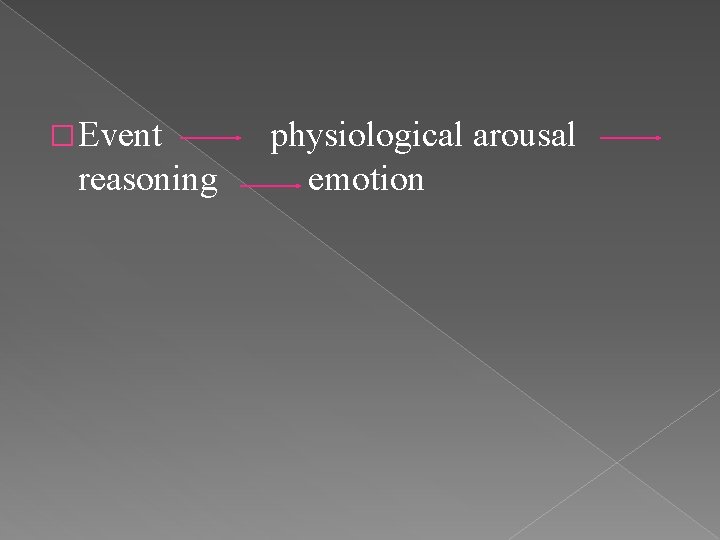
� Event reasoning physiological arousal emotion
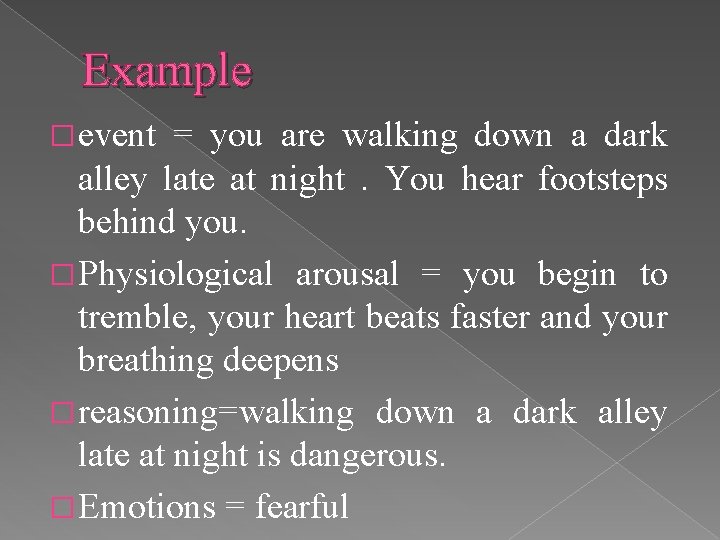
Example � event = you are walking down a dark alley late at night. You hear footsteps behind you. � Physiological arousal = you begin to tremble, your heart beats faster and your breathing deepens � reasoning=walking down a dark alley late at night is dangerous. � Emotions = fearful
Lazarus theory � It states that interpretation must come before any emotion or physiological arousal. � In other words, you must first think about your situation before you can experience an emotion.
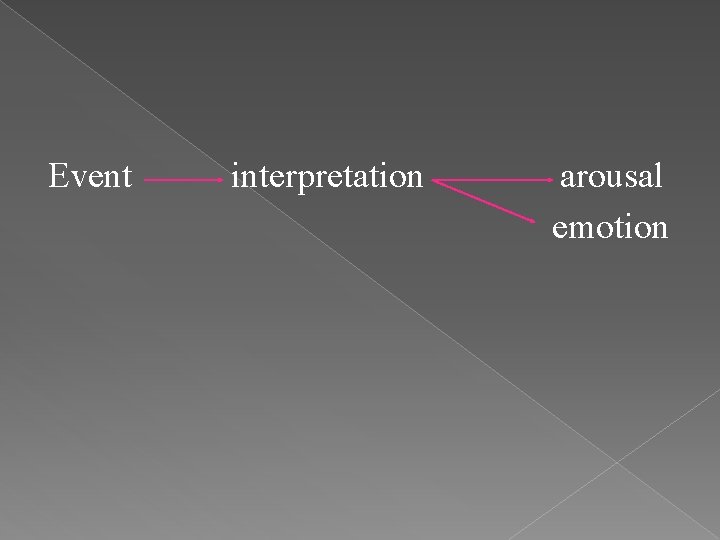
Event interpretation arousal emotion
Example � event = you are walking down a dark alley late at night. You hear footsteps behind you. � Interpretation =walking down a dark alley late at night is dangerous. � Physiological arousal = you begin to tremble, your heart beats faster and your breathing deepens � Emotions = fearful
Facial feedback theory � According to this theory, changes in our facial muscles send message to the brain and then we experience emotion.
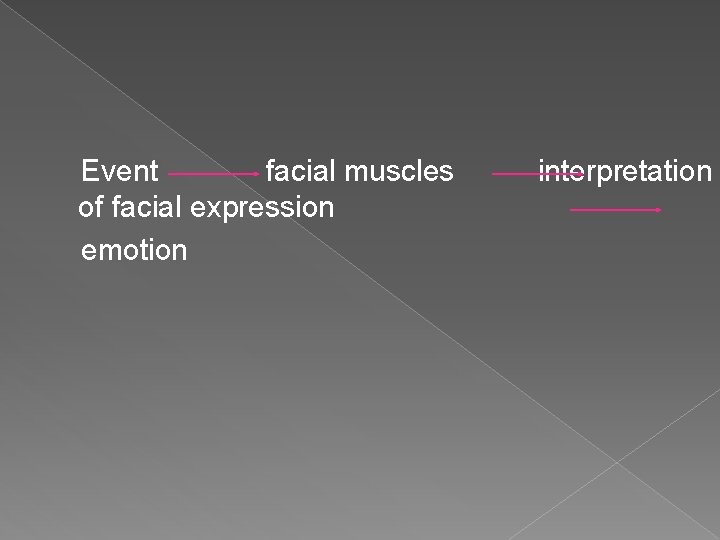
Event facial muscles of facial expression emotion interpretation
Example � event = you are walking down a dark alley late at night. You hear footsteps behind you. � Facial changes = teeth clench, eyes widen � Interpretation = interpretation of facial changes � Emotions = fearful
- Slides: 19