
Emotions Chapter 4 Discussion How would you describe

Emotions Chapter 4
Discussion • How would you describe or define “loud” to someone who is deaf? • How would you describe “emotions” to an alien with no knowledge of human behavior? • Are “emotions” and “feelings” the same thing?
Activity: How Would You Feel? 1. In groups, generate 4 -5 situations in which you or your friends get emotional 2. Discuss what emotions are felt in each situation and note how different people feel in each situation. • • How do these emotions manifest themselves physically and non-verbally? How do labels influence emotion? How/Why are some emotions more intense than others? Is it easy or hard to verbally express emotions in these situations?
How Many Emotions Are There? • Create a list of all the emotions humans can experience, then reduce that to a list of “core” emotions. How many are there? • for example: �anxious is a lesser degree of fear �ecstatic is a greater degree of happy
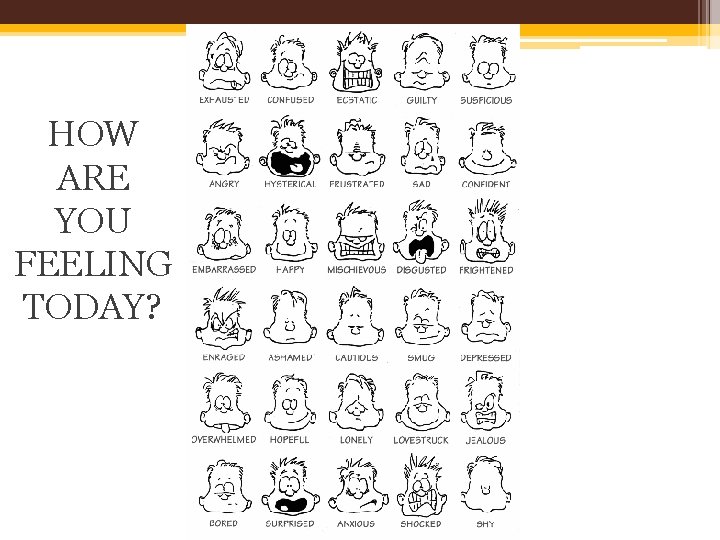
HOW ARE YOU FEELING TODAY?
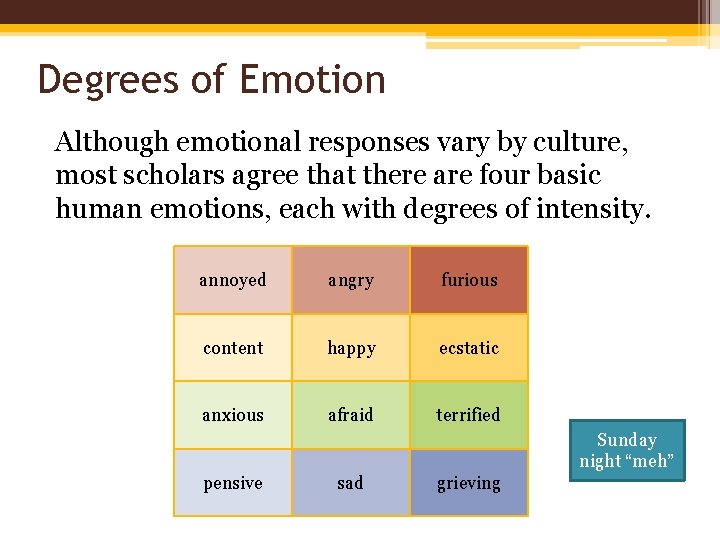
Degrees of Emotion Although emotional responses vary by culture, most scholars agree that there are four basic human emotions, each with degrees of intensity. annoyed angry furious content happy ecstatic anxious afraid terrified Sunday night “meh” pensive sad grieving
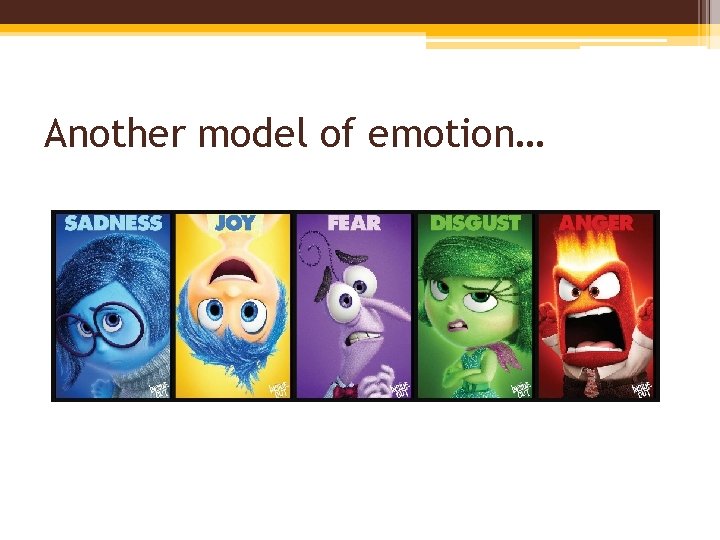
Another model of emotion…
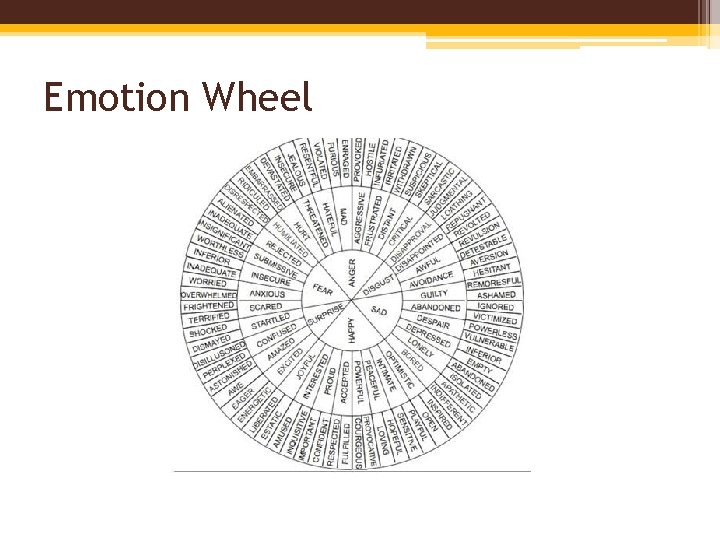
Emotion Wheel
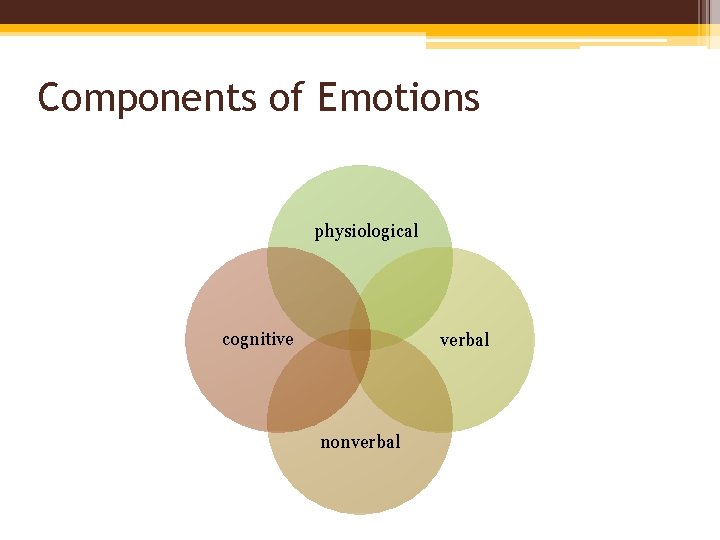
Components of Emotions physiological cognitive verbal nonverbal
• Physiological factors are bodily changes �Increased heart rate �Increased blood pressure �Increased adrenaline �Dilation of pupils �Churning stomach �Dry mouth �Blushing �Sweating
• Nonverbal factors are outward signs: �Facial expressions �Eye contact �Posture �Gestures �Fidgeting �Vocal tone, rate, and pitch (paralanguage)

• Cognitive Interpretations are the mental label or designations for emotional states �Physiological factors can be identical (fright, joy, and anger all cause elevated blood pressure and crying). �The emotional experience comes primarily from the label we give to the situation.
• Verbal expression is important to clarify emotional states �Being able to talk about emotion is necessary for personal wellness and social health. �People who don’t talk about emotions constructively suffer from social isolation, anxiety, depression, and misdirected aggression �The way parents talk about and express emotion has a powerful effect on the child’s development
Graded Activity 4. 1: The Components of Emotion
Influences on Emotional Expression • • • Personality Culture Gender Social Conventions Fear of Self-Disclosure Emotional Contagion �The process by which emotions are transferred from one person to another �Volkswagen Commercial - Get In. Get Happy. • Discussion: which factor do you believe has the greatest influence on emotion?
Emotions and Music • What emotional response do/can you have to music? • With "Someone Like You, " Adele and Mr. Wilson not only crafted a perfect tear-jerker but also stumbled upon a formula for commercial success: Unleash the tears and chills with small surprises, a smoky voice and soulful lyrics, and then sit back and let the dopamine keep us coming back for more. Wall Street Journal 11 Feb. 2012 ▫ SNL - Someone Like You ▫ NPR - The Ballad of the Tearful
Emotion and Music ØListen to each clip. What does the music make you feel? • http: //www. youtube. com/watch? v=e. HFA_w. EK_00 • http: //www. youtube. com/watch? v=4 LZc. Mv 0 H 1 b. I • https: //www. youtube. com/watch? v=9 bu. IAYnp. UNM • https: //www. youtube. com/watch? v=_n. H 1 r. CXv 36 A • https: //www. youtube. com/watch? v=5 vs. Wps. Sd. Aao • https: //www. youtube. com/watch? v=b 9 Gil. Knpiv 0
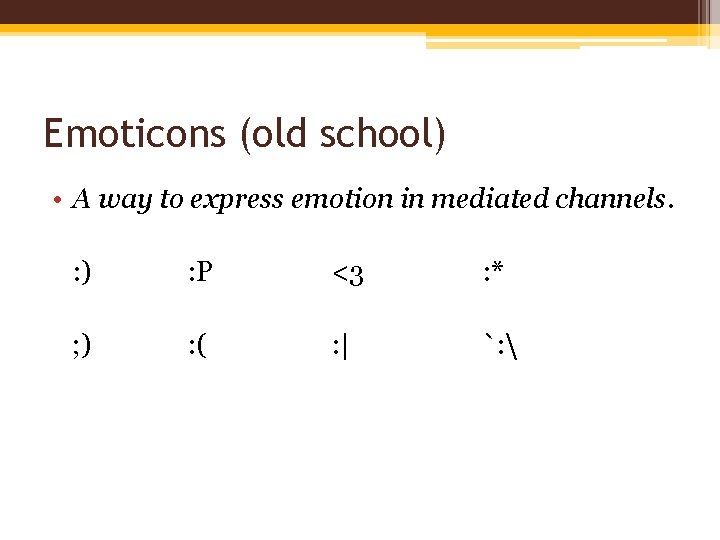
Emoticons (old school) • A way to express emotion in mediated channels. : ) : P <3 : * ; ) : ( : | `:
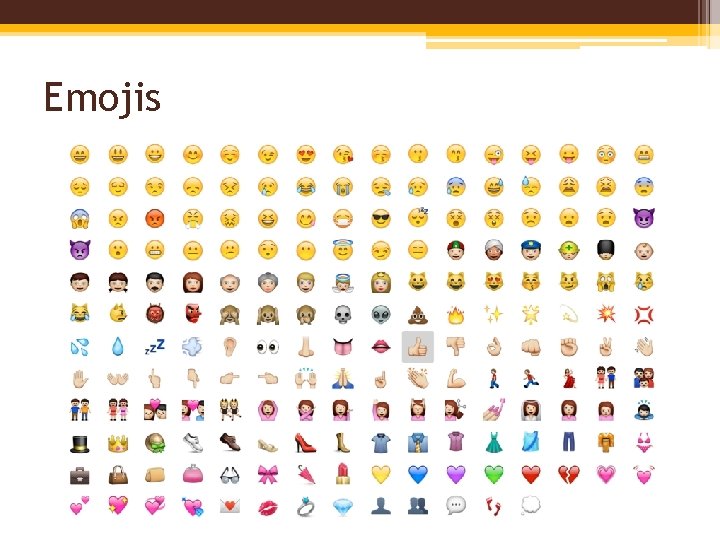
Emojis
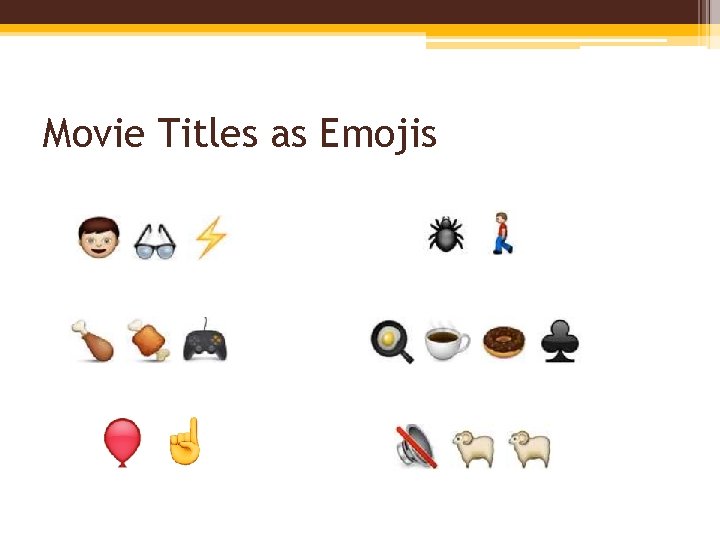
Movie Titles as Emojis
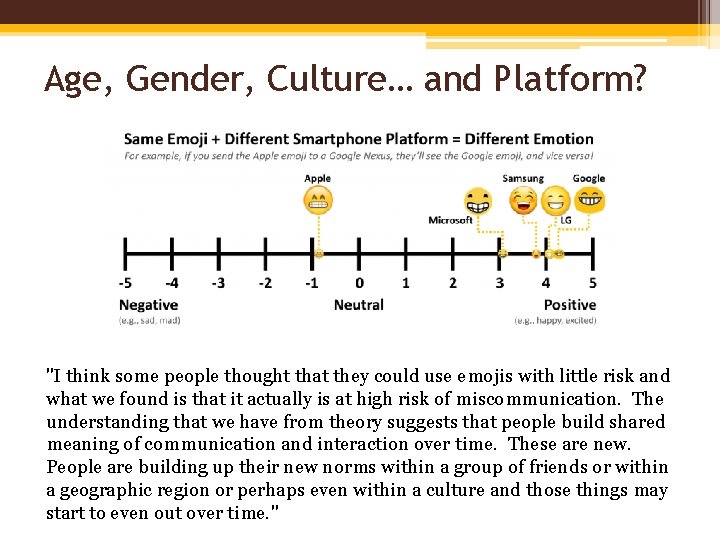
Age, Gender, Culture… and Platform? "I think some people thought that they could use emojis with little risk and what we found is that it actually is at high risk of miscommunication. The understanding that we have from theory suggests that people build shared meaning of communication and interaction over time. These are new. People are building up their new norms within a group of friends or within a geographic region or perhaps even within a culture and those things may start to even out over time. "

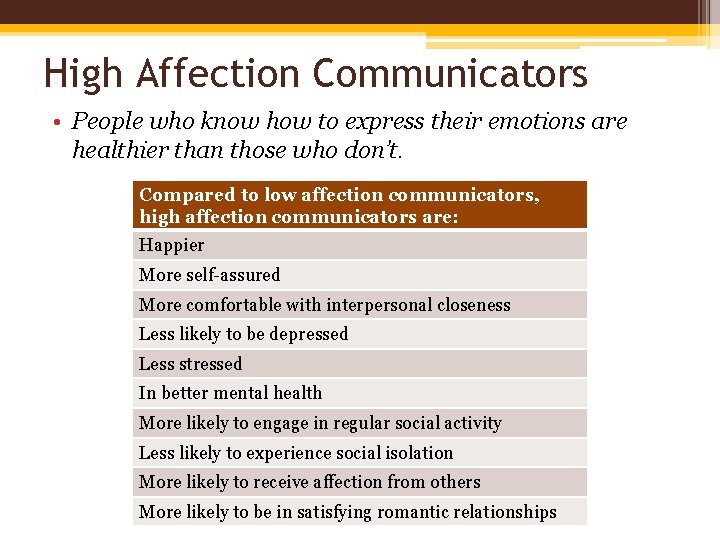
High Affection Communicators • People who know how to express their emotions are healthier than those who don’t. Compared to low affection communicators, high affection communicators are: Happier More self-assured More comfortable with interpersonal closeness Less likely to be depressed Less stressed In better mental health More likely to engage in regular social activity Less likely to experience social isolation More likely to receive affection from others More likely to be in satisfying romantic relationships
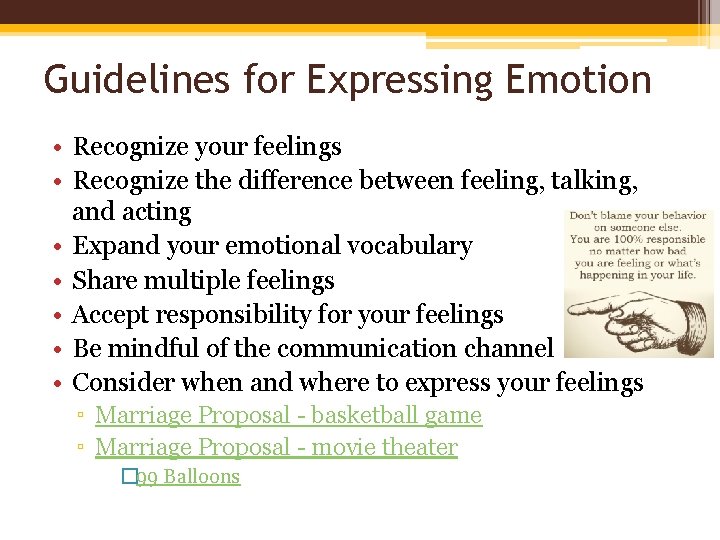
Guidelines for Expressing Emotion • Recognize your feelings • Recognize the difference between feeling, talking, and acting • Expand your emotional vocabulary • Share multiple feelings • Accept responsibility for your feelings • Be mindful of the communication channel • Consider when and where to express your feelings ▫ Marriage Proposal - basketball game ▫ Marriage Proposal - movie theater � 99 Balloons

Activity 4. 3: Stating Emotions Effectively
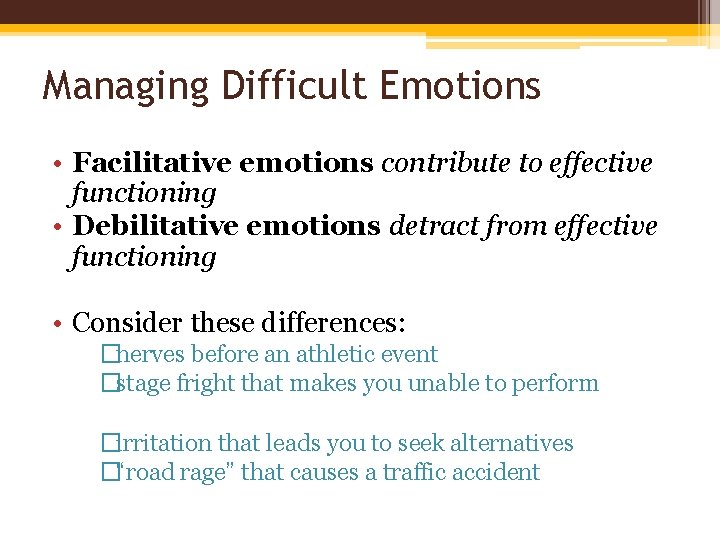
Managing Difficult Emotions • Facilitative emotions contribute to effective functioning • Debilitative emotions detract from effective functioning • Consider these differences: �nerves before an athletic event �stage fright that makes you unable to perform �irritation that leads you to seek alternatives �“road rage” that causes a traffic accident
Emotion Labor • Situations where managing and suppressing emotions is appropriate and necessary. Discuss: What types of jobs would require aptitude in emotion labor?
Sources of Debilitative Emotions • Physiology �“Fight or flight”; inherited biological traits • Emotional memory �Your father was killed by a Oscar Meyer delivery truck; you now get tense every time you smell hot dogs • Self-talk �Determining feelings by interpreting an event �What you think has a profound effect on how you feel
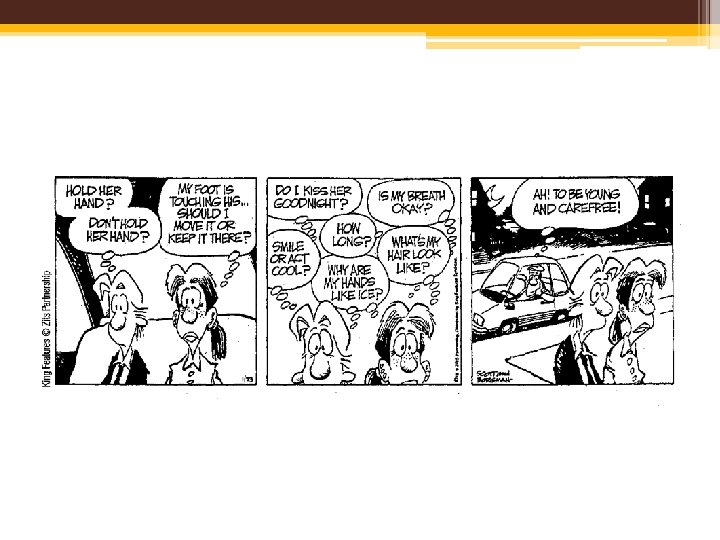
Minimizing Debilitative Emotions • Monitor your emotional reactions • Note the activating event • Record your self-talk • Reappraise your irrational beliefs
Handout • 15 Things Emotionally Strong People Never Do

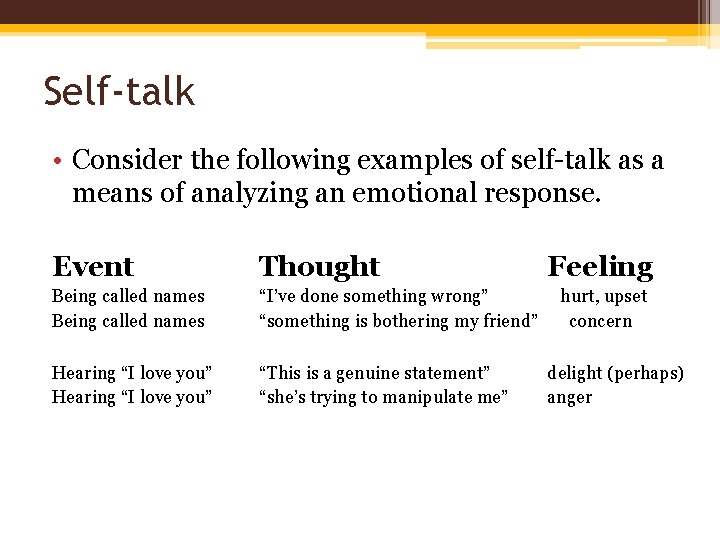
Self-talk • Consider the following examples of self-talk as a means of analyzing an emotional response. Event Thought Being called names “I’ve done something wrong” “something is bothering my friend” Hearing “I love you” “This is a genuine statement” “she’s trying to manipulate me” Feeling hurt, upset concern delight (perhaps) anger
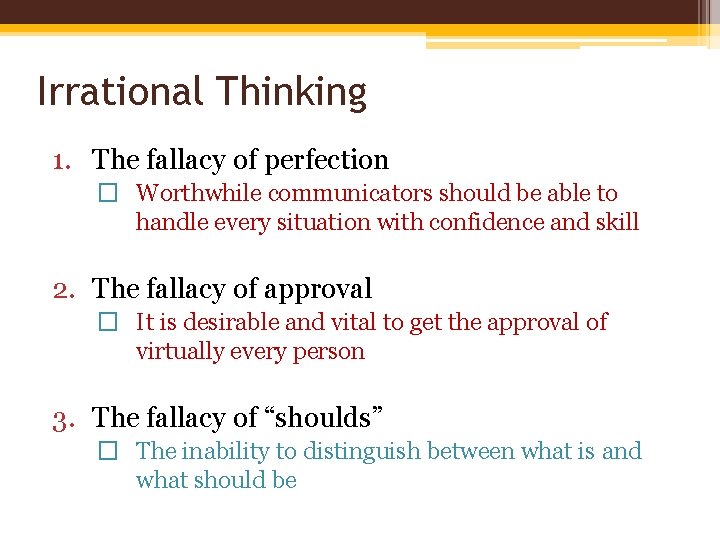
Irrational Thinking 1. The fallacy of perfection � Worthwhile communicators should be able to handle every situation with confidence and skill 2. The fallacy of approval � It is desirable and vital to get the approval of virtually every person 3. The fallacy of “shoulds” � The inability to distinguish between what is and what should be
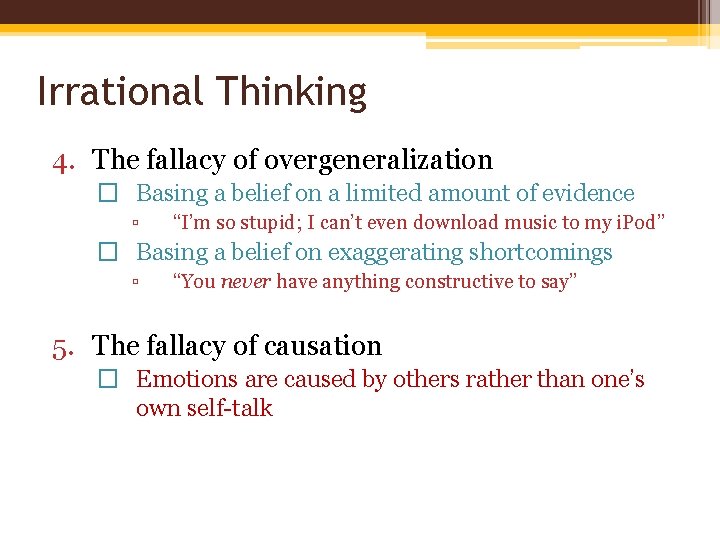
Irrational Thinking 4. The fallacy of overgeneralization � Basing a belief on a limited amount of evidence ▫ “I’m so stupid; I can’t even download music to my i. Pod” � Basing a belief on exaggerating shortcomings ▫ “You never have anything constructive to say” 5. The fallacy of causation � Emotions are caused by others rather than one’s own self-talk
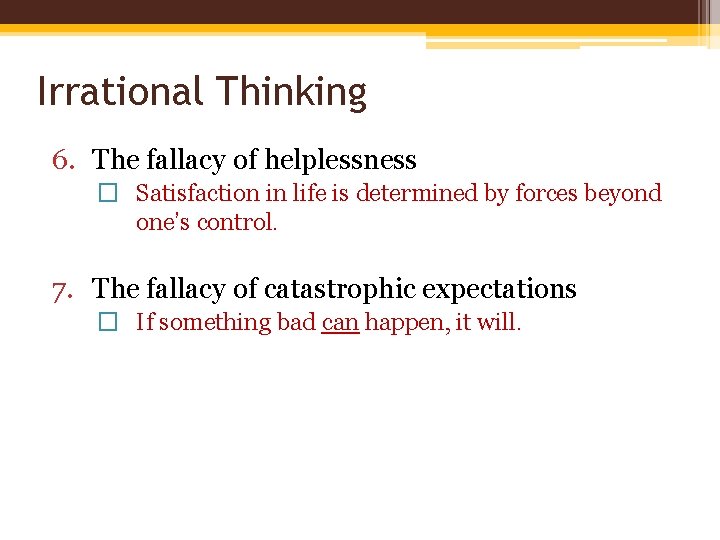
Irrational Thinking 6. The fallacy of helplessness � Satisfaction in life is determined by forces beyond one’s control. 7. The fallacy of catastrophic expectations � If something bad can happen, it will.
Graded Activity 4. 4: Self-talk
Activity 4. 6: Mediated Messages – Expressing Emotion
Activity 4. 7: Reappraisal (homework)
Activity 4. 8: Assessing Non-verbal Reactions (homework)
Reward Challenge • To review for the chapter quiz, each tribe will write 5 -7 questions. • On the day of the quiz, I will alternate asking questions of each tribe. The tribe with the most correct answers will win a reward, which will give that tribe an advantage on the next immunity challenge.
- Slides: 43