
EMOTIONAL RESILIENCE THE ANXIOUS STUDENT Part One Supported
- Slides: 26
EMOTIONAL RESILIENCE & THE ANXIOUS STUDENT Part One Supported by the Northwest Ohio Clinical Education Consortium Deborah George, PT, Ph. D, MS, DCE Allison Durham, PT, DPT, RN, DCE Karyn Westrick, MA, LPCC-S
Objective Demonstrate appreciation for the need to address student mental health issues, in particular anxiety. Explain common behaviors exhibited by a student with anxiety. Explain potential solutions to deal with the anxious situation, as recommended by the mental health counselor Develop skill with providing a supportive approach to mentoring students during clinical education.
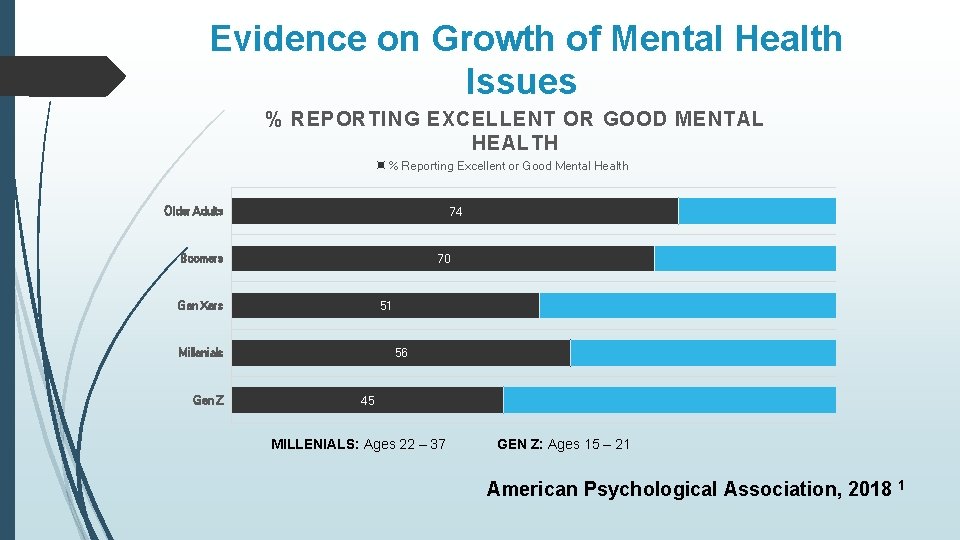
Evidence on Growth of Mental Health Issues % REPORTING EXCELLENT OR GOOD MENTAL HEALTH % Reporting Excellent or Good Mental Health 74 Older Adults 70 Boomers 51 Gen Xers 56 Millenials Gen Z 45 MILLENIALS: Ages 22 – 37 GEN Z: Ages 15 – 21 American Psychological Association, 2018 1
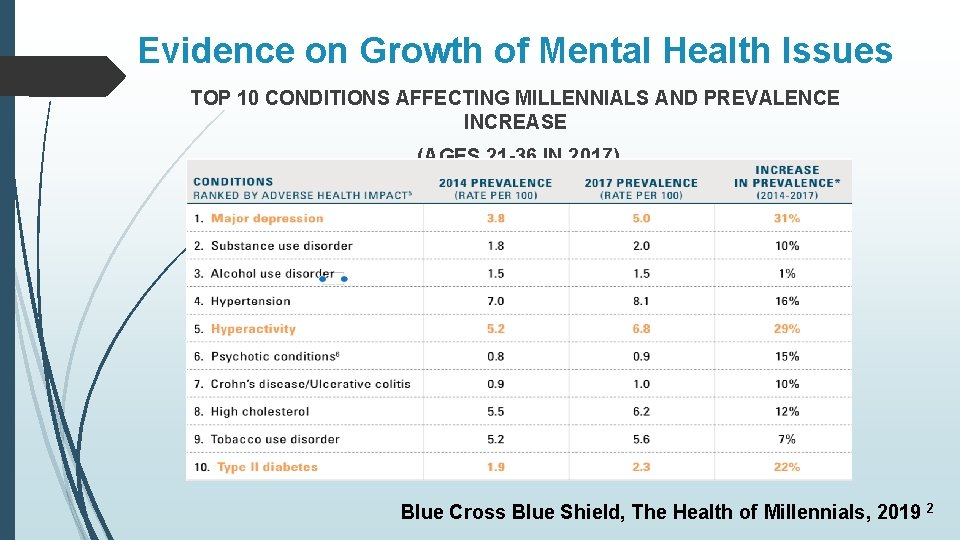
Evidence on Growth of Mental Health Issues TOP 10 CONDITIONS AFFECTING MILLENNIALS AND PREVALENCE INCREASE (AGES 21 -36 IN 2017) Blue Cross Blue Shield, The Health of Millennials, 2019 2
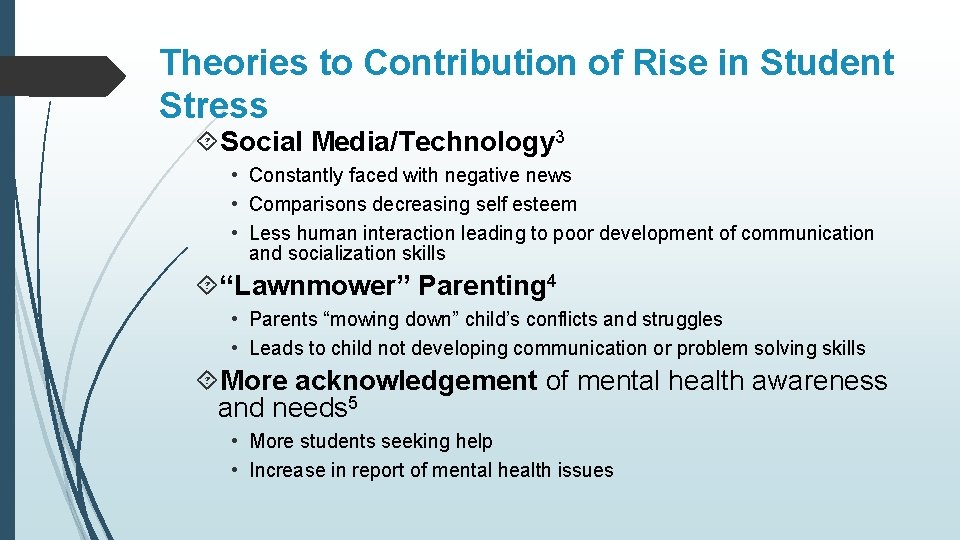
Theories to Contribution of Rise in Student Stress Social Media/Technology 3 • Constantly faced with negative news • Comparisons decreasing self esteem • Less human interaction leading to poor development of communication and socialization skills “Lawnmower” Parenting 4 • Parents “mowing down” child’s conflicts and struggles • Leads to child not developing communication or problem solving skills More acknowledgement of mental health awareness and needs 5 • More students seeking help • Increase in report of mental health issues
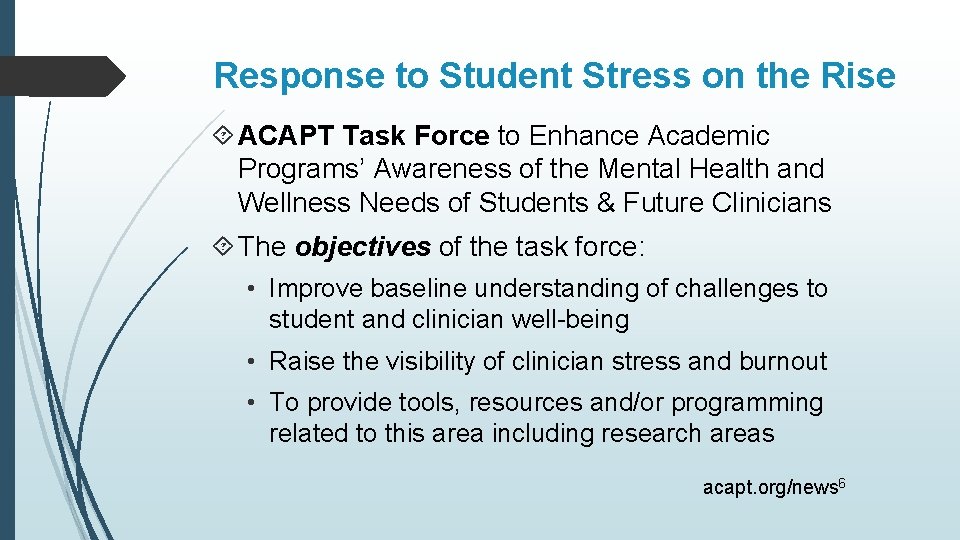
Response to Student Stress on the Rise ACAPT Task Force to Enhance Academic Programs’ Awareness of the Mental Health and Wellness Needs of Students & Future Clinicians The objectives of the task force: • Improve baseline understanding of challenges to student and clinician well-being • Raise the visibility of clinician stress and burnout • To provide tools, resources and/or programming related to this area including research areas acapt. org/news 6
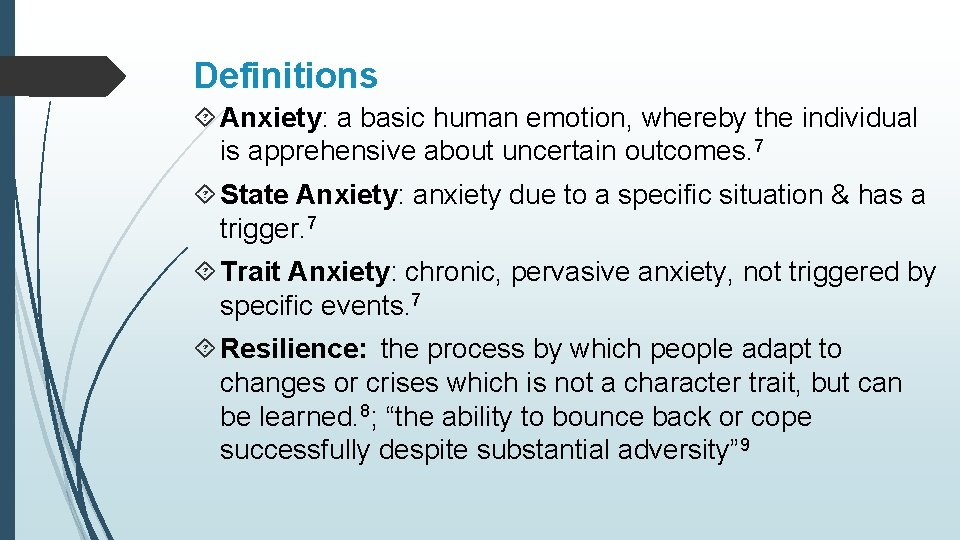
Definitions Anxiety: a basic human emotion, whereby the individual is apprehensive about uncertain outcomes. 7 State Anxiety: anxiety due to a specific situation & has a trigger. 7 Trait Anxiety: chronic, pervasive anxiety, not triggered by specific events. 7 Resilience: the process by which people adapt to changes or crises which is not a character trait, but can be learned. 8; “the ability to bounce back or cope successfully despite substantial adversity” 9
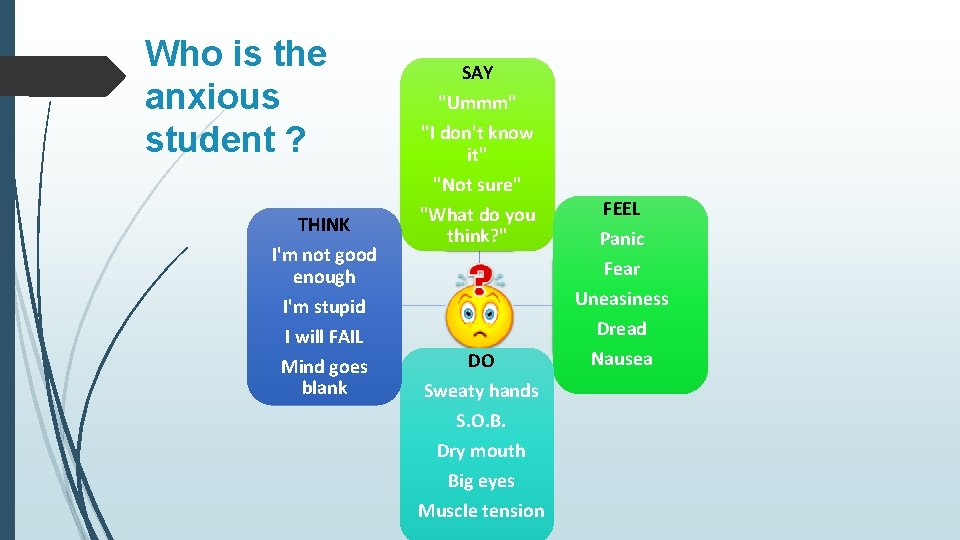
Who is the anxious student ? THINK I'm not good enough I'm stupid I will FAIL Mind goes blank SAY "Ummm" "I don't know it" "Not sure" "What do you think? " DO Sweaty hands S. O. B. Dry mouth Big eyes Muscle tension FEEL Panic Fear Uneasiness Dread Nausea
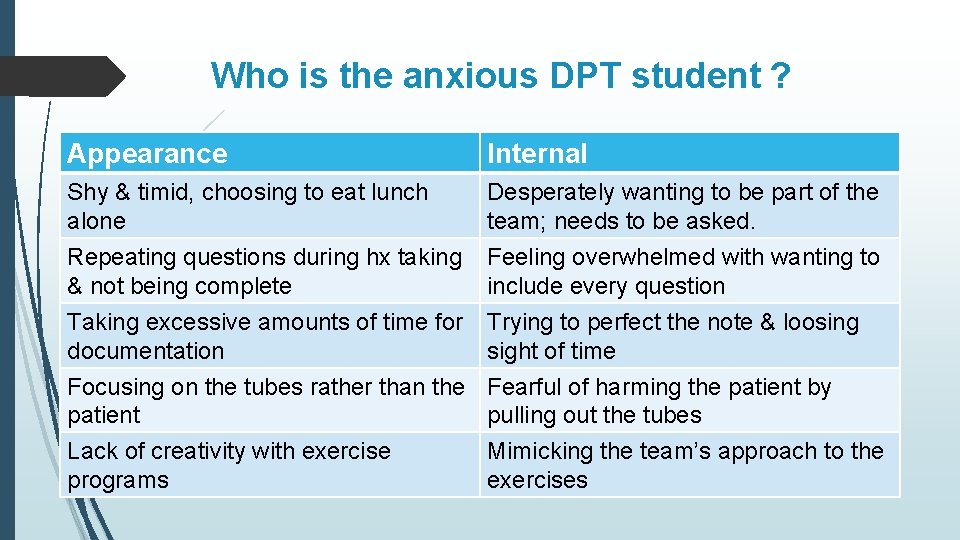
Who is the anxious DPT student ? Appearance Internal Shy & timid, choosing to eat lunch alone Desperately wanting to be part of the team; needs to be asked. Repeating questions during hx taking Feeling overwhelmed with wanting to & not being complete include every question Taking excessive amounts of time for documentation Focusing on the tubes rather than the patient Trying to perfect the note & loosing sight of time Fearful of harming the patient by pulling out the tubes Lack of creativity with exercise programs Mimicking the team’s approach to the exercises
Student Perspective – Stress Triggers
REFLECTION – Pause & think What could the CI or SCCE do to help alleviate the stress in this particular student?
Student Perspective – Potential Solutions
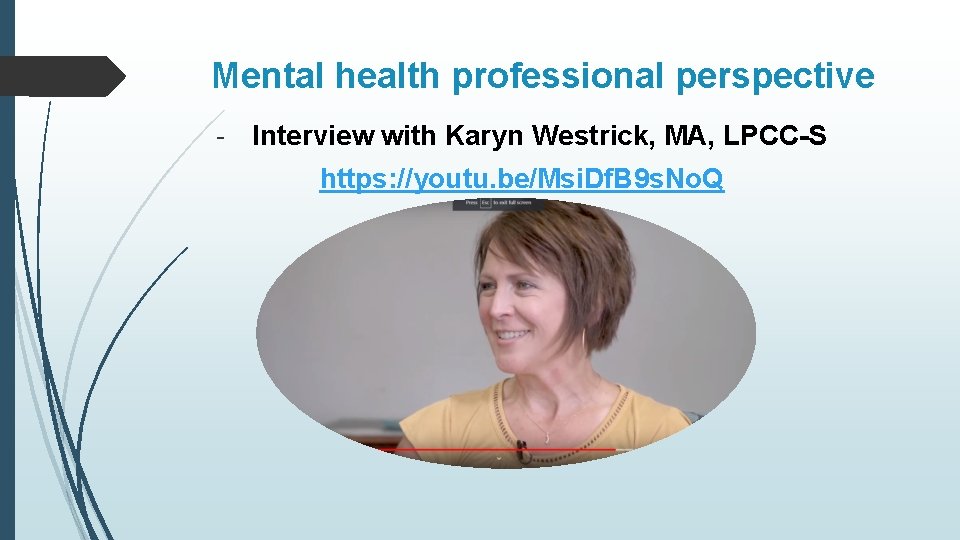
Mental health professional perspective - Interview with Karyn Westrick, MA, LPCC-S https: //youtu. be/Msi. Df. B 9 s. No. Q
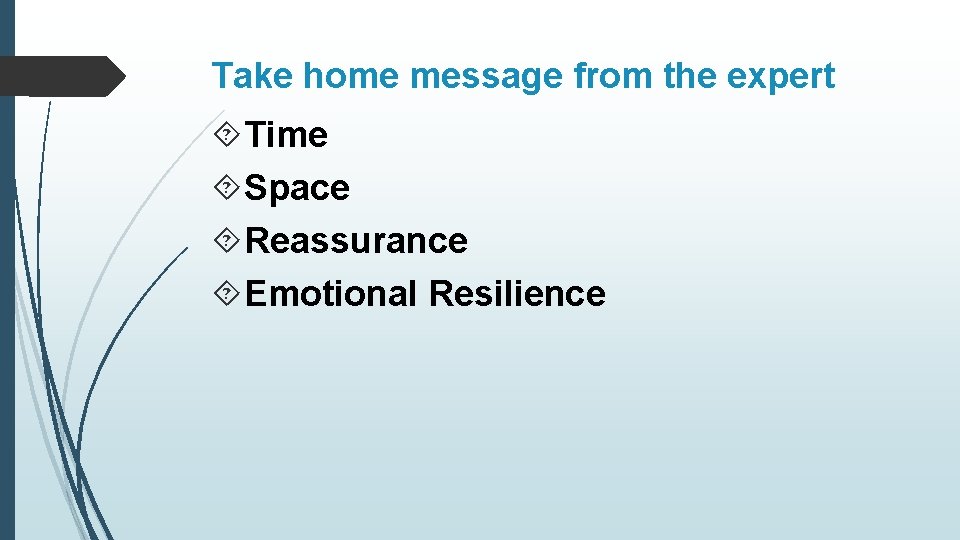
Take home message from the expert Time Space Reassurance Emotional Resilience
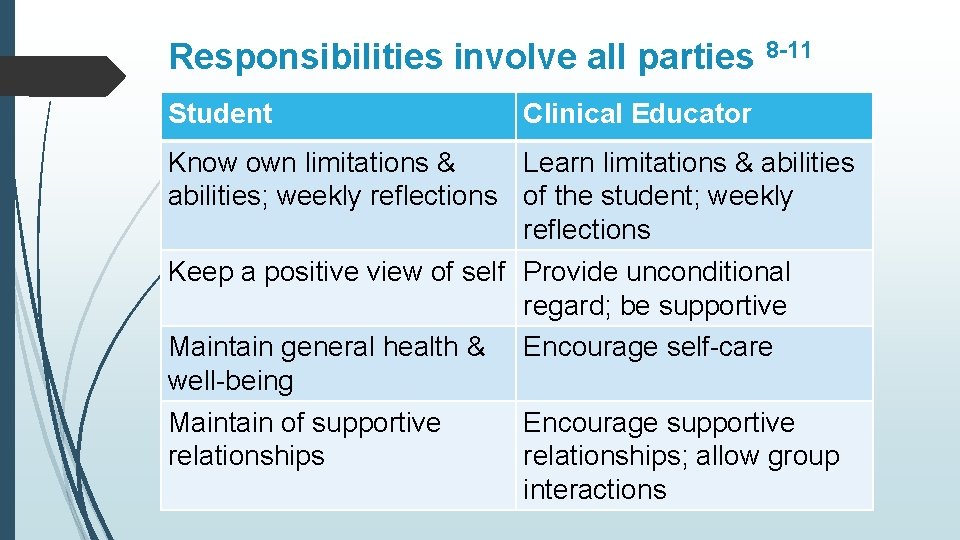
Responsibilities involve all parties 8 -11 Student Clinical Educator Know own limitations & Learn limitations & abilities; weekly reflections of the student; weekly reflections Keep a positive view of self Provide unconditional regard; be supportive Maintain general health & Encourage self-care well-being Maintain of supportive Encourage supportive relationships; allow group interactions
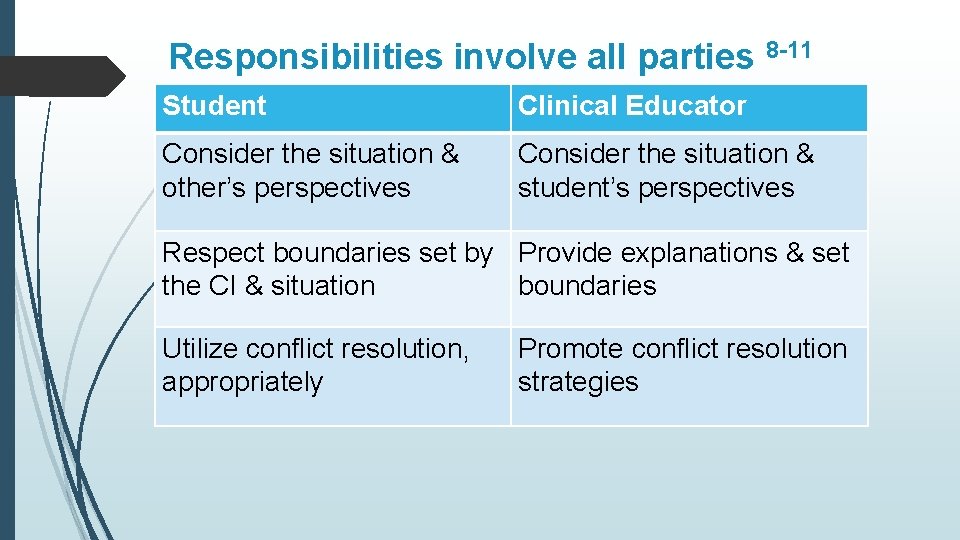
Responsibilities involve all parties 8 -11 Student Clinical Educator Consider the situation & other’s perspectives Consider the situation & student’s perspectives Respect boundaries set by Provide explanations & set the CI & situation boundaries Utilize conflict resolution, appropriately Promote conflict resolution strategies
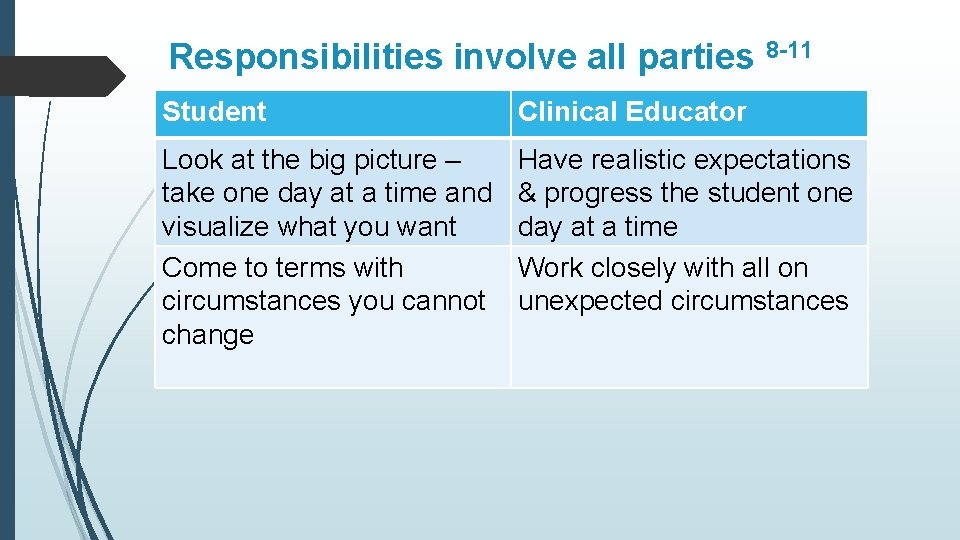
Responsibilities involve all parties 8 -11 Student Clinical Educator Look at the big picture – take one day at a time and visualize what you want Come to terms with circumstances you cannot change Have realistic expectations & progress the student one day at a time Work closely with all on unexpected circumstances
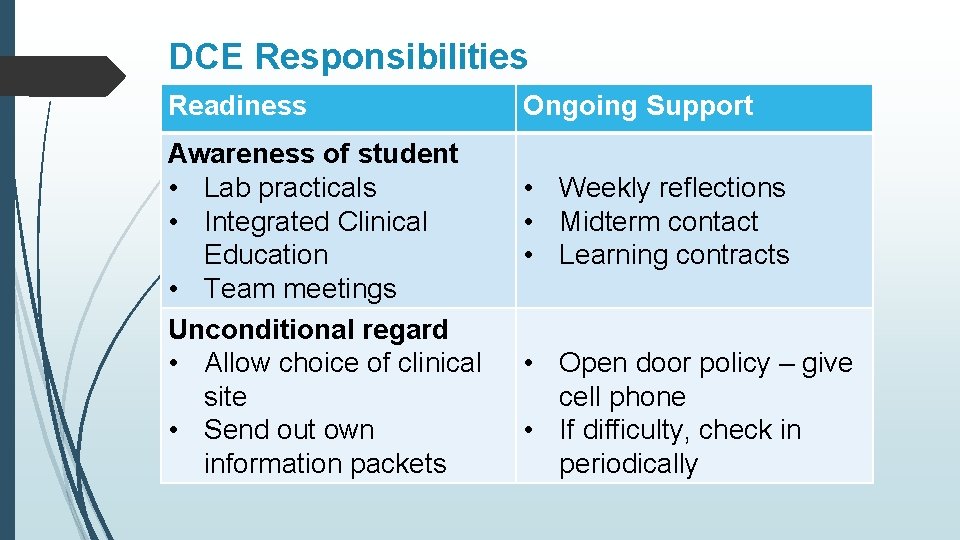
DCE Responsibilities Readiness Awareness of student • Lab practicals • Integrated Clinical Education • Team meetings Unconditional regard • Allow choice of clinical site • Send out own information packets Ongoing Support • Weekly reflections • Midterm contact • Learning contracts • Open door policy – give cell phone • If difficulty, check in periodically
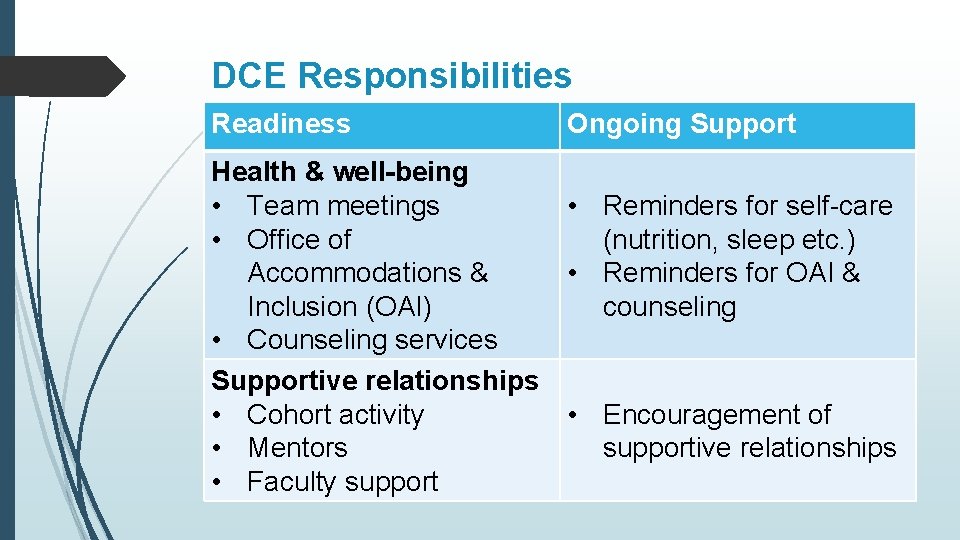
DCE Responsibilities Readiness Ongoing Support Health & well-being • Team meetings • Reminders for self-care • Office of (nutrition, sleep etc. ) Accommodations & • Reminders for OAI & Inclusion (OAI) counseling • Counseling services Supportive relationships • Cohort activity • Encouragement of • Mentors supportive relationships • Faculty support
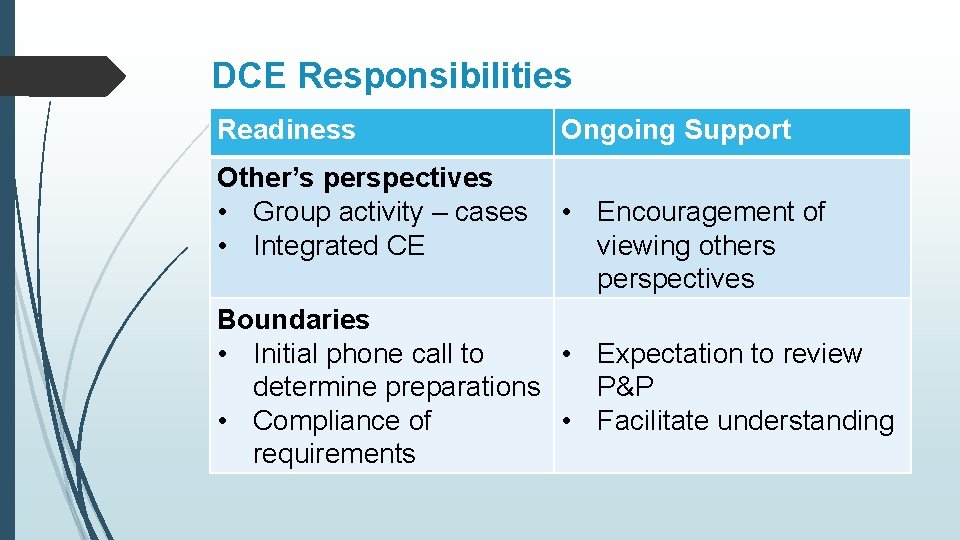
DCE Responsibilities Readiness Other’s perspectives • Group activity – cases • Integrated CE Ongoing Support • Encouragement of viewing others perspectives Boundaries • Initial phone call to • Expectation to review determine preparations P&P • Compliance of • Facilitate understanding requirements
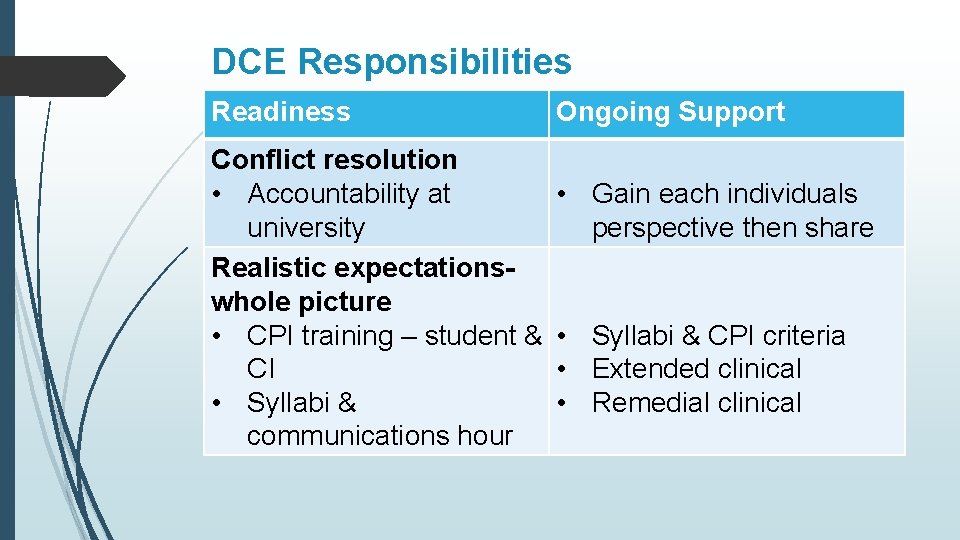
DCE Responsibilities Readiness Ongoing Support Conflict resolution • Accountability at • university Realistic expectationswhole picture • CPI training – student & • CI • • Syllabi & • communications hour Gain each individuals perspective then share Syllabi & CPI criteria Extended clinical Remedial clinical
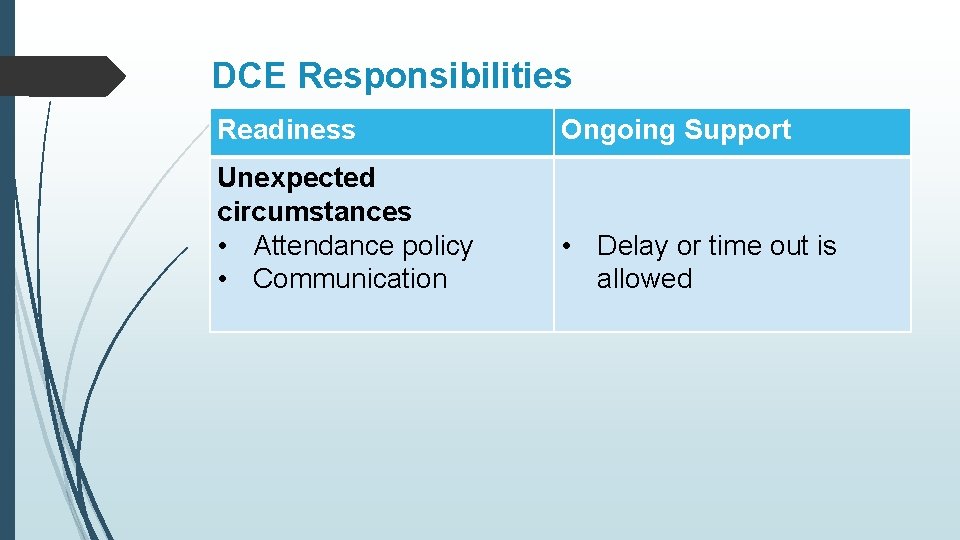
DCE Responsibilities Readiness Ongoing Support Unexpected circumstances • Attendance policy • Communication • Delay or time out is allowed
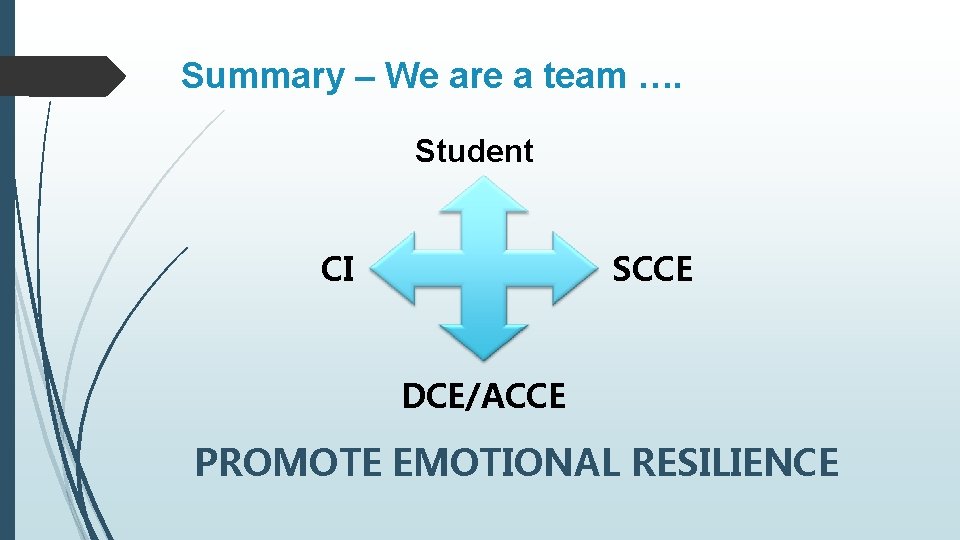
Summary – We are a team …. Student CI SCCE DCE/ACCE PROMOTE EMOTIONAL RESILIENCE
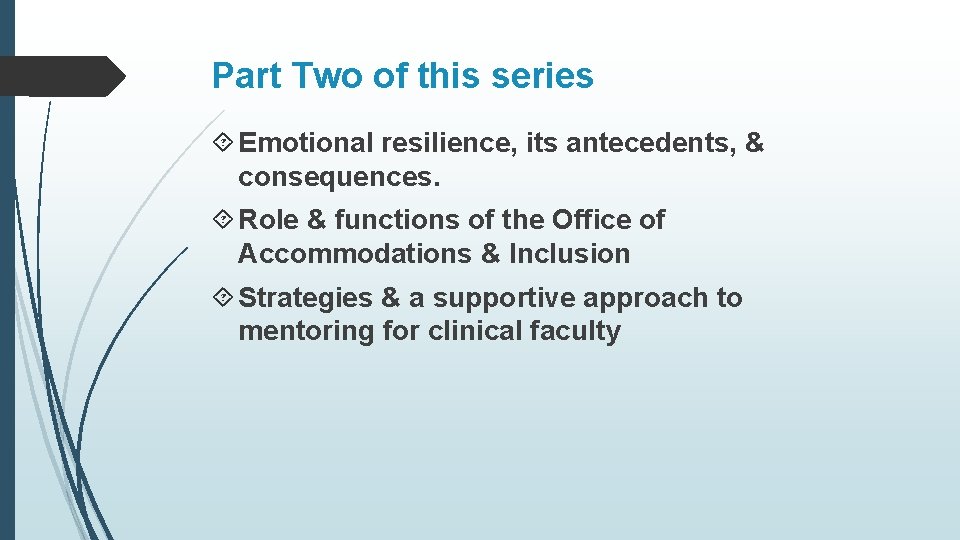
Part Two of this series Emotional resilience, its antecedents, & consequences. Role & functions of the Office of Accommodations & Inclusion Strategies & a supportive approach to mentoring for clinical faculty
Questions ? Contact information: Deborah George - 419 -434 -5531 george@findlay. edu Allison Durham – 419 -434 -5975 durham@findlay. edu
References 1. American Psychological Association (2018). Stress in America: Generation Z. Stress in America. TM Survey. 2. Blue Cross Blue Shield (2019). The Health of Millenials. The Health of America Report®. 3. Lepp A, Barkley JE, and Karpinski AC. The relationship between cell phone use, academic performance, anxiety, and Satisfaction with Life in college students. Computers in Human Behavior. 2014. 31: 343 -350. 4. Haller S. Meet the 'lawnmower parent, ' the new helicopter parents of 2018. USA Today. September 19, 2018. www. usatoday. com. Accessed July 29, 2019. 5. Oswalt SE, et al. Trends in college students’ mental health diagnoses and utilization of services, 2009– 2015. J Am Coll Health, 2018; 25: 1 -11. 6. American Council of Academic Physical Therapy. https: //acapt. org/news. Accessed June 18, 2019. 7. Hurberty T. Test and performance anxiety. Principal Leadership. 2009; 9: 12 -16. 8. Call JA. Resilience in the face of rough times. Psychology Today. July 9, 2008. http: //www. psychologytoday. com. Accessed June 26, 2019. Rutter M. Resilience in the face of adversity: Protective factors and resistance to psychiatric disorder. British Journal of Psychiatry, 1985; 147: 598– 611. 10. Earvolino-Ramirez M. Resilience: A concept analysis. Nursing Forum, 2007; 42(2): 73 -82. 11. Dunn L. , Iglewicz A. , Moutier C. A conceptual model of medical student well-being: Promoting resilience and preventing burnout. Academic Psychiatry, 2008; 32: 44– 53.