
Emotional Intelligence The Universal Key to Successful Leadership

- Slides: 8
Emotional Intelligence- The Universal Key to Successful Leadership A ROUND TABLE PRESENTATION FOR THE 2020 IAHPEDS SUMMIT DR. JOE DEUTSCH AND ROMAN WALDERA, MS
What is Emotional Intelligence? Similar to how an Intelligence Quotient (IQ) is a measure of one’s content knowledge (highly influenced by genetics and difficult to improve), an Emotional Quotient (EQ) is a measure of a person’s emotional strengths and weaknesses (emotional intelligence). An organization who’s employees have high EQ will be able to meet the constantly changing challenges of an ever-changing workplace. Highly intelligent (IQ) employees are great assets, but often lack the social awareness to be an effective leader. Emotional intelligence impacts our ability to communicate effectively, empathize with others, overcome challenges, and defuse conflict and is much easier to develop.
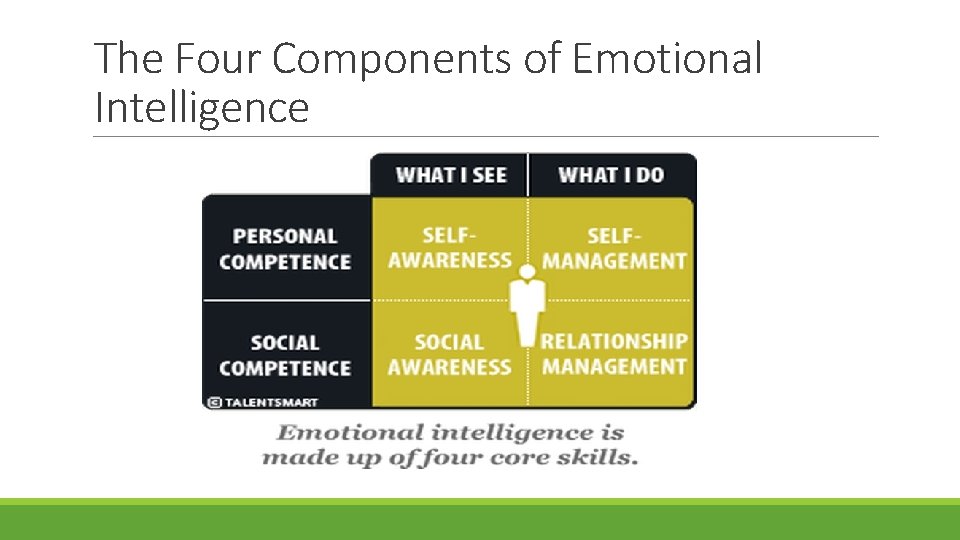
The Four Components of Emotional Intelligence
The Four Components of Emotional Intelligence • 1) Self-Awareness • Those who are in touch with their emotions are better able to guide their own lives • Helps with effective interactions and appreciating emotions of others • Proficiency leads to trusting ‘gut feelings’ • Example: Team members are in touch with their emotions in order to interact successfully with others
The Four Components of Emotional Intelligence • 2) Self-Management • Balancing worry, anxiety, fear, or anger so it doesn’t impede what needs to be done • Dealing with situations by understanding emotions, not suppressing or denying them • Example: “Think before you act”
The Four Components of Emotional Intelligence • 3) Social Awareness • Understanding how to act within different social situations • Modifying interactions with different people to achieve the best results • Being aware of how different environments might influence people • Example: Improving skills to connect with others in the community through verbal and non-verbal communication
The Four Components of Emotional Intelligence • 4) Relationship Management • Involves connecting with, responding to, and influencing the emotions of others • Includes identifying, analyzing, and managing relationships • Vital for successful negotiations, conflict resolution, and goal attainment • Example: Ability to develop a relationship with rapport
Conclusion When employees are asked to list leadership skills they want to see in a boss/leader, the list things like honesty and integrity, confidence and humility, inspiring others and empathetic, passionate, and excellent communicator. These qualities listed are only qualities when some exhibits emotional intelligence.