
Emotional Intelligence Presented by Kendra WilkinsFontenot Human Resource
Emotional Intelligence Presented by: Kendra Wilkins-Fontenot Human Resource Services Revised October 2016
Emotional Intelligence • What is it? • Why does it matter to me? • What can I do with it?
Defined The ability to perceive and express emotion, Assimilate emotion in thought, Understand reason with emotion, and Regulate emotion in self and others… (Mayer, Salovey and Caruso)
Emotional Intelligence - AKA • Executive Competencies • Interpersonal Communication • Relationship Management • Social Intelligence • Leadership Development
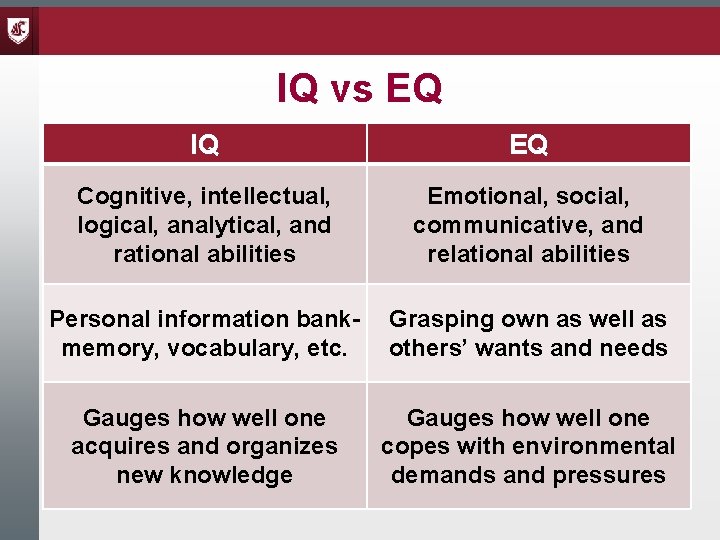
IQ vs EQ IQ EQ Cognitive, intellectual, logical, analytical, and rational abilities Emotional, social, communicative, and relational abilities Personal information bankmemory, vocabulary, etc. Grasping own as well as others’ wants and needs Gauges how well one acquires and organizes new knowledge Gauges how well one copes with environmental demands and pressures
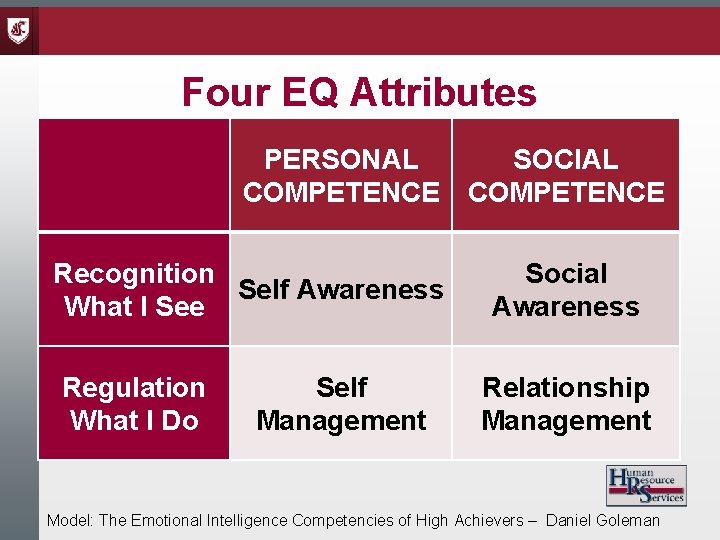
Four EQ Attributes PERSONAL SOCIAL COMPETENCE Recognition Self Awareness What I See Regulation What I Do Self Management Social Awareness Relationship Management Model: The Emotional Intelligence Competencies of High Achievers – Daniel Goleman
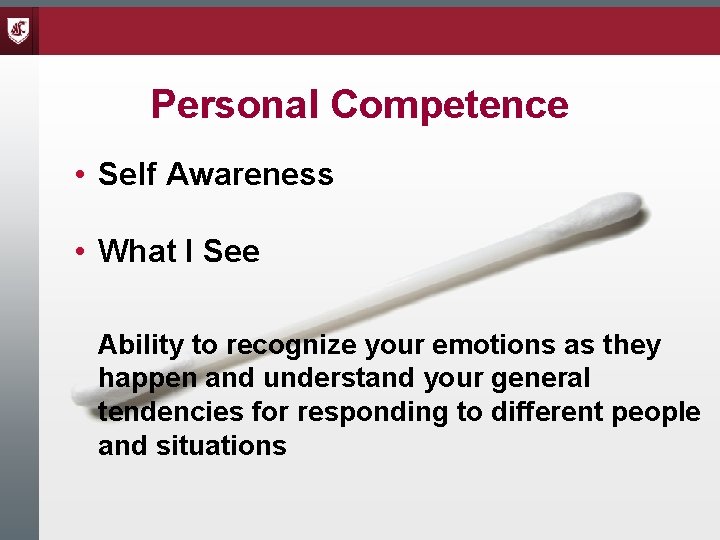
Personal Competence • Self Awareness • What I See Ability to recognize your emotions as they happen and understand your general tendencies for responding to different people and situations
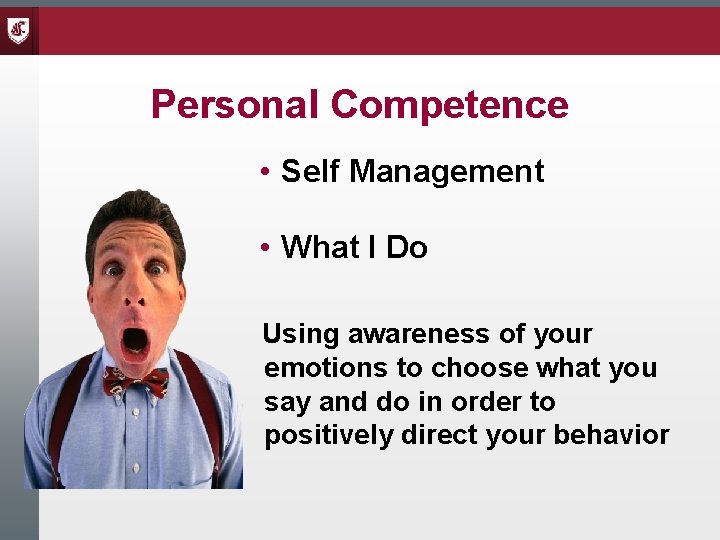
Personal Competence • Self Management • What I Do Using awareness of your emotions to choose what you say and do in order to positively direct your behavior
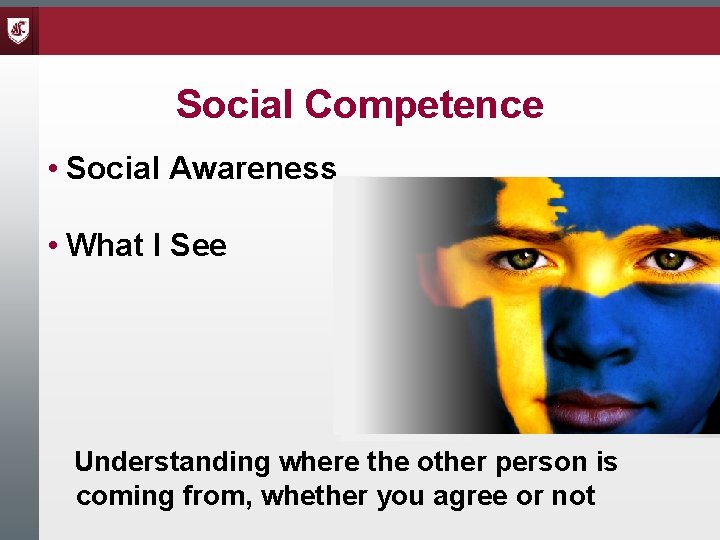
Social Competence • Social Awareness • What I See Understanding where the other person is coming from, whether you agree or not
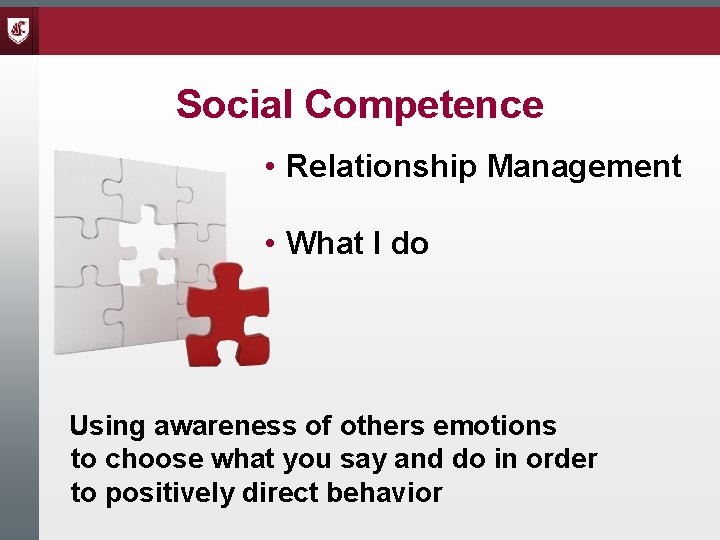
Social Competence • Relationship Management • What I do Using awareness of others emotions to choose what you say and do in order to positively direct behavior
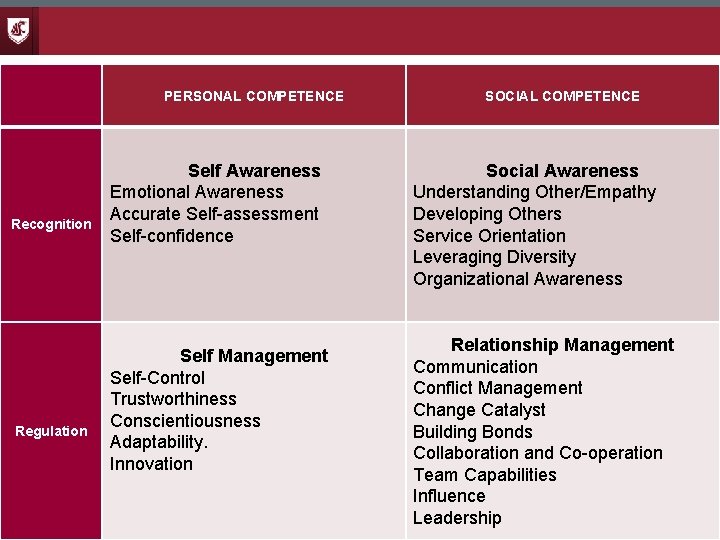
PERSONAL COMPETENCE Recognition Regulation Self Awareness Emotional Awareness Accurate Self-assessment Self-confidence Self Management Self-Control Trustworthiness Conscientiousness Adaptability. Innovation SOCIAL COMPETENCE Social Awareness Understanding Other/Empathy Developing Others Service Orientation Leveraging Diversity Organizational Awareness Relationship Management Communication Conflict Management Change Catalyst Building Bonds Collaboration and Co-operation Team Capabilities Influence Leadership
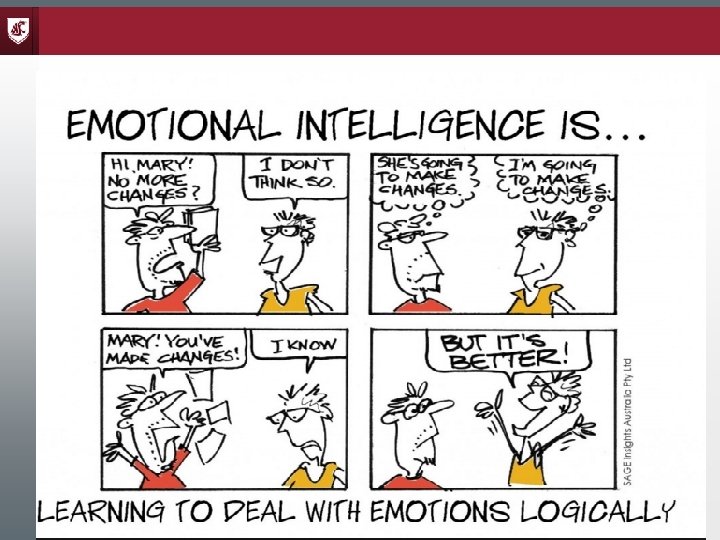
Impacts and Success Helps individuals in their strive for success in living, working, learning, and social interactions with self and others.
Exercising EI • Enhance better communication • Improve personal relations • Coach others • Manage change • Deal with conflict • Improve productivity • Build teams • Promote better work environment • Retain employees
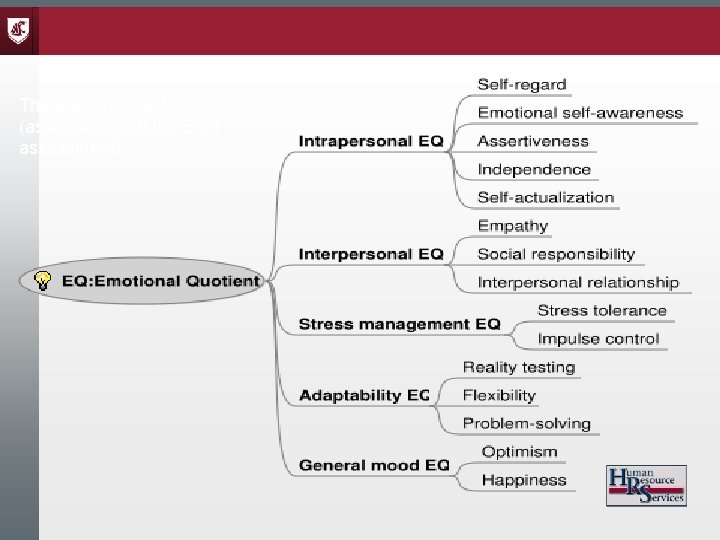
The Bar-On model (associated with the EQ-i assessment)
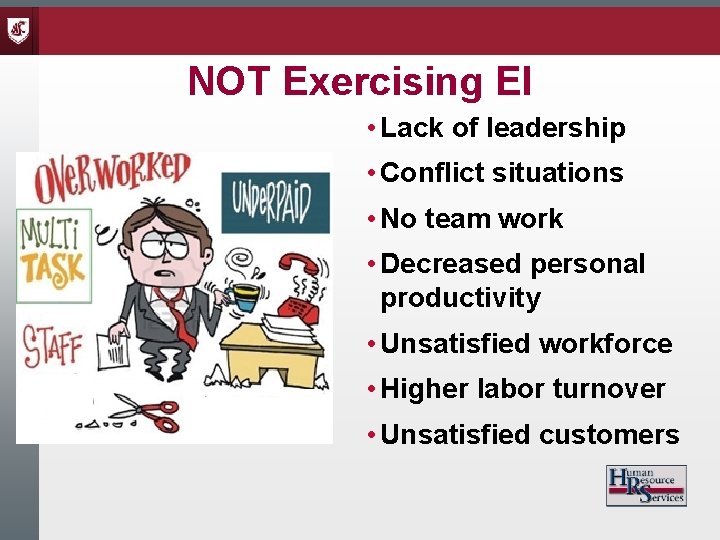
NOT Exercising EI • Lack of leadership • Conflict situations • No team work • Decreased personal productivity • Unsatisfied workforce • Higher labor turnover • Unsatisfied customers
Practical Applications • Hiring • Performance management • Career movement • Overall business needs
Developing EI • Listen to your self and your emotions • Identify and classify emotions • Note difference between having and acting on emotions • Learn to distract • Take the time to note your impact on others • Set goals – internally or written Slow Down, Think, Act
As we look ahead…leaders will be those who empower others. - Bill Gates
This has been a WSU Training Videoconference If you attended this live training session and wish to have your attendance documented in your training history, please notify Human Resource Services within 24 hours of today's date: hrstraining@wsu. edu
- Slides: 21