
Emotional intelligence is a term used to describe
� Emotional intelligence -“is a term used to describe the various competencies that are essential for building, developing and managing relationships” (Peters, 2008, p. 13). Emotional intelligence consists of two dimensions, intrapersonal intelligence and interpersonal intelligence. � Intrapersonal intelligence – “being intelligent in identifying our own thoughts and feelings (self awareness) and being effective at dealing with those thoughts and feelings (self management)” (Palethorpe, 2006, p. 13). � Interpersonal intelligence – “being intelligent in identifying the thoughts and feelings of others and between others (other awareness) and being effective in how we tailor our actions to work with others most appropriately (relationship management)” (Palethorpe, 2006, p. 13). Intrapersonal intelligence + Interpersonal Intelligence = Emotional Intelligence 2
� Emotional intelligence is a LEARNABLE ability. � According to Goleman (1998) EI… “refers to the capacity for recognizing our own feelings and those of others, for motivating ourselves, and for managing emotions well in ourselves and in our relationships” relationships
� EQ is the capacity to create positive outcomes in your relationships with others and with yourself (in work, school, and life). � EQ has been associated with better results in leadership, sales, academic performance, marriage, friendships, and health.
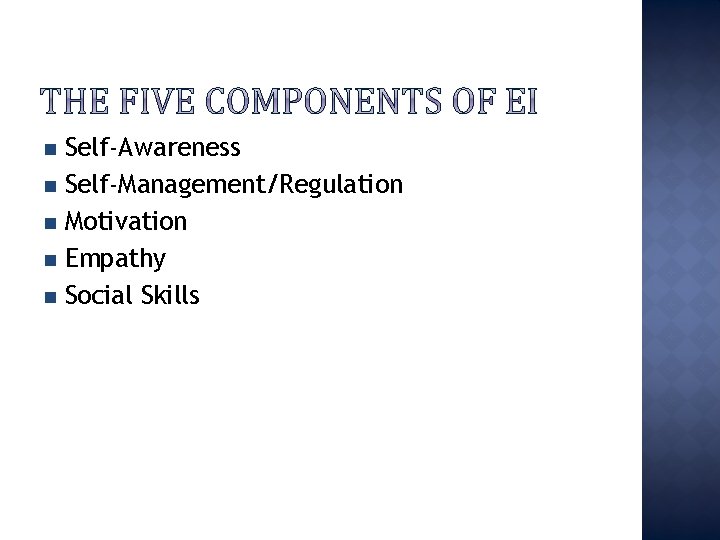
Self-Awareness n Self-Management/Regulation n Motivation n Empathy n Social Skills n
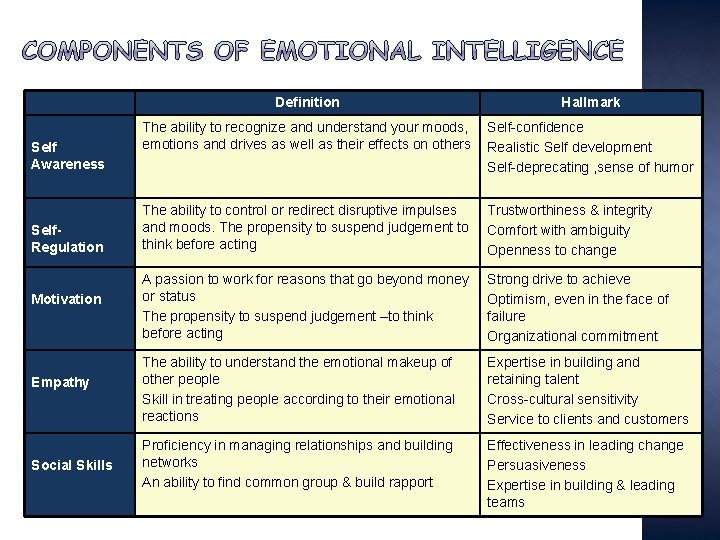
Definition Hallmark The ability to recognize and understand your moods, emotions and drives as well as their effects on others Self-confidence Realistic Self development Self-deprecating , sense of humor The ability to control or redirect disruptive impulses and moods. The propensity to suspend judgement to think before acting Trustworthiness & integrity Comfort with ambiguity Openness to change Motivation A passion to work for reasons that go beyond money or status The propensity to suspend judgement –to think before acting Strong drive to achieve Optimism, even in the face of failure Organizational commitment Empathy The ability to understand the emotional makeup of other people Skill in treating people according to their emotional reactions Expertise in building and retaining talent Cross-cultural sensitivity Service to clients and customers Social Skills Proficiency in managing relationships and building networks An ability to find common group & build rapport Effectiveness in leading change Persuasiveness Expertise in building & leading teams Self Awareness Self. Regulation
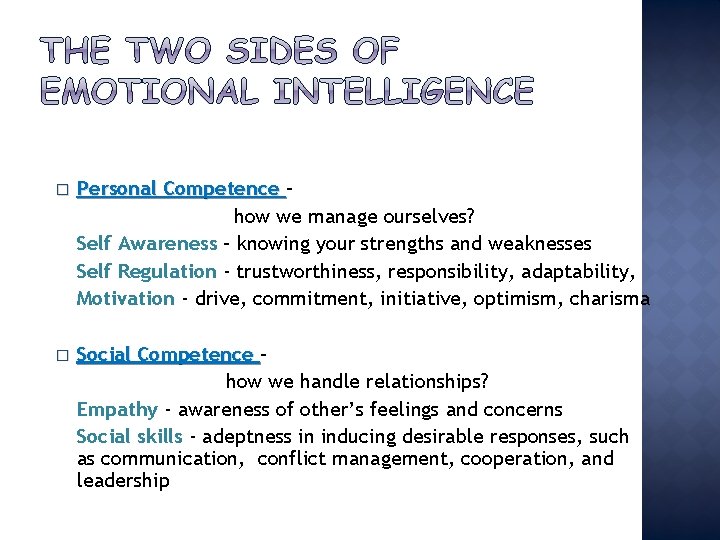
� Personal Competence – how we manage ourselves? Self Awareness – knowing your strengths and weaknesses Self Regulation - trustworthiness, responsibility, adaptability, Motivation - drive, commitment, initiative, optimism, charisma � Social Competence – how we handle relationships? Empathy - awareness of other’s feelings and concerns Social skills - adeptness in inducing desirable responses, such as communication, conflict management, cooperation, and leadership
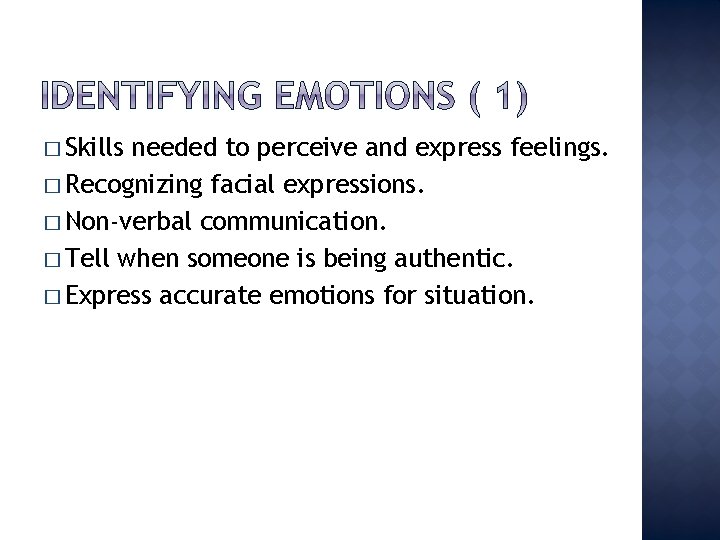
� Skills needed to perceive and express feelings. � Recognizing facial expressions. � Non-verbal communication. � Tell when someone is being authentic. � Express accurate emotions for situation.
� Using emotions to facilitate thinking. � Improve problem solving and boost creativity. � Identify Emotional component to motivation. � “Care enough to send the very best. ” � Using emotion to help make decisions.

� Understanding complex and conflicting emotions. � Emotions and behavioral consequences. � Read a situation and respond correctly. � Some emotional responses are maladaptive. � Jealousy and envy are destructive.
� Developing mood regulation skills. � Productive ways to change mood. � Avoid over and under regulation. � Seek natural means rather than alcohol, tobacco or other drugs. � Stress coping strategies. � Use optimistic explanatory style.
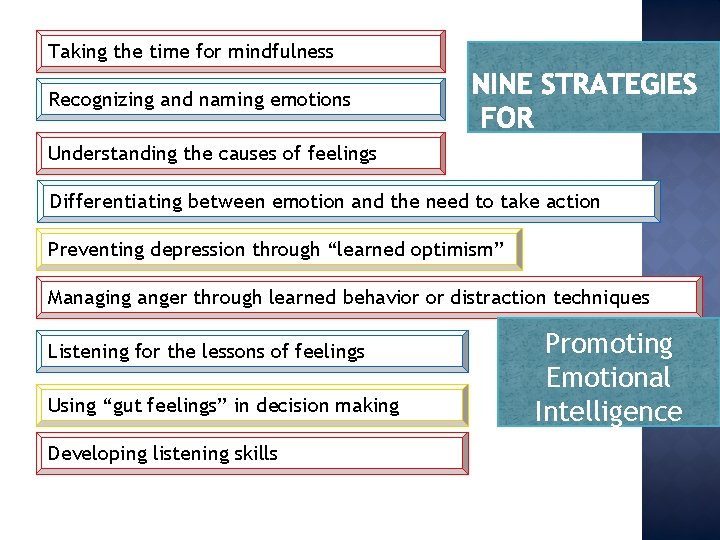
Taking the time for mindfulness Recognizing and naming emotions Understanding the causes of feelings Differentiating between emotion and the need to take action Preventing depression through “learned optimism” Managing anger through learned behavior or distraction techniques Listening for the lessons of feelings Using “gut feelings” in decision making Developing listening skills Promoting Emotional Intelligence
� increased performance � Effective leadership � More teamwork � Quality customer service � Improved and enhanced innovation � Effective use of time and resources � Restored trust � Courage and resilience in times of adverse condition
- Slides: 13