
Emotional Intelligence Daniel Goleman Emotional Intelligence Domains of
- Slides: 15
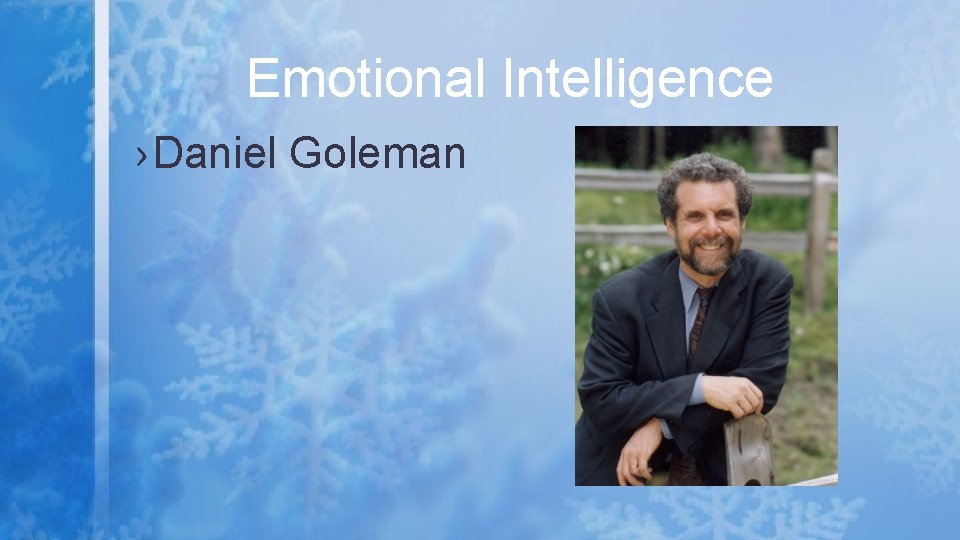
Emotional Intelligence › Daniel Goleman
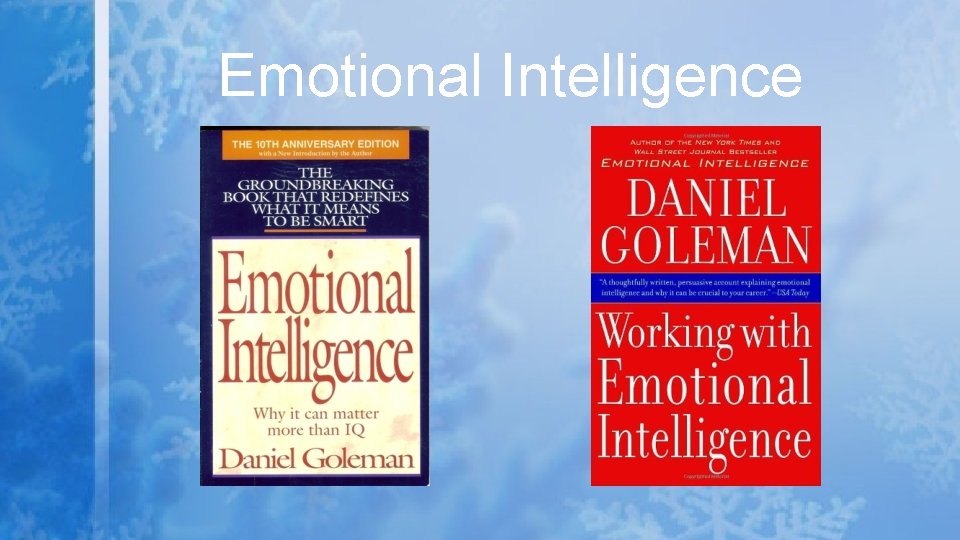
Emotional Intelligence
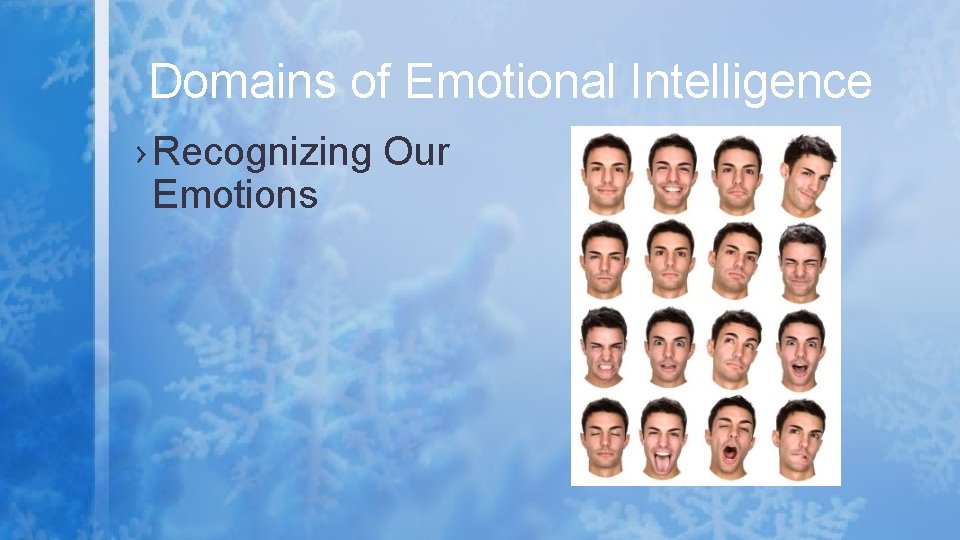
Domains of Emotional Intelligence › Recognizing Our Emotions
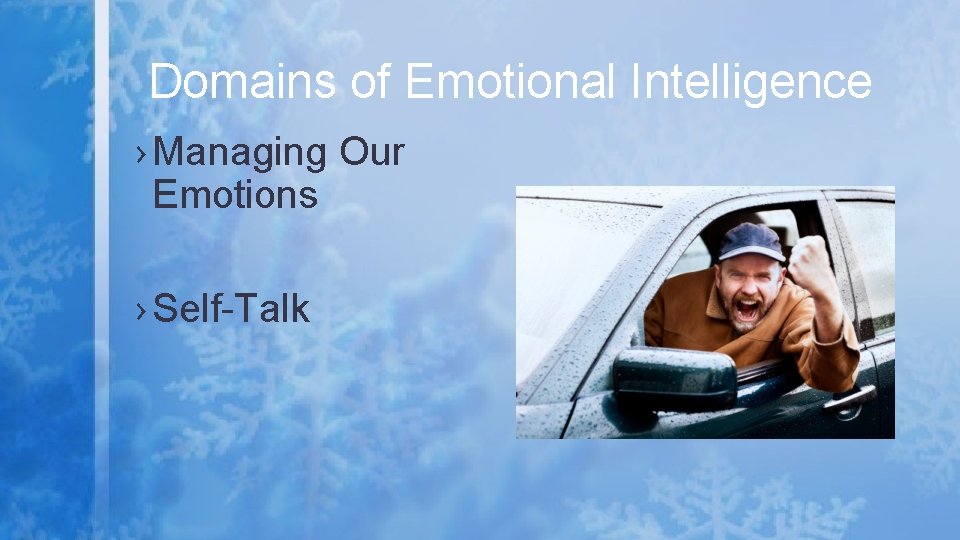
Domains of Emotional Intelligence › Managing Our Emotions › Self-Talk
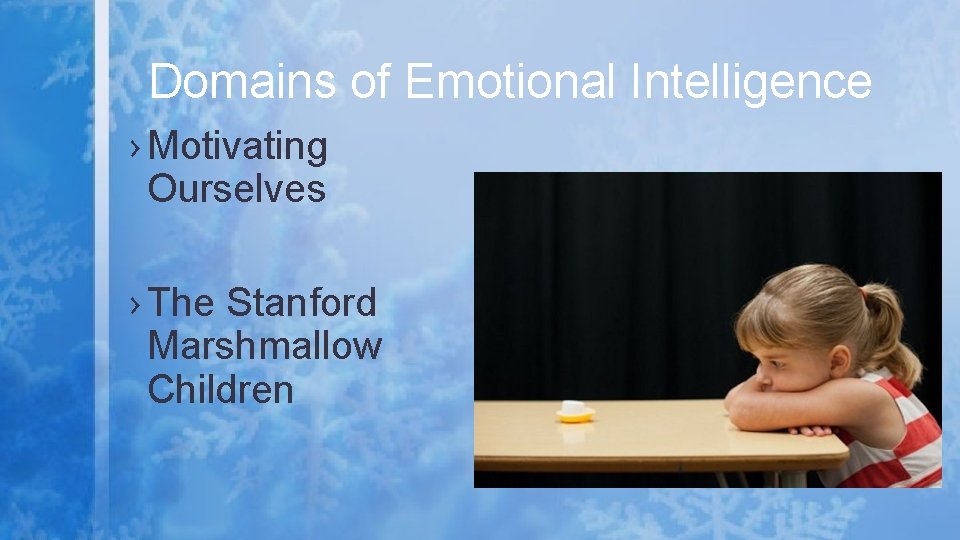
Domains of Emotional Intelligence › Motivating Ourselves › The Stanford Marshmallow Children
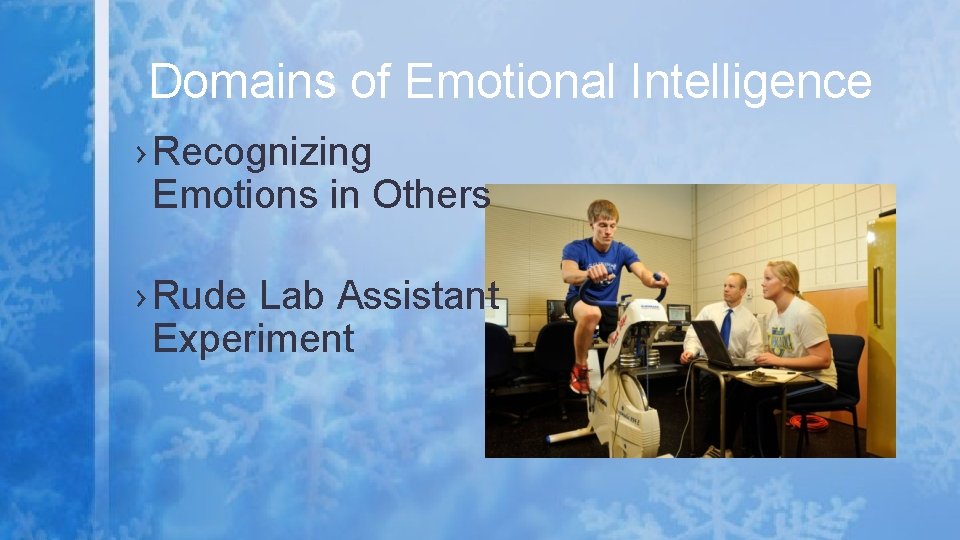
Domains of Emotional Intelligence › Recognizing Emotions in Others › Rude Lab Assistant Experiment
Domains of Emotional Intelligence › Handling Our Relationships › Can Emotional Intelligence be Taught? › Which domains are most important?
Emotional Intelligence: Exercises for Getting Calm and Relaxed › › › Exercise: Daniel Goleman and Linda Lantieri When were you last feeling stressed and upset? How did it make your body feel? Did you have: Shaky hands Fast breathing Cold hands Cold feet Tense muscles Upset stomach Sweating Difficulty sleeping
Exercises for Emotional Intelligence: Getting Calm and Relaxed › The things that cause stress aren’t actually stress until our minds see them that way. › Stress: our body’s response to these thoughts when we feel that we are in danger. › Sometimes the danger is a false alarm, but our bodies still prepare us for a challenge. › We can learn to change how we react to stress and cut down on these false alarms and gain more control over our emotions.
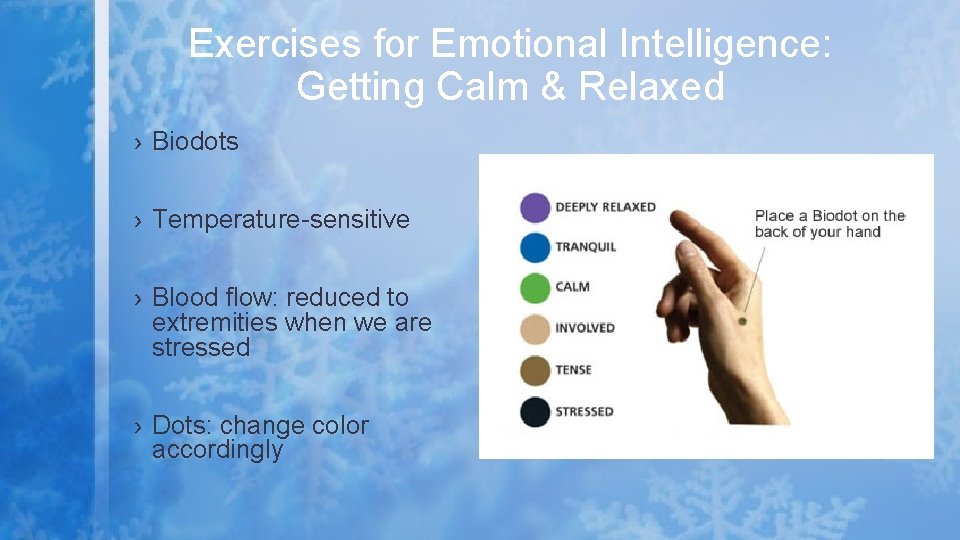
Exercises for Emotional Intelligence: Getting Calm & Relaxed › Biodots › Temperature-sensitive › Blood flow: reduced to extremities when we are stressed › Dots: change color accordingly
Exercises for Emotional Intelligence: Getting Calm and Relaxed
Emotional Intelligence Exercises: Mindfulness › Mindfulness: › Quiets the mind › Allows us to pay attention to present moment without judgment › When we are mindful: bring our full selves and whole heart to activities › Learning to quiet our minds helps us focus our attention better, improving our concentration & ability to learn new things.
Emotional Intelligence Exercise: Mindfulness › To explore what it feels like to be mindful & really concentrate on what you are seeing. › You have one minute to look at the tray of objects. › You can’t touch them or write anything down. › After the alarm, write down as many objects as you remember.
Emotional Intelligence Exercise: Mindfulness › How well did you do? How many did you leave off your list? › Did you manage to stay focused while you were looking at the objects? › Did you try to remember them by working out some kind of system? › With practice, we can train our minds to concentrate better. › Did your biodot change color during this exercise?
Emotional Intelligence Exercises: Recognizing Emotions in Others › Do this exercise in pairs. › Each pair has a scenario, each member with a different viewpoint. › Write down what you believe your character would be feeling. › Write down what you might say to the other person to express your feelings. › Each of you read your feelings statement to the other. › Exchange your scenarios and read about each viewpoints & feelings. › Express your feelings to your partner a second time, this time with the added knowledge about how s/he feels.