
Emotional Intelligence Coaching Introduction for Major Healthcare Provider
- Slides: 44
Emotional Intelligence Coaching Introduction for Major Healthcare Provider Presented by Toby Elwin www. Toby. Elwin. com
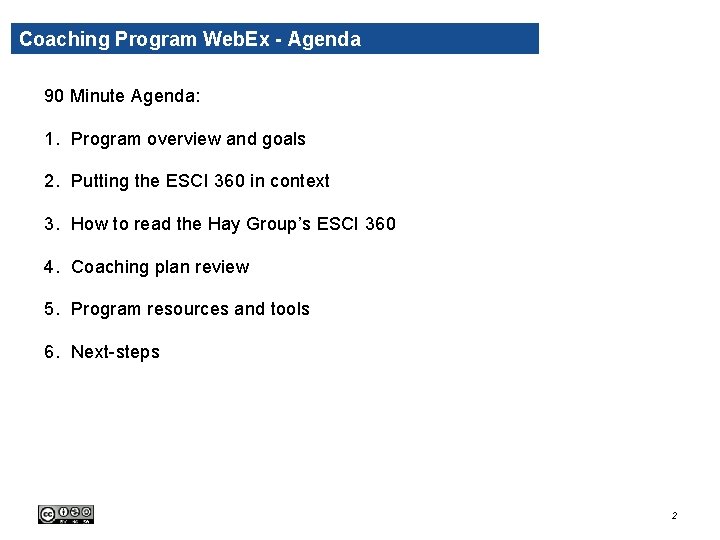
Coaching Program Web. Ex - Agenda 90 Minute Agenda: 1. Program overview and goals 2. Putting the ESCI 360 in context 3. How to read the Hay Group’s ESCI 360 4. Coaching plan review 5. Program resources and tools 6. Next-steps 2
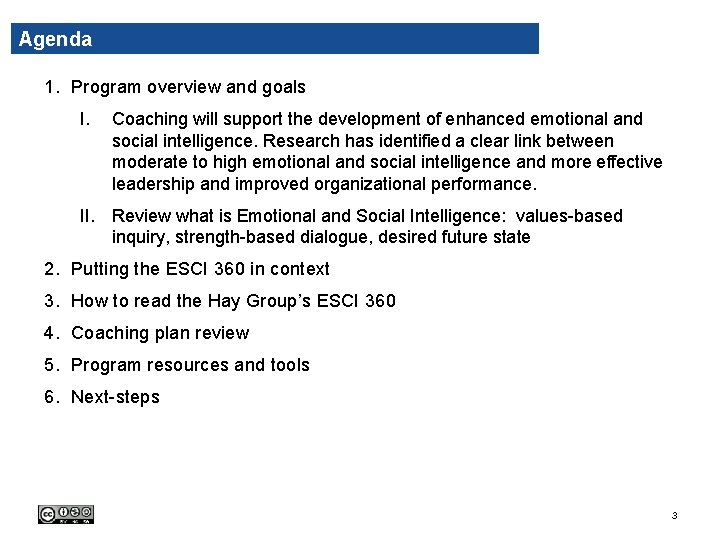
Agenda 1. Program overview and goals I. Coaching will support the development of enhanced emotional and social intelligence. Research has identified a clear link between moderate to high emotional and social intelligence and more effective leadership and improved organizational performance. II. Review what is Emotional and Social Intelligence: values-based inquiry, strength-based dialogue, desired future state 2. Putting the ESCI 360 in context 3. How to read the Hay Group’s ESCI 360 4. Coaching plan review 5. Program resources and tools 6. Next-steps 3
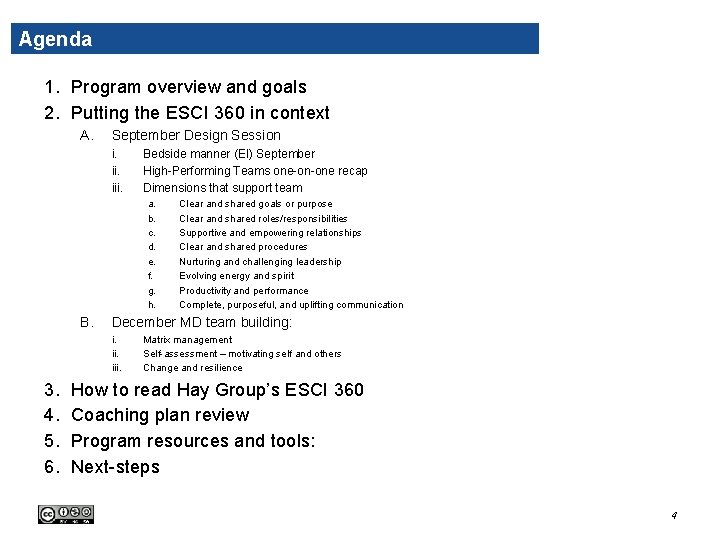
Agenda 1. Program overview and goals 2. Putting the ESCI 360 in context A. September Design Session i. iii. Bedside manner (EI) September High-Performing Teams one-on-one recap Dimensions that support team a. b. c. d. e. f. g. h. B. December MD team building: i. iii. 3. 4. 5. 6. Clear and shared goals or purpose Clear and shared roles/responsibilities Supportive and empowering relationships Clear and shared procedures Nurturing and challenging leadership Evolving energy and spirit Productivity and performance Complete, purposeful, and uplifting communication Matrix management Self-assessment – motivating self and others Change and resilience How to read Hay Group’s ESCI 360 Coaching plan review Program resources and tools: Next-steps 4
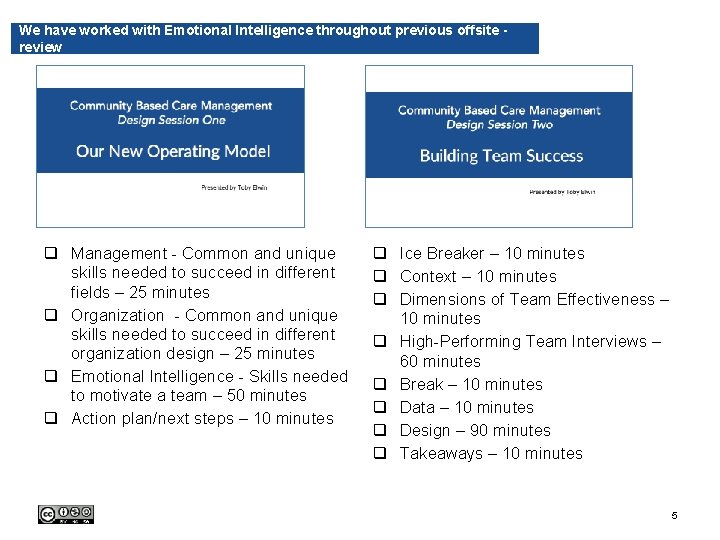
We have worked with Emotional Intelligence throughout previous offsite review q Management - Common and unique skills needed to succeed in different fields – 25 minutes q Organization - Common and unique skills needed to succeed in different organization design – 25 minutes q Emotional Intelligence - Skills needed to motivate a team – 50 minutes q Action plan/next steps – 10 minutes q Ice Breaker – 10 minutes q Context – 10 minutes q Dimensions of Team Effectiveness – 10 minutes q High-Performing Team Interviews – 60 minutes q Break – 10 minutes q Data – 10 minutes q Design – 90 minutes q Takeaways – 10 minutes 5
Relationships in a New Operating Model 1. 2. 3. 4. q Clear and shared goals or purpose q Clear and shared roles and responsibilities q Clear and shared procedures q Nurturing and challenging leadership q Evolving energy and spirit q Productivity and performance q Complete, purposeful, and uplifting communication 1 Self Awareness Self Management Social Awareness Relationship Management Known as Bedside Manner or, more formally, Emotional Intelligence 6
Organization Design - how managers group people together to perform work Five basic organizational structures combine varying elements of bureaucratic and decentralized structures: 1. Functional, 2. Divisional, 3. Matrix • Strong Matrix • Weak Matrix • Balanced Matrix Question: What skills* are needed to motivate a team? 4. Team, and 5. Networking *Skill is an ability acquired through training while competency is a set of defined behavior achieved through skill or knowledge. 7
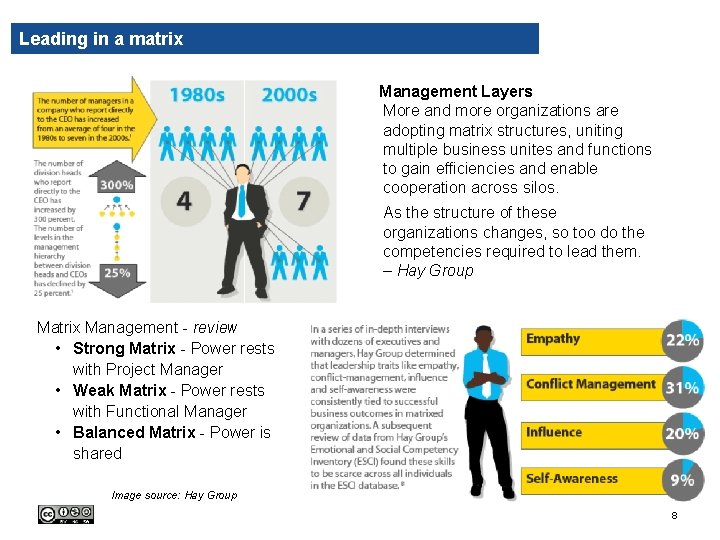
Leading in a matrix Management Layers More and more organizations are adopting matrix structures, uniting multiple business unites and functions to gain efficiencies and enable cooperation across silos. As the structure of these organizations changes, so too do the competencies required to lead them. – Hay Group Matrix Management - review • Strong Matrix - Power rests with Project Manager • Weak Matrix - Power rests with Functional Manager • Balanced Matrix - Power is shared Image source: Hay Group 8
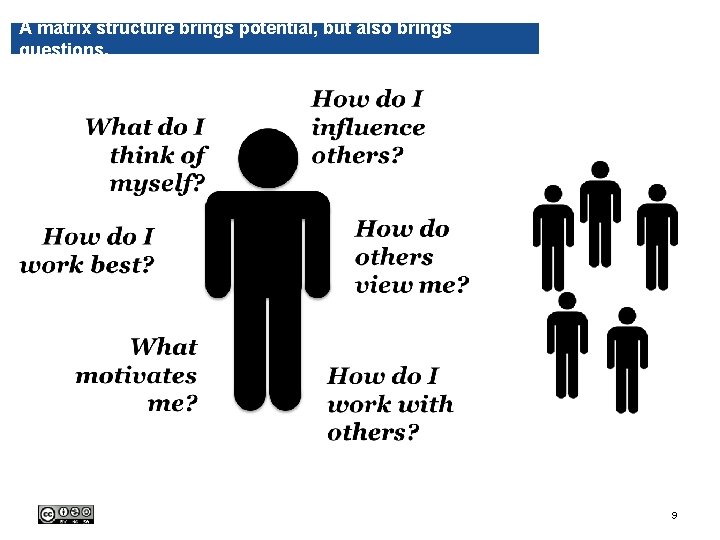
A matrix structure brings potential, but also brings questions. 9
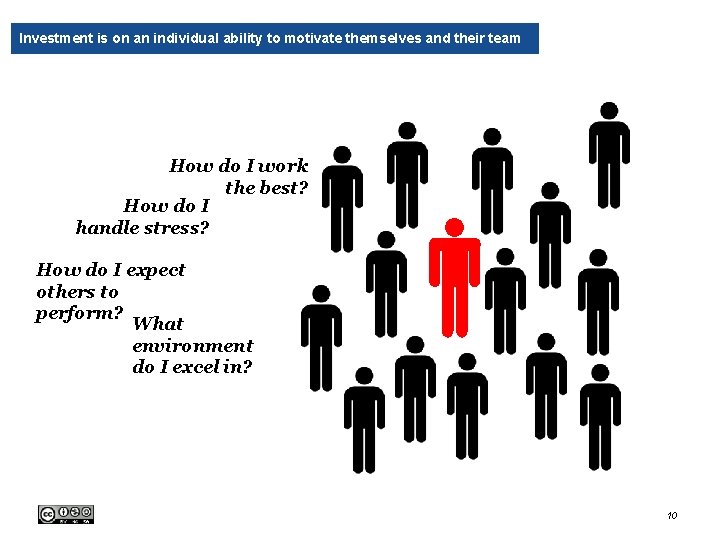
Investment is on an individual ability to motivate themselves and their team How do I work the best? How do I handle stress? How do I expect others to perform? What environment do I excel in? 10
Horizon CBCM ESCI Coaching Program Web. Ex - Agenda 1. Program overview and goals 2. Putting the ESCI 360 in context 3. How to read Hay Group’s ESCI 360 A. B. C. Competencies Sample Case Read 4. Coaching plan review 5. Program resources and tools 6. Next-steps 11
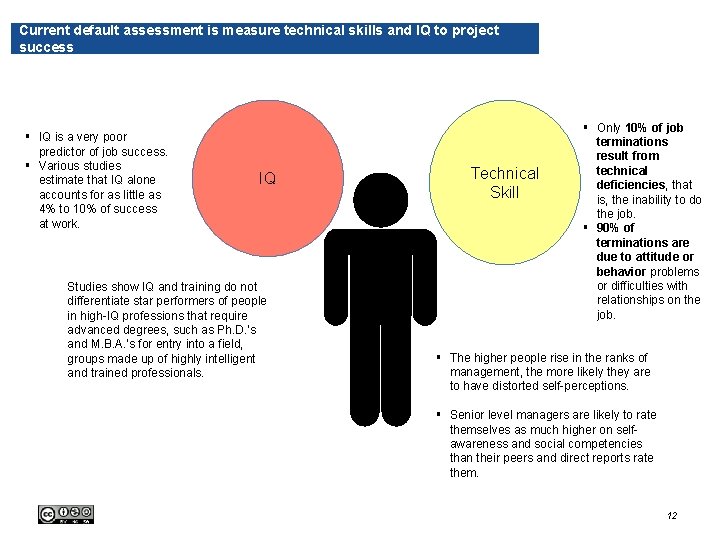
Current default assessment is measure technical skills and IQ to project success § IQ is a very poor predictor of job success. § Various studies estimate that IQ alone accounts for as little as 4% to 10% of success at work. IQ Studies show IQ and training do not differentiate star performers of people in high-IQ professions that require advanced degrees, such as Ph. D. ’s and M. B. A. ’s for entry into a field, groups made up of highly intelligent and trained professionals. Technical Skill § Only 10% of job terminations result from technical deficiencies, that is, the inability to do the job. § 90% of terminations are due to attitude or behavior problems or difficulties with relationships on the job. § The higher people rise in the ranks of management, the more likely they are to have distorted self-perceptions. § Senior level managers are likely to rate themselves as much higher on selfawareness and social competencies than their peers and direct reports rate them. 12
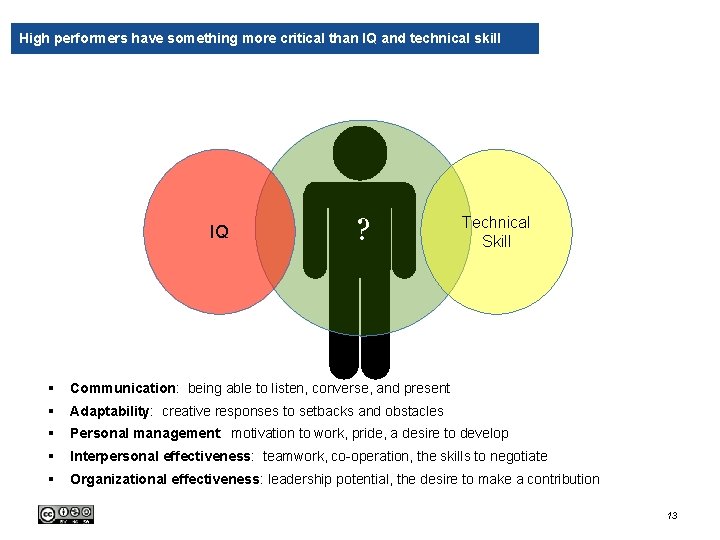
High performers have something more critical than IQ and technical skill IQ ? Technical Skill § Communication: being able to listen, converse, and present § Adaptability: creative responses to setbacks and obstacles § Personal management: motivation to work, pride, a desire to develop § Interpersonal effectiveness: teamwork, co-operation, the skills to negotiate § Organizational effectiveness: leadership potential, the desire to make a contribution 13
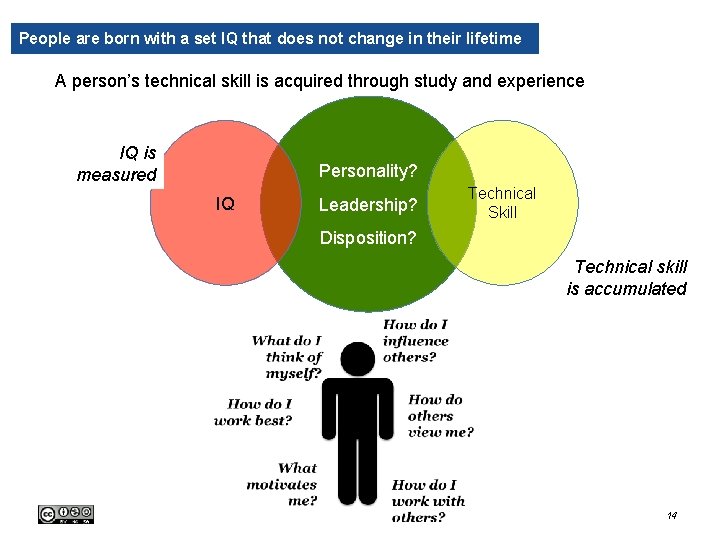
People are born with a set IQ that does not change in their lifetime A person’s technical skill is acquired through study and experience IQ is measured Personality? IQ Leadership? Technical Skill Disposition? Technical skill is accumulated 14
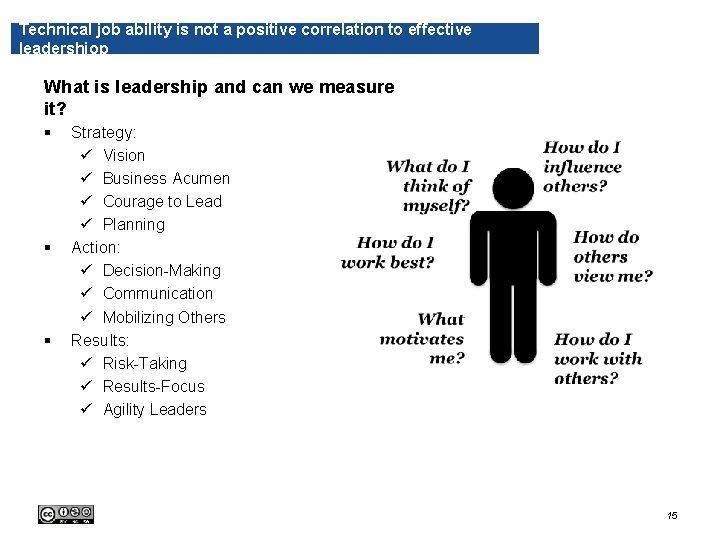
Technical job ability is not a positive correlation to effective leadershiop What is leadership and can we measure it? § § § Strategy: ü Vision ü Business Acumen ü Courage to Lead ü Planning Action: ü Decision-Making ü Communication ü Mobilizing Others Results: ü Risk-Taking ü Results-Focus ü Agility Leaders 15
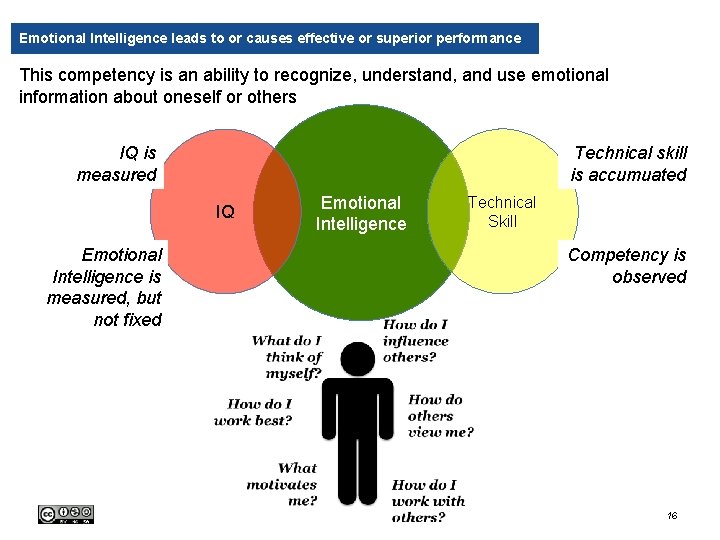
Emotional Intelligence leads to or causes effective or superior performance This competency is an ability to recognize, understand, and use emotional information about oneself or others IQ is measured Technical skill is accumuated IQ Emotional Intelligence is measured, but not fixed Emotional Intelligence Technical Skill Competency is observed 16
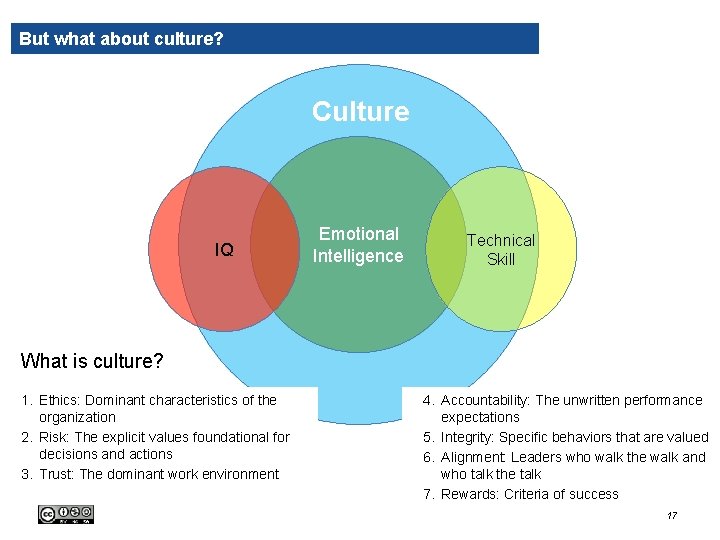
But what about culture? Culture IQ Emotional Intelligence Technical Skill What is culture? 1. Ethics: Dominant characteristics of the organization 2. Risk: The explicit values foundational for decisions and actions 3. Trust: The dominant work environment 4. Accountability: The unwritten performance expectations 5. Integrity: Specific behaviors that are valued 6. Alignment: Leaders who walk the walk and who talk the talk 7. Rewards: Criteria of success 17
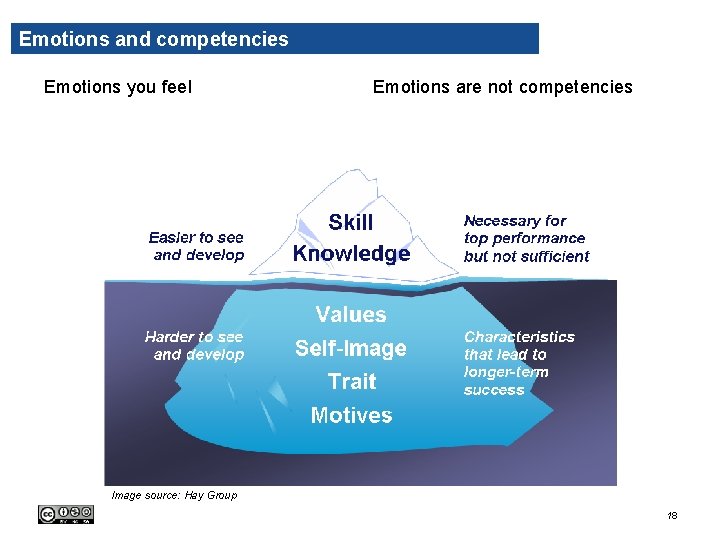
Emotions and competencies Emotions you feel Emotions are not competencies Image source: Hay Group 18
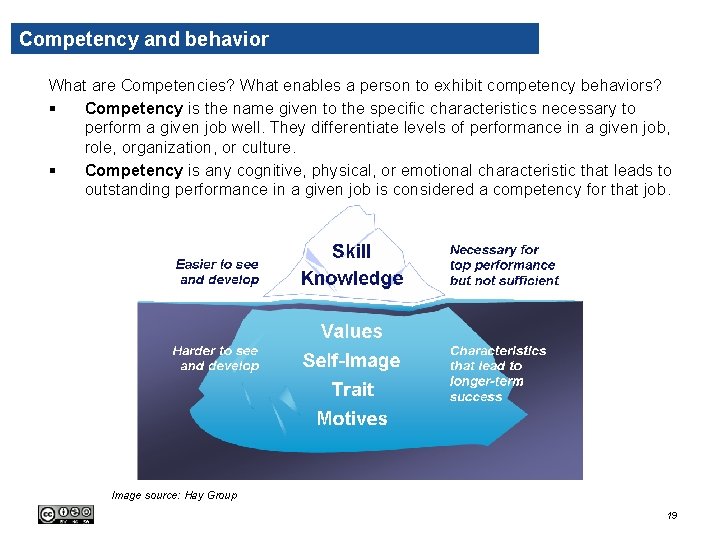
Competency and behavior What are Competencies? What enables a person to exhibit competency behaviors? § Competency is the name given to the specific characteristics necessary to perform a given job well. They differentiate levels of performance in a given job, role, organization, or culture. § Competency is any cognitive, physical, or emotional characteristic that leads to outstanding performance in a given job is considered a competency for that job. Image source: Hay Group 19
What are competencies 1. A cognitive intelligence is an ability to think or analyze information and situations that leads to or causes effective or superior performance. 2. An emotional intelligence is an ability to recognize, understand, and use emotional information about oneself that leads to or causes effective or superior performance; and 3. A social intelligence is the ability to recognize, understand use emotional information about others that leads to or causes effective or superior performance; 20
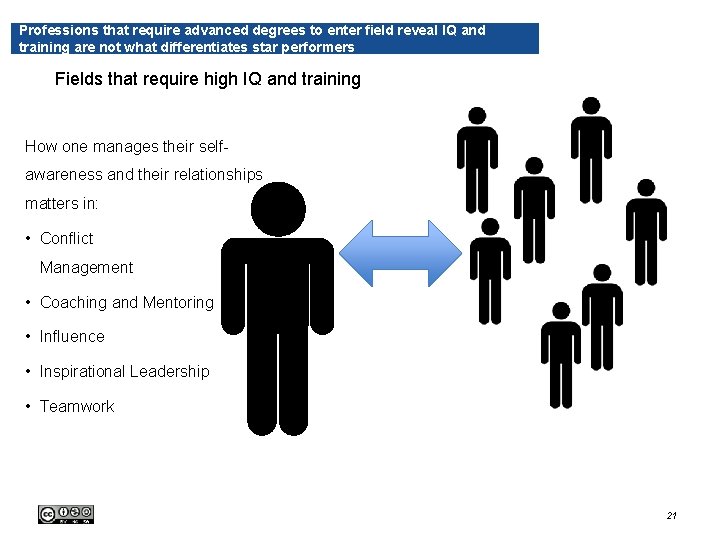
Professions that require advanced degrees to enter field reveal IQ and training are not what differentiates star performers Fields that require high IQ and training How one manages their selfawareness and their relationships matters in: • Conflict Management • Coaching and Mentoring • Influence • Inspirational Leadership • Teamwork 21
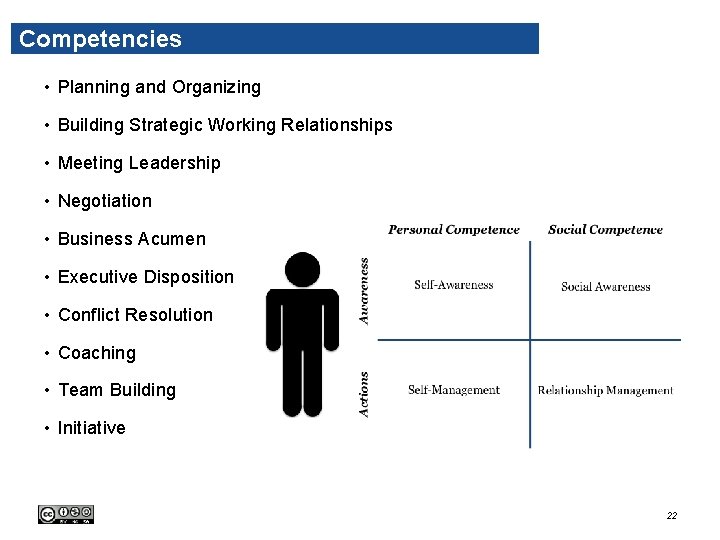
Competencies • Planning and Organizing • Building Strategic Working Relationships • Meeting Leadership • Negotiation • Business Acumen • Executive Disposition • Conflict Resolution • Coaching • Team Building • Initiative 22
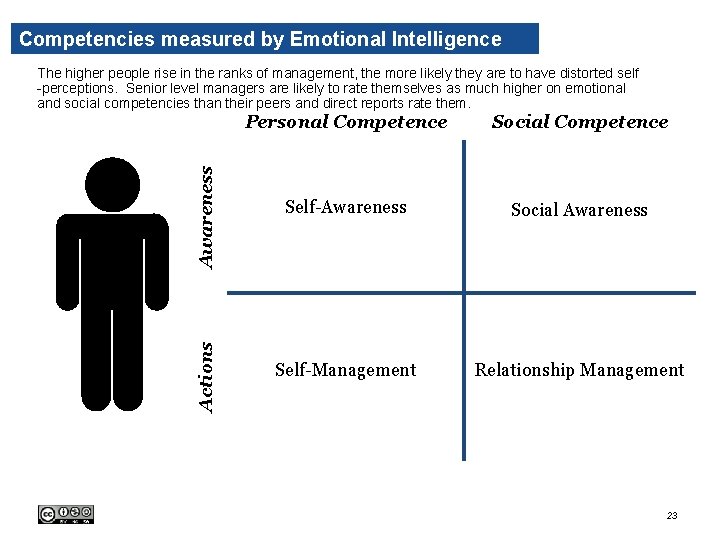
Competencies measured by Emotional Intelligence Actions Awareness The higher people rise in the ranks of management, the more likely they are to have distorted self -perceptions. Senior level managers are likely to rate themselves as much higher on emotional and social competencies than their peers and direct reports rate them. Personal Competence Social Competence Self-Awareness Social Awareness Self-Management Relationship Management 23
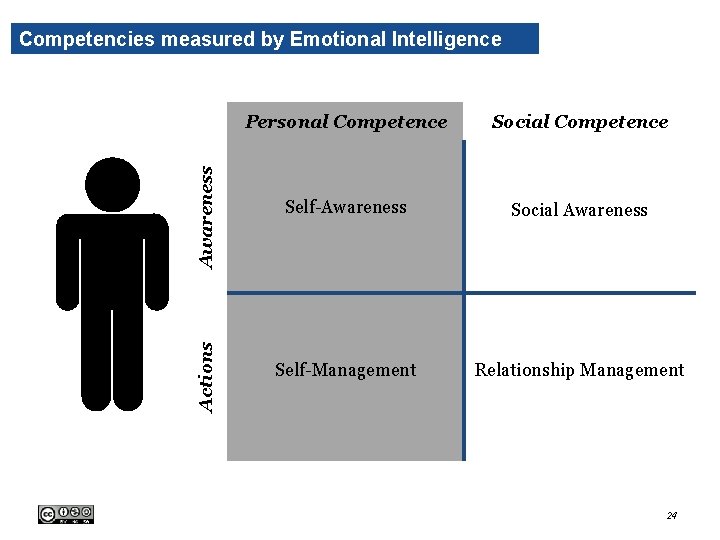
Actions Awareness Competencies measured by Emotional Intelligence Personal Competence Social Competence Self-Awareness Social Awareness Self-Management Relationship Management 24
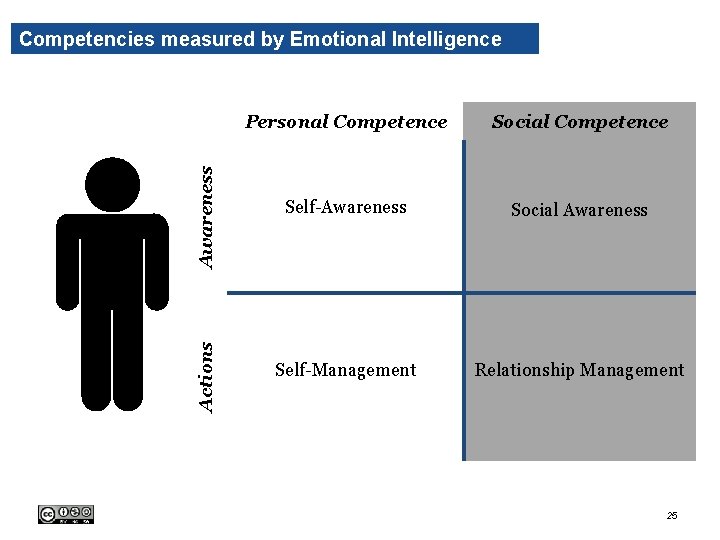
Actions Awareness Competencies measured by Emotional Intelligence Personal Competence Social Competence Self-Awareness Social Awareness Self-Management Relationship Management 25
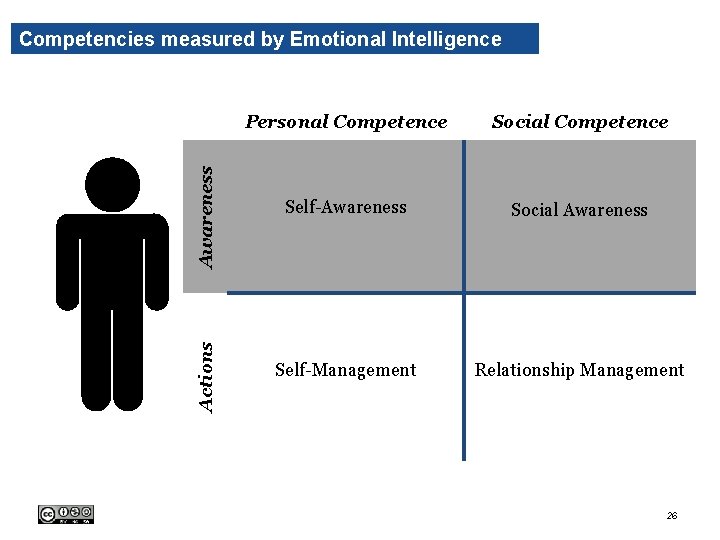
Actions Awareness Competencies measured by Emotional Intelligence Personal Competence Social Competence Self-Awareness Social Awareness Self-Management Relationship Management 26
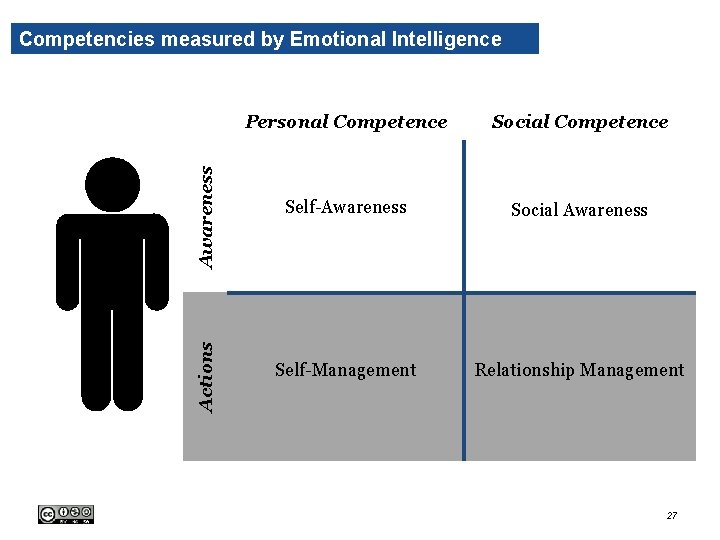
Actions Awareness Competencies measured by Emotional Intelligence Personal Competence Social Competence Self-Awareness Social Awareness Self-Management Relationship Management 27
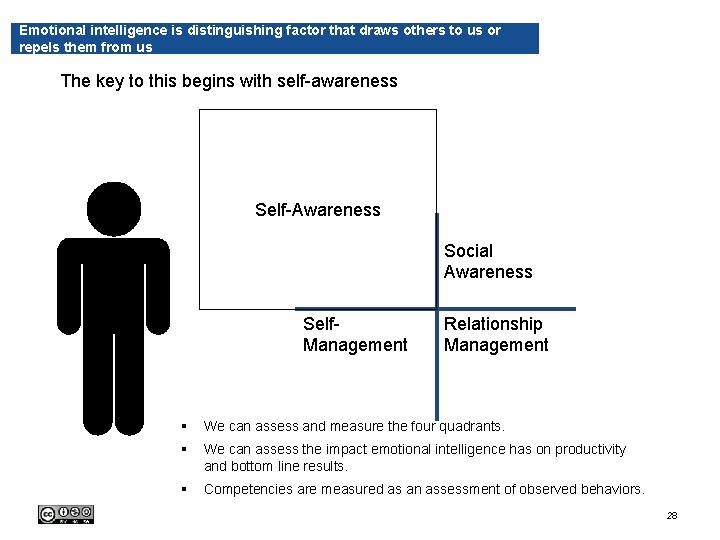
Emotional intelligence is distinguishing factor that draws others to us or repels them from us The key to this begins with self-awareness Self-Awareness Social Awareness Self. Management Relationship Management § We can assess and measure the four quadrants. § We can assess the impact emotional intelligence has on productivity and bottom line results. § Competencies are measured as an assessment of observed behaviors. 28
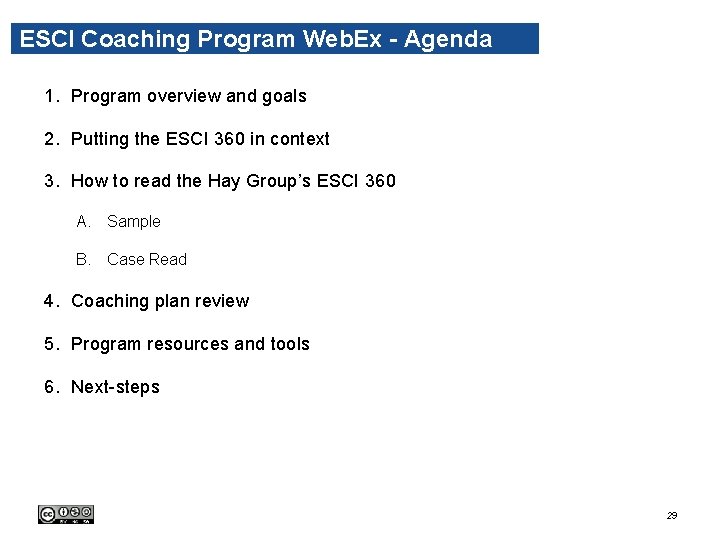
ESCI Coaching Program Web. Ex - Agenda 1. Program overview and goals 2. Putting the ESCI 360 in context 3. How to read the Hay Group’s ESCI 360 A. Sample B. Case Read 4. Coaching plan review 5. Program resources and tools 6. Next-steps 29
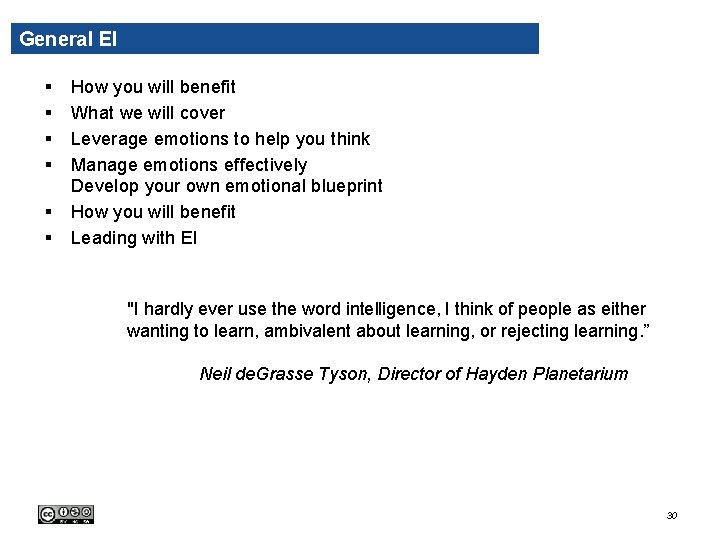
General EI § § § How you will benefit What we will cover Leverage emotions to help you think Manage emotions effectively Develop your own emotional blueprint How you will benefit Leading with EI "I hardly ever use the word intelligence, I think of people as either wanting to learn, ambivalent about learning, or rejecting learning. ” Neil de. Grasse Tyson, Director of Hayden Planetarium 30
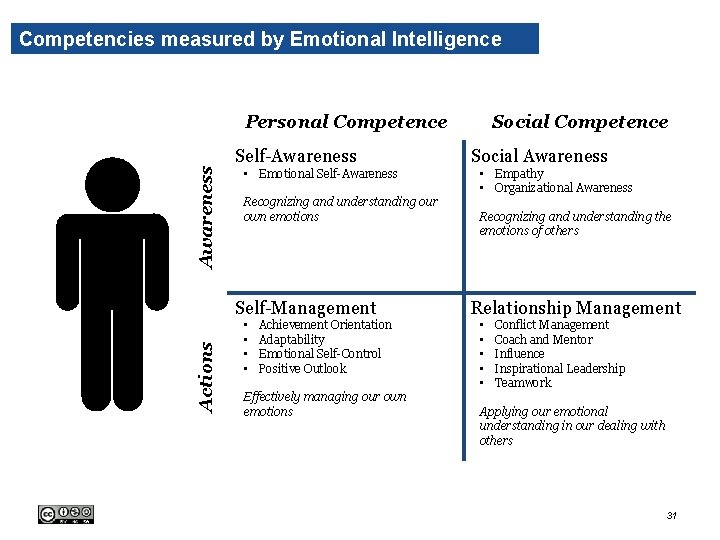
Competencies measured by Emotional Intelligence Awareness Personal Competence Self-Awareness • Emotional Self-Awareness Recognizing and understanding our own emotions Actions Self-Management • • Achievement Orientation Adaptability Emotional Self-Control Positive Outlook Effectively managing our own emotions Social Competence Social Awareness • Empathy • Organizational Awareness Recognizing and understanding the emotions of others Relationship Management • • • Conflict Management Coach and Mentor Influence Inspirational Leadership Teamwork Applying our emotional understanding in our dealing with others 31
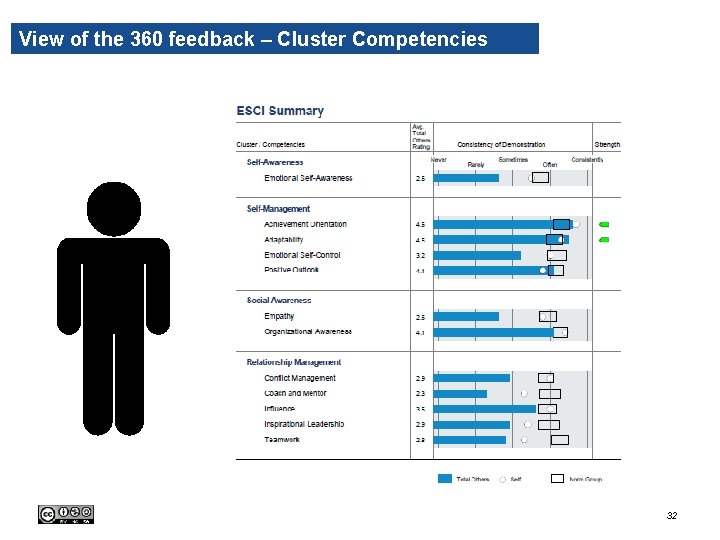
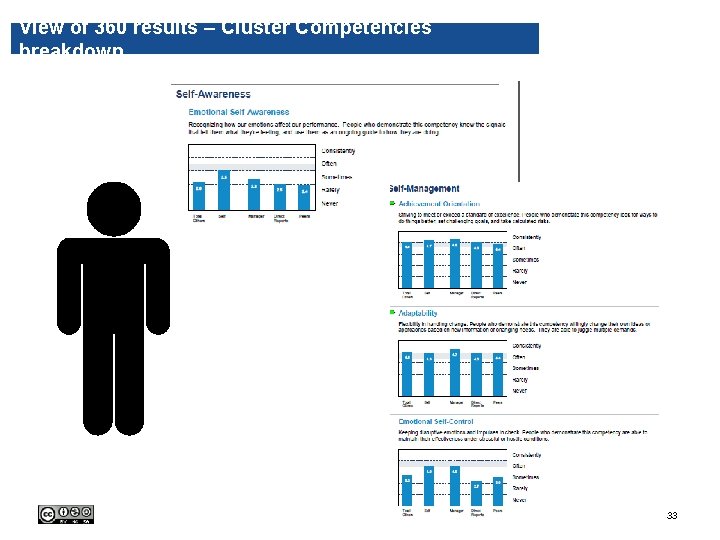
View of the 360 feedback – Cluster Competencies 32
View of 360 results – Cluster Competencies breakdown 33
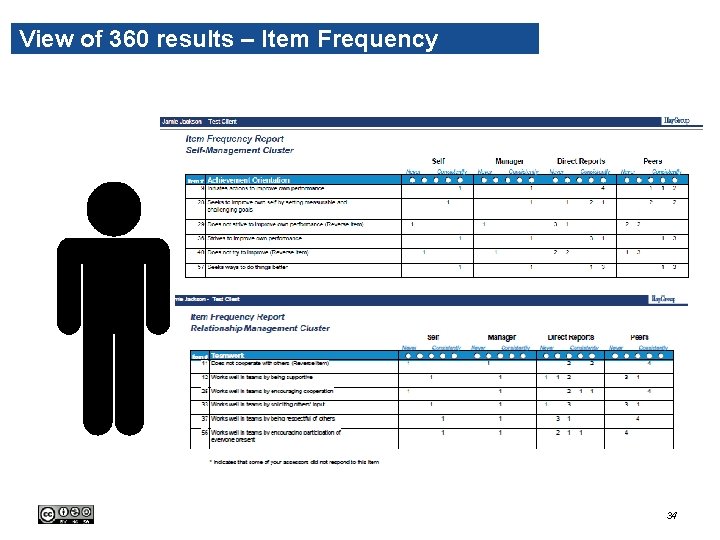
View of 360 results – Item Frequency 34
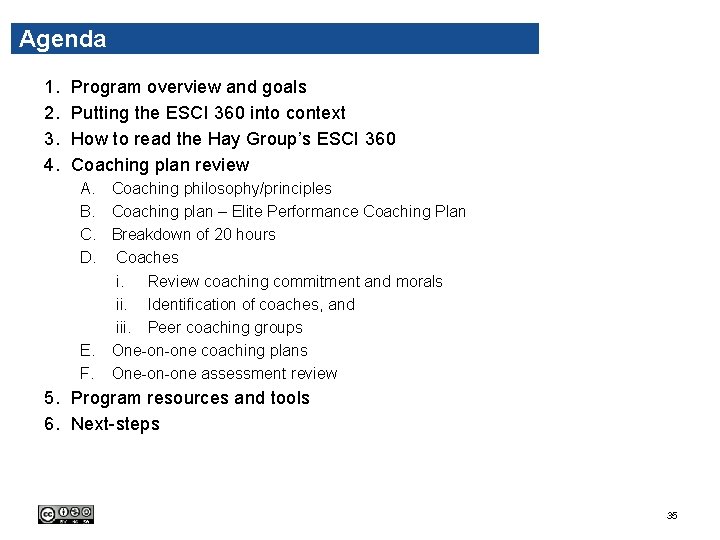
Agenda 1. 2. 3. 4. Program overview and goals Putting the ESCI 360 into context How to read the Hay Group’s ESCI 360 Coaching plan review A. Coaching philosophy/principles B. Coaching plan – Elite Performance Coaching Plan C. Breakdown of 20 hours D. Coaches i. Review coaching commitment and morals ii. Identification of coaches, and iii. Peer coaching groups E. One-on-one coaching plans F. One-on-one assessment review 5. Program resources and tools 6. Next-steps 35
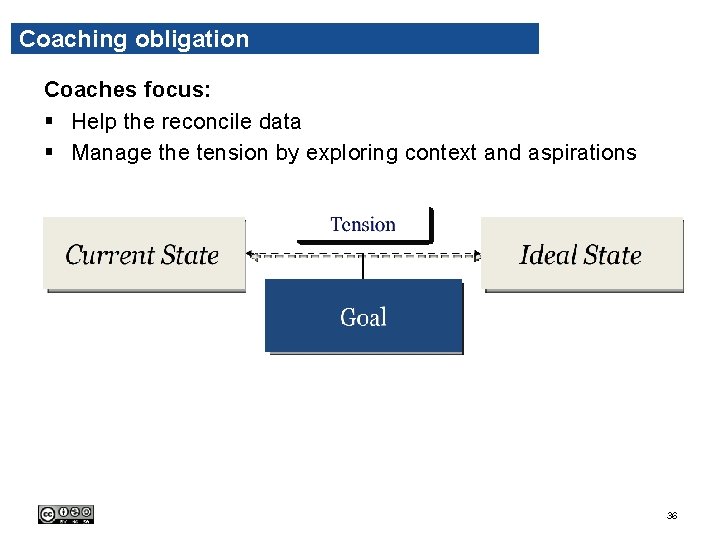
Coaching obligation Coaches focus: § Help the reconcile data § Manage the tension by exploring context and aspirations 36
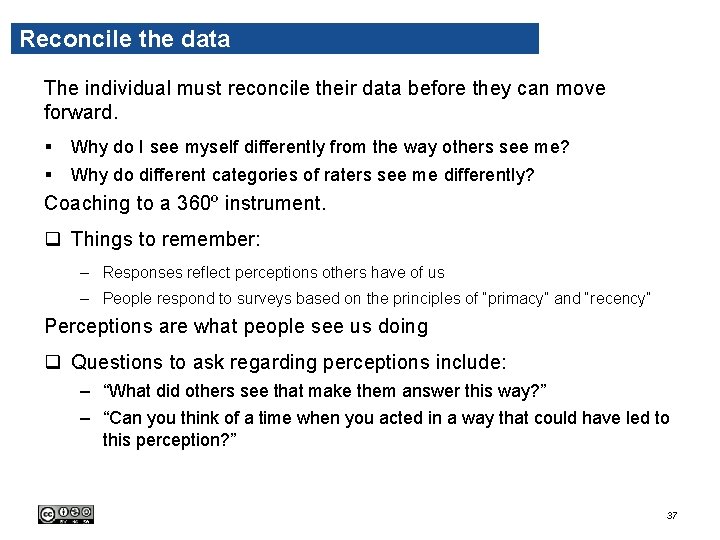
Reconcile the data The individual must reconcile their data before they can move forward. § § Why do I see myself differently from the way others see me? Why do different categories of raters see me differently? Coaching to a 360º instrument. q Things to remember: – Responses reflect perceptions others have of us – People respond to surveys based on the principles of “primacy” and “recency” Perceptions are what people see us doing q Questions to ask regarding perceptions include: – “What did others see that make them answer this way? ” – “Can you think of a time when you acted in a way that could have led to this perception? ” 37
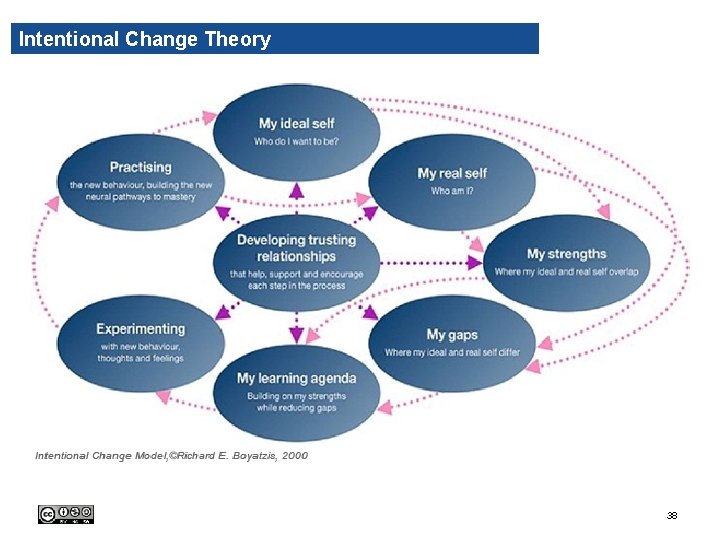
Intentional Change Theory 38
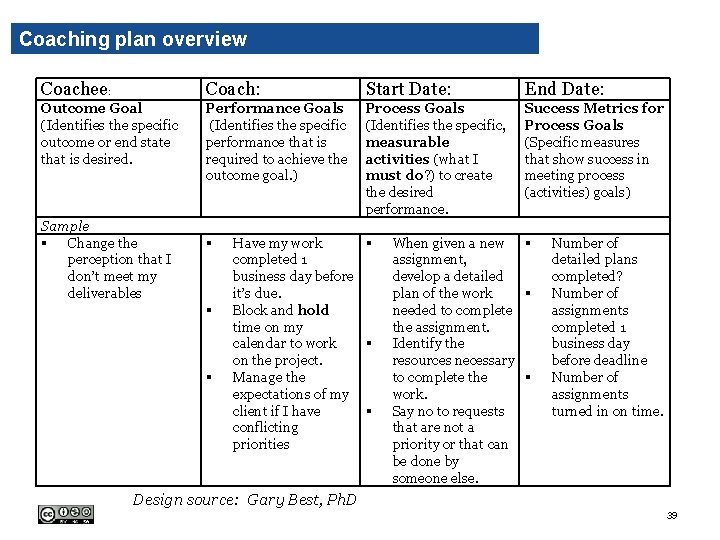
Coaching plan overview Coachee: Coach: Start Date: End Date: Outcome Goal (Identifies the specific outcome or end state that is desired. Performance Goals (Identifies the specific performance that is required to achieve the outcome goal. ) Process Goals (Identifies the specific, measurable activities (what I must do? ) to create the desired performance. Success Metrics for Process Goals (Specific measures that show success in meeting process (activities) goals) Sample § Change the perception that I don’t meet my deliverables § § § Have my work § completed 1 business day before it’s due. Block and hold time on my calendar to work § on the project. Manage the expectations of my client if I have § conflicting priorities When given a new § assignment, develop a detailed plan of the work § needed to complete the assignment. Identify the resources necessary to complete the § work. Say no to requests that are not a priority or that can be done by someone else. Number of detailed plans completed? Number of assignments completed 1 business day before deadline Number of assignments turned in on time. Design source: Gary Best, Ph. D 39
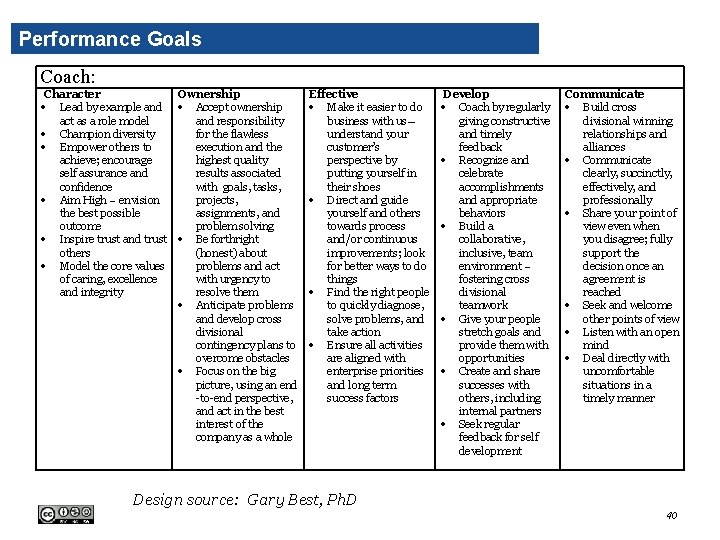
Performance Goals Coach: Character Ownership Lead by example and Accept ownership act as a role model and responsibility Champion diversity for the flawless Empower others to execution and the achieve; encourage highest quality self assurance and results associated confidence with goals, tasks, Aim High – envision projects, the best possible assignments, and outcome problem solving Inspire trust and trust Be forthright others (honest) about Model the core values problems and act of caring, excellence with urgency to and integrity resolve them Anticipate problems and develop cross divisional contingency plans to overcome obstacles Focus on the big picture, using an end -to-end perspective, and act in the best interest of the company as a whole Effective Make it easier to do business with us— understand your customer’s perspective by putting yourself in their shoes Direct and guide yourself and others towards process and/or continuous improvements; look for better ways to do things Find the right people to quickly diagnose, solve problems, and take action Ensure all activities are aligned with enterprise priorities and long term success factors Develop Coach by regularly giving constructive and timely feedback Recognize and celebrate accomplishments and appropriate behaviors Build a collaborative, inclusive, team environment – fostering cross divisional teamwork Give your people stretch goals and provide them with opportunities Create and share successes with others, including internal partners Seek regular feedback for self development Communicate Build cross divisional winning relationships and alliances Communicate clearly, succinctly, effectively, and professionally Share your point of view even when you disagree; fully support the decision once an agreement is reached Seek and welcome other points of view Listen with an open mind Deal directly with uncomfortable situations in a timely manner Design source: Gary Best, Ph. D 40
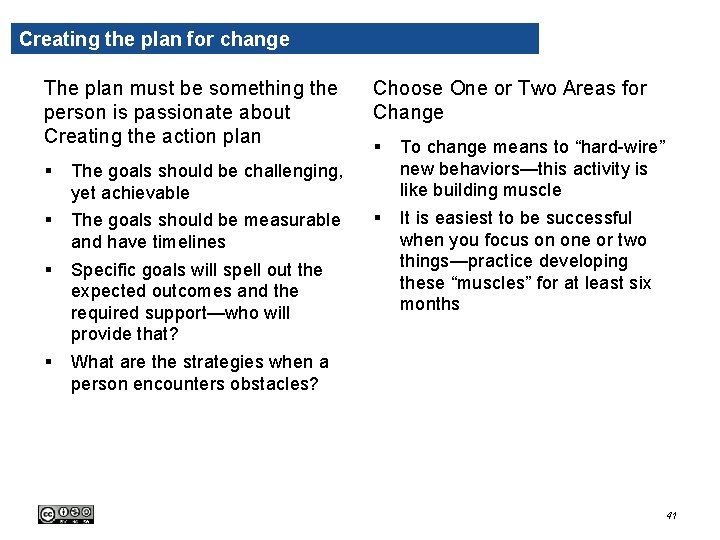
Creating the plan for change The plan must be something the person is passionate about Creating the action plan § The goals should be challenging, yet achievable § The goals should be measurable and have timelines § Specific goals will spell out the expected outcomes and the required support—who will provide that? § What are the strategies when a person encounters obstacles? Choose One or Two Areas for Change § To change means to “hard-wire” new behaviors—this activity is like building muscle § It is easiest to be successful when you focus on one or two things—practice developing these “muscles” for at least six months 41
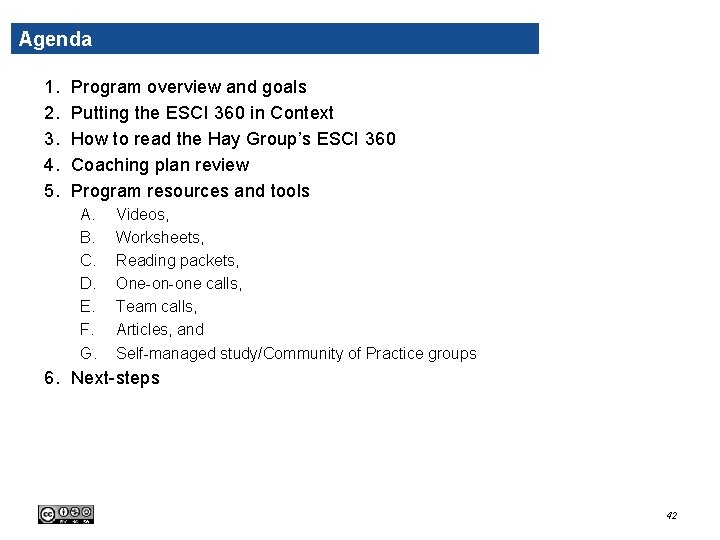
Agenda 1. 2. 3. 4. 5. Program overview and goals Putting the ESCI 360 in Context How to read the Hay Group’s ESCI 360 Coaching plan review Program resources and tools A. B. C. D. E. F. G. Videos, Worksheets, Reading packets, One-on-one calls, Team calls, Articles, and Self-managed study/Community of Practice groups 6. Next-steps 42
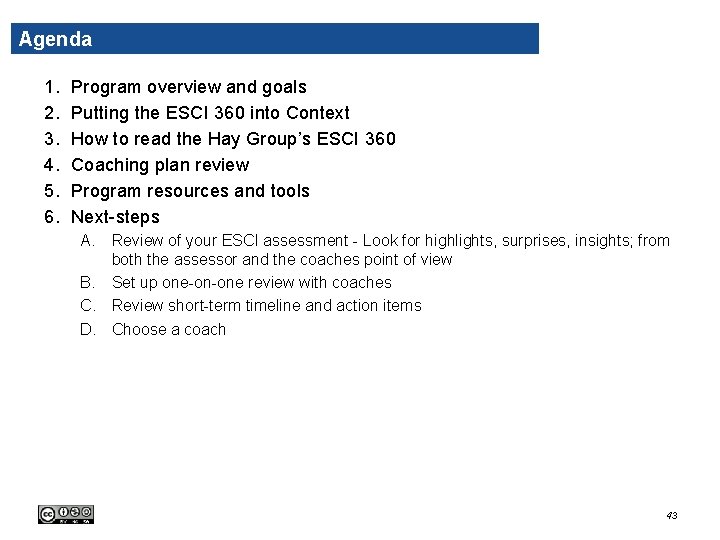
Agenda 1. 2. 3. 4. 5. 6. Program overview and goals Putting the ESCI 360 into Context How to read the Hay Group’s ESCI 360 Coaching plan review Program resources and tools Next-steps A. Review of your ESCI assessment - Look for highlights, surprises, insights; from both the assessor and the coaches point of view B. Set up one-on-one review with coaches C. Review short-term timeline and action items D. Choose a coach 43
Contact @Toby. Elwin But I don’t want to go among mad people, ” Alice remarked email@Toby. Elwin. com “Oh, you can’t help that”, said the Cat: “we’re all mad here. https: //Toby. Elwin. com I’m mad. You’re mad. ” “How do you know I’m mad? ” said Alice “You must be, ” said the Cat, “or you wouldn’t have come here. ” Alice’s Adventures in Wonderland, by Lewis Carroll Blog Resources @Toby. Elwin. com q Human Capital Risk q Emotional Intelligence q Appreciative Inquiry 44