
Emotional Behavior Disorder Characteristics of ED Academic IDEA
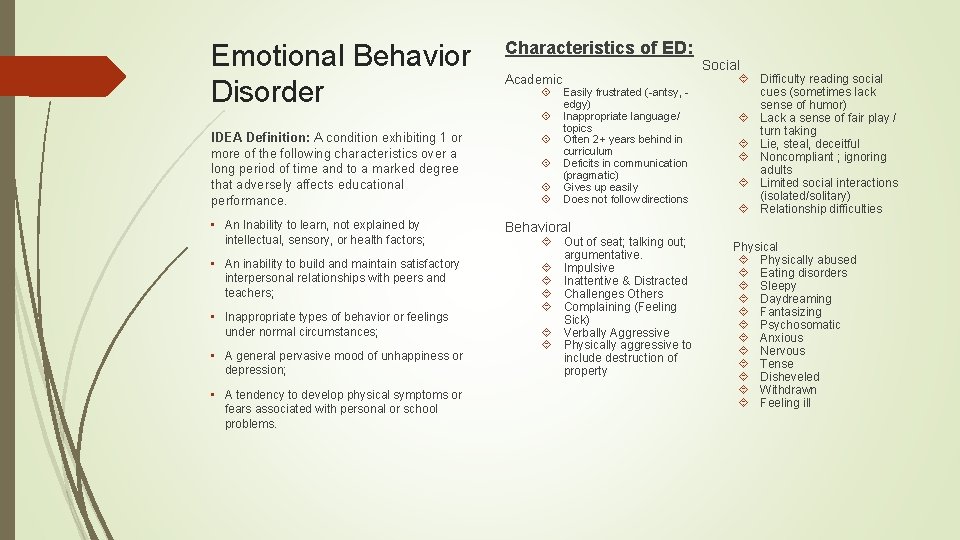
Emotional Behavior Disorder Characteristics of ED: Academic IDEA Definition: A condition exhibiting 1 or more of the following characteristics over a long period of time and to a marked degree that adversely affects educational performance. • An Inability to learn, not explained by intellectual, sensory, or health factors; • An inability to build and maintain satisfactory interpersonal relationships with peers and teachers; • Inappropriate types of behavior or feelings under normal circumstances; • A general pervasive mood of unhappiness or depression; • A tendency to develop physical symptoms or fears associated with personal or school problems. Easily frustrated (-antsy, edgy) Inappropriate language/ topics Often 2+ years behind in curriculum Deficits in communication (pragmatic) Gives up easily Does not follow directions Social Difficulty reading social cues (sometimes lack sense of humor) Lack a sense of fair play / turn taking Lie, steal, deceitful Noncompliant ; ignoring adults Limited social interactions (isolated/solitary) Relationship difficulties Behavioral Out of seat; talking out; argumentative. Impulsive Inattentive & Distracted Challenges Others Complaining (Feeling Sick) Verbally Aggressive Physically aggressive to include destruction of property Physically abused Eating disorders Sleepy Daydreaming Fantasizing Psychosomatic Anxious Nervous Tense Disheveled Withdrawn Feeling ill
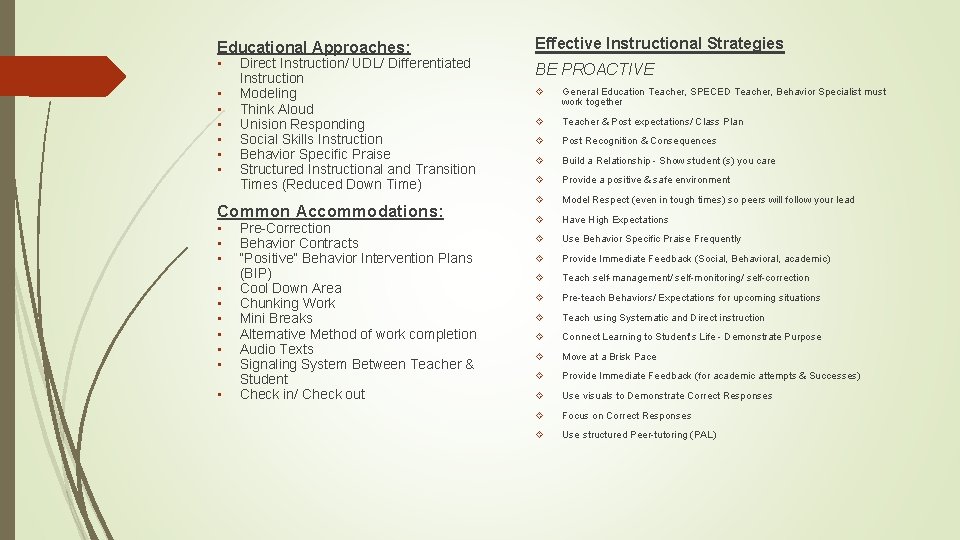
Educational Approaches: • • Direct Instruction/ UDL/ Differentiated Instruction Modeling Think Aloud Unision Responding Social Skills Instruction Behavior Specific Praise Structured Instructional and Transition Times (Reduced Down Time) Common Accommodations: • • • Pre-Correction Behavior Contracts “Positive” Behavior Intervention Plans (BIP) Cool Down Area Chunking Work Mini Breaks Alternative Method of work completion Audio Texts Signaling System Between Teacher & Student Check in/ Check out Effective Instructional Strategies BE PROACTIVE General Education Teacher, SPECED Teacher, Behavior Specialist must work together Teacher & Post expectations/ Class Plan Post Recognition & Consequences Build a Relationship - Show student (s) you care Provide a positive & safe environment Model Respect (even in tough times) so peers will follow your lead Have High Expectations Use Behavior Specific Praise Frequently Provide Immediate Feedback (Social, Behavioral, academic) Teach self-management/ self-monitoring/ self-correction Pre-teach Behaviors/ Expectations for upcoming situations Teach using Systematic and Direct instruction Connect Learning to Student’s Life - Demonstrate Purpose Move at a Brisk Pace Provide Immediate Feedback (for academic attempts & Successes) Use visuals to Demonstrate Correct Responses Focus on Correct Responses Use structured Peer-tutoring (PAL)
- Slides: 2