
Emotional Adjustment To Visual Impairments The effects of
- Slides: 37
Emotional Adjustment To Visual Impairments
The effects of becoming blind ● ● Blind at Birth Acquiring blindness during school age Acquiring blindness as a young adult Acquiring blindness as an elder
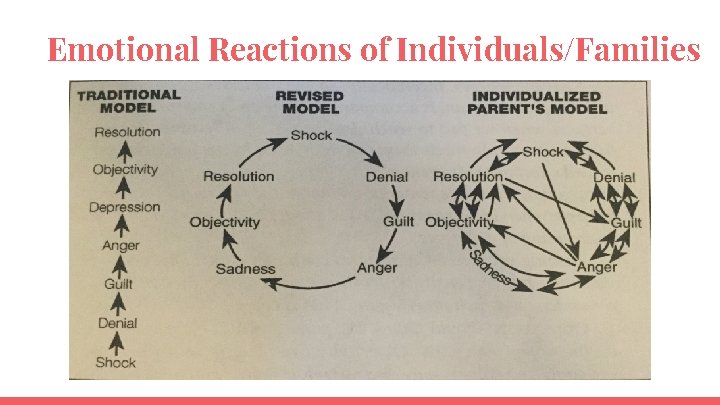
Emotional Reactions of Individuals/Families
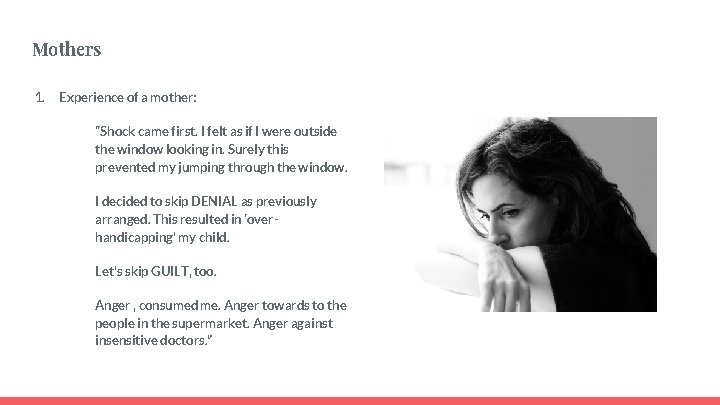
Mothers 1. Experience of a mother: “Shock came first. I felt as if I were outside the window looking in. Surely this prevented my jumping through the window. I decided to skip DENIAL as previously arranged. This resulted in ‘overhandicapping’ my child. Let’s skip GUILT, too. Anger , consumed me. Anger towards to the people in the supermarket. Anger against insensitive doctors. ”
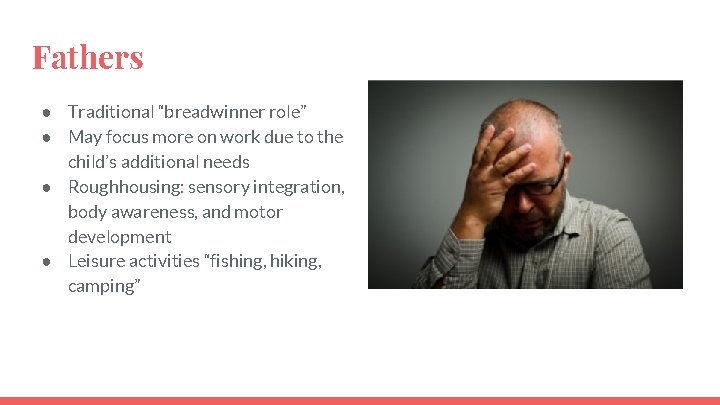
Fathers ● Traditional “breadwinner role” ● May focus more on work due to the child’s additional needs ● Roughhousing: sensory integration, body awareness, and motor development ● Leisure activities “fishing, hiking, camping”
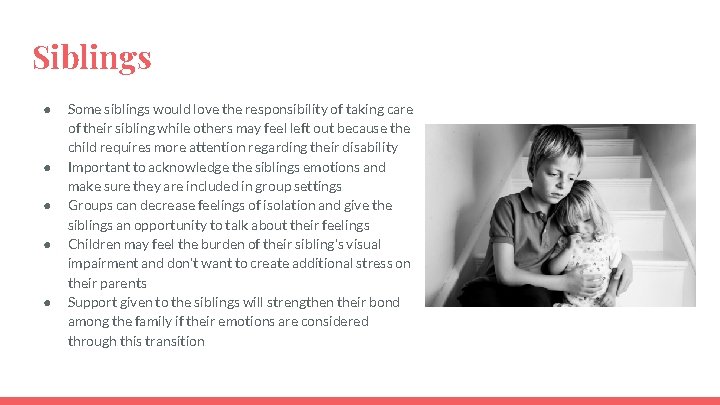
Siblings ● ● ● Some siblings would love the responsibility of taking care of their sibling while others may feel left out because the child requires more attention regarding their disability Important to acknowledge the siblings emotions and make sure they are included in group settings Groups can decrease feelings of isolation and give the siblings an opportunity to talk about their feelings Children may feel the burden of their sibling’s visual impairment and don’t want to create additional stress on their parents Support given to the siblings will strengthen their bond among the family if their emotions are considered through this transition
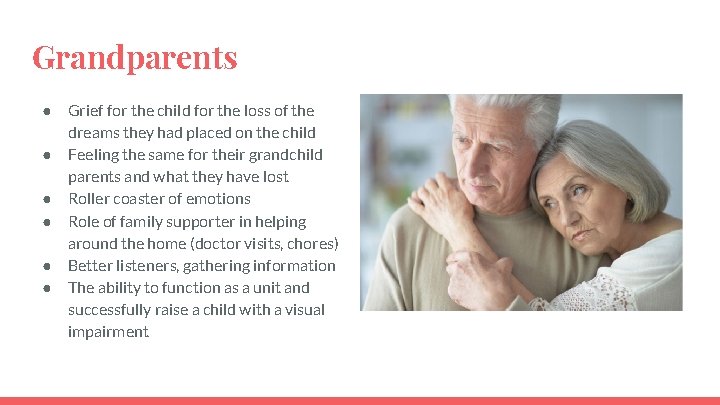
Grandparents ● ● ● Grief for the child for the loss of the dreams they had placed on the child Feeling the same for their grandchild parents and what they have lost Roller coaster of emotions Role of family supporter in helping around the home (doctor visits, chores) Better listeners, gathering information The ability to function as a unit and successfully raise a child with a visual impairment
Youtuber: Molly Burke https: //youtu. be/VMvu 1 s. AS 6 CE Molly’s 10 year journey of becoming visually impaired
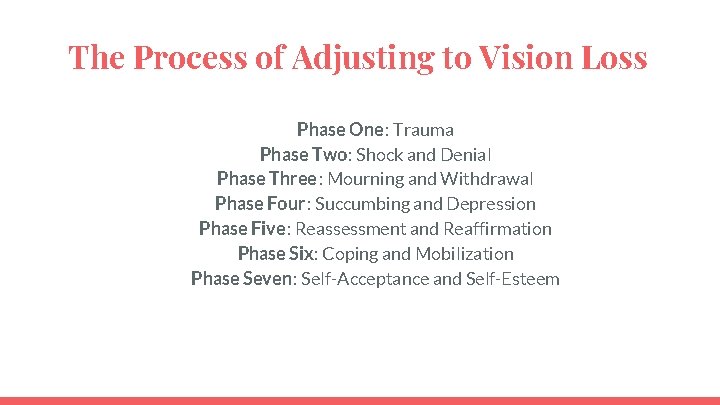
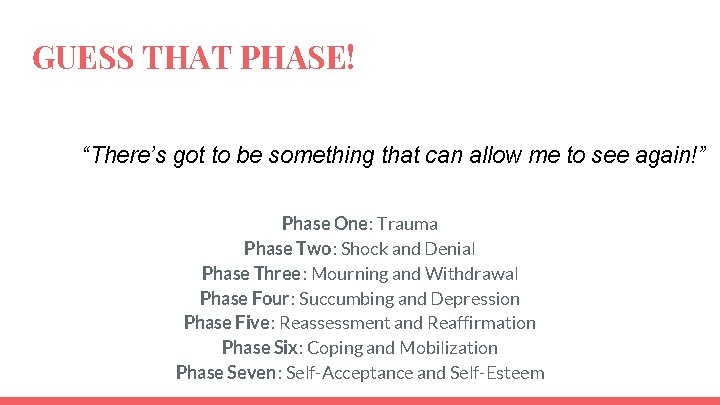
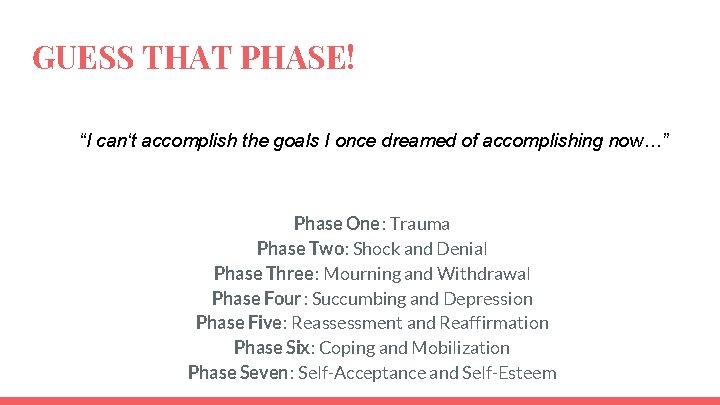
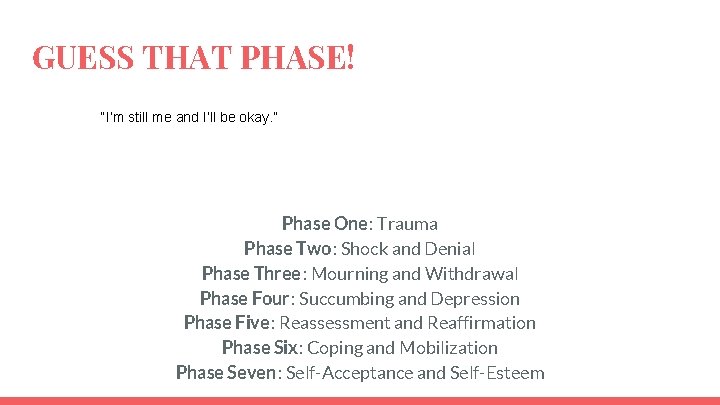
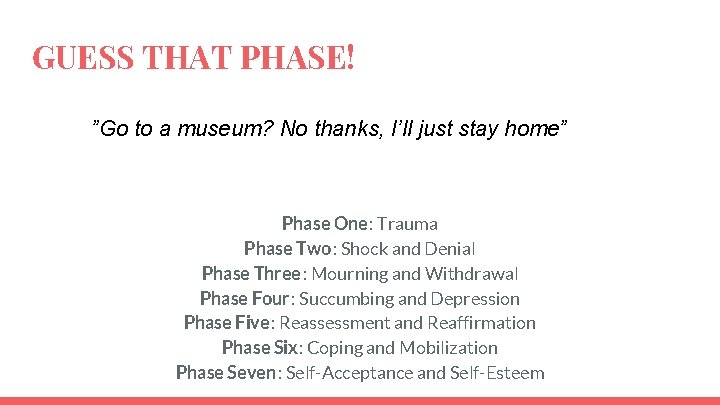
The Process of Adjusting to Vision Loss Phase One: Trauma Phase Two: Shock and Denial Phase Three : Mourning and Withdrawal Phase Four : Succumbing and Depression Phase Five: Reassessment and Reaffirmation Phase Six: Coping and Mobilization Phase Seven: Self-Acceptance and Self-Esteem
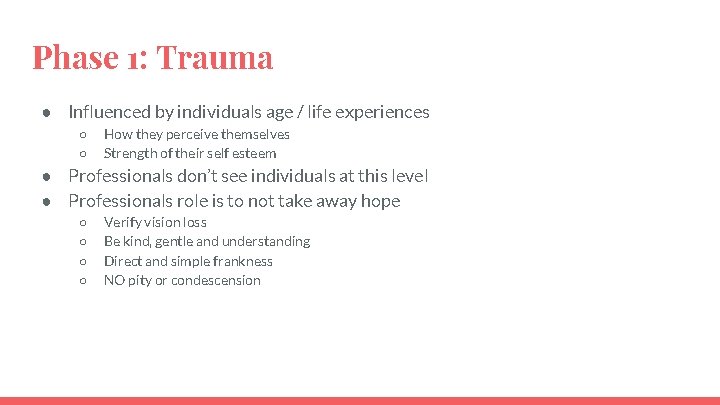
Phase 1: Trauma ● Influenced by individuals age / life experiences ○ ○ How they perceive themselves Strength of their self esteem ● Professionals don’t see individuals at this level ● Professionals role is to not take away hope ○ ○ Verify vision loss Be kind, gentle and understanding Direct and simple frankness NO pity or condescension
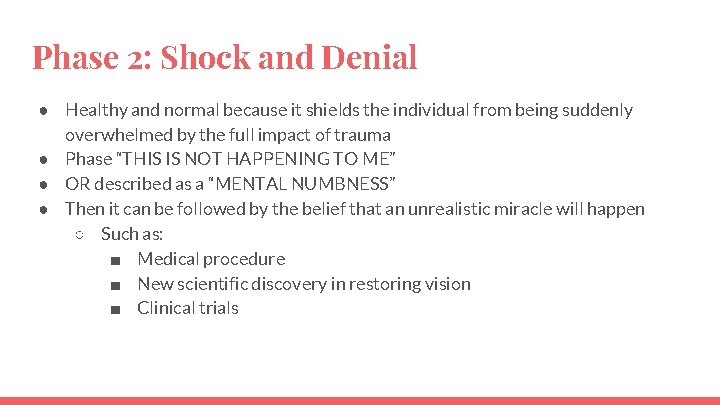
Phase 2: Shock and Denial ● Healthy and normal because it shields the individual from being suddenly overwhelmed by the full impact of trauma ● Phase “THIS IS NOT HAPPENING TO ME” ● OR described as a “MENTAL NUMBNESS” ● Then it can be followed by the belief that an unrealistic miracle will happen ○ Such as: ■ Medical procedure ■ New scientific discovery in restoring vision ■ Clinical trials
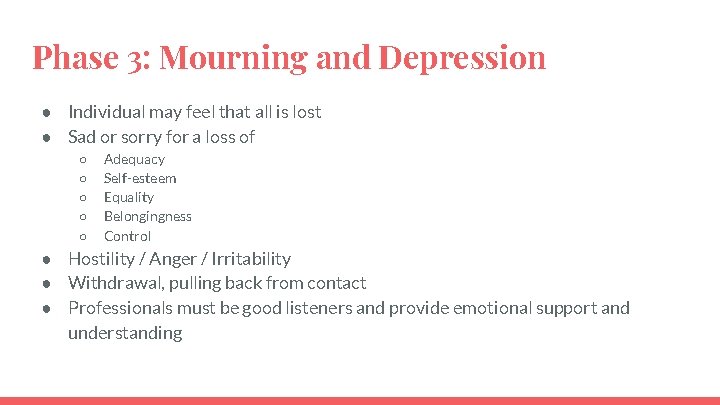
Phase 3: Mourning and Depression ● Individual may feel that all is lost ● Sad or sorry for a loss of ○ ○ ○ Adequacy Self-esteem Equality Belongingness Control ● Hostility / Anger / Irritability ● Withdrawal, pulling back from contact ● Professionals must be good listeners and provide emotional support and understanding
Phase 4: Succumbing and Withdraw ● Also known as the "I can't" phase. Some individuals describe this as "giving in" because of their real or perceived loss of personal freedom or independence. The areas of loss vary, but typically include a loss of income, travel (in particular is the ability to drive), recreational activities, social interactions, etc. ● Depression can also be described as "the D's. " This includes despair, discouragement, disinterest, distress, despondency, and disenchantment. May lead to suicidal thoughts, although most suicidal thoughts and death wishes soon disappear. Depression may be a common fact of life; however, serious and prolonged depression is not. ● Support : family, friends, and staff the depressive state of a person will become less intense and less frequent ● An individual without support they are left to deal with severe depression alone
Phase 5: Reassessment and Reaffirmation ● ● ● “Is life still worth living? ” Can be a turning point May accept vision loss but does nothing to adjust it Realize they must deal with things differently now Process of determining individual strengths and weaknesses Role of Professional: ○ ○ Help foster a positive frame of mindset Encourage positive outlook through positive examples Allow individual to experience success in training Help determine motivational factors that can help adjusting process
Phase 6: Coping and Mobilization ● ● ● Phase where they feel self-conscious in public Support system is important bc it is encouraging and supportive Individuals with visual impairments using statements in a positive way The "I can" or the "some things I do in a different way" phase. Encouraging the individual to take part of daily activities and be active in planning Develop confidence and from there on more confidence arises Coping refers to the process of learning to manage the demands of one's physical and social environment. While learning new skills and developing resources, people in the coping phase frequently comment that they feel self-conscious in public. This phase is where the individual's support system can have the most effect by being encouraging and supportive. Emphasis is on ability, and the individual should be encouraged to take an active part in planning any activity he participates in. A little confidence gained from a successful experience has a way of generating even more confidence.
Phase 7: Self-Acceptance and Self-Esteem ● ● ● ● “I like me” “I am somebody” Learned to accept all personal attributes Strengths and limitations Self-approval and self-respect Begin to build or rebuild relationships Encouraged to be less dependent on VI staff and use resources from community Role of Professionals: ○ ○ ○ Reassure individuals that life can be what they make it to be Discourage “as if” and “if only” Encourage understanding and developing a positive attitude
GUESS THAT PHASE! “There’s got to be something that can allow me to see again!” Phase One: Trauma Phase Two: Shock and Denial Phase Three : Mourning and Withdrawal Phase Four : Succumbing and Depression Phase Five: Reassessment and Reaffirmation Phase Six: Coping and Mobilization Phase Seven: Self-Acceptance and Self-Esteem
GUESS THAT PHASE! “I can‘t accomplish the goals I once dreamed of accomplishing now…” Phase One: Trauma Phase Two: Shock and Denial Phase Three : Mourning and Withdrawal Phase Four : Succumbing and Depression Phase Five: Reassessment and Reaffirmation Phase Six: Coping and Mobilization Phase Seven: Self-Acceptance and Self-Esteem
GUESS THAT PHASE! “I’m still me and I’ll be okay. ” Phase One: Trauma Phase Two: Shock and Denial Phase Three : Mourning and Withdrawal Phase Four : Succumbing and Depression Phase Five: Reassessment and Reaffirmation Phase Six: Coping and Mobilization Phase Seven: Self-Acceptance and Self-Esteem
GUESS THAT PHASE! ”Go to a museum? No thanks, I’ll just stay home” Phase One: Trauma Phase Two: Shock and Denial Phase Three : Mourning and Withdrawal Phase Four : Succumbing and Depression Phase Five: Reassessment and Reaffirmation Phase Six: Coping and Mobilization Phase Seven: Self-Acceptance and Self-Esteem
Statements To Help Coping Families ● ● ● “It sounds like you’re feeling a great deal of pain. ” “You must be feeling confused and overwhelmed now. ” “Not knowing what to expect must be scary. ” ● Listen quietly and attentively ● Acknowledge their feelings with a word “Oh … Mmm … I understand …” ● Give their feelings a name “You are really frustrated with your homework. ” ● Give the child his or her wishes in fantasy “I wish I could make it stop raining right now. ● Accept all feelings ● Limit unacceptable actions “I can see how angry you are at your brother. Tell him what you want with words, not fists. ”
Supporting families through Transitions ● Provide relevant information ● Share info in a sensitive and confidential manner ● Encourage parents to use direct communication in expressing their concerns & priorities ● Give families time to process assessment results before beginning educational program planning ● No jargon, help family understand information ● Assist family in preparing questions about their child to medical personnel or other professionals
Transition from Home to Hospital ● ● ● Ongoing caretaking responsibilities Social contacts and activities may be reduced Medical procedures implemented at home Feeling of guilt Need to develop advocacy strategies New vocabulary
Transition from Home to School ● ● ● Teachers and new routines Losing control of several aspects General v. Special Education classrooms New policies, procedures and options Transportation
Transition from School to School ● Inclusive campus (children with and without disabilities ● Curiosity of other parents and students ○ ○ Appearance of eyes Special equipment Long cane Magnifiers ● Great deal of energy explaining to new teachers about their child who is visually impaired ○ ○ O&M training Interpreter services ● Ensuring continuity of services from one setting to another
Group Open Discussion
Molly Burke https: //www. youtube. com/watch? v=H-T 01 Oa-ceo Start: 5 min ● Stories from her childhood experience and how she felt
Helping Families through a transition EFFECTIVE SUPPORT = WELL BEING & DEVELOPMENT OF CHILD ● ● ● ● Face to face meetings Provide in-service training to the school staff Provide resource contacts Inform family of applicable laws, rights and available services Advocacy training Encourage collaboration between families and professionals Provide contact with other families for support putposes
Horstmeyer Family https: //www. youtube. com/watch? v=9_Qe. Qc. Svey 0&feature=youtu. be
Culture Clash ● ● ● ● Occurs when values at home are not supported or valued at school Family attitudes towards their children and how they learn vary Role of parents in their child’s development varies Beliefs of what is best for their child varies Family structure / organization Degree of isolation from other cultures / communities Socioeconomic status ○ ○ ○ Value obedience for success Parents are teachers of their children (p 39) Democratic style versus Authoritarian style (37) (Give examples of Asian and US culture p. 37 early focus)
Dealing with Cultural Differences ● Listen to families descriptions of reasoning behind specific cultural practices ● Explain to families the professional reason for using a particular approach and how it benefits their child ● Compromise new approaches ● Integrate values and beliefs ● Remain open-minded and open-communication ● Listen carefully ● Discuss concerns ● Clarify confusion ● Check back regularly
As educators, we need cultural competence https: //www. youtube. com/watch? v=5 Qb. Sz. AOg Gn. A&feature=youtu. be
Adolescence Adult Years ● Similar challenges as ● ● ● children Independence Dating Social settings Driving Resistant to use low vision devices “Passing” ● Deny having a severe impairment ● Delay seeking medical attention ● Worried about future & earning a living ● Being attractive to a significant other ● Resist seeking out support services ● Fear of being labeled disabled ● Fear of having driver’s license being taken away ● Jeopardizing their employment
Elder Years ● Dealing with other significant changes in their lives ○ ● ● Medical, financial, loss of spouse/family Deny changes in visual functioning Giving up driving Losing control of one’s life Withdraw from situations where they have to explain their visual status
Molly Burke “ 10 Worst Things About Being Blind” https: //youtu. be/p. Ylnga. Rxnw. A? t=60
Fear of Losing Vision ● Stages can be repeated ● Adults with diabetic retinopathy may experience fluctuations in visual functioning, causing frustration & feelings of uncertainty regarding their independence ● Retinopathy of prematurity may have secondary visual problems that may caused reduced visual functioning in later life ● Ongoing concern or fear about future vision loss
Guide Dogs https: //youtu. be/Xh. WHuy. E 3 ln 8 ● Dog guide provides comfort and a sense of security to the handler because they are not alone. ● Dog guide becomes a trusted companion. ● Handlers with diabetic retinopathy can benefit greatly from a dog guide to help prevent bumps and bruises. ● Help to keep safe: alert handler to overhead obstacles, respect for cars. ● Help with certain mobility skills such as keeping a straight line and drop-off detection. ● Possible deterrent for acts of crime against the handler. ● The bond between the dog and the handler motivates the dog guide to perform their service well and keep the handler safe.