
Emotion Topics l Arousal and autonomic control l

- Slides: 34
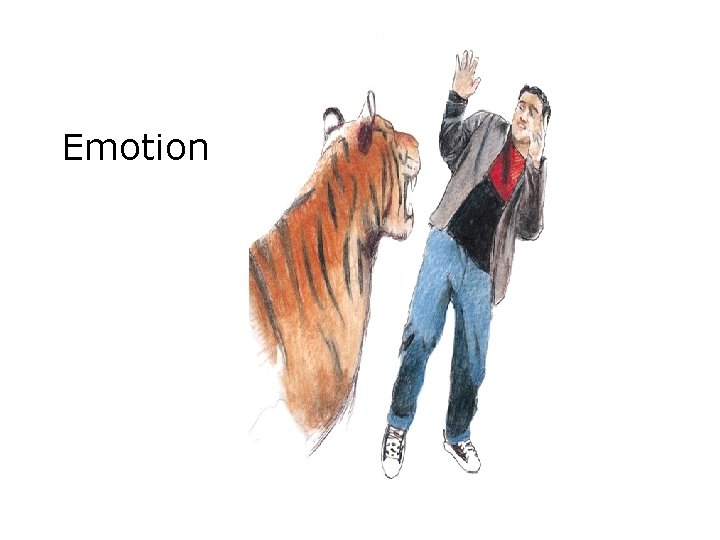
Emotion
Topics l Arousal and autonomic control l Polygraphs l Emotional expression and experience l Emotion and feelings © Kip Smith, 2003
Arousal l The physical response that prepares the body and mind to act & l The level of activity summoned in the course of action © Kip Smith, 2003
High arousal l l Muscles tense up, receive more blood (oxygen and sugars) Metabolic rate up l l heart, breathing, blood pressure Just do it ! l Endorphins released into bloodstream l Attention becomes narrowly focused © Kip Smith, 2003
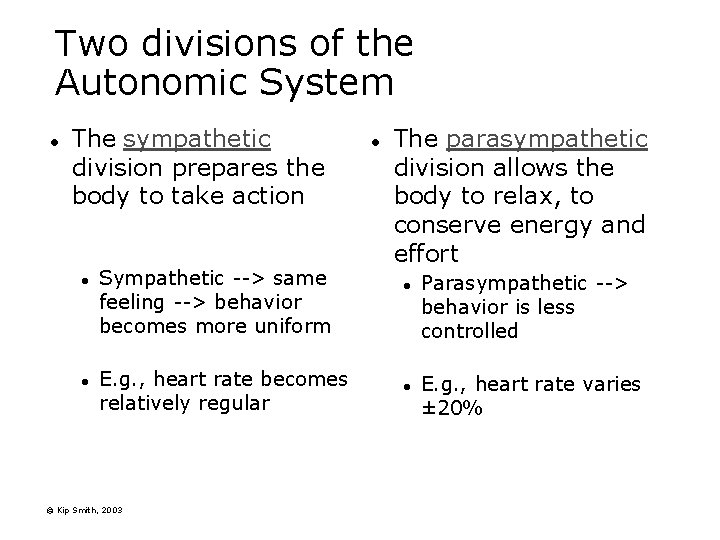
Autonomic System l Arousal is controlled by the two divisions of the autonomic ‘system’ l l l Sympathetic Parasympathetic The ‘system’ consists of an ancient and complex set of predispositions controlled by limbic structures l l Hypothalamus Amygdala © Kip Smith, 2003
Two divisions of the Autonomic System l The sympathetic division prepares the body to take action l l Sympathetic --> same feeling --> behavior becomes more uniform E. g. , heart rate becomes relatively regular © Kip Smith, 2003 l The parasympathetic division allows the body to relax, to conserve energy and effort l l Parasympathetic --> behavior is less controlled E. g. , heart rate varies ± 20%
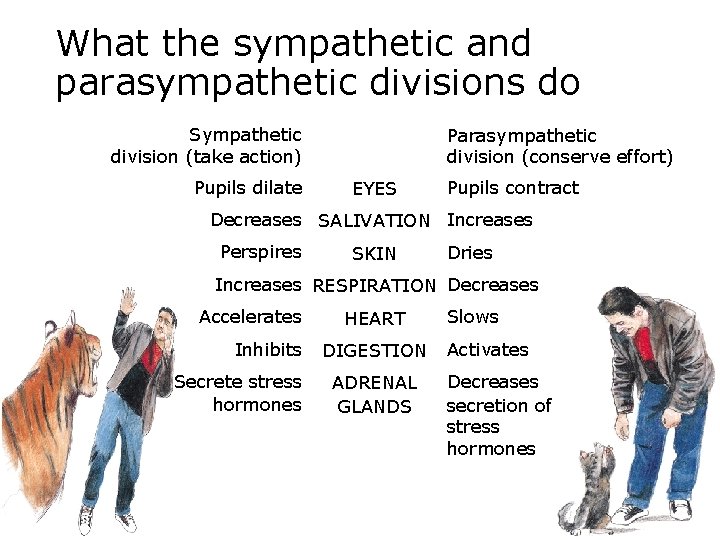
What the sympathetic and parasympathetic divisions do Sympathetic division (take action) Pupils dilate Parasympathetic division (conserve effort) EYES Pupils contract Decreases SALIVATION Increases Perspires SKIN Dries Increases RESPIRATION Decreases Accelerates Inhibits Secrete stress hormones © Kip Smith, 2003 HEART DIGESTION ADRENAL GLANDS Slows Activates Decreases secretion of stress hormones
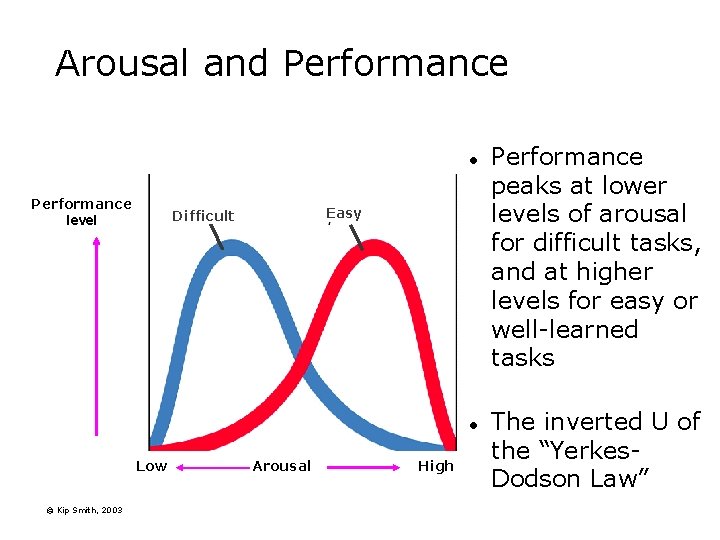
Arousal and Performance level Easy Difficult l Low © Kip Smith, 2003 Arousal High Performance peaks at lower levels of arousal for difficult tasks, and at higher levels for easy or well-learned tasks The inverted U of the “Yerkes. Dodson Law”
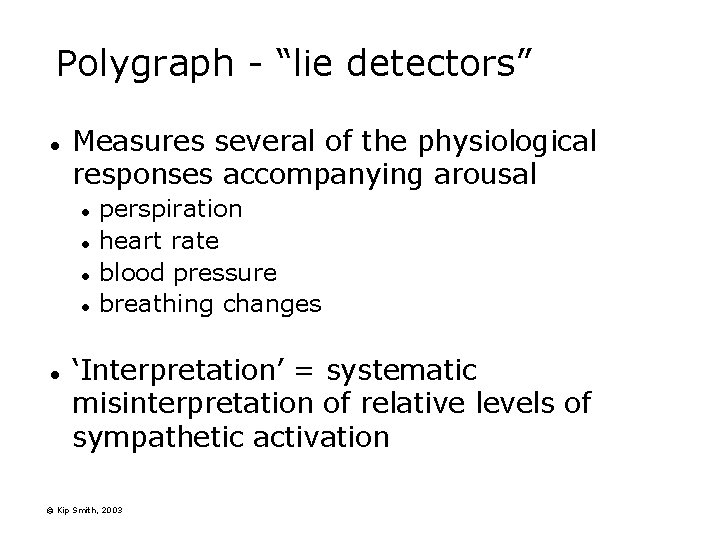
Polygraph - “lie detectors” l Measures several of the physiological responses accompanying arousal l l perspiration heart rate blood pressure breathing changes ‘Interpretation’ = systematic misinterpretation of relative levels of sympathetic activation © Kip Smith, 2003
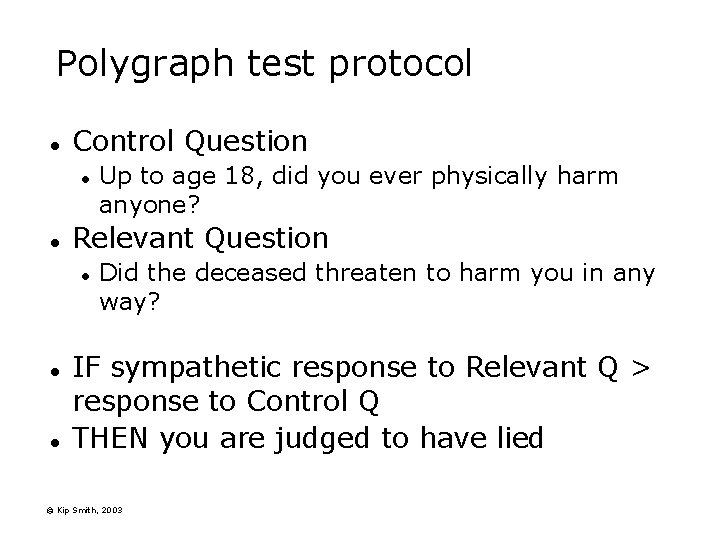
Polygraph test protocol l Control Question l l Relevant Question l l l Up to age 18, did you ever physically harm anyone? Did the deceased threaten to harm you in any way? IF sympathetic response to Relevant Q > response to Control Q THEN you are judged to have lied © Kip Smith, 2003
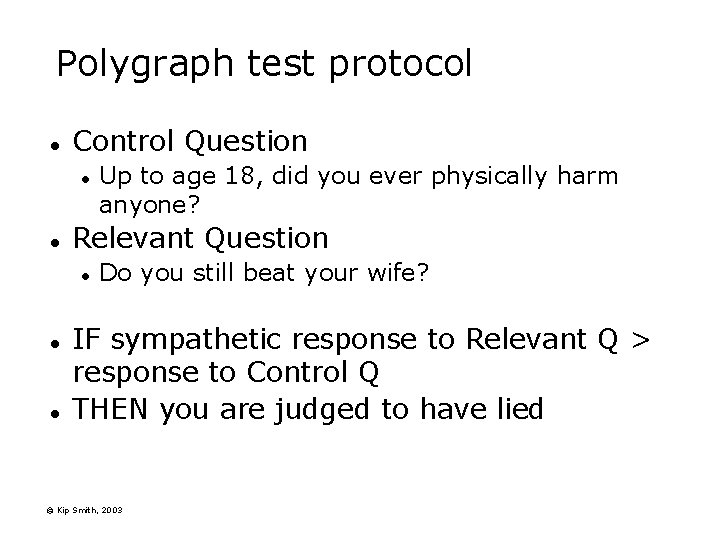
Polygraph test protocol l Control Question l l Relevant Question l l l Up to age 18, did you ever physically harm anyone? Do you still beat your wife? IF sympathetic response to Relevant Q > response to Control Q THEN you are judged to have lied © Kip Smith, 2003
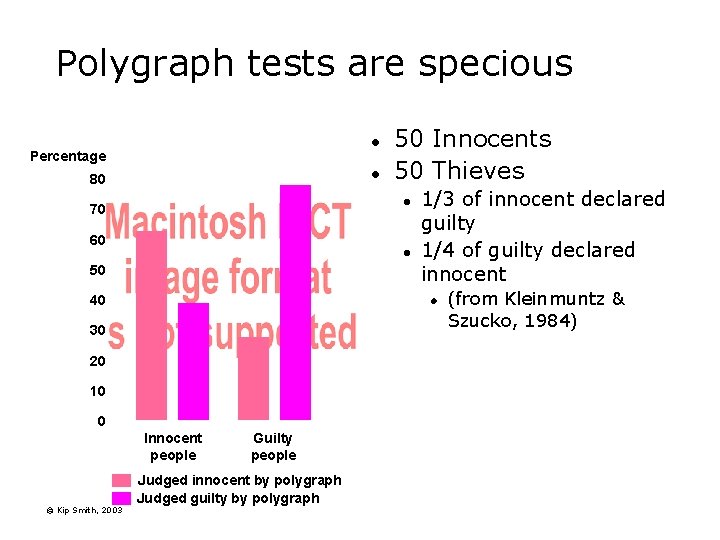
Polygraph tests are specious l Percentage l 80 l 70 60 l 50 40 1/3 of innocent declared guilty 1/4 of guilty declared innocent l 30 20 10 0 Innocent people © Kip Smith, 2003 50 Innocents 50 Thieves Guilty people Judged innocent by polygraph Judged guilty by polygraph (from Kleinmuntz & Szucko, 1984)
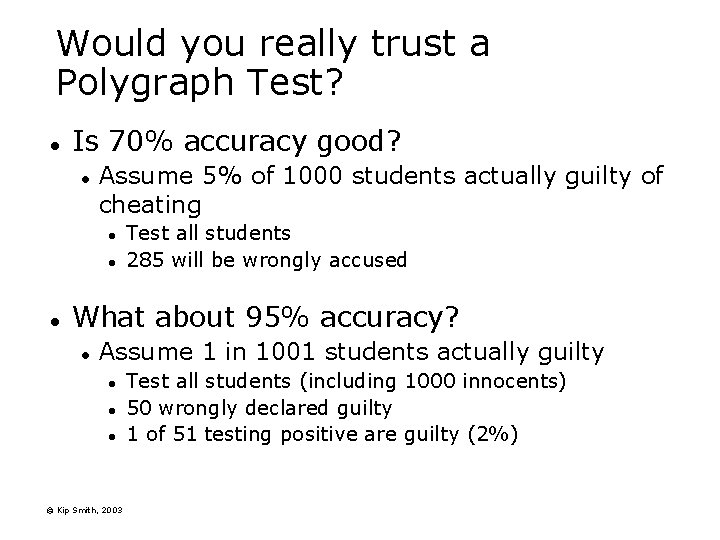
Would you really trust a Polygraph Test? l Is 70% accuracy good? l Assume 5% of 1000 students actually guilty of cheating l l l Test all students 285 will be wrongly accused What about 95% accuracy? l Assume 1 in 1001 students actually guilty l l l © Kip Smith, 2003 Test all students (including 1000 innocents) 50 wrongly declared guilty 1 of 51 testing positive are guilty (2%)
Emotion and Feelings Note: Much of the material on emotion and feelings in the textbook is not up to date The material here goes beyond the book © Kip Smith, 2003
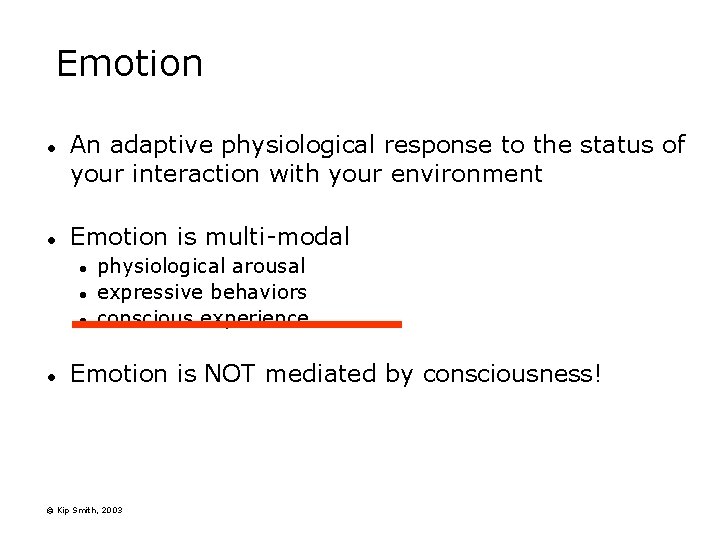
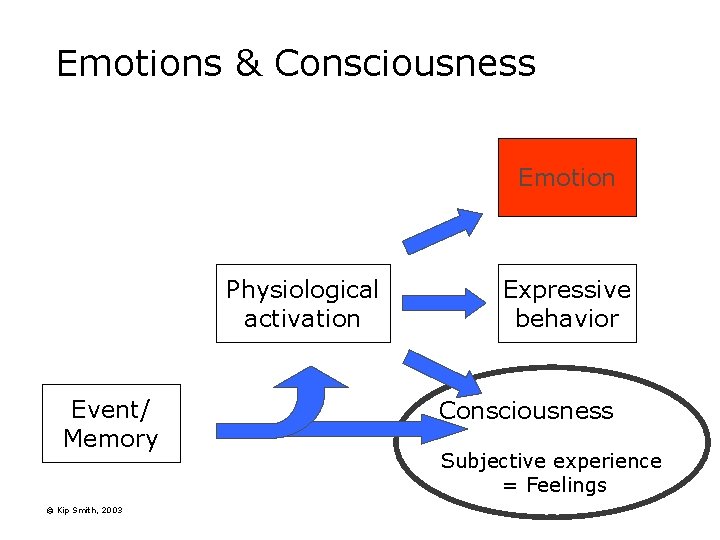
Emotion l l An adaptive physiological response to the status of your interaction with your environment Emotion is multi-modal l l physiological arousal expressive behaviors conscious experience Emotion is NOT mediated by consciousness! © Kip Smith, 2003
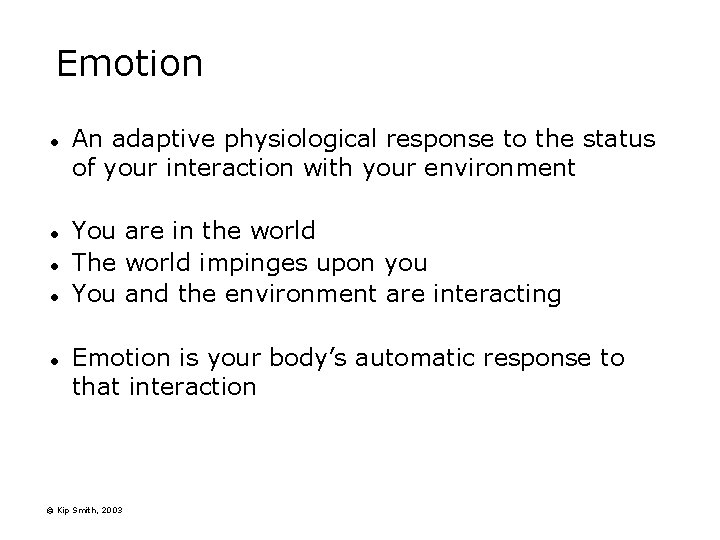
Emotion l l l An adaptive physiological response to the status of your interaction with your environment You are in the world The world impinges upon you You and the environment are interacting Emotion is your body’s automatic response to that interaction © Kip Smith, 2003
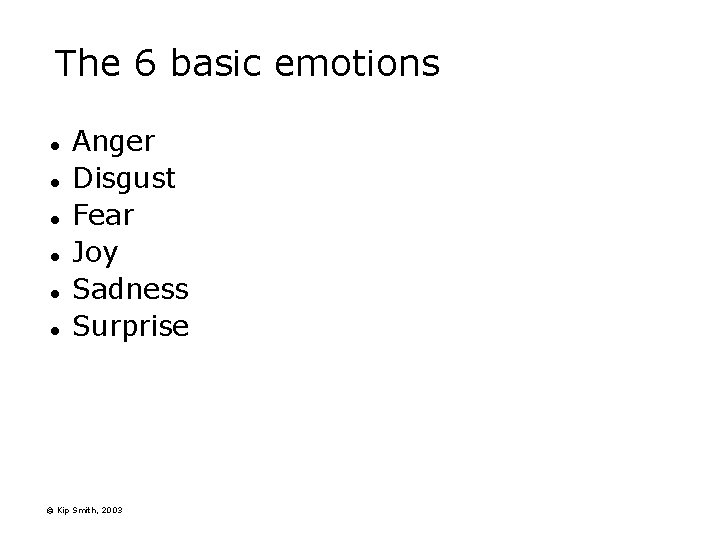
The 6 basic emotions l l l Anger Disgust Fear Joy Sadness Surprise © Kip Smith, 2003
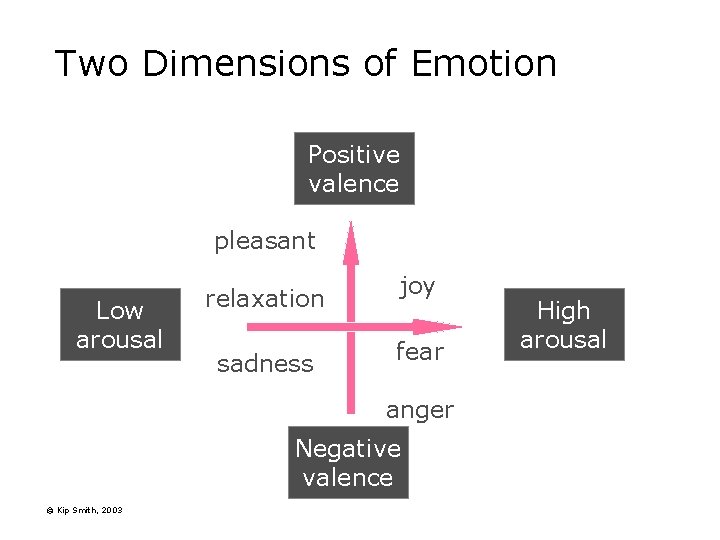
Two Dimensions of Emotion Positive valence pleasant Low arousal relaxation sadness joy fear anger Negative valence © Kip Smith, 2003 High arousal
Subjective Well-Being l l Self-perceived and described happiness or satisfaction with life Does not necessarily correlate with objective measures of well-being l l Physical and economic indicators to evaluate people’s quality of life Poor people can be perfectly happy and satisfied with life l Money don’t buy me love © Kip Smith, 2003
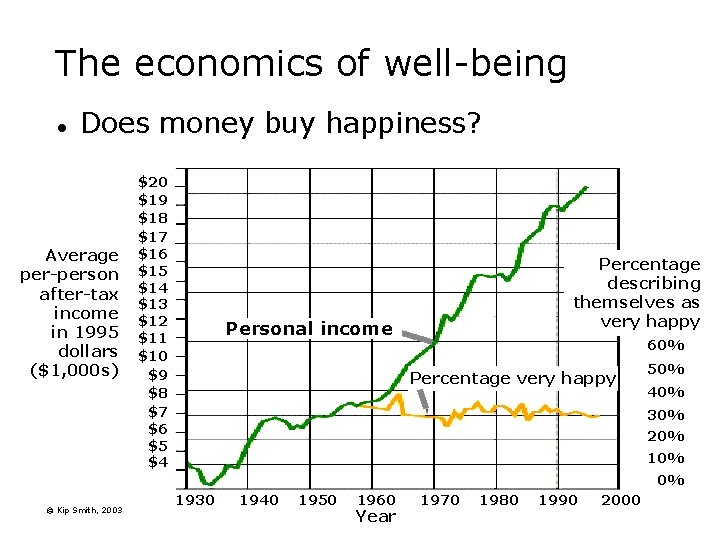
The economics of well-being l Does money buy happiness? Average per-person after-tax income in 1995 dollars ($1, 000 s) $20, 000 $19, 000 $18, 000 $17, 000 $16, 000 $15, 000 $14, 000 $13, 000 $12, 000 $11, 000 $10, 000 $9, 000 $8, 000 $7, 000 $6, 000 $5, 000 $4, 000 100% Percentage 90% describing 80%as themselves 70% very happy Personal income 60% Percentage very happy 50% 40% 30% 20% 10% 0% © Kip Smith, 2003 1930 1940 1950 1960 Year 1970 1980 1990 2000
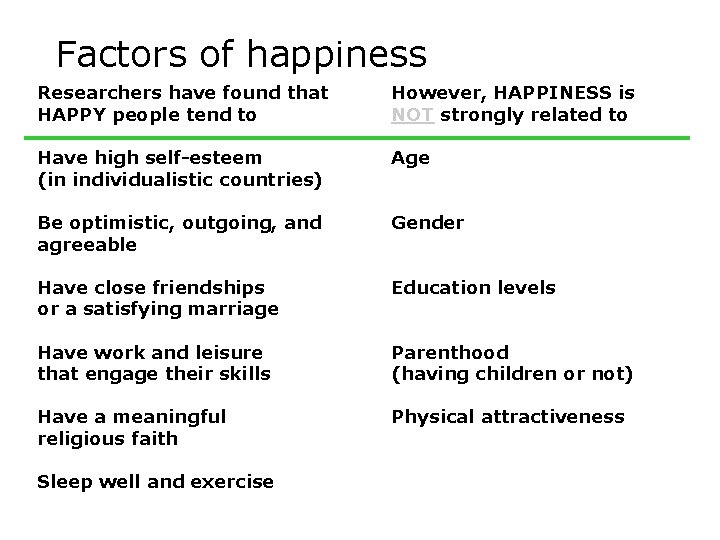
Factors of happiness Researchers have found that HAPPY people tend to However, HAPPINESS is NOT strongly related to Have high self-esteem (in individualistic countries) Age Be optimistic, outgoing, and agreeable Gender Have close friendships or a satisfying marriage Education levels Have work and leisure that engage their skills Parenthood (having children or not) Have a meaningful religious faith Physical attractiveness Sleep well and exercise
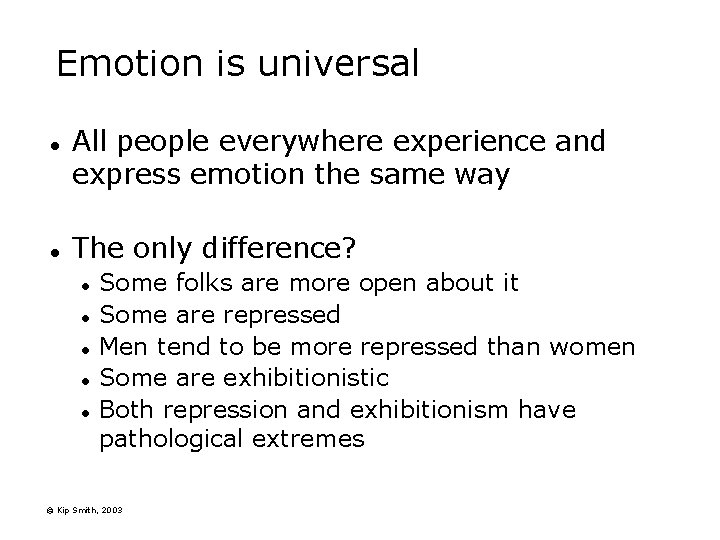
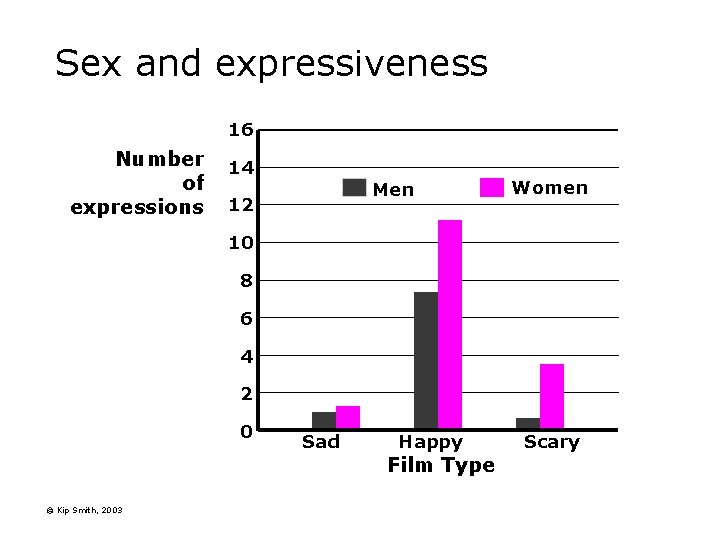
Emotion is universal l l All people everywhere experience and express emotion the same way The only difference? l l l Some folks are more open about it Some are repressed Men tend to be more repressed than women Some are exhibitionistic Both repression and exhibitionism have pathological extremes © Kip Smith, 2003
Sex and expressiveness 16 Number of expressions 14 Men 12 Women 10 8 6 4 2 0 © Kip Smith, 2003 Sad Happy Film Type Scary
Emotion and Feeling © Kip Smith, 2003
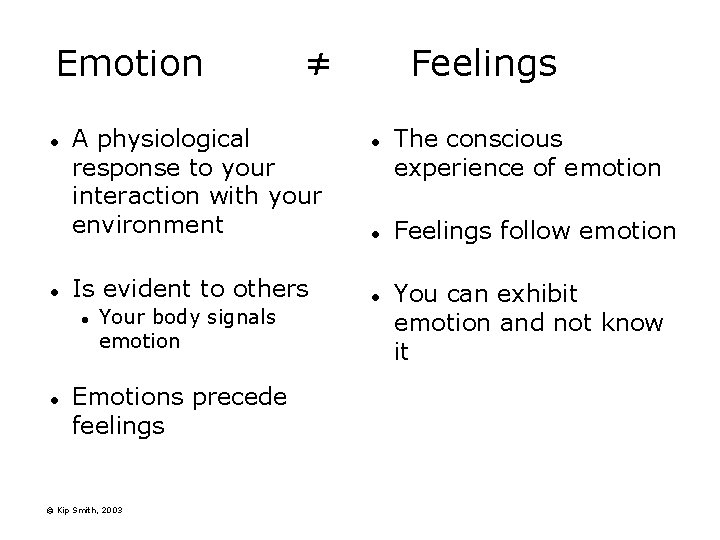
Emotion l l A physiological response to your interaction with your environment Is evident to others l l ≠ Your body signals emotion Emotions precede feelings © Kip Smith, 2003 Feelings l l l The conscious experience of emotion Feelings follow emotion You can exhibit emotion and not know it
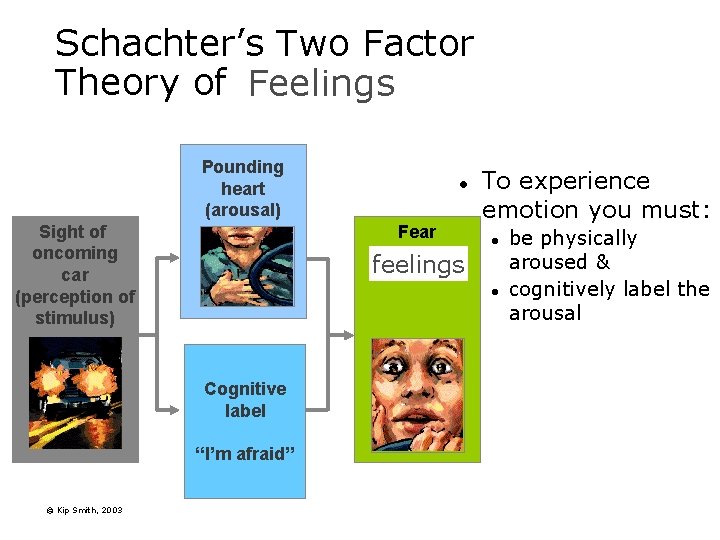
Theories of Emotion l l l Does your heart pound because you are afraid. . . Or Are you afraid because you feel your heart pounding? © Kip Smith, 2003
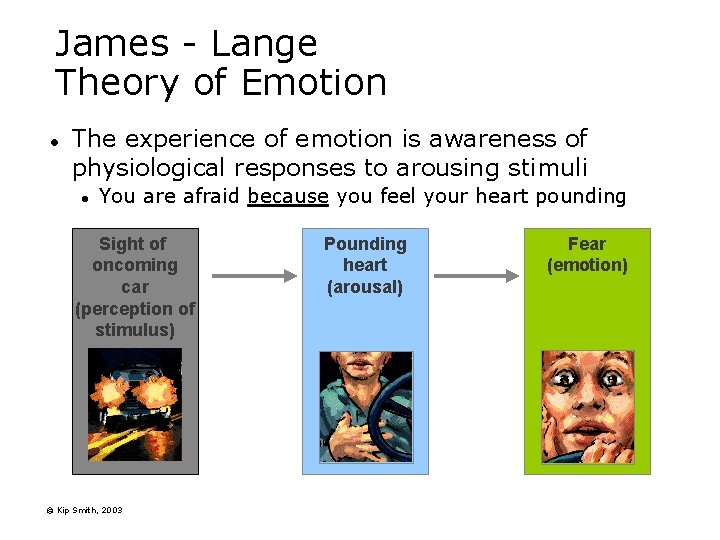
James - Lange Theory of Emotion l The experience of emotion is awareness of physiological responses to arousing stimuli l You are afraid because you feel your heart pounding Sight of oncoming car (perception of stimulus) © Kip Smith, 2003 Pounding heart (arousal) Fear (emotion)
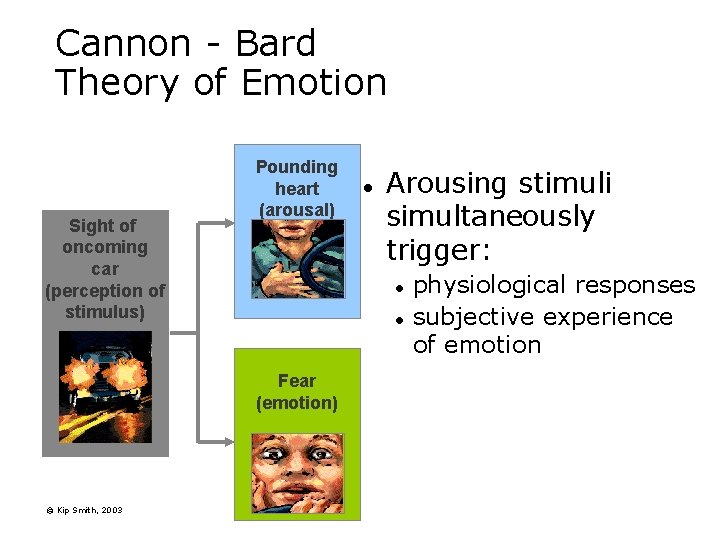
Cannon - Bard Theory of Emotion Sight of oncoming car (perception of stimulus) Pounding heart (arousal) Arousing stimuli simultaneously trigger: l l Fear (emotion) © Kip Smith, 2003 l physiological responses subjective experience of emotion
The problem with Cannon-Bard l Arousing stimuli simultaneously trigger: l l physiological responses subjective experience of emotion But emotions exist whether or not you feel them Emotions precede feelings © Kip Smith, 2003
Schachter’s Two Factor Theory of Emotion Feelings Pounding heart (arousal) Sight of oncoming car (perception of stimulus) Fear (emotion) To experience emotion you must: l feelings l Cognitive label “I’m afraid” © Kip Smith, 2003 l be physically aroused & cognitively label the arousal
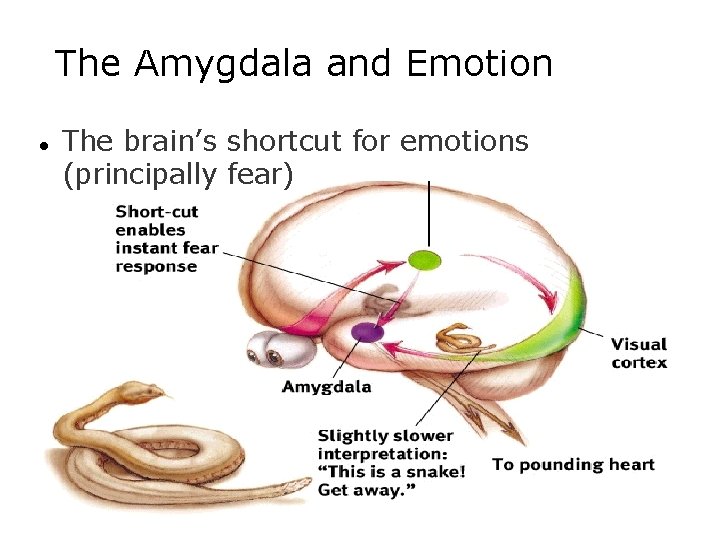
The Amygdala and Emotion l The brain’s shortcut for emotions (principally fear) © Kip Smith, 2003
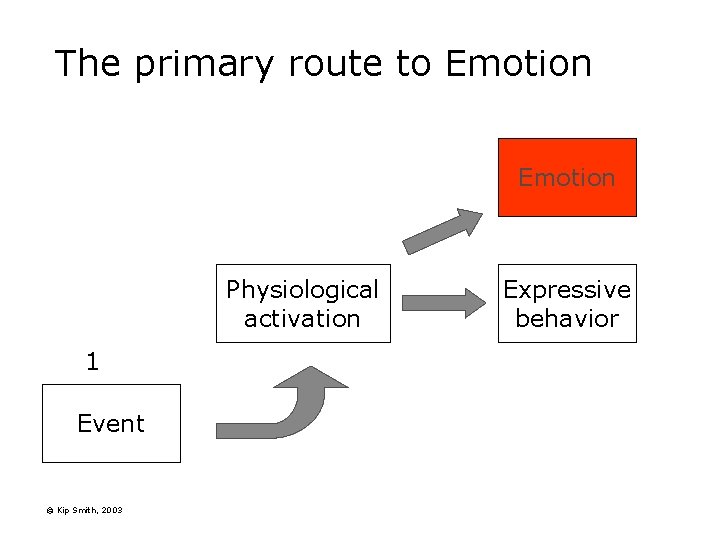
The primary route to Emotion Physiological activation 1 Event © Kip Smith, 2003 Expressive behavior
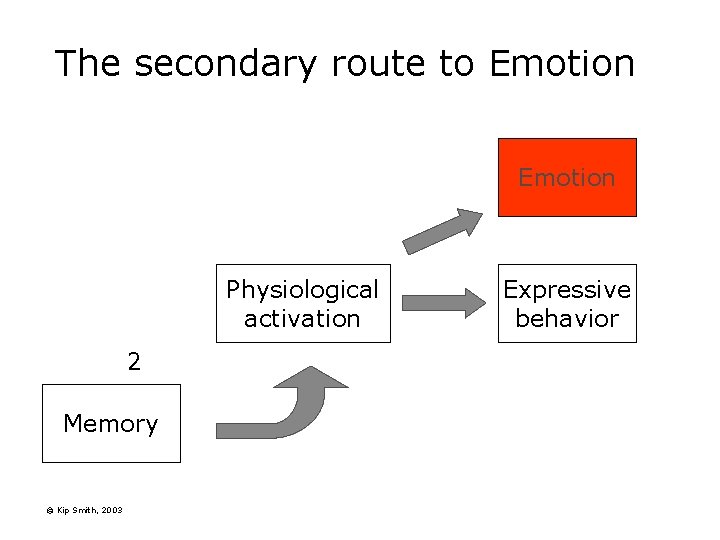
The secondary route to Emotion Physiological activation 2 Memory © Kip Smith, 2003 Expressive behavior
Emotions & Consciousness Emotion Physiological activation Event/ Memory © Kip Smith, 2003 Expressive behavior Consciousness Subjective experience = Feelings