
Emissions Standards for Distributed Generation Joel Bluestein Energy
Emissions Standards for Distributed Generation Joel Bluestein Energy and Environmental Analysis, Inc www. eea-inc. com Providence, RI December 11, 2003 The Regulatory Assistance Project 50 State Street, Suite 3 Montpelier, Vermont 05602 Tel: 802. 223. 8199 Fax: 802. 223. 8172 177 Water St. Gardiner, Maine 04345 Tel: 207. 582. 1135 Fax: 207. 582. 1176 Website: http: //www. raponline. org 1
Overview Ø Output-Based Regulation Ø More on CHP benefits and applications 2
What is Output-Based Regulation? Ø Regulation that relates emissions to the productive output of a device or process. – Unit of emissions/unit of output – lb emission/MWh Ø Can be applied for any process – Our focus is the power/large boiler sector 3
Measurement in Air Regulations Ø Historically based on industry practice. Ø Some regulations have always been output-based: – Engines - g/bhp-hr – Industrial processes - lb emission/ton of product – Cars - g/mi 4
Power Generation and Boiler Regulation Have Not Been Output-Based Ø Boilers - lb/MMBtuin Ø Turbines - ppm Ø Eliminate energy efficiency as a control option. Output-based version is: lb/MWhout lb/MMBtuout 5
Why Output-Based Regulation? Ø Recognizes and rewards efficiency which translates to: – Reduced fuel consumption (multimedia and energy security impacts) – Multi-emission reductions Ø Provides a common basis for comparison - apples to apples. Ø Relates cost (pollution) to benefit (productive output). 6
Evolution of Air Quality Regulation Ø Initial focus was add-on/end of pipe controls to reduce existing pollution. – Great progress has been made on air quality. Ø Pollution prevention (P 2) is an additional tool to enable further, cost-effective progress. – Improving efficiency in any process is P 2 at its best. Ø Output-based regulations promote efficiency. 7
Efficiency as a Pollution Control Measure Ø Reduces all emissions, including nonregulated and greenhouse gases. Ø It’s always “on”. No start-up, shut-down or malfunction interruptions. Ø Provides additional options for emission reduction. Ø Makes emission reduction more costeffective. 8
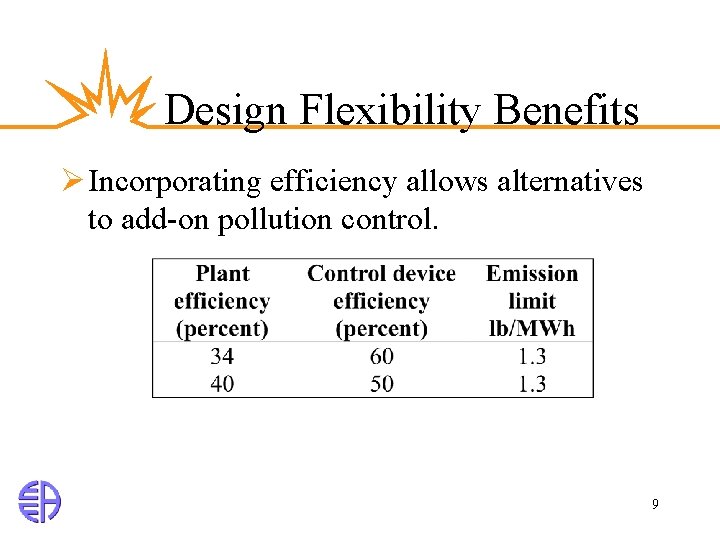
Design Flexibility Benefits Ø Incorporating efficiency allows alternatives to add-on pollution control. 9
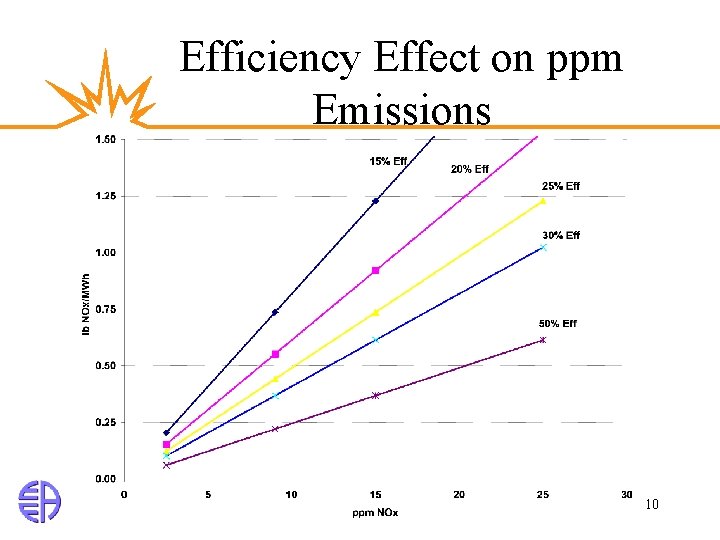
Efficiency Effect on ppm Emissions 10
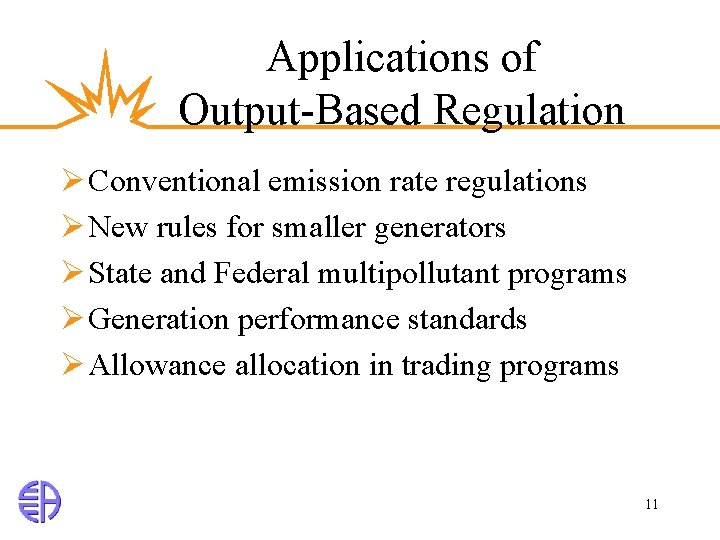
Applications of Output-Based Regulation Ø Conventional emission rate regulations Ø New rules for smaller generators Ø State and Federal multipollutant programs Ø Generation performance standards Ø Allowance allocation in trading programs 11
Conventional Rate Limits Ø Output-based regulation allows and encourages efficiency to be used as a control option. – Combustion efficiency – Reduced parasitic loads – Generator efficiency Ø Links emissions to productive output. 12
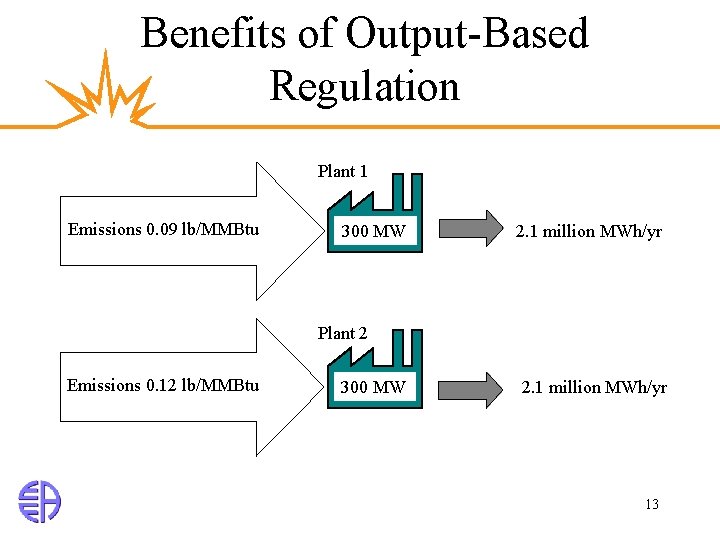
Benefits of Output-Based Regulation Plant 1 Emissions 0. 09 lb/MMBtu 300 MW 2. 1 million MWh/yr Plant 2 Emissions 0. 12 lb/MMBtu 300 MW 2. 1 million MWh/yr 13
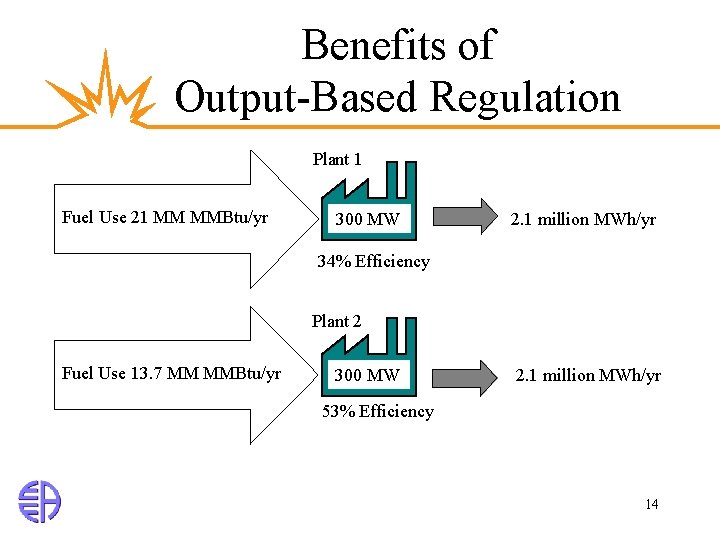
Benefits of Output-Based Regulation Plant 1 Fuel Use 21 MM MMBtu/yr 300 MW 2. 1 million MWh/yr 34% Efficiency Plant 2 Fuel Use 13. 7 MM MMBtu/yr 300 MW 2. 1 million MWh/yr 53% Efficiency 14
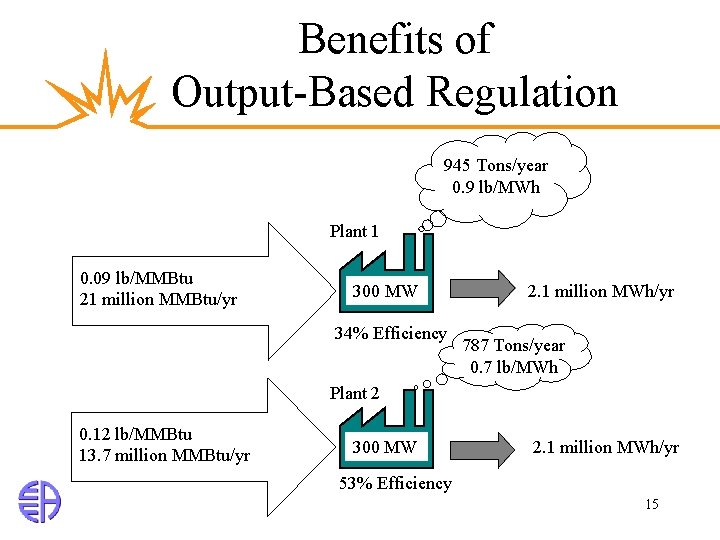
Benefits of Output-Based Regulation 945 Tons/year 0. 9 lb/MWh Plant 1 0. 09 lb/MMBtu 21 million MMBtu/yr 300 MW 34% Efficiency 2. 1 million MWh/yr 787 Tons/year 0. 7 lb/MWh Plant 2 0. 12 lb/MMBtu 13. 7 million MMBtu/yr 300 MW 2. 1 million MWh/yr 53% Efficiency 15
Who Has Done Output-Based Regulation? Ø Conventional rate limits Ø Distributed generation Ø Allowance allocation Ø Multipollutant programs Ø Generation performance standards 16
Conventional Rate Limits Ø EPA NSPS for utility boilers - uniform output-based limit with credit for CHP Ø Ozone Transport Commission Model NOx Rule - sets NOx limits for combustion turbines in lb/MWh 17
Distributed Generation Ø California SB 1298 certification program and BACT guidance - output-based limits for NOx, VOC, CO and PM with some credit for CHP. Ø Texas general permit for DG - output-based NOx limits and full thermal credit for CHP. Ø RAP Model Rule - Output-based limits for NOx, CO, PM with emission credit for CHP. 18
Allowance Allocation Ø Primarily for OTC and SIP call NOx trading programs. Ø Output-based systems in: – Connecticut – Massachusetts – New Hampshire – New Jersey 19
State Multipollutant Programs Ø Output-based limits set for four pollutants in: – Massachusetts – New Hampshire 20
Federal Multipollutant Programs Ø Clear Skies Initiative - Output-based emission performance standard replacement for NSR. Ø Carper bill - output-based allocation Ø Jeffords bill - output-based set asides for renewables, CHP, efficiency 21
Generation Performance Standard Ø Derives from Massachusetts restructuring language. Ø Requires retail sellers to meet output-based portfolio emission standards including out of state generation. Ø Connecticut and New Jersey have considered similar requirements. 22
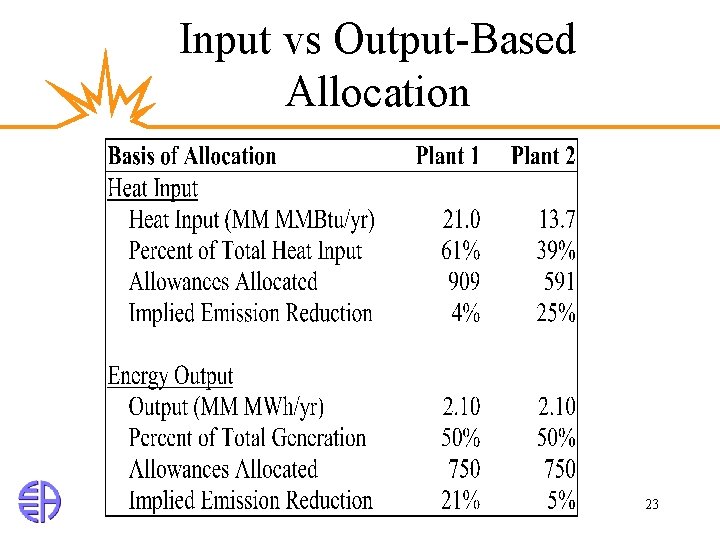
Input vs Output-Based Allocation 23
Combined Heat and Power CHP is the generation of electricity and heat sequentially from the same heat input. Ø Historically the most cost-effective DG option but more complicated, higher investment for user. Ø Requires good thermal and electric load match and preferably high run hours. Ø Primarily used by industry but large potential commercial market. Ø A critical resource for CO 2 reductions. 24
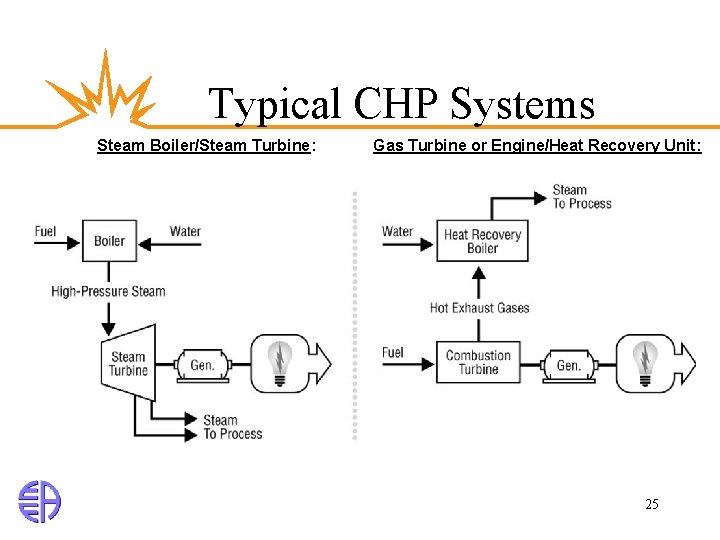
Typical CHP Systems Steam Boiler/Steam Turbine: Gas Turbine or Engine/Heat Recovery Unit: 25
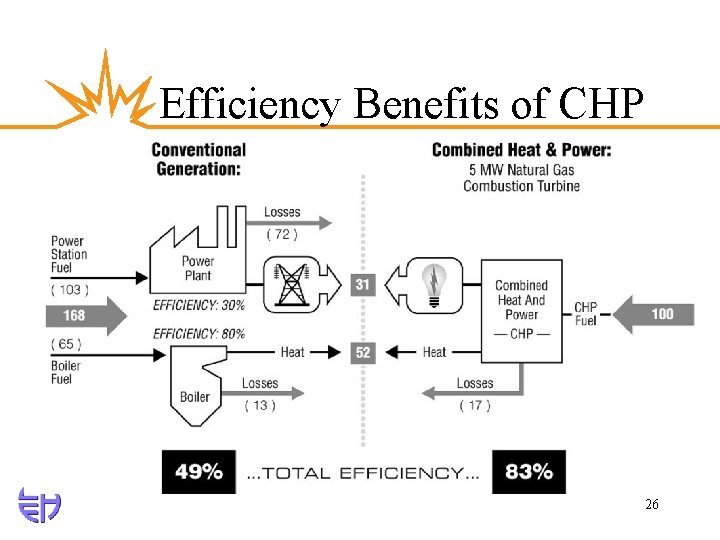
Efficiency Benefits of CHP 26
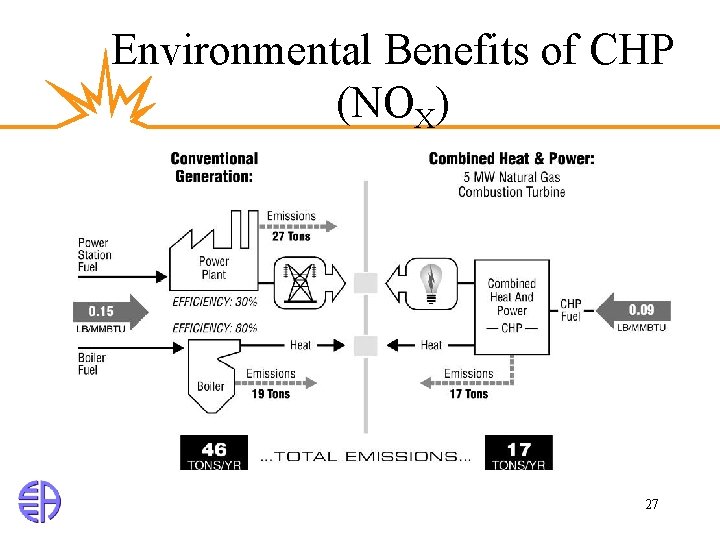
Environmental Benefits of CHP (NOX) 27
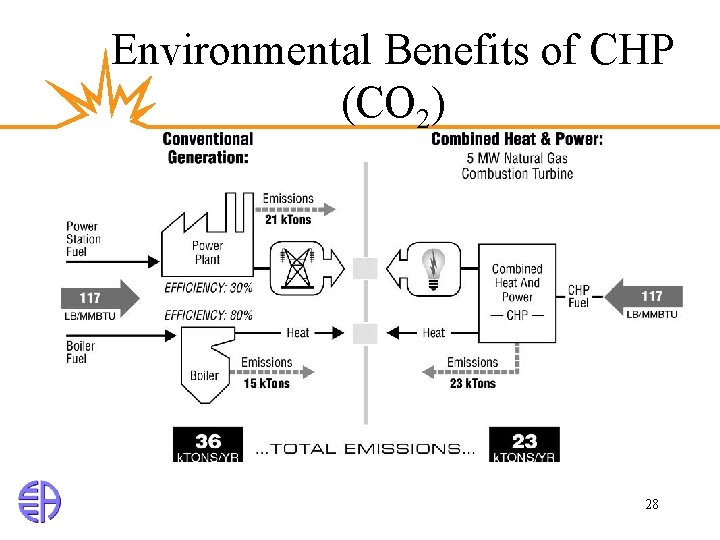
Environmental Benefits of CHP (CO 2) 28
Valuing CHP Ø Conventional air regulation does not encourage CHP and can discourage it. – Promotes capital investment in tailpipe controls over new process technology. Ø Output-based regulation is a key tool in recognizing and rewarding CHP. 29
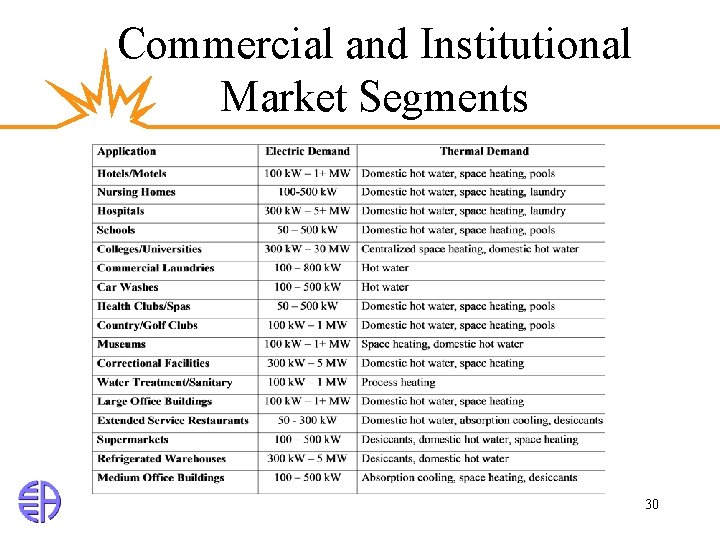
Commercial and Institutional Market Segments 30
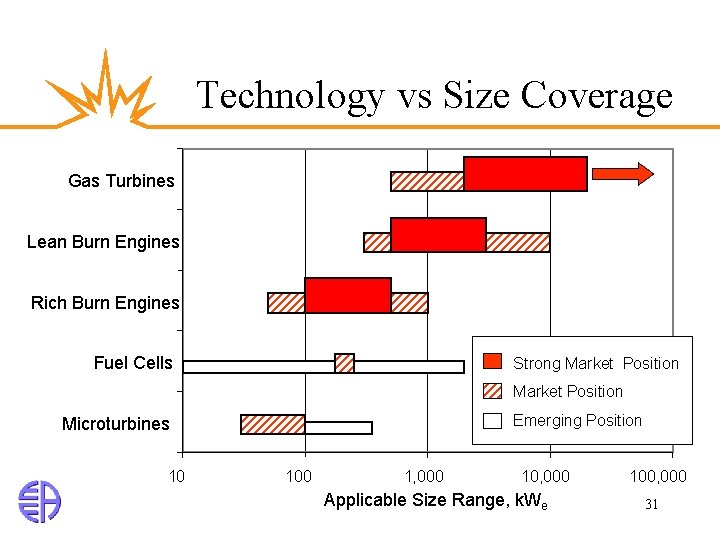
Technology vs Size Coverage Gas Turbines Lean Burn Engines Rich Burn Engines Fuel Cells Strong Market Position Emerging Position Microturbines 10 100 1, 000 10, 000 Applicable Size Range, k. We 100, 000 31

Conclusions Ø Output-based regulation is the mechanism to encourage further efficiency improvements. Ø CHP is valuable tool to reduce GHG and can be encouraged through appropriate regulation. 32
- Slides: 32