
Emission Spectra of Excited Gases Light Emission Energetics

- Slides: 18
Emission Spectra of Excited Gases Light Emission Energetics and Spectra
Essential Question How do excited gas atoms emit specific colors of light, and how can these specific colors be used to explore the composition of planetary atmospheres?
Lesson Objectives • Observe the different colors in emission spectra for different excited gases and compare the specific emitted wavelengths. • Explain how these specific emitted wavelengths are the result of energetic and physical transitions by electrons in excited atoms. • Apply emission spectra experience to predict and compare the spectra of atmospheres for solar system planets.
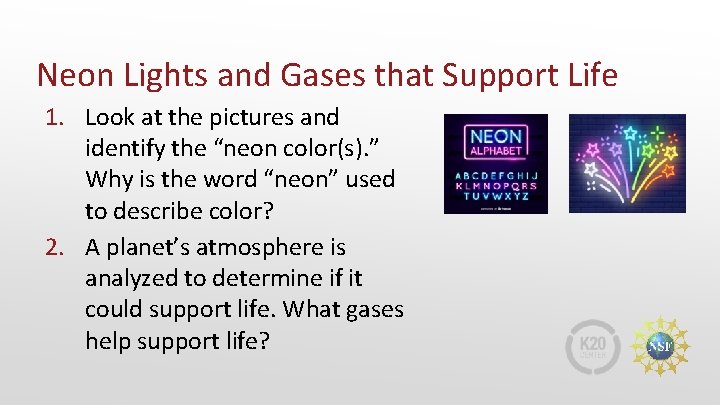
Neon Lights and Gases that Support Life 1. Look at the pictures and identify the “neon color(s). ” Why is the word “neon” used to describe color? 2. A planet’s atmosphere is analyzed to determine if it could support life. What gases help support life?
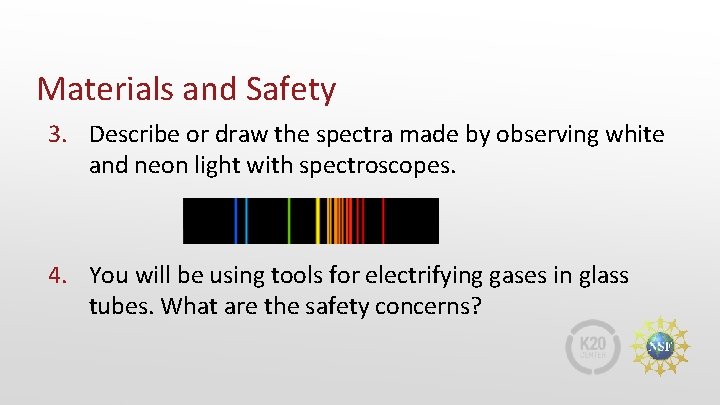
Materials and Safety 3. Describe or draw the spectra made by observing white and neon light with spectroscopes. 4. You will be using tools for electrifying gases in glass tubes. What are the safety concerns?
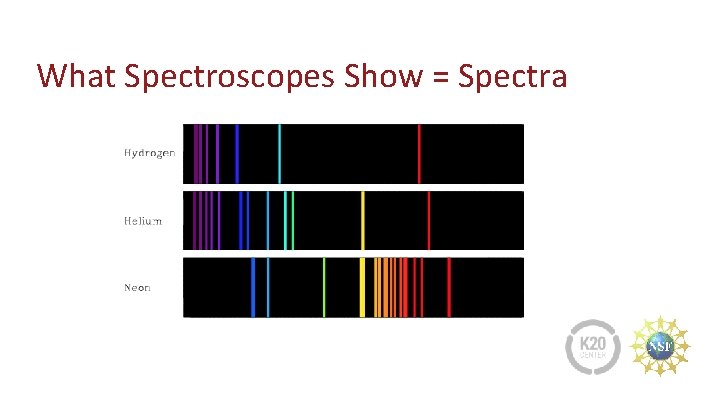
What Spectroscopes Show = Spectra
Give Your Table a Good Title! 1. Add a good scientific title to your data table. 2. Share your title with others. In science, most titles: • Are descriptive (detailed and a little longer than you might expect). • Summarize a key result. (What did you learn? )
Tweet Up Write a tweet in which you create a title for your data table. Your tweet should: • Use 280 characters or fewer. • Include a hashtag that reflects the main point of this lesson. Remember, in science, titles are descriptive and detailed to summarize the key result indicated by the data.
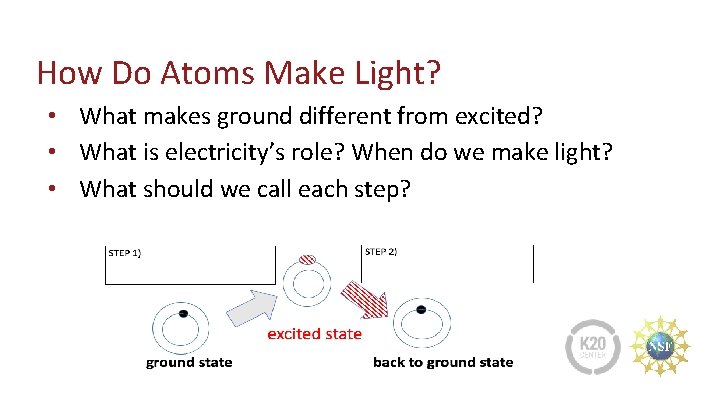
How Do Atoms Make Light? • What makes ground different from excited? • What is electricity’s role? When do we make light? • What should we call each step?
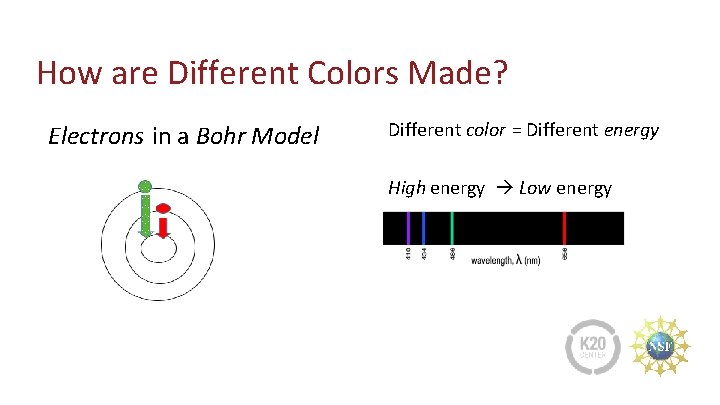
How are Different Colors Made? Electrons in a Bohr Model Different color = Different energy High energy Low energy
The Science of Firework Color
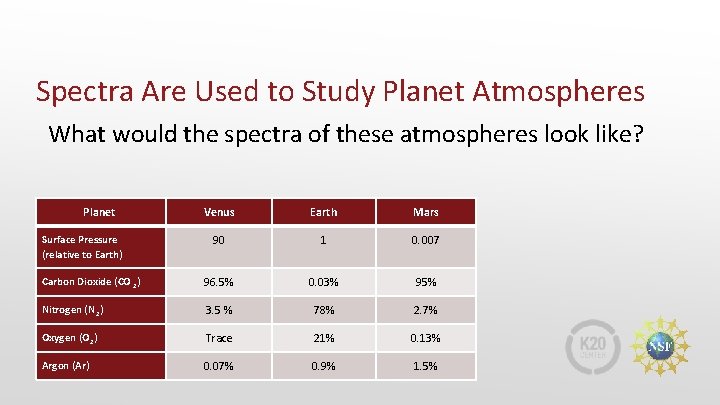
Spectra Are Used to Study Planet Atmospheres What would the spectra of these atmospheres look like? Planet Venus Earth Mars 90 1 0. 007 Carbon Dioxide (CO 2) 96. 5% 0. 03% 95% Nitrogen (N 2) 3. 5 % 78% 2. 7% Oxygen (O 2) Trace 21% 0. 13% Argon (Ar) 0. 07% 0. 9% 1. 5% Surface Pressure (relative to Earth)
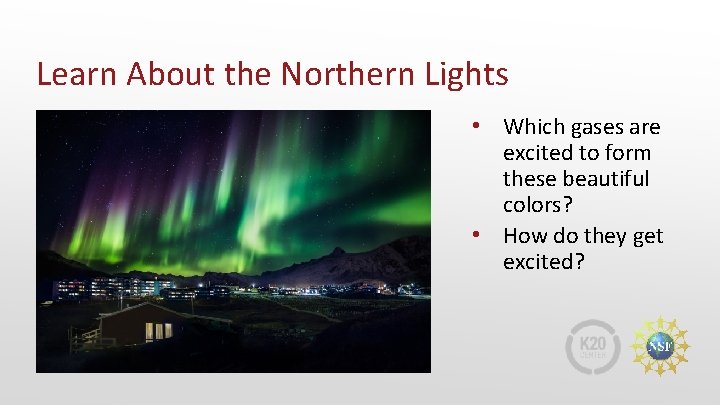
Learn About the Northern Lights • Which gases are excited to form these beautiful colors? • How do they get excited?
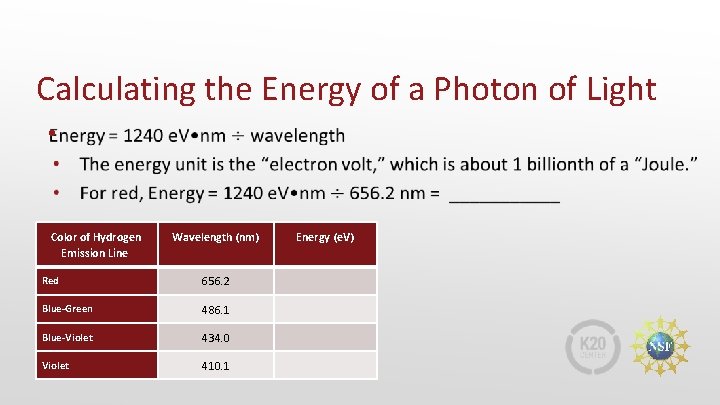
Calculating the Energy of a Photon of Light • Color of Hydrogen Emission Line Wavelength (nm) Red 656. 2 Blue-Green 486. 1 Blue-Violet 434. 0 Violet 410. 1 Energy (e. V)
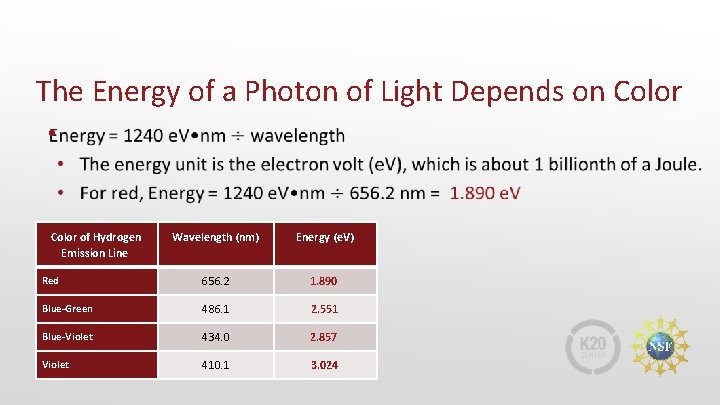
The Energy of a Photon of Light Depends on Color • Color of Hydrogen Emission Line Wavelength (nm) Energy (e. V) Red 656. 2 1. 890 Blue-Green 486. 1 2. 551 Blue-Violet 434. 0 2. 857 Violet 410. 1 3. 024
Three Stray, One Stays 1. Discuss your assigned Extend question within your group. 2. Choose one group member to “stay” and explain the answer to other students. 3. Other group members “stray, ” each going to a different question group and taking notes about what is shared. 4. Return to your original groups to share what you’ve learned and prepare to share with the class.
Design a Gas Tube Sign for the School Plan: Apply: Be Clear: What can and will your sign display? What types of gas are you going to use? Label your drawing to show the types of gas you chose.