
Eminent Domain Condemnation and Inverse Condemnation Erik Johnson

- Slides: 33
Eminent Domain, Condemnation and Inverse Condemnation Erik Johnson
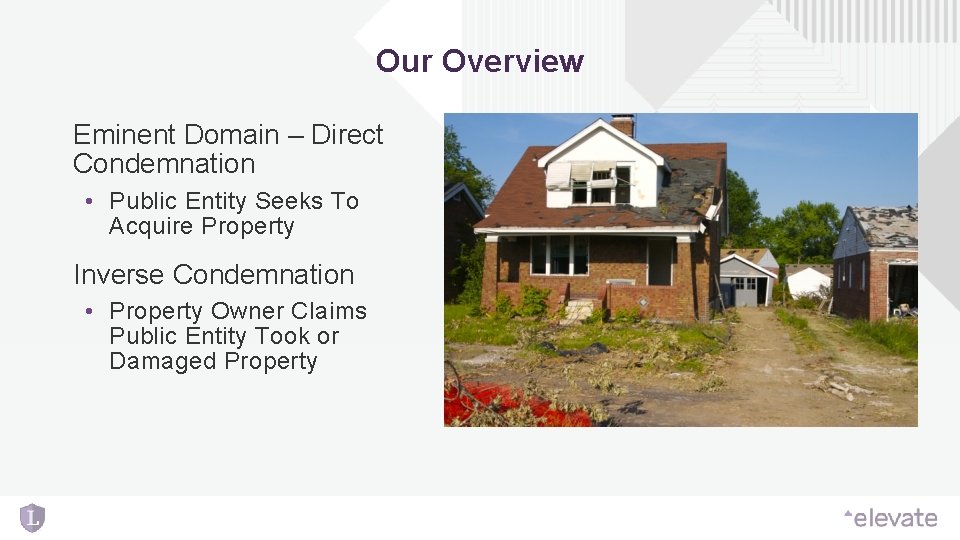
Our Overview Eminent Domain – Direct Condemnation • Public Entity Seeks To Acquire Property Inverse Condemnation • Property Owner Claims Public Entity Took or Damaged Property
CONSTITUTIONAL BASIS United States Constitution: • “. . . Nor shall private property be taken for public use, without just compensation. ” Oklahoma Constitution: • “Private Property may be taken or damaged for public use only when just compensation. . . has first been paid to, or into court for, the owner. ”
Eminent Domain Pre-Condemnation Procedures • Walkthrough with Appraiser and Owner • Appraise Property • Obtain Approval to Make Offer in Closed Session • Make Offer • No less than appraised value • Good Faith Negotiations Acquire Property Voluntarily OR Proceed to Resolution of Necessity
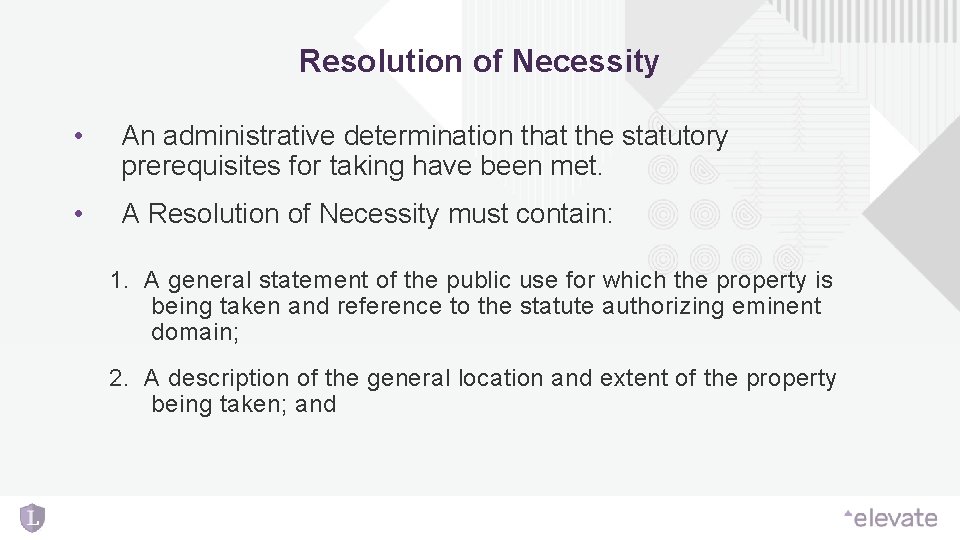
Resolution of Necessity • An administrative determination that the statutory prerequisites for taking have been met. • A Resolution of Necessity must contain: 1. A general statement of the public use for which the property is being taken and reference to the statute authorizing eminent domain; 2. A description of the general location and extent of the property being taken; and
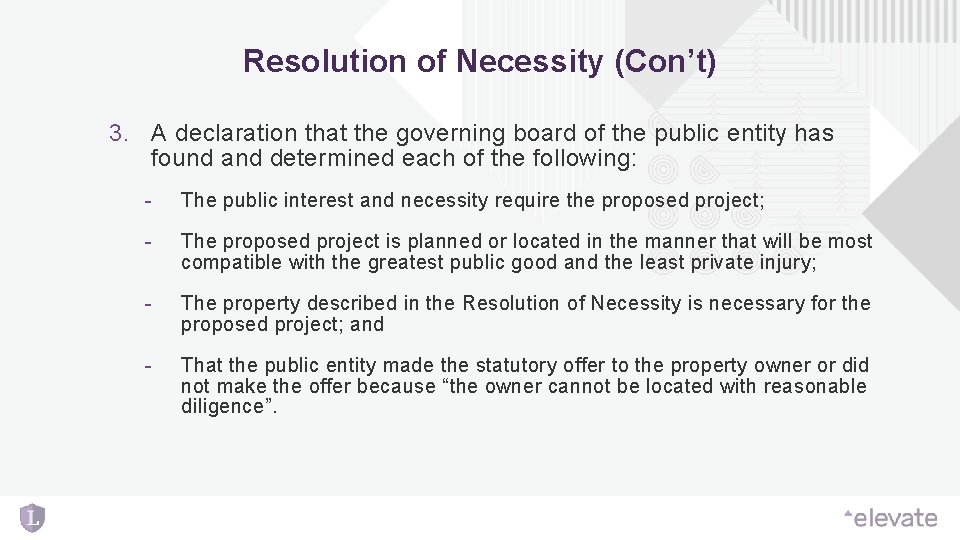
Resolution of Necessity (Con’t) 3. A declaration that the governing board of the public entity has found and determined each of the following: - The public interest and necessity require the proposed project; - The proposed project is planned or located in the manner that will be most compatible with the greatest public good and the least private injury; - The property described in the Resolution of Necessity is necessary for the proposed project; and - That the public entity made the statutory offer to the property owner or did not make the offer because “the owner cannot be located with reasonable diligence”.
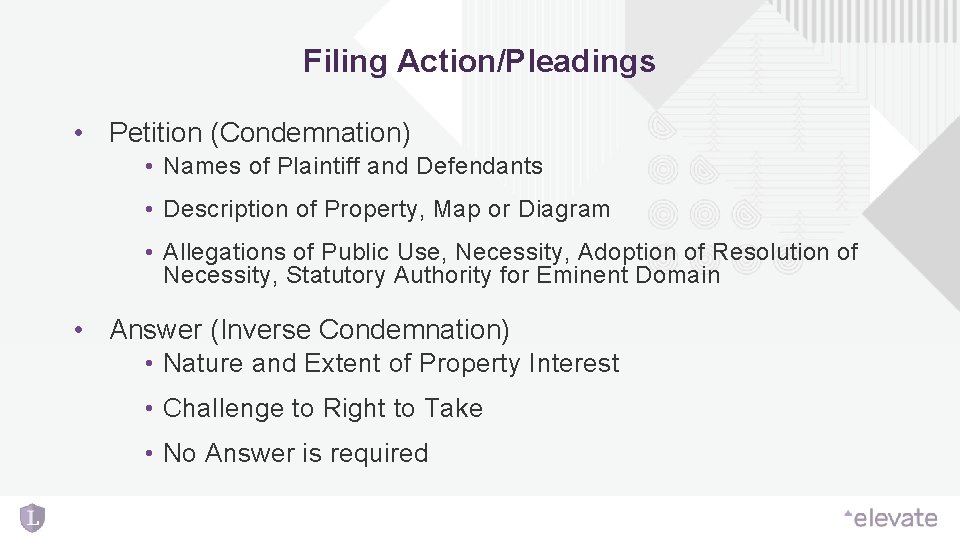
Filing Action/Pleadings • Petition (Condemnation) • Names of Plaintiff and Defendants • Description of Property, Map or Diagram • Allegations of Public Use, Necessity, Adoption of Resolution of Necessity, Statutory Authority for Eminent Domain • Answer (Inverse Condemnation) • Nature and Extent of Property Interest • Challenge to Right to Take • No Answer is required
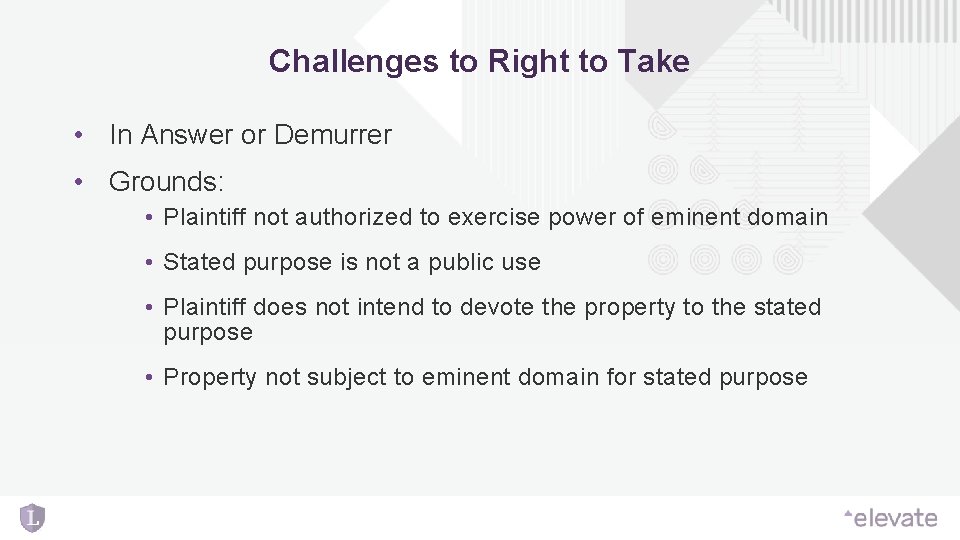
Challenges to Right to Take • In Answer or Demurrer • Grounds: • Plaintiff not authorized to exercise power of eminent domain • Stated purpose is not a public use • Plaintiff does not intend to devote the property to the stated purpose • Property not subject to eminent domain for stated purpose
Deposit of Just Compensation • Before Deposit, Expert Prepares Summary of Basis for Appraisal • Deposit Fair Market Value in Court • Serve Notice of Deposit • Interest Holders May Apply to Withdraw Money
Possession Prior to Judgment • Prejudgment or Immediate Order for Possession • Must Have Made Deposit • Public Entity Can Obtain Possession: • 3 Days if Not Occupied • 90 Days if Occupied • Risk of Loss Transfers to Public Entity
Experts/Discovery • Hire Appraiser • Owner can also testify • Can Conduct Discovery
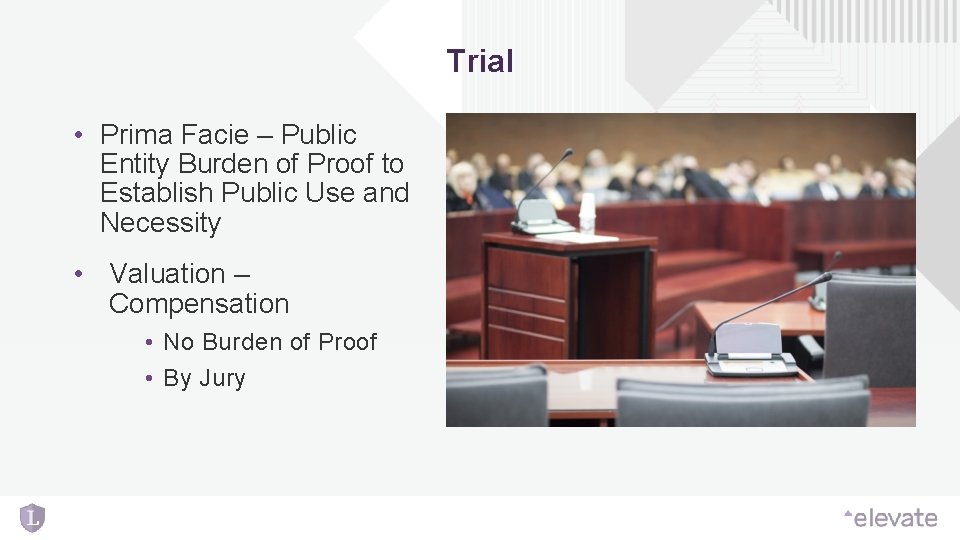
Trial • Prima Facie – Public Entity Burden of Proof to Establish Public Use and Necessity • Valuation – Compensation • No Burden of Proof • By Jury
Inverse Condemnation • When Person or Entity with Property Interest Claims that a Public Entity Took or Damaged Its Interest Without Payment of Just Compensation • The Public Entity Is Not Actively Seeking to Acquire Property • Philosophical Underpinning: Disproportionate Contribution to a Public Undertaking • Often Not Obvious Taking • Fact-Specific and Fact-Intensive
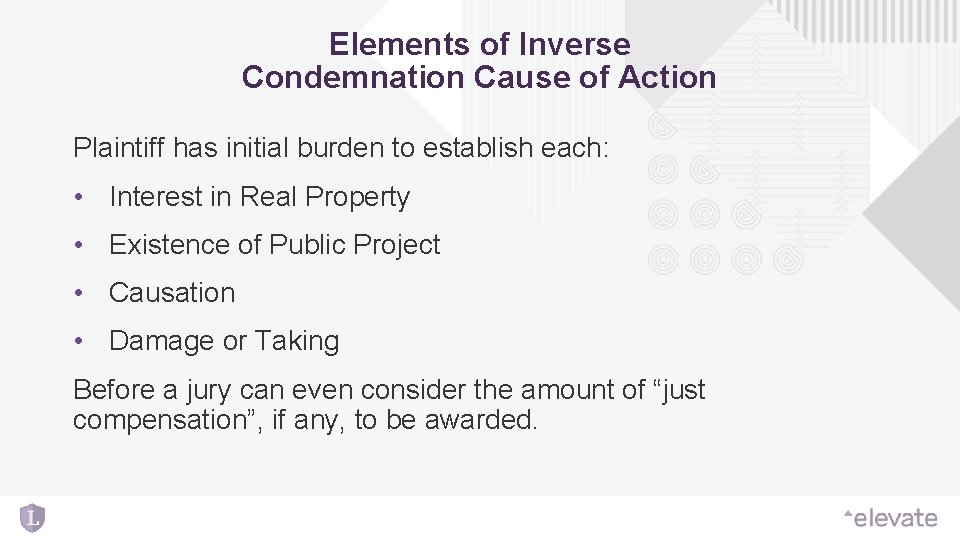
Elements of Inverse Condemnation Cause of Action Plaintiff has initial burden to establish each: • Interest in Real Property • Existence of Public Project • Causation • Damage or Taking Before a jury can even consider the amount of “just compensation”, if any, to be awarded.
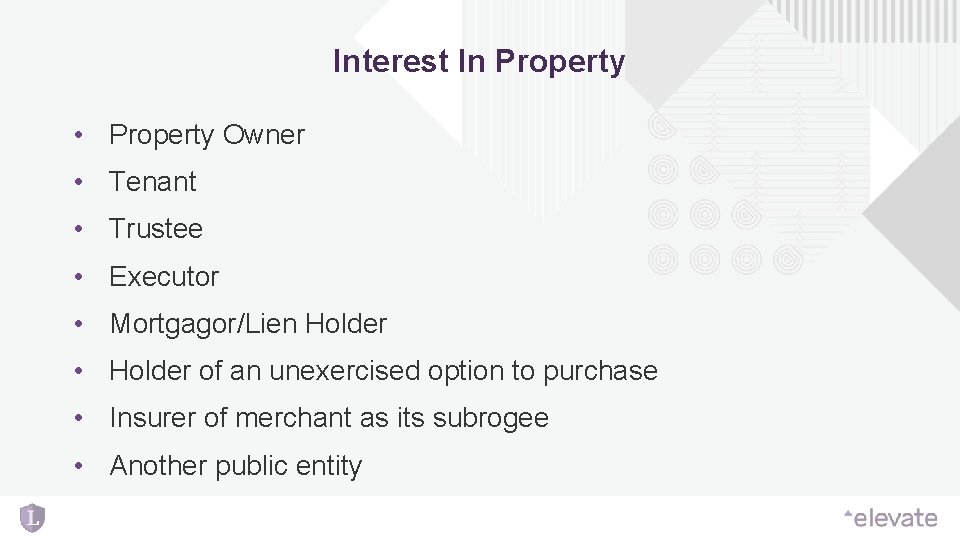
Interest In Property • Property Owner • Tenant • Trustee • Executor • Mortgagor/Lien Holder • Holder of an unexercised option to purchase • Insurer of merchant as its subrogee • Another public entity
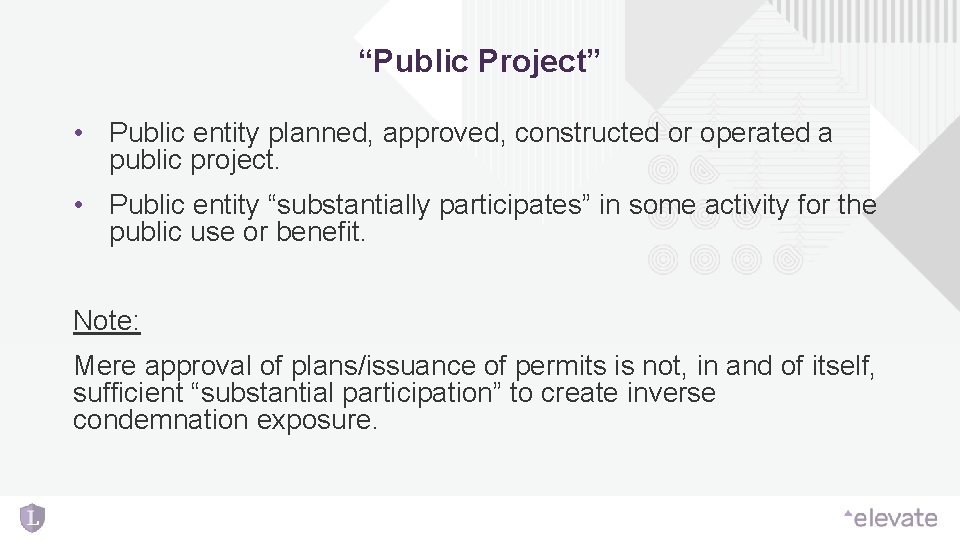
“Public Project” • Public entity planned, approved, constructed or operated a public project. • Public entity “substantially participates” in some activity for the public use or benefit. Note: Mere approval of plans/issuance of permits is not, in and of itself, sufficient “substantial participation” to create inverse condemnation exposure.
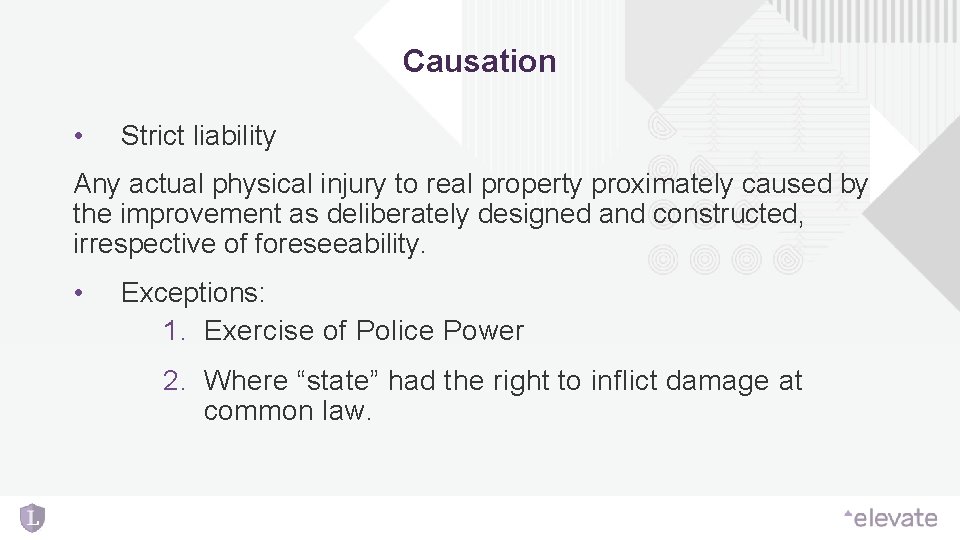
Causation • Strict liability Any actual physical injury to real property proximately caused by the improvement as deliberately designed and constructed, irrespective of foreseeability. • Exceptions: 1. Exercise of Police Power 2. Where “state” had the right to inflict damage at common law.
Causation • When Intervening Force: “Substantial Factor” Test Whether governmental action, acting alone, could have produced the damage. Damage or Taking • Fact-based specific inquiry
Types of Inverse Condemnation • Physical Intrusion • Intangible Intrusion Not Causing Physical Damage (noise, dust, fumes) • Intangible Intrusion Causing Physical Damage (vibration, land stability) • Loss of Access • “Regulatory Takings”
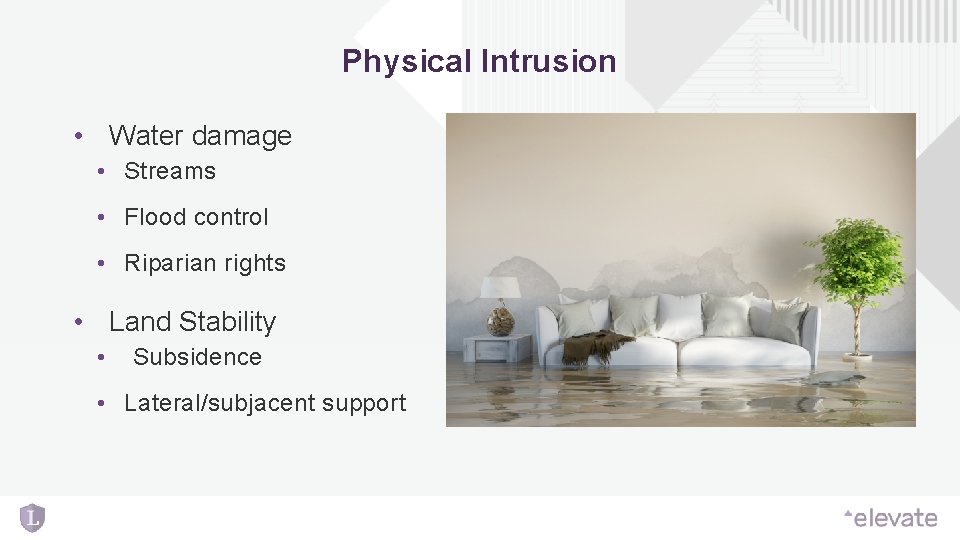
Physical Intrusion • Water damage • Streams • Flood control • Riparian rights • Land Stability • Subsidence • Lateral/subjacent support
Physical Intrusions • Loss/Interference with Access • Good Faith Mitigation
Intangible Intrusion – No Physical Damage • Overflying aircraft • Highway, airport noise • Public works construction projects • Utilities
Intangible Intrusion – Causing Damage • Vibrations • Land Stability / Subsidence
Loss of Access • Complete deprivation is actionable • No right to expect that access will be maintained indefinitely • Public policy favors public improvements, especially to traffic • As long as property remains accessible, there is no inverse condemnation liability • Unreasonable construction activity is actionable • Vehicles and equipment • Time
Regulatory Takings • The “facial” or “as applied” challenge to a land use restriction or ordinance. • Per Se Taking: • Ordinance takes or denies all economically viable uses of property. Lucas v. South Carolina Coastal Council (1992) 505 US 1003. • Partial Taking: • Ad hoc analysis of factors. Penn Central Transp. Co. v. New York City (1978) 438 US 104.
Key Penn Central Factors • The economic impact of the regulation of the claimant. • The impact of the regulation on the investment-backed expectations. • The character of the governmental action.
Common Regulatory Takings Contexts • Zoning • Down zoning v. open space overlays • Development Moratoria • Generally, not a taking • 30 years temporary moratorium is not a taking • Weigh state interest v. burden on owner
Common Regulatory Takings Contexts • Permits • If total denial (=denial of all economically viable use) must compensate owner unless denial was for public safety (police power) or unless delay in issuing permit was normal in the permissible regulation of development. • Mere delay in issuing permit is generally not a taking.
Valuation Issues • Fair Market Value “. . . The highest prices on the date of valuation that would be agreed to by a seller, being willing to sell but under no particular or urgent necessity for so doing, nor obliged to sell, and a buyer, being ready, willing and able to buy but under no particular necessity for so doing, each dealing with the other with full knowledge of all of the uses and purposes for which the property is reasonably adaptable and available. ” • Same Standard In Inverse Condemnation Except in Unusual Circumstances
Valuation of Special Use Property • Fair Market Value for Special Use Property “The fair market value of property taken for which there is no relevant, comparable market is its value on the date of valuation as determined by any method of valuation that is just and equitable. ” Mitigation • Good faith mitigation measures are compensable in inverse condemnation.
Date of Value • Eminent Domain: • Date of Commencement of Action if brought to trial within 1 year • Date of Trial if after 1 year • Date of Prejudgment Deposit • Inverse Condemnation: • Date of Taking v. Date of Trial
Additional Considerations – General • Furniture, Fixtures and Equipment • Fixtures Are Actionable In Inverse Condemnation • Relocation Benefits • Loss of Goodwill