
EMG Nerve Injury Neurapraxia Demyelination Axonotmesis Axonal loss


- Slides: 63
EMG
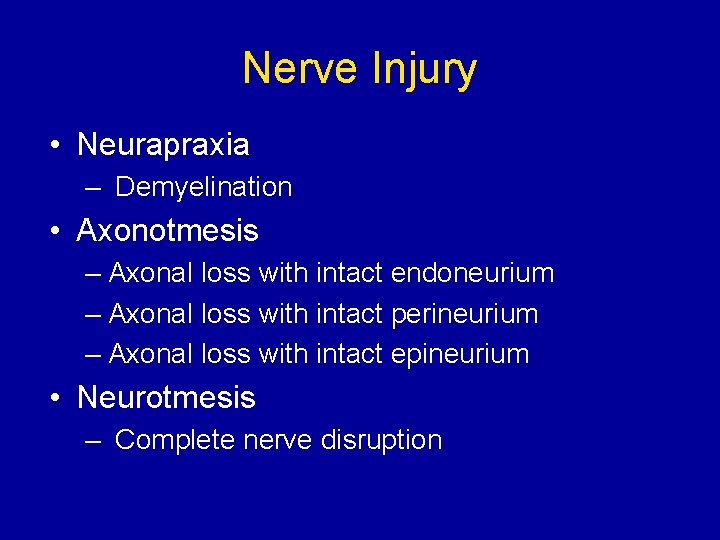
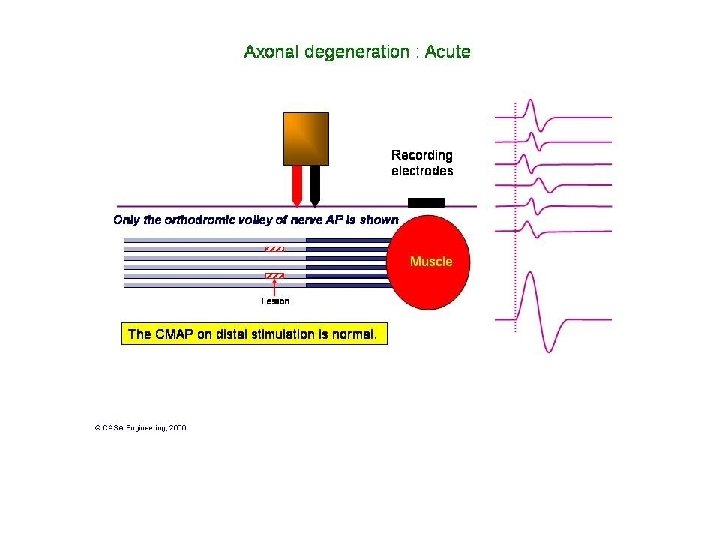
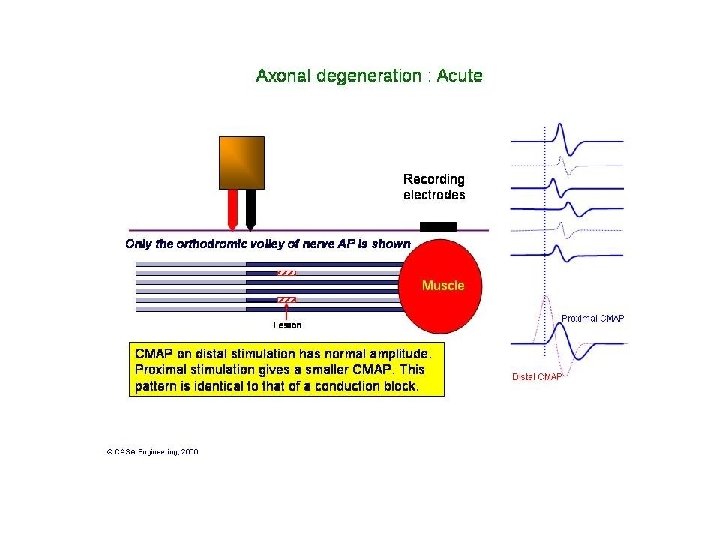
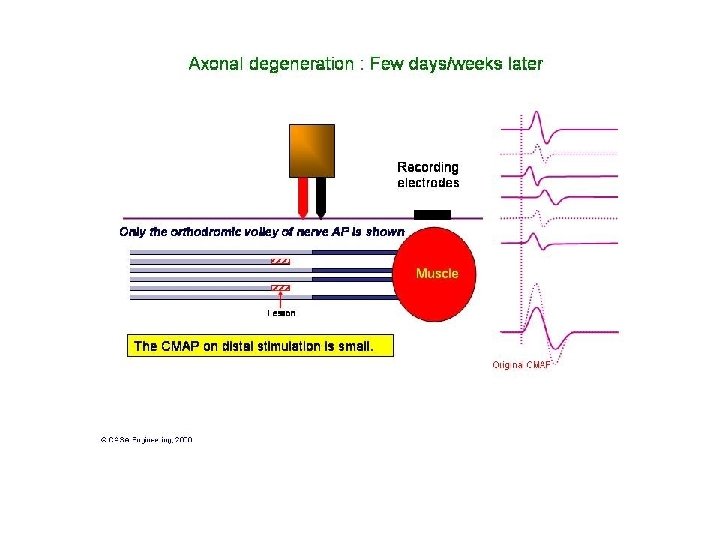
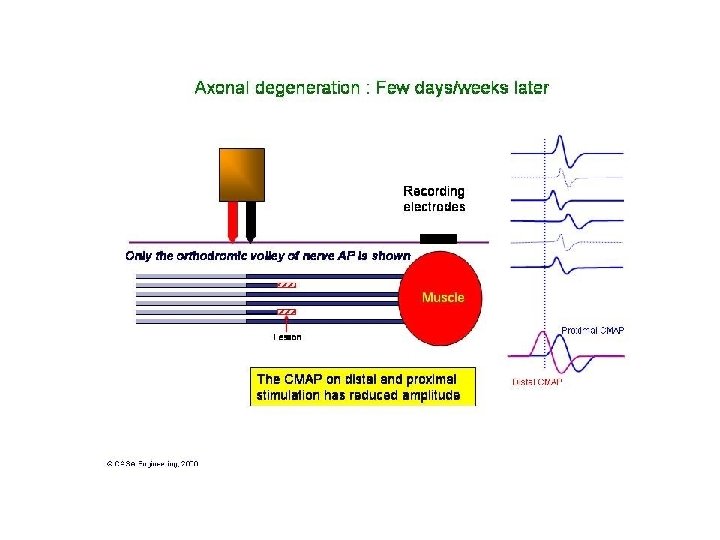
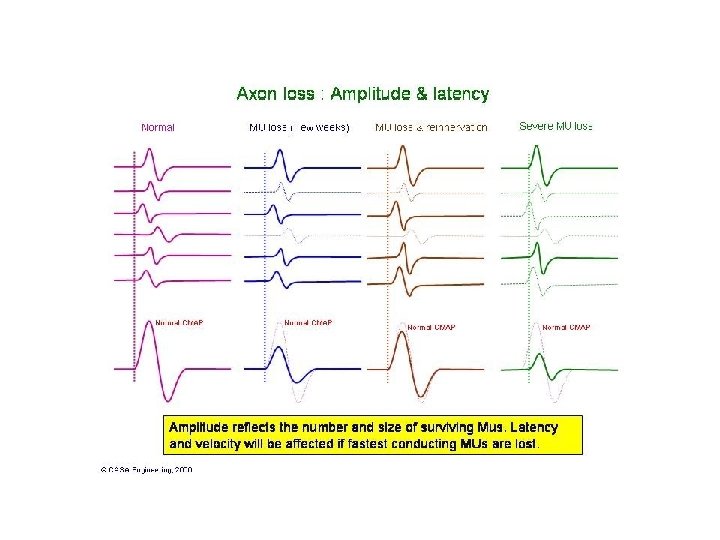
Nerve Injury • Neurapraxia – Demyelination • Axonotmesis – Axonal loss with intact endoneurium – Axonal loss with intact perineurium – Axonal loss with intact epineurium • Neurotmesis – Complete nerve disruption
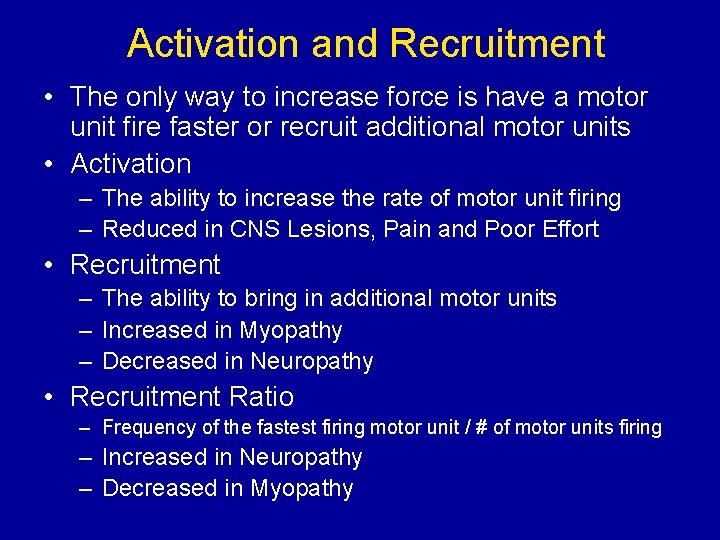
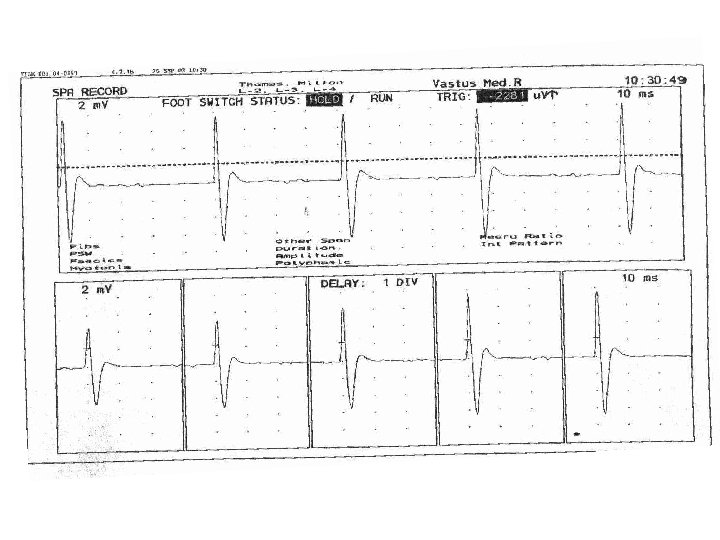
Activation and Recruitment • The only way to increase force is have a motor unit fire faster or recruit additional motor units • Activation – The ability to increase the rate of motor unit firing – Reduced in CNS Lesions, Pain and Poor Effort • Recruitment – The ability to bring in additional motor units – Increased in Myopathy – Decreased in Neuropathy • Recruitment Ratio – Frequency of the fastest firing motor unit / # of motor units firing – Increased in Neuropathy – Decreased in Myopathy
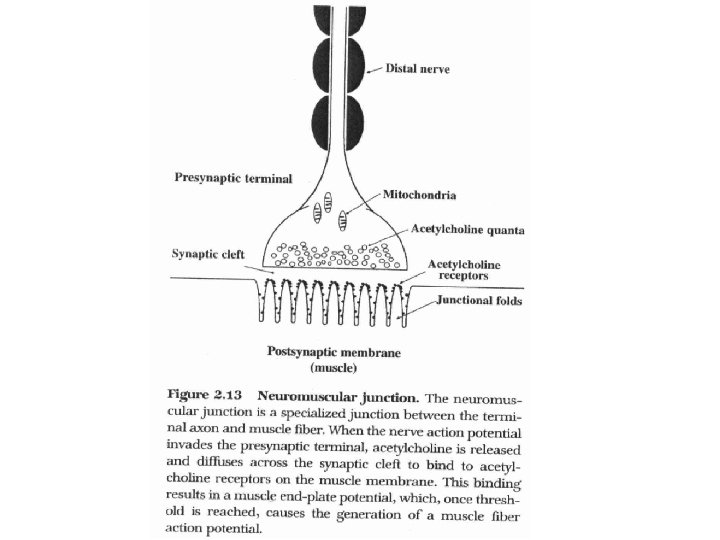
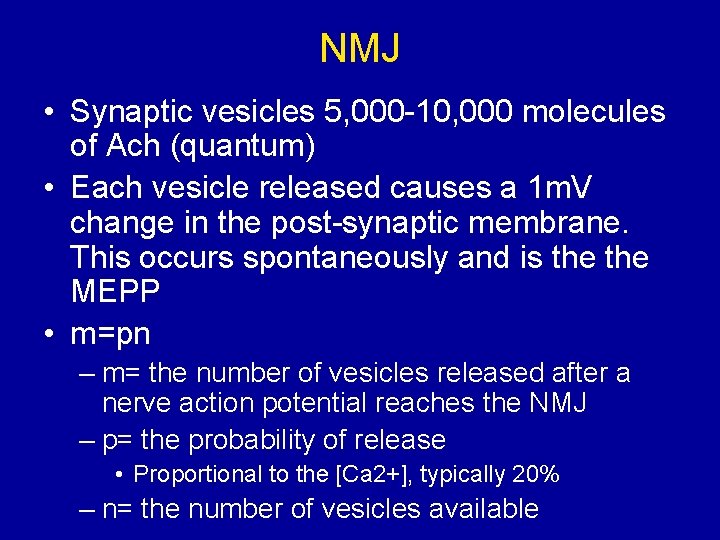
NMJ • Synaptic vesicles 5, 000 -10, 000 molecules of Ach (quantum) • Each vesicle released causes a 1 m. V change in the post-synaptic membrane. This occurs spontaneously and is the MEPP • m=pn – m= the number of vesicles released after a nerve action potential reaches the NMJ – p= the probability of release • Proportional to the [Ca 2+], typically 20% – n= the number of vesicles available
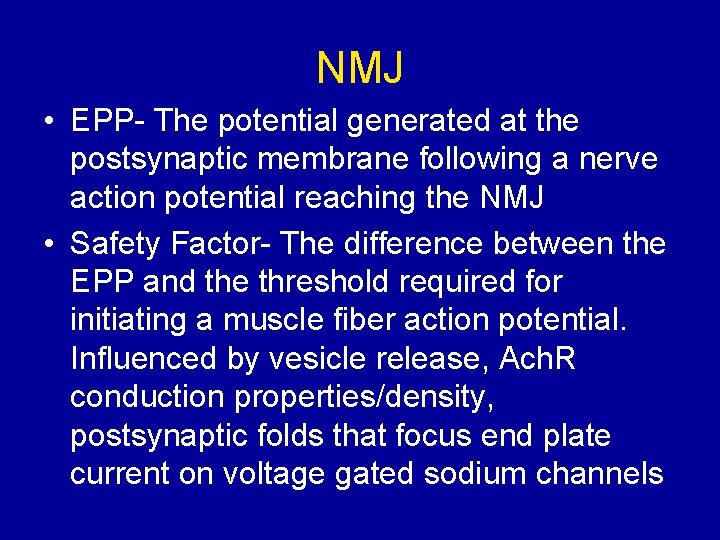
NMJ • EPP- The potential generated at the postsynaptic membrane following a nerve action potential reaching the NMJ • Safety Factor- The difference between the EPP and the threshold required for initiating a muscle fiber action potential. Influenced by vesicle release, Ach. R conduction properties/density, postsynaptic folds that focus end plate current on voltage gated sodium channels
NMJ • Calcium- Pre-synaptic depolarization leads to calcium influx that leads to vesicular docking and Ach release • Calcium diffuses slowly out of the presynaptic terminal at a rate of 100 -200 ms. • RNS < 5 Hz -calcium’s role in vesicular release is not enhanced • RNS > 10 Hz increased calcium [ ] greatly increases the probability that a vesicle will be released
NMJ • Primary store- immediately available- 1000 vesicles • Secondary store- mobilization, replenishes primary store after 1 -2 seconds- 10, 000 vesicles • Tertiary store- reserve, found in the axon and cell body- 100, 000 vesicles
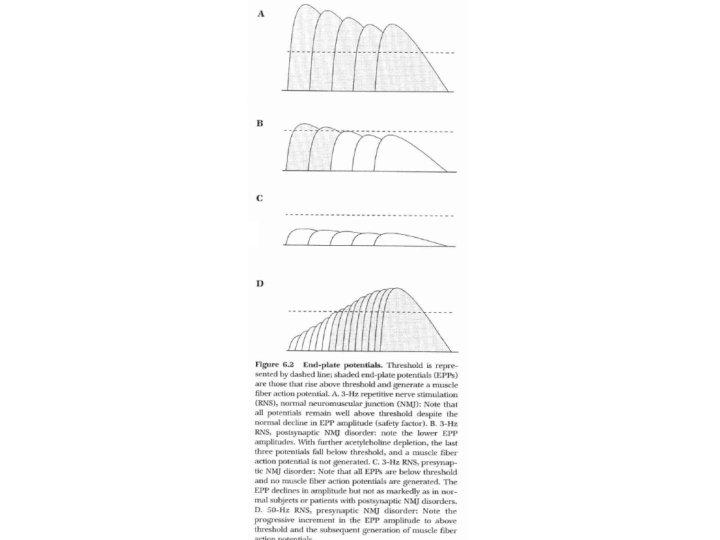
NMJ • In normals, with slow RNS, the EPP falls as vesicles are slowly depleted, but because of a normal safety factor, threshold is achieved and a muscle fiber action potential is generated • With fast RNS (or exercise), the depletion of vesicles is counterbalanced by an accumulation of calcium, and there is an increase in the EPP
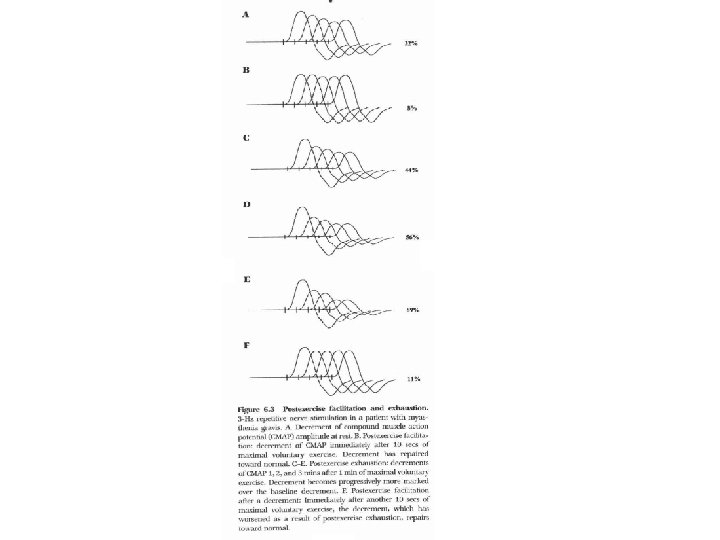
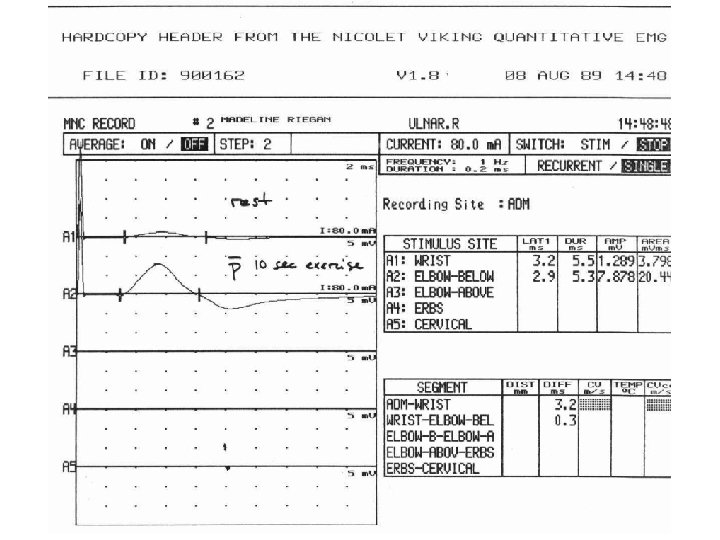
Post-Synaptic Disorders • MG – The baseline EPP and safety factor are reduced, however threshold is still reached and the CMAP is normal – Slow RNS- The EPP falls further, some become subthreshold, muscle fiber action potentials fail and the CMAP drops (10%) – The greatest drop is seen between stimulus 1 & 2. By stimulus 5 the CMAP may increase with mobilization of the 2 nd store – There may be a repair of the decrement after 10 seconds of exercise- “Post Exercise Facilitation” – Without a decrement, slow RNS should be repeated every minute after one minute of exercise- “Post Exercise Exhaustion”
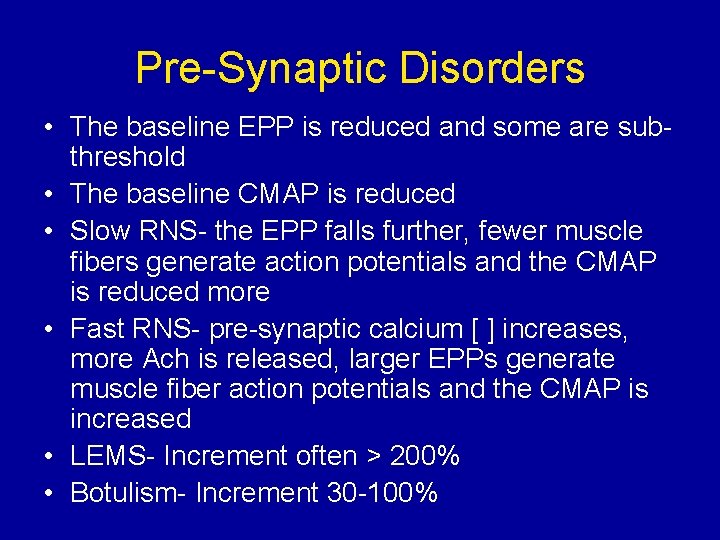
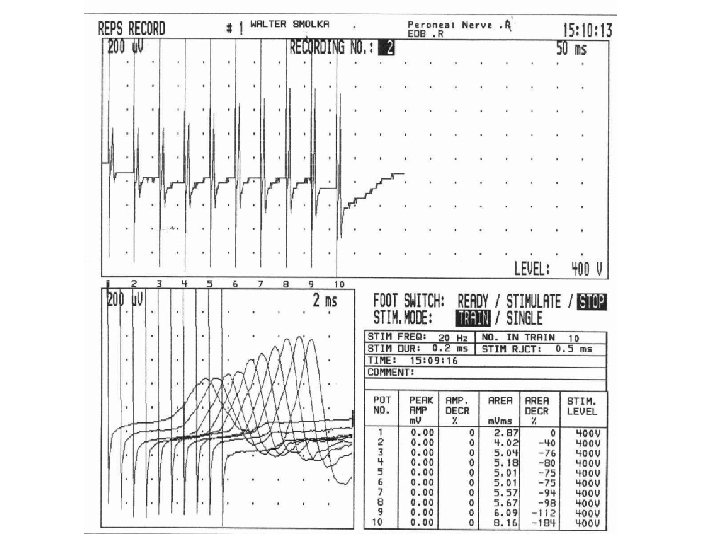
Pre-Synaptic Disorders • The baseline EPP is reduced and some are subthreshold • The baseline CMAP is reduced • Slow RNS- the EPP falls further, fewer muscle fibers generate action potentials and the CMAP is reduced more • Fast RNS- pre-synaptic calcium [ ] increases, more Ach is released, larger EPPs generate muscle fiber action potentials and the CMAP is increased • LEMS- Increment often > 200% • Botulism- Increment 30 -100%
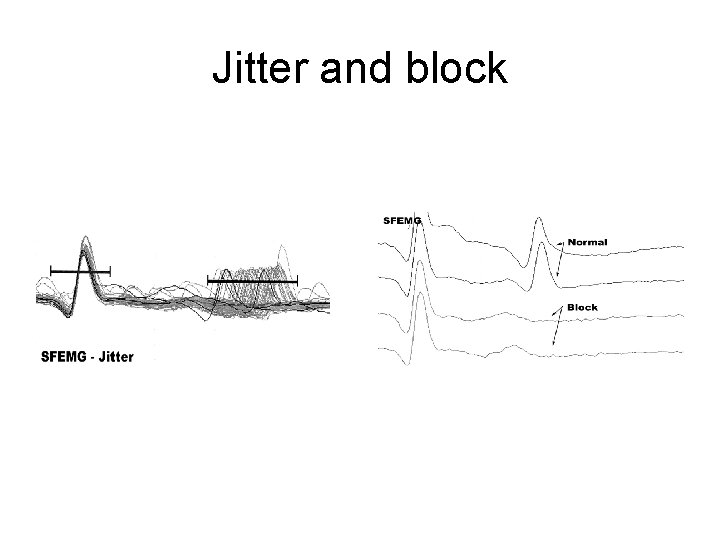
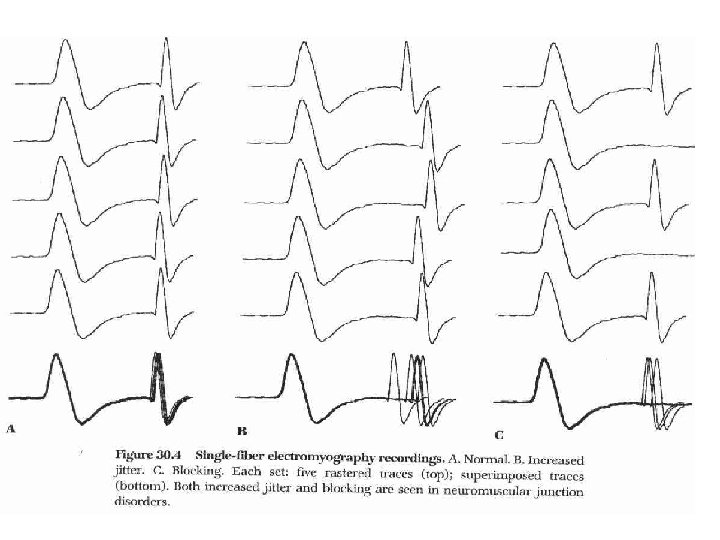
NMJ • EMG – Jitter- variability of the time interval between two muscle fiber action potentials innervated by the same motor unit – Blocking- the failure of transmission leading to an absent muscle fiber action potential in a pair – Cooling improves neuromuscular transmission (? Decreased function of Achesterase? )
Jitter and block