
Emerging themes from HSIB investigations in Emergency Departments
Emerging themes from HSIB investigations in Emergency Departments Saskia Fursland National Investigator saskia. fursland@hsib. org. uk www. hsib. org. uk @hsib_org

My background
Overview • Brief introduction to the Healthcare Safety Investigation Branch (HSIB) • Emerging themes from HSIB investigations conducted in ED • Questions


National Investigations • Encompasses any patient safety concern that occurred within NHS-funded care in England after 1 April 2017 • Decide what to investigate based on: • Outcome Impact • Systemic Risk • Learning potential • Make safety recommendations at a national level
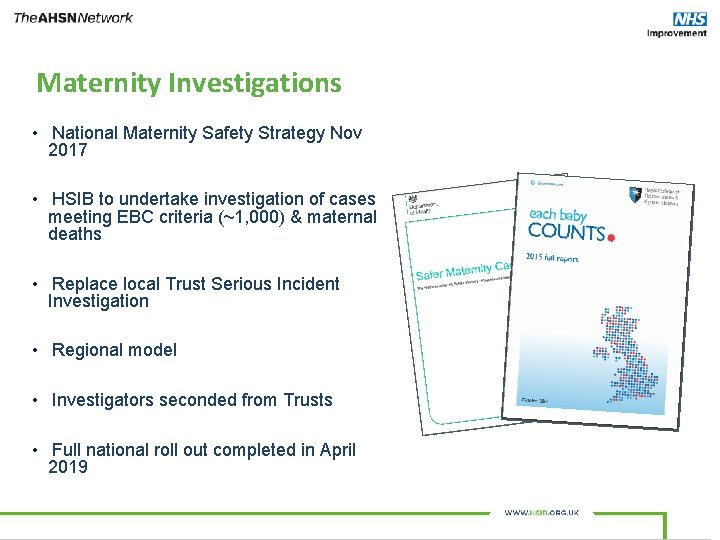
Maternity Investigations • National Maternity Safety Strategy Nov 2017 • HSIB to undertake investigation of cases meeting EBC criteria (~1, 000) & maternal deaths • Replace local Trust Serious Incident Investigation • Regional model • Investigators seconded from Trusts • Full national roll out completed in April 2019
Systems approach to investigation “Systems thinking focuses more on the system rather than on human actions in order to learn how to redesign the system to reduce losses— where the system includes engineering design, construction, operations, management, and organizational structure. ” Leveson, Stringfellow and Thomas
Why use a systems approach in investigation? • Healthcare systems are complex and so you need to use an approach which embraces its complexity of interactions and interrelationships • The vast majority of healthcare incidents have systemic factors that may have influenced the sequence of events • Enables the investigation to look beyond ‘human error’ • By understanding the factors which contribute to human error it is possible for recommendations to be defined and targeted at the right place to reduce the risk of reoccurrence
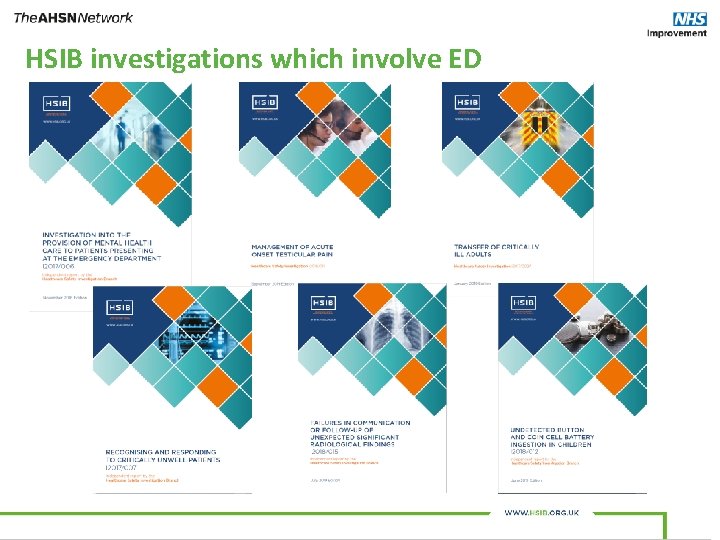
HSIB investigations which involve ED
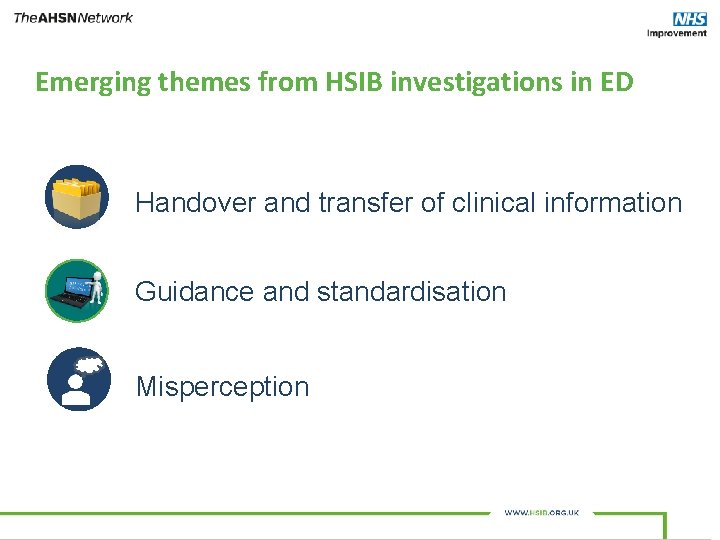
Emerging themes from HSIB investigations in ED Handover and transfer of clinical information Guidance and standardisation Misperception
Handover and transfer of clinical information Distributed Situation Awareness Distributed situation awareness considers how the system can be viewed, as a whole, by taking into account the information held by the actors, for example, medical records, people, and the way in which they interact. Salmon, P. M. , Stanton, N. A. , Walker, G. H. Jenkins, D. P. , and Rafferty, L. (2009). Is it really better to share? Distributed situation awareness and its implications for collaborative system design. Theoretical Issues in Ergonomics Science. 11, 58 -83.
Guidance and standardisation • Volume of guidance from multiple sources
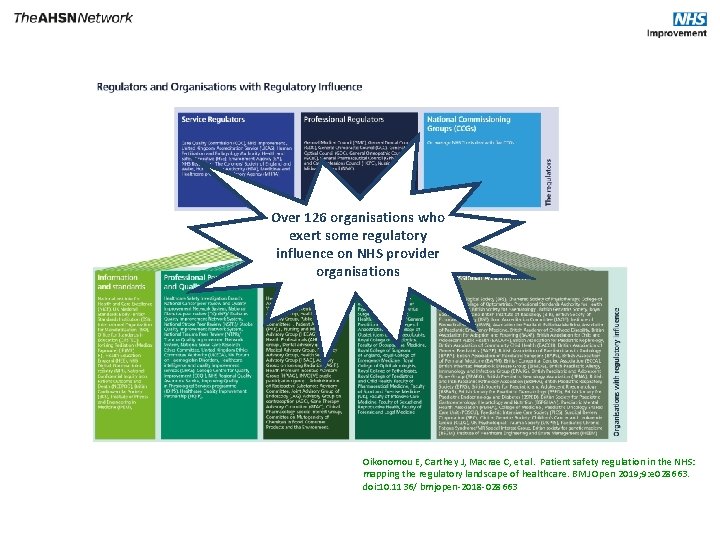
Over 126 organisations who exert some regulatory influence on NHS provider organisations Oikonomou E, Carthey J, Macrae C, et al. Patient safety regulation in the NHS: mapping the regulatory landscape of healthcare. BMJ Open 2019; 9: e 028663. doi: 10. 1136/ bmjopen-2018 -028663
Guidance and standardisation • Volume of guidance from multiple sources • Lack of standardisation • Outdated guidance still in circulation
Misperception ‘Wellness bias’ The patient who does not appear critically unwell
Reports can be downloaded from: https: //www. hsib. org. uk/investigations-cases/
Saskia Fursland National Investigator saskia. fursland@hsib. org. uk www. hsib. org. uk @hsib_org
- Slides: 18