
Emerging Modes of Business eBusiness Concept e Electronic
Emerging Modes of Business
e-Business Concept • ‘e’ – Electronic • e-business – Electronic Business • Conducting of wide range of activities comprising of Industry, Trade and Commerce using computer networks is called e-business • Definition : “Electronic Business is the general term for buying and selling process that is supported by electronic means” Philip Kotler
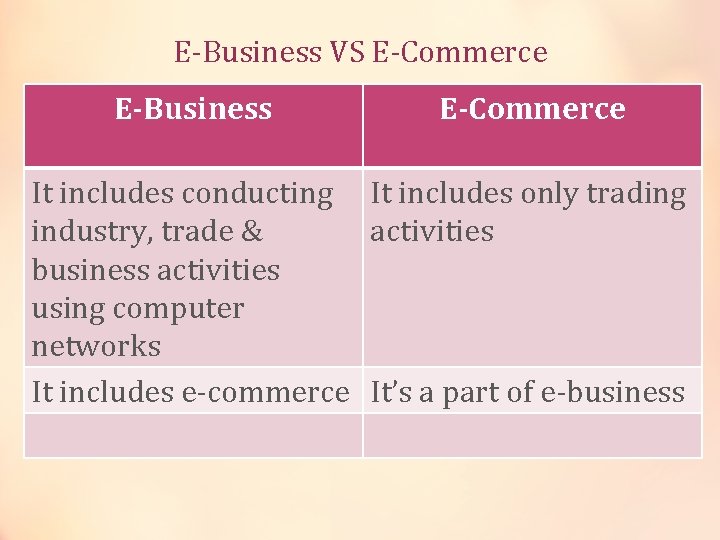
E-Business VS E-Commerce E-Business E-Commerce It includes conducting It includes only trading industry, trade & activities business activities using computer networks It includes e-commerce It’s a part of e-business
Scope of e-Business 1. B 2 B (Business to Business) • Opportunity to interact with other business as suppliers, vendors or distributors • Network of computers help to place orders, manage stock, monitor production and delivery of products • Networking reduces the need to restrict the business activities at one place • It expedites the movement of the information, documents and even the payments • Example – Maruti Udyog / Bajaj Auto iuses B 2 B to order components
Scope of e-Business 2. B 2 C ( Business to Customers) • Business to customer interaction • Includes the entire marketing process – promoting – marketing, selling, delivery, providing after sale services • Economical and with speed • Shop at will • Delivery at place of choice • Choice of payment mode and at their convenience • Example – withdrawal of money from ATM (Bank to Customer
Scope of e-Business 3. Intra –B (with in Business) • Intra B transactions involve all individuals or parties within the organisation • Uses intranet to manage interaction and dealings among various departments or individuals with in the organisation • Facilitates efficient planning, implementation, coordination, well informed employees, faster decisions etc • Example- Marketing Department may use intra B instead of visiting offices to inform production department about orders or inform the stores the details of the dispatch
Other types of e- Commerce 4. B 2 E Commerce – Business 2 Employees • Companies use e-commerce to recruit, train & develop employees • Online reporting facilities help employees send their report promptly and management to receive them on real time basis • Virtual Private Network (VPN) has led to creation of virtual offices. Employees work from the places of their choice • On line Domestic or Global Meetings • It takes office to employees instead of bringing employees to office
Other types of e- Commerce 5. C 2 C (Customer to Customer) • Goods are sold by one customer to another • C 2 C acts as a Payment Intermediary – Pay Pal, Pay. Tm • C 2 C provides platform to consumers to forums or pressure groups. Consumers can write their complaints/ grievances on the forums
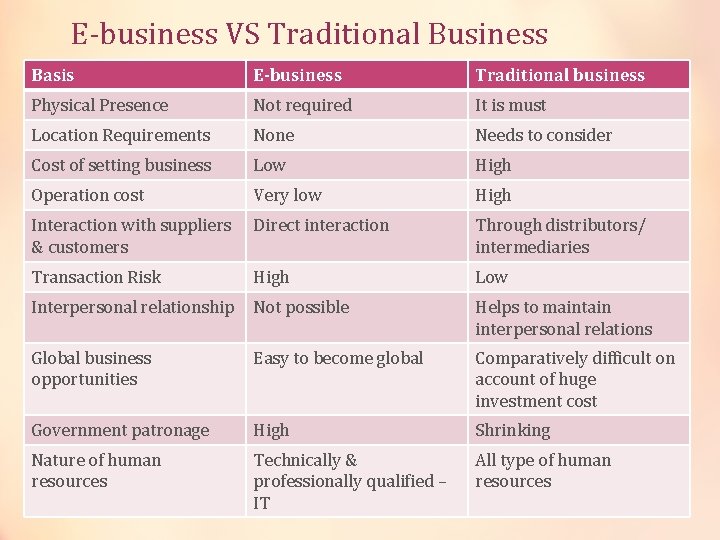
E-business VS Traditional Business Basis E-business Traditional business Physical Presence Not required It is must Location Requirements None Needs to consider Cost of setting business Low High Operation cost Very low High Interaction with suppliers & customers Direct interaction Through distributors/ intermediaries Transaction Risk High Low Interpersonal relationship Not possible Helps to maintain interpersonal relations Global business opportunities Easy to become global Comparatively difficult on account of huge investment cost Government patronage High Shrinking Nature of human resources Technically & professionally qualified – IT All type of human resources
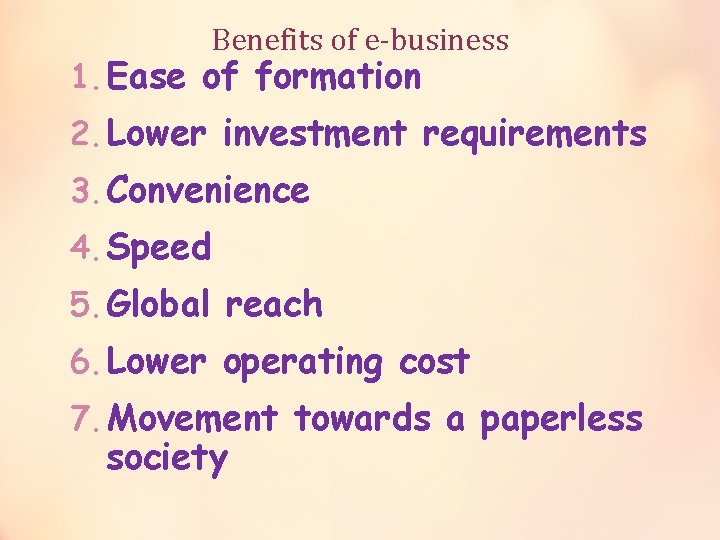
Benefits of e-business 1. Ease of formation 2. Lower investment requirements 3. Convenience 4. Speed 5. Global reach 6. Lower operating cost 7. Movement towards a paperless society
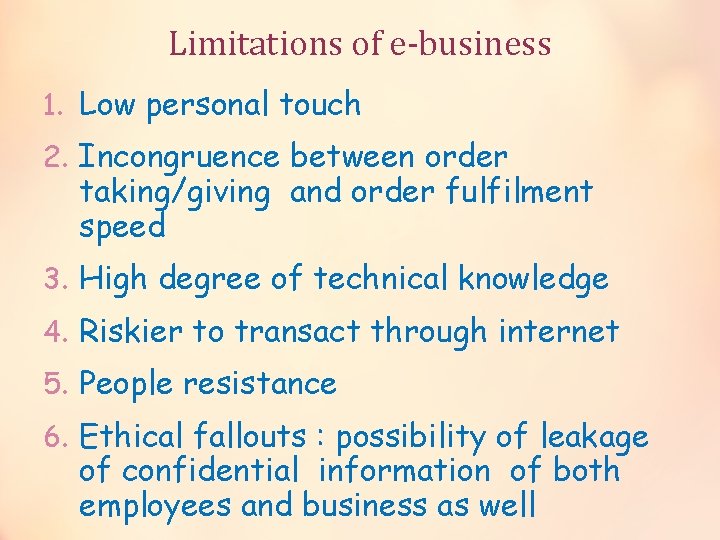
Limitations of e-business 1. Low personal touch 2. Incongruence between order taking/giving and order fulfilment speed 3. High degree of technical knowledge 4. Riskier to transact through internet 5. People resistance 6. Ethical fallouts : possibility of leakage of confidential information of both employees and business as well
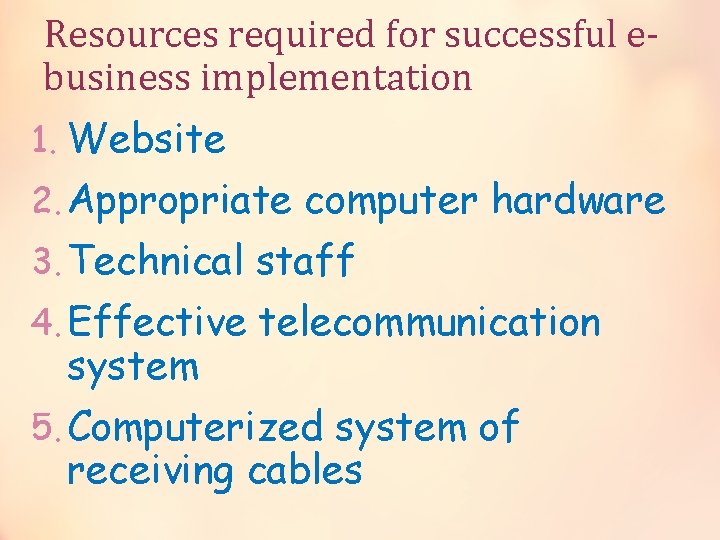
Resources required for successful ebusiness implementation 1. Website 2. Appropriate computer hardware 3. Technical staff 4. Effective telecommunication system 5. Computerized system of receiving cables
On Line Transactions • Stage 1: Registration – The pre Purchase / Sale Stage • Stage 2: Placing an order – The Purchase / Sale Stage • Stage 3: The Delivery Stage
Outsourcing • Meaning • Features: It involves contracting out None core business activities are outsourced Processes may be outsourced to a captive unit or a third party
Outsourcing Scope of Outsourcing: • Contractual manufacturing • Contract Sales • Contract Research • Informatics
Benefits or need of Outsourcing • Focus on core activities • Quest for excellence – Benefits of division of labour and specialization • Cost reduction • Growth through alliance – reduces the need of investment • Stimulates economic development
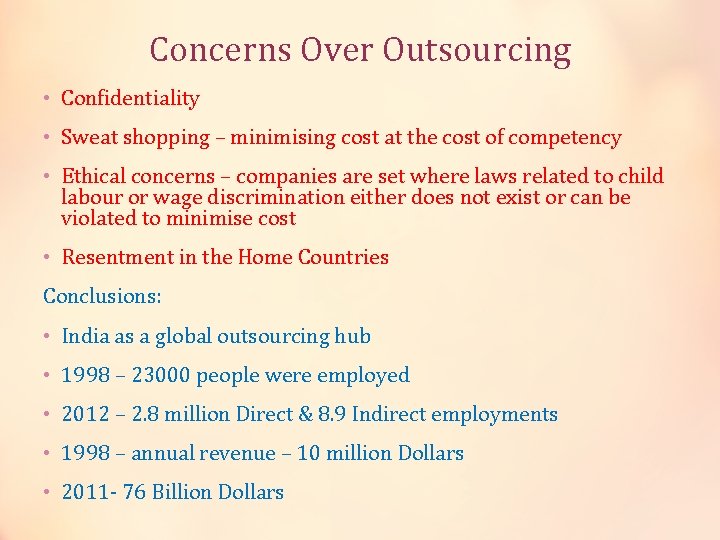
Concerns Over Outsourcing • Confidentiality • Sweat shopping – minimising cost at the cost of competency • Ethical concerns – companies are set where laws related to child labour or wage discrimination either does not exist or can be violated to minimise cost • Resentment in the Home Countries Conclusions: • India as a global outsourcing hub • 1998 – 23000 people were employed • 2012 – 2. 8 million Direct & 8. 9 Indirect employments • 1998 – annual revenue – 10 million Dollars • 2011 - 76 Billion Dollars
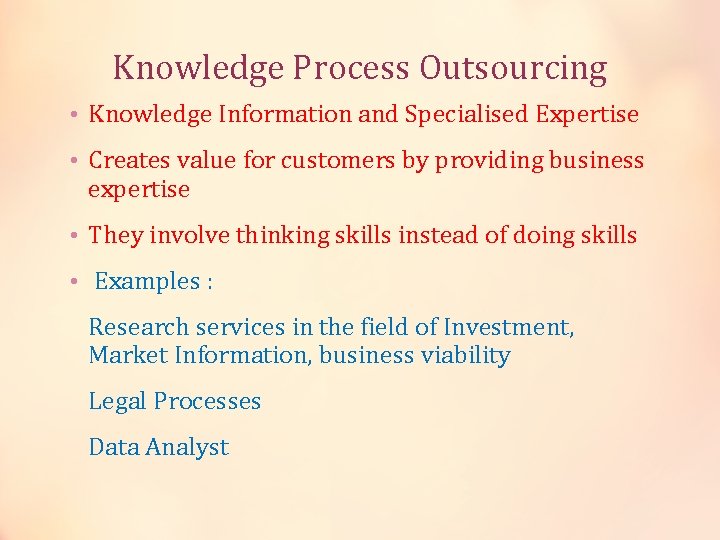
Knowledge Process Outsourcing • Knowledge Information and Specialised Expertise • Creates value for customers by providing business expertise • They involve thinking skills instead of doing skills • Examples : Research services in the field of Investment, Market Information, business viability Legal Processes Data Analyst

Thank You for your patient listening
- Slides: 19