
Emerging Issues in Health Care Ethics Approaches to
![In Defiance of Ecclesiastes: [no time] for every season unto heaven A time to](https://slidetodoc.com/presentation_image_h2/1592940052b9847f87268c2e2361f7e3/image-38.jpg "In Defiance of Ecclesiastes: [no time] for every season unto heaven A time to")







- Slides: 54
Emerging Issues in Health Care Ethics: Approaches to Ethics Living Our Values and Thinking Outside the Box Hazel Markwell, Ph. D. , D. Th. Ethics and Policy Advisor Catholic Health Alliance of Canada Chair in Bioethics St. Paul University, Ottawa
Objectives What is Ethics What is organizational ethics Approaches to Ethics and why we disagree Faith Based Approach Where have we come from? : Review the development and changes in faith based health care Where we have come from: - The goals of medicine and the current state Inside the box: Our values Thinking outside the box Why can’t we keep doing what we are doing?
What is Ethics? A term for the different ways of understanding morality (Beauchamp & Childress) About right and wrong and why we make certain choices or do certain things (Hebert) The disciplined study of values and actions (Pellegrino & Thomasma) The science that helps us to determine which actions are good or bad (de. Blois, Norris, O’Rourke) 3
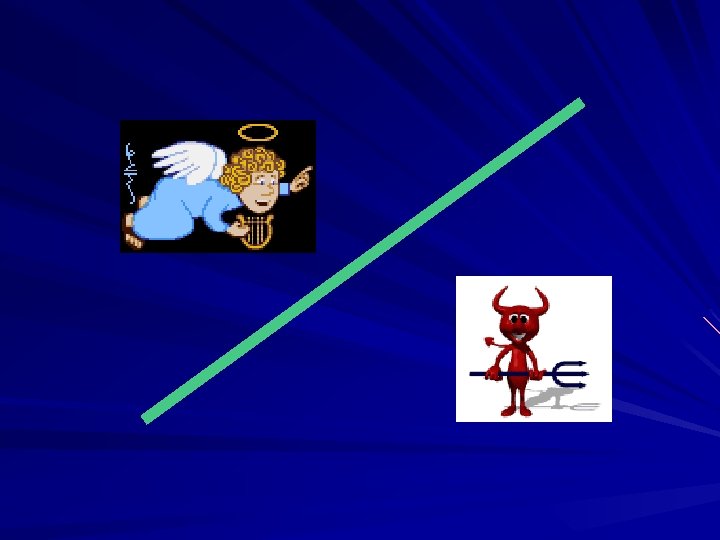
NOW …. what do you do?
Organizational Ethics Organizational… ethics is the intentional use of values to guide the decisions of a system. (Ralph Porter) Alignment of org culture (mission and vision) with corporate decisions Knowing and doing what is right in the workplace in response to various situations Management led but “everyone’s business” Leaders need to treat ethics “the same way they treat other organizational priorities” (Hamel) Who we say we are and how we show it Setting an ethical culture
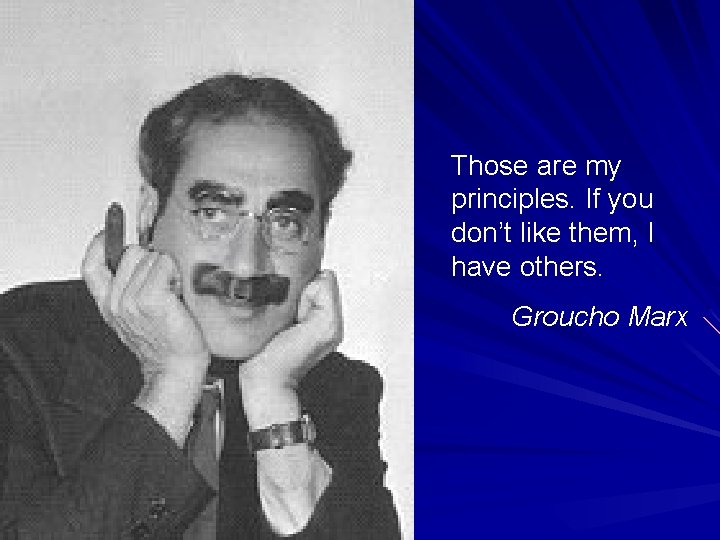
Those are my principles. If you don’t like them, I have others. Groucho Marx
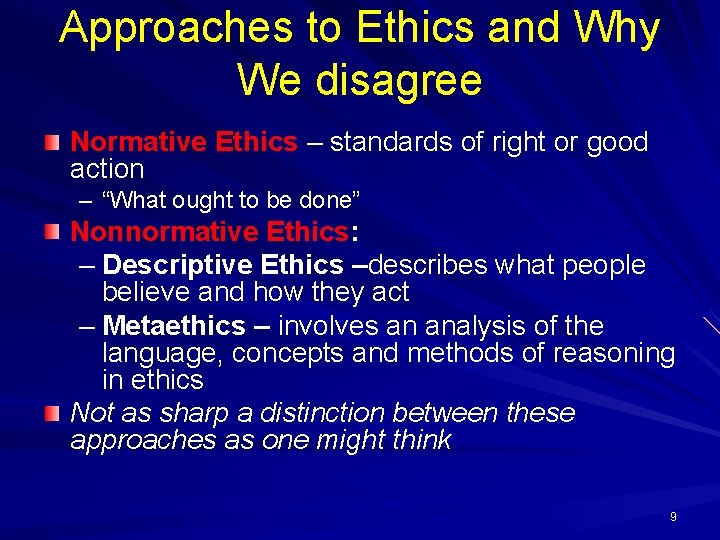
Approaches to Ethics and Why We disagree Normative Ethics – standards of right or good action – “What ought to be done” Nonnormative Ethics: – Descriptive Ethics –describes what people believe and how they act – Metaethics – involves an analysis of the language, concepts and methods of reasoning in ethics Not as sharp a distinction between these approaches as one might think 9
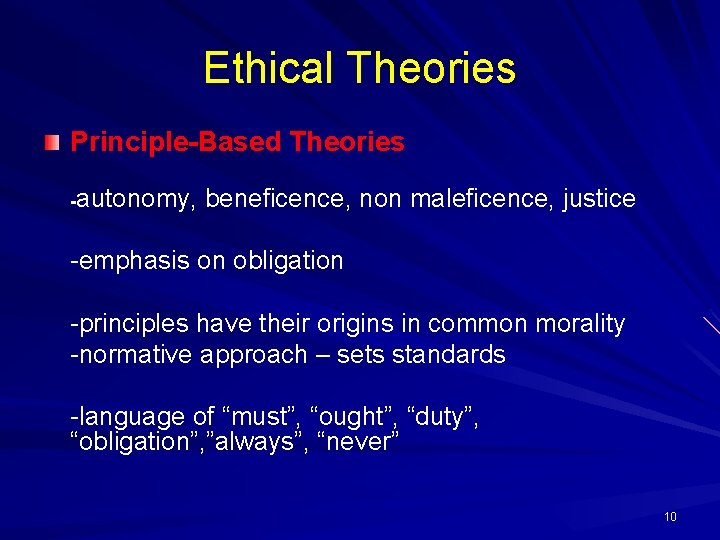
Ethical Theories Principle-Based Theories -autonomy, beneficence, non maleficence, justice -emphasis on obligation -principles have their origins in common morality -normative approach – sets standards -language of “must”, “ought”, “duty”, “obligation”, ”always”, “never” 10
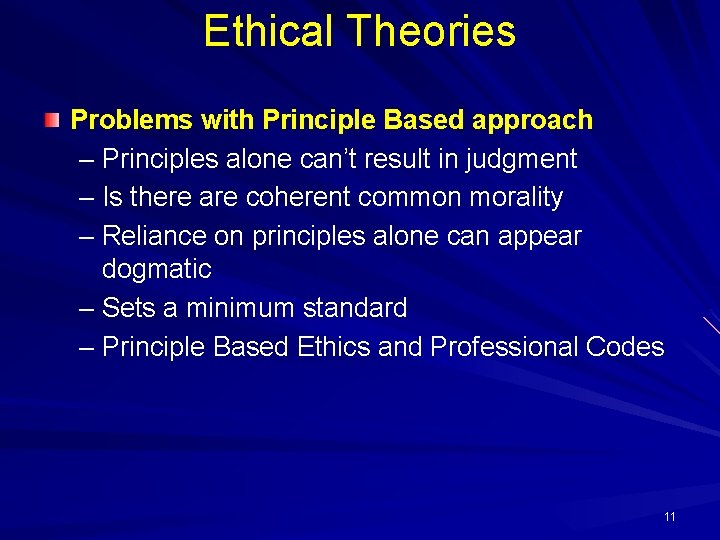
Ethical Theories Problems with Principle Based approach – Principles alone can’t result in judgment – Is there are coherent common morality – Reliance on principles alone can appear dogmatic – Sets a minimum standard – Principle Based Ethics and Professional Codes 11
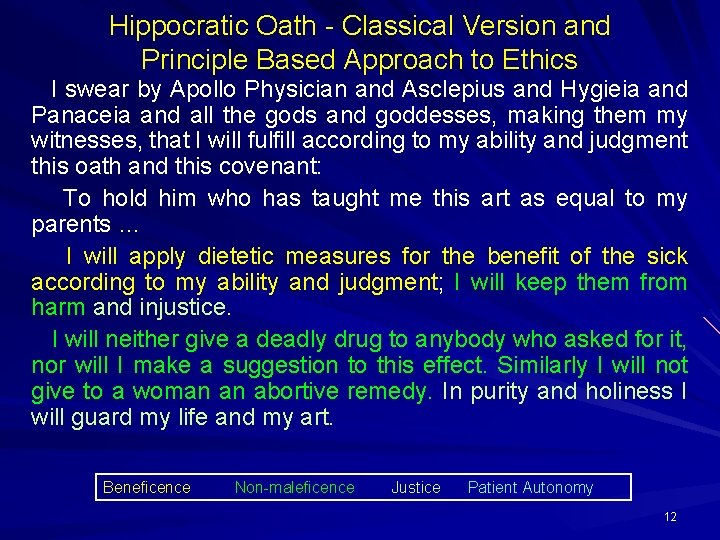
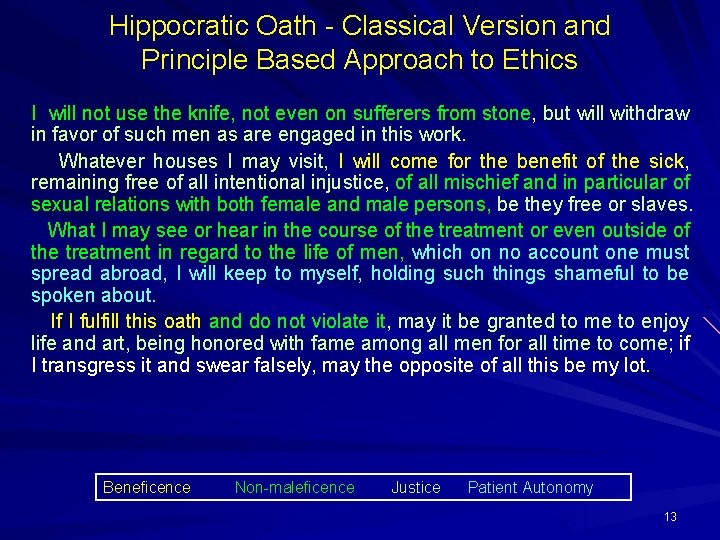
Hippocratic Oath - Classical Version and Principle Based Approach to Ethics I swear by Apollo Physician and Asclepius and Hygieia and Panaceia and all the gods and goddesses, making them my witnesses, that I will fulfill according to my ability and judgment this oath and this covenant: To hold him who has taught me this art as equal to my parents … I will apply dietetic measures for the benefit of the sick according to my ability and judgment; I will keep them from harm and injustice. I will neither give a deadly drug to anybody who asked for it, nor will I make a suggestion to this effect. Similarly I will not give to a woman an abortive remedy. In purity and holiness I will guard my life and my art. Beneficence Non-maleficence Justice Patient Autonomy 12
Hippocratic Oath - Classical Version and Principle Based Approach to Ethics I will not use the knife, not even on sufferers from stone, but will withdraw in favor of such men as are engaged in this work. Whatever houses I may visit, I will come for the benefit of the sick, remaining free of all intentional injustice, of all mischief and in particular of sexual relations with both female and male persons, be they free or slaves. What I may see or hear in the course of the treatment or even outside of the treatment in regard to the life of men, which on no account one must spread abroad, I will keep to myself, holding such things shameful to be spoken about. If I fulfill this oath and do not violate it, may it be granted to me to enjoy life and art, being honored with fame among all men for all time to come; if I transgress it and swear falsely, may the opposite of all this be my lot. Beneficence Non-maleficence Justice Patient Autonomy 13
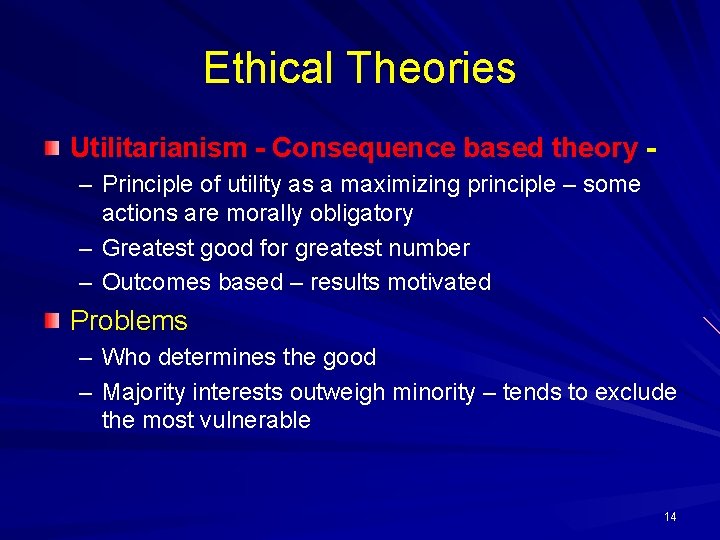
Ethical Theories Utilitarianism - Consequence based theory – Principle of utility as a maximizing principle – some actions are morally obligatory – Greatest good for greatest number – Outcomes based – results motivated Problems – Who determines the good – Majority interests outweigh minority – tends to exclude the most vulnerable 14
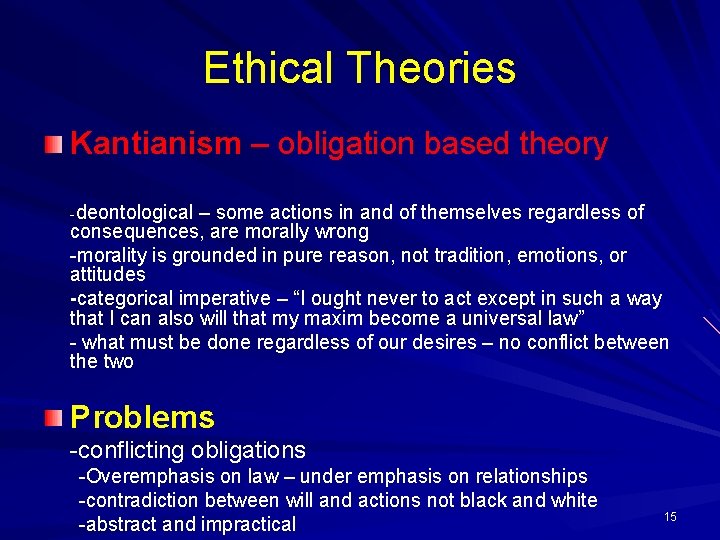
Ethical Theories Kantianism – obligation based theory -deontological – some actions in and of themselves regardless of consequences, are morally wrong -morality is grounded in pure reason, not tradition, emotions, or attitudes -categorical imperative – “I ought never to act except in such a way that I can also will that my maxim become a universal law” - what must be done regardless of our desires – no conflict between the two Problems -conflicting obligations -Overemphasis on law – under emphasis on relationships -contradiction between will and actions not black and white -abstract and impractical 15
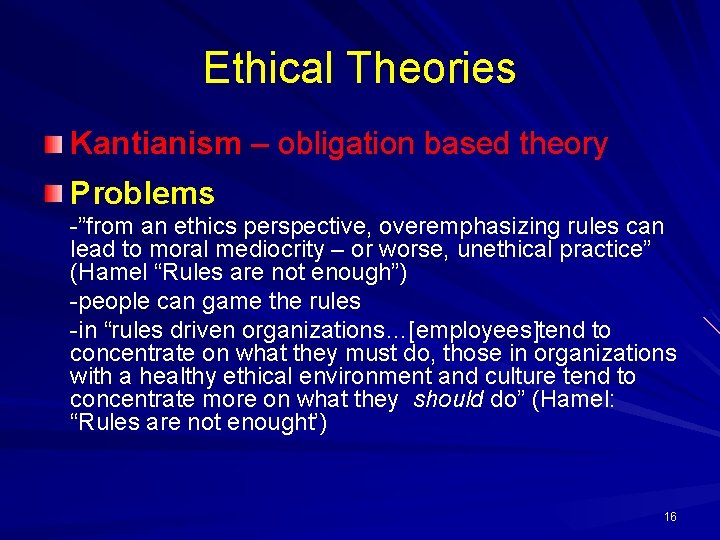
Ethical Theories Kantianism – obligation based theory Problems -”from an ethics perspective, overemphasizing rules can lead to moral mediocrity – or worse, unethical practice” (Hamel “Rules are not enough”) -people can game the rules -in “rules driven organizations…[employees]tend to concentrate on what they must do, those in organizations with a healthy ethical environment and culture tend to concentrate more on what they should do” (Hamel: “Rules are not enought’) 16
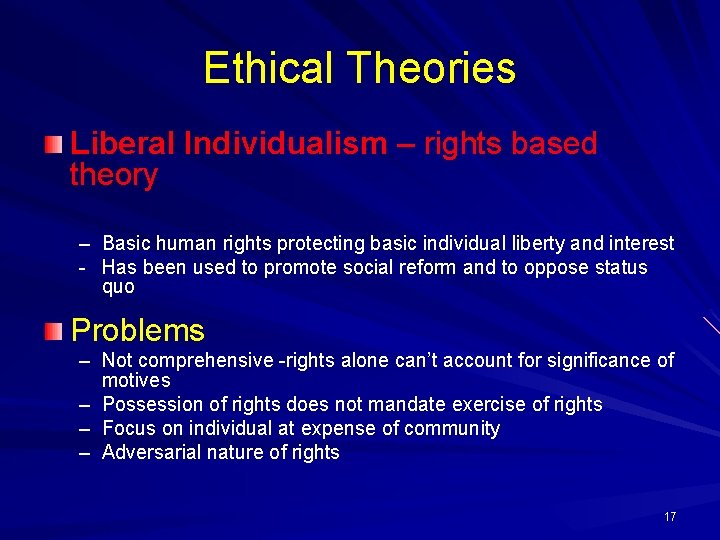
Ethical Theories Liberal Individualism – rights based theory – Basic human rights protecting basic individual liberty and interest - Has been used to promote social reform and to oppose status quo Problems – Not comprehensive -rights alone can’t account for significance of motives – Possession of rights does not mandate exercise of rights – Focus on individual at expense of community – Adversarial nature of rights 17
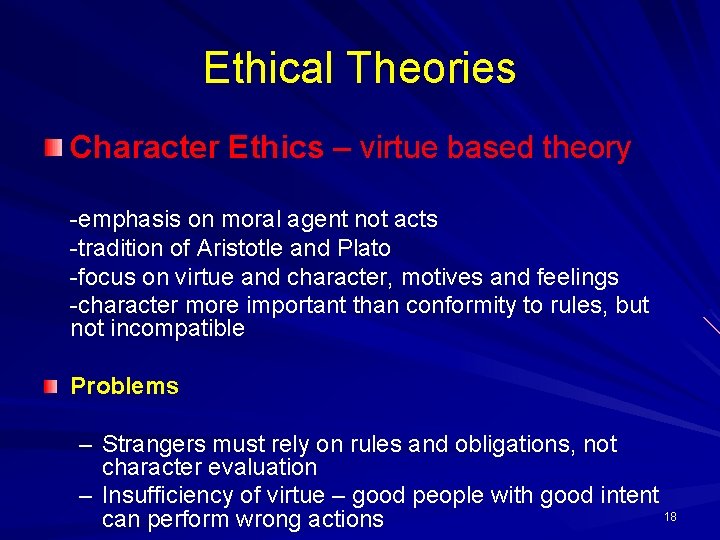
Ethical Theories Character Ethics – virtue based theory -emphasis on moral agent not acts -tradition of Aristotle and Plato -focus on virtue and character, motives and feelings -character more important than conformity to rules, but not incompatible Problems – Strangers must rely on rules and obligations, not character evaluation – Insufficiency of virtue – good people with good intent 18 can perform wrong actions
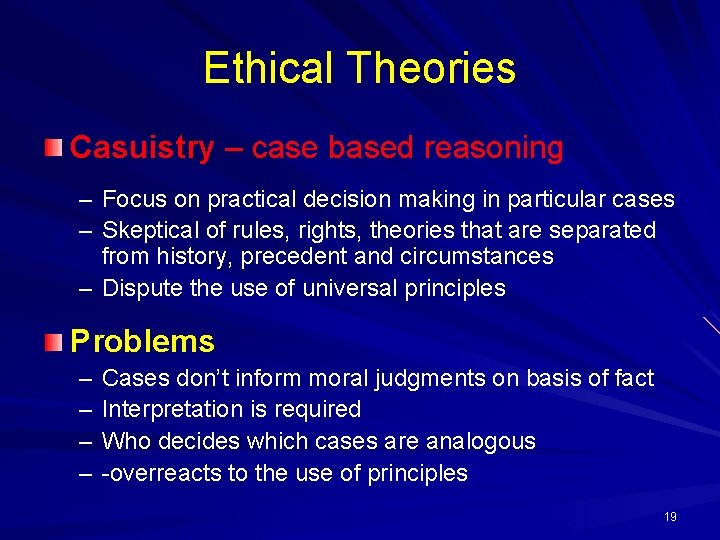
Ethical Theories Casuistry – case based reasoning – Focus on practical decision making in particular cases – Skeptical of rules, rights, theories that are separated from history, precedent and circumstances – Dispute the use of universal principles Problems – – Cases don’t inform moral judgments on basis of fact Interpretation is required Who decides which cases are analogous -overreacts to the use of principles 19
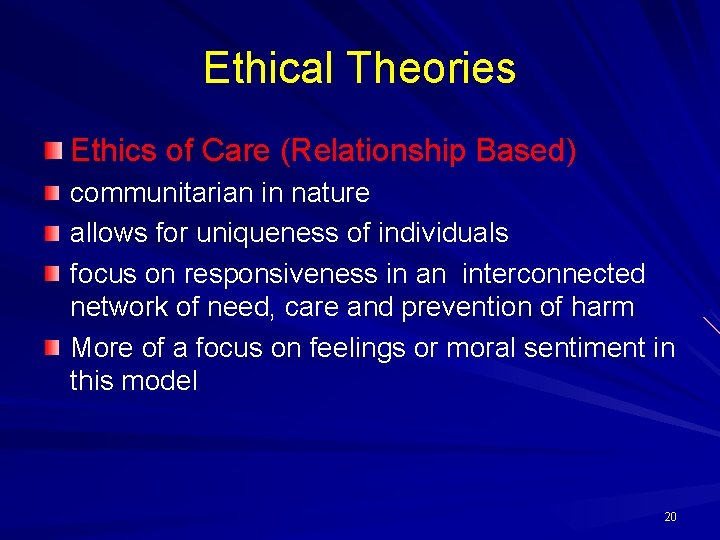
Ethical Theories Ethics of Care (Relationship Based) communitarian in nature allows for uniqueness of individuals focus on responsiveness in an interconnected network of need, care and prevention of harm More of a focus on feelings or moral sentiment in this model 20
Caveats/Problems With An Ethic of Care Avoid an ethic of care that is devoid of principles Need to complement moral sentiment with reason Need to examine the social context of care in order to establish limits to an ethics of care Involve appeals to justice 21
Faith Based Approach (Catholic) Also incorporates other approaches but starts from a position of faith Two fundamental values: Dignity of the human person as “imago dei” Interconnectedness of every human being Related Values: (Actions that allow us to realize identity) – – Stewardship and creativity respect for human life common good Charity, solidarity, empathy
Problems With Faith Based Approaches Can appear (or be) dogmatic May not be able to find a common ground with others unless we speak of the values as common human values Tension between inclusiveness and “relativism”
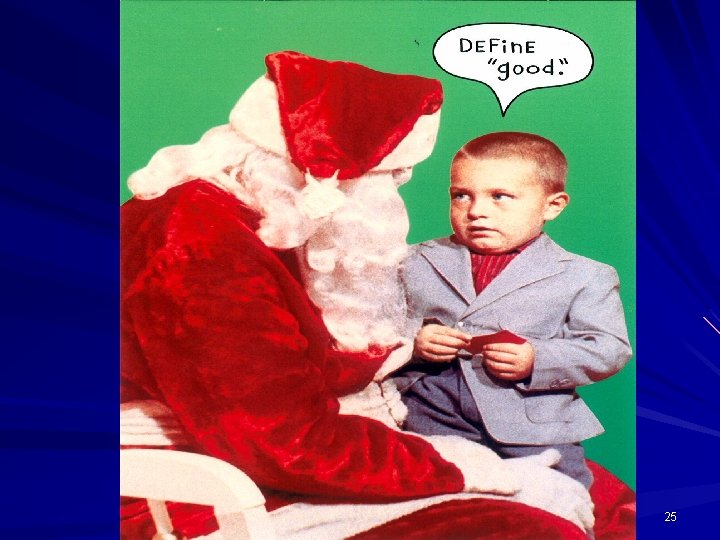
Theories of Ethics No one model is sufficient In clinical practice we often use the best components of each model and hopefully avoid the problems inherent in each Every day decisions involve some or all of these Families/patients and teams often using different ways of reasoning and this results in conflict We also hold different opinions on “The Good” and this results in further conflict 24
25
Further Developments Medicine developed into a science based endeavor Churches and religious orders became less involved Divestment of ownership and sponsorship of faith based institutions Creates a challenge between “fitting in” as a publicly funded hospital (inclusiveness) and losing our identity as Catholic institutions (relativism) Need to remember our roots
Thinking Inside the Box: Avoiding the Tension Between Inclusiveness and Relativism by Remembering Our Roots: Religious women in the 19 th and 20 th century Passion for healing ministry coming from a commitment to the Gospel Transcended the boundaries of geography, tradition, religion or socioeconomic status Focus on the poor and disenfranchised None of us would have died in hospitals
External challenges to Catholic healthcare: Tension Between Inclusiveness and Relativism Catholic healthcare today is confronted by several challenges – both outside and inside Outside - “To respect the ministry itself, seeing healthcare as a sacred trust in a market driven environment that often views it as a commodity; to promote human dignity and the common good in the face of cultural and social forces that seek to subvert these basic values; to balance fiscal demands with ministerial objectives at a time when it is tempting to sacrifice the latter to meet the former; to provide holistic care to all persons, with special concern for those on the margins of society; and to witness to the ethical and spiritual dimensions of health care in an era when technology and technological solutions reign supreme. ” (Panicola: ”A cautionary tale. ”)
Internal Challenges to Catholic Healthcare: Tension Between Inclusiveness and Relativism Internal challenges to Catholic healthcare Survival of Catholic healthcare ”ultimately rests squarely on the shoulders of ministry leaders” (Paniola) “Ministry leaders must show us how to compete while remaining true to our identity as Catholic health care providers (Panicola) Need to make sure that ministry leaders “do not lose sight of our mission and core values. ” (Panicola) “Prudential judgements outweigh laws and regulations” (Panicola) “Catholic healthcare should be more than simply a viable competitor in the health services industry. ” (Panicola)
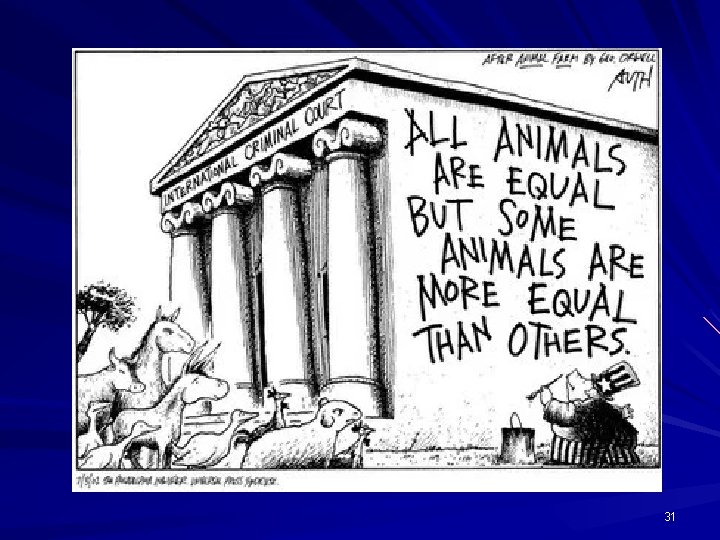
Tension Between Inclusiveness and Relativism Internal challenges: “Ministry leaders must always guard against the type of reasoning that leads them to believe they are doing things for the sake of the ministry when in fact their actions harm the ministry in the long run. They must bear in mind that if they sacrifice our soul just to stay in the game, Catholic healthcare has gained nothing and might as well cease to exist anyway, ” (Panicola) Catholic hospitals in name only Panicola in “A Cautionary Tale” No animals shall sleep in beds ----no animals shall sleep in beds with sheets (George Orwell in “Animal Farm”)
31
Thinking Inside the Box: Avoiding a Philosophy of Relativism by Remembering Theological Foundations A belief in the presence of God in human experience Creation is a gift from God Responsibility to work to eliminate sickness and suffering An acknowledgement that there can be growth through suffering Requirement to act from an informed conscience This is particularly important in trying to respond to current issues in medicine
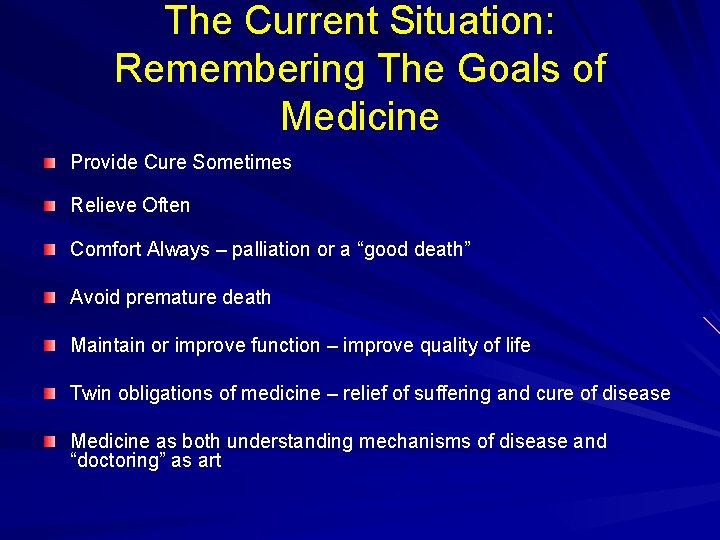
The Current Situation: Remembering The Goals of Medicine Provide Cure Sometimes Relieve Often Comfort Always – palliation or a “good death” Avoid premature death Maintain or improve function – improve quality of life Twin obligations of medicine – relief of suffering and cure of disease Medicine as both understanding mechanisms of disease and “doctoring” as art
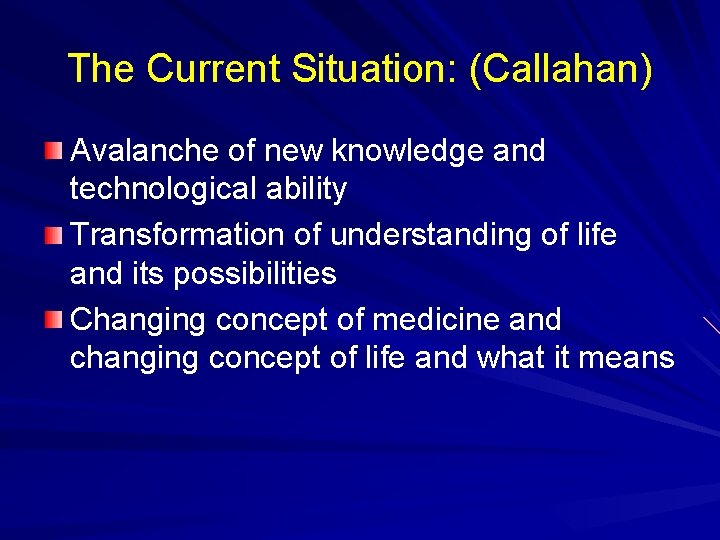
The Current Situation: (Callahan) Avalanche of new knowledge and technological ability Transformation of understanding of life and its possibilities Changing concept of medicine and changing concept of life and what it means
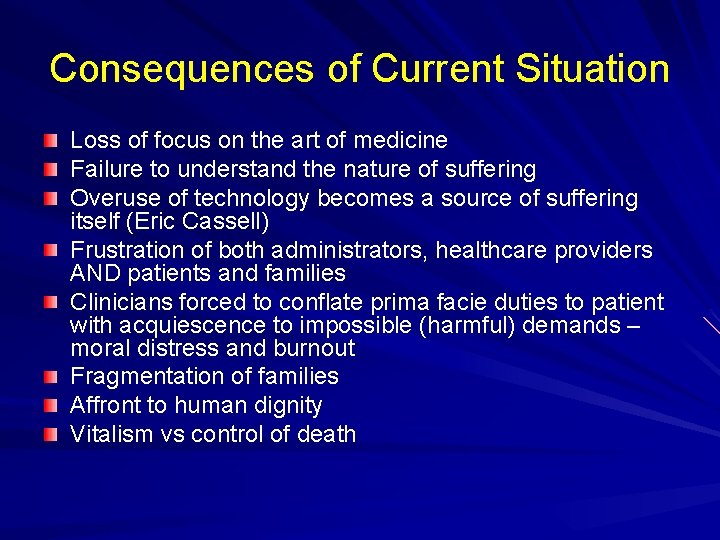
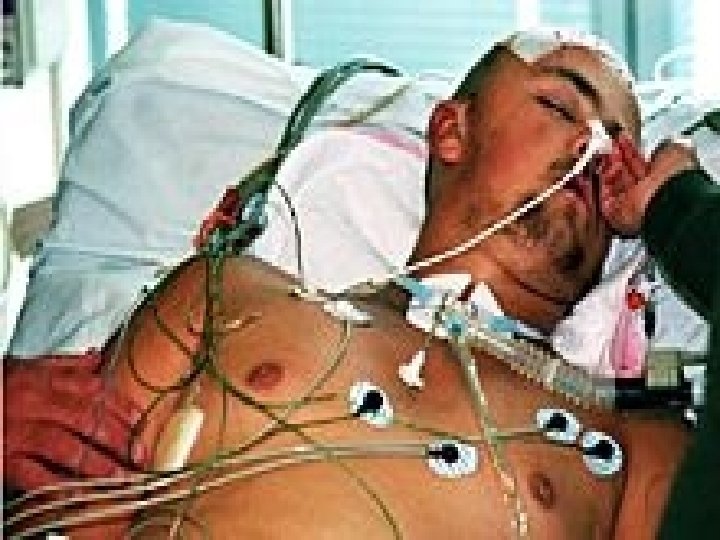
Consequences of Current Situation Loss of focus on the art of medicine Failure to understand the nature of suffering Overuse of technology becomes a source of suffering itself (Eric Cassell) Frustration of both administrators, healthcare providers AND patients and families Clinicians forced to conflate prima facie duties to patient with acquiescence to impossible (harmful) demands – moral distress and burnout Fragmentation of families Affront to human dignity Vitalism vs control of death
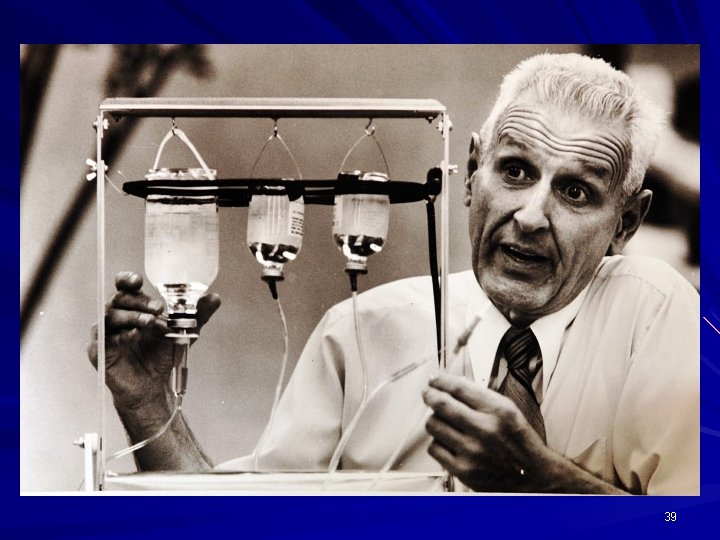
In Defiance of Ecclesiastes: [no time] for every season unto heaven A time to be born, [but no time to die. . . ]
39
Emerging Issues in Health Care Ethics: Living Our Values and Thinking Outside the Box MAID and Catholic Healthcare
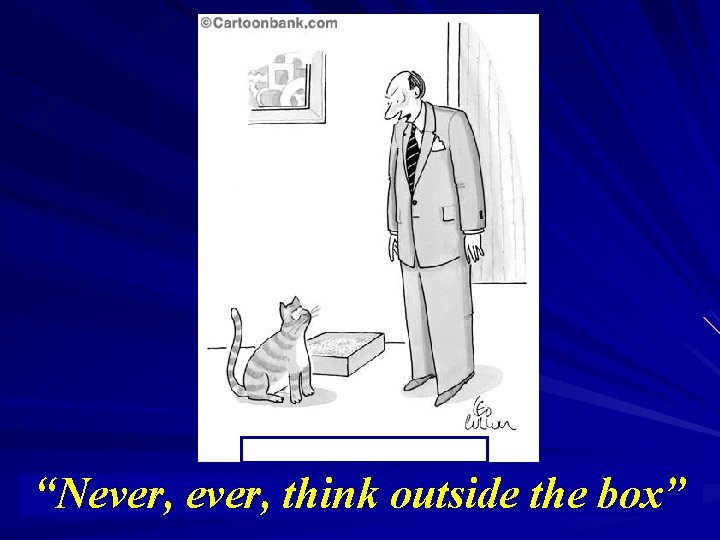
“Never, think outside the box”
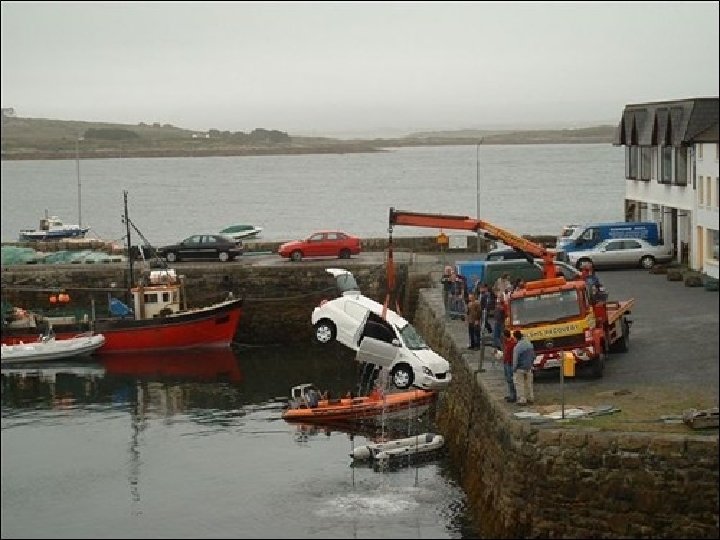
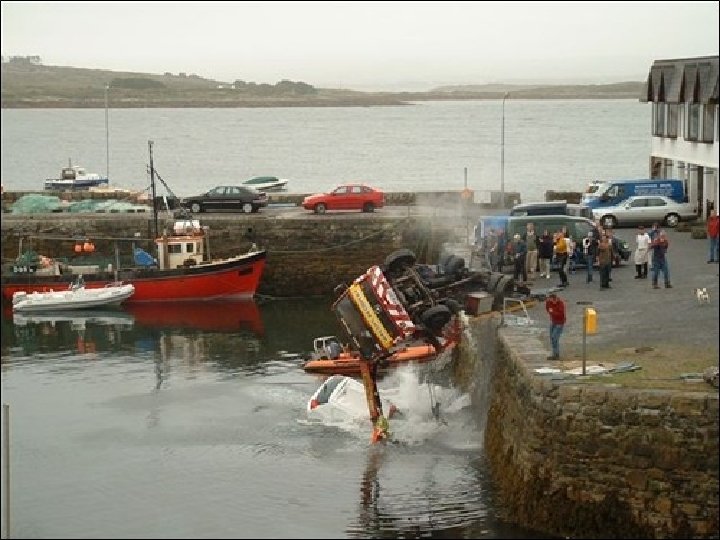
Why Can’t We Just Keep Doing What We Are Doing?
43
44
45
46
47
48
49
50
Healing “We thought we could cure everything, but it turns out we can cure only a small amount of human suffering. The rest of it needs to be healed. ” -Rachel Naomi Remen 52
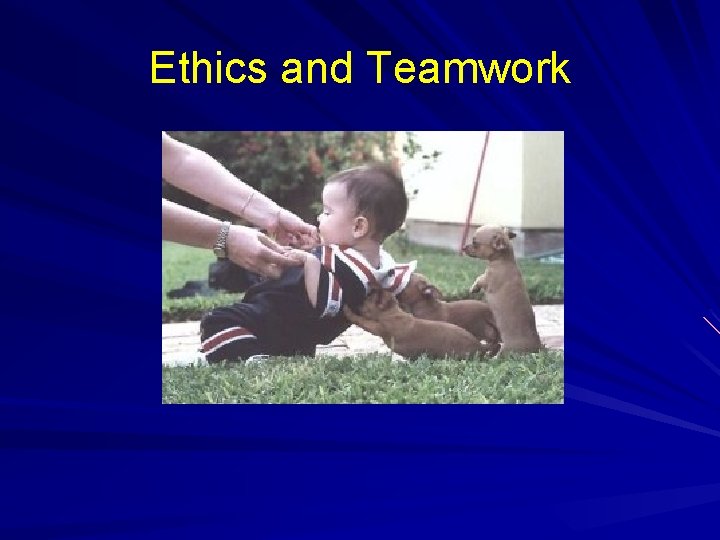
Ethics and Teamwork
"Africans believe in something that is difficult to render in English. We call it ununtu botho. It means the essence of being human. You know when it is there and when it is absent. It speaks about humanness, gentleness, hospitality, putting yourself out on behalf of others, being vulnerable. It recognizes that my humanity is bound in yours, for we can only be human together. " ……………. . Desmond Tutu