
Emerging Adults Who Are They and How do
- Slides: 40
Emerging Adults: Who Are They and How do We Find Them? Presented by: Laura Liang, San Mateo County Libraries, Jessi Snow, Boston Public Library, Vikki Terrile, Queens Library and Julie Winkelstein, Ph. D, UT Knoxville 1
PLA Conference Information www. placonference. org/mobileapp For evaluations www. ala. org/libraryofthefuture Click on digital badges 2
Agenda ∗ ∗ ∗ ∗ Introduction Emerging Adults by the Numbers 2015 Emerging Adults Study Working with Administration Best Practices Group Activity/Report Back on Group Activity Expert Panel Questions 3
Emerging Adults by the Numbers From U. S. Census American Community Survey Data (2014 -2015 estimates) 4
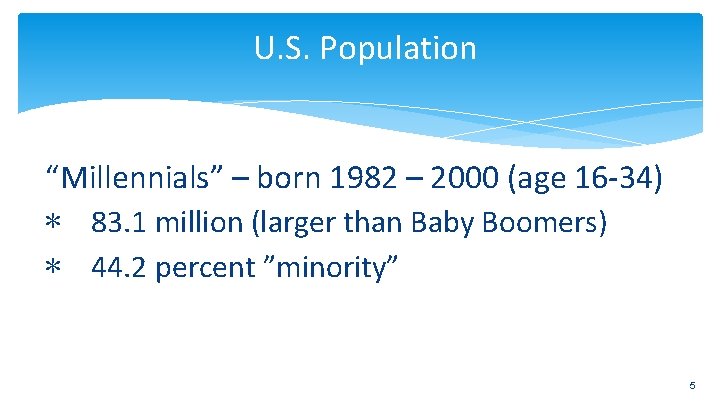
U. S. Population “Millennials” – born 1982 – 2000 (age 16 -34) ∗ 83. 1 million (larger than Baby Boomers) ∗ 44. 2 percent ”minority” 5
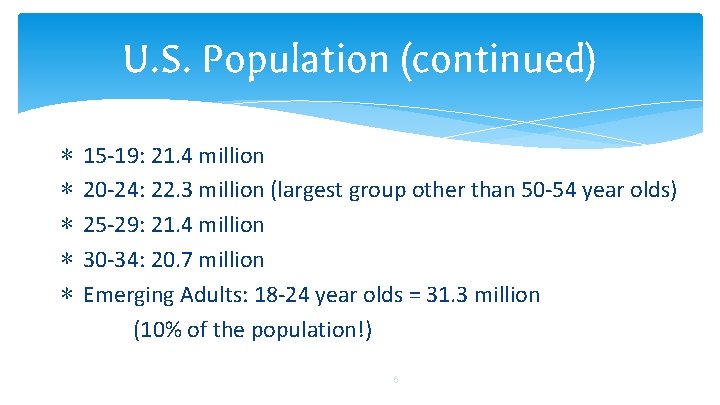
U. S. Population (continued) ∗ ∗ ∗ 15 -19: 21. 4 million 20 -24: 22. 3 million (largest group other than 50 -54 year olds) 25 -29: 21. 4 million 30 -34: 20. 7 million Emerging Adults: 18 -24 year olds = 31. 3 million (10% of the population!) 6
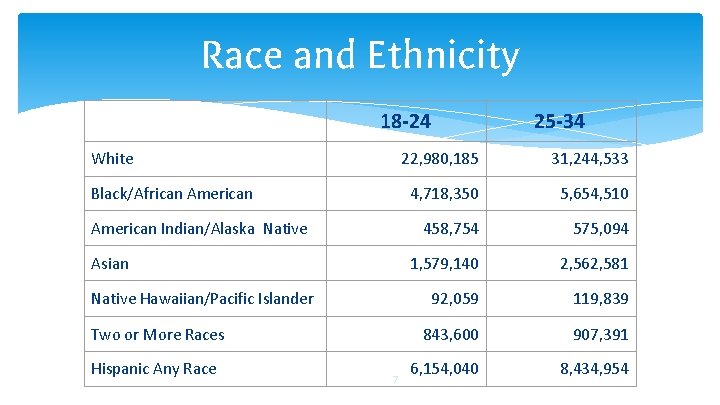
Race and Ethnicity 18 -24 White Black/African American Indian/Alaska Native Asian Native Hawaiian/Pacific Islander Two or More Races Hispanic Any Race 7 25 -34 22, 980, 185 31, 244, 533 4, 718, 350 5, 654, 510 458, 754 575, 094 1, 579, 140 2, 562, 581 92, 059 119, 839 843, 600 907, 391 6, 154, 040 8, 434, 954
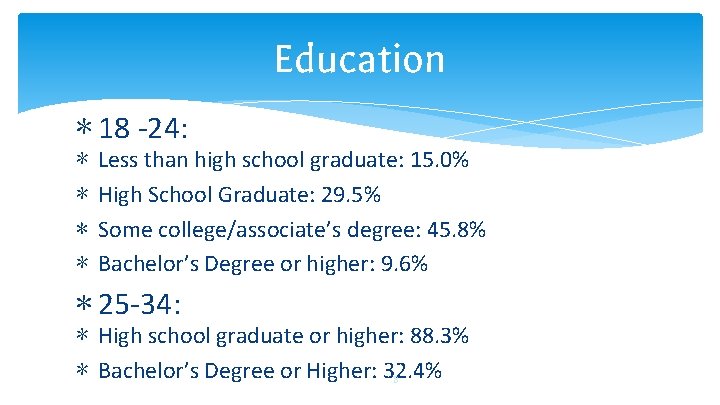
Education ∗ 18 -24: ∗ ∗ Less than high school graduate: 15. 0% High School Graduate: 29. 5% Some college/associate’s degree: 45. 8% Bachelor’s Degree or higher: 9. 6% ∗ 25 -34: ∗ High school graduate or higher: 88. 3% ∗ Bachelor’s Degree or Higher: 32. 4% 8
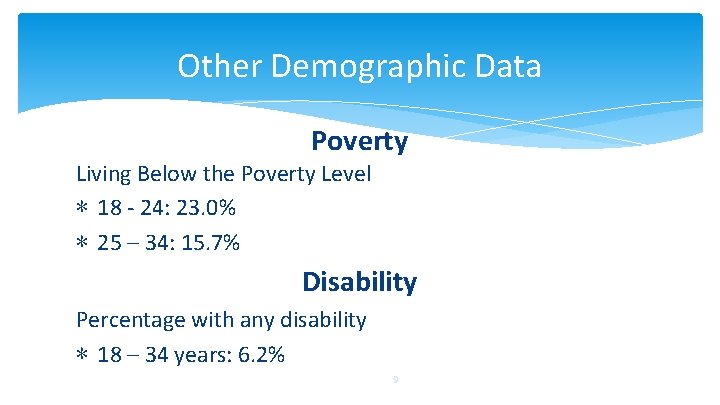
Other Demographic Data Poverty Living Below the Poverty Level ∗ 18 - 24: 23. 0% ∗ 25 – 34: 15. 7% Disability Percentage with any disability ∗ 18 – 34 years: 6. 2% 9
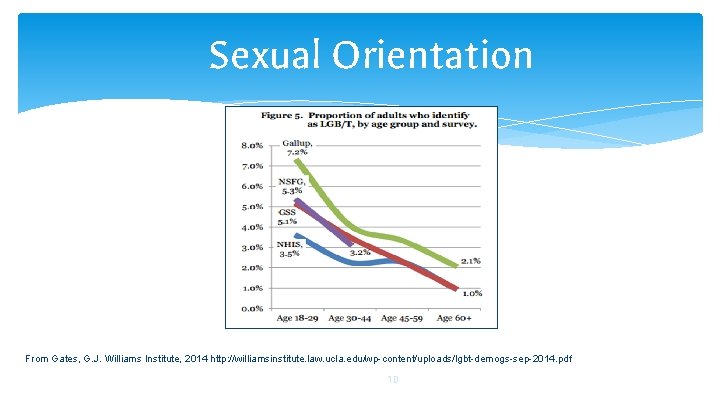
Sexual Orientation From Gates, G. J. Williams Institute, 2014 http: //williamsinstitute. law. ucla. edu/wp-content/uploads/lgbt-demogs-sep-2014. pdf 10
Overview & Methodology 2015 Emerging Adults Study 11
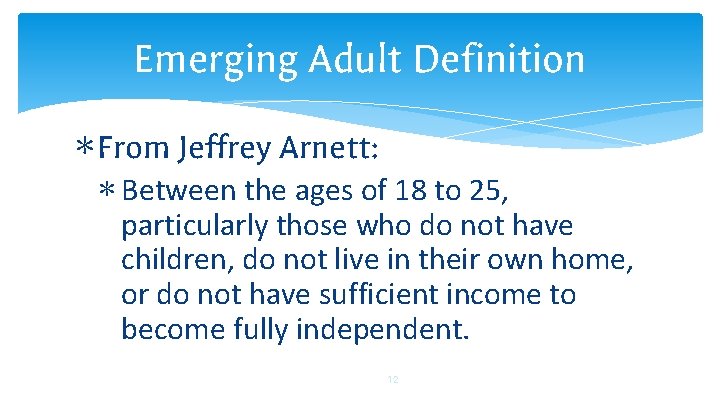
Emerging Adult Definition ∗ From Jeffrey Arnett: ∗ Between the ages of 18 to 25, particularly those who do not have children, do not live in their own home, or do not have sufficient income to become fully independent. 12
Research Methods ∗ Survey link sent to state library and ALA listervs, other library lists & individual librarians ∗ Survey Monkey link was open January 1 – January 31, 2015 ∗ 433 people completed the survey ∗ 88 said they had programs/services for emerging adults ∗ Conducted in-depth follow-up interviews with 53 librarians (or staff with other titles) offering or considering programs for 13 emerging adults
Examples of Survey Monkey questions ∗Does your library or library system offer programs and services specific to an emerging adult population (ages 18 -25)? ∗Who manages/plans these programs and services in your library/library system? ∗Please list some examples of programs and services. 14
Examples of Interview Questions ∗ Was this a need that was recognized by library administration? ∗ Is your emerging adult population a new population or are they young adults that were once teens using your library already and continue to do so but requesting different services and programs for their age group? 15
Examples of interview questions ∗ What do you see as the greatest need for services and programs for this emerging adult population? ∗ What have been the most successful ways of reaching this population, especially new library users within this demographic? 16
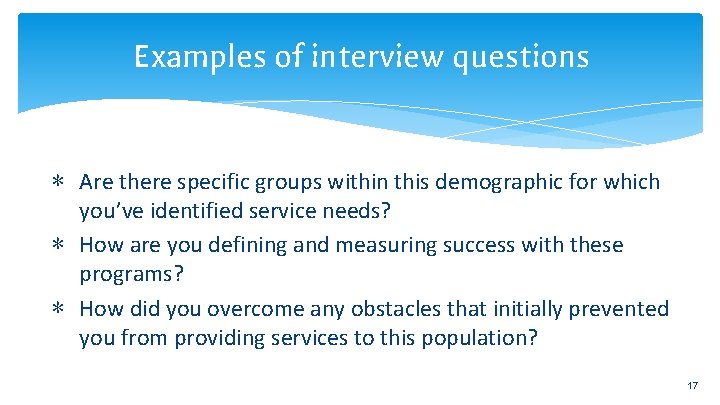
Examples of interview questions ∗ Are there specific groups within this demographic for which you’ve identified service needs? ∗ How are you defining and measuring success with these programs? ∗ How did you overcome any obstacles that initially prevented you from providing services to this population? 17
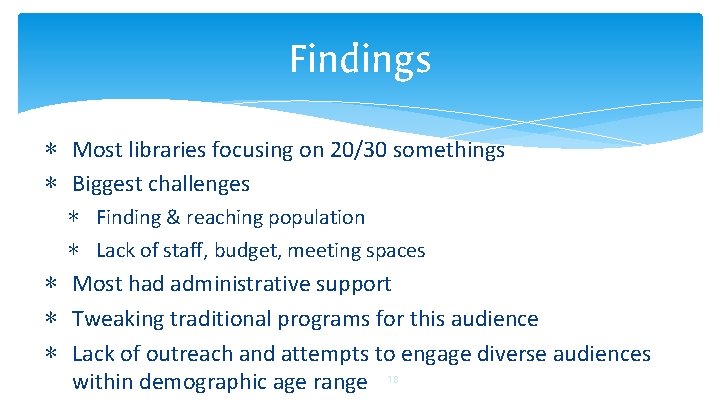
Findings ∗ Most libraries focusing on 20/30 somethings ∗ Biggest challenges ∗ Finding & reaching population ∗ Lack of staff, budget, meeting spaces ∗ Most had administrative support ∗ Tweaking traditional programs for this audience ∗ Lack of outreach and attempts to engage diverse audiences within demographic age range 18
Tips for Working with Administration 19
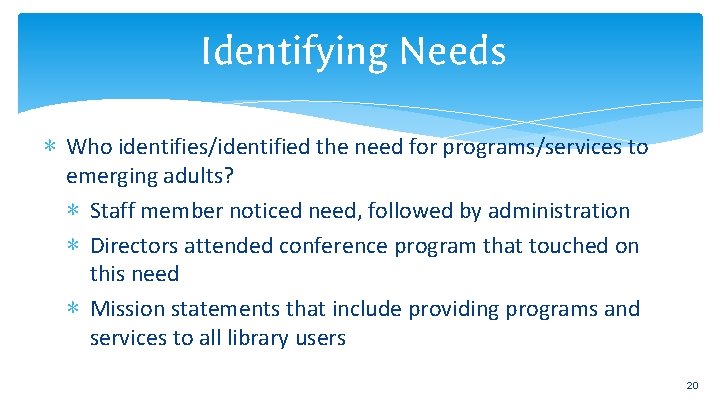
Identifying Needs ∗ Who identifies/identified the need for programs/services to emerging adults? ∗ Staff member noticed need, followed by administration ∗ Directors attended conference program that touched on this need ∗ Mission statements that include providing programs and services to all library users 20
Identifying Needs 26 out of 53 librarians in our research said their administration recognized the need for their library to serve emerging adults as a distinct population. However, at the same time, there was a sense their administration was not involved in the planning or implementation of these services. 21
6 Only 6 of the librarians interviewed said that services to emerging adults were currently included or would soon be added to THEIR LIBRARIES’ STRATEGIC PLANS. 22
Who are Your Emerging Adults? Library staff should have a good understanding of the community they serve. This should include both the statistical, demographic information available through the U. S. Census, local school districts and other resources, as well as getting out into the community and seeing who lives and works there. 23
Where are Your Emerging Adults? Building from that knowledge, staff can develop ideas of where their emerging adults are (i. e. , are they only home during college breaks; are they working full-time right out of high school; or are they disconnected from school and work and without any anchor in the community? ) and meet them (at least for initial connections) there. 24
Where are the Emerging Adults? (cont’d) Outreach to this population is imperative!! Since word-of-mouth works better than passive marketing— posting flyers or social media messages—consider hosting a table or event at the Starbucks or Panera Bread where you would have simply hung flyers. 25
What are their Needs? In its earliest stages, this outreach is about making connections and gathering information. This is the time to learn more about the interests and needs of emerging adults in your community. 26
What Do They Want/Need from the Library? ∗ ∗ Learn their needs and interests. Make connections and form partnerships. Figure out mutual benefits with other organizations. Talk to people on the street, in the library, where you live, online…EVERYWHERE! 27
Build on the Information Figure out how the library can establish its presence outside the library to become known, and then finally to take that information back to build the kinds of programs and services that will meet those interests and needs. 28
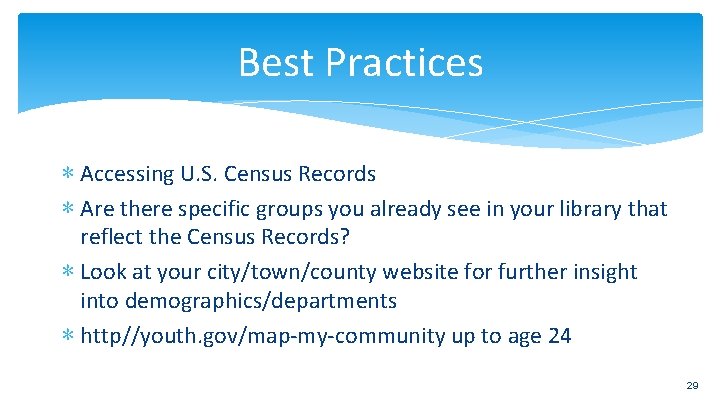
Best Practices ∗ Accessing U. S. Census Records ∗ Are there specific groups you already see in your library that reflect the Census Records? ∗ Look at your city/town/county website for further insight into demographics/departments ∗ http//youth. gov/map-my-community up to age 24 29
Being in the Community ∗ Making connections ∗ Listening and learning ∗ Gathering information 30
Building Partnerships ∗ Who’s in your library? Who’s not and not being served? ∗ What are the organizations in your community that serve these populations? ∗ How can ALA divisions/organizations/interest groups be helpful? 31
Possible Programs to Start With ∗Popular Culture ∗ Deadpool, Star Wars, Game of Thrones, etc. ∗Easy Arts & Crafts ∗ Adult coloring books, “retro” crafts (lanyard, Legos) ∗Trivia ∗Video/Tabletop Games 32
Putting it All Together Group Activity 33
Share Out on Group Activity ❖ Examples of populations in your communities ❖ Examples of organizations in your communities you may be able to connect with ❖ Ways in which you may connect with these populations 34
Once you’ve finished, take a picture of one completed page and text it to 617 -905 -6292. We’ll be posting/sharing the responses on the Emerging Adults Blog. 35
Expert Panel ❖ Tomas Mejia, Migrant Education Program State Director at Colorado Department of Education ❖ Alberto Pellicer, Early Litercy Librarian, Denver Public Library ❖ Clayton Gonzalez, Assistant Director of 36
Questions for the Expert Panel and Presenters 37
Emerging Adults Blog https: //emergingadultsblog. wordpress. co m/ All of the slides and activities are included on the blog 38
Thank you! Here’s our contact information Laura Liang liang@smcl. org Jessi Snow jsnow@bpl. org Vikki Terrile vcterrile@gmail. com Julie Winkelstein jwinkels@utk. edu 39
Expert Panel Contact Information Clayton Gonzalez, Urban Peak Clayton. Gonzales@urbanpeak. org Tomas Mejia, Colorado Department of Education Mejia_T@cde. state. co. us Alberto Pellicer, Denver Public Library apellicer@denverlibrary. org 40