
Emergency Supply Chain WFP Logistics We Deliver Lesson
- Slides: 22
Emergency Supply Chain WFP Logistics, We Deliver
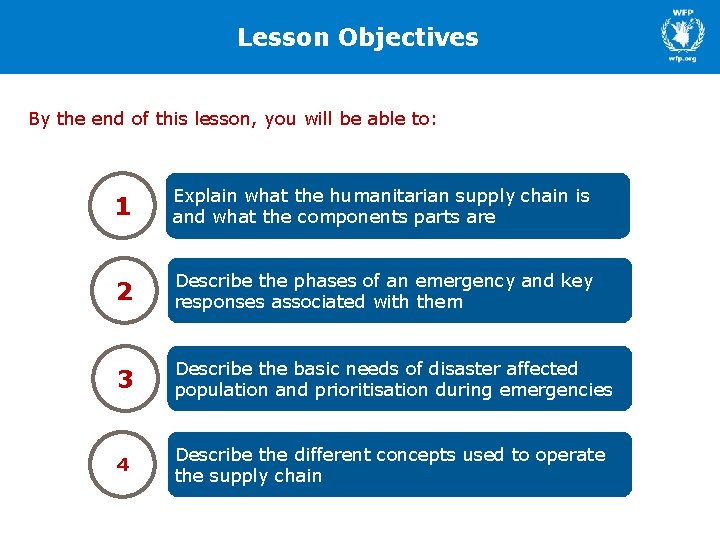
Lesson Objectives By the end of this lesson, you will be able to: 1 Explain what the humanitarian supply chain is and what the components parts are 2 Describe the phases of an emergency and key responses associated with them 3 Describe the basic needs of disaster affected population and prioritisation during emergencies 4 Describe the different concepts used to operate the supply chain
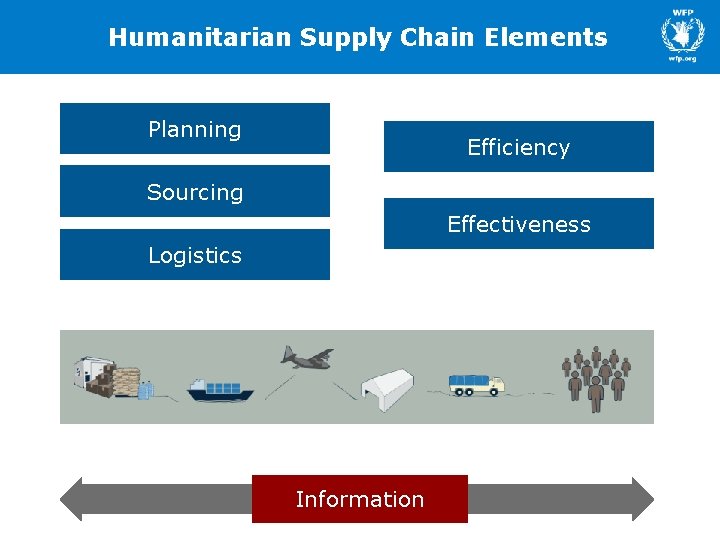
Humanitarian Supply Chain Elements Planning Efficiency Sourcing Effectiveness Logistics Information
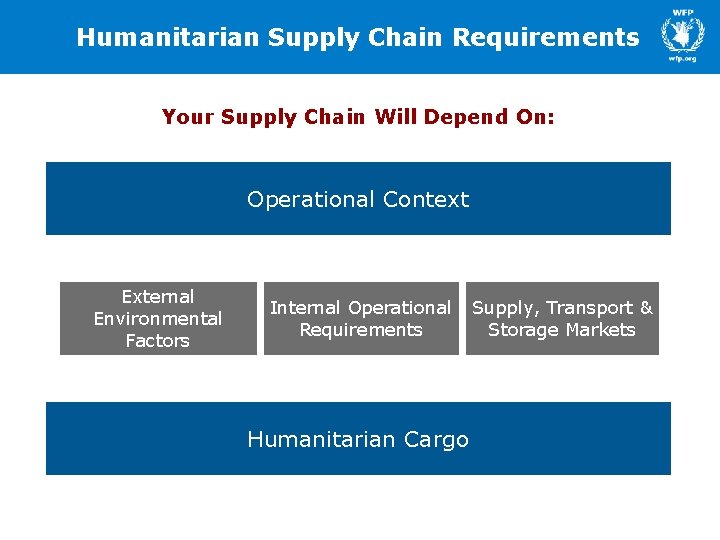
Humanitarian Supply Chain Requirements Your Supply Chain Will Depend On: Operational Context External Environmental Factors Internal Operational Requirements Humanitarian Cargo Supply, Transport & Storage Markets
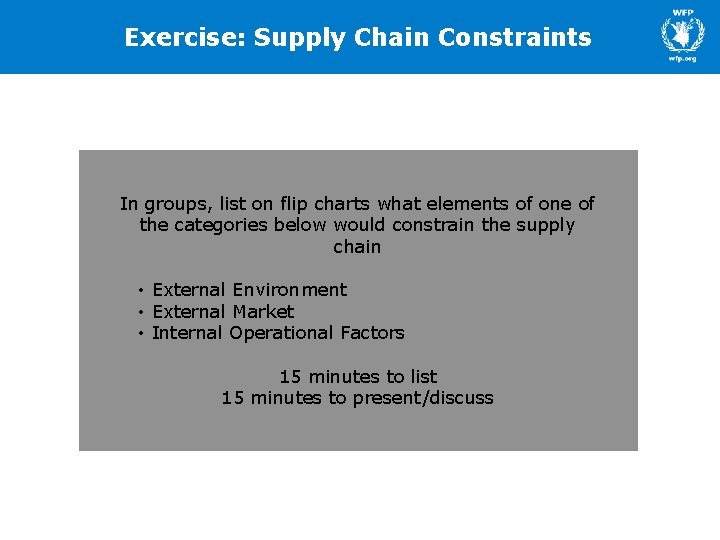
Exercise: Supply Chain Constraints In groups, list on flip charts what elements of one of the categories below would constrain the supply chain • External Environment • External Market • Internal Operational Factors 15 minutes to list 15 minutes to present/discuss
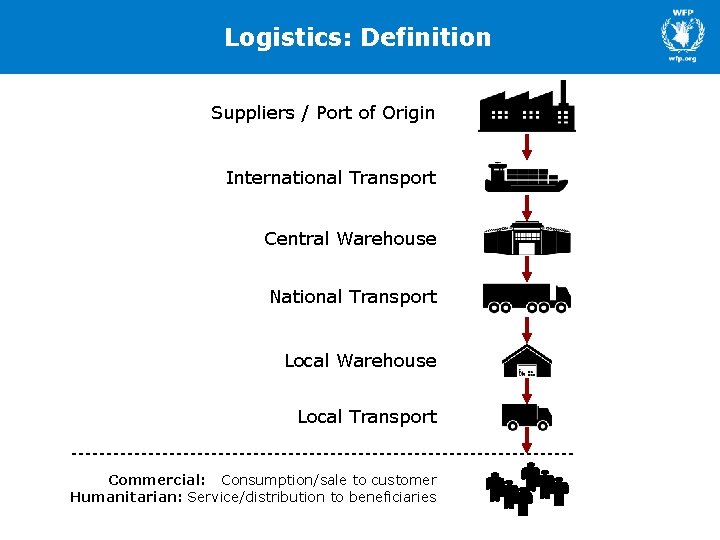
Logistics: Definition Suppliers / Port of Origin International Transport Central Warehouse National Transport Local Warehouse Local Transport Commercial: Consumption/sale to customer Humanitarian: Service/distribution to beneficiaries
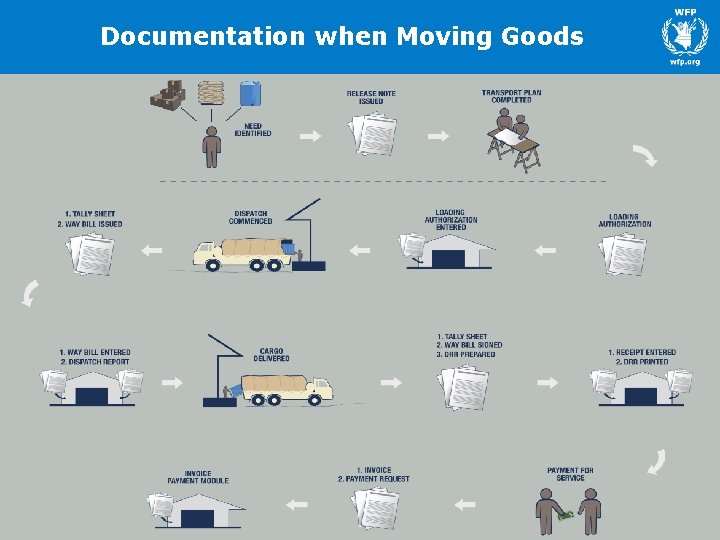
Documentation when Moving Goods
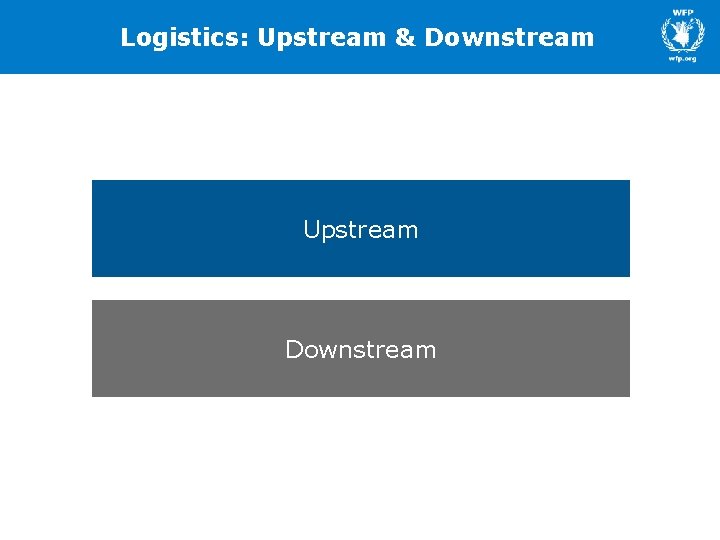
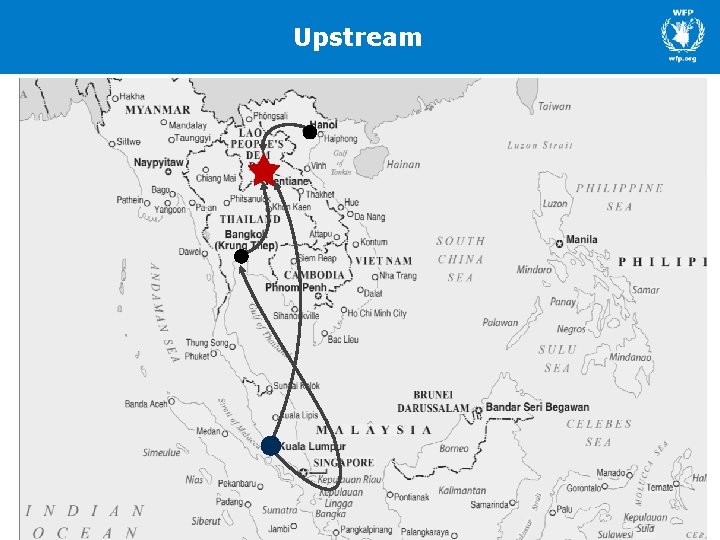
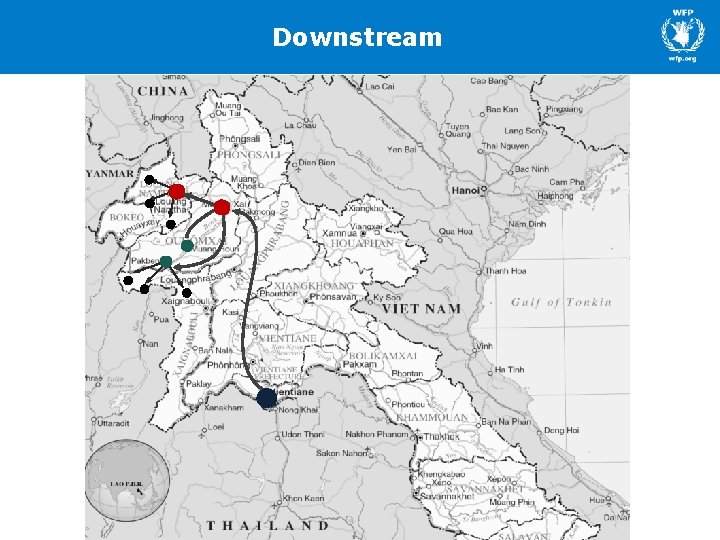
Logistics: Upstream & Downstream Upstream Downstream
Upstream
Downstream
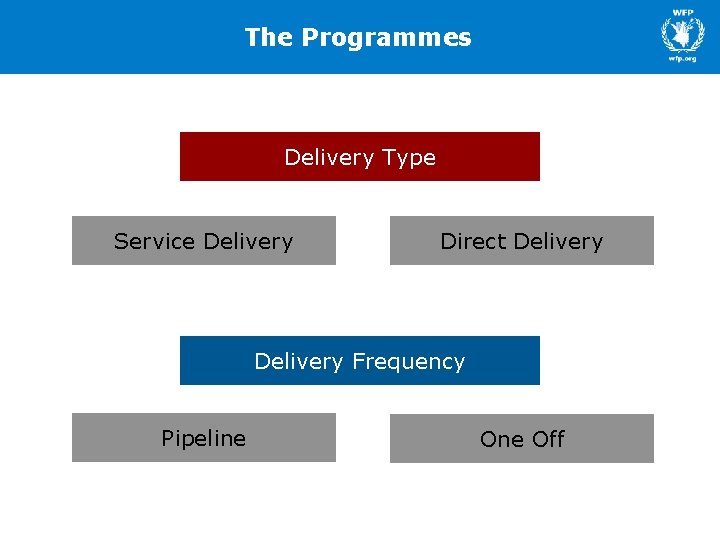
The Programmes Delivery Type Service Delivery Direct Delivery Frequency Pipeline Off
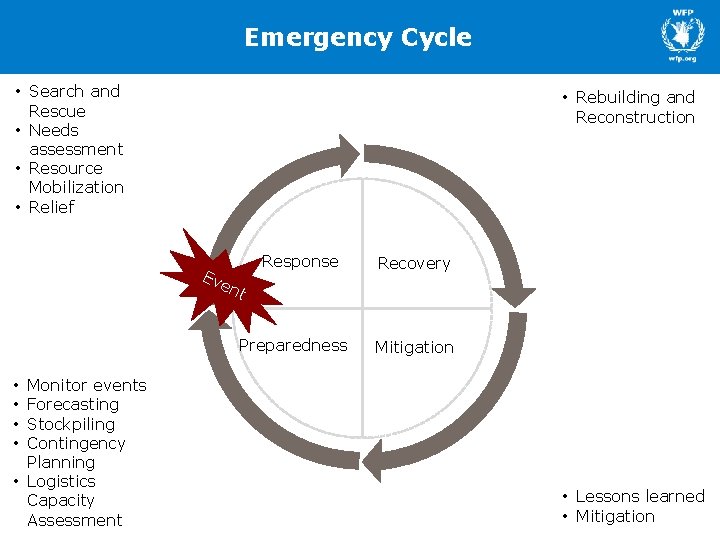
Emergency Cycle • Search and Rescue • Needs assessment • Resource Mobilization • Relief • Rebuilding and Reconstruction Ev Response Recovery en t Preparedness Monitor events Forecasting Stockpiling Contingency Planning • Logistics Capacity Assessment Mitigation • • • Lessons learned • Mitigation
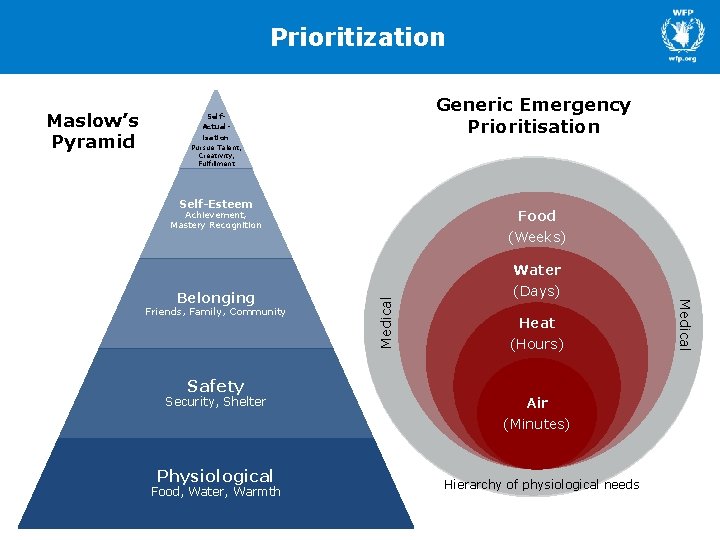
Prioritization Self-Esteem Food Achievement, Mastery Recognition (Weeks) Water Friends, Family, Community Safety Security, Shelter (Days) Heat (Hours) Air (Minutes) Physiological Food, Water, Warmth Hierarchy of physiological needs Medical Belonging Medical Maslow’s Pyramid Generic Emergency Prioritisation Self. Actualisation Pursue Talent, Creativity, Fulfillment
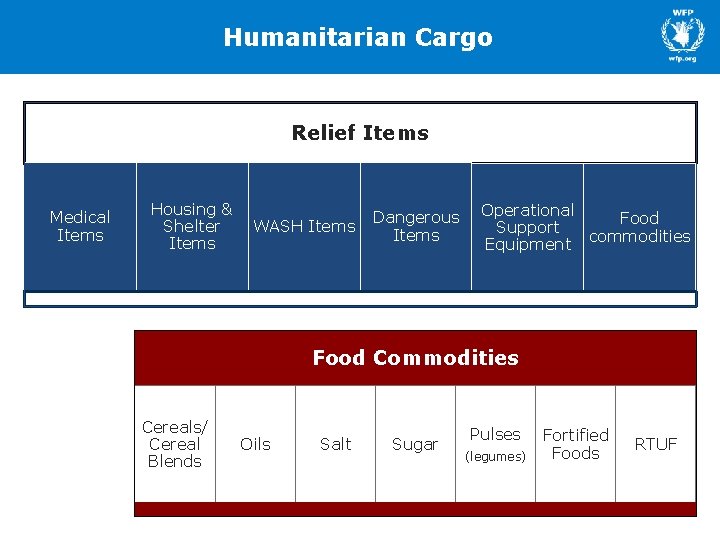
Humanitarian Cargo Relief Items Medical Items Housing & Shelter Items WASH Items Dangerous Items Operational Food Support commodities Equipment Food Commodities Cereals/ Cereal Blends Oils Salt Sugar Pulses (legumes) Fortified Foods RTUF
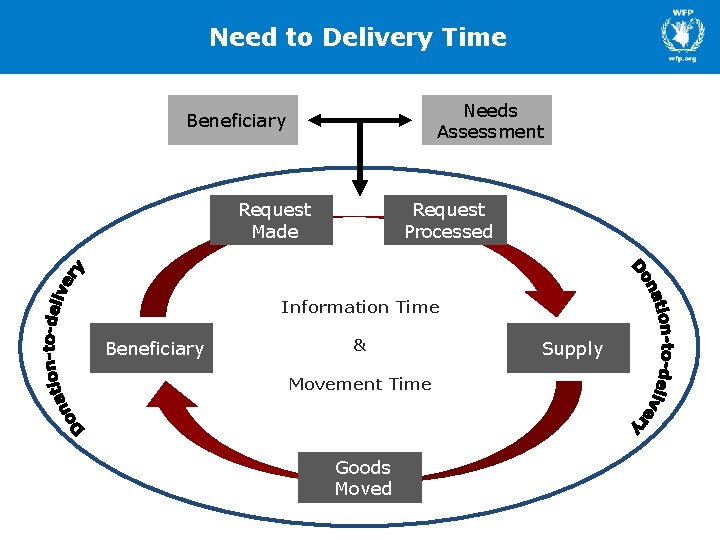
Need to Delivery Time Needs Assessment Beneficiary Request Made Request Processed Information Time Beneficiary & Movement Time Goods Moved Supply
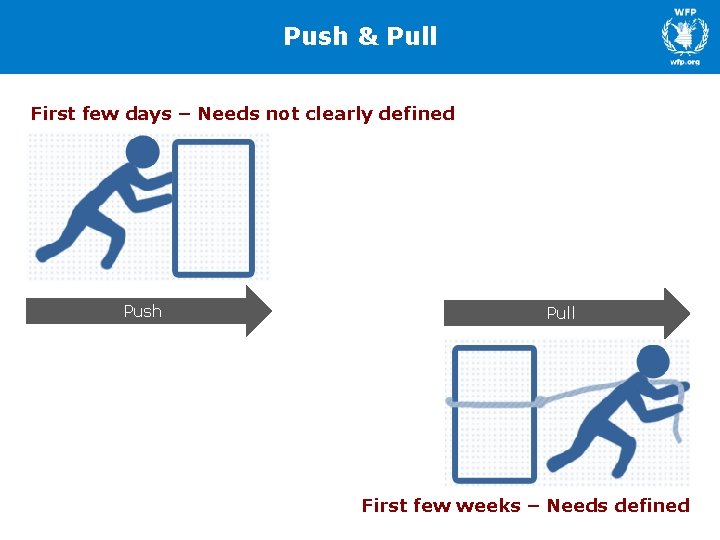
Push & Pull First few days – Needs not clearly defined Push Pull First few weeks – Needs defined
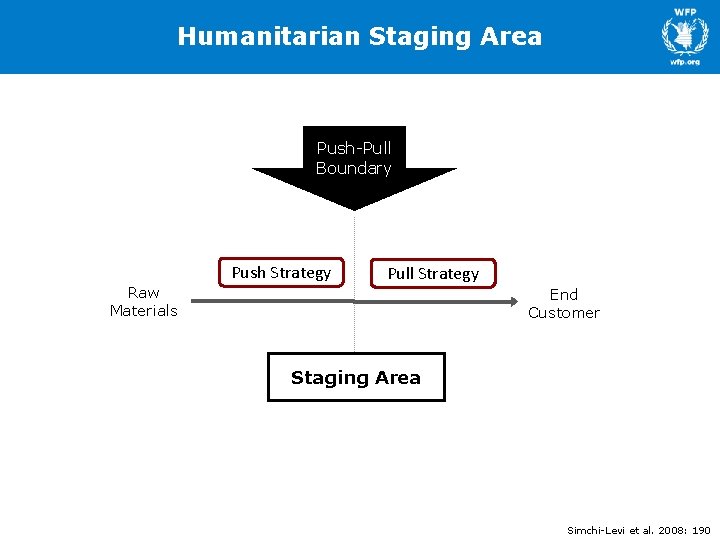
Humanitarian Staging Area Push-Pull Boundary Push Strategy Raw Materials Pull Strategy End Customer Staging Area Simchi-Levi et al. 2008: 190
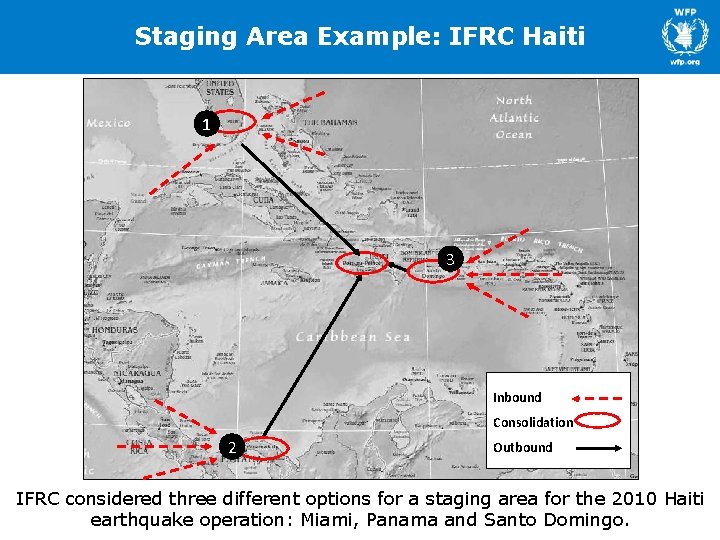
Staging Area Example: IFRC Haiti 1 3 Inbound Consolidation 2 Outbound IFRC considered three different options for a staging area for the 2010 Haiti earthquake operation: Miami, Panama and Santo Domingo.
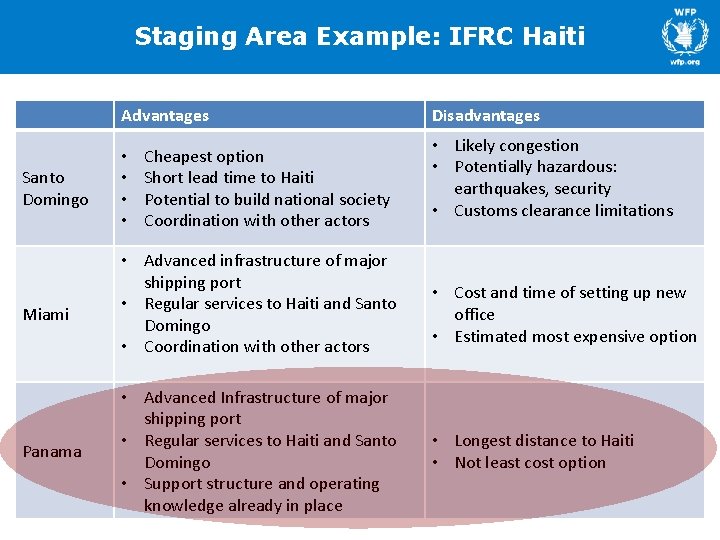
Staging Area Example: IFRC Haiti Advantages Santo Domingo Miami Panama • • Cheapest option Short lead time to Haiti Potential to build national society Coordination with other actors • Advanced infrastructure of major shipping port • Regular services to Haiti and Santo Domingo • Coordination with other actors • Advanced Infrastructure of major shipping port • Regular services to Haiti and Santo Domingo • Support structure and operating knowledge already in place Disadvantages • Likely congestion • Potentially hazardous: earthquakes, security • Customs clearance limitations • Cost and time of setting up new office • Estimated most expensive option • Longest distance to Haiti • Not least cost option
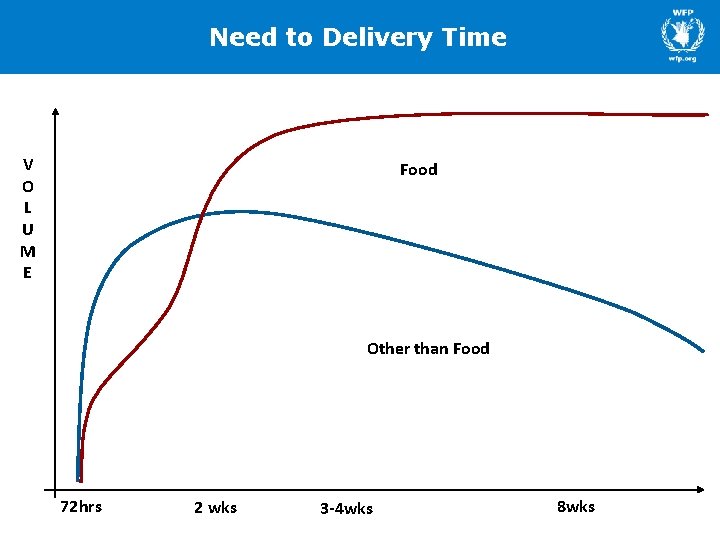
Need to Delivery Time V O L U M E Food Other than Food 72 hrs 2 wks 3 -4 wks 8 wks
Lesson Recap Lesson Questions: 1 What are the components of the humanitarian supply chain? 2 Summarise the main factors that constrain the supply chain? 3 Give two examples of different programmes that would require different operational setups? 4 Describe the difference between the push and pull strategies?
Questions WFP Logistics, We Deliver