
EMERGENCY PROCEDURES What is an Emergency Correctly identifying
- Slides: 12
EMERGENCY PROCEDURES
What is an Emergency? Correctly identifying a workplace emergency situation is vital to being able to respond appropriately and quickly. An emergency is an abnormal and dangerous situation needing prompt action to control, correct and return to a safe condition. A workplace emergency, refers to an unexpected situation that: Threatens employees, residents, patients or members of the general public Disrupts or completely shuts-down facility operations Causes physical and/or environmental damage.
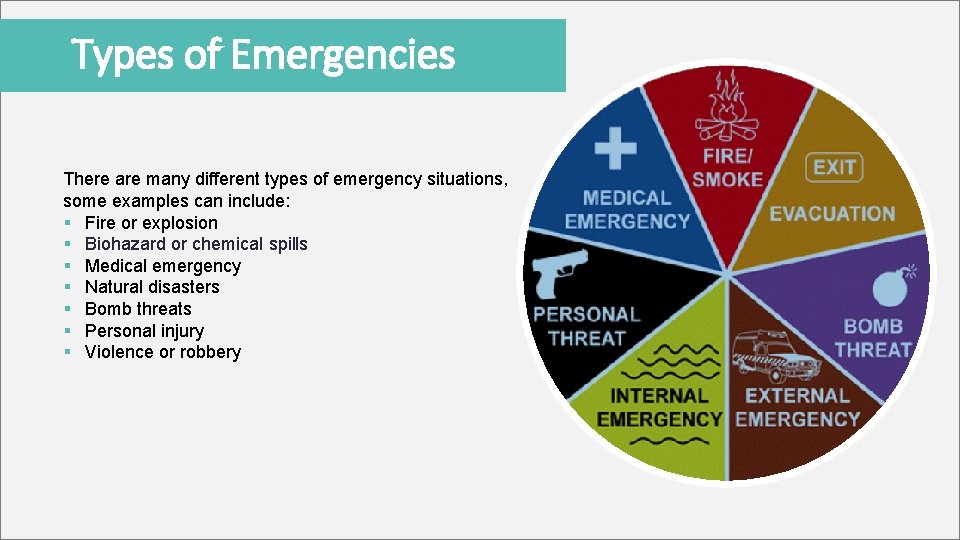
Types of Emergencies There are many different types of emergency situations, some examples can include: § Fire or explosion § Biohazard or chemical spills § Medical emergency § Natural disasters § Bomb threats § Personal injury § Violence or robbery
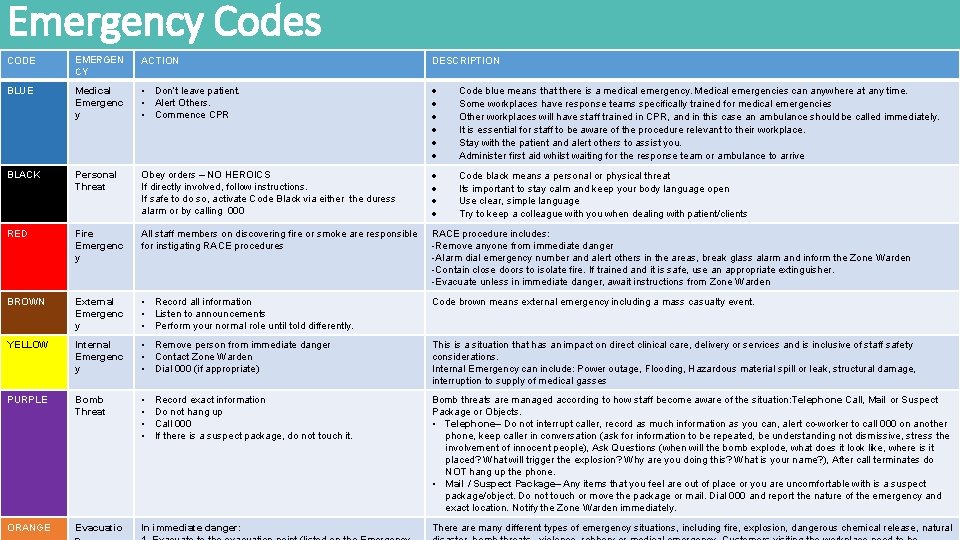
Emergency Codes CODE EMERGEN CY ACTION DESCRIPTION BLUE Medical Emergenc y • Don’t leave patient. • Alert Others. • Commence CPR Code blue means that there is a medical emergency. Medical emergencies can anywhere at any time. Some workplaces have response teams specifically trained for medical emergencies Other workplaces will have staff trained in CPR, and in this case an ambulance should be called immediately. It is essential for staff to be aware of the procedure relevant to their workplace. Stay with the patient and alert others to assist you. Administer first aid whilst waiting for the response team or ambulance to arrive BLACK Personal Threat Obey orders – NO HEROICS If directly involved, follow instructions. If safe to do so, activate Code Black via either the duress alarm or by calling 000 Code black means a personal or physical threat Its important to stay calm and keep your body language open Use clear, simple language Try to keep a colleague with you when dealing with patient/clients RED Fire Emergenc y All staff members on discovering fire or smoke are responsible for instigating RACE procedures RACE procedure includes: -Remove anyone from immediate danger -Alarm dial emergency number and alert others in the areas, break glass alarm and inform the Zone Warden -Contain close doors to isolate fire. If trained and it is safe, use an appropriate extinguisher. -Evacuate unless in immediate danger, await instructions from Zone Warden BROWN External Emergenc y • Record all information • Listen to announcements • Perform your normal role until told differently. Code brown means external emergency including a mass casualty event. YELLOW Internal Emergenc y • Remove person from immediate danger • Contact Zone Warden • Dial 000 (if appropriate) This is a situation that has an impact on direct clinical care, delivery or services and is inclusive of staff safety considerations. Internal Emergency can include: Power outage, Flooding, Hazardous material spill or leak, structural damage, interruption to supply of medical gasses PURPLE Bomb Threat • • Bomb threats are managed according to how staff become aware of the situation: Telephone Call, Mail or Suspect Package or Objects. • Telephone– Do not interrupt caller, record as much information as you can, alert co-worker to call 000 on another phone, keep caller in conversation (ask for information to be repeated, be understanding not dismissive, stress the involvement of innocent people), Ask Questions (when will the bomb explode, what does it look like, where is it placed? What will trigger the explosion? Why are you doing this? What is your name? ), After call terminates do NOT hang up the phone. • Mail / Suspect Package– Any items that you feel are out of place or you are uncomfortable with is a suspect package/object. Do not touch or move the package or mail. Dial 000 and report the nature of the emergency and exact location. Notify the Zone Warden immediately. ORANGE Evacuatio In immediate danger: Record exact information Do not hang up Call 000 If there is a suspect package, do not touch it. There are many different types of emergency situations, including fire, explosion, dangerous chemical release, natural
Emergency Plan As a healthcare facility, MAT Health Clinic should be well prepared and able to respond to a range of emergency events that may impact the provision of care. The goal of the emergency plan is to ensure the safety of all occupants of the affected area and minimise damage to assets. The emergency plan is a set of instructions outlining what to do in an emergency situation and includes: § Emergency procedures and effective responses to emergencies § Evacuation procedures § Identifying those that hold responsibility i. e. Wardens, First Aid officers § Notifying emergency services as soon as possible § Directions for any medical treatment and assistance required § Effective communication between the authorised emergency response coordinator and the rest of the workplace § Testing of the emergency procedure § Information, training and instruction to relevant workers in relation to implementing the emergency procedures For a full list of what to include in an emergency plan, visit: https: //www. safeworkaustralia. gov. au.
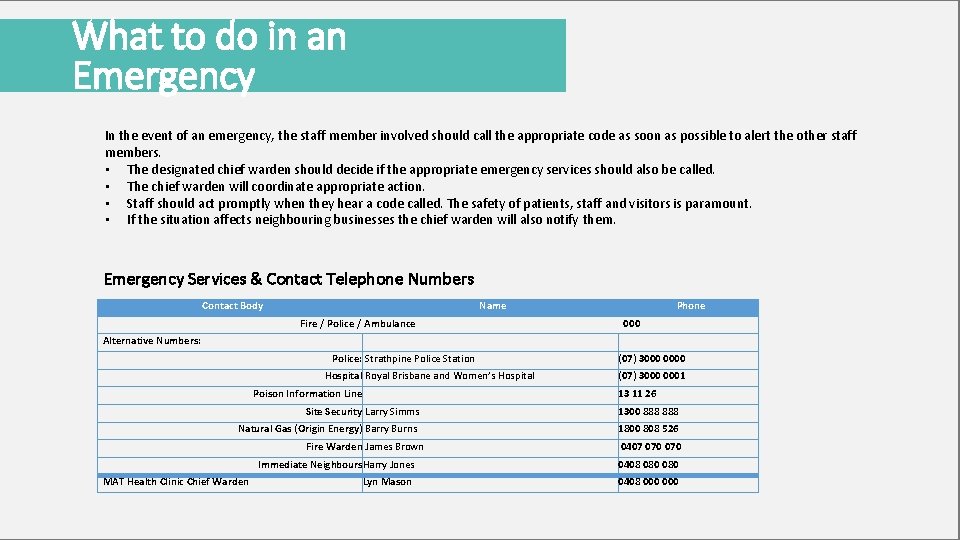
What to do in an Emergency In the event of an emergency, the staff member involved should call the appropriate code as soon as possible to alert the other staff members. • The designated chief warden should decide if the appropriate emergency services should also be called. • The chief warden will coordinate appropriate action. • Staff should act promptly when they hear a code called. The safety of patients, staff and visitors is paramount. • If the situation affects neighbouring businesses the chief warden will also notify them. Emergency Services & Contact Telephone Numbers Contact Body Name Fire / Police / Ambulance Phone 000 Alternative Numbers: Police: Strathpine Police Station Hospital Royal Brisbane and Women’s Hospital Poison Information Line (07) 3000 0000 (07) 3000 0001 13 11 26 Site Security Larry Simms 1300 888 Natural Gas (Origin Energy) Barry Burns 1800 808 526 Fire Warden James Brown MAT Health Clinic Chief Warden 0407 070 Immediate Neighbours. Harry Jones 0408 080 Lyn Mason 0408 000
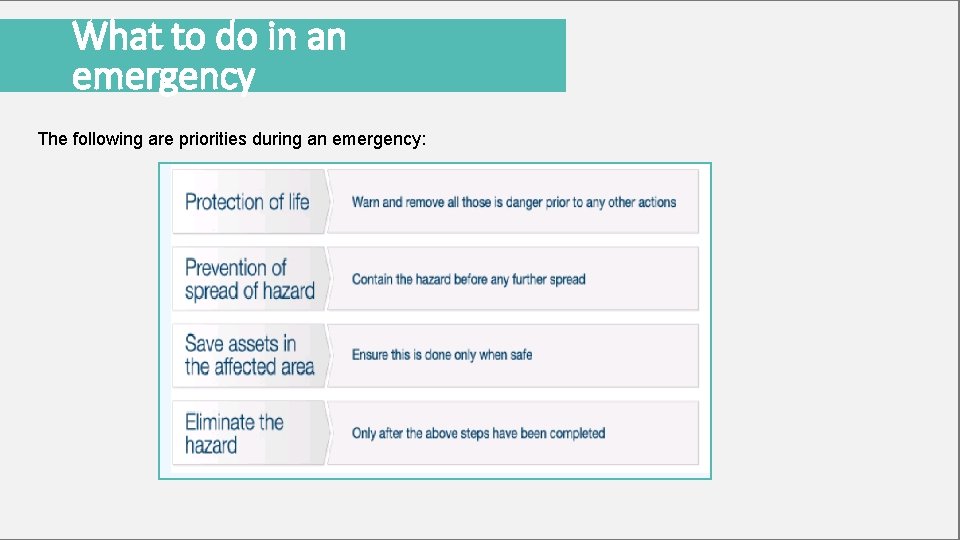
What to do in an emergency The following are priorities during an emergency:
Evacuation Planning Ensure there is a designated meeting place for all evacuated occupants of the building somewhere away from the building and not impeding any emergency vehicles. In the event of fire, or hazardous material emergency, someone should call “ 000” immediately. There should be a roster of designated staff tasked with checking that everyone has left the premises. A staff member should be tasked with directing everyone to the designated meeting place. A senior staff member should check the all rooms on the premises, including toilets, to make sure everyone is out. Once a room is checked the door should be closed to indicate that the room has been checked. Ensure anyone with special needs is evacuated safely, allocate someone to be in charge of evacuating patients with special needs. Make the building secure and make sure no one re-enters the building. On arrival of the fire brigade allocate one person to liaise with chief fire officer and give details of the emergency, where it is located any steps taken to deal with it. E. g. fire extinguisher used. NB All staff to undergo training by an approved supplier in the use of the firefighting equipment located in the practice. This will be done on a yearly basis. Firefighting equipment must be maintained to relevant Standard.
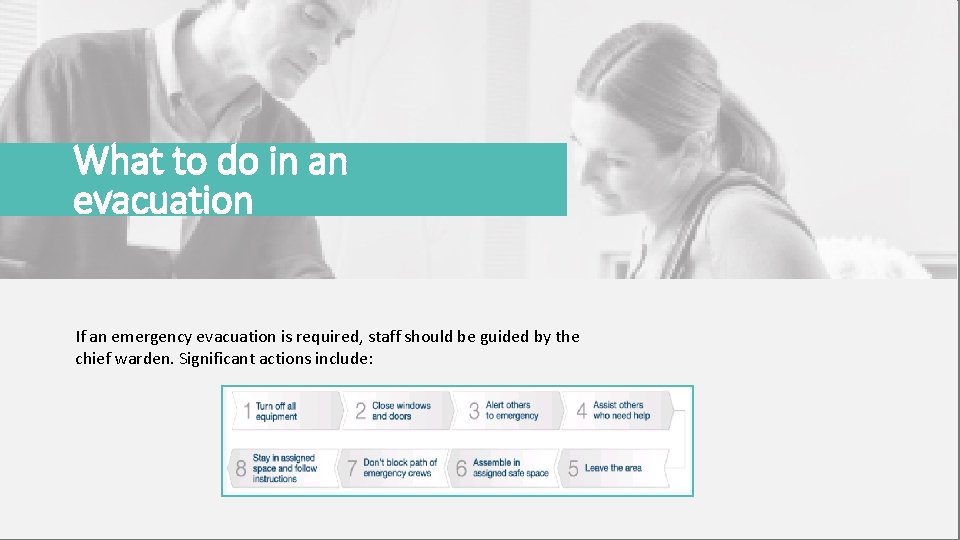
What to do in an evacuation If an emergency evacuation is required, staff should be guided by the chief warden. Significant actions include:
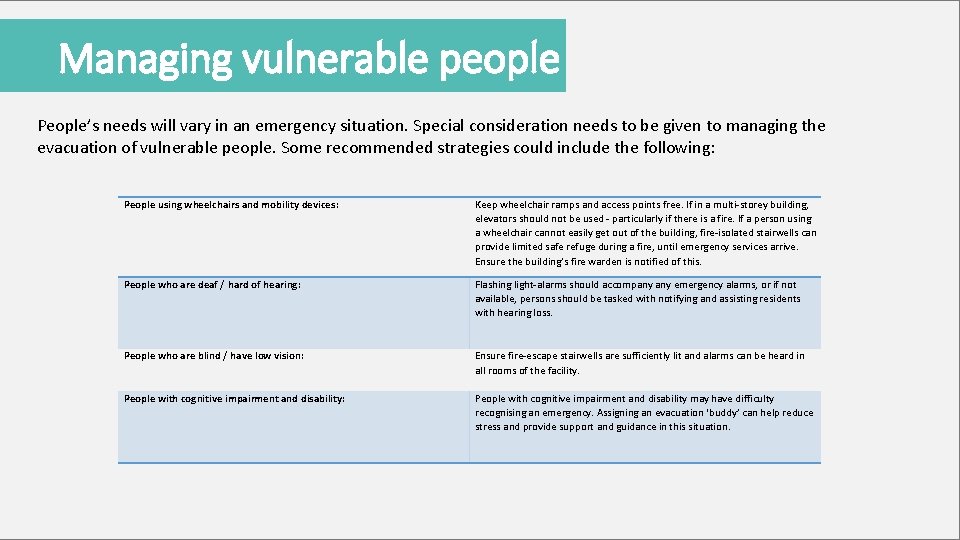
Managing vulnerable people People’s needs will vary in an emergency situation. Special consideration needs to be given to managing the evacuation of vulnerable people. Some recommended strategies could include the following: People using wheelchairs and mobility devices: Keep wheelchair ramps and access points free. If in a multi-storey building, elevators should not be used - particularly if there is a fire. If a person using a wheelchair cannot easily get out of the building, fire-isolated stairwells can provide limited safe refuge during a fire, until emergency services arrive. Ensure the building’s fire warden is notified of this. People who are deaf / hard of hearing: Flashing light-alarms should accompany emergency alarms, or if not available, persons should be tasked with notifying and assisting residents with hearing loss. People who are blind / have low vision: Ensure fire-escape stairwells are sufficiently lit and alarms can be heard in all rooms of the facility. People with cognitive impairment and disability: People with cognitive impairment and disability may have difficulty recognising an emergency. Assigning an evacuation ‘buddy’ can help reduce stress and provide support and guidance in this situation.
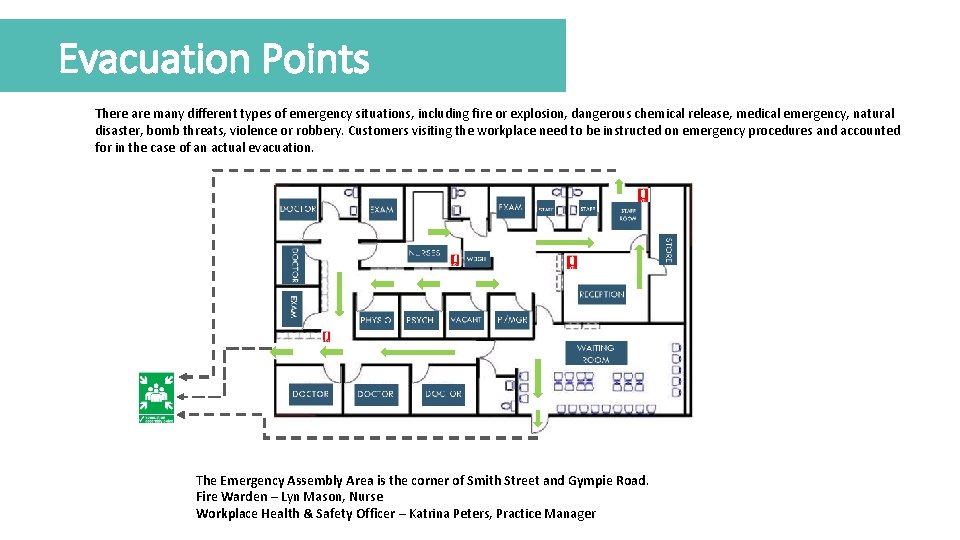
Evacuation Points There are many different types of emergency situations, including fire or explosion, dangerous chemical release, medical emergency, natural disaster, bomb threats, violence or robbery. Customers visiting the workplace need to be instructed on emergency procedures and accounted for in the case of an actual evacuation. The Emergency Assembly Area is the corner of Smith Street and Gympie Road. Fire Warden – Lyn Mason, Nurse Workplace Health & Safety Officer – Katrina Peters, Practice Manager
Managing Emergencies in a GP Clinic Feel free to use the below resource when creating your own Emergency Management Plan at your GP Clinic. https: //www. racgp. org. au/download/Documents/e-health/Managing-emergenciesin-general-practice. pdf