
Emergency Preparedness Campaign Research and Strategy Overview Presentation


- Slides: 23
Emergency Preparedness Campaign Research and Strategy Overview Presentation by Johns Hopkins Bloomberg School of Public Health Center for Communication Programs Jim Williams – Associate Director May 9, 2006
Fear Management Theory Extended Parallel Processing Model Theoretical Framework for Campaign Development • Fear can be motivating or incapacitating • Two Components in the Model § Perception of Threat determines motivation § Sense of Self Efficacy determines response 2
Communication Campaign Objective: Increase individual self efficacy by persuading residents of the Baltimore region to be better prepared for emergencies by assembling 3 basic home emergency preparedness items: - Portable Radio - Flashlight - –with extra batteries - Water Supply (1 gallon, person, per day for 3 day minimum) 3
Additional Benefit: • Increased individual preparedness will lessen initial burden of first responders • Enable them to attend to urgent community situations 4
Quantitative Research • WB&A Marke. Trak Survey: Quarterly, multi-client, randomized, telephone study among heads of household • Coverage: 6 jurisdictions, proportional to population: Harford County Baltimore City Anne Arundel Baltimore County Howard County Carroll County • Sample n=294; half men, half women • Data collection July 14 - 31, 2005 5
Quantitative Findings • Half of respondents reported feelings of insecurity • Greater concern about manmade versus natural emergencies • Only 24% say they are prepared to deal with emergencies • Only half believe that individuals have a responsibility for emergency preparedness 6
Quantitative Findings • 91% believe having supplies would be helpful. • 2/3 say they have some supplies assembled. • 1/3 of respondents do not currently have supplies assembled, but are likely to do so now. • 1/3 haven’t done so because they haven’t thought about it. • 1/5 don’t feel at risk or don’t know what supplies to assemble. 7
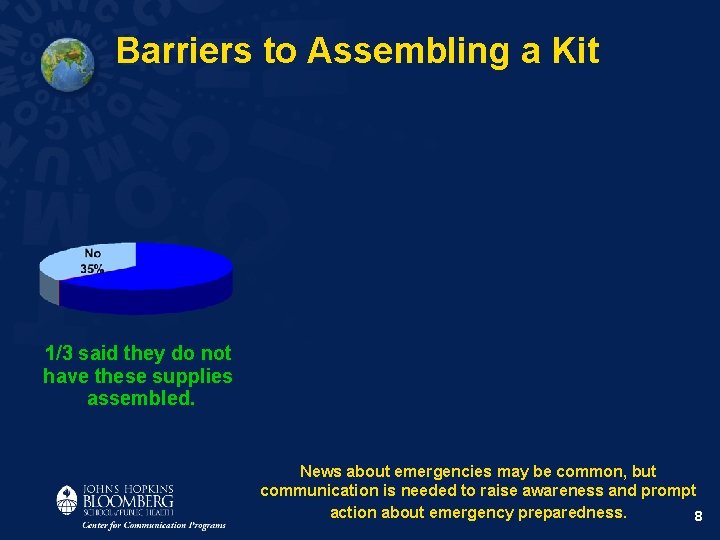
Barriers to Assembling a Kit 1/3 said they do not have these supplies assembled. News about emergencies may be common, but communication is needed to raise awareness and prompt action about emergency preparedness. 8
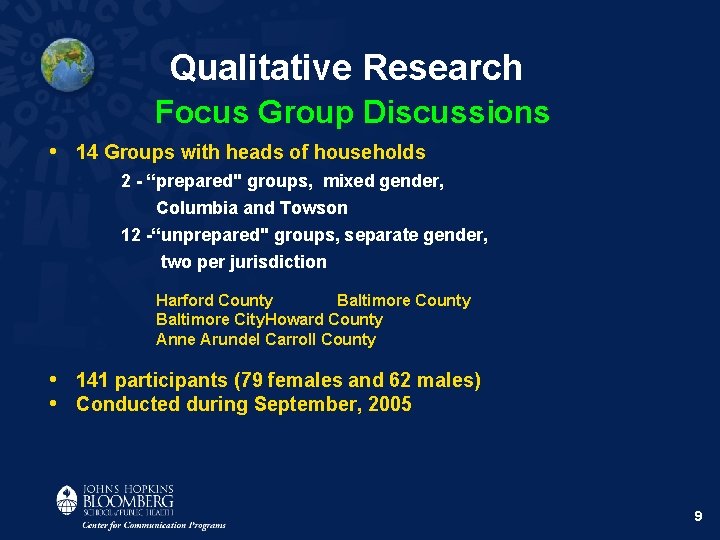
Qualitative Research Focus Group Discussions • 14 Groups with heads of households 2 - “prepared" groups, mixed gender, Columbia and Towson 12 -“unprepared" groups, separate gender, two per jurisdiction Harford County Baltimore City. Howard County Anne Arundel Carroll County • 141 participants (79 females and 62 males) • Conducted during September, 2005 9
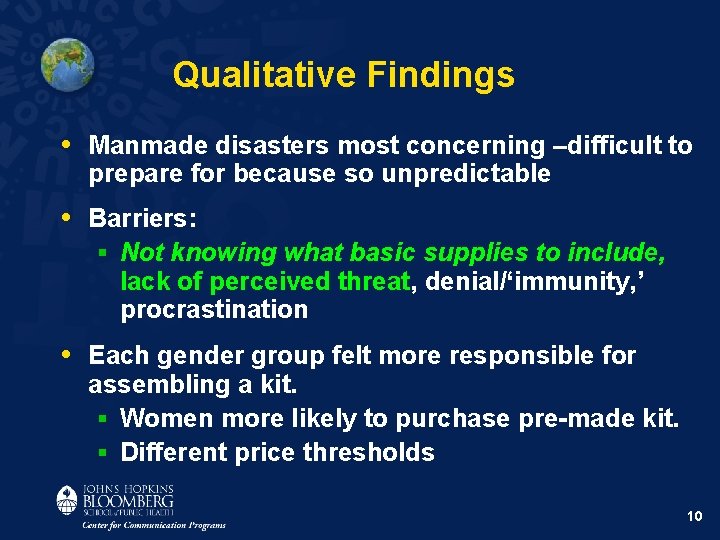
Qualitative Findings • Manmade disasters most concerning –difficult to prepare for because so unpredictable • Barriers: § Not knowing what basic supplies to include, lack of perceived threat, denial/‘immunity, ’ procrastination • Each gender group felt more responsible for assembling a kit. § Women more likely to purchase pre-made kit. § Different price thresholds 10
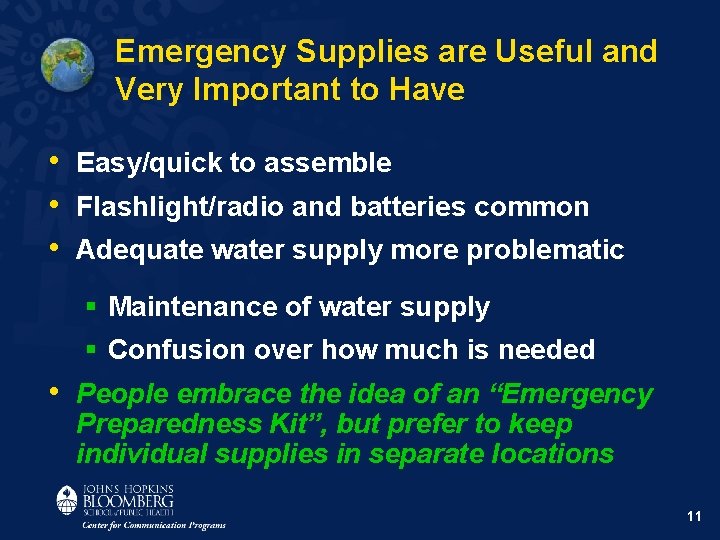
Emergency Supplies are Useful and Very Important to Have • Easy/quick to assemble • Flashlight/radio and batteries common • Adequate water supply more problematic § Maintenance of water supply § Confusion over how much is needed • People embrace the idea of an “Emergency Preparedness Kit”, but prefer to keep individual supplies in separate locations 11
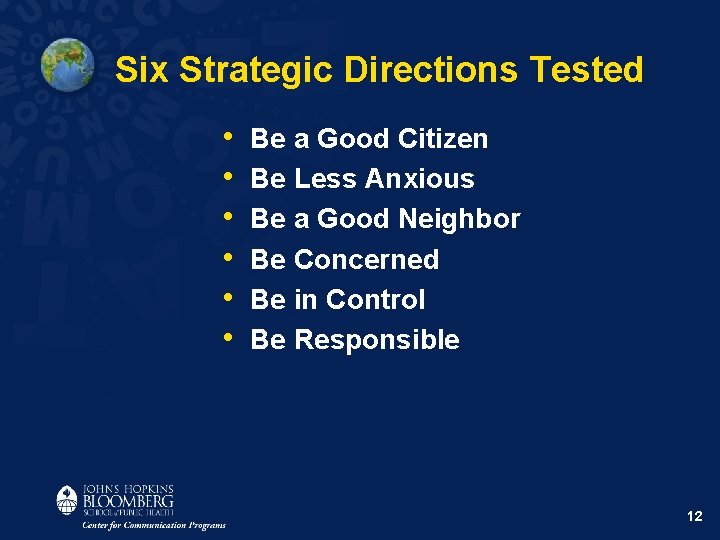
Six Strategic Directions Tested • • • Be a Good Citizen Be Less Anxious Be a Good Neighbor Be Concerned Be in Control Be Responsible 12
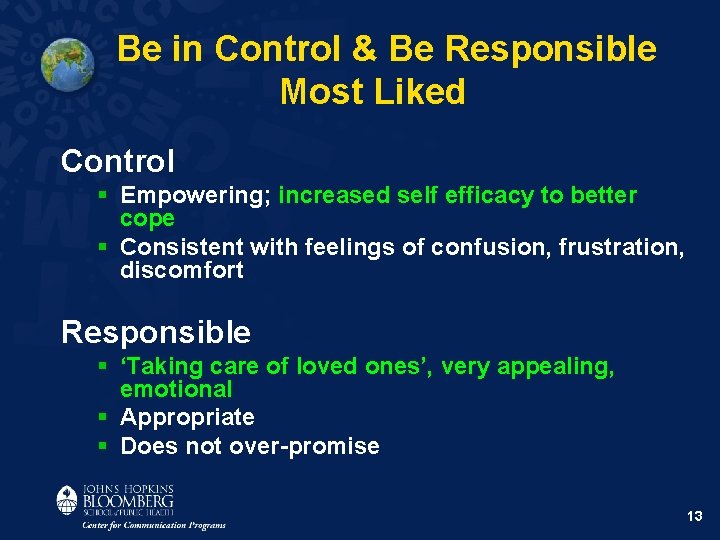
Be in Control & Be Responsible Most Liked Control § Empowering; increased self efficacy to better cope § Consistent with feelings of confusion, frustration, discomfort Responsible § ‘Taking care of loved ones’, very appealing, emotional § Appropriate § Does not over-promise 13
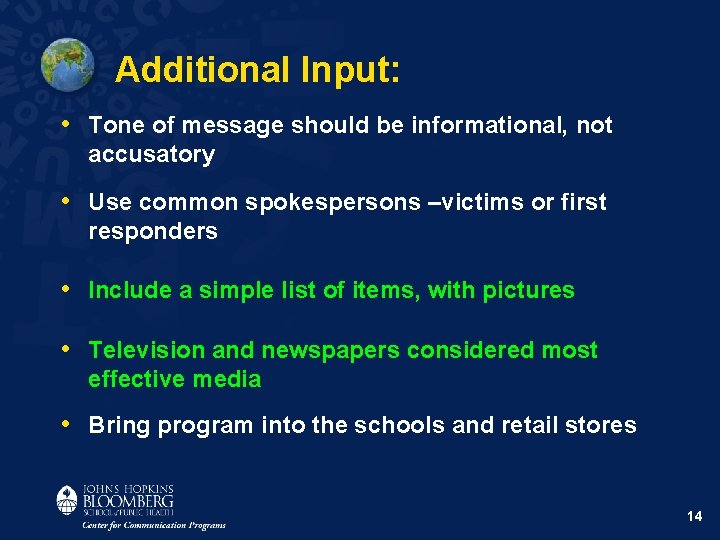
Additional Input: • Tone of message should be informational, not accusatory • Use common spokespersons –victims or first responders • Include a simple list of items, with pictures • Television and newspapers considered most effective media • Bring program into the schools and retail stores 14
Summary Observations
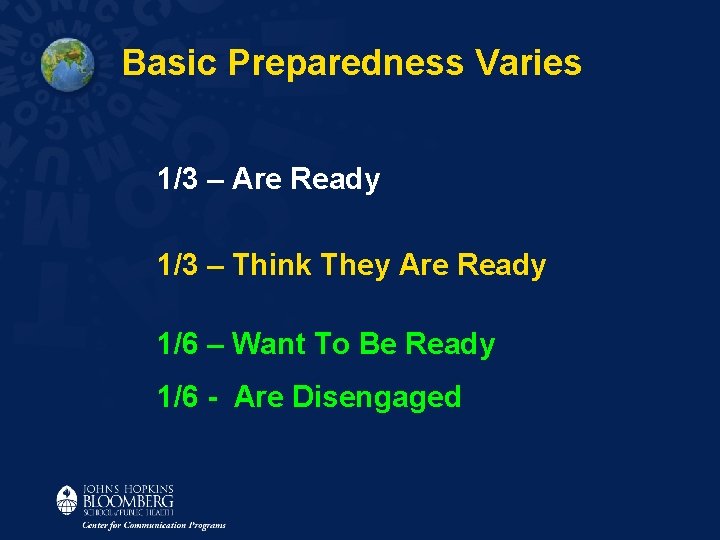
Basic Preparedness Varies 1/3 – Are Ready 1/3 – Think They Are Ready 1/6 – Want To Be Ready 1/6 - Are Disengaged
Preparation is Personal • Definition of “Emergency” Varies • Power Outage to Terrorism • Definition of “Preparedness” Varies • Flashlight to Generators • Need for Clear/Consistent Definition 17
Responsibility to Self and Loved Ones • First and Foremost • Not to Neighbors, Community, or the Government • “Self Preservation Vs. Species Preservation” 18
Self-Efficacy • Achievable but contingent on emergency • Saw value in having 3 basic items • Most people feel capable of getting prepared--some don’t feel/see the need • Or don’t know what supplies are needed and how to assemble them—Want a list with pictures 19
Scope of Work Based on Formative Research Findings, A Comprehensive Communication Plan Communication Strategy • Campaign Identity /Logo • Campaign Theme/Slogan • Advertising materials to include: • : 30 & : 10 TV Spots • Two print ads • : 30 radio spot • Pre-Test & Finalized All Creative Materials • Produce and place materials in all media • Plan to extend campaign with retail partners, school programs and governmental agencies. 20
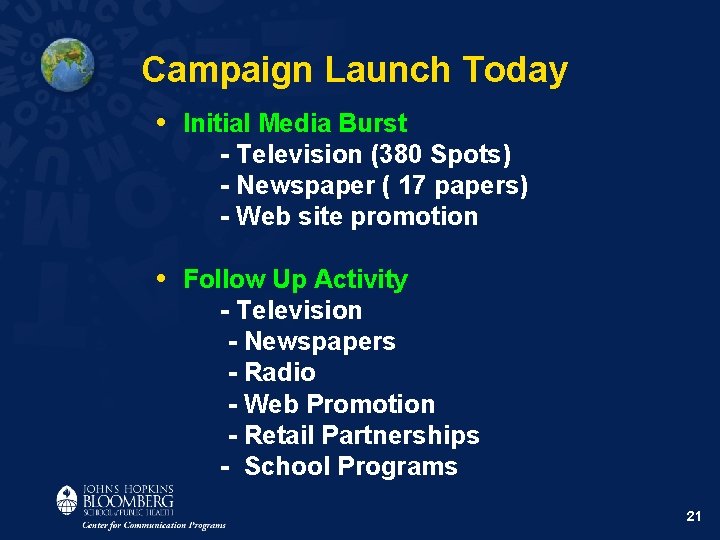
Campaign Launch Today • Initial Media Burst - Television (380 Spots) - Newspaper ( 17 papers) - Web site promotion • Follow Up Activity - Television - Newspapers - Radio - Web Promotion - Retail Partnerships - School Programs 21
22
23