
Emergency Operations Centre Control Services Introduction The control
- Slides: 12
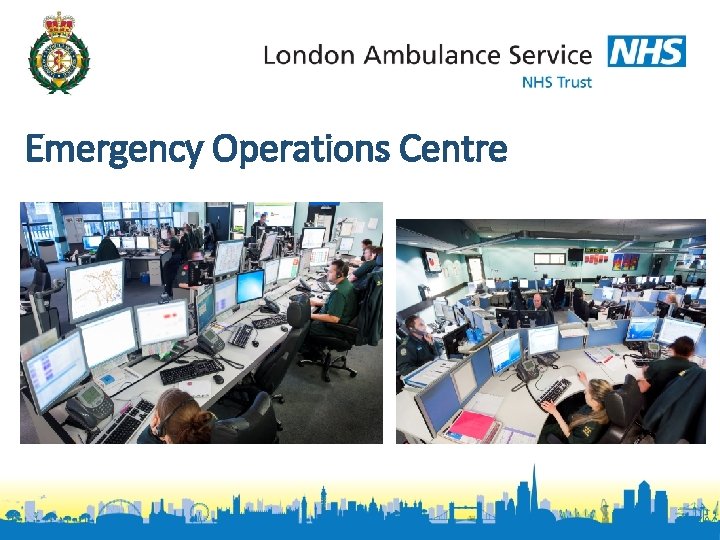
Emergency Operations Centre
Control Services • Introduction • The control room and progress over the last 18 months • Roles, responsibilities and specialist desks • Recruitment and retention, ‘where we were and where we are now’ • IC and ambulance flow • Managing the peaks in demand • Next steps developing the control room London Ambulance Service NHS Trust 2
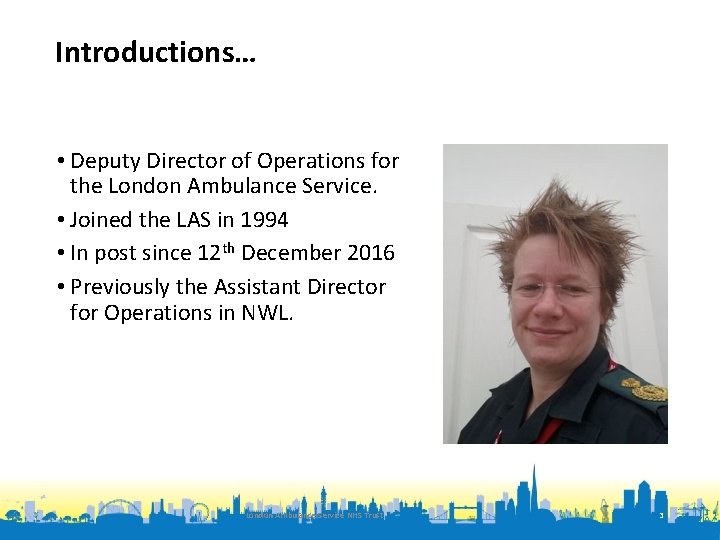
Introductions… • Deputy Director of Operations for the London Ambulance Service. • Joined the LAS in 1994 • In post since 12 th December 2016 • Previously the Assistant Director for Operations in NWL. London Ambulance Service NHS Trust 3
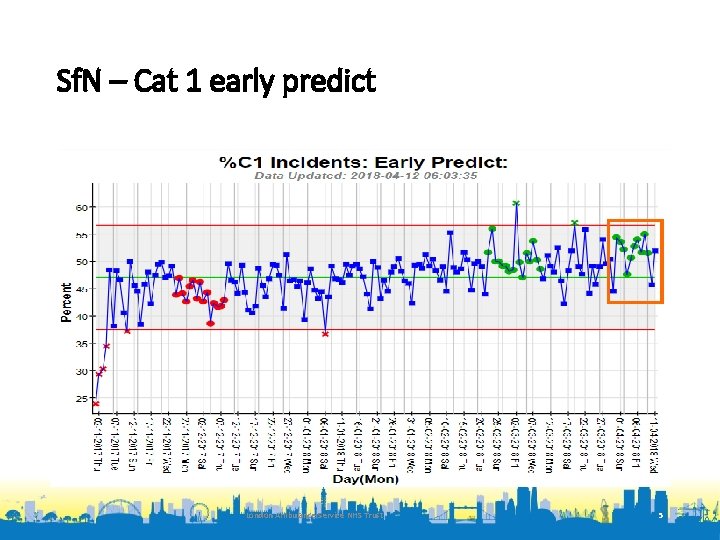
Progress over the last 18 months • CAD fail on New Years Day • 4 major incidents • Demand exceeding capacity • Interim operational management structure (Sept 2017) • Introducing leadership for CAD, call handling and performance • Introduced ARP in November 2017 • Increased focused on staff welfare • Signals from Noise performance monitoring tool • Recruited 126 new staff to the control room • Reduced the rate of leavers/movers to 83 last year • Enhanced recognition of excellence, wall of life • Increased communications, email, visibility days and VLogs London Ambulance Service NHS Trust 4
Sf. N – Cat 1 early predict London Ambulance Service NHS Trust 5
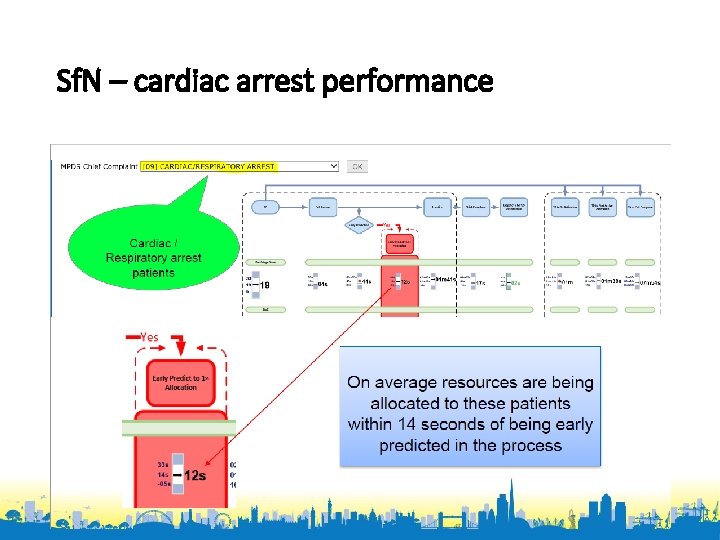
Sf. N – cardiac arrest performance London Ambulance Service NHS Trust 6
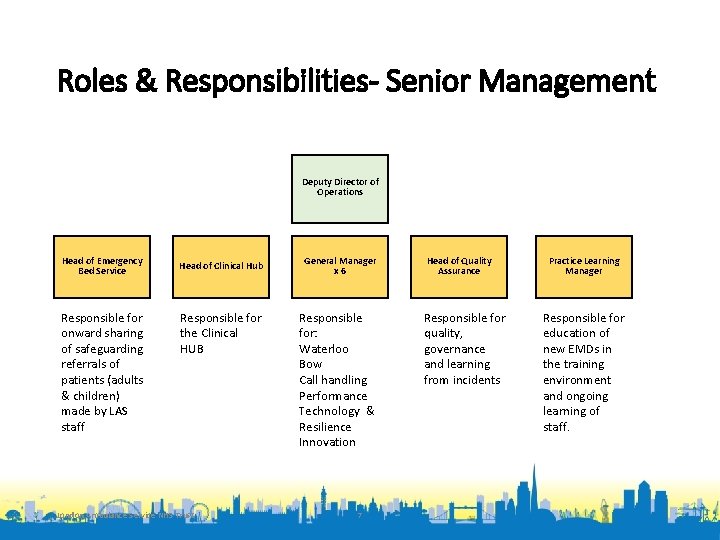
Roles & Responsibilities- Senior Management Deputy Director of Operations Head of Emergency Bed Service Responsible for onward sharing of safeguarding referrals of patients (adults & children) made by LAS staff Head of Clinical Hub Responsible for the Clinical HUB London Ambulance Service NHS Trust General Manager x 6 Responsible for: Waterloo Bow Call handling Performance Technology & Resilience Innovation 7 Head of Quality Assurance Responsible for quality, governance and learning from incidents Practice Learning Manager Responsible for education of new EMDs in the training environment and ongoing learning of staff.
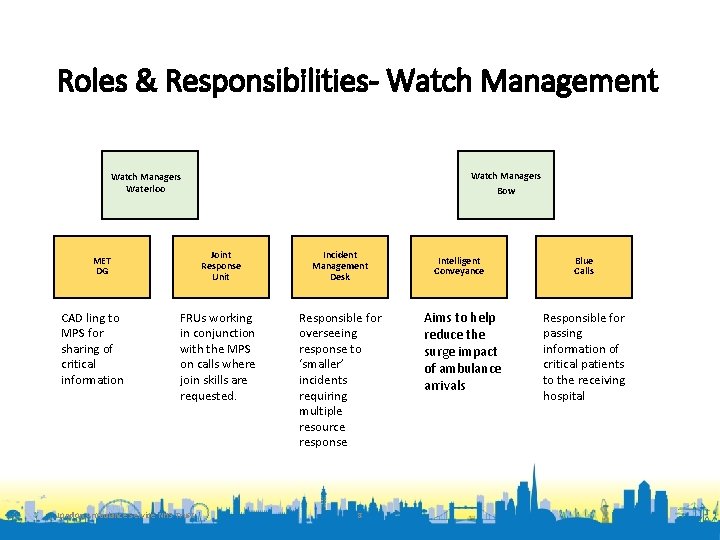
Roles & Responsibilities- Watch Management Watch Managers Waterloo Joint Response Unit MET DG CAD ling to MPS for sharing of critical information Bow FRUs working in conjunction with the MPS on calls where join skills are requested. London Ambulance Service NHS Trust Incident Management Desk Responsible for overseeing response to ‘smaller’ incidents requiring multiple resource response 8 Intelligent Conveyance Aims to help reduce the surge impact of ambulance arrivals Blue Calls Responsible for passing information of critical patients to the receiving hospital
Recruitment and retention, ‘where we were and where we are now’ • Review of resource levels in mid 2017 • 73 additional posts identified as required (and funded) • Leavers v joiners • Current vacancies • Reasons for leaving • • Cost of living / banding Demand / pressures Career pathway New expectations London Ambulance Service NHS Trust 9
IC and ambulance flow • Aims to help reduce the surge impact of ambulance arrivals • Threshold triggers set for each ED depending on size based on a rolling 60 minutes • Reviewed by NHSE in 2016 • IC does support the system during pressurised periods • It has limitations due to the volume of conveyances (59%) which are exclusions. • Full visibility of EEAST IC functions London Ambulance Service NHS Trust 10
What is an average day……. • 4, 400 calls into the control room in January (avg by day) • Busiest day this year 5 th March (5973 calls) • Lowest volume 2 nd April (3, 663) • Multi skilled staff • Incident delivery desk • Special Operations Centre • Senior leadership on call London Ambulance Service NHS Trust 11
Next steps developing the control room • Complete and continue the recruitment • Develop a clear Emergency Medical Dispatcher career pathway • Integrate the Clinical Hub with the i. CAT. • Develop the recognition of EMDs in the Customer Services qualifications. • Introduce a co-ordination centre for London Ambulance Service NHS Trust 12