
EMERGENCY MEETING FOR PHILHEALTH REQUIREMENTS CLINICAL PRACTICE GUIDELINES

- Slides: 22
EMERGENCY MEETING FOR PHILHEALTH REQUIREMENTS CLINICAL PRACTICE GUIDELINES ON HYPERTENSION CLINICAL PATHWAYS ON HYPERTENSION MAKATI MEDICAL CENTER DEPARTMENT OF MEDICINE SECTION OF CARDIOLOGY
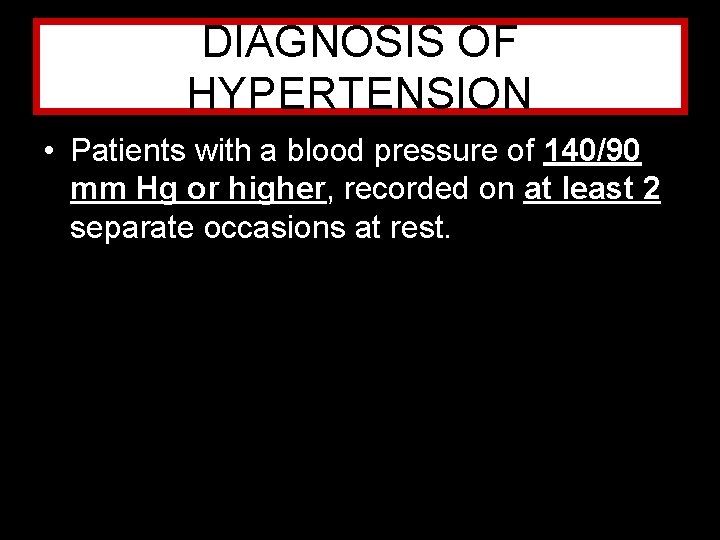
DIAGNOSIS OF HYPERTENSION • Patients with a blood pressure of 140/90 mm Hg or higher, recorded on at least 2 separate occasions at rest.
BP MEASUREMENTS: Steps in taking blood pressure: • Snug application of compression cuff • Palpation of radial artery as compression cuff is inflated • Palpation of radial artery as cuff is deflated as 2 – 3 mm Hg per heartbeat • Careful placement of stethoscope bell • Inflation of compression cuff above systolic pressure • Deflation of the cuff at a rate of 2 – 3 mm Hg per heartbeat to determine systolic and diastolic
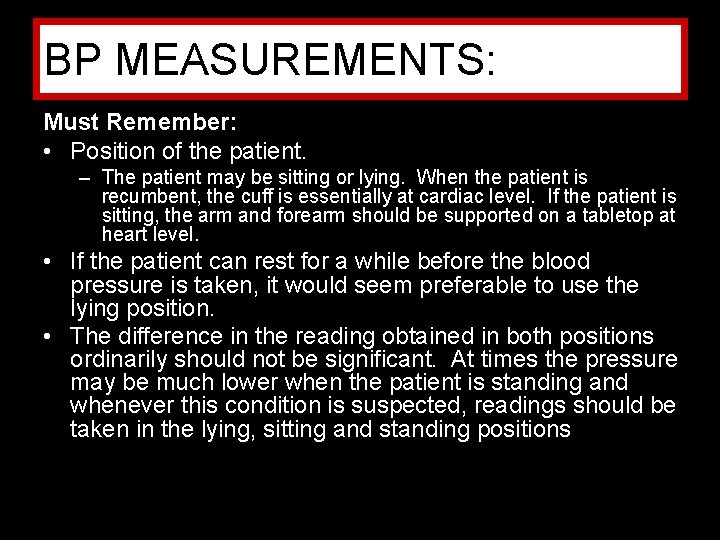
BP MEASUREMENTS: Must Remember: • Position of the patient. – The patient may be sitting or lying. When the patient is recumbent, the cuff is essentially at cardiac level. If the patient is sitting, the arm and forearm should be supported on a tabletop at heart level. • If the patient can rest for a while before the blood pressure is taken, it would seem preferable to use the lying position. • The difference in the reading obtained in both positions ordinarily should not be significant. At times the pressure may be much lower when the patient is standing and whenever this condition is suspected, readings should be taken in the lying, sitting and standing positions
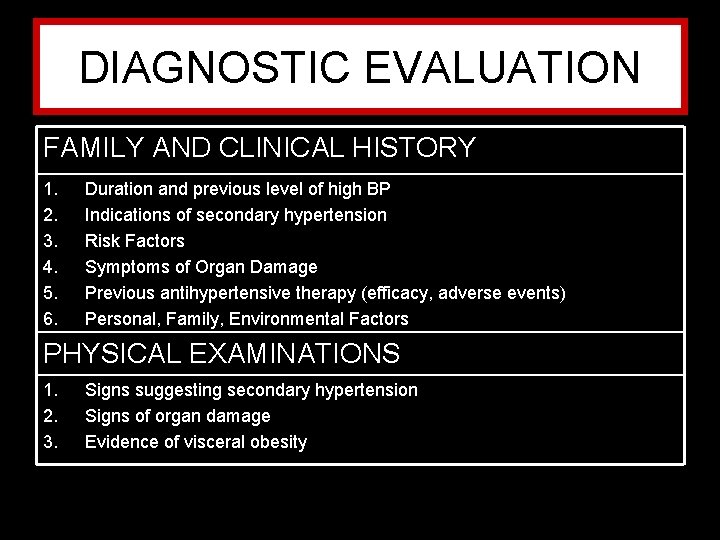
DIAGNOSTIC EVALUATION FAMILY AND CLINICAL HISTORY 1. 2. 3. 4. 5. 6. Duration and previous level of high BP Indications of secondary hypertension Risk Factors Symptoms of Organ Damage Previous antihypertensive therapy (efficacy, adverse events) Personal, Family, Environmental Factors PHYSICAL EXAMINATIONS 1. 2. 3. Signs suggesting secondary hypertension Signs of organ damage Evidence of visceral obesity
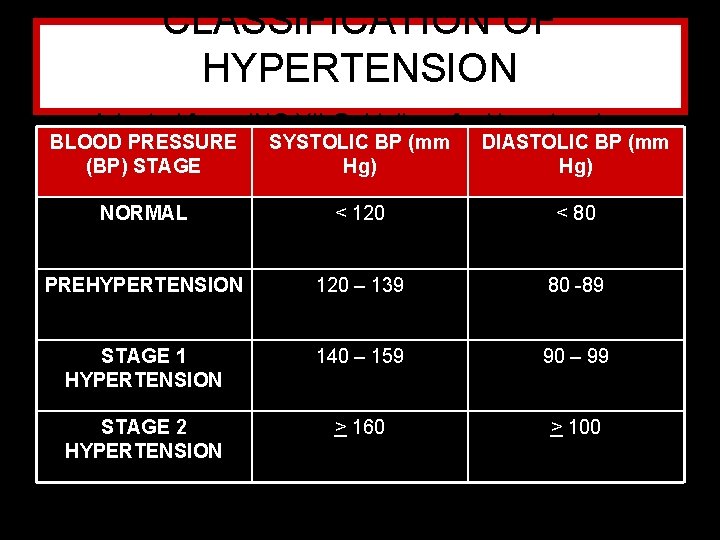
CLASSIFICATION OF HYPERTENSION Adapted from JNC VII Guidelines for Hypertension BLOOD PRESSURE (BP) STAGE SYSTOLIC BP (mm Hg) DIASTOLIC BP (mm Hg) NORMAL < 120 < 80 PREHYPERTENSION 120 – 139 80 -89 STAGE 1 HYPERTENSION 140 – 159 90 – 99 STAGE 2 HYPERTENSION > 160 > 100
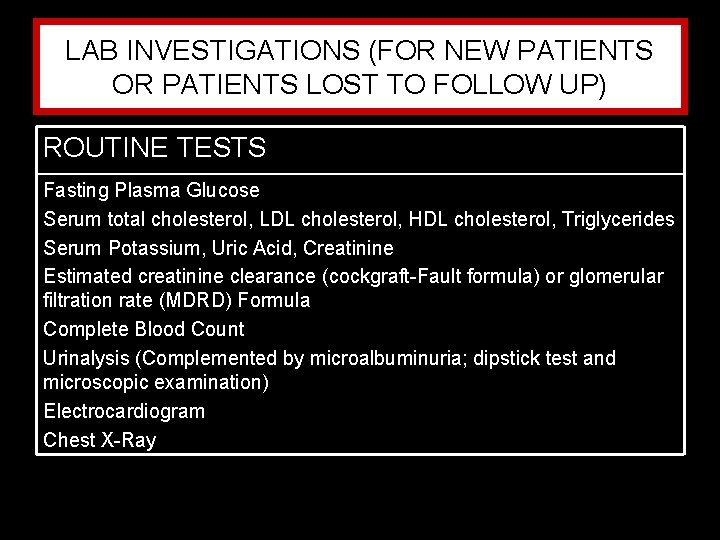
LAB INVESTIGATIONS (FOR NEW PATIENTS OR PATIENTS LOST TO FOLLOW UP) ROUTINE TESTS Fasting Plasma Glucose Serum total cholesterol, LDL cholesterol, HDL cholesterol, Triglycerides Serum Potassium, Uric Acid, Creatinine Estimated creatinine clearance (cockgraft-Fault formula) or glomerular filtration rate (MDRD) Formula Complete Blood Count Urinalysis (Complemented by microalbuminuria; dipstick test and microscopic examination) Electrocardiogram Chest X-Ray Adapted from the Compendium of Abridged ESC Guidelines 2008.
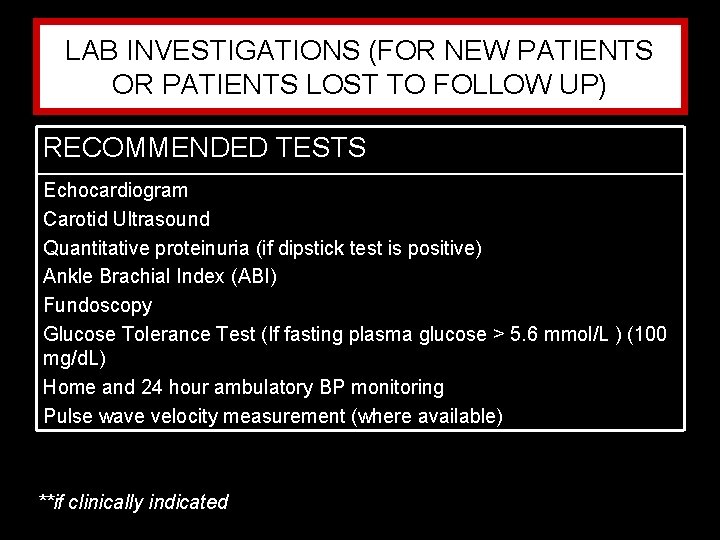
LAB INVESTIGATIONS (FOR NEW PATIENTS OR PATIENTS LOST TO FOLLOW UP) RECOMMENDED TESTS Echocardiogram Carotid Ultrasound Quantitative proteinuria (if dipstick test is positive) Ankle Brachial Index (ABI) Fundoscopy Glucose Tolerance Test (If fasting plasma glucose > 5. 6 mmol/L ) (100 mg/d. L) Home and 24 hour ambulatory BP monitoring Pulse wave velocity measurement (where available) **if clinically indicated
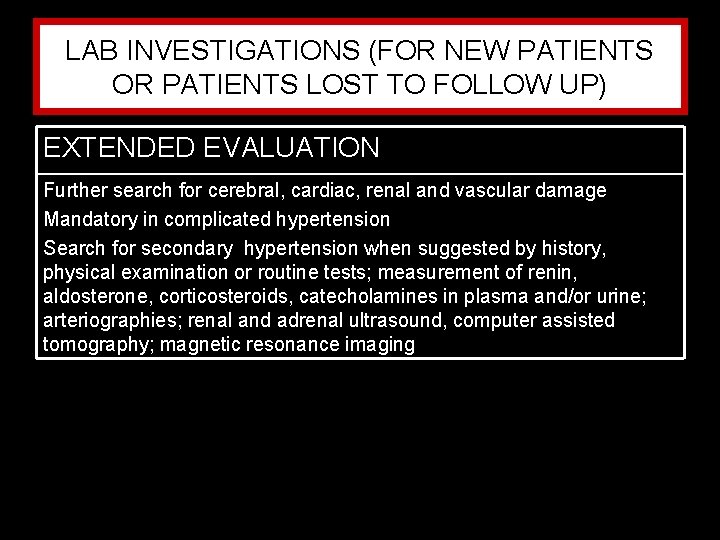
LAB INVESTIGATIONS (FOR NEW PATIENTS OR PATIENTS LOST TO FOLLOW UP) EXTENDED EVALUATION Further search for cerebral, cardiac, renal and vascular damage Mandatory in complicated hypertension Search for secondary hypertension when suggested by history, physical examination or routine tests; measurement of renin, aldosterone, corticosteroids, catecholamines in plasma and/or urine; arteriographies; renal and adrenal ultrasound, computer assisted tomography; magnetic resonance imaging
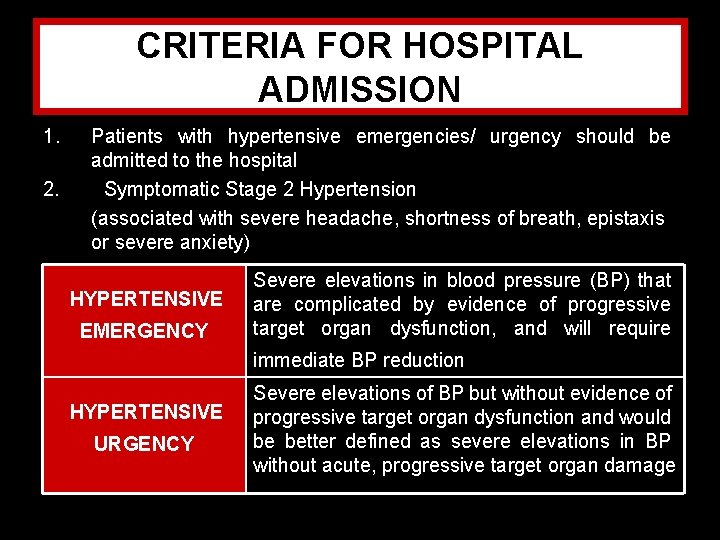
CRITERIA FOR HOSPITAL ADMISSION 1. 2. Patients with hypertensive emergencies/ urgency should be admitted to the hospital Symptomatic Stage 2 Hypertension (associated with severe headache, shortness of breath, epistaxis or severe anxiety) HYPERTENSIVE EMERGENCY Severe elevations in blood pressure (BP) that are complicated by evidence of progressive target organ dysfunction, and will require immediate BP reduction HYPERTENSIVE URGENCY Severe elevations of BP but without evidence of progressive target organ dysfunction and would be better defined as severe elevations in BP without acute, progressive target organ damage
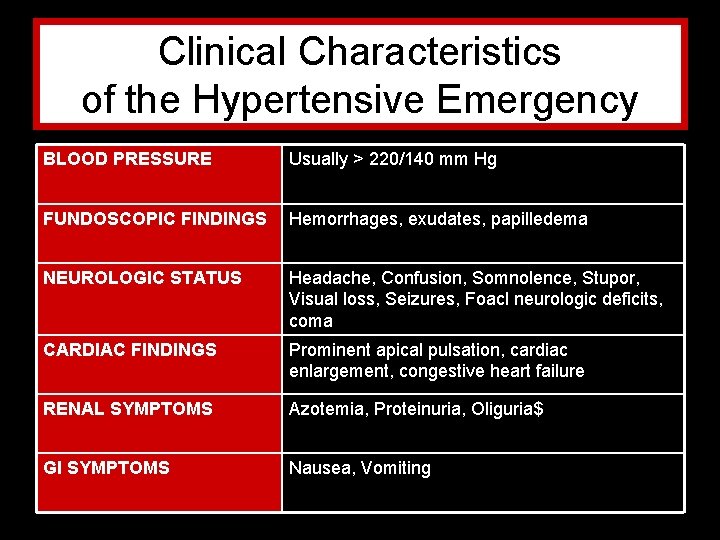
Clinical Characteristics of the Hypertensive Emergency BLOOD PRESSURE Usually > 220/140 mm Hg FUNDOSCOPIC FINDINGS Hemorrhages, exudates, papilledema NEUROLOGIC STATUS Headache, Confusion, Somnolence, Stupor, Visual loss, Seizures, Foacl neurologic deficits, coma CARDIAC FINDINGS Prominent apical pulsation, cardiac enlargement, congestive heart failure RENAL SYMPTOMS Azotemia, Proteinuria, Oliguria$ GI SYMPTOMS Nausea, Vomiting
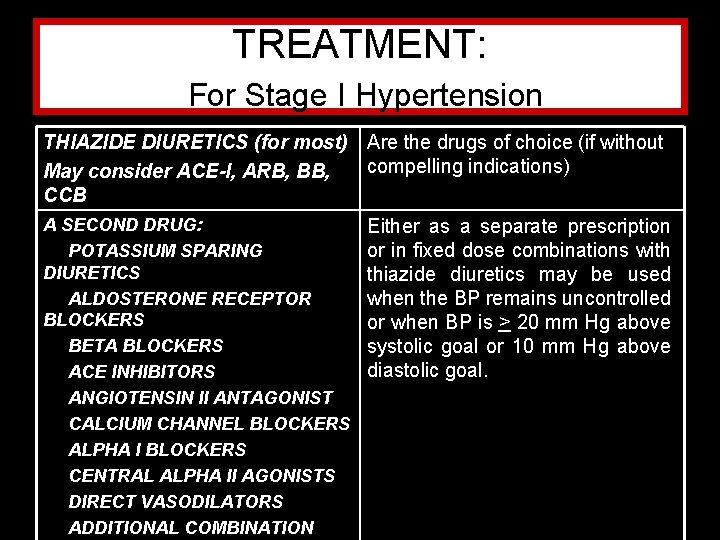
TREATMENT: For Stage I Hypertension THIAZIDE DIURETICS (for most) Are the drugs of choice (if without compelling indications) May consider ACE-I, ARB, BB, CCB A SECOND DRUG: POTASSIUM SPARING DIURETICS ALDOSTERONE RECEPTOR BLOCKERS BETA BLOCKERS ACE INHIBITORS ANGIOTENSIN II ANTAGONIST CALCIUM CHANNEL BLOCKERS ALPHA I BLOCKERS CENTRAL ALPHA II AGONISTS DIRECT VASODILATORS ADDITIONAL COMBINATION Either as a separate prescription or in fixed dose combinations with thiazide diuretics may be used when the BP remains uncontrolled or when BP is > 20 mm Hg above systolic goal or 10 mm Hg above diastolic goal.
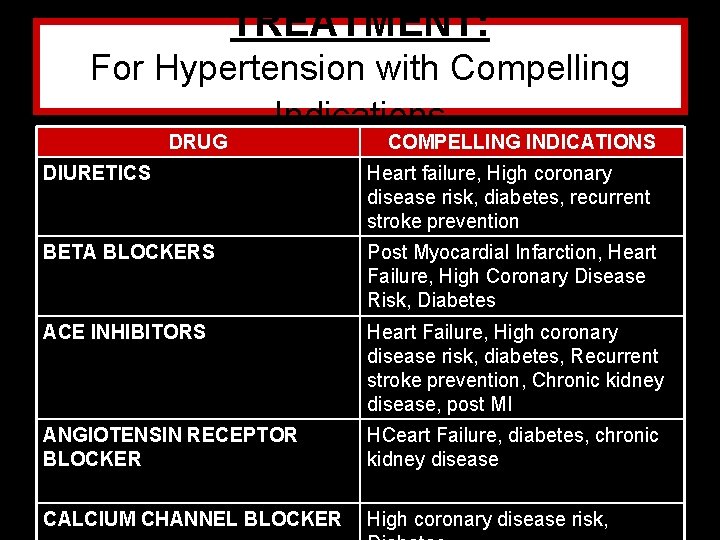
TREATMENT: For Hypertension with Compelling Indications DRUG COMPELLING INDICATIONS DIURETICS Heart failure, High coronary disease risk, diabetes, recurrent stroke prevention BETA BLOCKERS Post Myocardial Infarction, Heart Failure, High Coronary Disease Risk, Diabetes ACE INHIBITORS Heart Failure, High coronary disease risk, diabetes, Recurrent stroke prevention, Chronic kidney disease, post MI ANGIOTENSIN RECEPTOR BLOCKER HCeart Failure, diabetes, chronic kidney disease CALCIUM CHANNEL BLOCKER High coronary disease risk,
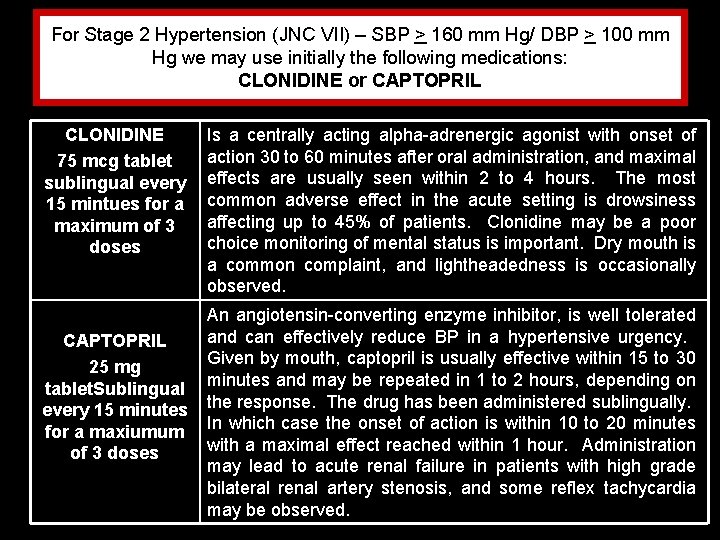
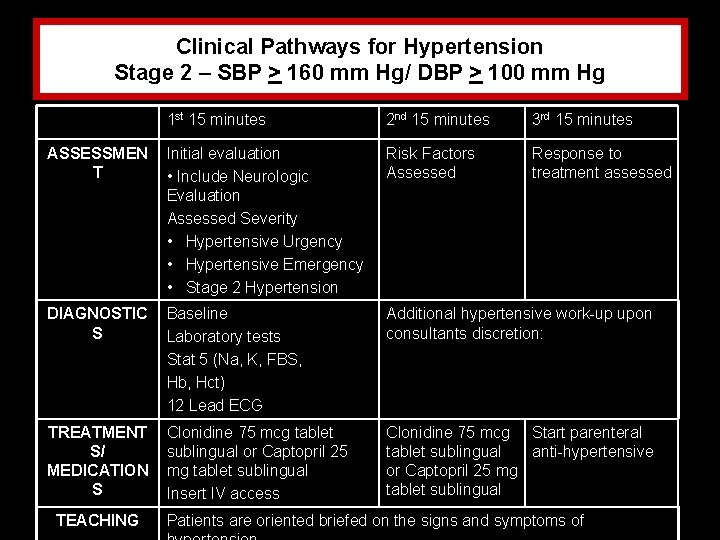
For Stage 2 Hypertension (JNC VII) – SBP > 160 mm Hg/ DBP > 100 mm Hg we may use initially the following medications: CLONIDINE or CAPTOPRIL CLONIDINE 75 mcg tablet sublingual every 15 mintues for a maximum of 3 doses CAPTOPRIL 25 mg tablet. Sublingual every 15 minutes for a maxiumum of 3 doses Is a centrally acting alpha-adrenergic agonist with onset of action 30 to 60 minutes after oral administration, and maximal effects are usually seen within 2 to 4 hours. The most common adverse effect in the acute setting is drowsiness affecting up to 45% of patients. Clonidine may be a poor choice monitoring of mental status is important. Dry mouth is a common complaint, and lightheadedness is occasionally observed. An angiotensin-converting enzyme inhibitor, is well tolerated and can effectively reduce BP in a hypertensive urgency. Given by mouth, captopril is usually effective within 15 to 30 minutes and may be repeated in 1 to 2 hours, depending on the response. The drug has been administered sublingually. In which case the onset of action is within 10 to 20 minutes with a maximal effect reached within 1 hour. Administration may lead to acute renal failure in patients with high grade bilateral renal artery stenosis, and some reflex tachycardia may be observed.
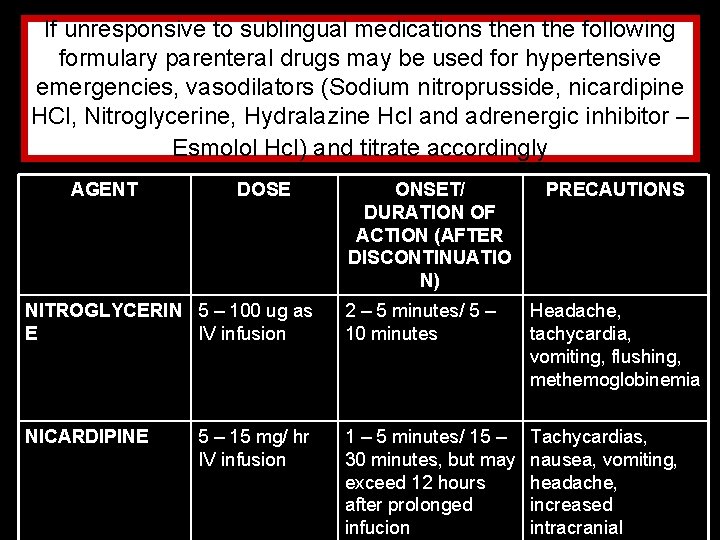
If unresponsive to sublingual medications then the following formulary parenteral drugs may be used for hypertensive emergencies, vasodilators (Sodium nitroprusside, nicardipine HCl, Nitroglycerine, Hydralazine Hcl and adrenergic inhibitor – Esmolol Hcl) and titrate accordingly AGENT DOSE ONSET/ DURATION OF ACTION (AFTER DISCONTINUATIO N) PRECAUTIONS NITROGLYCERIN 5 – 100 ug as E IV infusion 2 – 5 minutes/ 5 – 10 minutes Headache, tachycardia, vomiting, flushing, methemoglobinemia NICARDIPINE 1 – 5 minutes/ 15 – 30 minutes, but may exceed 12 hours after prolonged infucion Tachycardias, nausea, vomiting, headache, increased intracranial 5 – 15 mg/ hr IV infusion
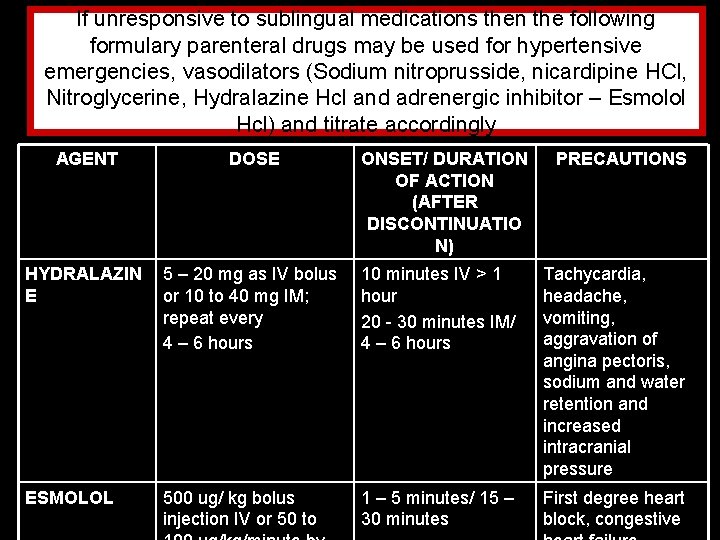
If unresponsive to sublingual medications then the following formulary parenteral drugs may be used for hypertensive emergencies, vasodilators (Sodium nitroprusside, nicardipine HCl, Nitroglycerine, Hydralazine Hcl and adrenergic inhibitor – Esmolol Hcl) and titrate accordingly AGENT DOSE ONSET/ DURATION OF ACTION (AFTER DISCONTINUATIO N) PRECAUTIONS HYDRALAZIN E 5 – 20 mg as IV bolus or 10 to 40 mg IM; repeat every 4 – 6 hours 10 minutes IV > 1 hour 20 - 30 minutes IM/ 4 – 6 hours Tachycardia, headache, vomiting, aggravation of angina pectoris, sodium and water retention and increased intracranial pressure ESMOLOL 500 ug/ kg bolus injection IV or 50 to 1 – 5 minutes/ 15 – 30 minutes First degree heart block, congestive
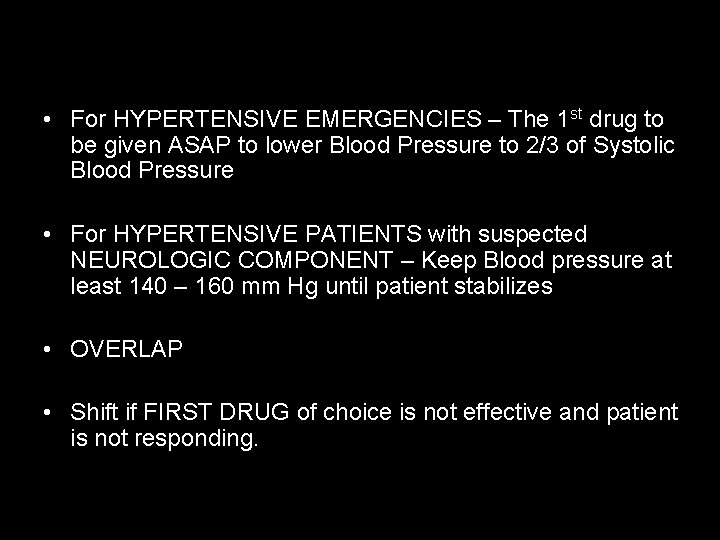
• For HYPERTENSIVE EMERGENCIES – The 1 st drug to be given ASAP to lower Blood Pressure to 2/3 of Systolic Blood Pressure • For HYPERTENSIVE PATIENTS with suspected NEUROLOGIC COMPONENT – Keep Blood pressure at least 140 – 160 mm Hg until patient stabilizes • OVERLAP • Shift if FIRST DRUG of choice is not effective and patient is not responding.
Clinical Pathways for Hypertension Stage 2 – SBP > 160 mm Hg/ DBP > 100 mm Hg 1 st 15 minutes 2 nd 15 minutes 3 rd 15 minutes ASSESSMEN T Initial evaluation • Include Neurologic Evaluation Assessed Severity • Hypertensive Urgency • Hypertensive Emergency • Stage 2 Hypertension Risk Factors Assessed Response to treatment assessed DIAGNOSTIC S Baseline Laboratory tests Stat 5 (Na, K, FBS, Hb, Hct) 12 Lead ECG Additional hypertensive work-up upon consultants discretion: TREATMENT S/ MEDICATION S Clonidine 75 mcg tablet sublingual or Captopril 25 mg tablet sublingual Insert IV access Clonidine 75 mcg Start parenteral tablet sublingual anti-hypertensive or Captopril 25 mg tablet sublingual TEACHING Patients are oriented briefed on the signs and symptoms of
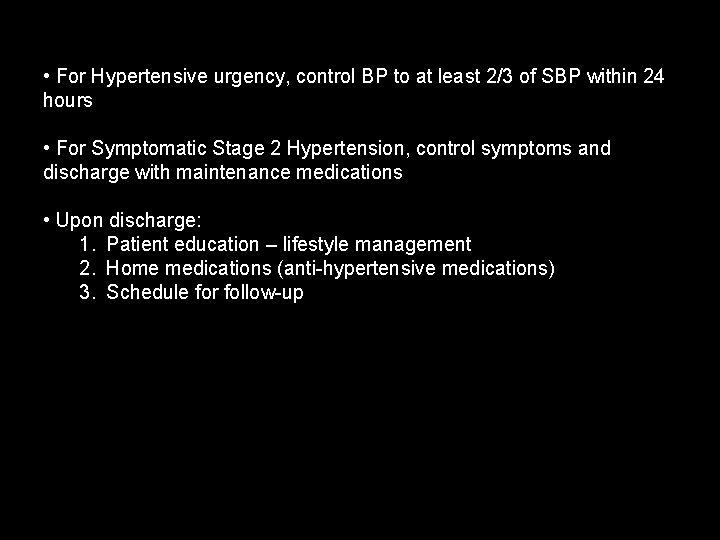
• For Hypertensive urgency, control BP to at least 2/3 of SBP within 24 hours • For Symptomatic Stage 2 Hypertension, control symptoms and discharge with maintenance medications • Upon discharge: 1. Patient education – lifestyle management 2. Home medications (anti-hypertensive medications) 3. Schedule for follow-up
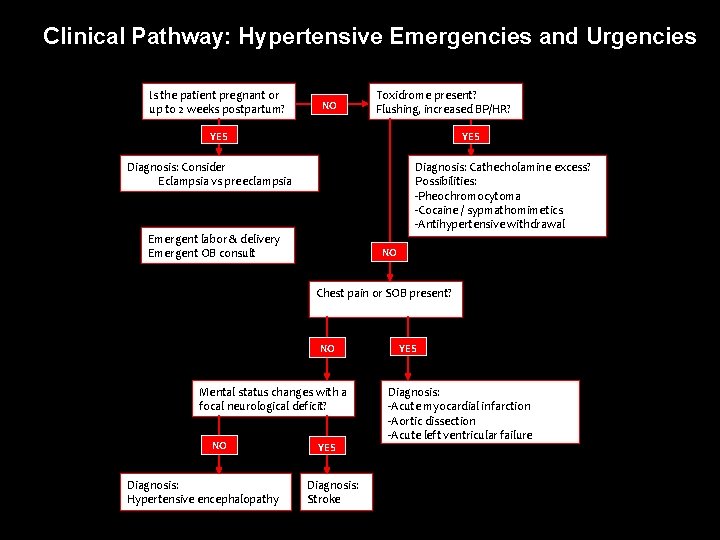
Clinical Pathway: Hypertensive Emergencies and Urgencies Is the patient pregnant or up to 2 weeks postpartum? NO Toxidrome present? Flushing, increased BP/HR? YES Diagnosis: Consider Eclampsia vs preeclampsia Diagnosis: Cathecholamine excess? Possibilities: -Pheochromocytoma -Cocaine / sypmathomimetics -Antihypertensive withdrawal Emergent labor & delivery Emergent OB consult NO Chest pain or SOB present? NO Mental status changes with a focal neurological deficit? NO Diagnosis: Hypertensive encephalopathy YES Diagnosis: Stroke YES Diagnosis: -Acute myocardial infarction -Aortic dissection -Acute left ventricular failure
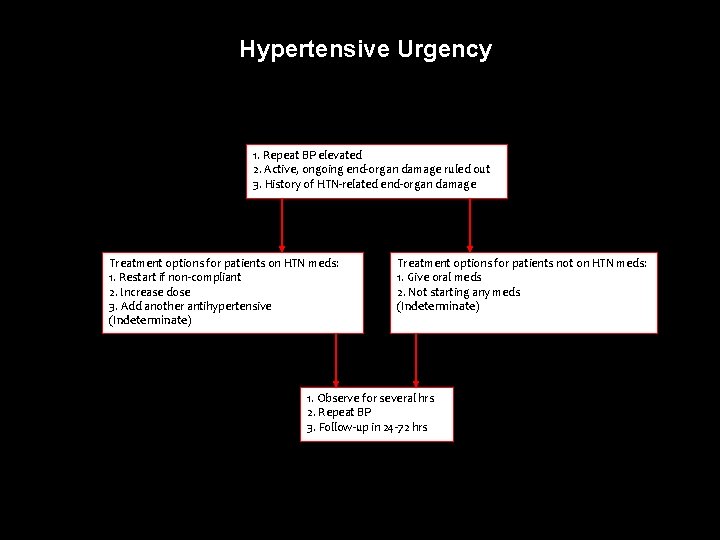
Hypertensive Urgency 1. Repeat BP elevated 2. Active, ongoing end-organ damage ruled out 3. History of HTN-related end-organ damage Treatment options for patients on HTN meds: 1. Restart if non-compliant 2. Increase dose 3. Add another antihypertensive (Indeterminate) Treatment options for patients not on HTN meds: 1. Give oral meds 2. Not starting any meds (Indeterminate) 1. Observe for several hrs 2. Repeat BP 3. Follow-up in 24 -72 hrs
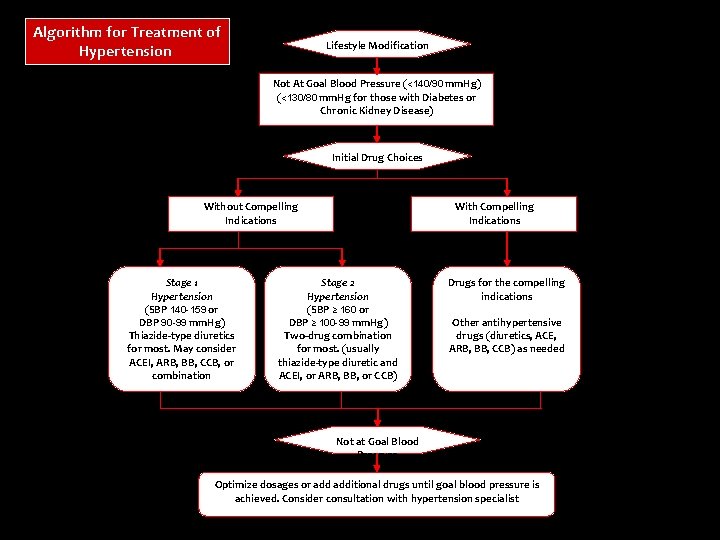
Algorithm for Treatment of Hypertension Lifestyle Modification Not At Goal Blood Pressure (<140/90 mm. Hg) (<130/80 mm. Hg for those with Diabetes or Chronic Kidney Disease) Initial Drug Choices Without Compelling Indications Stage 1 Hypertension (SBP 140 -159 or DBP 90 -99 mm. Hg) Thiazide-type diuretics for most. May consider ACEI, ARB, BB, CCB, or combination With Compelling Indications Stage 2 Hypertension (SBP ≥ 160 or DBP ≥ 100 -99 mm. Hg) Two-drug combination for most. (usually thiazide-type diuretic and ACEI, or ARB, BB, or CCB) Drugs for the compelling indications Other antihypertensive drugs (diuretics, ACE, ARB, BB, CCB) as needed Not at Goal Blood Pressure Optimize dosages or additional drugs until goal blood pressure is achieved. Consider consultation with hypertension specialist