
Emergency Medical Stroke Assessment EMSA Abnormal E Eye
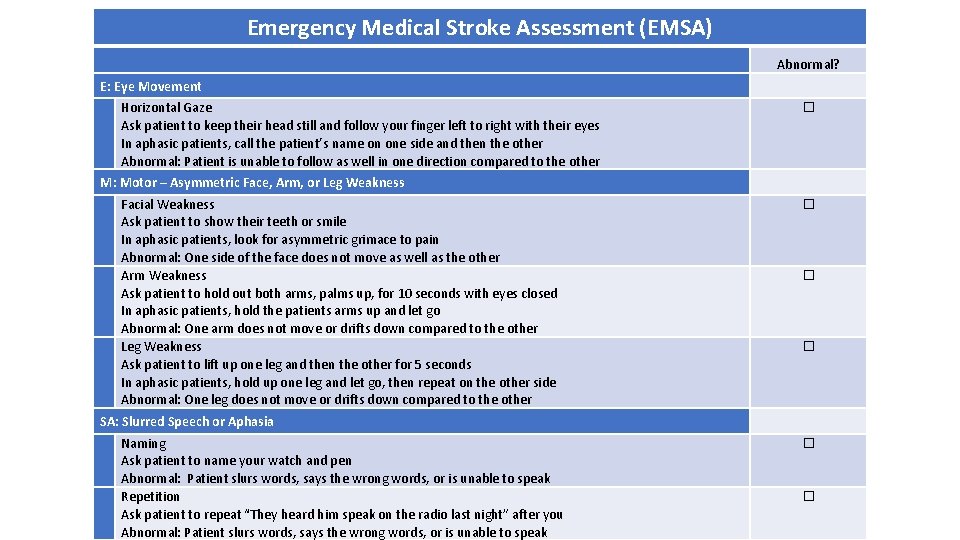
Emergency Medical Stroke Assessment (EMSA) Abnormal? E: Eye Movement Horizontal Gaze Ask patient to keep their head still and follow your finger left to right with their eyes In aphasic patients, call the patient’s name on one side and then the other Abnormal: Patient is unable to follow as well in one direction compared to the other ☐ M: Motor – Asymmetric Face, Arm, or Leg Weakness Facial Weakness Ask patient to show their teeth or smile In aphasic patients, look for asymmetric grimace to pain Abnormal: One side of the face does not move as well as the other Arm Weakness Ask patient to hold out both arms, palms up, for 10 seconds with eyes closed In aphasic patients, hold the patients arms up and let go Abnormal: One arm does not move or drifts down compared to the other Leg Weakness Ask patient to lift up one leg and then the other for 5 seconds In aphasic patients, hold up one leg and let go, then repeat on the other side Abnormal: One leg does not move or drifts down compared to the other ☐ ☐ ☐ SA: Slurred Speech or Aphasia Naming Ask patient to name your watch and pen Abnormal: Patient slurs words, says the wrong words, or is unable to speak Repetition Ask patient to repeat “They heard him speak on the radio last night” after you Abnormal: Patient slurs words, says the wrong words, or is unable to speak ☐ ☐
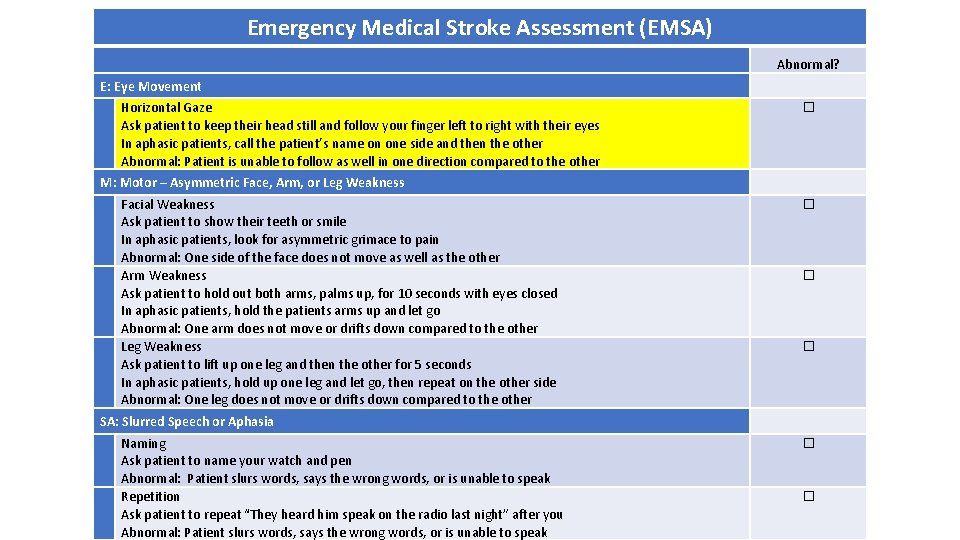
Emergency Medical Stroke Assessment (EMSA) Abnormal? E: Eye Movement Horizontal Gaze Ask patient to keep their head still and follow your finger left to right with their eyes In aphasic patients, call the patient’s name on one side and then the other Abnormal: Patient is unable to follow as well in one direction compared to the other ☐ M: Motor – Asymmetric Face, Arm, or Leg Weakness Facial Weakness Ask patient to show their teeth or smile In aphasic patients, look for asymmetric grimace to pain Abnormal: One side of the face does not move as well as the other Arm Weakness Ask patient to hold out both arms, palms up, for 10 seconds with eyes closed In aphasic patients, hold the patients arms up and let go Abnormal: One arm does not move or drifts down compared to the other Leg Weakness Ask patient to lift up one leg and then the other for 5 seconds In aphasic patients, hold up one leg and let go, then repeat on the other side Abnormal: One leg does not move or drifts down compared to the other ☐ ☐ ☐ SA: Slurred Speech or Aphasia Naming Ask patient to name your watch and pen Abnormal: Patient slurs words, says the wrong words, or is unable to speak Repetition Ask patient to repeat “They heard him speak on the radio last night” after you Abnormal: Patient slurs words, says the wrong words, or is unable to speak ☐ ☐
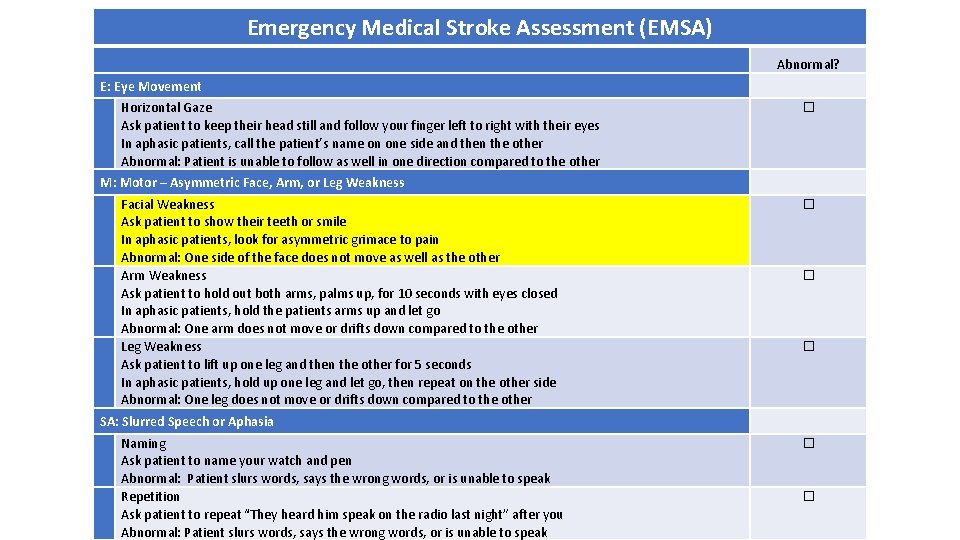
Emergency Medical Stroke Assessment (EMSA) Abnormal? E: Eye Movement Horizontal Gaze Ask patient to keep their head still and follow your finger left to right with their eyes In aphasic patients, call the patient’s name on one side and then the other Abnormal: Patient is unable to follow as well in one direction compared to the other ☐ M: Motor – Asymmetric Face, Arm, or Leg Weakness Facial Weakness Ask patient to show their teeth or smile In aphasic patients, look for asymmetric grimace to pain Abnormal: One side of the face does not move as well as the other Arm Weakness Ask patient to hold out both arms, palms up, for 10 seconds with eyes closed In aphasic patients, hold the patients arms up and let go Abnormal: One arm does not move or drifts down compared to the other Leg Weakness Ask patient to lift up one leg and then the other for 5 seconds In aphasic patients, hold up one leg and let go, then repeat on the other side Abnormal: One leg does not move or drifts down compared to the other ☐ ☐ ☐ SA: Slurred Speech or Aphasia Naming Ask patient to name your watch and pen Abnormal: Patient slurs words, says the wrong words, or is unable to speak Repetition Ask patient to repeat “They heard him speak on the radio last night” after you Abnormal: Patient slurs words, says the wrong words, or is unable to speak ☐ ☐

Emergency Medical Stroke Assessment (EMSA) Abnormal? E: Eye Movement Horizontal Gaze Ask patient to keep their head still and follow your finger left to right with their eyes In aphasic patients, call the patient’s name on one side and then the other Abnormal: Patient is unable to follow as well in one direction compared to the other ☐ M: Motor – Asymmetric Face, Arm, or Leg Weakness Facial Weakness Ask patient to show their teeth or smile In aphasic patients, look for asymmetric grimace to pain Abnormal: One side of the face does not move as well as the other Arm Weakness Ask patient to hold out both arms, palms up, for 10 seconds with eyes closed In aphasic patients, hold the patients arms up and let go Abnormal: One arm does not move or drifts down compared to the other Leg Weakness Ask patient to lift up one leg and then the other for 5 seconds In aphasic patients, hold up one leg and let go, then repeat on the other side Abnormal: One leg does not move or drifts down compared to the other ☐ ☐ ☐ SA: Slurred Speech or Aphasia Naming Ask patient to name your watch and pen Abnormal: Patient slurs words, says the wrong words, or is unable to speak Repetition Ask patient to repeat “They heard him speak on the radio last night” after you Abnormal: Patient slurs words, says the wrong words, or is unable to speak ☐ ☐
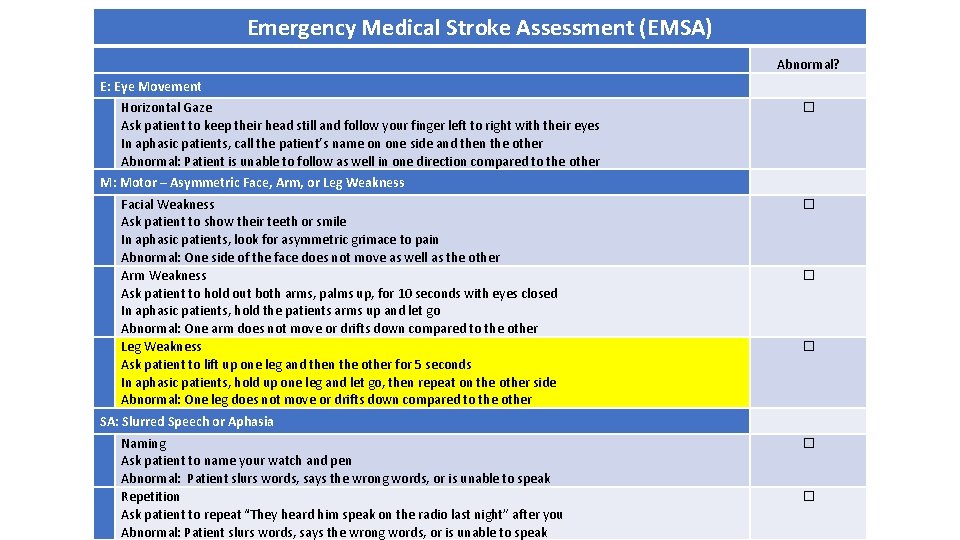
Emergency Medical Stroke Assessment (EMSA) Abnormal? E: Eye Movement Horizontal Gaze Ask patient to keep their head still and follow your finger left to right with their eyes In aphasic patients, call the patient’s name on one side and then the other Abnormal: Patient is unable to follow as well in one direction compared to the other ☐ M: Motor – Asymmetric Face, Arm, or Leg Weakness Facial Weakness Ask patient to show their teeth or smile In aphasic patients, look for asymmetric grimace to pain Abnormal: One side of the face does not move as well as the other Arm Weakness Ask patient to hold out both arms, palms up, for 10 seconds with eyes closed In aphasic patients, hold the patients arms up and let go Abnormal: One arm does not move or drifts down compared to the other Leg Weakness Ask patient to lift up one leg and then the other for 5 seconds In aphasic patients, hold up one leg and let go, then repeat on the other side Abnormal: One leg does not move or drifts down compared to the other ☐ ☐ ☐ SA: Slurred Speech or Aphasia Naming Ask patient to name your watch and pen Abnormal: Patient slurs words, says the wrong words, or is unable to speak Repetition Ask patient to repeat “They heard him speak on the radio last night” after you Abnormal: Patient slurs words, says the wrong words, or is unable to speak ☐ ☐
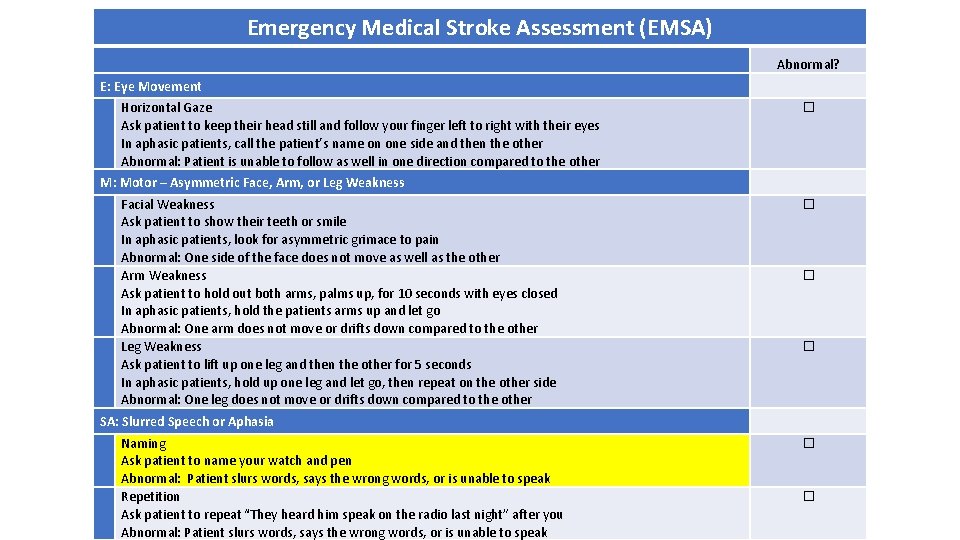
Emergency Medical Stroke Assessment (EMSA) Abnormal? E: Eye Movement Horizontal Gaze Ask patient to keep their head still and follow your finger left to right with their eyes In aphasic patients, call the patient’s name on one side and then the other Abnormal: Patient is unable to follow as well in one direction compared to the other ☐ M: Motor – Asymmetric Face, Arm, or Leg Weakness Facial Weakness Ask patient to show their teeth or smile In aphasic patients, look for asymmetric grimace to pain Abnormal: One side of the face does not move as well as the other Arm Weakness Ask patient to hold out both arms, palms up, for 10 seconds with eyes closed In aphasic patients, hold the patients arms up and let go Abnormal: One arm does not move or drifts down compared to the other Leg Weakness Ask patient to lift up one leg and then the other for 5 seconds In aphasic patients, hold up one leg and let go, then repeat on the other side Abnormal: One leg does not move or drifts down compared to the other ☐ ☐ ☐ SA: Slurred Speech or Aphasia Naming Ask patient to name your watch and pen Abnormal: Patient slurs words, says the wrong words, or is unable to speak Repetition Ask patient to repeat “They heard him speak on the radio last night” after you Abnormal: Patient slurs words, says the wrong words, or is unable to speak ☐ ☐
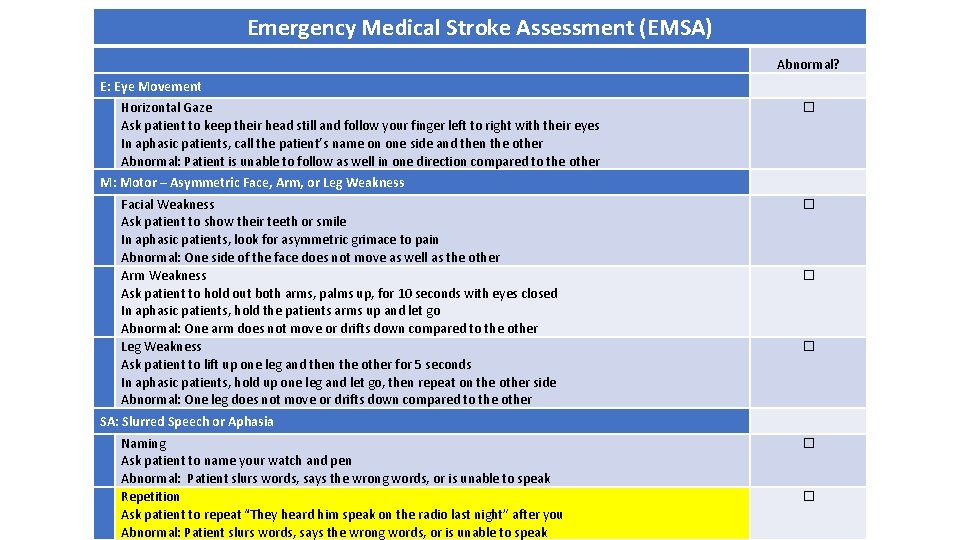
Emergency Medical Stroke Assessment (EMSA) Abnormal? E: Eye Movement Horizontal Gaze Ask patient to keep their head still and follow your finger left to right with their eyes In aphasic patients, call the patient’s name on one side and then the other Abnormal: Patient is unable to follow as well in one direction compared to the other ☐ M: Motor – Asymmetric Face, Arm, or Leg Weakness Facial Weakness Ask patient to show their teeth or smile In aphasic patients, look for asymmetric grimace to pain Abnormal: One side of the face does not move as well as the other Arm Weakness Ask patient to hold out both arms, palms up, for 10 seconds with eyes closed In aphasic patients, hold the patients arms up and let go Abnormal: One arm does not move or drifts down compared to the other Leg Weakness Ask patient to lift up one leg and then the other for 5 seconds In aphasic patients, hold up one leg and let go, then repeat on the other side Abnormal: One leg does not move or drifts down compared to the other ☐ ☐ ☐ SA: Slurred Speech or Aphasia Naming Ask patient to name your watch and pen Abnormal: Patient slurs words, says the wrong words, or is unable to speak Repetition Ask patient to repeat “They heard him speak on the radio last night” after you Abnormal: Patient slurs words, says the wrong words, or is unable to speak ☐ ☐
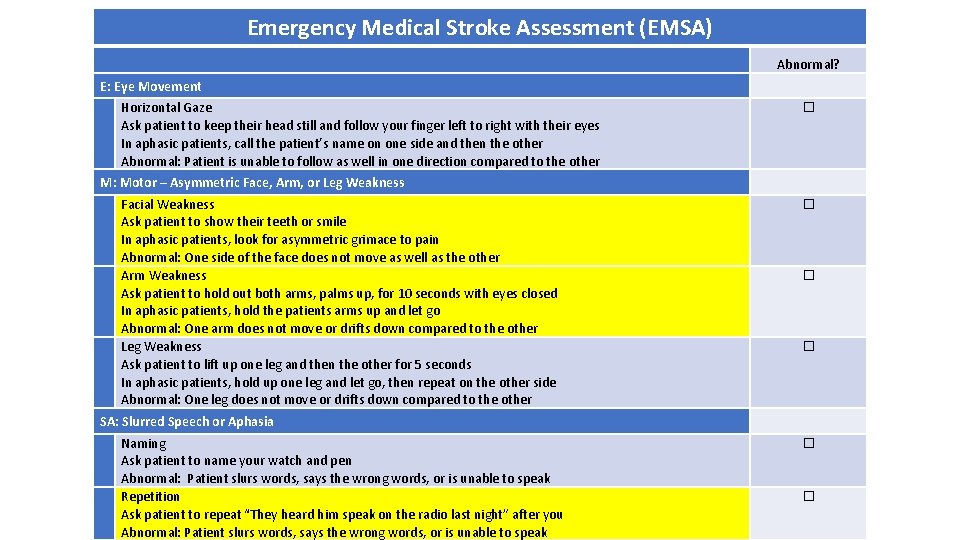
Emergency Medical Stroke Assessment (EMSA) Abnormal? E: Eye Movement Horizontal Gaze Ask patient to keep their head still and follow your finger left to right with their eyes In aphasic patients, call the patient’s name on one side and then the other Abnormal: Patient is unable to follow as well in one direction compared to the other ☐ M: Motor – Asymmetric Face, Arm, or Leg Weakness Facial Weakness Ask patient to show their teeth or smile In aphasic patients, look for asymmetric grimace to pain Abnormal: One side of the face does not move as well as the other Arm Weakness Ask patient to hold out both arms, palms up, for 10 seconds with eyes closed In aphasic patients, hold the patients arms up and let go Abnormal: One arm does not move or drifts down compared to the other Leg Weakness Ask patient to lift up one leg and then the other for 5 seconds In aphasic patients, hold up one leg and let go, then repeat on the other side Abnormal: One leg does not move or drifts down compared to the other ☐ ☐ ☐ SA: Slurred Speech or Aphasia Naming Ask patient to name your watch and pen Abnormal: Patient slurs words, says the wrong words, or is unable to speak Repetition Ask patient to repeat “They heard him speak on the radio last night” after you Abnormal: Patient slurs words, says the wrong words, or is unable to speak ☐ ☐
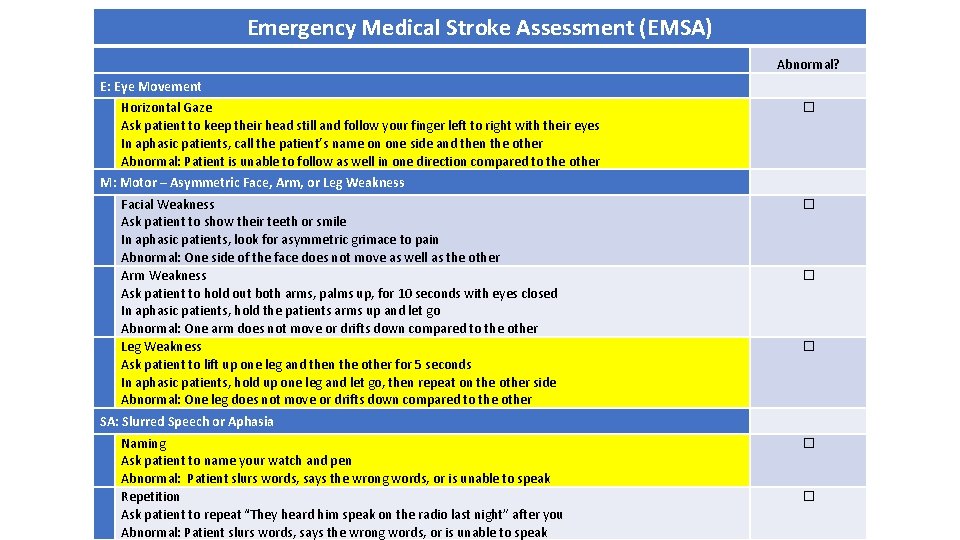
Emergency Medical Stroke Assessment (EMSA) Abnormal? E: Eye Movement Horizontal Gaze Ask patient to keep their head still and follow your finger left to right with their eyes In aphasic patients, call the patient’s name on one side and then the other Abnormal: Patient is unable to follow as well in one direction compared to the other ☐ M: Motor – Asymmetric Face, Arm, or Leg Weakness Facial Weakness Ask patient to show their teeth or smile In aphasic patients, look for asymmetric grimace to pain Abnormal: One side of the face does not move as well as the other Arm Weakness Ask patient to hold out both arms, palms up, for 10 seconds with eyes closed In aphasic patients, hold the patients arms up and let go Abnormal: One arm does not move or drifts down compared to the other Leg Weakness Ask patient to lift up one leg and then the other for 5 seconds In aphasic patients, hold up one leg and let go, then repeat on the other side Abnormal: One leg does not move or drifts down compared to the other ☐ ☐ ☐ SA: Slurred Speech or Aphasia Naming Ask patient to name your watch and pen Abnormal: Patient slurs words, says the wrong words, or is unable to speak Repetition Ask patient to repeat “They heard him speak on the radio last night” after you Abnormal: Patient slurs words, says the wrong words, or is unable to speak ☐ ☐
- Slides: 9