
Emergency Management Institute EMI Higher Education Program National
- Slides: 34
Emergency Management Institute (EMI) Higher Education Program & National Training Liaison Presents Webinar “Academic Perspective On Increasing Engagement With Faith-based Organizations in Disaster Preparedness” April 12, 2017 2: 00 - 3: 30 EDT 1 -800 -320 -4330 PIN 376368 1
Administrative § § § Submitting questions File/Resource Sharing The session will be recorded and captioned Access to Adobe site post webinar How to follow up with presenters How to get more information about the Higher Education Program 2
Academic Perspective On Increasing Engagement With Faith-based Organizations in Disaster Preparedness April 12, 2017 Federal Emergency Management Agency (FEMA)
Agenda § Welcoming Remarks § Overview of Today’s Webinar § Presentations: Wendy Walsh, FEMA Higher Education Program Manager, Moderator – Brie Loskota, Executive Director of the Center for Religious and Civic Culture at the University of Southern California, Los Angeles – Jamie Aten, Ph. D. , Founder & Co-Director, Wheaton College Humanitarian Disaster Institute – Marcus Coleman, Special Assistant, DHS Center for Faith-based & Neighborhood Partnerships § Questions § Adjourn 4
Objectives To describe FEMA’s collaborative, whole community approach to emergency management, highlighting FEMA’s commitment to encouraging collaborations with institutions of higher education and sharing some of FEMA’s ongoing work and resources developed by academic institutions to increase engagement of faith-based organizations in disaster preparedness. To highlight specific partnerships models and resources that may support our partners at every level and from across the nation to take deliberate actions before, during, and after disasters to engage faithbased and community organizations in order to create more equitable post-disaster outcomes. 5
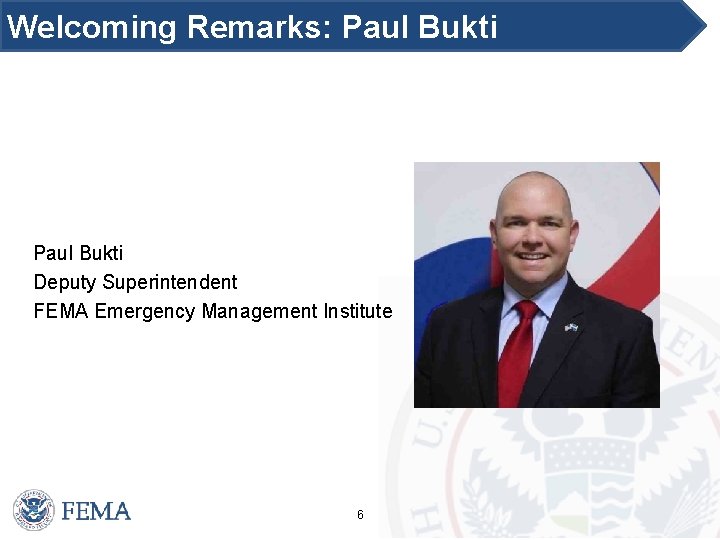
Welcoming Remarks: Paul Bukti Deputy Superintendent FEMA Emergency Management Institute 6
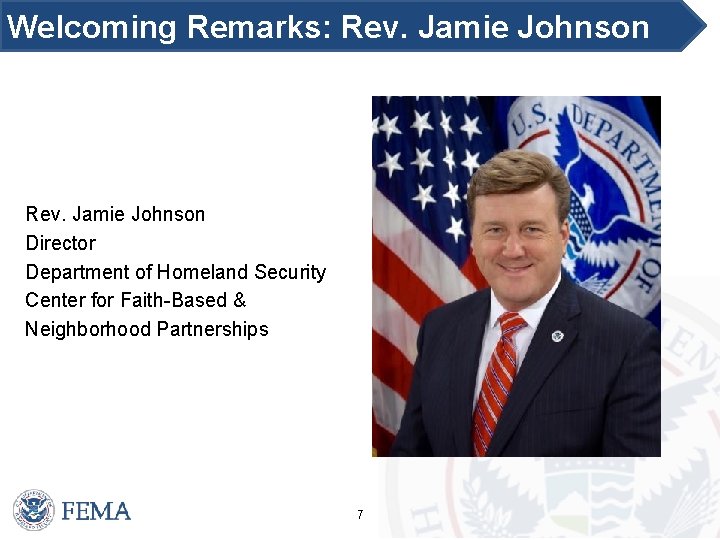
Welcoming Remarks: Rev. Jamie Johnson Director Department of Homeland Security Center for Faith-Based & Neighborhood Partnerships 7
Center for Religion and Civic Culture University of Southern California Brie Loskota Executive Director
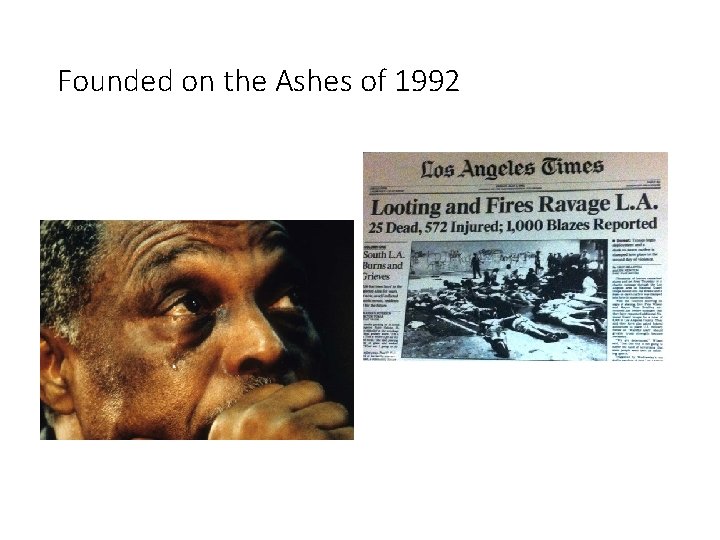
Founded on the Ashes of 1992
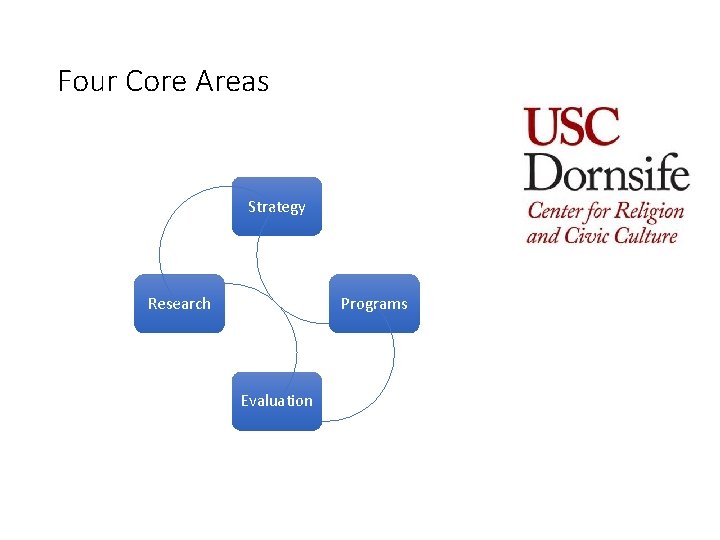
Four Core Areas Strategy Research Programs Evaluation
LA Emergency Roundtable: A Case-Study in Government-University-Community Cooperation
Partnerships with Non-Profits/Faith Communities
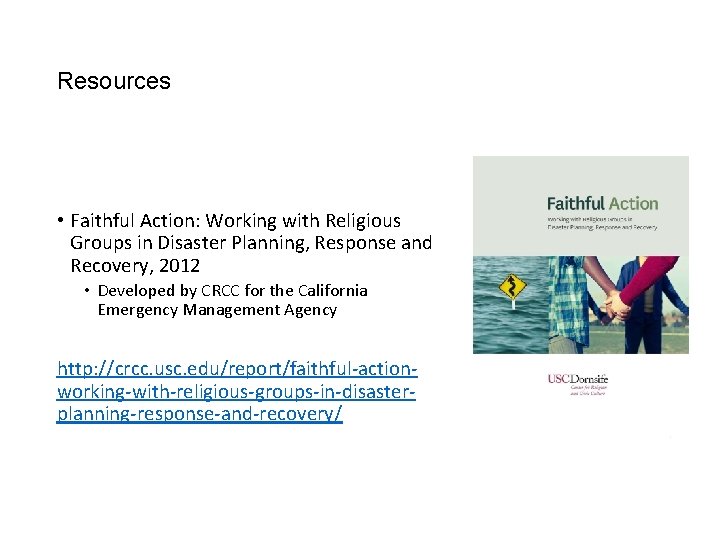
Resources • Faithful Action: Working with Religious Groups in Disaster Planning, Response and Recovery, 2012 • Developed by CRCC for the California Emergency Management Agency http: //crcc. usc. edu/report/faithful-actionworking-with-religious-groups-in-disasterplanning-response-and-recovery/
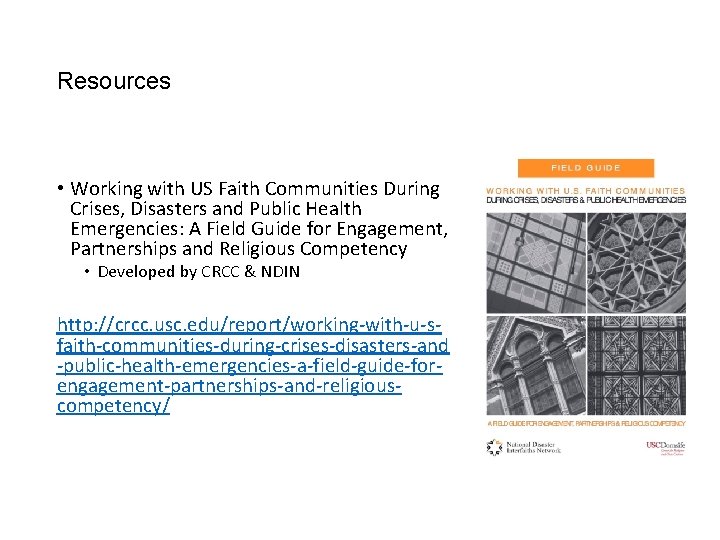
Resources • Working with US Faith Communities During Crises, Disasters and Public Health Emergencies: A Field Guide for Engagement, Partnerships and Religious Competency • Developed by CRCC & NDIN http: //crcc. usc. edu/report/working-with-u-sfaith-communities-during-crises-disasters-and -public-health-emergencies-a-field-guide-forengagement-partnerships-and-religiouscompetency/
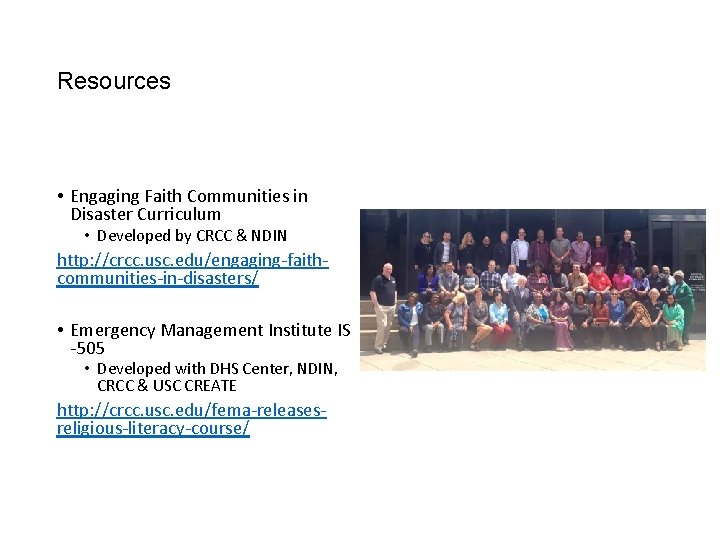
Resources • Engaging Faith Communities in Disaster Curriculum • Developed by CRCC & NDIN http: //crcc. usc. edu/engaging-faithcommunities-in-disasters/ • Emergency Management Institute IS -505 • Developed with DHS Center, NDIN, CRCC & USC CREATE http: //crcc. usc. edu/fema-releasesreligious-literacy-course/
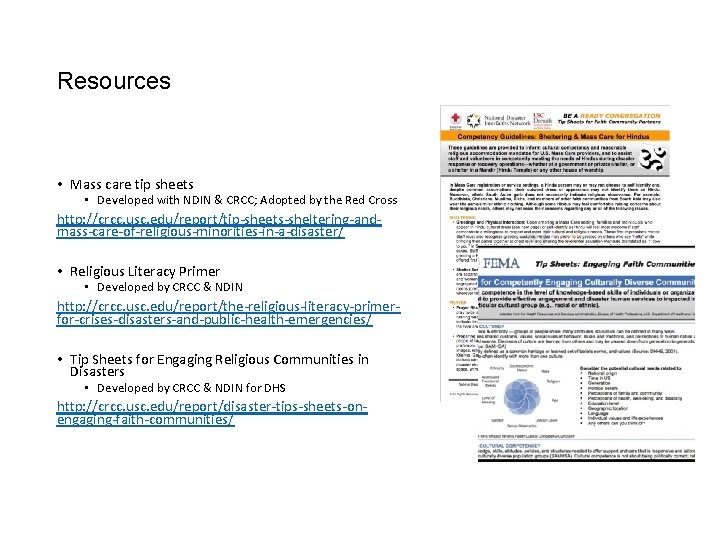
Resources • Mass care tip sheets • Developed with NDIN & CRCC; Adopted by the Red Cross http: //crcc. usc. edu/report/tip-sheets-sheltering-andmass-care-of-religious-minorities-in-a-disaster/ • Religious Literacy Primer • Developed by CRCC & NDIN http: //crcc. usc. edu/report/the-religious-literacy-primerfor-crises-disasters-and-public-health-emergencies/ • Tip Sheets for Engaging Religious Communities in Disasters • Developed by CRCC & NDIN for DHS http: //crcc. usc. edu/report/disaster-tips-sheets-onengaging-faith-communities/
Resources All of these materials, resources and other articles can be found at: http: //crcc. usc. edu/topic/disaster-response/
Jamie D. Aten, Ph. D.
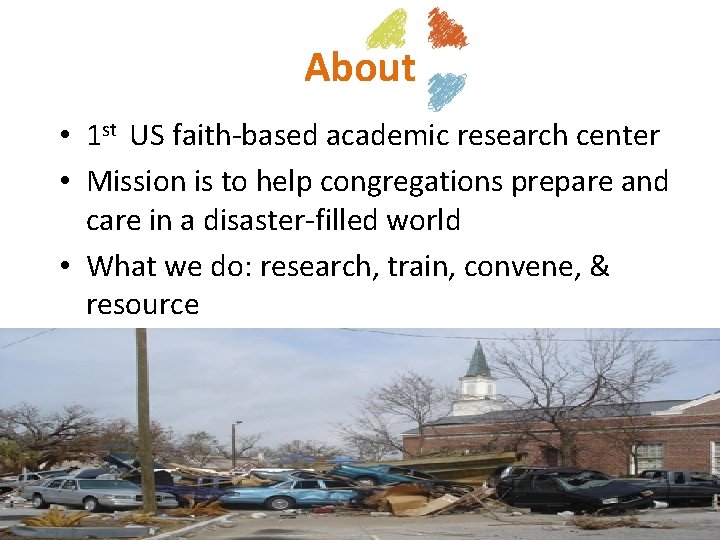
About • 1 st US faith-based academic research center • Mission is to help congregations prepare and care in a disaster-filled world • What we do: research, train, convene, & resource
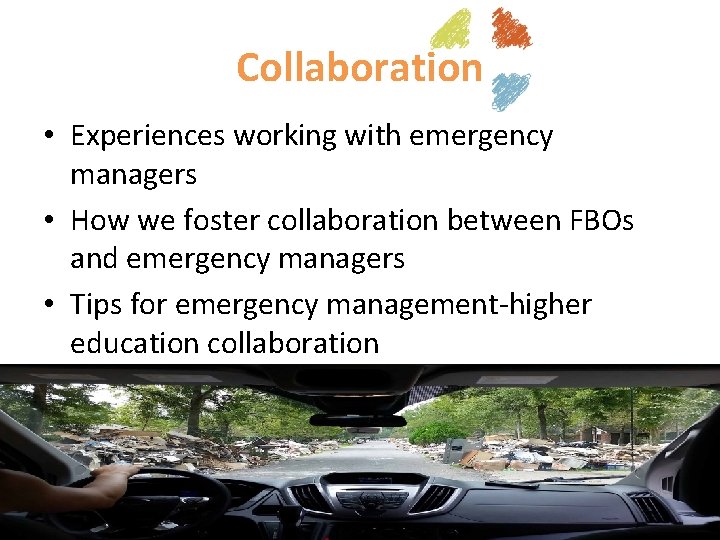
Collaboration • Experiences working with emergency managers • How we foster collaboration between FBOs and emergency managers • Tips for emergency management-higher education collaboration
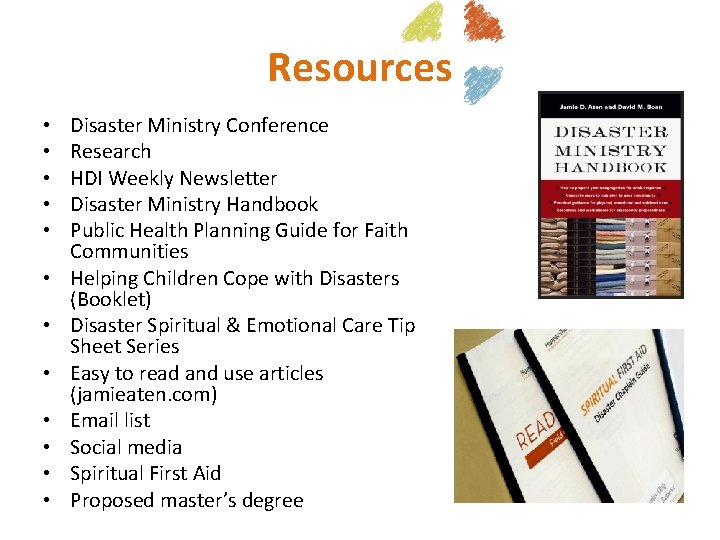
Resources • • • Disaster Ministry Conference Research HDI Weekly Newsletter Disaster Ministry Handbook Public Health Planning Guide for Faith Communities Helping Children Cope with Disasters (Booklet) Disaster Spiritual & Emotional Care Tip Sheet Series Easy to read and use articles (jamieaten. com) Email list Social media Spiritual First Aid Proposed master’s degree
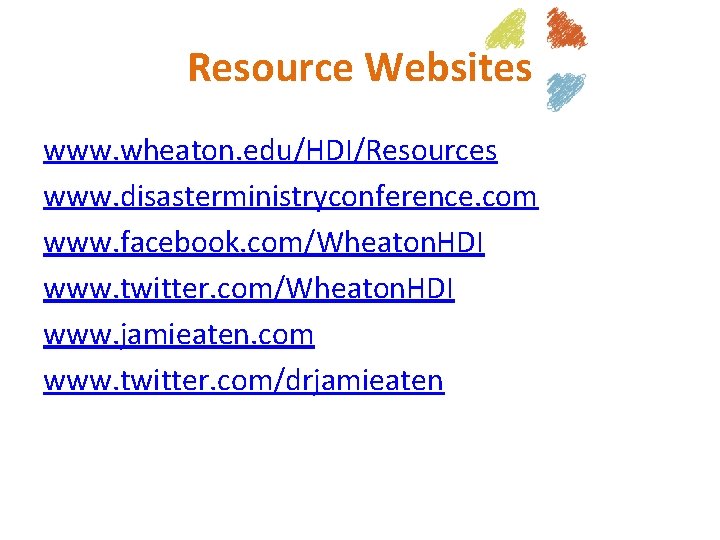
Resource Websites www. wheaton. edu/HDI/Resources www. disasterministryconference. com www. facebook. com/Wheaton. HDI www. twitter. com/Wheaton. HDI www. jamieaten. com www. twitter. com/drjamieaten
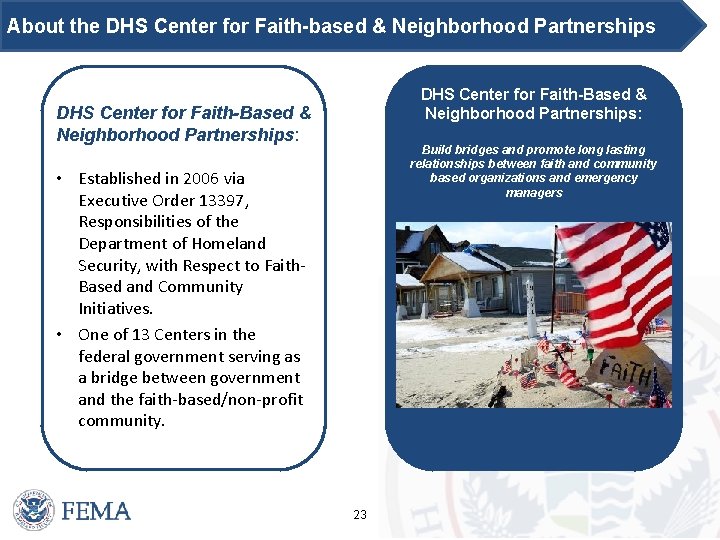
About the DHS Center for Faith-based & Neighborhood Partnerships DHS Center for Faith-Based & Neighborhood Partnerships: Build bridges and promote long lasting relationships between faith and community based organizations and emergency managers • Established in 2006 via Executive Order 13397, Responsibilities of the Department of Homeland Security, with Respect to Faith. Based and Community Initiatives. • One of 13 Centers in the federal government serving as a bridge between government and the faith-based/non-profit community. 23
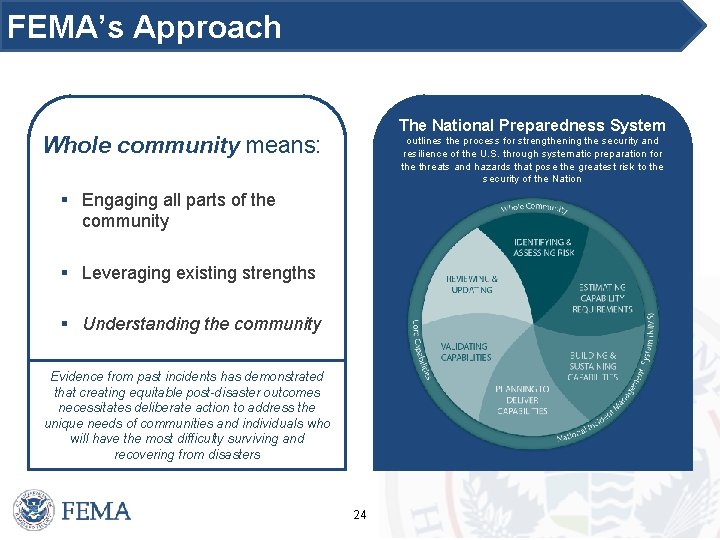
FEMA’s Approach The National Preparedness System Whole community means: outlines the process for strengthening the security and resilience of the U. S. through systematic preparation for the threats and hazards that pose the greatest risk to the security of the Nation § Engaging all parts of the community § Leveraging existing strengths § Understanding the community Evidence from past incidents has demonstrated that creating equitable post-disaster outcomes necessitates deliberate action to address the unique needs of communities and individuals who will have the most difficulty surviving and recovering from disasters 24
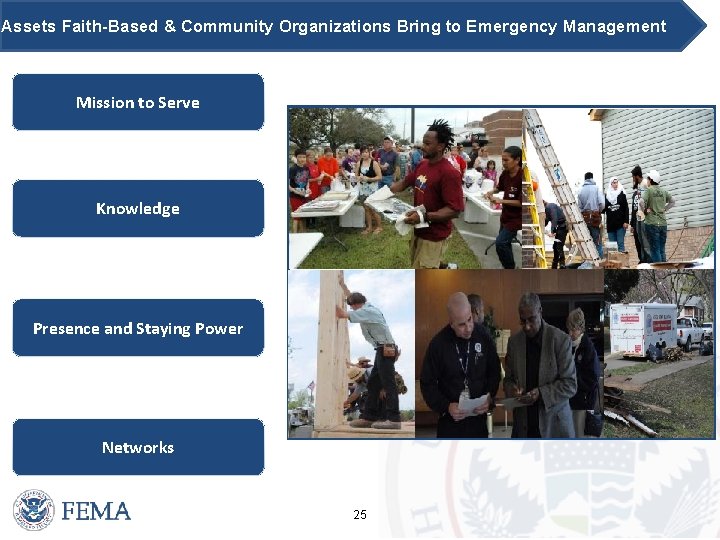
Assets Faith-Based & Community Organizations Bring to Emergency Management Mission to Serve Knowledge Presence and Staying Power Networks 25
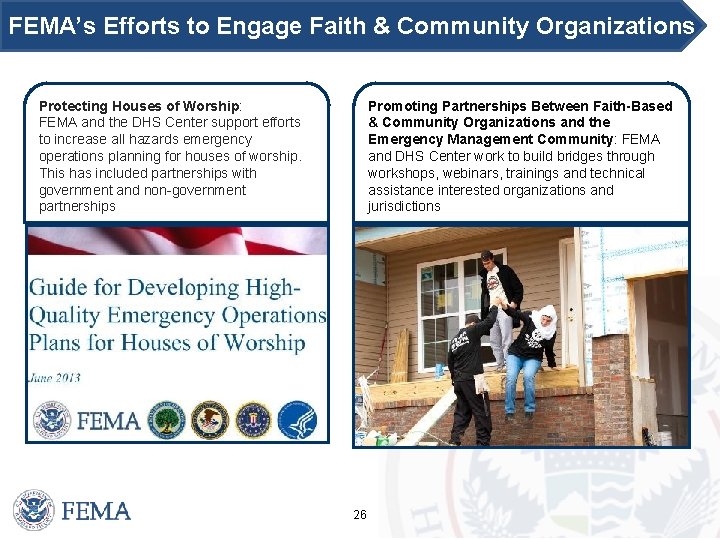
FEMA’s Efforts to Engage Faith & Community Organizations Protecting Houses of Worship: FEMA and the DHS Center support efforts to increase all hazards emergency operations planning for houses of worship. This has included partnerships with government and non-government partnerships Promoting Partnerships Between Faith-Based & Community Organizations and the Emergency Management Community: FEMA and DHS Center work to build bridges through workshops, webinars, trainings and technical assistance interested organizations and jurisdictions 26
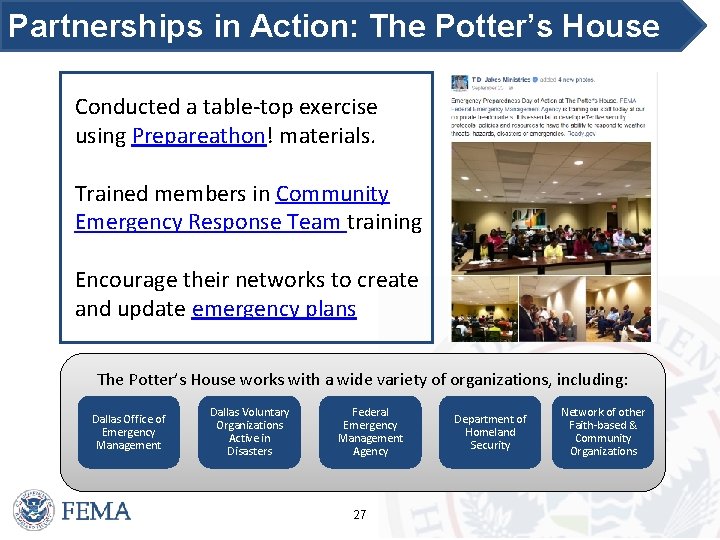
Partnerships in Action: The Potter’s House Conducted a table-top exercise using Prepareathon! materials. Trained members in Community Emergency Response Team training Encourage their networks to create and update emergency plans The Potter’s House works with a wide variety of organizations, including: Dallas Office of Emergency Management Dallas Voluntary Organizations Active in Disasters Federal Emergency Management Agency 27 Department of Homeland Security Network of other Faith-based & Community Organizations
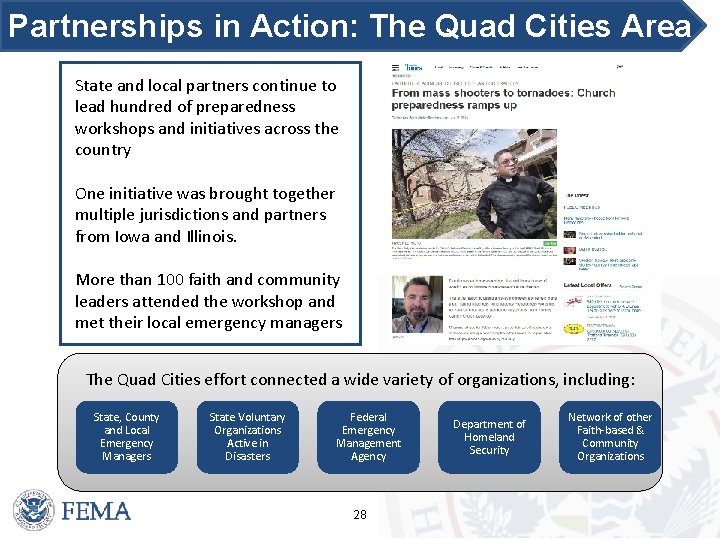
Partnerships in Action: The Quad Cities Area State and local partners continue to lead hundred of preparedness workshops and initiatives across the country One initiative was brought together multiple jurisdictions and partners from Iowa and Illinois. More than 100 faith and community leaders attended the workshop and met their local emergency managers The Quad Cities effort connected a wide variety of organizations, including: State, County and Local Emergency Managers State Voluntary Organizations Active in Disasters Federal Emergency Management Agency 28 Department of Homeland Security Network of other Faith-based & Community Organizations
Partnerships in Action: MGT 405 - Mobilizing Faith-Based Community Organizations in Preparing for Disaster MGT-405: Mobilizing Faith-Based Community Organizations in Preparing for Disaster is a course developed through a cooperative agreement with DHS/FEMA This 8 Hour Course was co-created with whole community partners including North Carolina Central University This course has been delivered in rural and suburban communities since 2012 The content of this course was developed with input from: Faith-based & Community Organizations State, County and Local Emergency Managers State Voluntary Organizations Active in Disasters 29 Federal Emergency Management Agency Department of Homeland Security
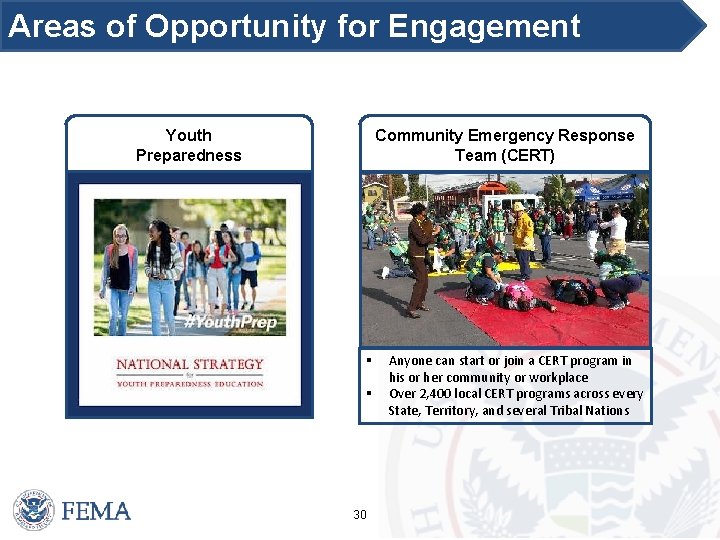
Areas of Opportunity for Engagement Community Emergency Response Team (CERT) Youth Preparedness § § 30 Anyone can start or join a CERT program in his or her community or workplace Over 2, 400 local CERT programs across every State, Territory, and several Tribal Nations
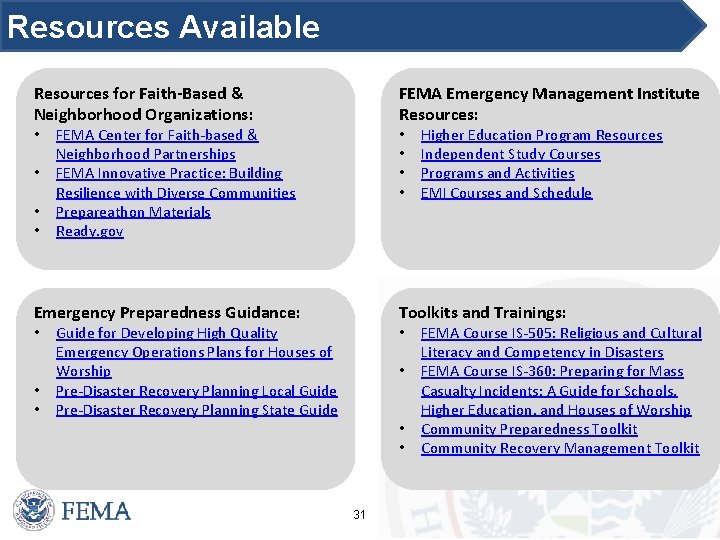
Resources Available Resources for Faith-Based & Neighborhood Organizations: • • FEMA Emergency Management Institute Resources: FEMA Center for Faith-based & Neighborhood Partnerships FEMA Innovative Practice: Building Resilience with Diverse Communities Prepareathon Materials Ready. gov • • Emergency Preparedness Guidance: • • • Higher Education Program Resources Independent Study Courses Programs and Activities EMI Courses and Schedule Toolkits and Trainings: Guide for Developing High Quality Emergency Operations Plans for Houses of Worship Pre-Disaster Recovery Planning Local Guide Pre-Disaster Recovery Planning State Guide • • 31 FEMA Course IS-505: Religious and Cultural Literacy and Competency in Disasters FEMA Course IS-360: Preparing for Mass Casualty Incidents: A Guide for Schools, Higher Education, and Houses of Worship Community Preparedness Toolkit Community Recovery Management Toolkit
Contact Information DHS Center for Faith-Based & Neighborhood Partnerships@fema. dhs. gov FEMA Higher Education Program Barbara. Johnson 3@fema. dhs. gov 32
Contact Information Presenter contact information: DHS Center for Faith-Based & Neighborhood Partnerships@fema. dhs. gov Brie Loskota bloskota@dornsife. usc. edu Jamie Aten Jamie. aten@wheaton. edu Marcus Coleman Marcus. Coleman@fema. dhs. gov EMI Higher Education Program Information: Wendy Walsh wendy. walsh@fema. dhs. gov 301 -447 -1262 Barbara Johnson Barbara. Johnson 3@fema. dhs. gov 301 -447 -1452 Danielle Green Danielle. green@associates. fema. dhs. gov 301. 447 -7251 http: //training. fema. gov/hiedu/ 19 th Annual Emergency Management Higher Education Symposium IS 505 https: //training. fema. gov/is/crslist. aspx 33