
Emergency Evaluation and Treatment of Burns Sarah Seiler

Emergency Evaluation and Treatment of Burns Sarah Seiler, RN, BSN, NREMT-P CCRN, CEN Emergency Medicine Outreach Coordinator
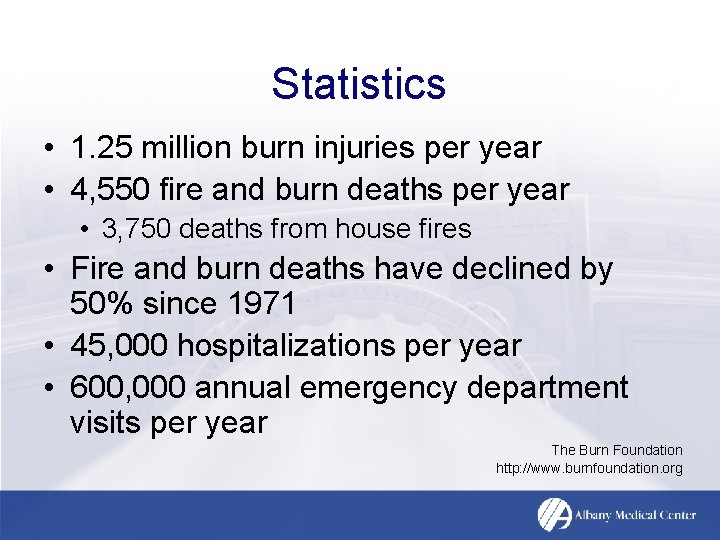
Statistics • 1. 25 million burn injuries per year • 4, 550 fire and burn deaths per year • 3, 750 deaths from house fires • Fire and burn deaths have declined by 50% since 1971 • 45, 000 hospitalizations per year • 600, 000 annual emergency department visits per year The Burn Foundation http: //www. burnfoundation. org
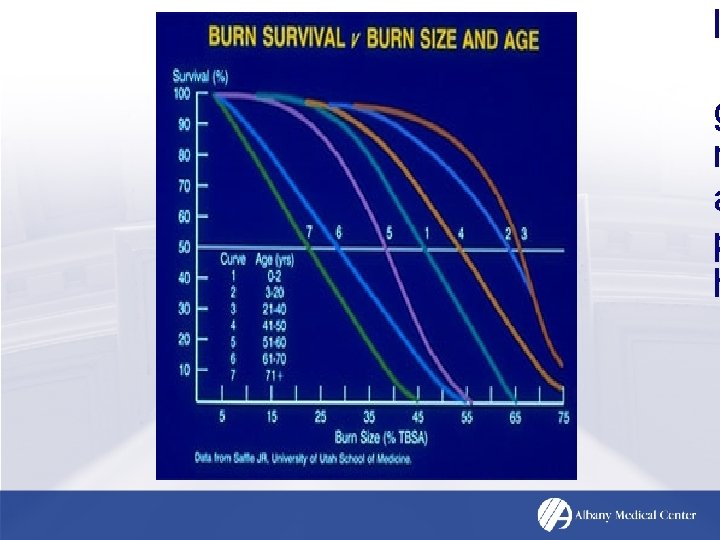
l g r a p h
Functions of the Skin • Protection – • Prevents invasion of environmental toxins and microorganisms Immunologic – • Sebum has antibacterial properties which helps shed topical bacteria Thermoregulation – Insulates from heat loss and controls loss of heat through evaporation
Functions of the Skin cont’d • Fluid and Electrolyte Balance – Controls sodium excretion – Sebum retards fluid loss from skin • Metabolism – Produces Vitamin D – Prevents excessive fluid loss • Neurosensory – Nerve endings and receptors process environmental stimuli for pain, touch, heat and cold • Social and Interactive – Provides body image and personal identity Carrougher Burn Care and Therapy
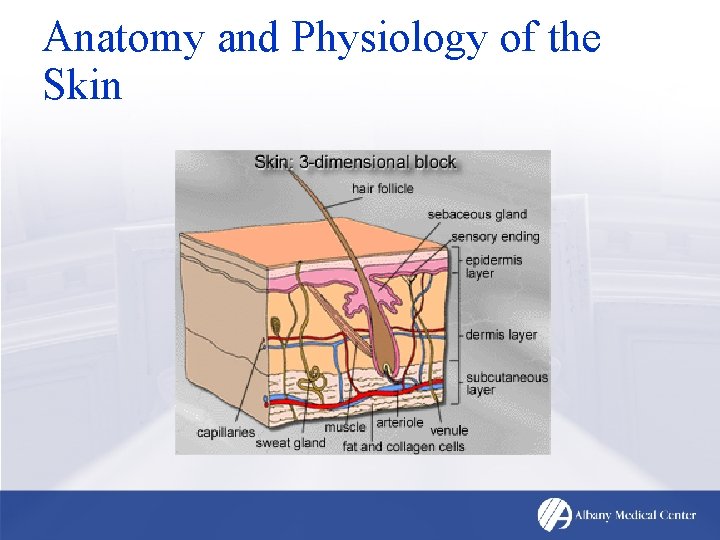
Anatomy and Physiology of the Skin
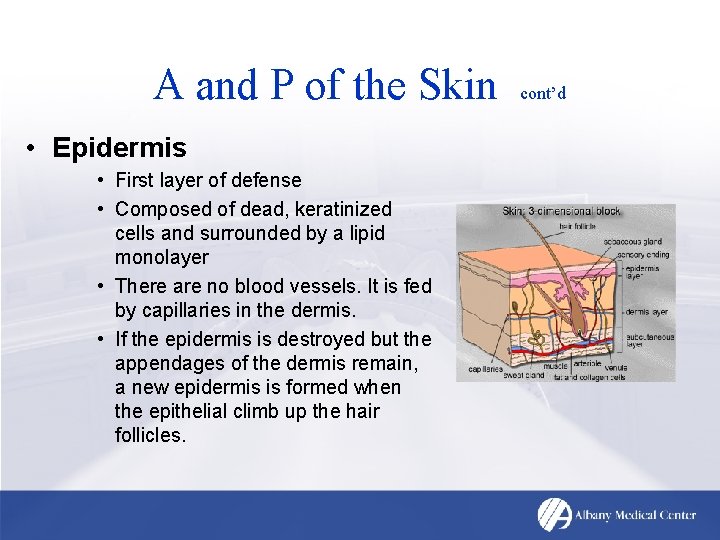
A and P of the Skin • Epidermis • First layer of defense • Composed of dead, keratinized cells and surrounded by a lipid monolayer • There are no blood vessels. It is fed by capillaries in the dermis. • If the epidermis is destroyed but the appendages of the dermis remain, a new epidermis is formed when the epithelial climb up the hair follicles. cont’d
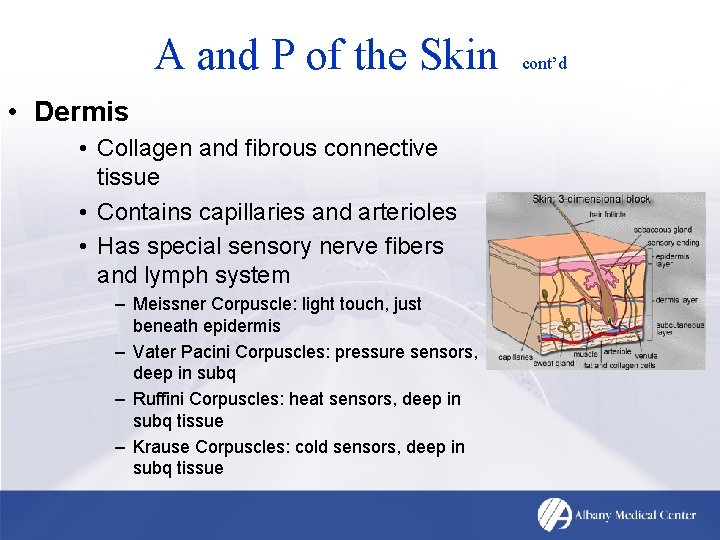
A and P of the Skin • Dermis • Collagen and fibrous connective tissue • Contains capillaries and arterioles • Has special sensory nerve fibers and lymph system – Meissner Corpuscle: light touch, just beneath epidermis – Vater Pacini Corpuscles: pressure sensors, deep in subq – Ruffini Corpuscles: heat sensors, deep in subq tissue – Krause Corpuscles: cold sensors, deep in subq tissue cont’d
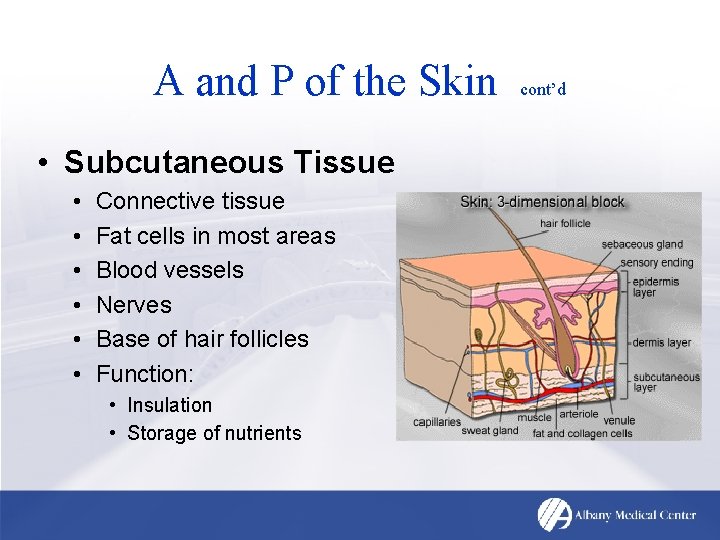
A and P of the Skin • Subcutaneous Tissue • • • Connective tissue Fat cells in most areas Blood vessels Nerves Base of hair follicles Function: • Insulation • Storage of nutrients cont’d
Types of Burns • • Superficial partial thickness Deep partial thickness Full thickness
Superficial Burn • • • Sunburn Involves only the epidermis Local pain and erythema No blister formation Heals spontaneously without scarring Systemic response is minimal
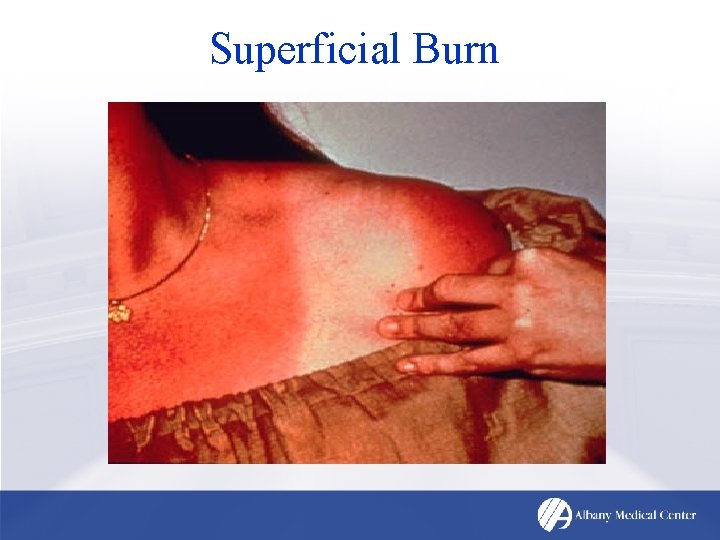
Superficial Burn
Partial Thickness Burn • • • Can be superficial or deep Involves epidermis and dermis Has blister formation Moist appearance Tactile and pain sensors intact Will usually heal on own but will scar
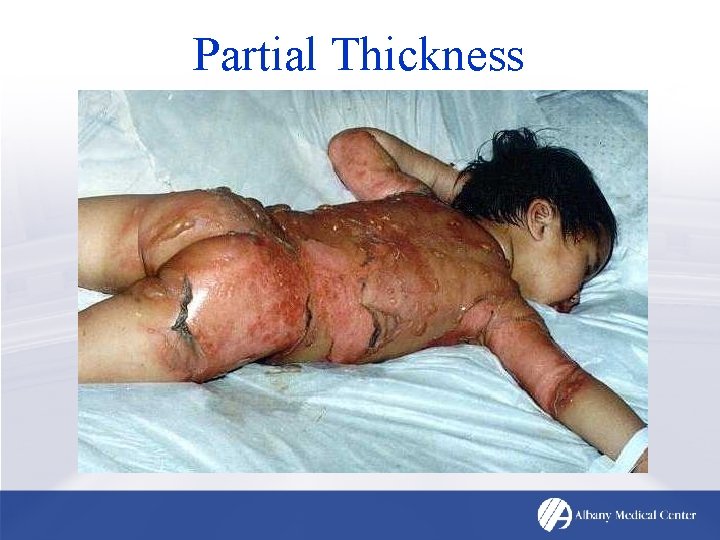
Partial Thickness
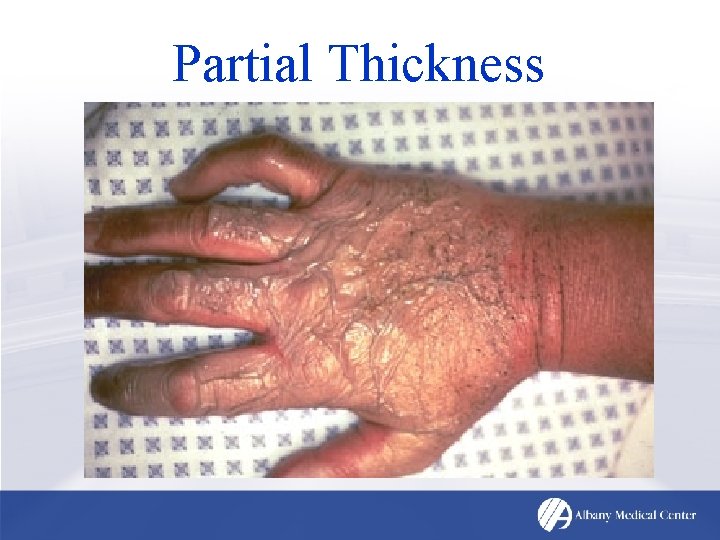
Partial Thickness
Full Thickness Burn • • • Involves all layer of skin Has waxy and dry appearance Elasticity destroyed Painless Does not heal without intervention
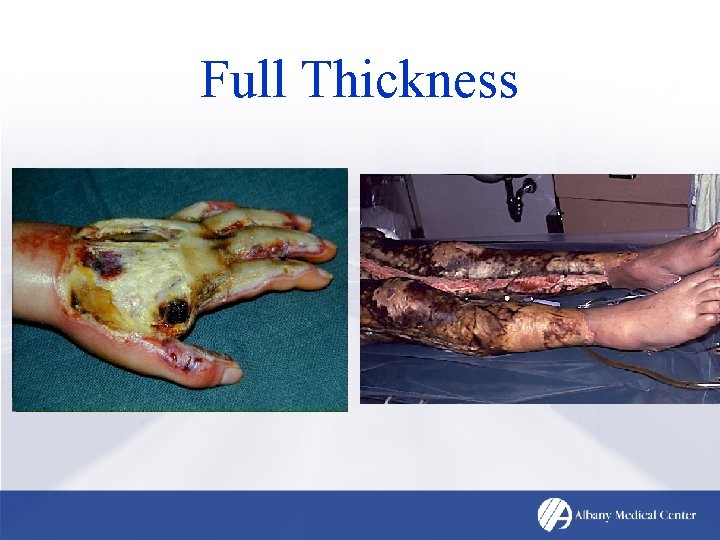
Full Thickness
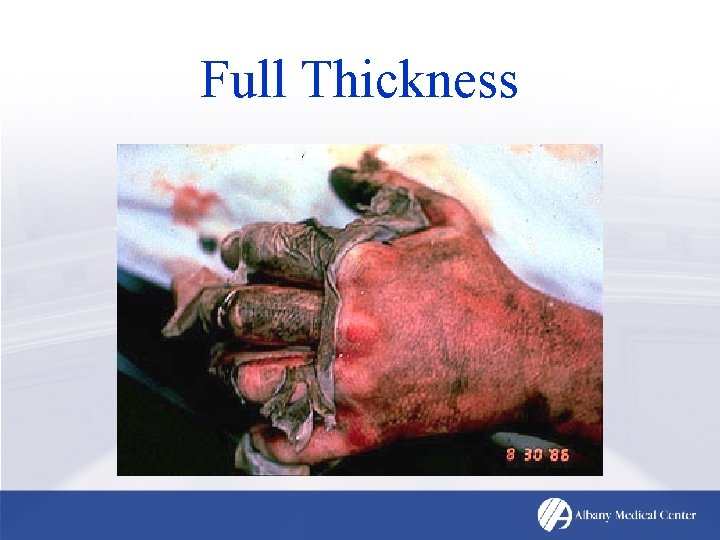
Full Thickness
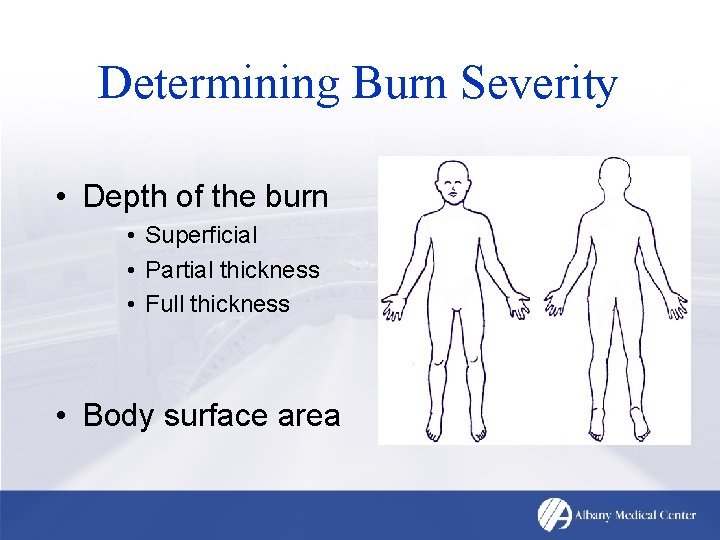
Determining Burn Severity • Depth of the burn • Superficial • Partial thickness • Full thickness • Body surface area
Estimating BSA • Rule of Nines • Easiest to use, best for field use • Lund Brower • More accurate, used in hospital • Palmar • Estimates scattered burns • Patient’s palm is 1% of his/her BSA
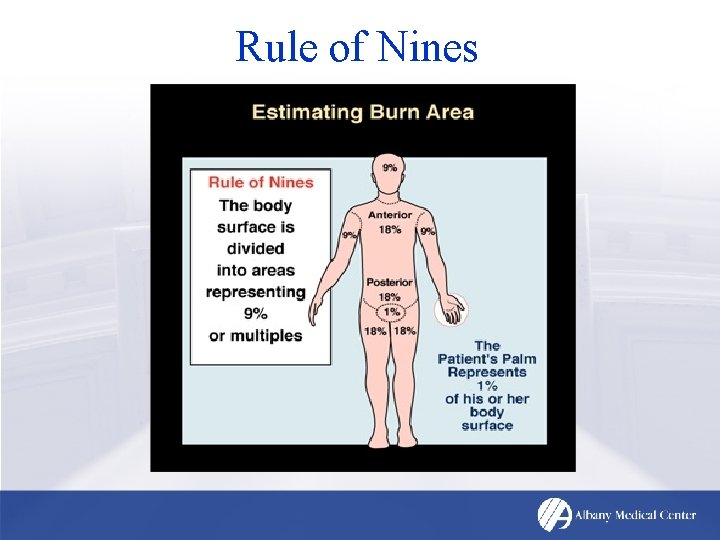
Rule of Nines
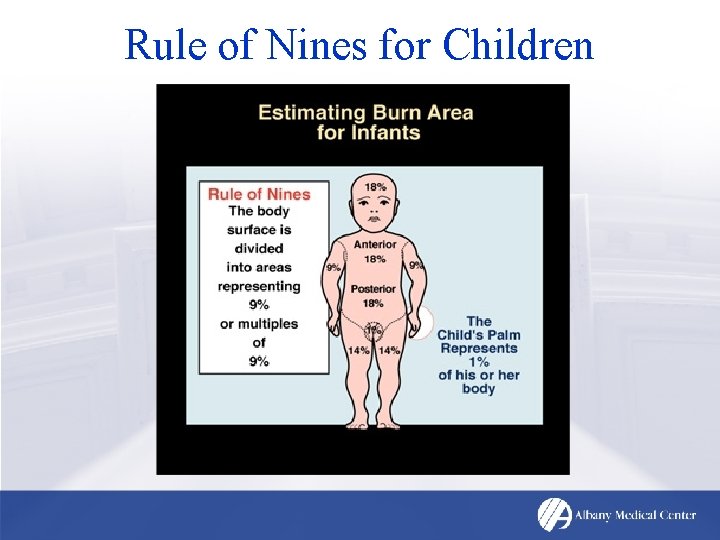
Rule of Nines for Children
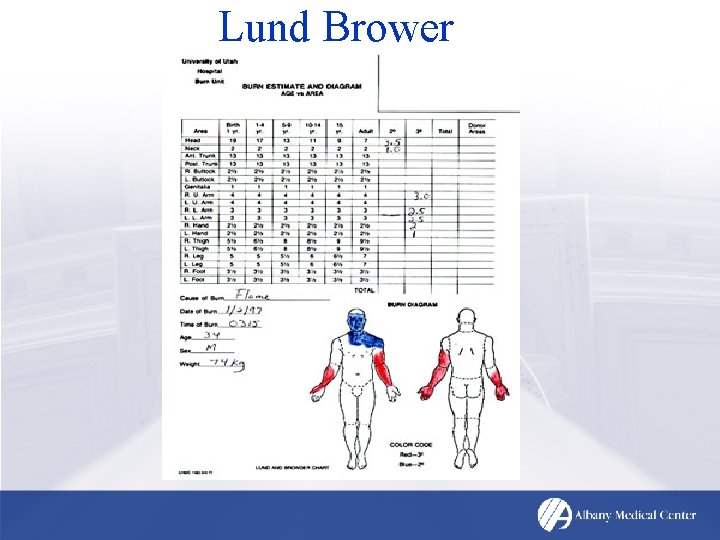
Lund Brower
Initial Treatment • STOP the burning process • • • AIRWAY, AIRWAY High flow humidified O 2 Remove all clothing – keep warm Decontaminate chemical burns Pain control – Do not give SQ or IM
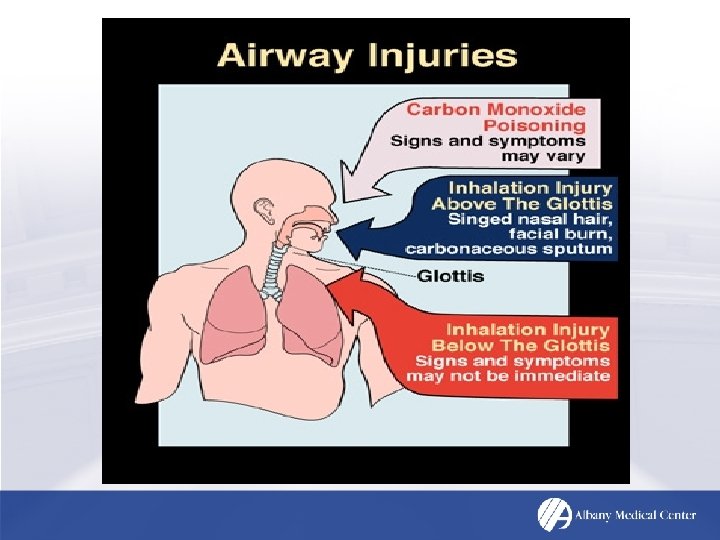
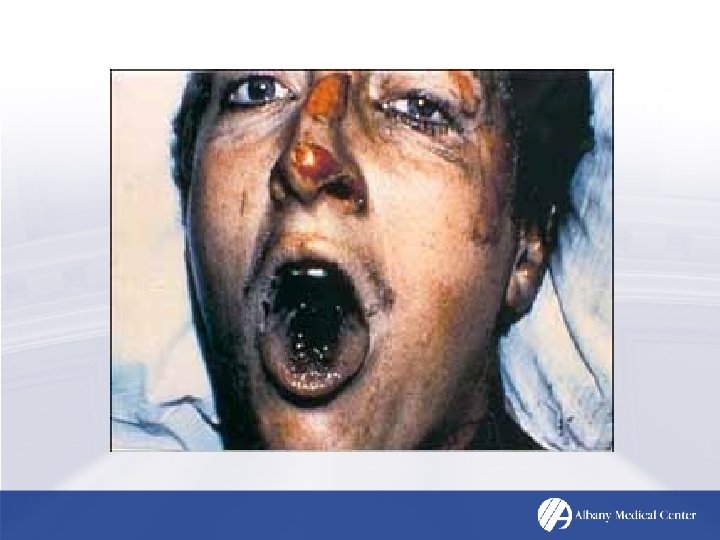
Signs and Symptoms of Airway Injury • Soot around the nose and mouth • Singed nasal hairs • Complains of shortness of breath • Wheezing or rales on auscultation
Signs and Symptoms of Airway Injury cont’d • Agitation, tachypnea, anxiety, stupor, cyanosis • Disorientation, obtundation, coma • Hoarse voice, brassy cough
Signs and Symptoms of Airway Injury cont’d • Rapid respiratory rate, flaring nostrils, intercostal retractions • Stridor • Sooty sputum • History of the event
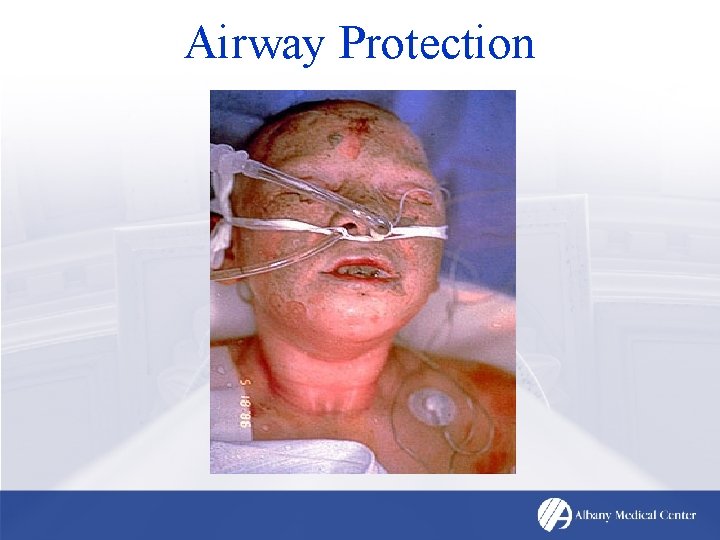
Airway Protection
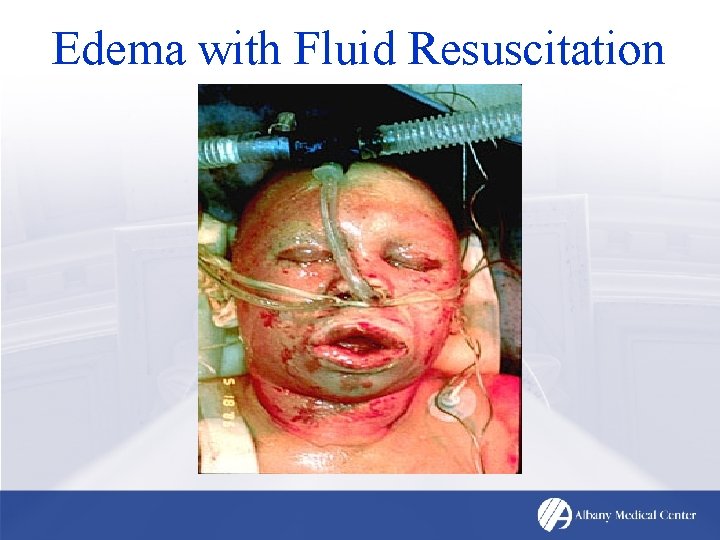
Edema with Fluid Resuscitation
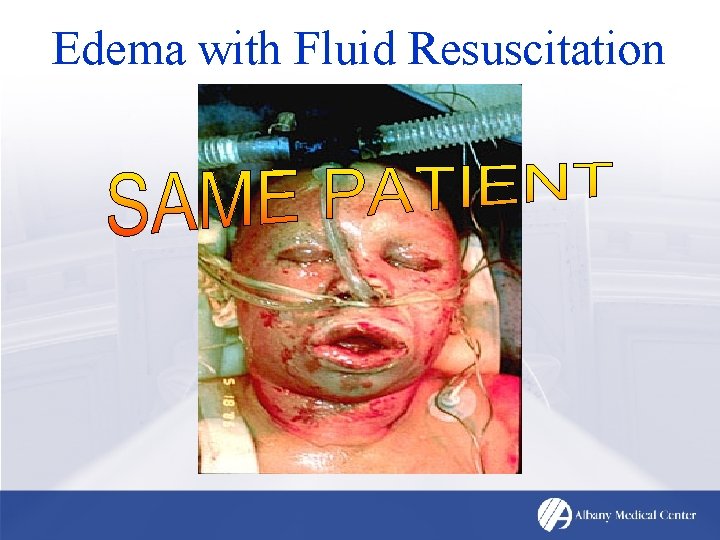
Edema with Fluid Resuscitation
Inhalation Injury Prognosis • • risk of nosocomial infection length of stay cost of hospital care mortality by up to 20%
Carbon Monoxide Poisoning • Hemoglobin has 200 -250 times greater affinity for CO than oxygen • Most on-scene fatalities are caused by asphyxiation and/or carbon monoxide poisoning. • Normally present with normal Pa. O 2 • Usually normal color and no respiratory distress • Suspect based on history • Until recently definitive diagnosis could only be made by measuring carboxyhemoglobin levels in blood
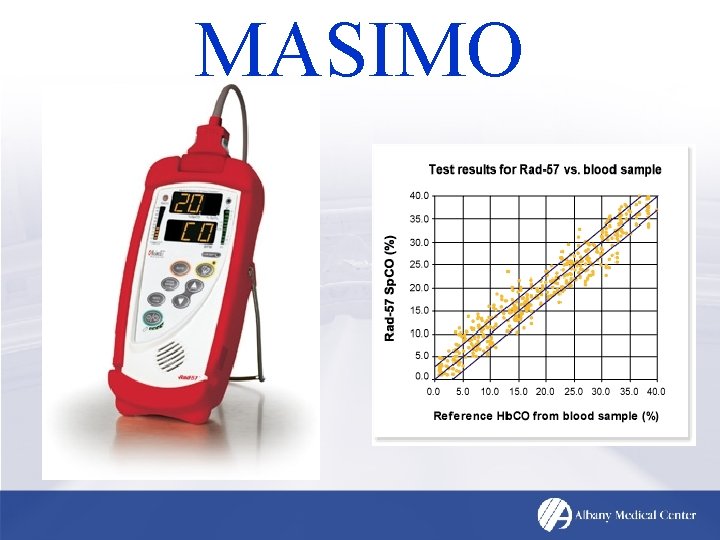
MASIMO
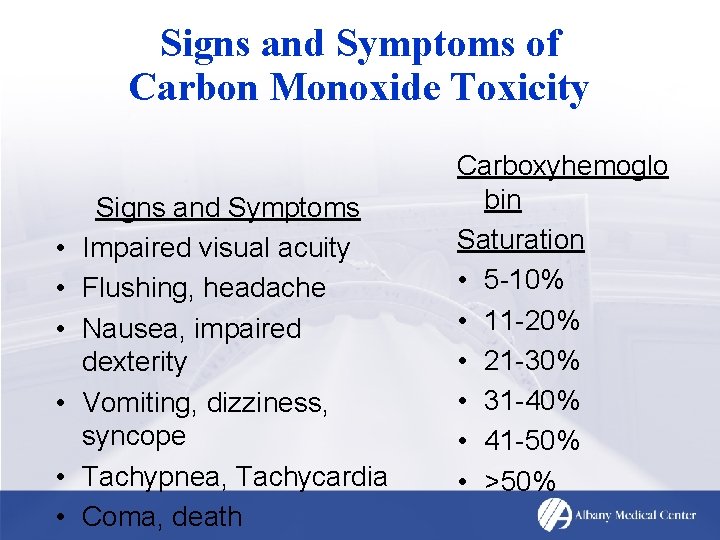
Signs and Symptoms of Carbon Monoxide Toxicity • • • Signs and Symptoms Impaired visual acuity Flushing, headache Nausea, impaired dexterity Vomiting, dizziness, syncope Tachypnea, Tachycardia Coma, death Carboxyhemoglo bin Saturation • 5 -10% • 11 -20% • 21 -30% • 31 -40% • 41 -50% • >50%
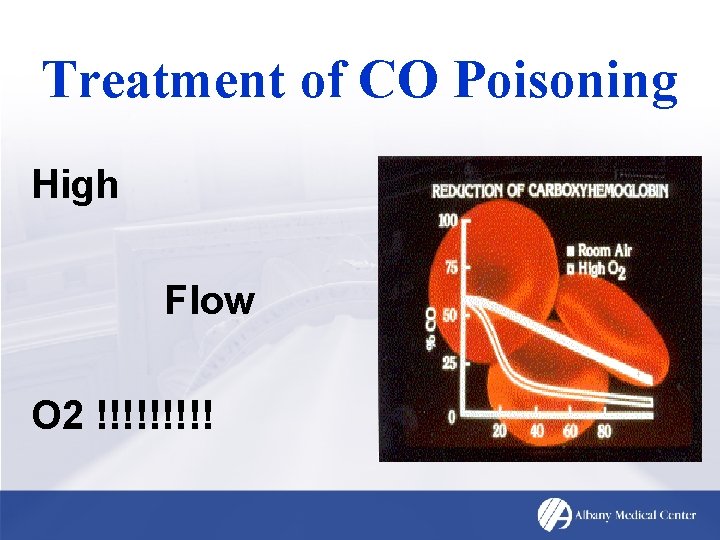
Treatment of CO Poisoning High Flow O 2 !!!!!
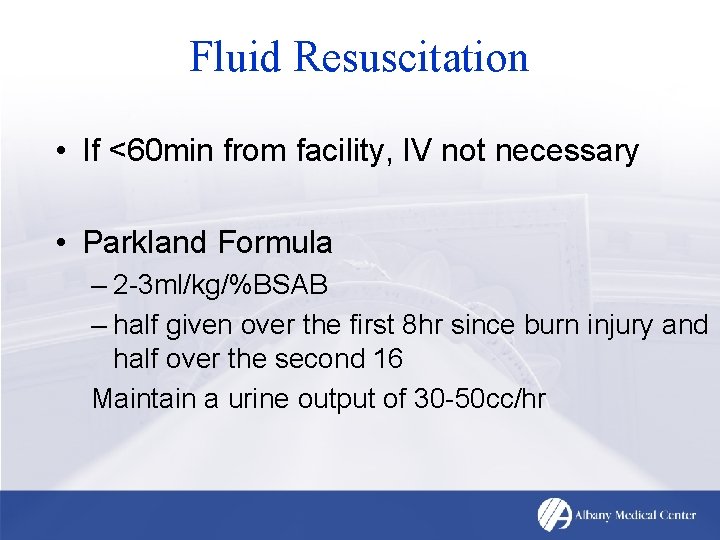
Fluid Resuscitation • If <60 min from facility, IV not necessary • Parkland Formula – 2 -3 ml/kg/%BSAB – half given over the first 8 hr since burn injury and half over the second 16 Maintain a urine output of 30 -50 cc/hr
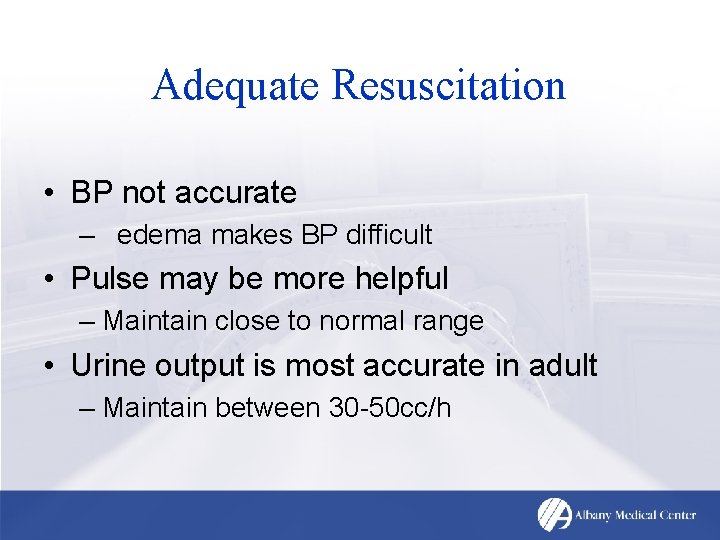
Adequate Resuscitation • BP not accurate – edema makes BP difficult • Pulse may be more helpful – Maintain close to normal range • Urine output is most accurate in adult – Maintain between 30 -50 cc/h
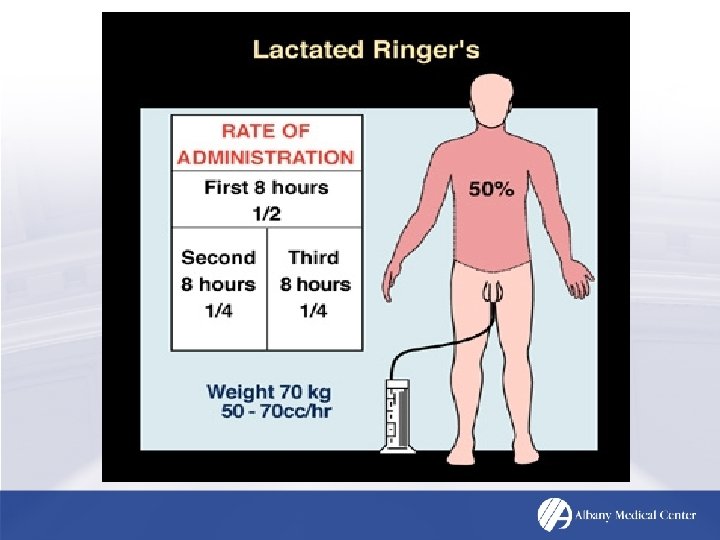
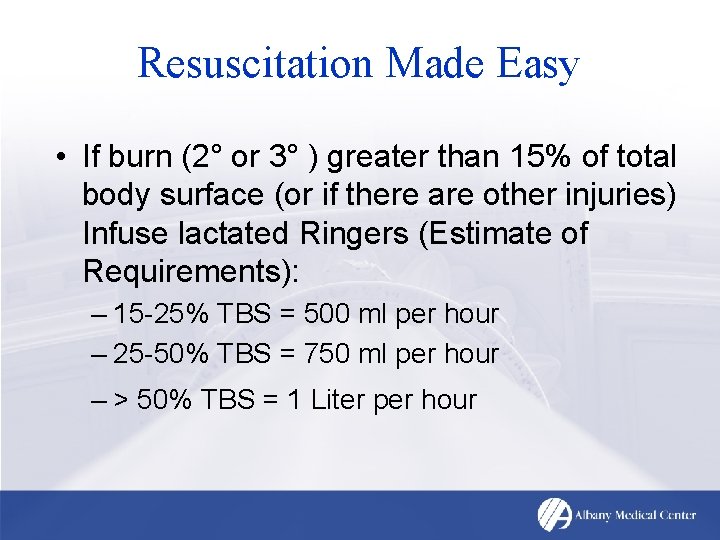
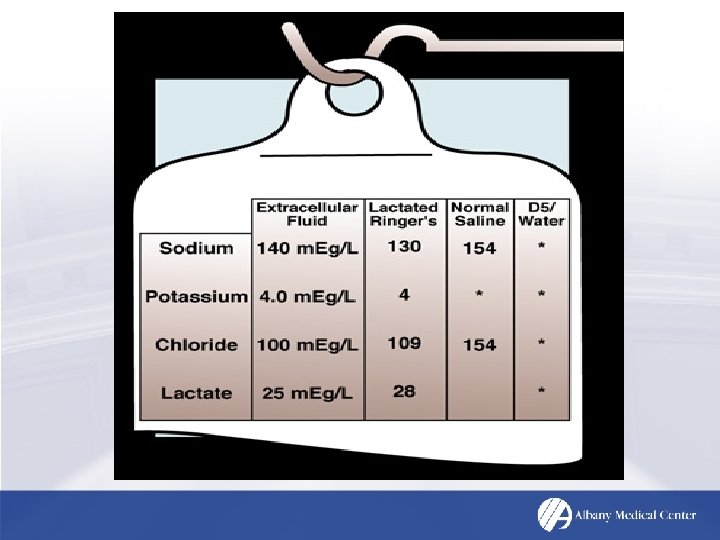
Resuscitation Made Easy • If burn (2° or 3° ) greater than 15% of total body surface (or if there are other injuries) Infuse lactated Ringers (Estimate of Requirements): – 15 -25% TBS = 500 ml per hour – 25 -50% TBS = 750 ml per hour – > 50% TBS = 1 Liter per hour
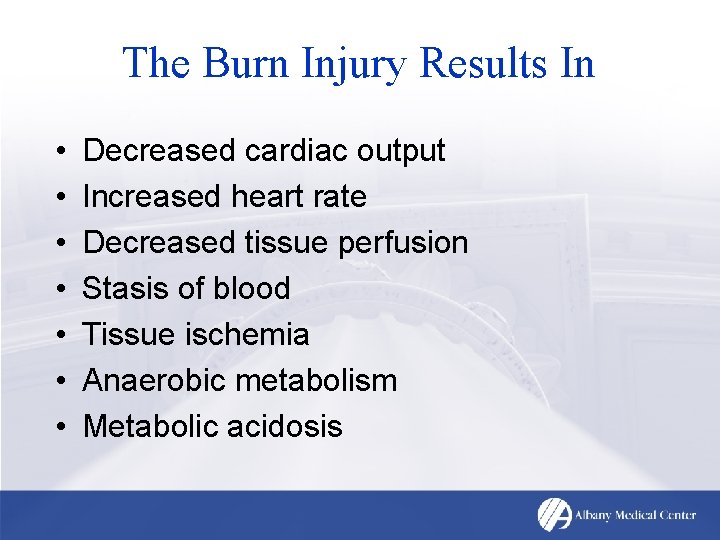
The Burn Injury Results In • • Decreased cardiac output Increased heart rate Decreased tissue perfusion Stasis of blood Tissue ischemia Anaerobic metabolism Metabolic acidosis
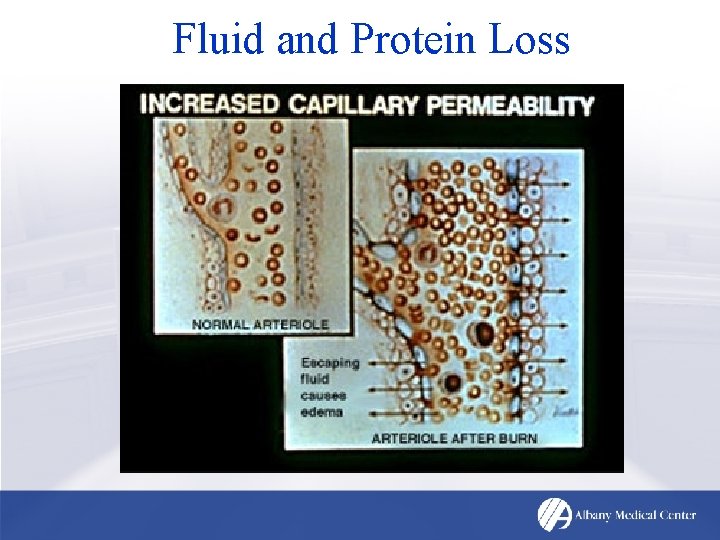
Fluid and Protein Loss
Special Considerations for Resuscitation • • Elderly Pediatric Electrical burns Pre-existing cardiopulmonary conditions
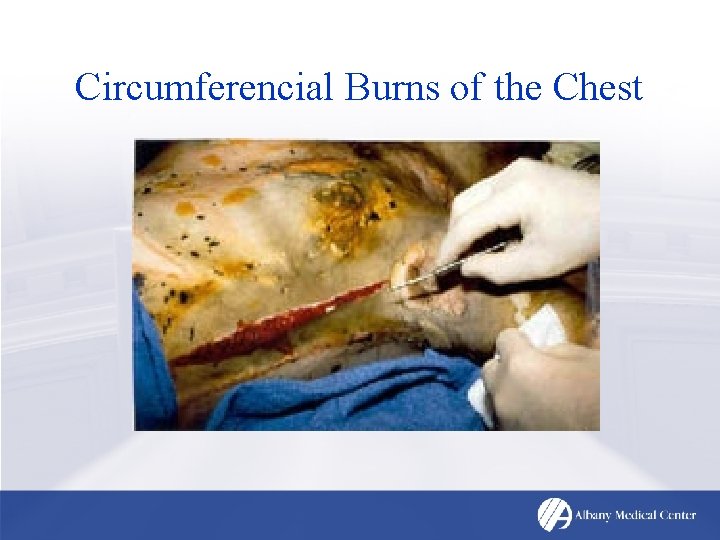
Circumferencial Burns of the Chest
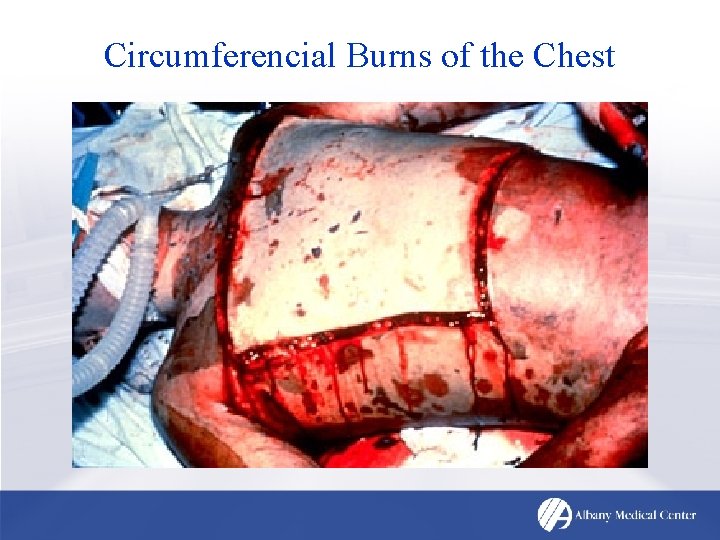
Circumferencial Burns of the Chest
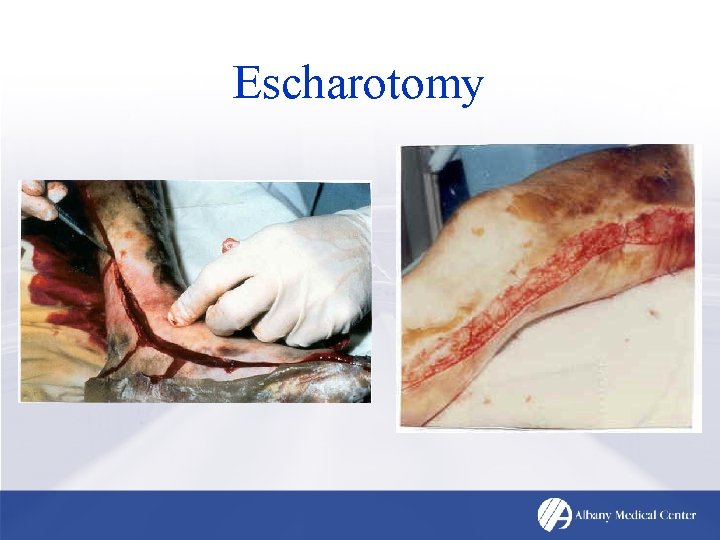
Escharotomy
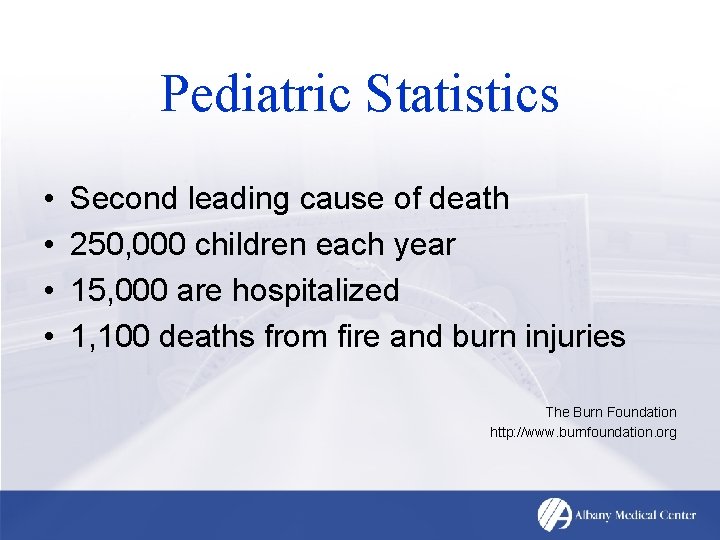
Pediatric Statistics • • Second leading cause of death 250, 000 children each year 15, 000 are hospitalized 1, 100 deaths from fire and burn injuries The Burn Foundation http: //www. burnfoundation. org
Pediatric Statistics • 100, 000 are burned from scalds from spilled food and beverages • 18, 700 are burned by curling and clothing irons • 3, 200 burned by fireworks • 1, 500 burned by gasoline and matches • 1, 500 burned by cigarettes The Burn Foundation http: //www. burnfoundation. org
Pediatrics • Reliable indicators of adequate resuscitation – Mental clarity – Pulse pressures – Arterial blood gases – Distal extremity color – Capillary refill – Body temperature
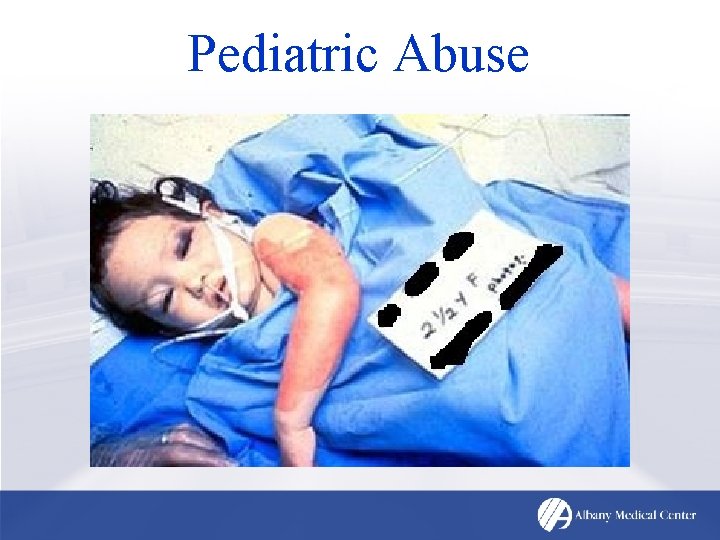
Pediatric Abuse
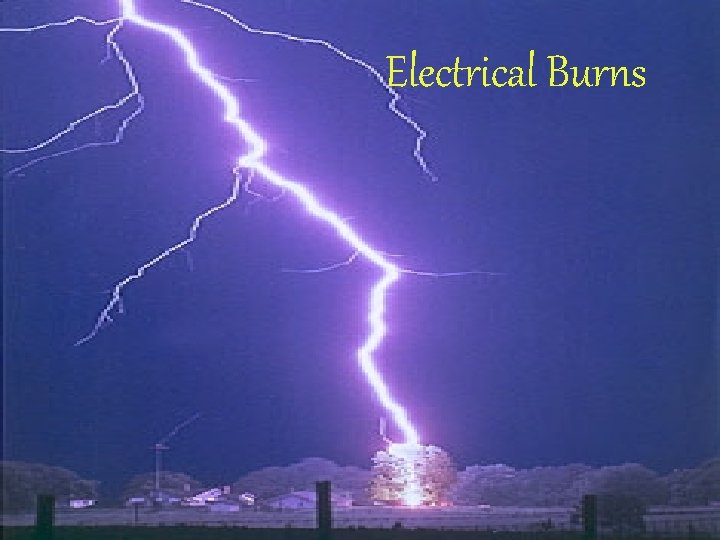
Electrical Burns
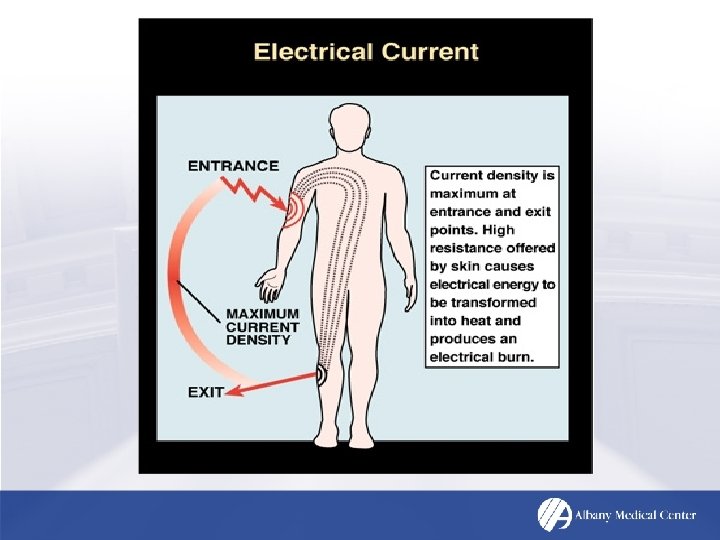
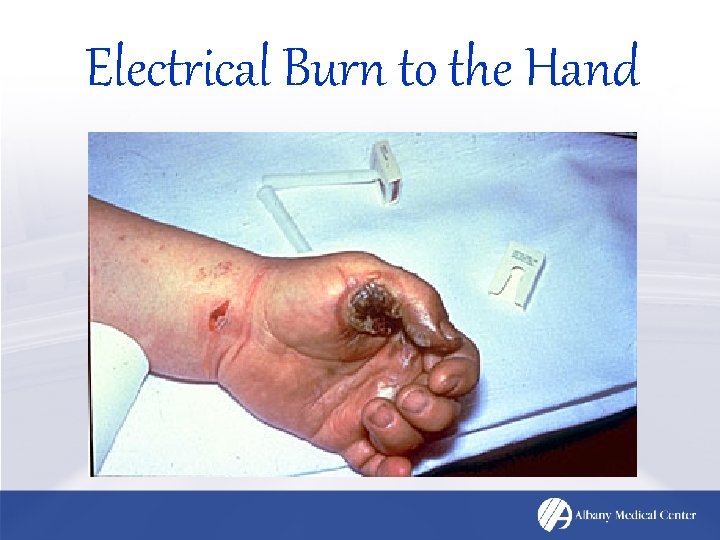
Electrical Burn to the Hand
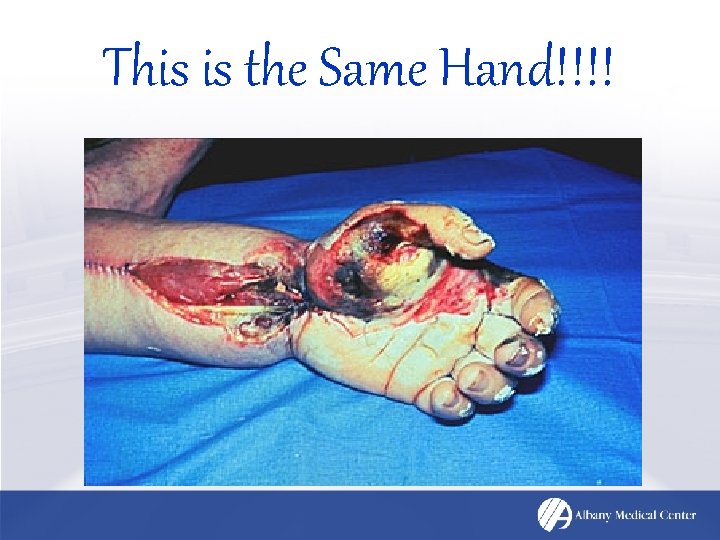
This is the Same Hand!!!!
Treatment for Electrical Burns • Scene Safety – Remove from source after disconnecting • ABCs • 12 lead EKG – Nonspecific ST changes and A fib most common • IV – Usually require more fluid • Labs – CK-MB to check for muscle damage
Long Term Treatment • • Early exploration of wound (within 24 h) Debridement Fasciotomy Amputation
Increased Risk of Cardiac Damage • • Loss of consciousness Documented cardiac arrhythmia Abnormal EKG Chest pain and palpitations
Complications • • Renal failure Pulmonary Edema Infection Acidosis Cardiac dyrhythmias Cardiac arrest Myocardial injury Amputation
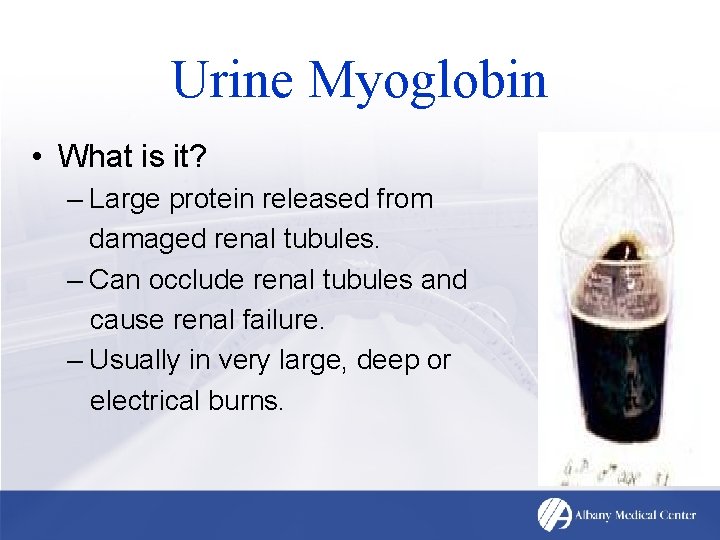
Urine Myoglobin • What is it? – Large protein released from damaged renal tubules. – Can occlude renal tubules and cause renal failure. – Usually in very large, deep or electrical burns.
Treatment for Myoglobinuria • Increase IVF to maintain UO at 75 -100 cc/h • Administer Na. HCO 3 to buffer the kidney
Chemical Burns • • Can be liquid, solid, or gas Usually deeper than it looks Appearance is brown to gray If have severe persistent pain, it is still burning. • Some can lead to systemic poisoning (i. e. phenol and gasoline)
Treatment for Chemical Burns • ABCs • Remove clothing and constrictive objects (jewelry) • Obtain a good history – – – Place, nature, and duration of exposure What are the chemicals Specific toxic properties Relevant patient history Current symptoms
Chemical Wound Management • Brush off chemicals first • Continuously irrigate for 20 -30 min minimum • Do NOT attempt to neutralize acids or alkalis. • Notify ED PTA if unable to decontaminate
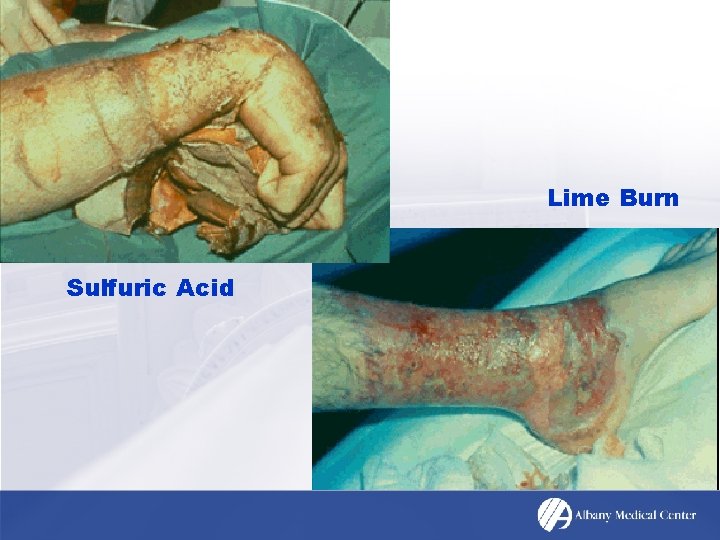
Lime Burn Sulfuric Acid
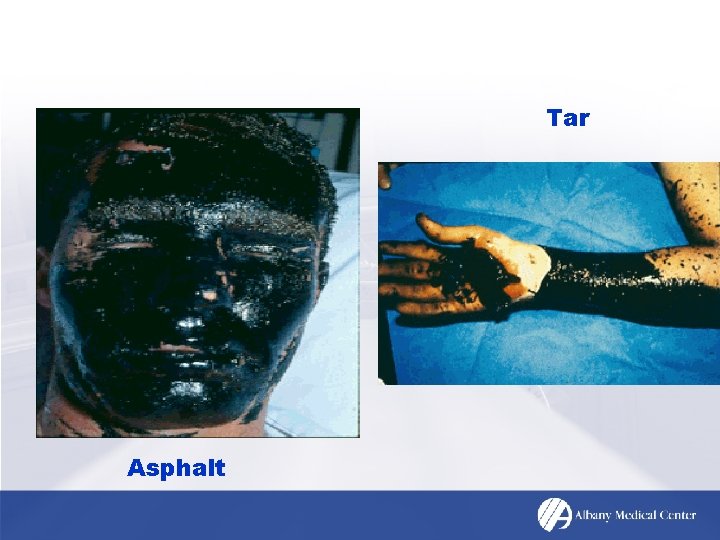
Tar Asphalt
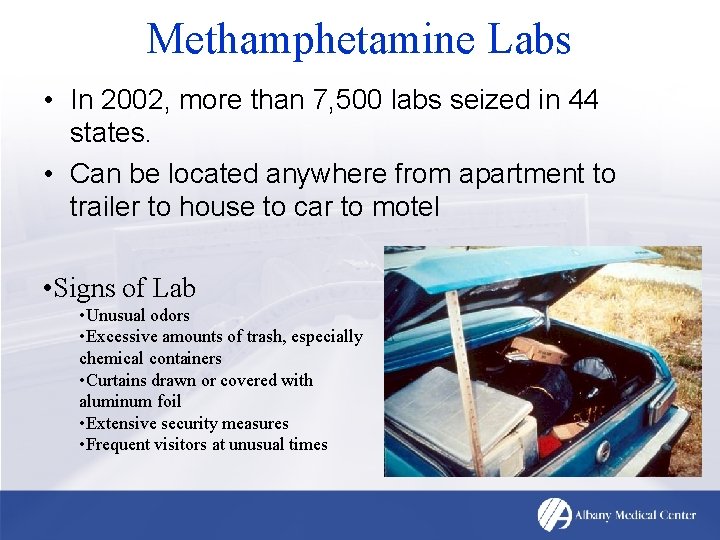
Methamphetamine Labs • In 2002, more than 7, 500 labs seized in 44 states. • Can be located anywhere from apartment to trailer to house to car to motel • Signs of Lab • Unusual odors • Excessive amounts of trash, especially chemical containers • Curtains drawn or covered with aluminum foil • Extensive security measures • Frequent visitors at unusual times
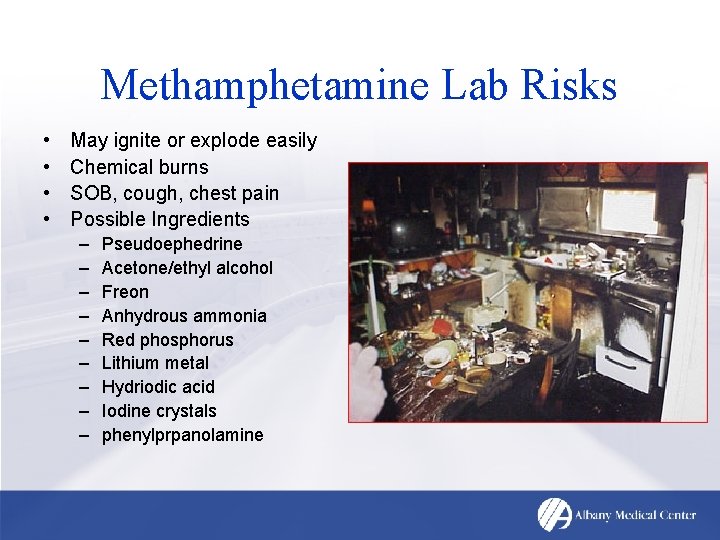
Methamphetamine Lab Risks • • May ignite or explode easily Chemical burns SOB, cough, chest pain Possible Ingredients – – – – – Pseudoephedrine Acetone/ethyl alcohol Freon Anhydrous ammonia Red phosphorus Lithium metal Hydriodic acid Iodine crystals phenylprpanolamine
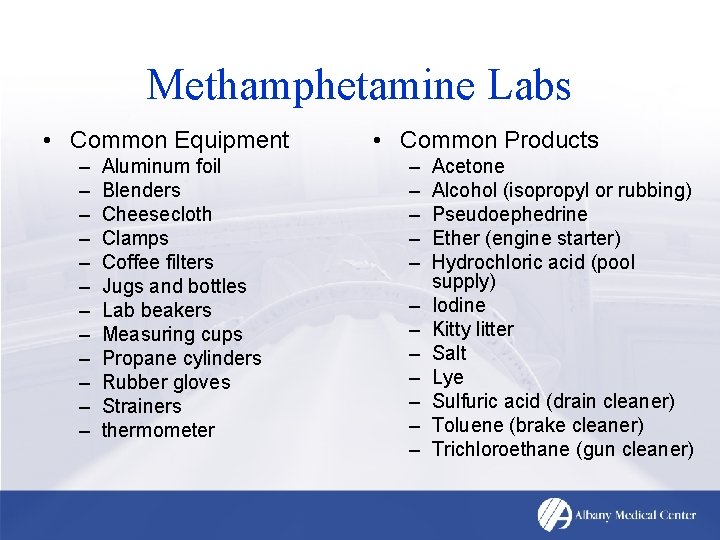
Methamphetamine Labs • Common Equipment – – – Aluminum foil Blenders Cheesecloth Clamps Coffee filters Jugs and bottles Lab beakers Measuring cups Propane cylinders Rubber gloves Strainers thermometer • Common Products – – – Acetone Alcohol (isopropyl or rubbing) Pseudoephedrine Ether (engine starter) Hydrochloric acid (pool supply) Iodine Kitty litter Salt Lye Sulfuric acid (drain cleaner) Toluene (brake cleaner) Trichloroethane (gun cleaner)
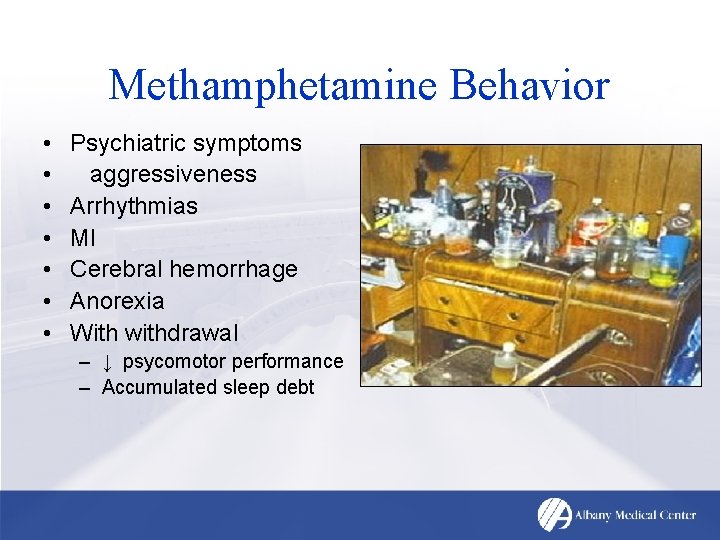
Methamphetamine Behavior • • Psychiatric symptoms aggressiveness Arrhythmias MI Cerebral hemorrhage Anorexia With withdrawal – ↓ psycomotor performance – Accumulated sleep debt
Methamphetamine Burns • More likely to have inhalation injury • Greater extent of full thickness burns • Increased risk of nosocomial pneumonia and respiratory failure • Increased risk of sepsis • Longer hospital and ICU stays • Higher mortality
Cyanide • In 1998, 350 documented cyanide deaths • Hydrogen cyanide in wool, silk, polyurethane (furniture cushion), urea formaldehyde, melanine (dishwasher), acetonitrile (artificial fingernail remover) • Common in metal trades, mining, electroplating, jewelry manufacturing, xray films • Cassava (potato), apricot pits
Cyanide Poisoning • More difficult to diagnose than CO poisoning • Common with smoke inhalation from residential and industrial fires. • Used in suicide • Suspect in patients with an unexplained metabolic acidosis and elevated lactic acid levels because shifts cellular metabolism from aerobic to anaerobic • Individuals who survive have increased risk for CNS dysfunction
Cyanide Poisoning Signs and Symptoms • May be delayed depending on type, route, and dose • Headache, vertigo, dizziness, giddiness, inebriation, confusion • Seizures • Coma • Shortness of breath, tachypnea, apnea • Abd pain, nausea, vomiting • General weakness, malaise
Cyanide Poisoning Signs and Symptoms • Initial bradycardia and hypertension may quickly change to hypotension • Pulse oximetry inaccurate • Cherry red skin color (rare and late) • Smell of bitter almonds on breath (60% of population) • Soot in mouth and nose if smoke inhalation
Cyanide Poisoning Treatment • Scene safety/Decontaminate • Airway protection • EKG – May show AV blocks, SVT, Ischemia, Asystole • Sodium Bicarb if unconscious or hemodynamically unstable and acidotic • Cyanide antidote kit =amyl nitrite, sodium nitrite, and sodium thiosulfate – Don’t use sodium nitrite in smoke inhalation because ↓ carrying capacity if blood
Cyanide Poisoning Treatment • Arterial and venous blood gas – Metabolic acidosis and ↓ oxygen • Lactic acid levels – >10 mmol suggest cyanide • Carboxyhemoglobin • Plasma cyanide concentration • Methomoglobin – For monitoring nitrite therapy
Special Concerns in Pregnancy with Cyanide • Fetal demise is possible • Aggressive support and antidotal treatment of mother is imperative • Obstetric evaluation after stabilization • Therapeutic abortion may be necessary in fetal demise
Burn Center Referral Criteria • Partial thickness burns > 10% TBSA • Burns that involve the face, hands, feet, genitalia, perineum, or major joints • Third degree burns in any age group • Electrical burns, including lightening injury • Inhalation injury
Burn Center Referral Criteria cont’d • Burn injury in patients with preexisting medical disorders that could complicate management, prolong recovery, or affect mortality. • Any burn injury with concomitant trauma in which the burn injury poses the greatest risk of morbidity or mortality. • Burned children of any degree should be transferred to a facility equipped to care for them. • Burn injury in patients who will require special social, emotional, or long-term rehabilitation American Burn Association
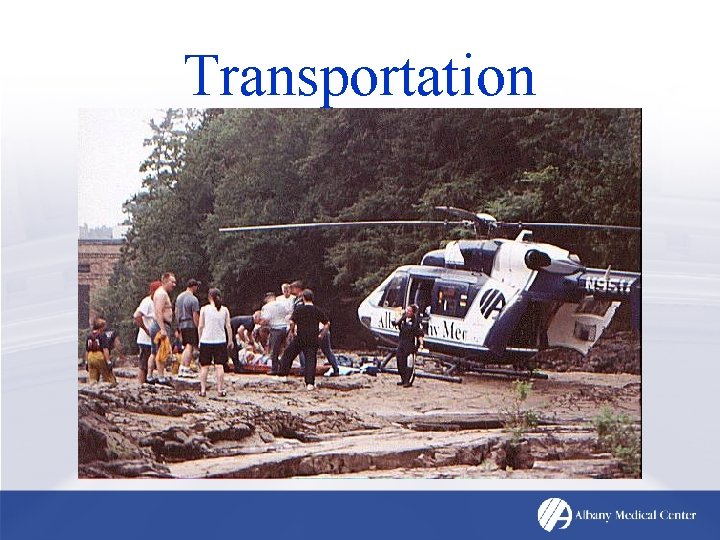
Transportation
References • • • American Burn Association www. ameriburn. org Arnoldo, B. et al. Practice guidelines for the management of electrical burns. Journal of Burn Care and Research. 2006; 27: 439 -447. www. burnsurgery. org Carrougher, G. Burn Care and Therapy. Mosby; 1998. Sai, N. et al. The comparison of early fluid therapy in extensive flame burns between inhalation and noninhalation. Burns. 1998; 24: 671 -5. Herndon, D. Total Burn Care 2 nd Edition. Elsevier Science; 2001. Leybell, I. et al. Cyanide Toxicity. Emedicine. 2006. http: //www. emedicine. com/emerg/topic 118. htm National Drug Intelligence Center, U. S. Department of Justice. Methamphetamine Laboratory Identification and Hazards. http: //www. usdoj. gov/ndic Spann, M, et al. Characteristics of burn patients injured in methamphetamine laboratory explosions. Journal of Burn Care and Research. 2006; 27: 496 -501. Tomaszewski, M. D. C. Carbon monoxide poisoning: early awareness can save lives. Postgraduate Medicine. 1999; 105
- Slides: 83