
Emergency Department Triage System By Jamal Wahadneh Rn
Emergency Department Triage System By Jamal Wahadneh Rn MPH and Ms Aida Salahat Rn Al-Makassaed Emergency department
Objectives • • Define Triage system Identify different systems Describe emergency severity index • Function of triage system
History of Triage • Definition • Origin • Informal triage
Goals of Triage • Primary • Secondary
Category of triage • In hospital triage • Multi casualty disaster triage
Types of triage methods • Three level • Four level • Five level
Function of triage • Identify life-threatening conditions and determine acuity level of each patient
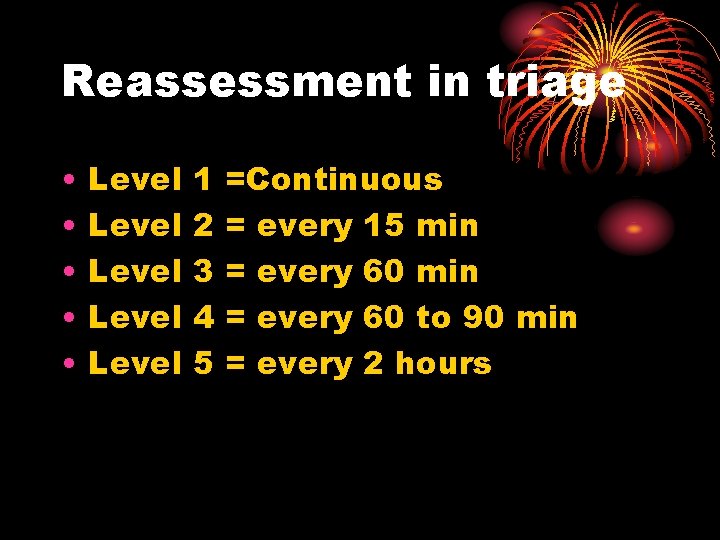
Reassessment in triage • • • Level Level 1 2 3 4 5 =Continuous = every 15 min = every 60 to 90 min = every 2 hours
Five level system • Origin of 5 level • Identify different levels
Emergency Severity Index • Definition • Advantages • disadvantages
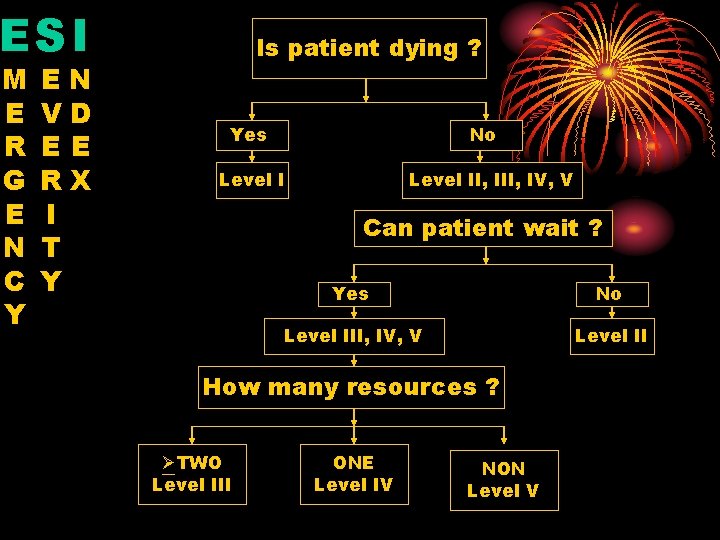
ES I M E R G E N C Y EN VD EE RX I T Y Is patient dying ? Yes No Level II, III, IV, V Can patient wait ? Yes No Level III, IV, V Level II How many resources ? ØTWO Level III ONE Level IV NON Level V
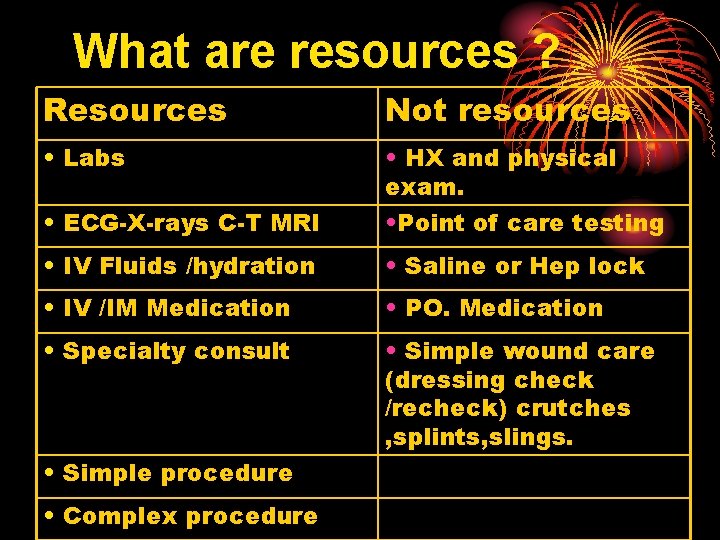
What are resources ? Resources Not resources • Labs • ECG-X-rays C-T MRI • HX and physical exam. • Point of care testing • IV Fluids /hydration • Saline or Hep lock • IV /IM Medication • PO. Medication • Specialty consult • Simple wound care (dressing check /recheck) crutches , splints, slings. • Simple procedure • Complex procedure
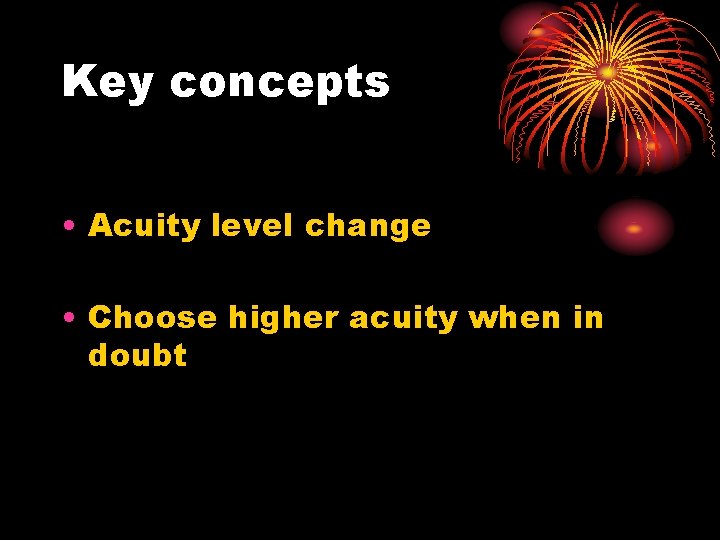
Key concepts • Acuity level change • Choose higher acuity when in doubt
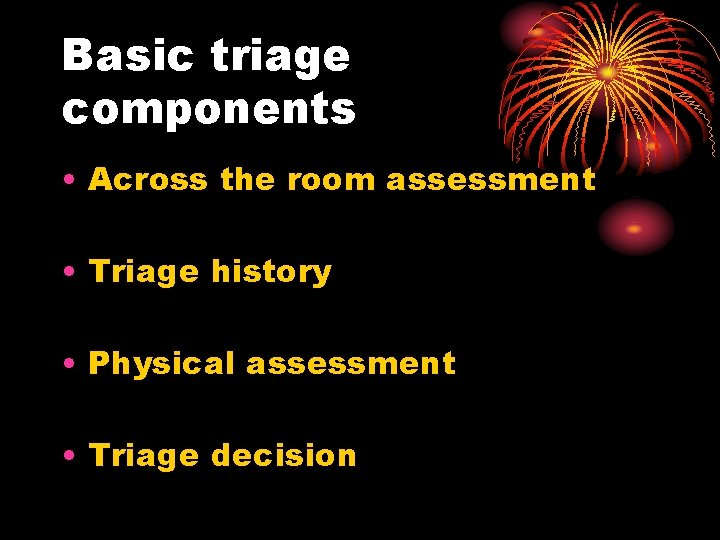
Basic triage components • Across the room assessment • Triage history • Physical assessment • Triage decision
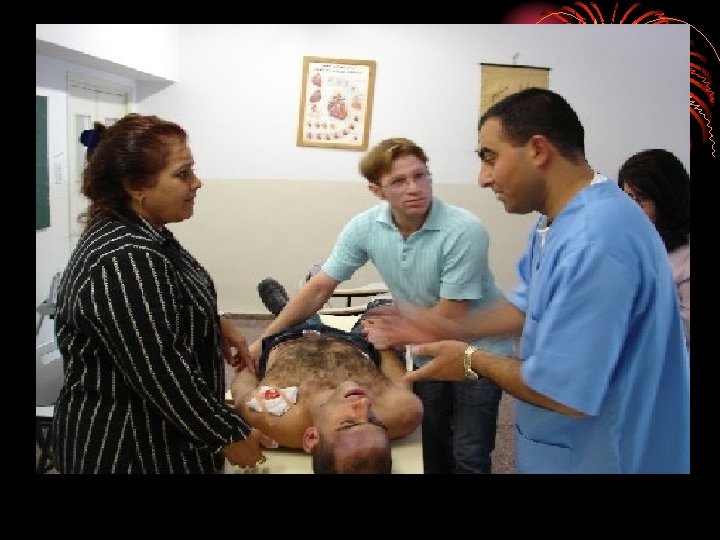
Key concept • Discontinue assessment and transport the patient immediately to the treatment area if immediate care is needed. Do not delay treatment to finish the assessment
Triage process • Establish priorities • Scientific method • Importance of time
Nursing process in triage • Assessment time • Vital signs • Pain scale • Nursing diagnosis
Key Concept • Never assume the accident caused the presenting condition. The presenting condition may have caused the accident.
Interview methods • • • Open ended Close ended Communication style Use of five sense attitude
How do I triage? • • Across the room General appearance Abcd Subjective and objective (AMPLE) • Focused assessment • Pains scale (Pqrst)
Triage decision • • • Step 1 - visual Step 2 - chief complaints Step 3 - focused assessment Step 4 - pose hypothesis Step 5 - determine acuity Step 6 - reassess the acuity
Remember That: Effective triage gets the patient • To the right place. • At the right time. • With the right care provider.

Questions
- Slides: 27