
Emergency Care The First Responder American Red Cross
- Slides: 19
Emergency Care The First Responder American Red Cross Emergency Response 3 rd edition, 2001
Topic Overview ¨ Overview of Course Mechanics ¨ Criteria for Certifications – Agency Requirements – Institutional Requirements ¨ Overview of the EMS System ¨ Roles and Responsibilities of First Responders ¨ Professional Attributes and Traits ¨ Medical Direction
Course Overview ¨ Course Description – Lecture / Labs ¨ Course Requirements – Quizzes, Homework, Written Exams, Practical Exams, Final ¨ Syllabus ¨ Attendance ¨ Textbook, Workbook ¨ Illness/Immunizations
Introduction to Course ¨ Criteria for Certification & Recertification – Skills – Written Final Exam ¨ Certifications – CPR for the Professional rescuer – Emergency Response – Preventing Disease Transmission – Automated External Defibrillator – Oxygen Administration
Introduction to Course ¨ Institutional Requirements ¨ Americans with Disabilities Act – Documented Disabilities – Illness ¨ Harassment Issues – Lab Attire Policy – Behavior
The First Responder Chapter One
Components of the Health Care System ¨ Emergency Departments ¨ Specialty Facilities – Trauma Centers – Burn Centers – Pediatric Centers – Poison Control Centers – Other Specialty Centers ¨ Physicians / Nurses / Other Providers
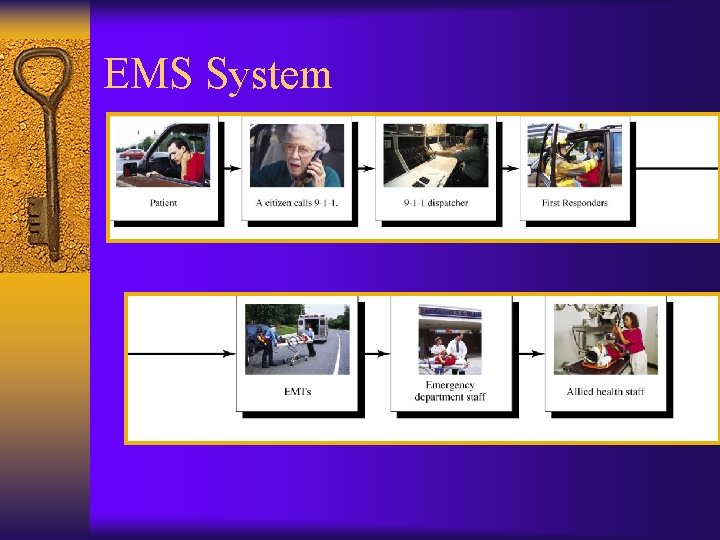
EMS System ¨ Emergency Medical Services System – Network of community resources – EMS Act, 1973 – DOT • NHTSA ¨ Activating the EMS System – 911 (basic, enhanced) – Responders • First Responders, EMT-basics, Advanced Life Support Providers (EMT-Intermediates and EMT-paramedics)
EMS System ¨ Ten Components – Resource management – Human Resources & Training – Transportation – Communications – Public Information – Education – Medical Oversight – Trauma Systems – Evaluation
EMS System
EMS System ¨ Chain of Survival – Recognition – Activation – Citizen Response – EMS Response – Hospital Care – Rehabilitation
Levels of EMS Training ¨ First Responder – Designed for the first to arrive – 60 -80 hours ¨ Emergency Medical Technician – Basic – Intermediate – Paramedic
Medical Oversight / Direction ¨ Direct (On Line) – Telephone – Radio ¨ Indirect (Off Line) – Protocols – Standing Orders
First Responders ¨ Characteristics – Personal health & safety – Caring attitude – Personal composure – Professional appearance – Up to date knowledge & skills
First Responder ¨ Primary Responsibilities – Personal safety and safety of others – Access – Assessment of Immediate Life-Threatening Conditions – Initial Care – Assisting More Advanced Personnel
First Responder ¨ Secondary Responsibilities – Summoning help when needed – Controlling & protecting bystanders – Recording scene events – Reassuring victim’s family & friends
Equipment, Tools and Supplies ¨ DOT recommendations – Know how to use and have available whenever possible the following items: • • Triangular bandages Roller-type bandages Universal dressings/gauze pads Occlusive dressings (for airtight seals) Eye dressings Adhesive tape Bandage shears
Equipment, Tools and Supplies • • Blanket and pillow Upper and lower extremity splint sets Gloves Eye protection Barrier devices Pliers, screwdriver, hammer and knife Rope
Conclusion ¨ Remember – the components of the EMS system – level of care each can perform – the roles, responsibilities and traits of the first responder – Maintain a minimum level of competency