
EMDAT The International Disaster Database CRED University of
EM-DAT The International Disaster Database CRED – University of Louvain, Belgium Regina BELOW Expert Meeting on Hazard and Disaster Data, May 19 -20, 2010 - Copenhagen
AIM OF THE DATABASE AND GENERAL INFORMATION
EM-DAT: International Disaster Database, created in 1988 and maintained by CRED Compile information on occurrence and impacts of over 18, 000 natural and technological disasters from 1900 until present Objective: Provide evidence-base to humanitarian and development actors at national and international levels Database maintained by Centre for Research on the Epidemiology of Disasters – CRED (Research Institute Health and Society (IRSS) - University of Louvain, Brussels, Belgium) Project funded by OFDA/USAID, USA
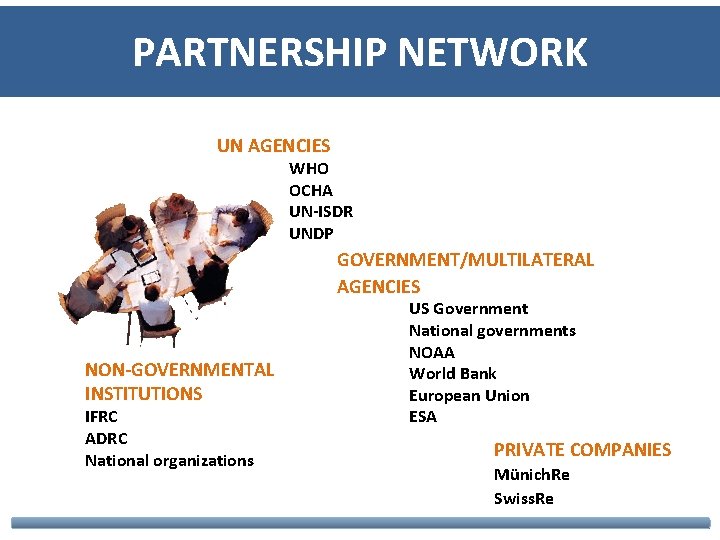
PARTNERSHIP NETWORK UN AGENCIES WHO OCHA UN-ISDR UNDP GOVERNMENT/MULTILATERAL AGENCIES NON-GOVERNMENTAL INSTITUTIONS IFRC ADRC National organizations US Government National governments NOAA World Bank European Union ESA PRIVATE COMPANIES Münich. Re Swiss. Re
CONTENT OF THE DATABASE
Disasters in EM-DAT are defined as: “a situation or event which overwhelms local capacity, necessitating a request to the national or international level for external assistance, or is recognised as such by a multilateral agency or by at least two sources, such as national, regional or international assistance groups and the media”
EM-DAT CRITERIA • 10 or more people reported killed and/or • 100 or more people reported affected and/or • Call for international assistance/declaration of a state of emergency
Information on Human and Economic Impact of: • Natural disasters (62%) • • • Geological (Earthquake, volcano, dry mass movement) Hydrological (Flood, wet mass movement) Climatological (Extreme temperature, drought, wildfire) Meteorological (Storm) Biological (Epidemic, insect infestation, animal stampede) • Technological disasters (38%) • Transport accidents • Industrial accidents • Miscellaneous accidents
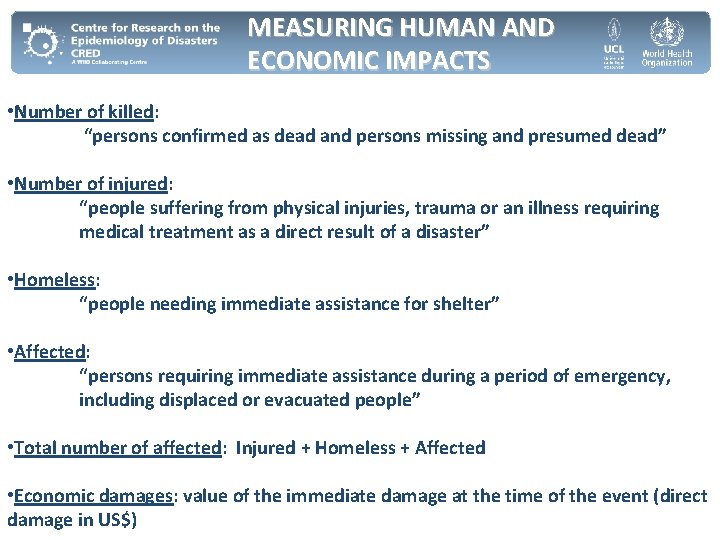
MEASURING HUMAN AND ECONOMIC IMPACTS • Number of killed: “persons confirmed as dead and persons missing and presumed dead” • Number of injured: “people suffering from physical injuries, trauma or an illness requiring medical treatment as a direct result of a disaster” • Homeless: “people needing immediate assistance for shelter” • Affected: “persons requiring immediate assistance during a period of emergency, including displaced or evacuated people” • Total number of affected: Injured + Homeless + Affected • Economic damages: value of the immediate damage at the time of the event (direct damage in US$)
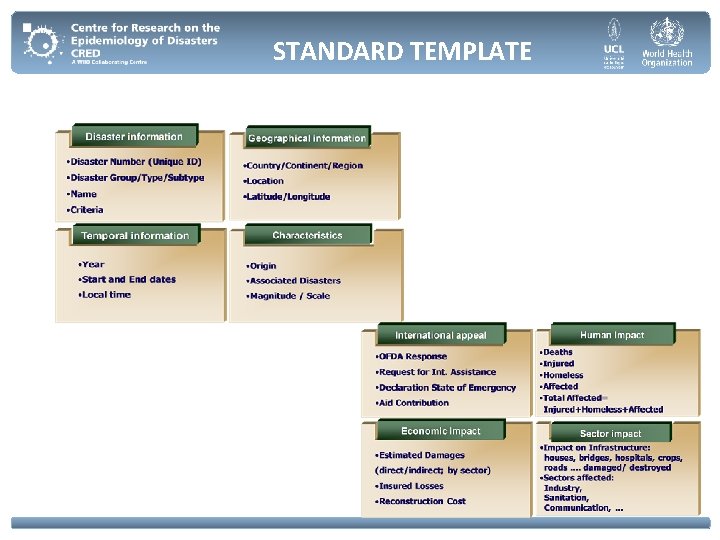
STANDARD TEMPLATE

STANDARD TEMPLATE
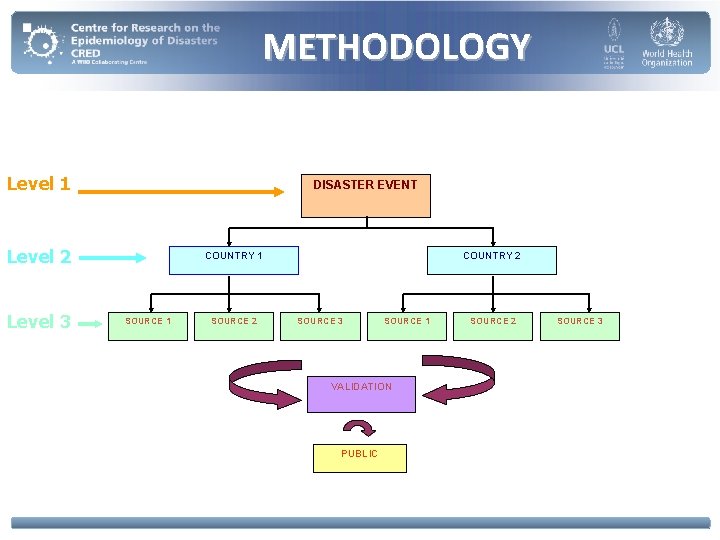
METHODOLOGY Level 1 DISASTER EVENT Level 2 Level 3 COUNTRY 1 SOURCE 2 COUNTRY 2 SOURCE 3 SOURCE 1 VALIDATION PUBLIC SOURCE 2 SOURCE 3
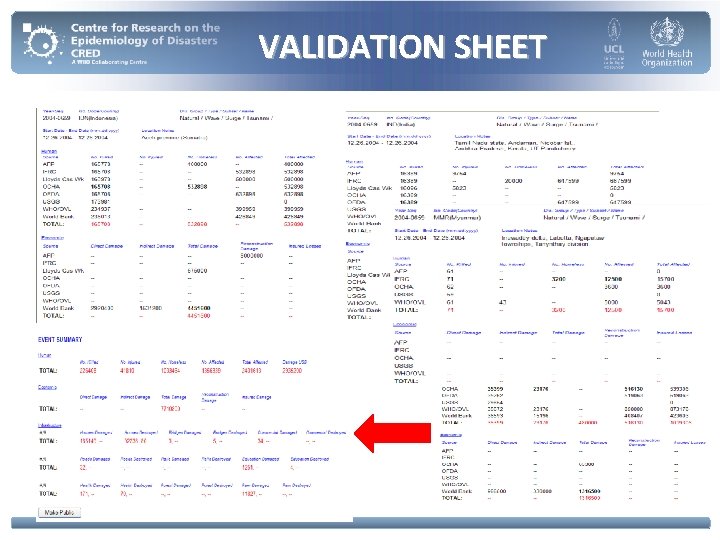
VALIDATION SHEET
VALIDATION ü Data entered and updated daily ü Monthly validation process before making data available for the public (3 months interval) ü Internal error cross checking ü Yearly data quality control
COLLECTION OF DATA AND TECHNICAL QUESTIONS
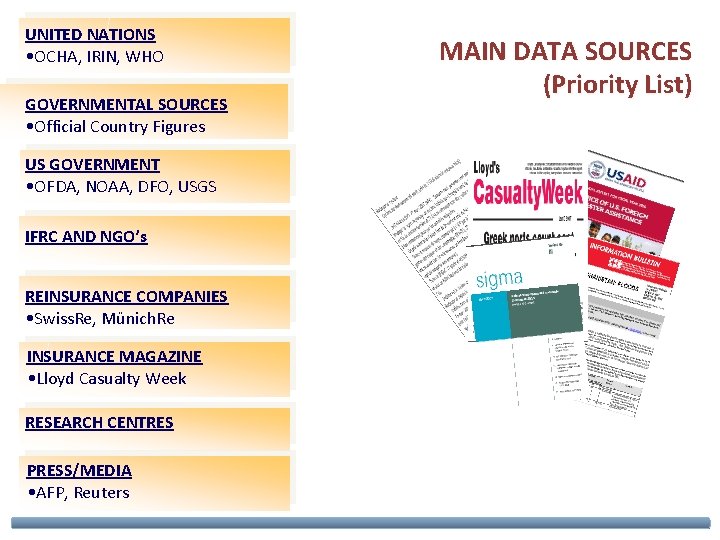
UNITED NATIONS • OCHA, IRIN, WHO GOVERNMENTAL SOURCES • Official Country Figures US GOVERNMENT • OFDA, NOAA, DFO, USGS IFRC AND NGO’s REINSURANCE COMPANIES • Swiss. Re, Münich. Re INSURANCE MAGAZINE • Lloyd Casualty Week RESEARCH CENTRES PRESS/MEDIA • AFP, Reuters MAIN DATA SOURCES (Priority List)
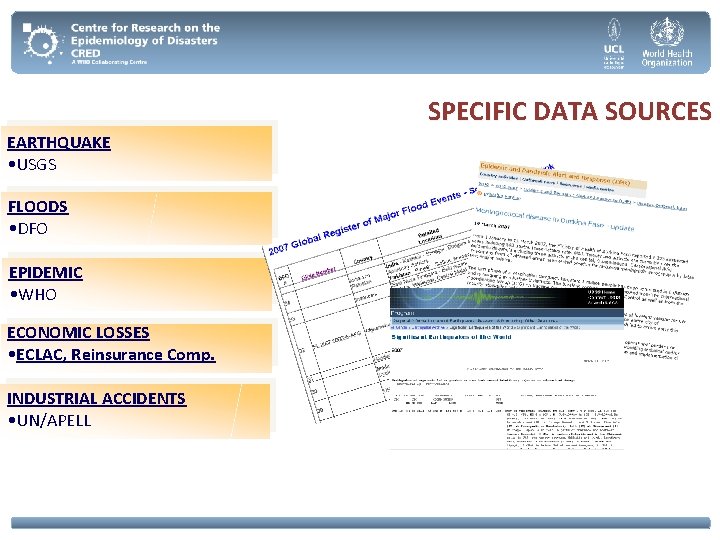
SPECIFIC DATA SOURCES EARTHQUAKE • USGS FLOODS • DFO EPIDEMIC • WHO ECONOMIC LOSSES • ECLAC, Reinsurance Comp. INDUSTRIAL ACCIDENTS • UN/APELL
CONSISTENCY/UPDATE OF DATA
METHODOLOGY • Data must be comparable over time and space • Standard methodology for entering data • Clear stated methodology, based on 20 years experience and posted on the website • Figures confirmed by at least 2 sources • Use of priority sources
STRENGHTS OF EM-DAT - Unique free accessible database - Acts as a reference point for global analysis of disaster occurrence and impact - Unique basis for policy papers on disaster reduction and risks - International recognition and credibility - Capacity to provide methods and guidelines (20 years experience) -Transparent conventions regarding data sources and internal protocol -Standard data templates -Global and coherent data
LIMITATIONS OF EM-DAT -Global database -Limited potential for analysis in terms of disaster occurrence and impact on smaller, intra-country spatial scales -Public aspect of EM-DAT may lead to inappropriate use of data
EMDAT : CREDibility • Long experience in data collection & management • Normative rules, clear definition • Clearly-stated methodology • Validation methods and tools • Transparency • Automatization (data entry and outputs) • Comparability of its data across time and space UNIQUE PUBLIC GLOBAL REFERENCE DATABASE
ACCESS TO DATA
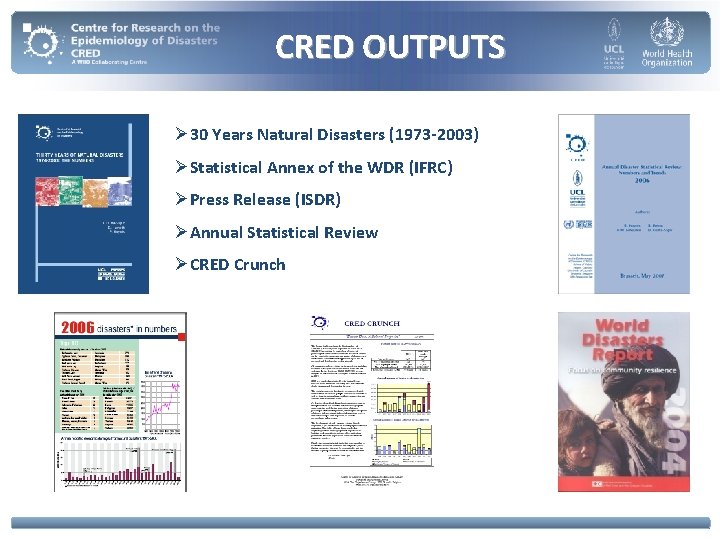
CRED OUTPUTS Ø 30 Years Natural Disasters (1973 -2003) ØStatistical Annex of the WDR (IFRC) ØPress Release (ISDR) ØAnnual Statistical Review ØCRED Crunch
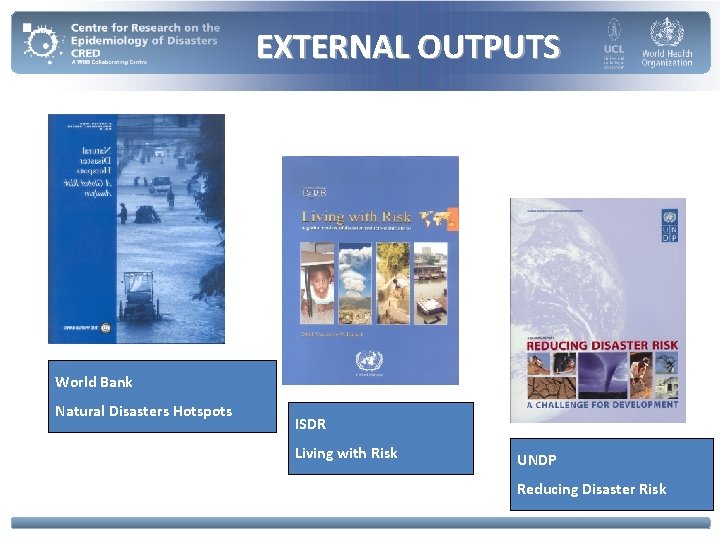
EXTERNAL OUTPUTS World Bank Natural Disasters Hotspots ISDR Living with Risk UNDP Reducing Disaster Risk
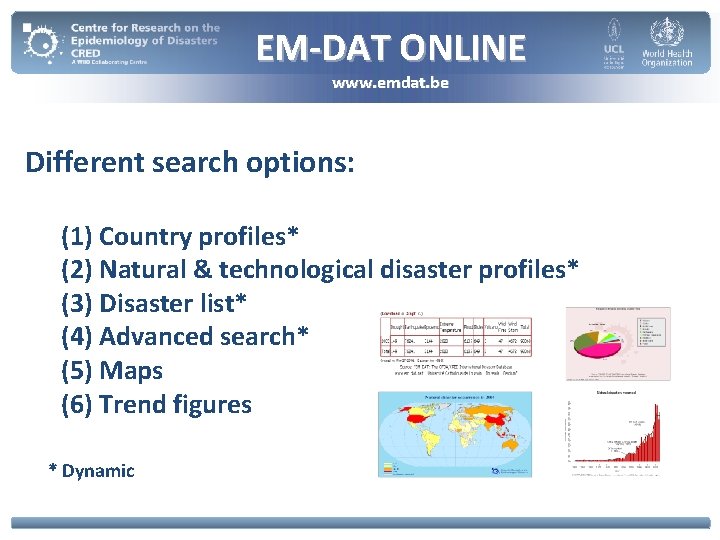
EM-DAT ONLINE www. emdat. be Different search options: (1) Country profiles* (2) Natural & technological disaster profiles* (3) Disaster list* (4) Advanced search* (5) Maps (6) Trend figures * Dynamic
EM-DAT USERS • Ministries and specialized agencies (white & policy papers, budget justifications, planning, priorities) • Red Cross and NGOs • Consultant firms (environmental, land use) • Insurance firms • High school teachers, Undergraduate University projects • Research (environment, geography, urbanization, tourism)
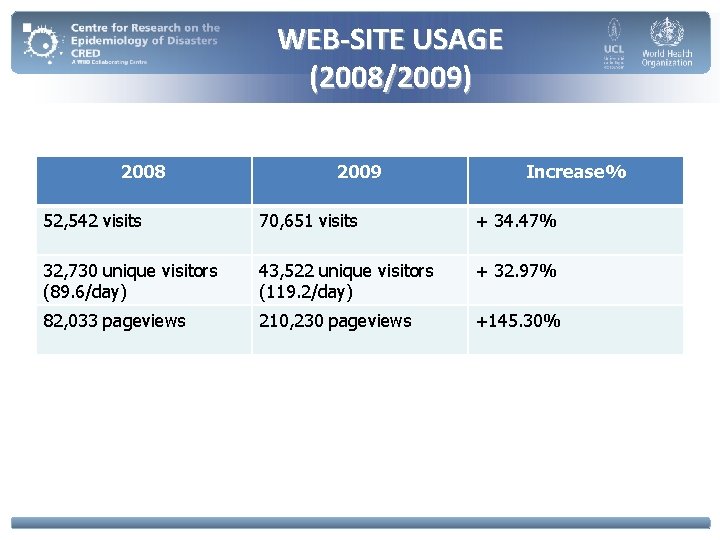
WEB-SITE USAGE (2008/2009) 2008 2009 Increase% 52, 542 visits 70, 651 visits + 34. 47% 32, 730 unique visitors (89. 6/day) 43, 522 unique visitors (119. 2/day) + 32. 97% 82, 033 pageviews 210, 230 pageviews +145. 30%
DATA IN EUROPE
DATA GAPS FOR EUROPE • Systematic reporting of disaster impact is weak (depend on centralization) • Realistic and appropriate methods to measure human impact in European context should be developed • Common data standards for reporting need to be established across European Union countries (and intra – country)
CONCLUSIONS • Building on existing efforts better then starting from scratch • The « Kiss principle » : Keep it Short and Simple • Problems of disaster data collection in the Europe will be the same as problems of data collection in the world
THANK YOU … CONTACT CRED 30, Clos Chapelle-aux-Champs 1200 Brussels – Belgium Tel: +32 -2 -764 -3327/Fax-3441 E-Mail: contact@cred. be Website: www. cred. be
QUESTIONS
• "Common protocol" for georeferencing global disaster databases (interoperability) • More precise information on disaster locations (additional data sources and/or linking to other (global) datasets • Production of Spatial analysis & disaster footprints
CONTEXT AND NEEDS • Lack of accessible information remain major barrier for better disaster prevention, mitigation, preparedness and reduction • Need of comprehensive understanding of complete human, economic and social impact of disasters • Decision-makers need to be informed on where to invest and how to design sustainable project
ISSUES HIGHLIGHTED 1. Disaster definitions: Differences & lack of standardized terminology (low comparability) 2. Disaster typology: Disaster (sub)type classification, primary/secondary event 3. Geo-referencing: Data resolution 4. Temporal aspects: Difficulties in reporting start and end dates 5. Methodology: Lack of publicly available methodology => transparency & comparability, ambiguity of variables (definitions, sources, criteria) 6. Sourcing: Lack/Overabundance of data sources
- Slides: 36