
Embryophytes land plants fern moss gymnosperm angiosperm I
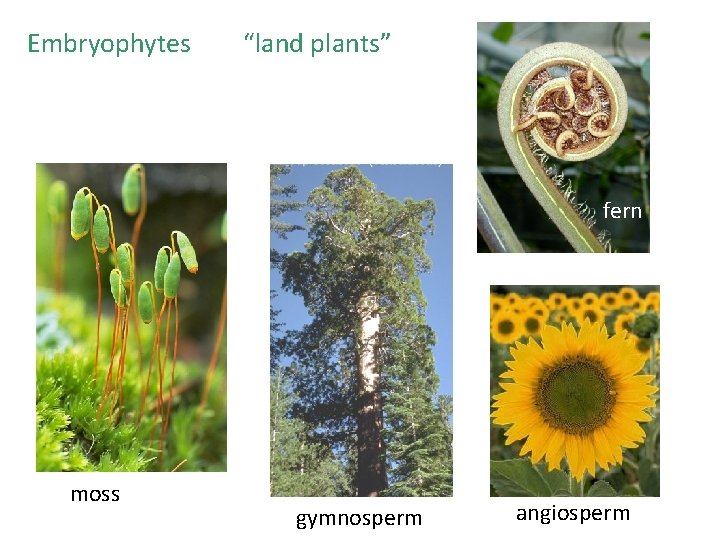
Embryophytes “land plants” fern moss gymnosperm angiosperm

I. Embryophytes A. Apomorphies (relative to green algae ancestors) 1. waxy cuticle (slows water loss) 2. parenchyma (structural tissue for support)

I. Embryophytes A. Apomorphies (relative to green algae ancestors) 3. new life cycle stages and structures Green Algae Gamete Spore Gametophyte Zygote haploid (n) sex cell haploid asexual cell haploid, gamete producer diploid (2 n) cell spores are products of meiosis; spores cannot fuse plant gametes are produced via mitosis; gametes can fuse

I. Embryophytes A. Apomorphies (relative to green algae ancestors) 3. new life cycle stages and structures Embryophytes Gamete Spore Gametophyte Gametangia structures Zygote Embryo Sporophyte haploid (n) sex cell haploid asexual cell haploid, gamete producer gamete-producing diploid (2 n) cell immature sporophyte multicellular diploid phase

I. Embryophytes 3. new life cycle stages and structures a. sporophyte (multicellular diploid phase) fern moss gymnosperm angiosperm
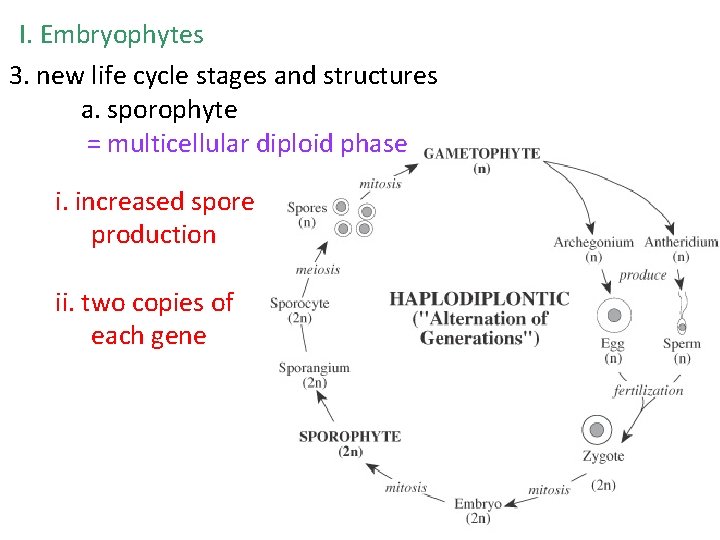
I. Embryophytes 3. new life cycle stages and structures a. sporophyte = multicellular diploid phase i. increased spore production ii. two copies of each gene

I. Embryophytes 3. new life cycle stages and structures b. embryo = immature sporophyte w/ nutrient transfer from gametophyte

I. Embryophytes 3. new life cycle stages and structures c. gametangia surrounded by sterile cells i. antheridium produces sperm (small, motile cells)
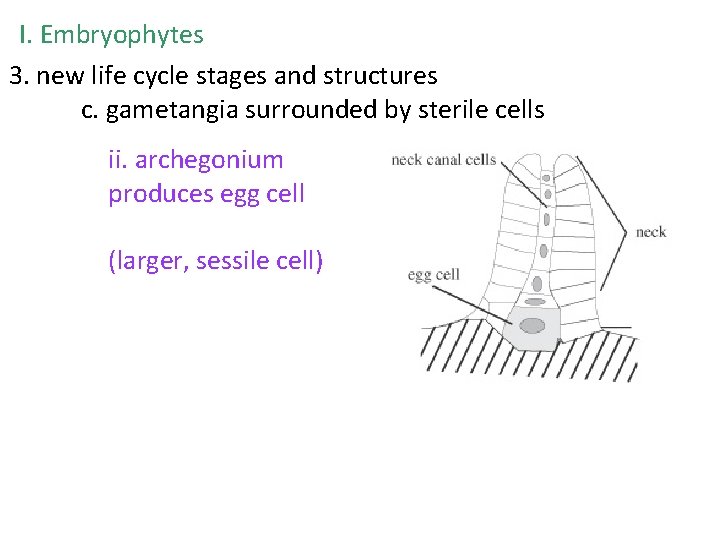
I. Embryophytes 3. new life cycle stages and structures c. gametangia surrounded by sterile cells ii. archegonium produces egg cell (larger, sessile cell)
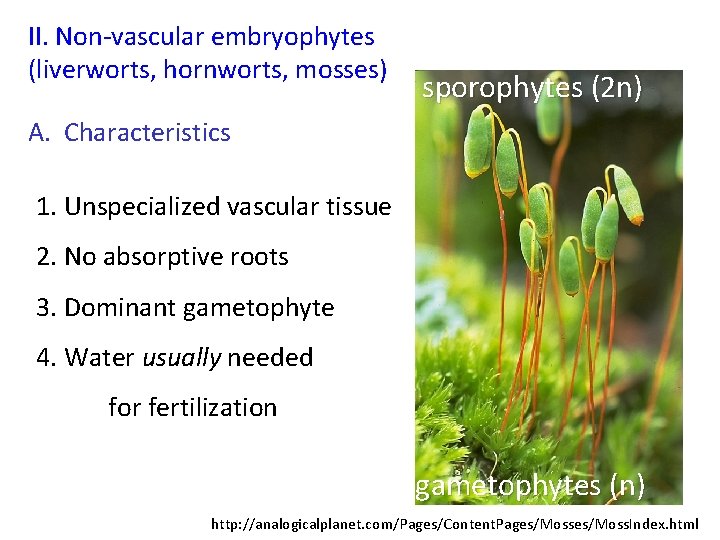
II. Non-vascular embryophytes (liverworts, hornworts, mosses) sporophytes (2 n) A. Characteristics 1. Unspecialized vascular tissue 2. No absorptive roots 3. Dominant gametophyte 4. Water usually needed for fertilization gametophytes (n) http: //analogicalplanet. com/Pages/Content. Pages/Moss. Index. html
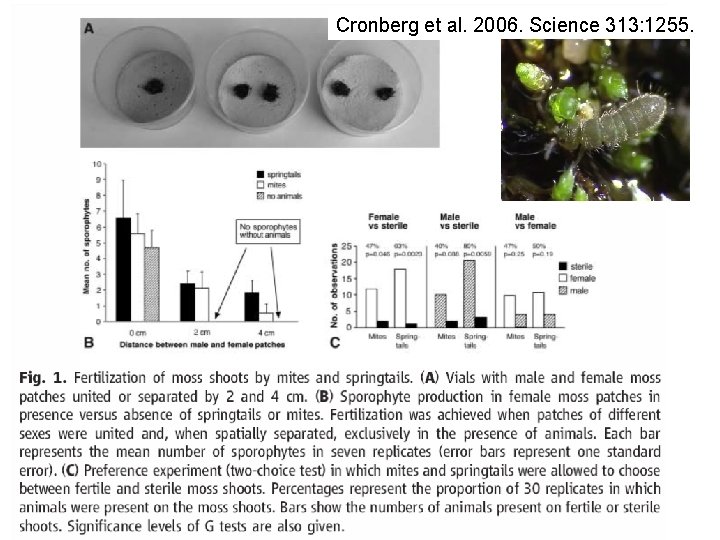
Cronberg et al. 2006. Science 313: 1255.

II. Non-vascular embryophytes B. Bryophyta = mosses 1. leaves 2. gametangia in leaf axils 3. long-lived sporophyte with stomata Maggy Wassilieff. 'Mosses - Life cycle and habitat', Te Ara - the Encyclopedia of New Zealand, http: //www. Te. Ara. govt. nz/en/diagram/10639/life-cycle-of-a-moss

II. Non-vascular embryophytes C. Marchantiophyta = liverworts 1. thallus or leaves 2. gametangia on complex structures 3. very short-lived sporophyte without stomata
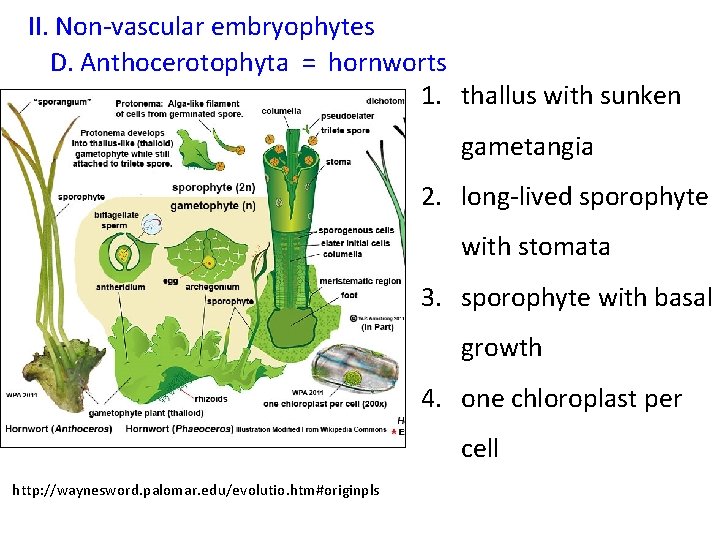
II. Non-vascular embryophytes D. Anthocerotophyta = hornworts 1. thallus with sunken gametangia 2. long-lived sporophyte with stomata 3. sporophyte with basal growth 4. one chloroplast per cell http: //waynesword. palomar. edu/evolutio. htm#originpls
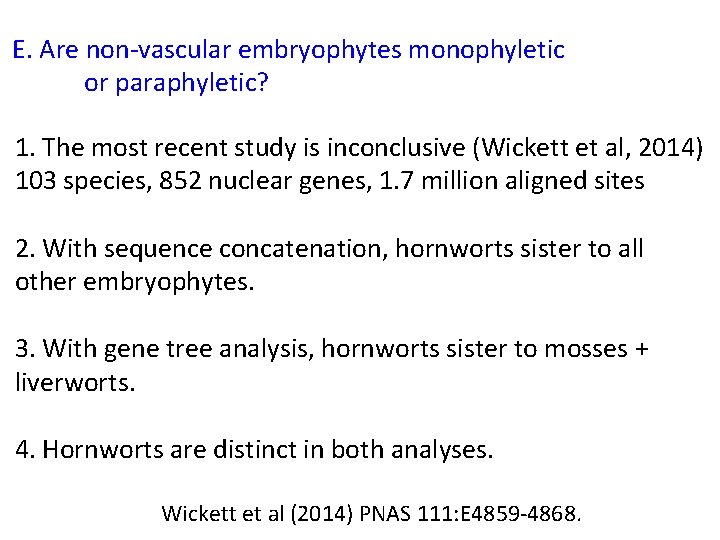
E. Are non-vascular embryophytes monophyletic or paraphyletic? 1. The most recent study is inconclusive (Wickett et al, 2014) 103 species, 852 nuclear genes, 1. 7 million aligned sites 2. With sequence concatenation, hornworts sister to all other embryophytes. 3. With gene tree analysis, hornworts sister to mosses + liverworts. 4. Hornworts are distinct in both analyses. Wickett et al (2014) PNAS 111: E 4859 -4868.

F. Are hornworts sister to vascular plants? 1. similar sporophytes in earliest land plant fossils 2. gametangia development like monilophytes (seed free vascular plants) http: //waynesword. palomar. edu/evolutio. htm#originpls
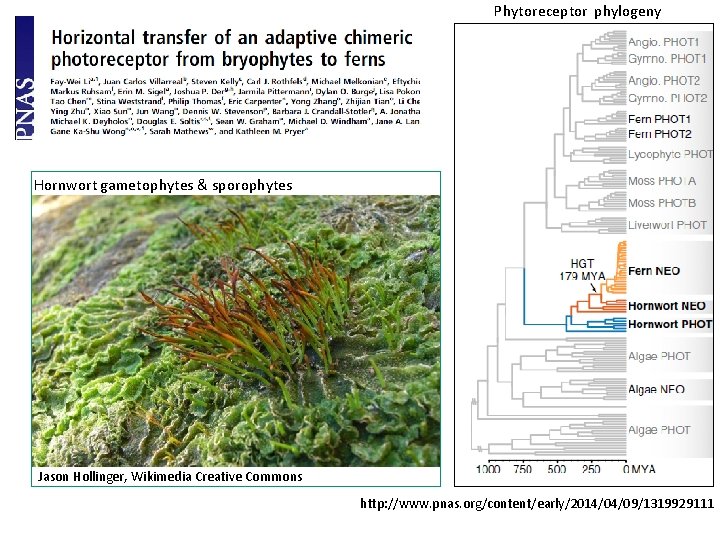
Phytoreceptor phylogeny Hornwort gametophytes & sporophytes Jason Hollinger, Wikimedia Creative Commons http: //www. pnas. org/content/early/2014/04/09/1319929111
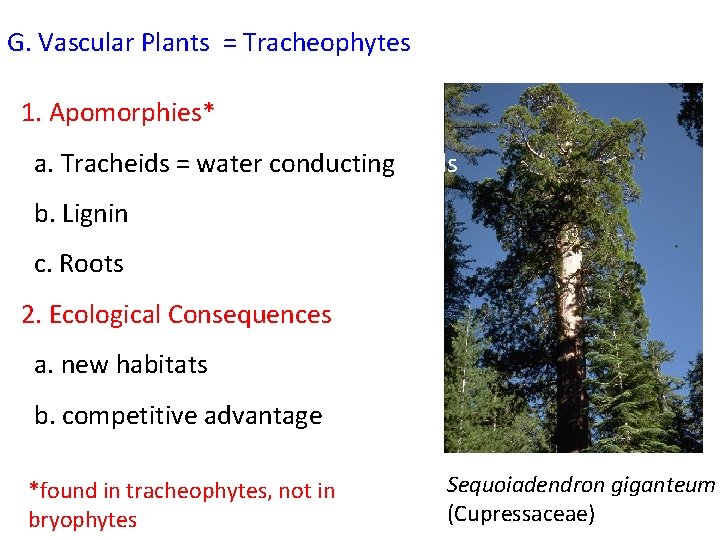
G. Vascular Plants = Tracheophytes 1. Apomorphies* a. Tracheids = water conducting cells b. Lignin c. Roots 2. Ecological Consequences a. new habitats b. competitive advantage *found in tracheophytes, not in bryophytes Sequoiadendron giganteum (Cupressaceae)
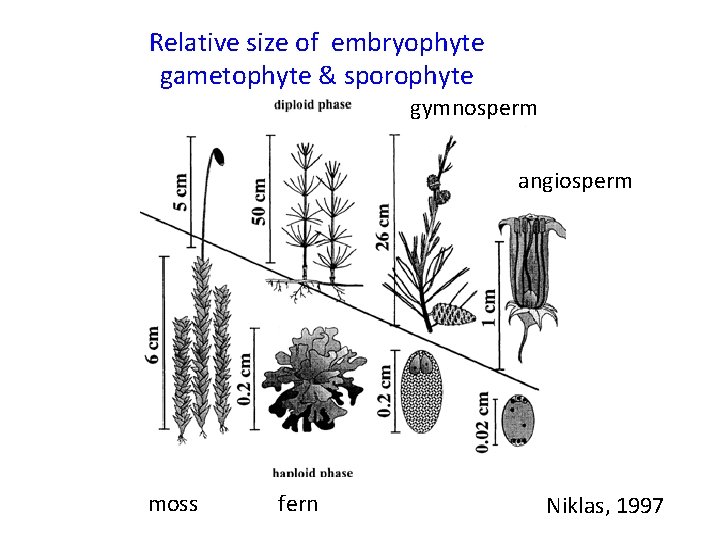
Relative size of embryophyte gametophyte & sporophyte gymnosperm angiosperm moss fern Niklas, 1997
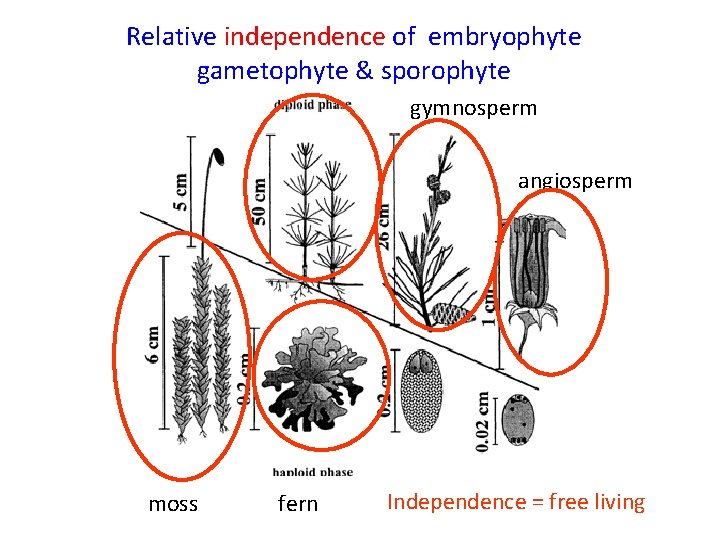
Relative independence of embryophyte gametophyte & sporophyte gymnosperm angiosperm moss fern Independence = free living
- Slides: 20