
Embryonic development and Pregnancy Embryonic development and Pregnancy
Embryonic development and Pregnancy
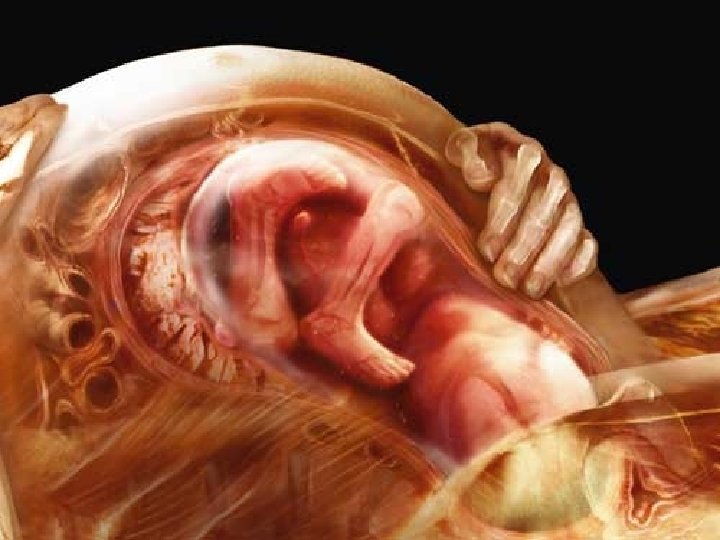
Embryonic development and Pregnancy Another term for pregnancy is the gestation period It lasts for about 280 days which is slightly more than 9 months
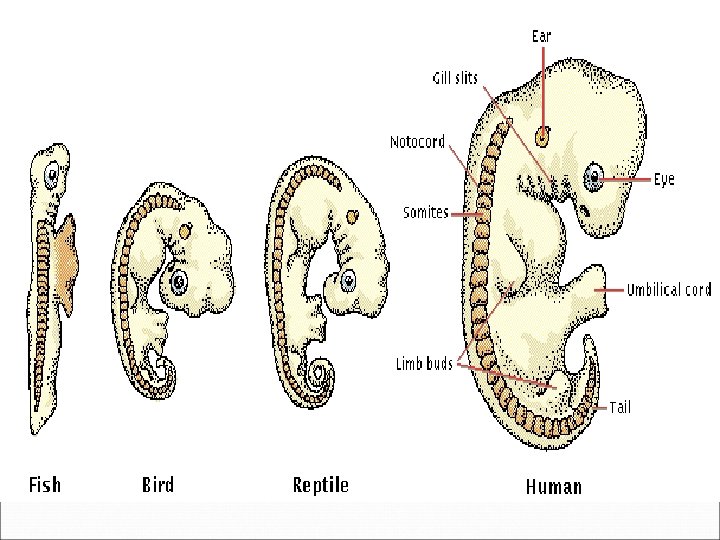
Embryonic development and Pregnancy Embryo increases in shape and size as it grows By 12 weeks the embryo has grown quite a lot, and will look clearly like a human baby It is now called the foetus
Development of the extraembryonic membranes
Development of the extra-embryonic membranes Soon after the blastocyst itself to the uterus wall, 2 membranes develop around it Extra-embryonic membranes
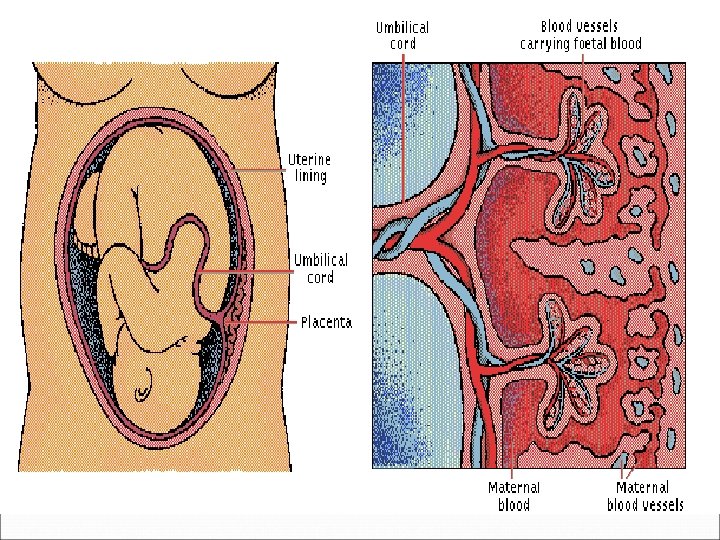
Development of the extra-embryonic membranes These membranes are: The chronian on the outside, forms chronic villi An amnion, on the inside, with amniotic cavity filled with amniotic fluid
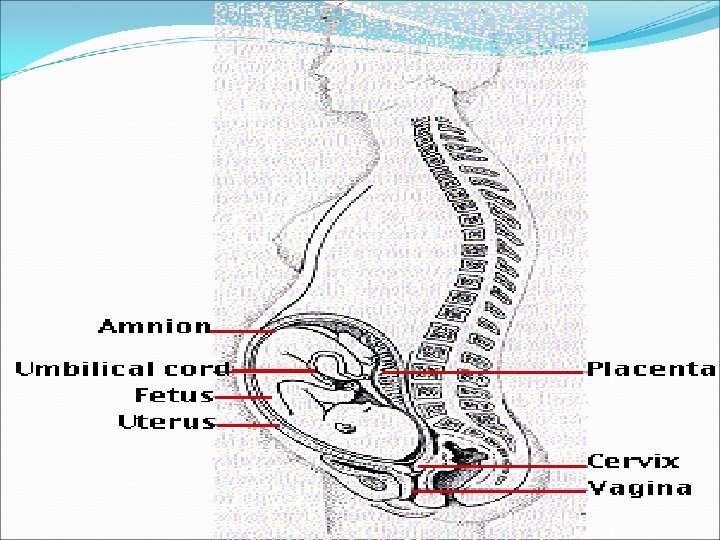
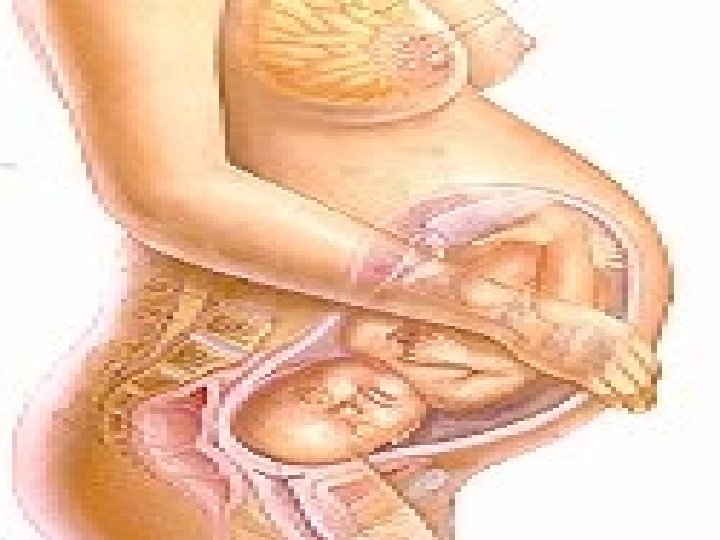
Development of the extraembryonic membranes Chronic villi with uterine tissue make up the placenta A hollow rope-like tube called umbilical cord, attaches the embryo to the placenta
Development of the extraembryonic membranes The placenta has the following functions: Attachment of embryo to mother Diffusion of desolved food from mother to foetus
Development of the extraembryonic membranes Diffusion of oxygen from mother to foetus and carbon dioxide from foetus to mother
Development of the extraembryonic membranes After 12 weeks of pregnancy it secretes its own progesterone which maintains pregnany
Development of the extraembryonic membranes The amniotic fluid has the following functions: Shock absorber Prevents dehydration
Development of the extraembryonic membranes Keeps foetus within a small temperature range Allows free foetal movement for growth and development
Development of the extraembryonic membranes The umbilical cord contains the umbilical artery and vein The artery carries deoxygenated blood with nitrogenous wastes from the embryo to the placenta The vein carries oxygenated blood and food
Birth Occurs about 280 days after fertilisation, this happens in 3 stages Stage 1: Uterus contracts Head pushed against cervix Membranes break Cervix dilates
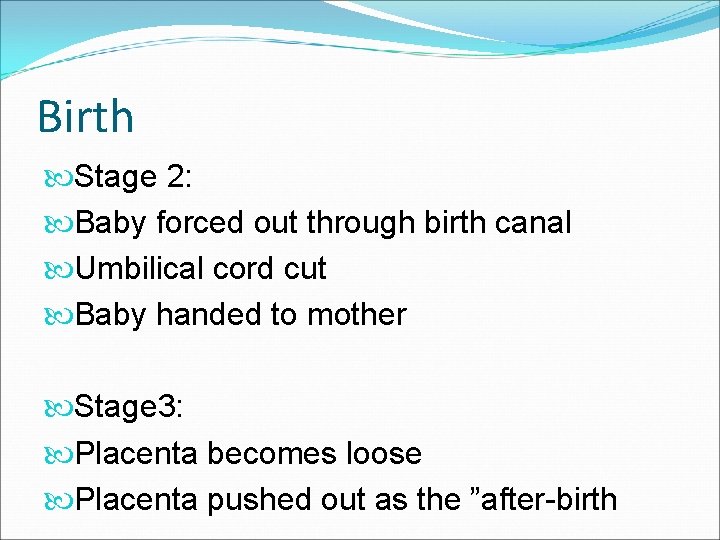
Birth Stage 2: Baby forced out through birth canal Umbilical cord cut Baby handed to mother Stage 3: Placenta becomes loose Placenta pushed out as the ”after-birth
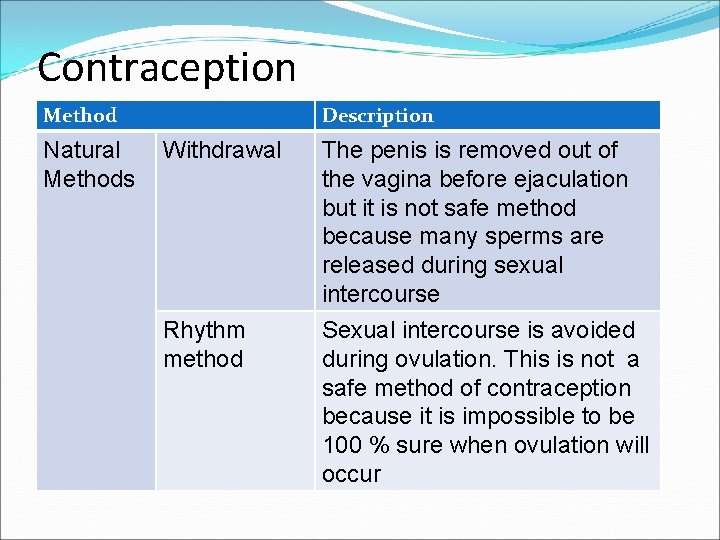
Contraception Method Natural Methods Description Withdrawal Rhythm method The penis is removed out of the vagina before ejaculation but it is not safe method because many sperms are released during sexual intercourse Sexual intercourse is avoided during ovulation. This is not a safe method of contraception because it is impossible to be 100 % sure when ovulation will occur
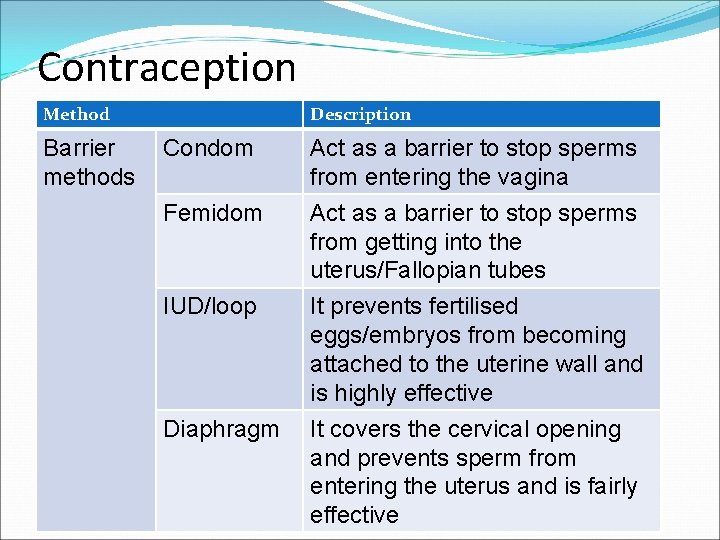
Contraception Method Barrier methods Description Condom Act as a barrier to stop sperms from entering the vagina Femidom Act as a barrier to stop sperms from getting into the uterus/Fallopian tubes It prevents fertilised eggs/embryos from becoming attached to the uterine wall and is highly effective It covers the cervical opening and prevents sperm from entering the uterus and is fairly effective IUD/loop Diaphragm
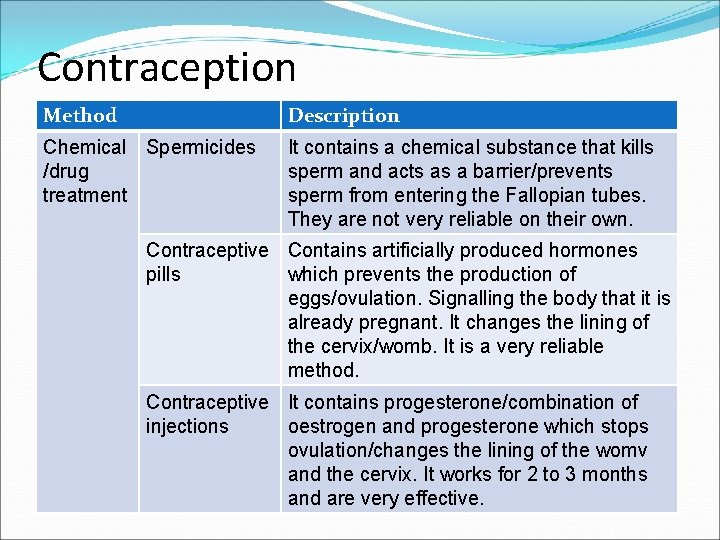
Contraception Method Description Chemical Spermicides /drug treatment It contains a chemical substance that kills sperm and acts as a barrier/prevents sperm from entering the Fallopian tubes. They are not very reliable on their own. Contraceptive Contains artificially produced hormones pills which prevents the production of eggs/ovulation. Signalling the body that it is already pregnant. It changes the lining of the cervix/womb. It is a very reliable method. Contraceptive It contains progesterone/combination of injections oestrogen and progesterone which stops ovulation/changes the lining of the womv and the cervix. It works for 2 to 3 months and are very effective.
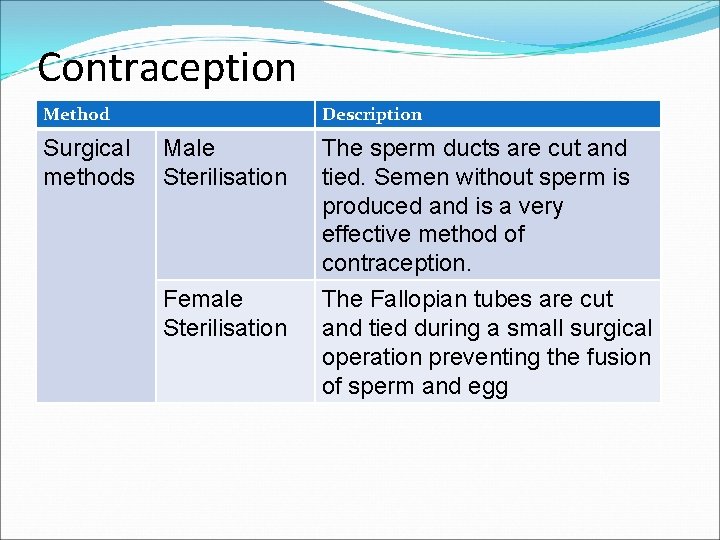
Contraception Method Surgical methods Description Male Sterilisation Female Sterilisation The sperm ducts are cut and tied. Semen without sperm is produced and is a very effective method of contraception. The Fallopian tubes are cut and tied during a small surgical operation preventing the fusion of sperm and egg
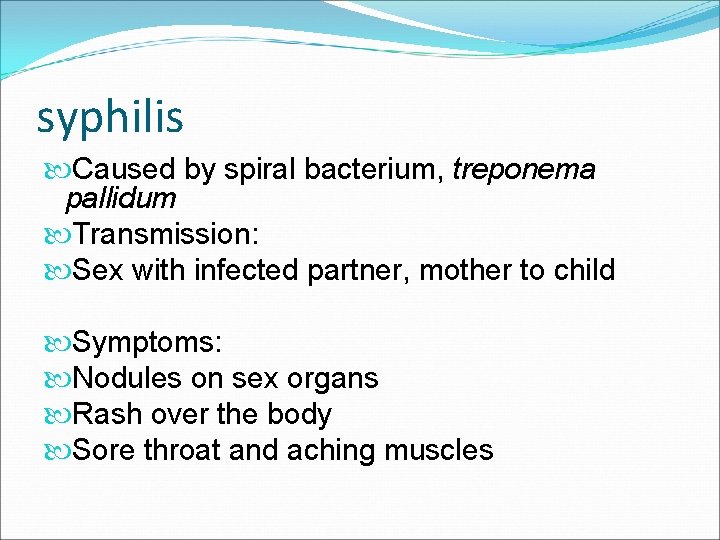
syphilis Caused by spiral bacterium, treponema pallidum Transmission: Sex with infected partner, mother to child Symptoms: Nodules on sex organs Rash over the body Sore throat and aching muscles
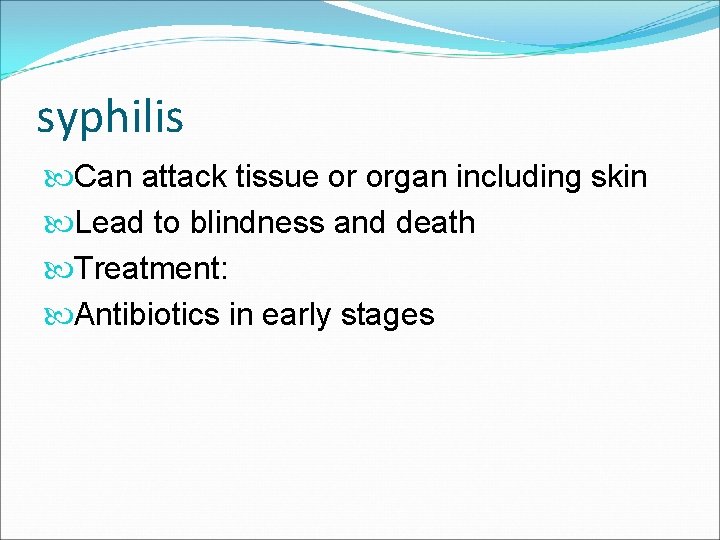
syphilis Can attack tissue or organ including skin Lead to blindness and death Treatment: Antibiotics in early stages
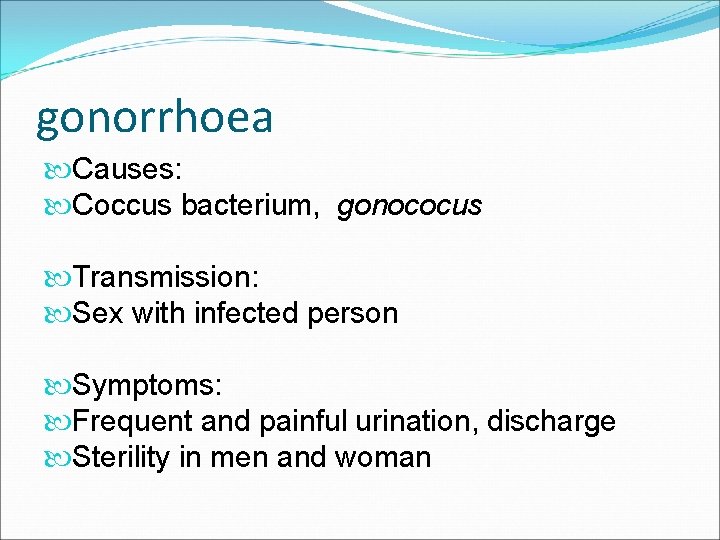
gonorrhoea Causes: Coccus bacterium, gonococus Transmission: Sex with infected person Symptoms: Frequent and painful urination, discharge Sterility in men and woman
gonorrhoea Treatment: Antibiotics, penicillin More difficult to cure in late stages
Prevention of stds Most stds are life-threatening For many of them, there is no cure Medication, nutritious diet and healthy lifestyle can slow down progress of the disease Use A B C method Abstain from sexual activites Be faithful to your partner Condomise
- Slides: 30