
Embryology Anatomy Physiology of the Breast Prof Dr
Embryology, Anatomy & Physiology of the Breast Prof. Dr. Reda M. Mostafa

“ The breast from their prominence, the colour of their skin, and the red colour of the nipples, by which they are surmounted, add great beauty to the female form” (Sir Astely Paston cooper. On the anatomy of breast, 1840) 2 © Prof. Reda Mostafa
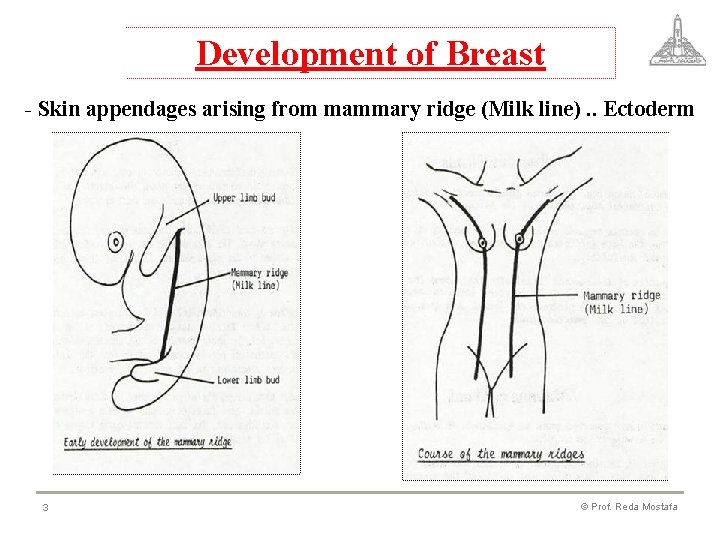
Development of Breast - Skin appendages arising from mammary ridge (Milk line). . Ectoderm 3 © Prof. Reda Mostafa

4 © Prof. Reda Mostafa

5 © Prof. Reda Mostafa
6 © Prof. Reda Mostafa
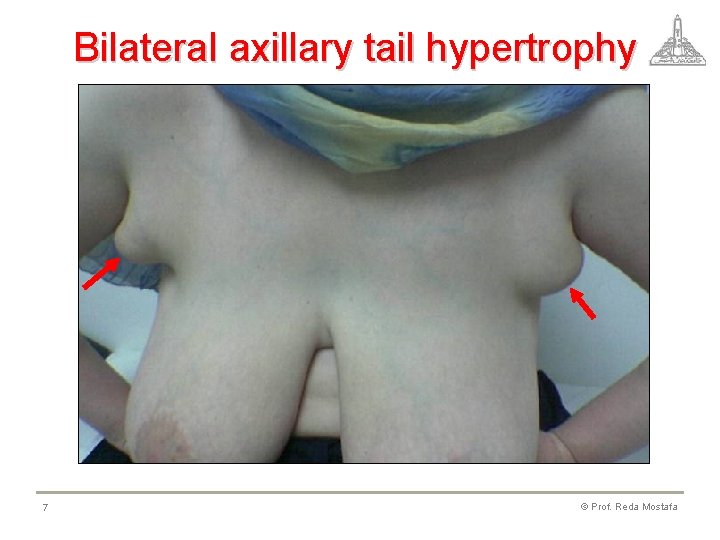
Bilateral axillary tail hypertrophy 7 © Prof. Reda Mostafa
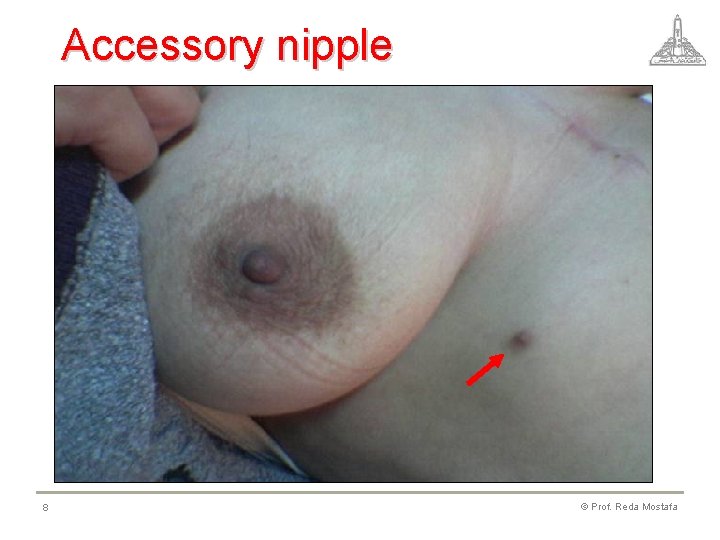
Accessory nipple 8 © Prof. Reda Mostafa
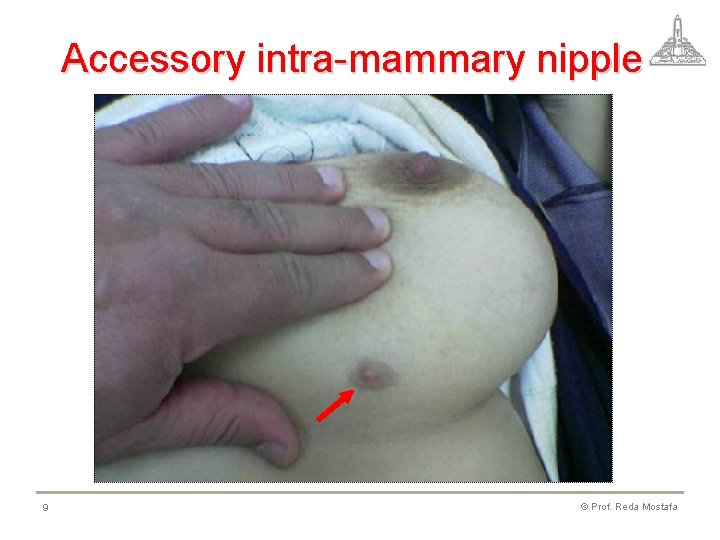
Accessory intra-mammary nipple 9 © Prof. Reda Mostafa
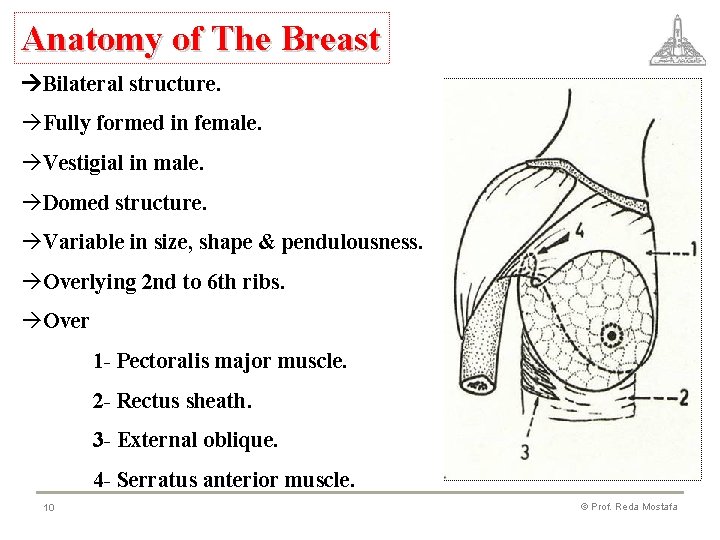
Anatomy of The Breast Bilateral structure. àFully formed in female. àVestigial in male. àDomed structure. àVariable in size, shape & pendulousness. àOverlying 2 nd to 6 th ribs. àOver 1 - Pectoralis major muscle. 2 - Rectus sheath. 3 - External oblique. 4 - Serratus anterior muscle. 10 © Prof. Reda Mostafa
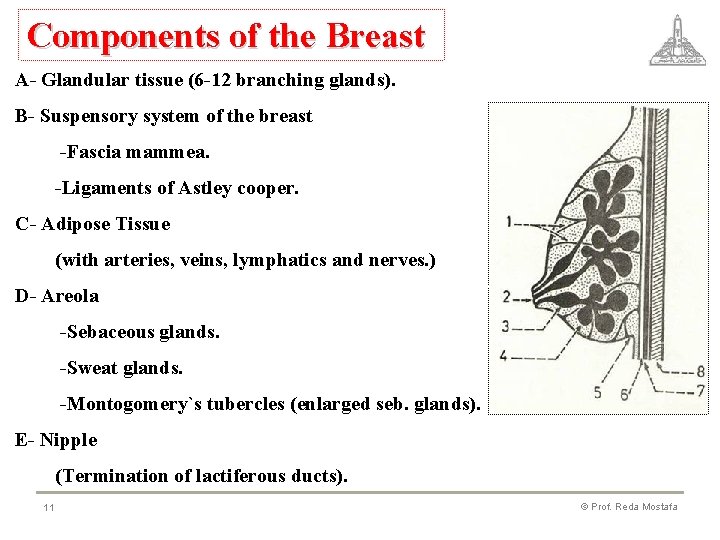
Components of the Breast A- Glandular tissue (6 -12 branching glands). B- Suspensory system of the breast -Fascia mammea. -Ligaments of Astley cooper. C- Adipose Tissue (with arteries, veins, lymphatics and nerves. ) D- Areola -Sebaceous glands. -Sweat glands. -Montogomery`s tubercles (enlarged seb. glands). E- Nipple (Termination of lactiferous ducts). 11 © Prof. Reda Mostafa
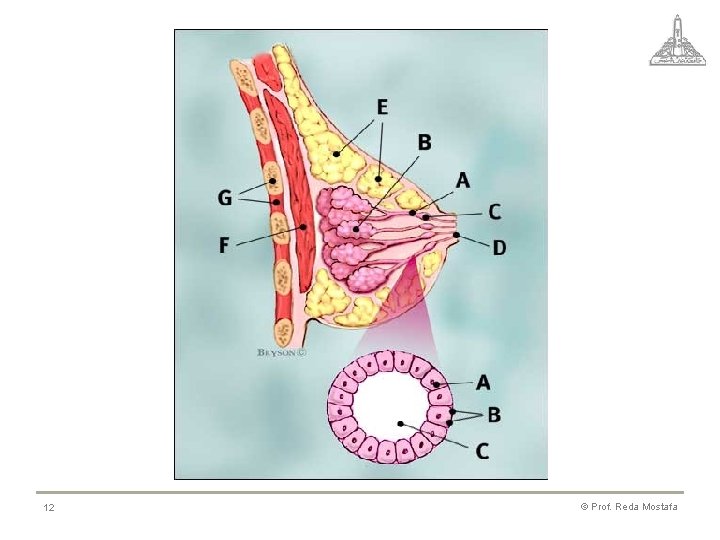
12 © Prof. Reda Mostafa

Blood supply of the Breast àArterial 1 - Axillary artery Lateral thoracic artery. Acromiothoracic artery. 2 - Internal mammary artery perforating branches. 3 - Inter costal arteries (2 nd, 3 rd, 4 th) Lateral branches. àVenous Corresponds to the arterial supply. 13 © Prof. Reda Mostafa
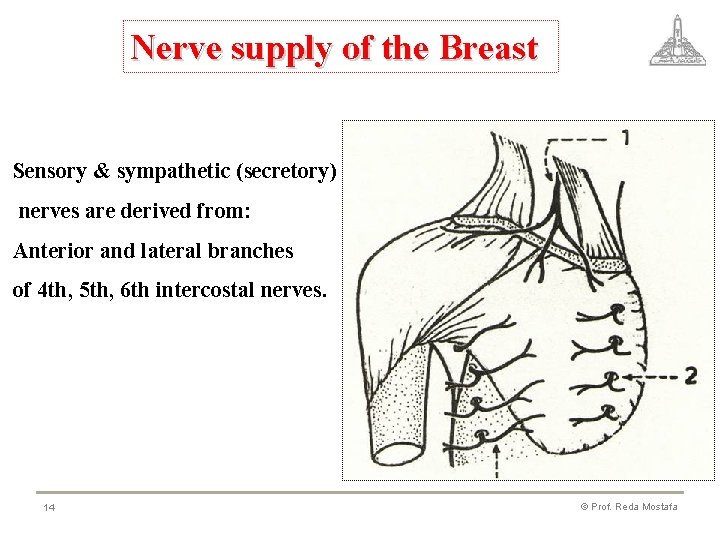
Nerve supply of the Breast Sensory & sympathetic (secretory) nerves are derived from: Anterior and lateral branches of 4 th, 5 th, 6 th intercostal nerves. 14 © Prof. Reda Mostafa
Lymphatic drainage of Breast 1 - Axillary LN (75%) -Lateral group along axillary vein. -Anterior group along lateral thoracic vein. -Posterior group along subscapular vein. -Central group In the fat of axilla. -Inter pectoral group Between the 2 muscles. -Apical group above the level of pectoralis minor. 2 - Internal mammary LN 15 © Prof. Reda Mostafa
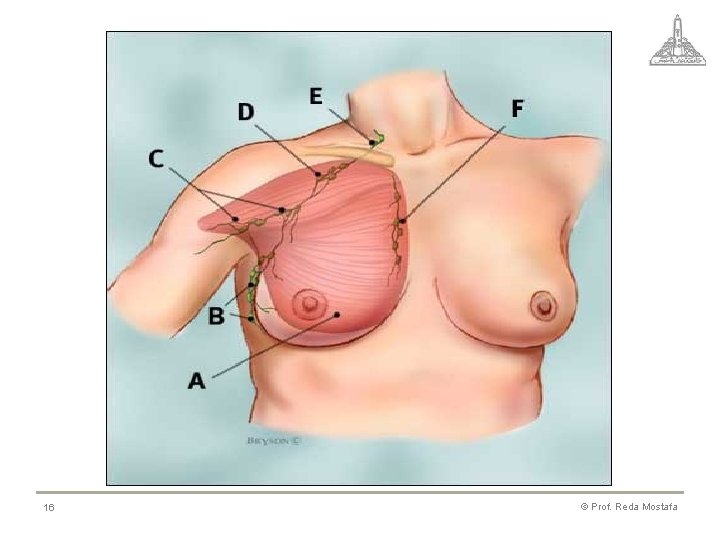
16 © Prof. Reda Mostafa
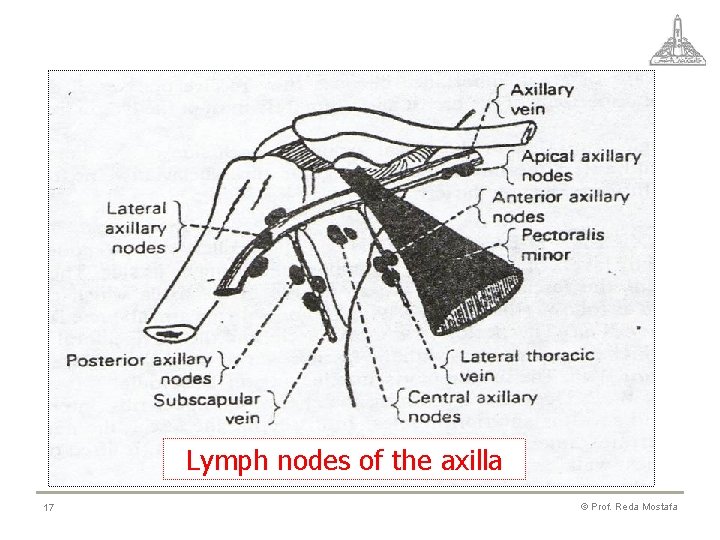
Lymph nodes of the axilla 17 © Prof. Reda Mostafa
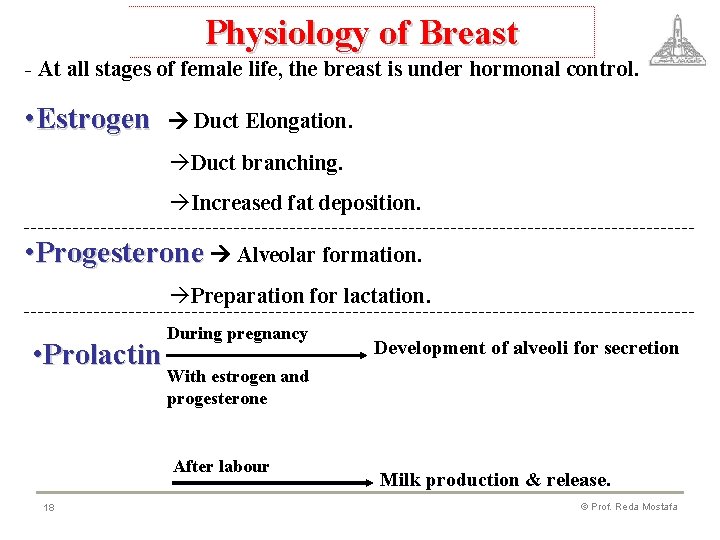
Physiology of Breast - At all stages of female life, the breast is under hormonal control. • Estrogen Duct Elongation. àDuct branching. àIncreased fat deposition. • Progesterone Alveolar formation. àPreparation for lactation. • Prolactin During pregnancy With estrogen and progesterone After labour 18 Development of alveoli for secretion Milk production & release. © Prof. Reda Mostafa
1 - In fetal and Neonatal life: -Not enfluenced by sex hormones till 7 th intra uterine month. -Epithelial ducts formation which arrange into lobules after 7 th month. -Regression after birth till puberty. 2 - At puberty: -Early anovulatory cycles Estrogen effect only. -Then, ovulatory cycles Estrogen & progesterone. 19 © Prof. Reda Mostafa
3 - In menstrual cycle: -During proliferative phase (Estrogen by graffian follicle) àBreast development, duct proliferation and budding. àIncreasing breast size by 15 -30 ml. -Failure cycle) of ovum implantation (i. e. an unsuccessful Regressive changes occur. 20 © Prof. Reda Mostafa
4 - During pregnancy Breast stimulation of development& differentiation under effect of: • Sex steroids (Luteal and placental). • Prolactin. • HPL. • HCGT 21 © Prof. Reda Mostafa
1 st Trimester -Duct enlargement (more than menstrual cycle). -Venous engorgement + Breast heaviness. -Increase pigmentation of nipple & areola. 2 nd Trimester -Alveolar development. -Increase mesenchymal growth. -Increase blood supply. 3 rd Trimester -Dramatic increase in breast size (about 350 gram). 22 © Prof. Reda Mostafa
5 - During lactation A- Milk production (under control of : ) 1 - Hypothalamus. 2 - Anterior pituitary. 3 -Ovary. 4 -Placenta. 5 - Adrenals. B- Milk Release (under control of: ) Posterior pituitary. 23 © Prof. Reda Mostafa
NB 1 - Colostrum (1 st few days) …… High protein & Ig G. 2 - Then, Mature human milk …. . High fat & Lactose. 3 - Mild letdown Is under neurohormonal control. -Oxytocin (++) milk letdown. -Pain & anxiety (- -) the reflex. 24 © Prof. Reda Mostafa

25 © Prof. Reda Mostafa
- Slides: 25