
EMBRACE YOUR DREAM WORKSHOP 1 PLAN YOUR FUTURE
EMBRACE YOUR DREAM WORKSHOP 1 “PLAN YOUR FUTURE” Presenter Name Presentation Date
Overview • Good decision-making • Short term and long term goals • How personal interests affect college choices • Benefits of postsecondary education • College costs • Conversation with a professional

Find out your dreams, so that you can chase them
7 Steps to Decision-Making • • Define your problem Gather information and resources List options Weigh and compare options Make a decision Make a plan of action Evaluate the decision
Here are the steps to determine a decision: • What is your area of interest in general? • What kind of education or training to take? • Would you consider being an entrepreneur? • Would you like to work part time during high school? • Would you prefer to go to college rights after high school or would want to work for a while? • Which courses to take during high school?

Activity Dream Your Future

Why College?
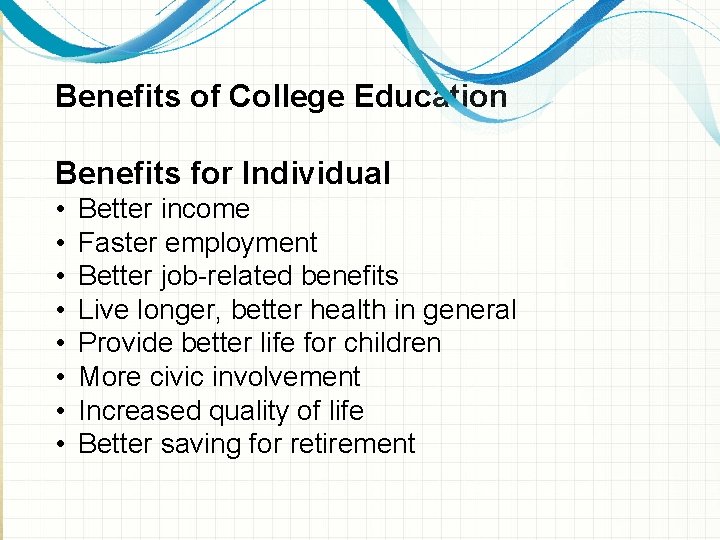
Benefits of College Education Benefits for Individual • • Better income Faster employment Better job-related benefits Live longer, better health in general Provide better life for children More civic involvement Increased quality of life Better saving for retirement
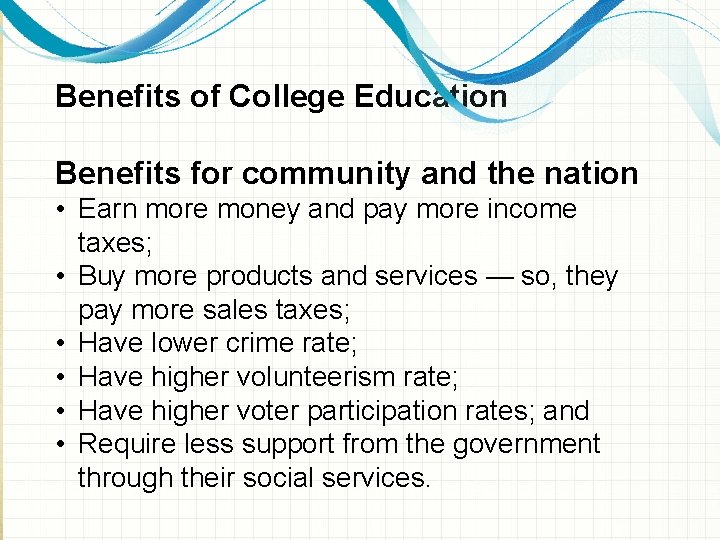
Benefits of College Education Benefits for community and the nation • Earn more money and pay more income taxes; • Buy more products and services — so, they pay more sales taxes; • Have lower crime rate; • Have higher volunteerism rate; • Have higher voter participation rates; and • Require less support from the government through their social services.
Activity Why College
Break 15 minutes

How to Afford a College?
Paying for College • • • Never too early to plan college payment Financial aid is available for everyone But, no one gets it by wishing! Every student would need assistance Application is free Most expensive colleges - most scholarships Today is the day • College costs increase every year • More financial aid available
Money comes from various sources: • US Government provide loans, grants, and work-study programs. • States give grant and loans. • College and universities offer grant, loan, and scholarships • Foundations, corporations, and community organizations give scholarships.
Types of financial aid • Grants and scholarships(Gift Aid) • Work-study • Loans
Financial aid process • • How does the process work? Who can help? Hard work pays off. Websites to get information www. finaid. org www. studentaid. ed. gov
Activity Myths about financial aid

Guest Speaker Name Lastname

NEW WORK

QUESTIONS?
APPENDIX
- Slides: 21