
Embedding career learning in schools and subject curricula
Embedding career learning in schools and subject curricula Tristram Hooley Karrierelæringskonference, Denmark 30 th September 2020
Careers leader handbook • Written to support leading and managing careers programmes in schools and vocational colleges. • Available from https: //trotman. co. uk/products/thecareers-leader-handbook • Additional digital resources at https: //indigo. careers/clh/
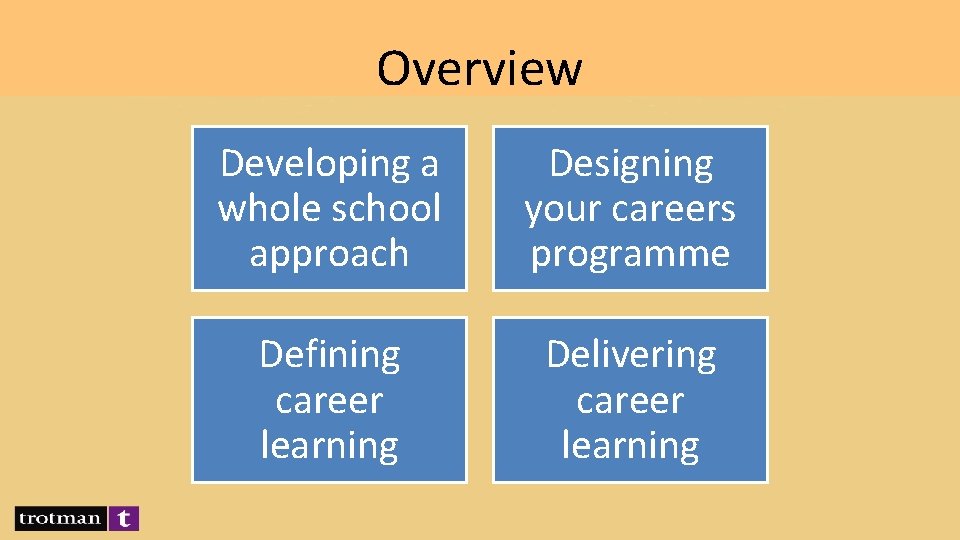
Overview Developing a whole school approach Designing your careers programme Defining career learning Delivering career learning
Overview Developing a whole school approach Designing your careers programme Defining career learning Delivering career learning

Career is the individual’s journey through life, learning and work
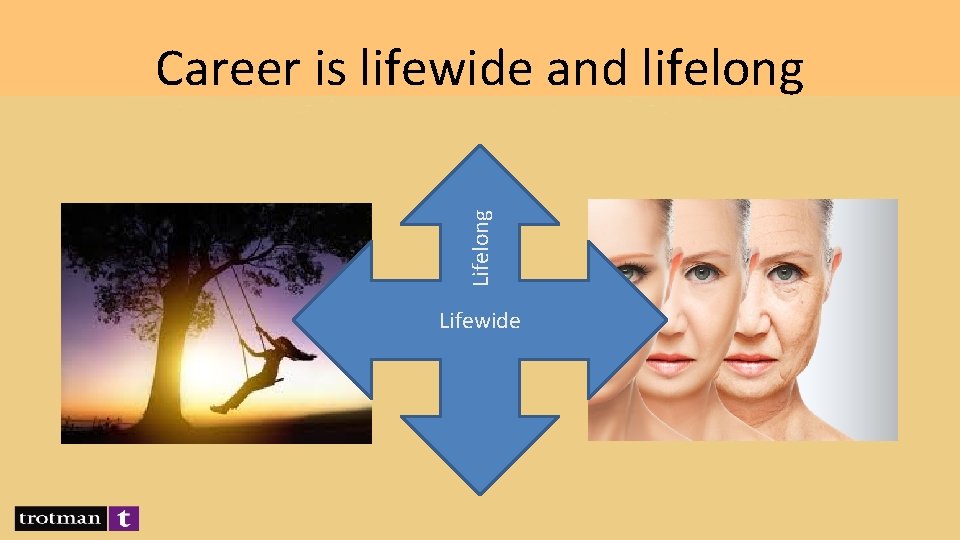
Lifelong Career is lifewide and lifelong Lifewide
It links… Education with life Effort today with outcomes tomorrow Schooling with society “Why are we learning this? What use will it be? ”
Strong link to bildung/danning
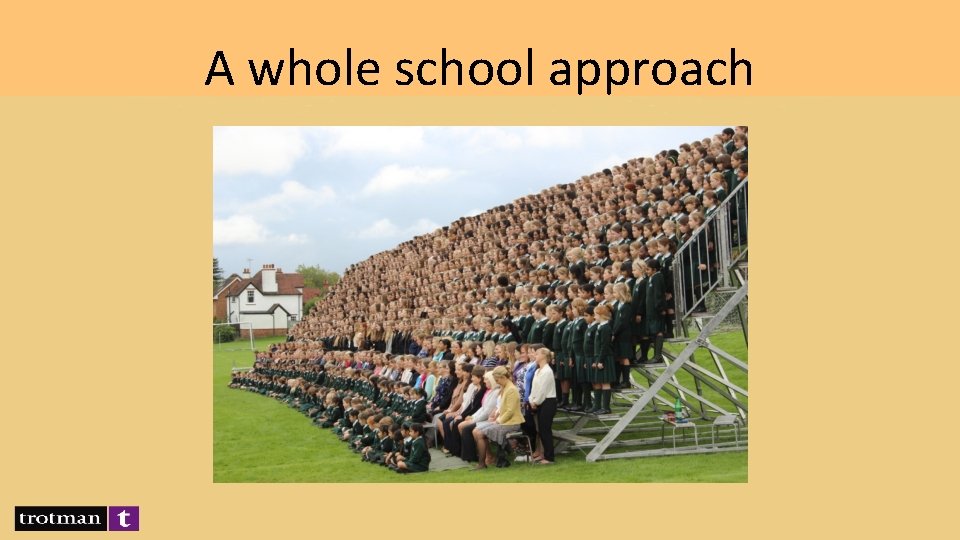
A whole school approach
Embedded in your school’s vision What is the guiding philosophy in your school? What does it promise to achieve for its students? How does this link to career?
Engaging senior leaders • • • Build a relationship with school principal Advise and help them around policy, strategy and resources Present a vision before you buy them into the details Report on successes as well as areas needing improvement Use them to support you sparingly.
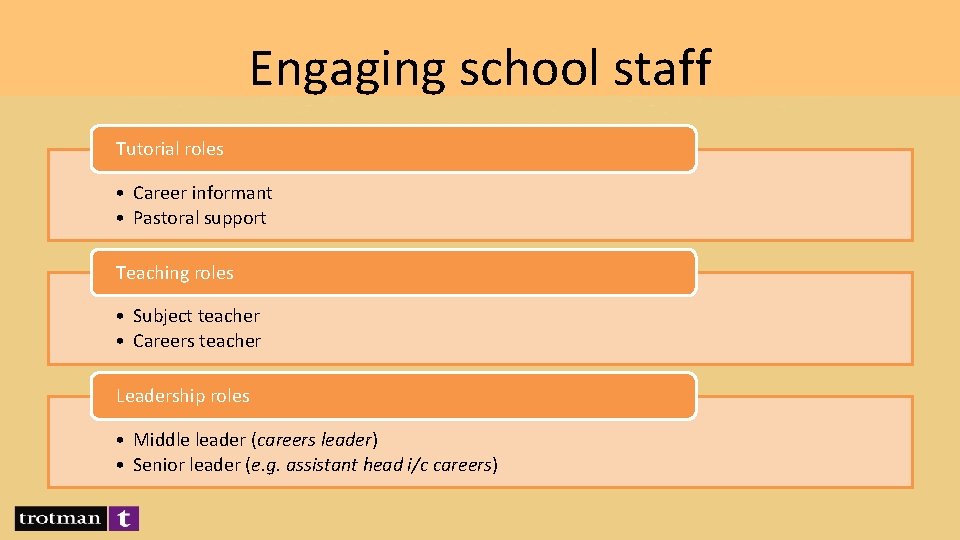
Engaging school staff Tutorial roles • Career informant • Pastoral support Teaching roles • Subject teacher • Careers teacher Leadership roles • Middle leader (careers leader) • Senior leader (e. g. assistant head i/c careers)
Getting colleagues on board • • • Explain what you are trying to do, and why Lead by example Celebrate and publicise success Make it easy for them Make sure SLT back you up Ask for feedback and use their ideas
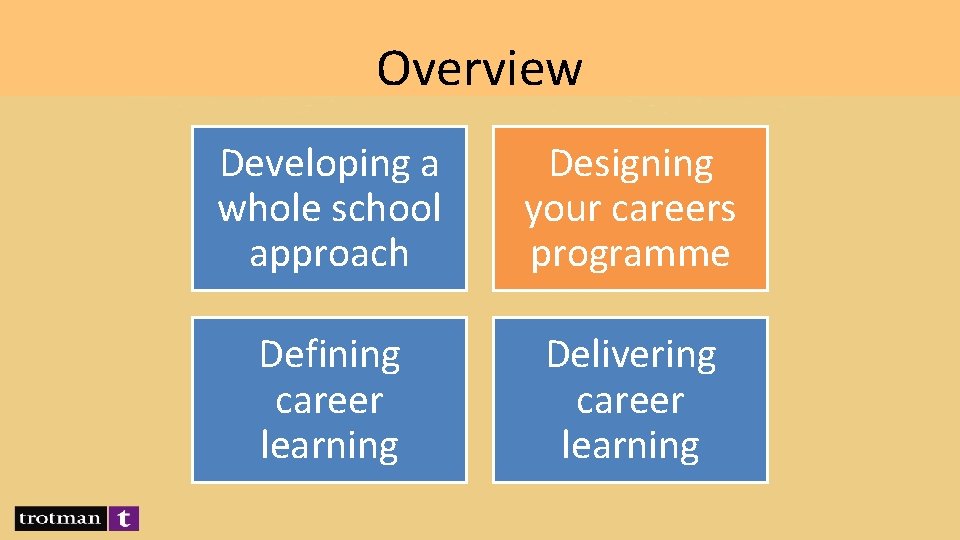
Overview Developing a whole school approach Designing your careers programme Defining career learning Delivering career learning
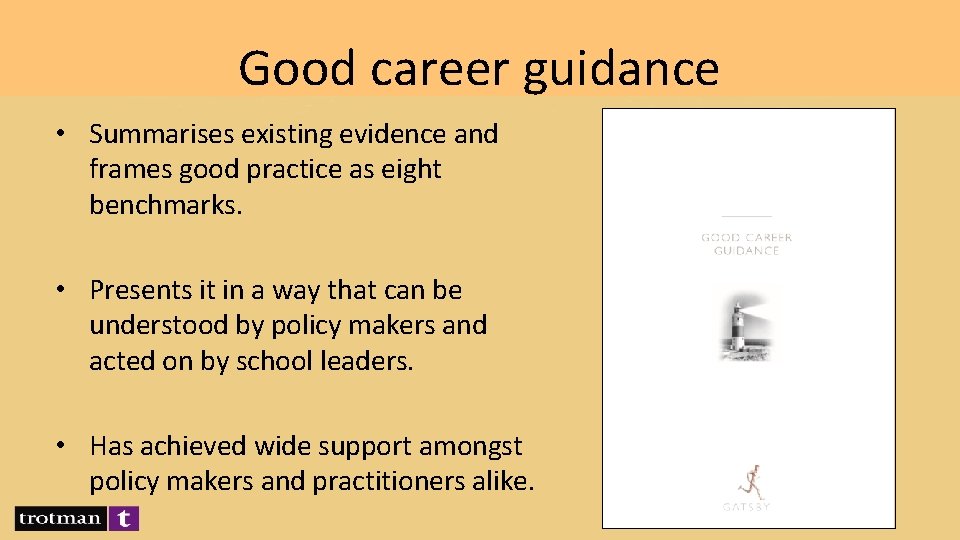
Good career guidance • Summarises existing evidence and frames good practice as eight benchmarks. • Presents it in a way that can be understood by policy makers and acted on by school leaders. • Has achieved wide support amongst policy makers and practitioners alike.
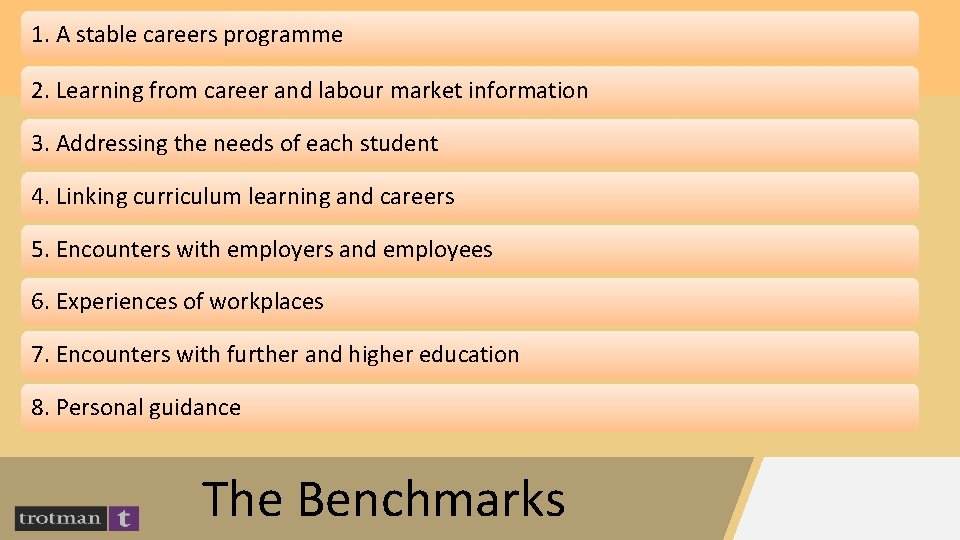
1. A stable careers programme 2. Learning from career and labour market information 3. Addressing the needs of each student 4. Linking curriculum learning and careers 5. Encounters with employers and employees 6. Experiences of workplaces 7. Encounters with further and higher education 8. Personal guidance The Benchmarks
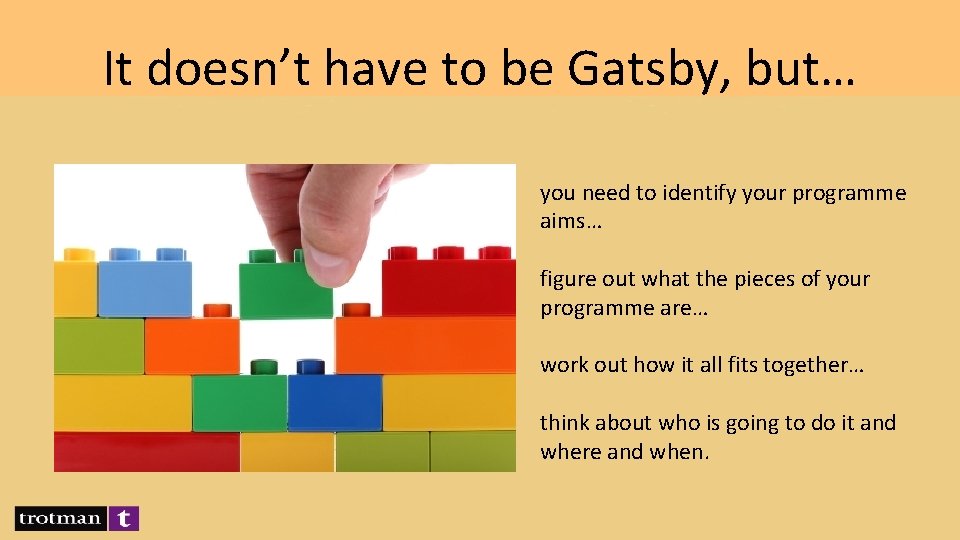
It doesn’t have to be Gatsby, but… you need to identify your programme aims… figure out what the pieces of your programme are… work out how it all fits together… think about who is going to do it and where and when.
Overview Developing a whole school approach Designing your careers programme Defining career learning Delivering career learning
What do you want people to learn? Just as with all subjects career learning needs to define what you want people to learn. Without an idea of the aims of learning, you can’t start thinking about how you will teach and develop students.
Some possible learning areas Students should… • Explore the full range of possibilities open to them and learn about recruitment processes and the culture of different workplaces • Grow throughout life by reflecting on themselves, their background, and their strengths and committing to lifelong learning. • Manage their career actively, make the most of opportunities and are resilient in the face of setbacks. • Balance their life as a worker and an earner with their wellbeing, other interests and their involvement with their family and community. • Influence the development of their career by creating opportunities and building strong relationships. • Think big and pay attention to how the economy, politics and society connect with their own life and career.
These learning areas are the basis for… • career learning as a subject • embedding career learning in other subjects • whole school and cross-curricular learning
What is the curriculum • The totality of the (formal) student experiences that occur in the educational process. • This is typically driven by the subject, but there also implicit and generic elements. • Supplemented by co-curricular and extra-curricular elements
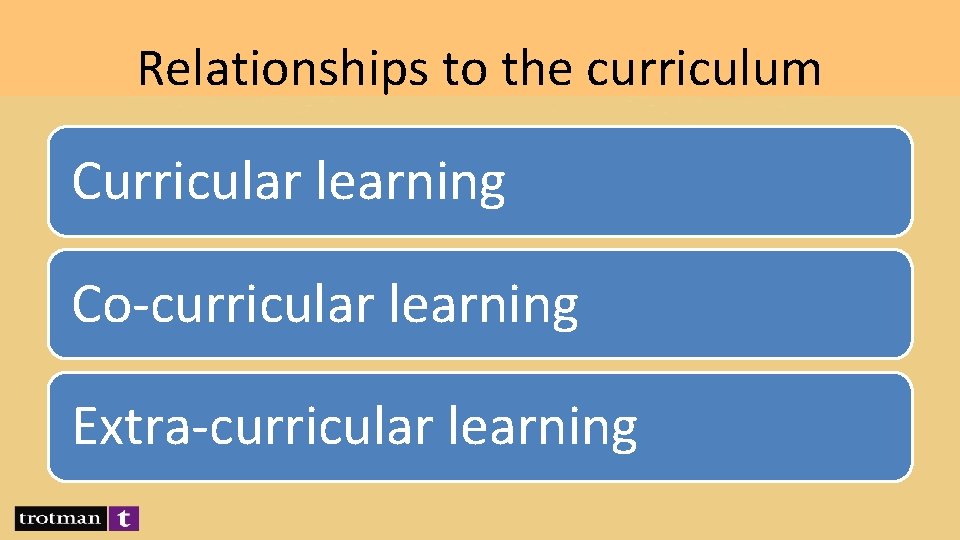
Relationships to the curriculum Curricular learning Co-curricular learning Extra-curricular learning
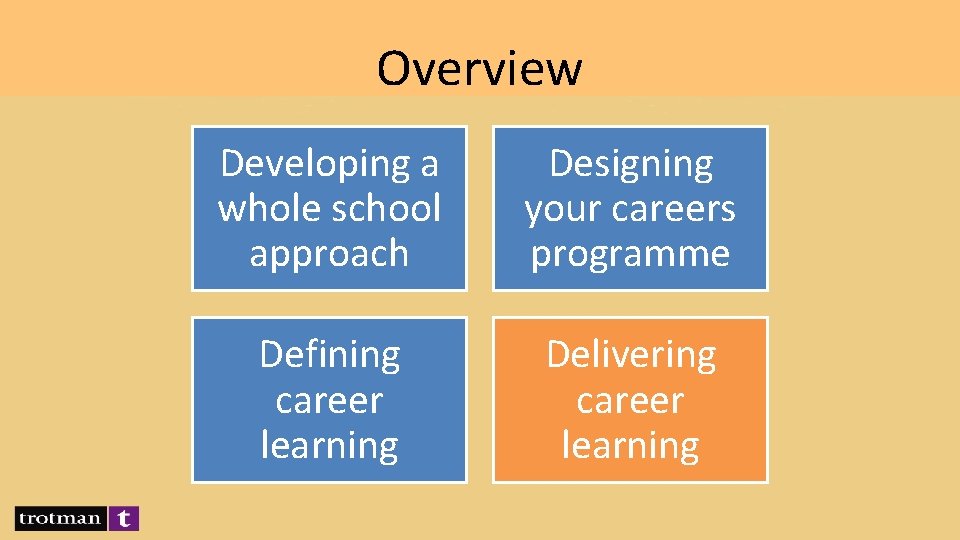
Overview Developing a whole school approach Designing your careers programme Defining career learning Delivering career learning
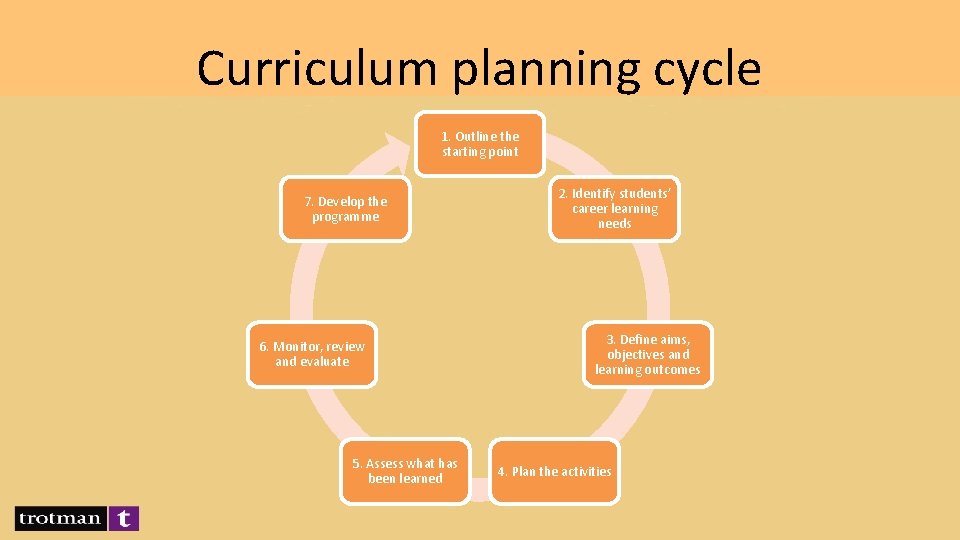
Curriculum planning cycle 1. Outline the starting point 7. Develop the programme 6. Monitor, review and evaluate 5. Assess what has been learned 2. Identify students’ career learning needs 3. Define aims, objectives and learning outcomes 4. Plan the activities
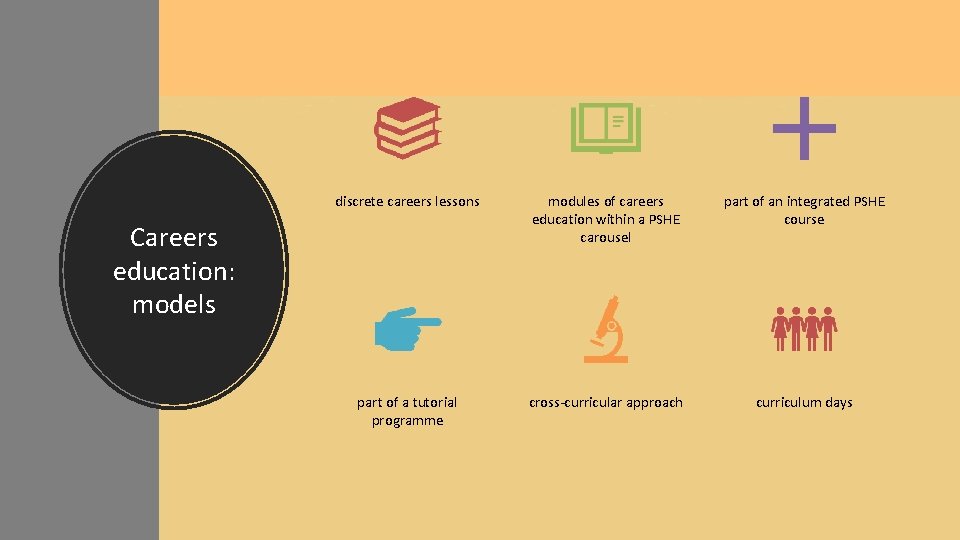
discrete careers lessons modules of careers education within a PSHE carousel part of an integrated PSHE course part of a tutorial programme cross-curricular approach curriculum days Careers education: models
Why embed career learning in subjects? • help students to understand the relevance and application of subject knowledge and skills outside of school (careers using the subject) • help students to understand the progression routes and employment opportunities in the subject area (careers from the subject) • teach elements of the careers education scheme of work
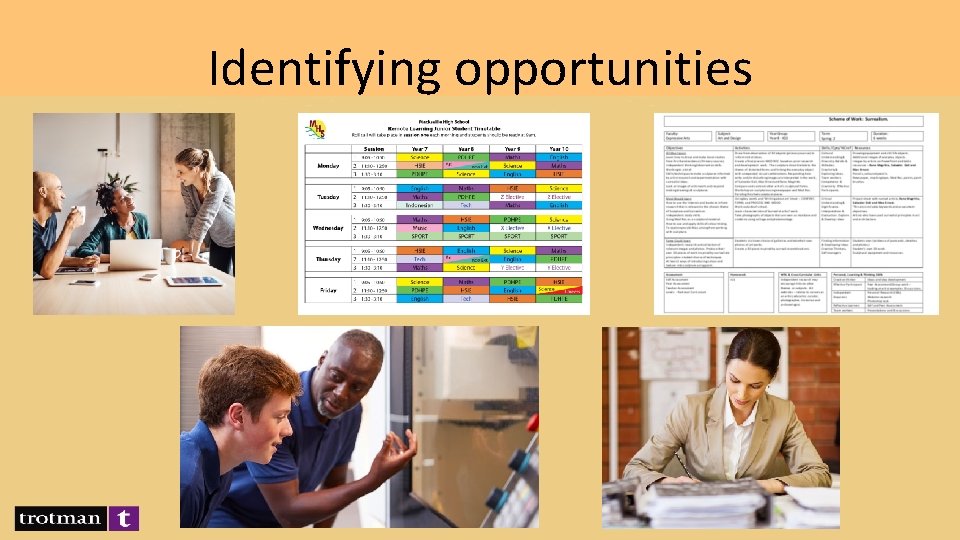
Identifying opportunities
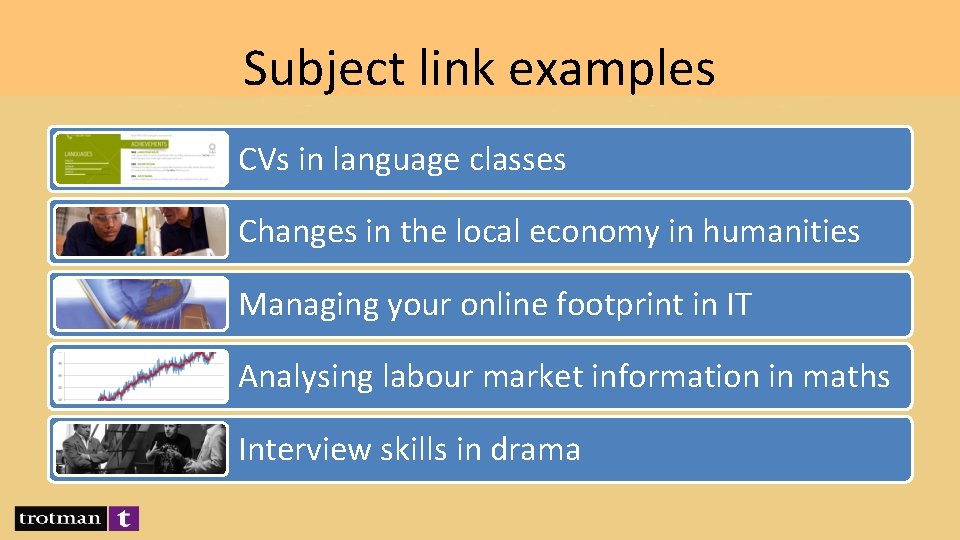
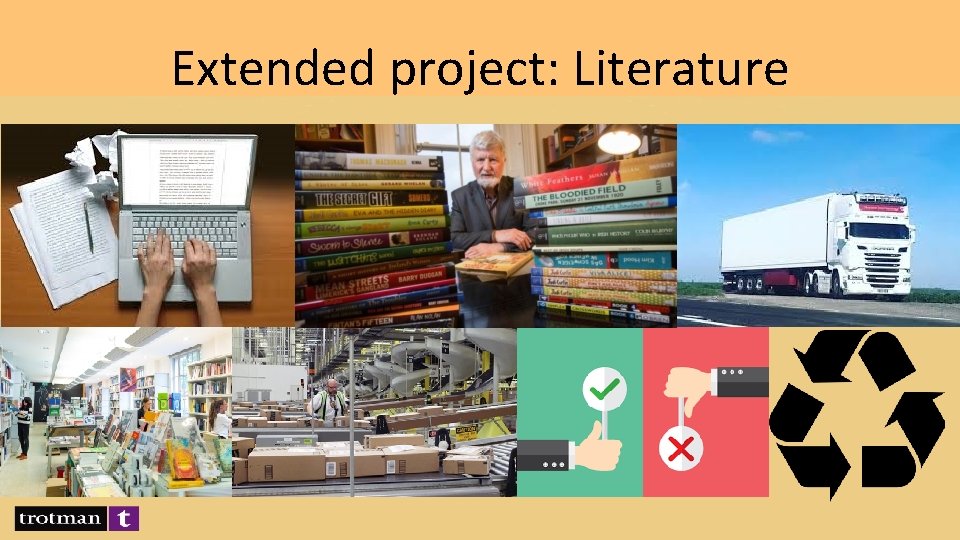
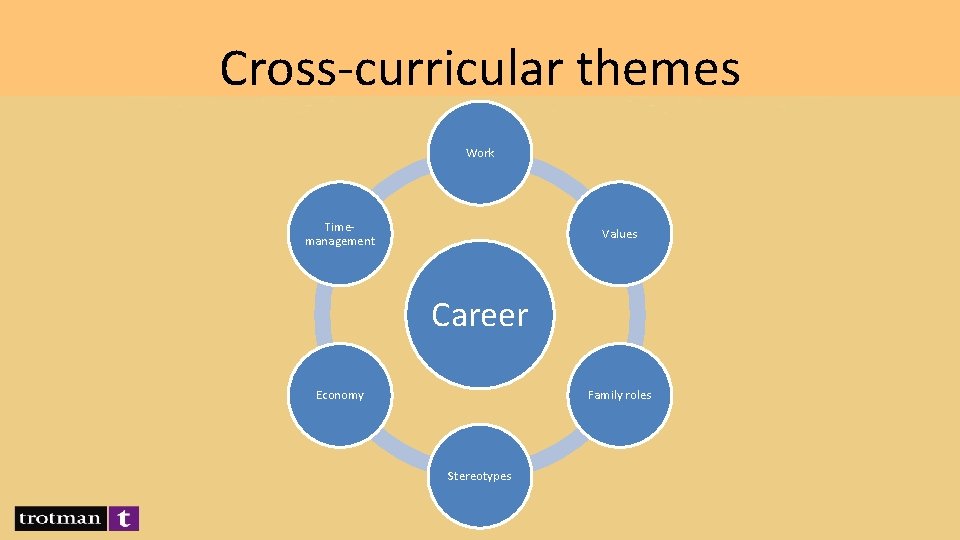
Subject link examples CVs in language classes Changes in the local economy in humanities Managing your online footprint in IT Analysing labour market information in maths Interview skills in drama
Extended project: Literature
Cross-curricular themes Work Timemanagement Values Career Economy Family roles Stereotypes

Questions
References and resources • Adventures in Career Development https: //adventuresincareerdevelopment. wordpress. com/. • Andrews, D. & Hooley, T. (2018). The Careers Leader Handbook. Bath: Trotman. With additional online resources at https: //indigo. careers/clh/ • Gatsby Charitable Foundation. (2014). Good Career Guidance. London: Gatsby Charitable Foundation.
Final thoughts • We should be aiming to put careers at the heart of education. • This means engaging our institutions and our colleagues in thinking about career. • Career learning can exist as a subject in its own right, but it is stronger when it is connected to the rest of the curriculum. • Building careers into the curriculum takes time and skill, but it is possible in every subject (and as a way of linking subjects).
About me Tristram Hooley, Professor of Career Education, University of Derby Email: tristram. hooley@gmail. com Blog: http: //adventuresincareerdevelopment. wordpress. com Twitter: @pigironjoe
- Slides: 35