
Embedded SmallScale Generation and Financial Stability in Municipalities
Embedded Small-Scale Generation and Financial Stability in Municipalities Renewable Energy Conference 2018 De Aar, Northern Cape 24 th August 2018 Dominic Milazi Cell: +27 71 618 9357 Email: DMilazi@csir. co. za Dr Tobias Bischof-Niemz Chief Engineer
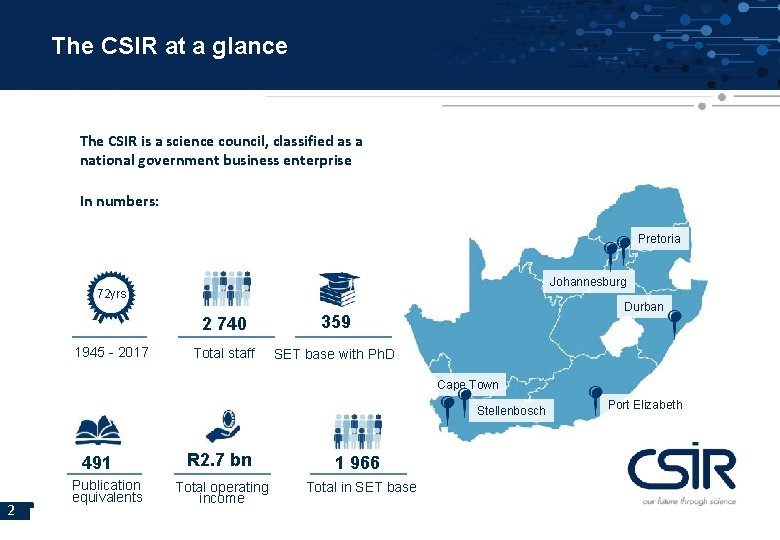
The CSIR at a glance The CSIR is a science council, classified as a national government business enterprise In numbers: ~ R 2. 15 bn Pretoria Johannesburg 72 yrs 1945 - 2017 2 740 359 Total staff SET base with Ph. D Durban Cape Town Stellenbosch 491 2 Publication equivalents R 2. 7 bn Total operating income 1 966 Total in SET base Port Elizabeth
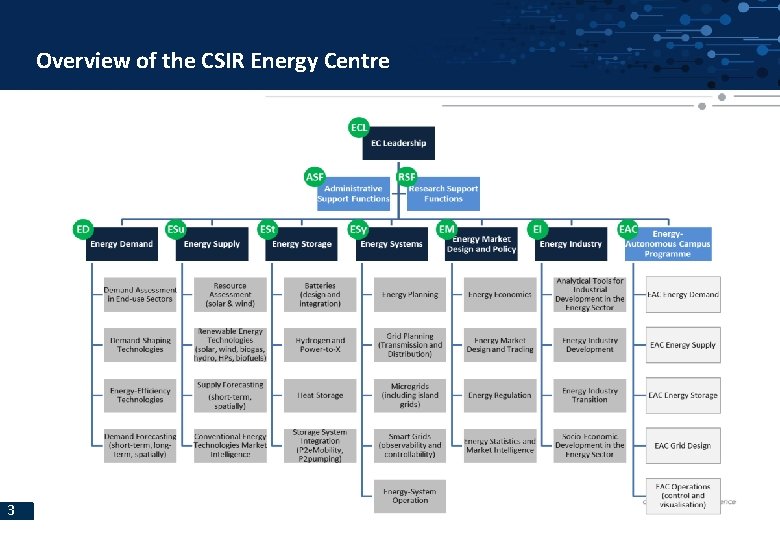
Overview of the CSIR Energy Centre 3
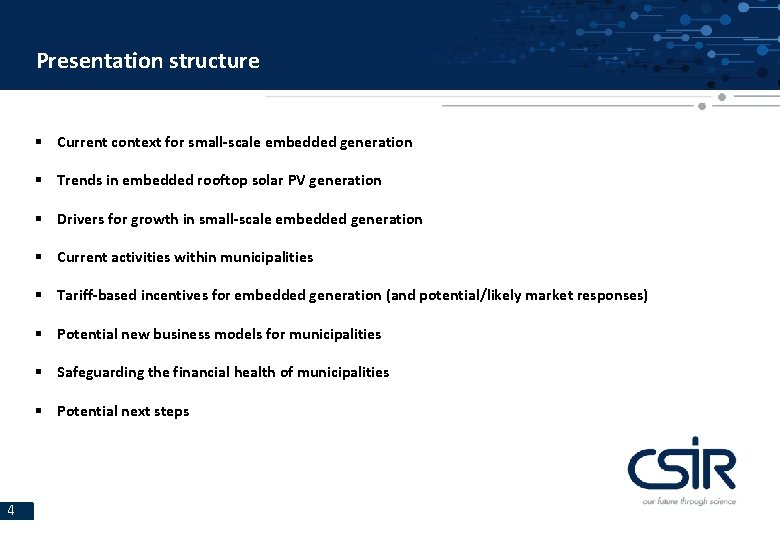
Presentation structure § Current context for small-scale embedded generation § Trends in embedded rooftop solar PV generation § Drivers for growth in small-scale embedded generation § Current activities within municipalities § Tariff-based incentives for embedded generation (and potential/likely market responses) § Potential new business models for municipalities § Safeguarding the financial health of municipalities § Potential next steps 4
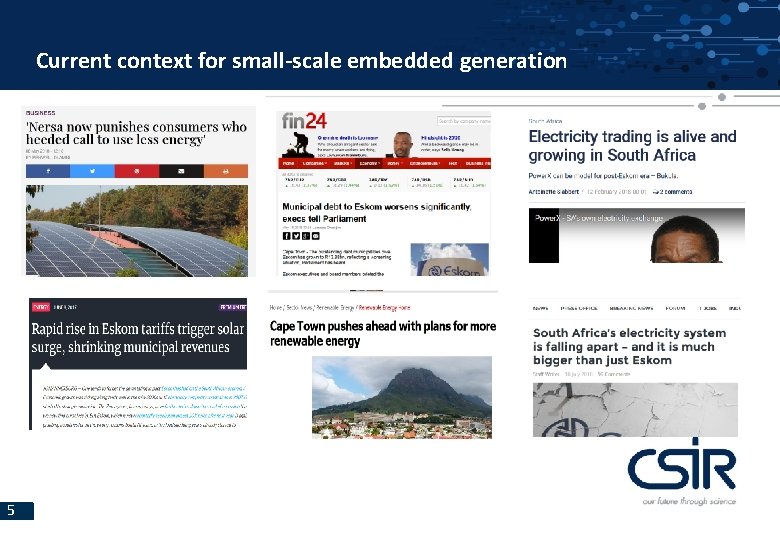
Current context for small-scale embedded generation 5
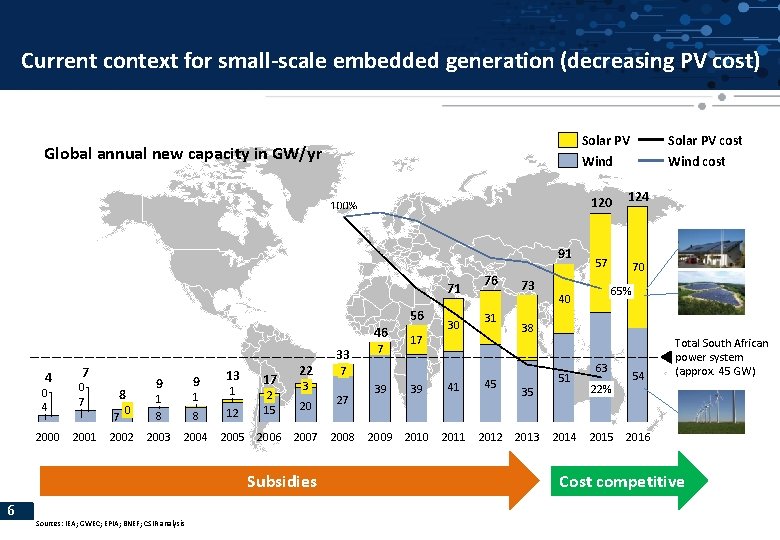
Current context for small-scale embedded generation (decreasing PV cost) Solar PV Wind Global annual new capacity in GW/yr 120 91 71 56 46 4 7 0 4 0 7 2000 2001 8 7 0 2002 9 9 13 1 8 1 1 8 2003 2004 17 22 3 Sources: IEA; GWEC; EPIA; BNEF; CSIR analysis 7 12 20 27 2005 2006 2007 2008 31 17 7 2 15 Subsidies 6 33 30 76 39 39 41 2009 2010 2011 45 2012 73 Solar PV cost Wind cost 124 57 70 65% 40 38 35 2013 51 2014 63 22% 2015 54 Total South African power system (approx. 45 GW) 2016 Cost competitive
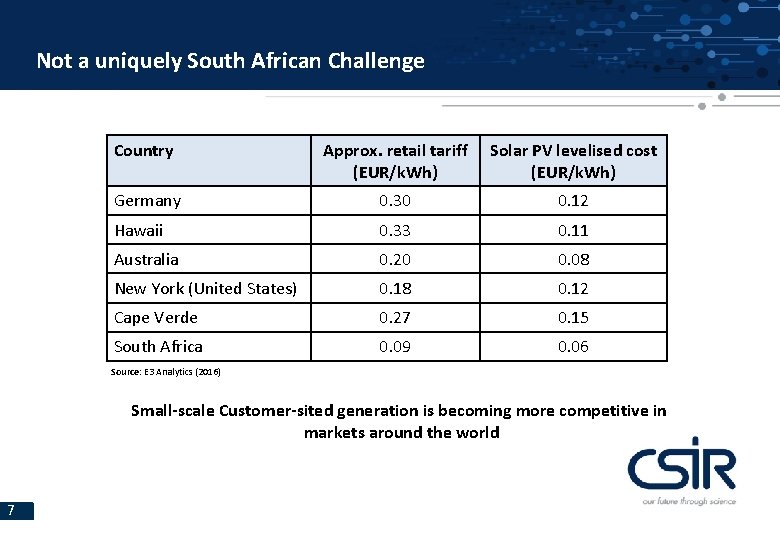
Not a uniquely South African Challenge Country Approx. retail tariff (EUR/k. Wh) Solar PV levelised cost (EUR/k. Wh) Germany 0. 30 0. 12 Hawaii 0. 33 0. 11 Australia 0. 20 0. 08 New York (United States) 0. 18 0. 12 Cape Verde 0. 27 0. 15 South Africa 0. 09 0. 06 Source: E 3 Analytics (2016) Small-scale Customer-sited generation is becoming more competitive in markets around the world 7
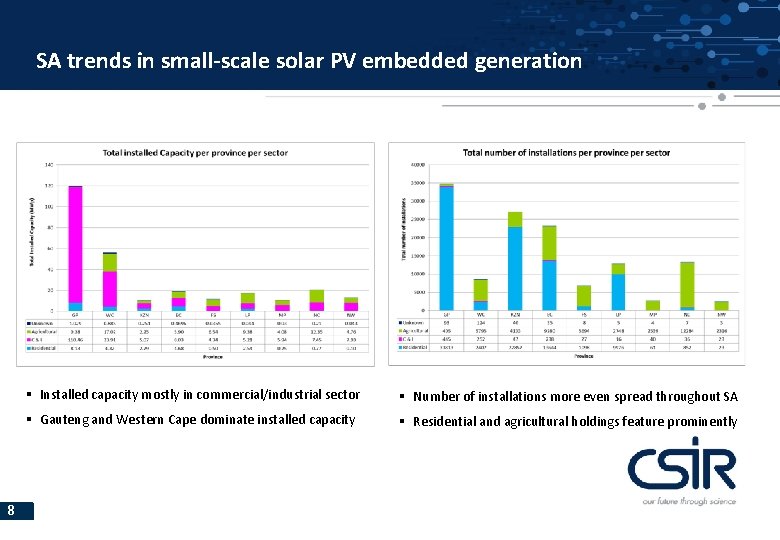
SA trends in small-scale solar PV embedded generation 8 § Installed capacity mostly in commercial/industrial sector § Number of installations more even spread throughout SA § Gauteng and Western Cape dominate installed capacity § Residential and agricultural holdings feature prominently
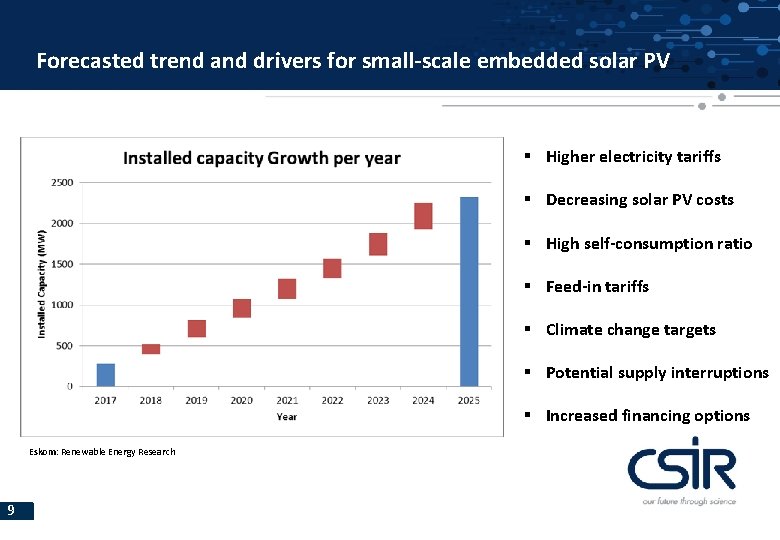
Forecasted trend and drivers for small-scale embedded solar PV § Higher electricity tariffs § Decreasing solar PV costs § High self-consumption ratio § Feed-in tariffs § Climate change targets § Potential supply interruptions § Increased financing options Eskom: Renewable Energy Research 9
Current activities within municipalities § Development of electricity or energy master plans (understanding their optimal energy mix) § Grid impact studies for higher penetration of renewable energy § Technical assistance on procurement modalities for Solar PV assets § Legal assistance on existing regulations and legislation § Registration of new embedded solar PV generators § Alternative ownership models for the municipal electricity distribution business § Exchange programmes with peer cities to understand alternative business models 10
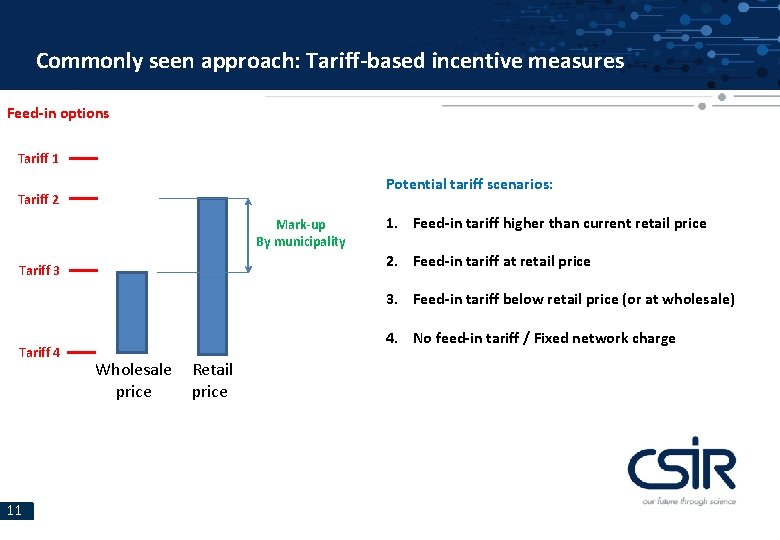
Commonly seen approach: Tariff-based incentive measures Feed-in options Tariff 1 Potential tariff scenarios: Tariff 2 Mark-up By municipality 1. Feed-in tariff higher than current retail price 2. Feed-in tariff at retail price Tariff 3 3. Feed-in tariff below retail price (or at wholesale) Tariff 4 11 4. No feed-in tariff / Fixed network charge Wholesale price Retail price
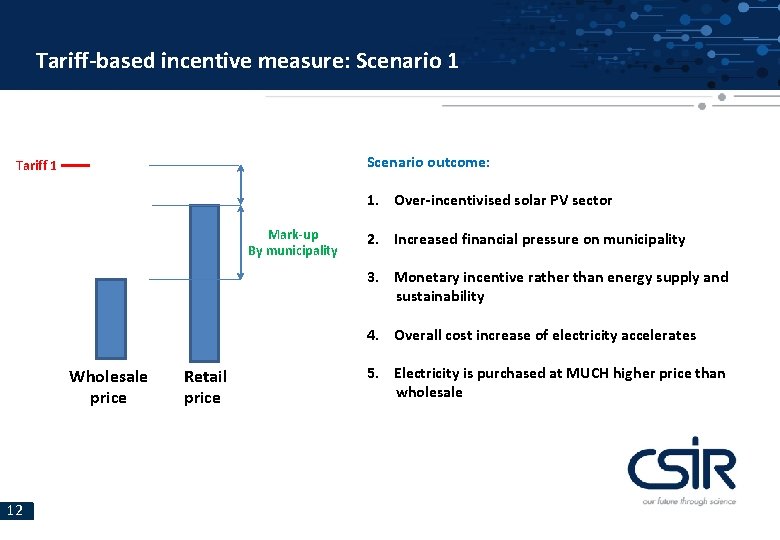
Tariff-based incentive measure: Scenario 1 Scenario outcome: Tariff 1 1. Over-incentivised solar PV sector Mark-up By municipality 2. Increased financial pressure on municipality 3. Monetary incentive rather than energy supply and sustainability 4. Overall cost increase of electricity accelerates Wholesale price 12 Retail price 5. Electricity is purchased at MUCH higher price than wholesale
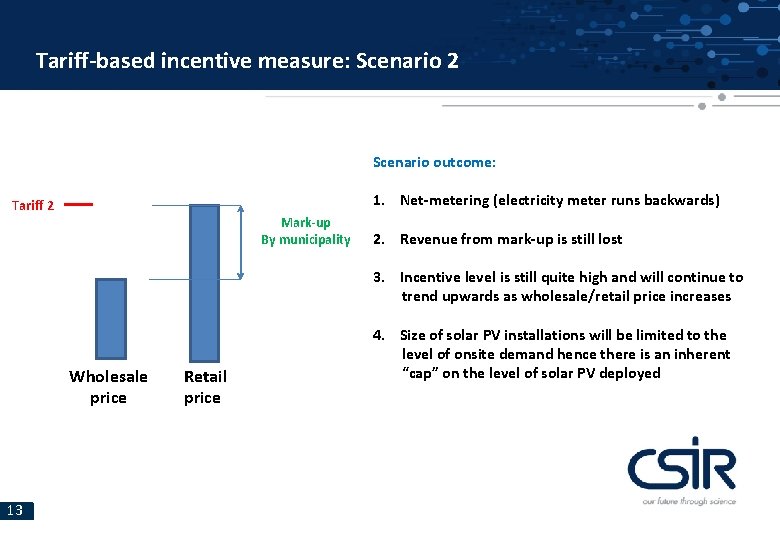
Tariff-based incentive measure: Scenario 2 Scenario outcome: 1. Net-metering (electricity meter runs backwards) Tariff 2 Mark-up By municipality 2. Revenue from mark-up is still lost 3. Incentive level is still quite high and will continue to trend upwards as wholesale/retail price increases Wholesale price 13 Retail price 4. Size of solar PV installations will be limited to the level of onsite demand hence there is an inherent “cap” on the level of solar PV deployed
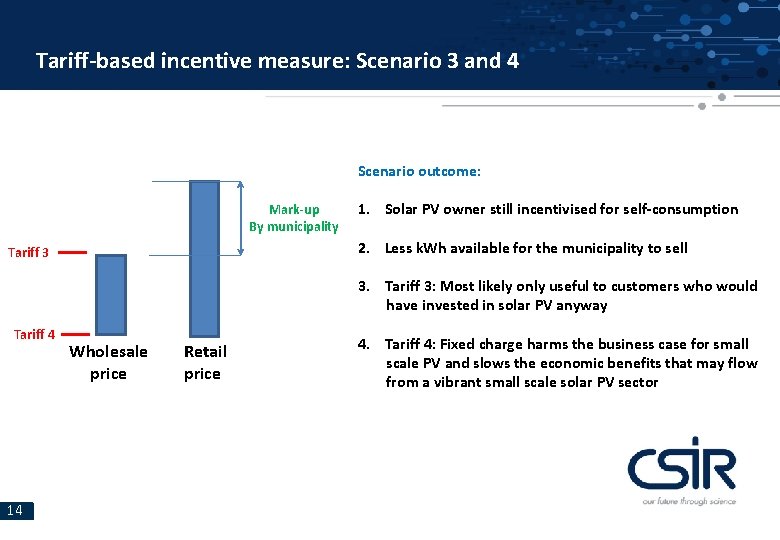
Tariff-based incentive measure: Scenario 3 and 4 Scenario outcome: Mark-up By municipality 1. Solar PV owner still incentivised for self-consumption 2. Less k. Wh available for the municipality to sell Tariff 3 3. Tariff 3: Most likely only useful to customers who would have invested in solar PV anyway Tariff 4 14 Wholesale price Retail price 4. Tariff 4: Fixed charge harms the business case for small scale PV and slows the economic benefits that may flow from a vibrant small scale solar PV sector
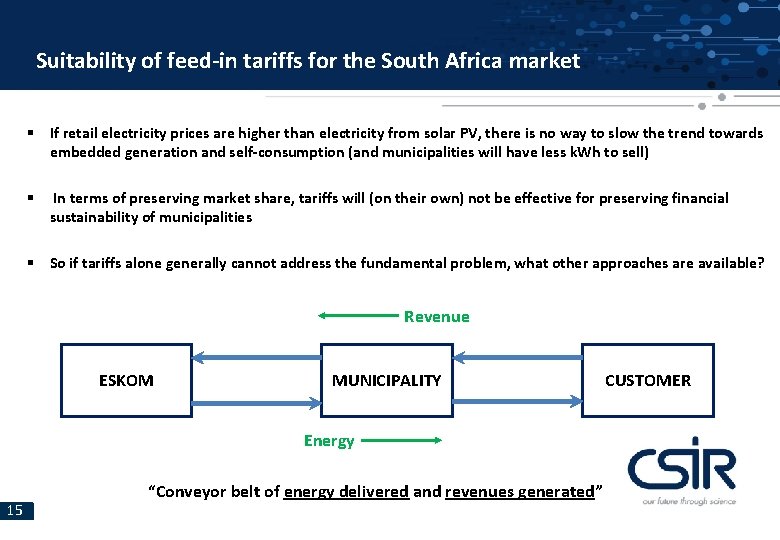
Suitability of feed-in tariffs for the South Africa market § If retail electricity prices are higher than electricity from solar PV, there is no way to slow the trend towards embedded generation and self-consumption (and municipalities will have less k. Wh to sell) § In terms of preserving market share, tariffs will (on their own) not be effective for preserving financial sustainability of municipalities § So if tariffs alone generally cannot address the fundamental problem, what other approaches are available? Revenue ESKOM MUNICIPALITY Energy 15 “Conveyor belt of energy delivered and revenues generated” CUSTOMER
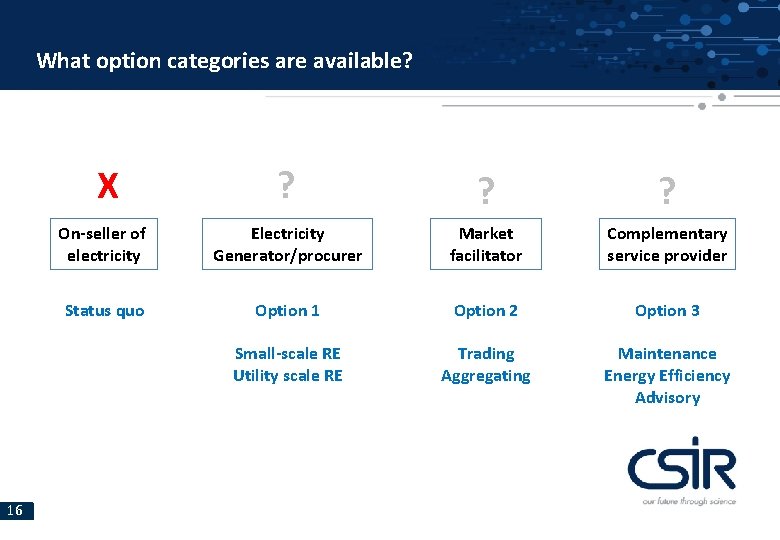
What option categories are available? X 16 ? ? ? On-seller of electricity Electricity Generator/procurer Market facilitator Complementary service provider Status quo Option 1 Option 2 Option 3 Small-scale RE Utility scale RE Trading Aggregating Maintenance Energy Efficiency Advisory
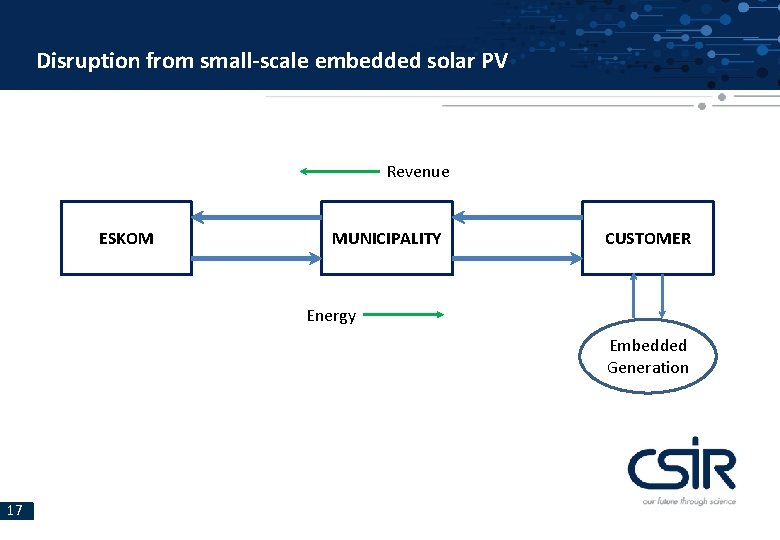
Disruption from small-scale embedded solar PV Revenue ESKOM MUNICIPALITY CUSTOMER Energy Embedded Generation 17
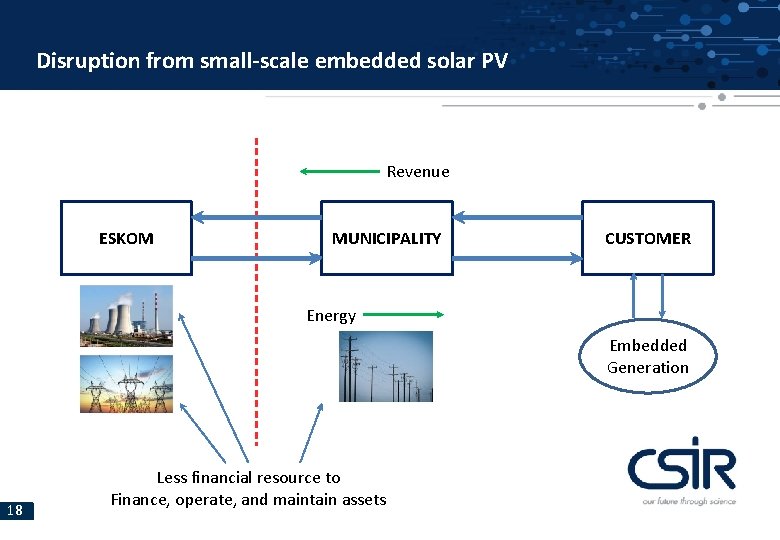
Disruption from small-scale embedded solar PV Revenue ESKOM MUNICIPALITY CUSTOMER Energy Embedded Generation 18 Less financial resource to Finance, operate, and maintain assets
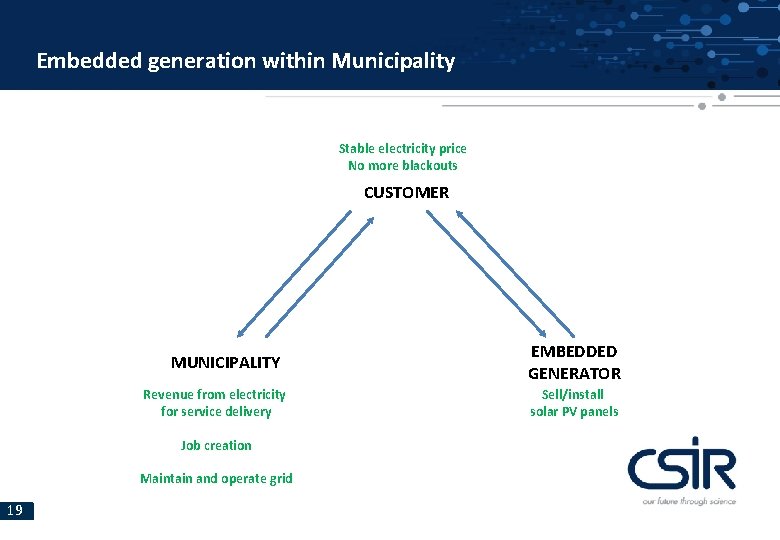
Embedded generation within Municipality Stable electricity price No more blackouts CUSTOMER MUNICIPALITY Revenue from electricity for service delivery Job creation Maintain and operate grid 19 EMBEDDED GENERATOR Sell/install solar PV panels
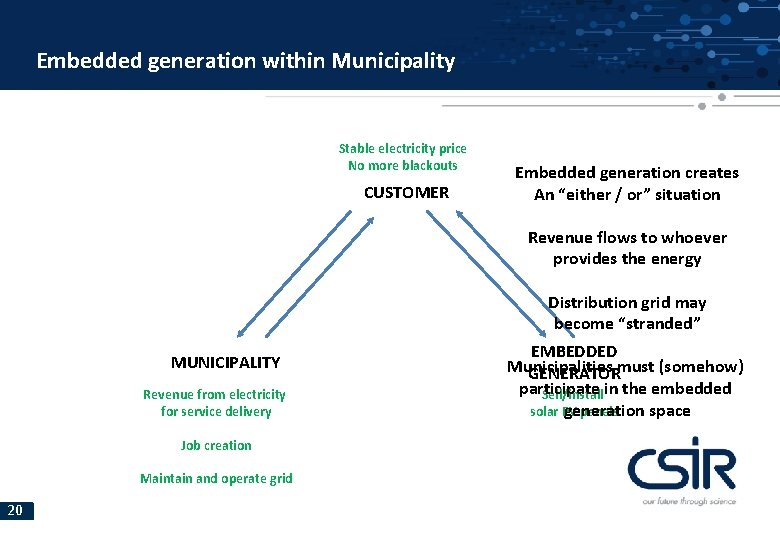
Embedded generation within Municipality Stable electricity price No more blackouts CUSTOMER Embedded generation creates An “either / or” situation Revenue flows to whoever provides the energy Distribution grid may become “stranded” MUNICIPALITY Revenue from electricity for service delivery Job creation Maintain and operate grid 20 EMBEDDED Municipalities GENERATORmust (somehow) participate Sell/install in the embedded generation space solar PV panels
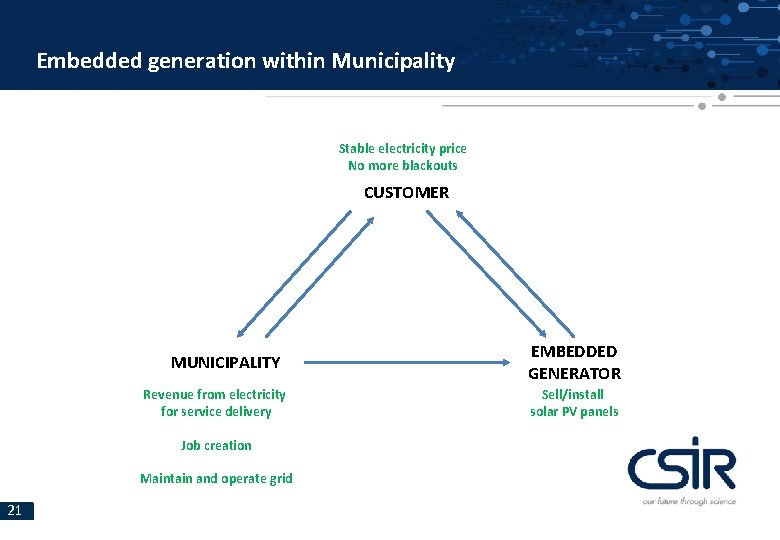
Embedded generation within Municipality Stable electricity price No more blackouts CUSTOMER MUNICIPALITY Revenue from electricity for service delivery Job creation Maintain and operate grid 21 EMBEDDED GENERATOR Sell/install solar PV panels
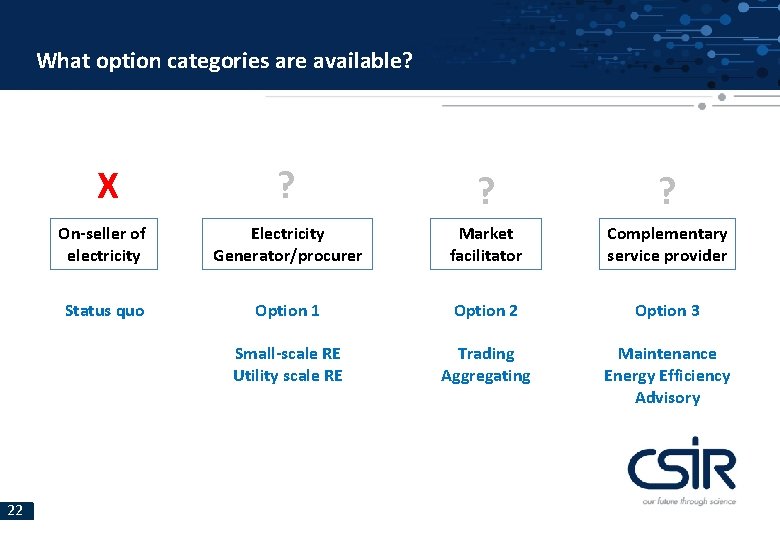
What option categories are available? X 22 ? ? ? On-seller of electricity Electricity Generator/procurer Market facilitator Complementary service provider Status quo Option 1 Option 2 Option 3 Small-scale RE Utility scale RE Trading Aggregating Maintenance Energy Efficiency Advisory
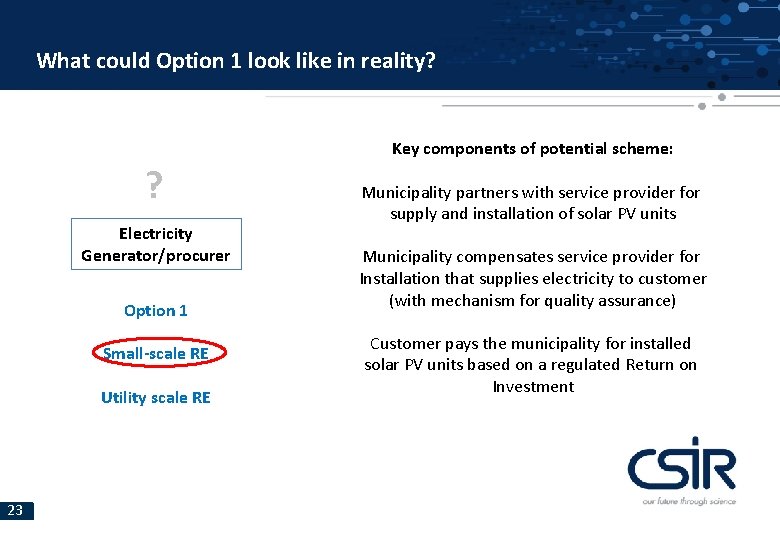
What could Option 1 look like in reality? Key components of potential scheme: ? Electricity Generator/procurer Option 1 Small-scale RE Utility scale RE 23 Municipality partners with service provider for supply and installation of solar PV units Municipality compensates service provider for Installation that supplies electricity to customer (with mechanism for quality assurance) Customer pays the municipality for installed solar PV units based on a regulated Return on Investment
Further development of the idea § Check for compatibility with PPP regulations § Understand where the obstacles are in regulation § How would current municipal debt impact possibilities for implementation? § What would be the mechanism for quality assurance? § What would participation and contribution be from the finance/funding institutions? § What would be the parallel adjustment required at Eskom to safeguard their sustainability? § How would such a plan interface with national electricity planning processes? 24
Ha Khensa Re a leboha Enkosi Siyathokoza Thank you! CSIR Energy Markets and Policy Re a leboga Ro livhuha Siyabonga 25 Dankie
- Slides: 25