
Embedded DRAM for a Reconfigurable Array S Perissakis
Embedded DRAM for a Reconfigurable Array S. Perissakis, Y. Joo 1, J. Ahn 1, A. De. Hon, J. Wawrzynek University of California, Berkeley 1 LG Semicon Co. , Ltd
Outline • • • Reconfigurable architecture overview Motivation for on-chip DRAM Configurable Memory Block (CMB) Evaluation Conclusion
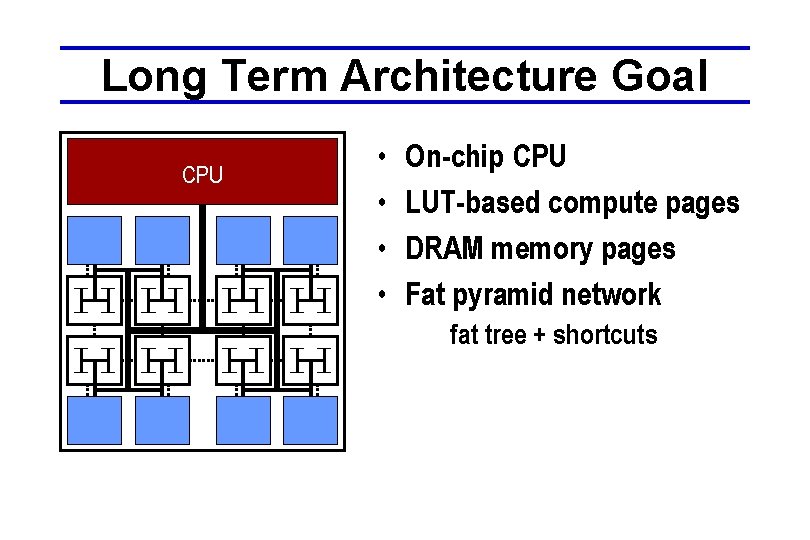
Long Term Architecture Goal CPU • • On-chip CPU LUT-based compute pages DRAM memory pages Fat pyramid network fat tree + shortcuts
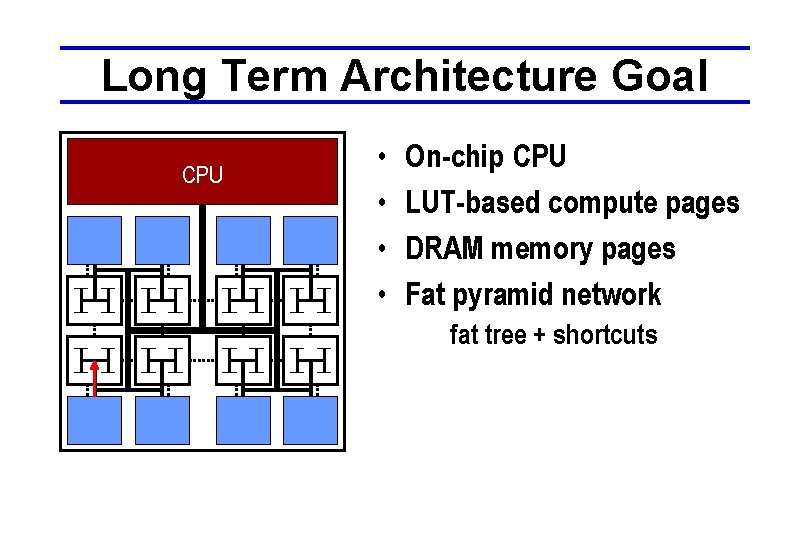
Long Term Architecture Goal CPU • • On-chip CPU LUT-based compute pages DRAM memory pages Fat pyramid network fat tree + shortcuts
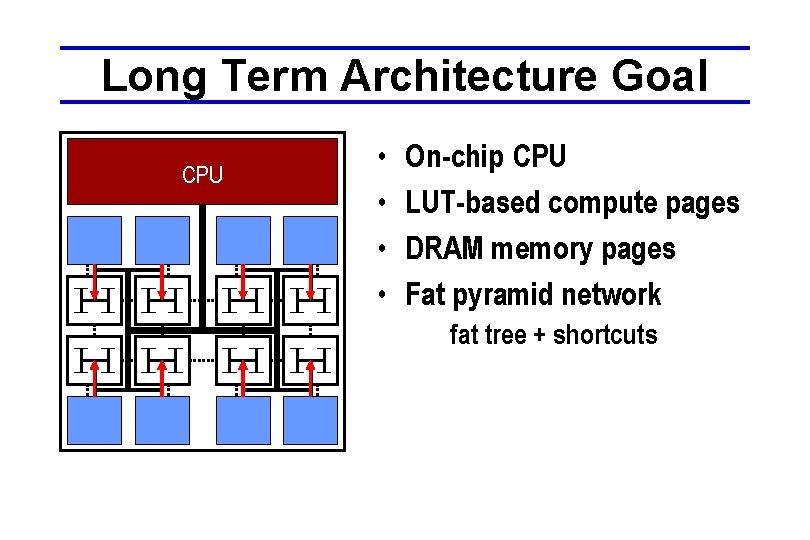
Long Term Architecture Goal CPU • • On-chip CPU LUT-based compute pages DRAM memory pages Fat pyramid network fat tree + shortcuts
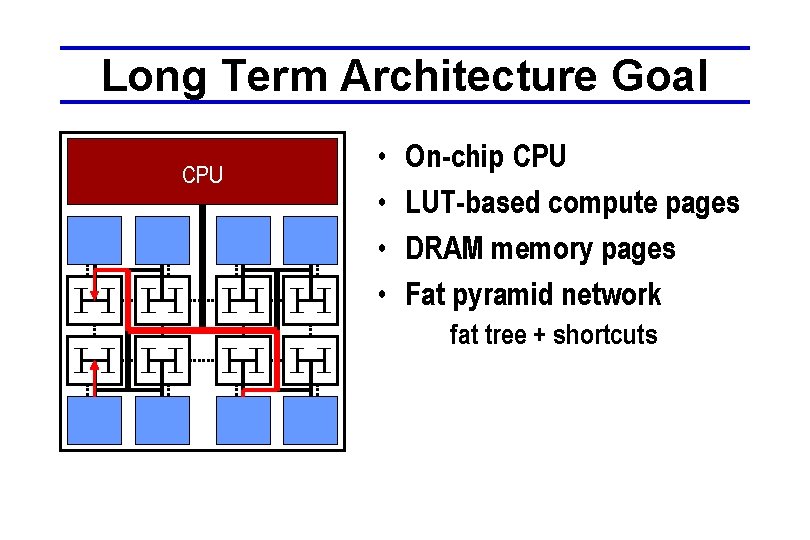
Long Term Architecture Goal CPU • • On-chip CPU LUT-based compute pages DRAM memory pages Fat pyramid network fat tree + shortcuts
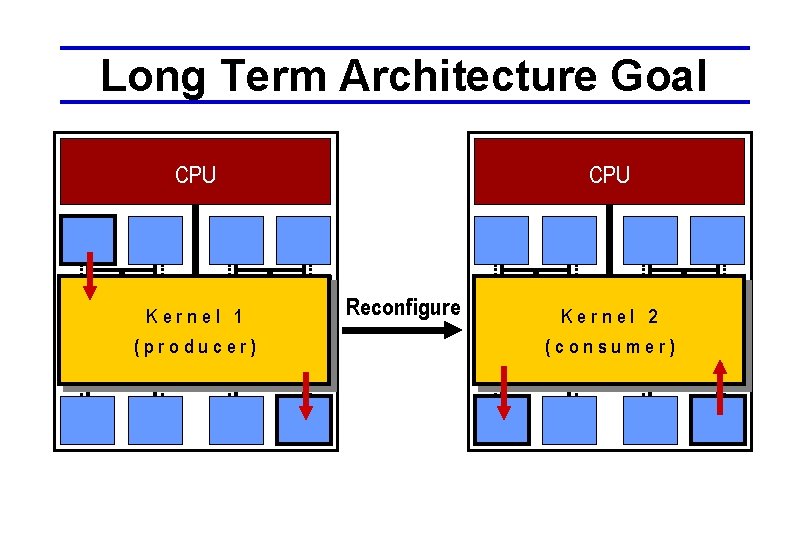
Long Term Architecture Goal CPU Kernel 1 (producer) CPU Reconfigure Kernel 2 (consumer)
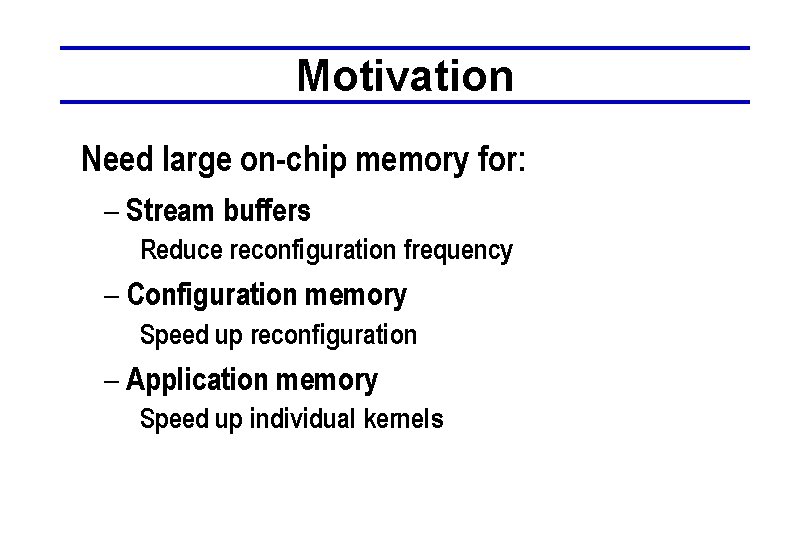
Motivation Need large on-chip memory for: – Stream buffers Reduce reconfiguration frequency – Configuration memory Speed up reconfiguration – Application memory Speed up individual kernels
Challenges DRAM offers increased density (10 X to 20 X that of SRAM), but: • Harder to use – Row/Col accesses & variable latency – Refresh • Lower performance – Increased access latency Q: Is it worth the trouble ?
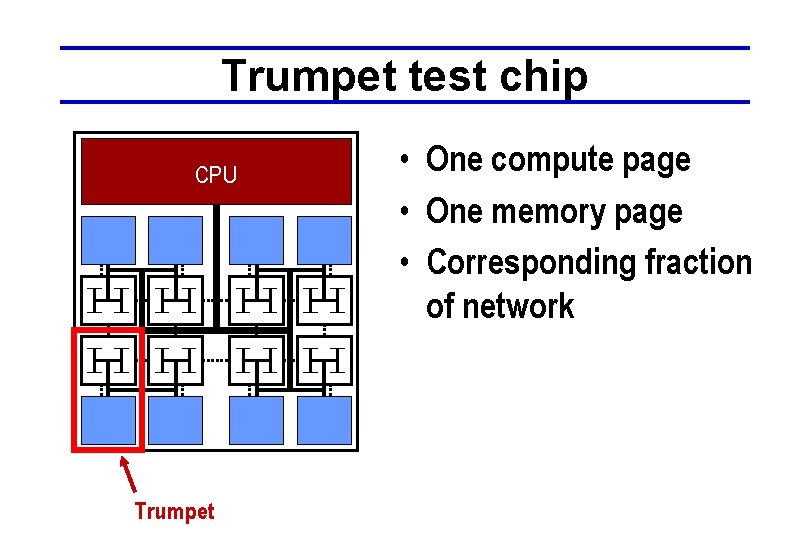
Trumpet test chip CPU Trumpet • One compute page • One memory page • Corresponding fraction of network
CMB Functions • • Configuration source State source/sink Data store Input/output
![CMB Overview Ctl[1: 0] Addr[9: 0] Cmd CMB Controller Ctl[1: 0] DRAM Macro From](http://slidetodoc.com/presentation_image_h2/87578d05fac5f6ac8b1f5d83e3dcfc49/image-12.jpg "CMB Overview Ctl[1: 0] Addr[9: 0] Cmd CMB Controller Ctl[1: 0] DRAM Macro From")
CMB Overview Ctl[1: 0] Addr[9: 0] Cmd CMB Controller Ctl[1: 0] DRAM Macro From host Addr[17: 0] Tree[159: 0] From compute page [63: 0] [127: 0] DQ[127: 0] Rate Address & Matching Data Xbars Short[159: 0] Stall Buffers Retiming Registers
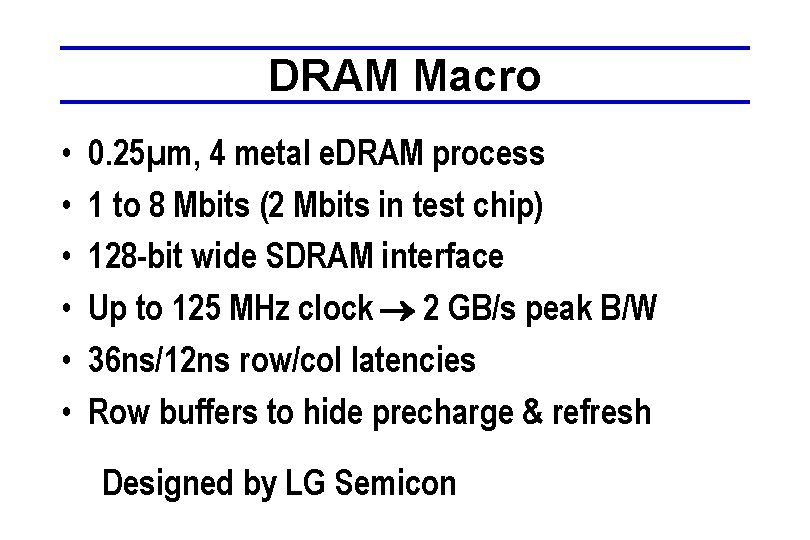
DRAM Macro • • • 0. 25µm, 4 metal e. DRAM process 1 to 8 Mbits (2 Mbits in test chip) 128 -bit wide SDRAM interface Up to 125 MHz clock 2 GB/s peak B/W 36 ns/12 ns row/col latencies Row buffers to hide precharge & refresh Designed by LG Semicon
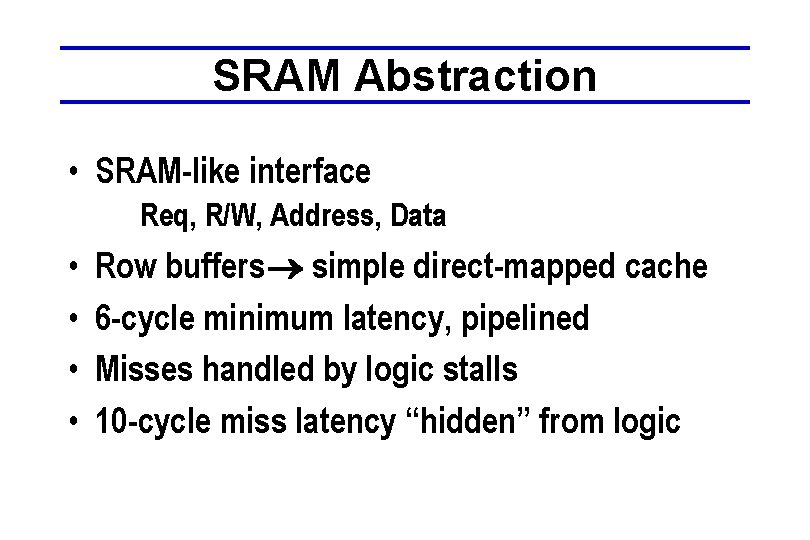
SRAM Abstraction • SRAM-like interface Req, R/W, Address, Data • • Row buffers simple direct-mapped cache 6 -cycle minimum latency, pipelined Misses handled by logic stalls 10 -cycle miss latency “hidden” from logic
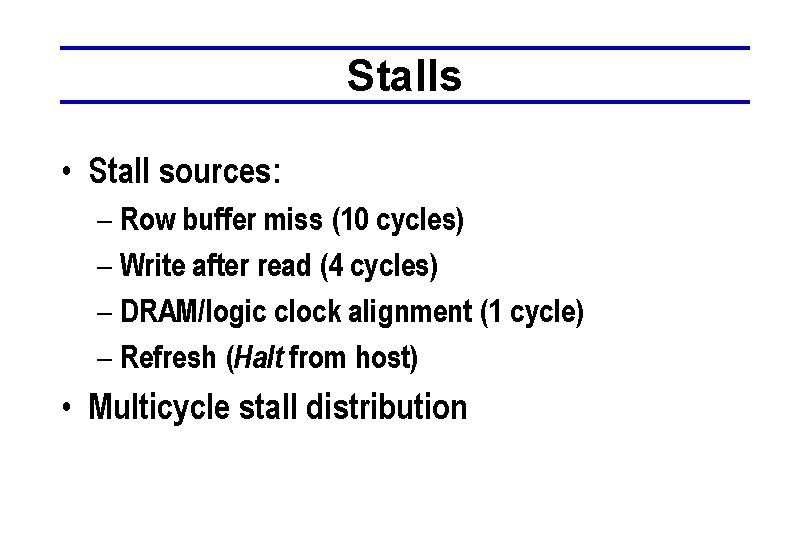
Stalls • Stall sources: – Row buffer miss (10 cycles) – Write after read (4 cycles) – DRAM/logic clock alignment (1 cycle) – Refresh (Halt from host) • Multicycle stall distribution
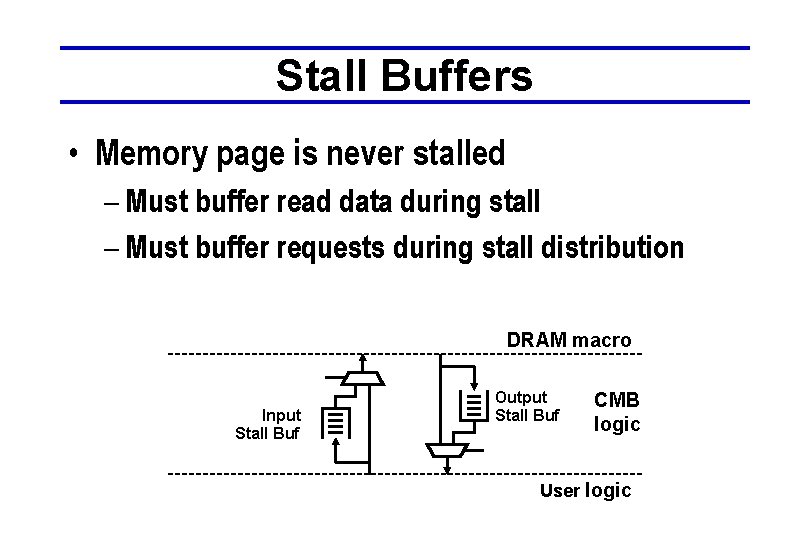
Stall Buffers • Memory page is never stalled – Must buffer read data during stall – Must buffer requests during stall distribution DRAM macro Input Stall Buf Output Stall Buf CMB logic User logic
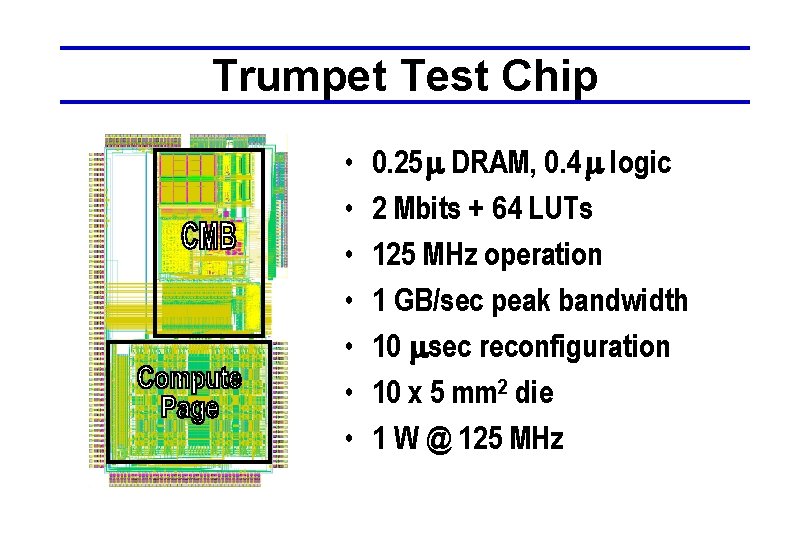
Trumpet Test Chip • • 0. 25 DRAM, 0. 4 logic 2 Mbits + 64 LUTs 125 MHz operation 1 GB/sec peak bandwidth 10 sec reconfiguration 10 x 5 mm 2 die 1 W @ 125 MHz
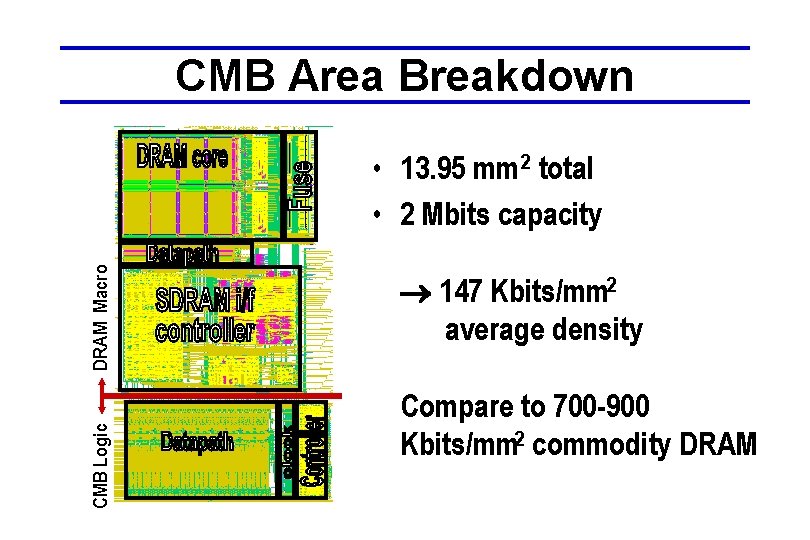
CMB Area Breakdown CMB Logic DRAM Macro • 13. 95 mm 2 total • 2 Mbits capacity 147 Kbits/mm 2 average density Compare to 700 -900 Kbits/mm 2 commodity DRAM
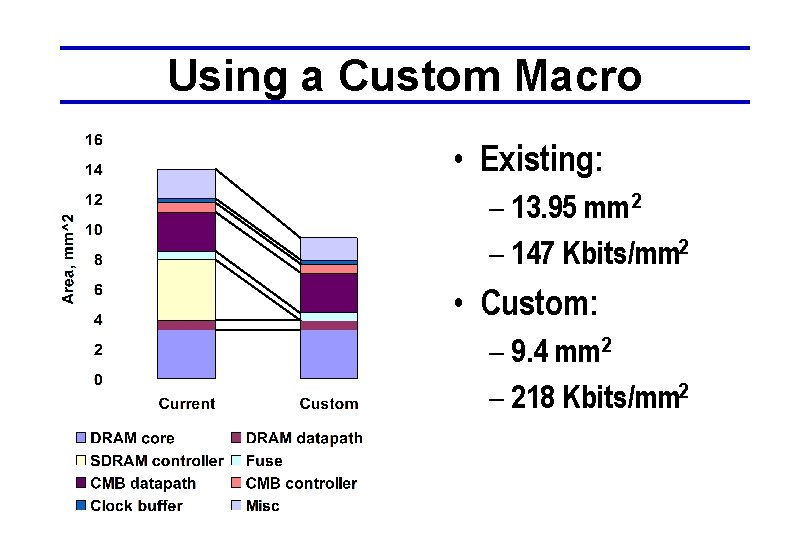
Using a Custom Macro • Existing: – 13. 95 mm 2 – 147 Kbits/mm 2 • Custom: – 9. 4 mm 2 – 218 Kbits/mm 2
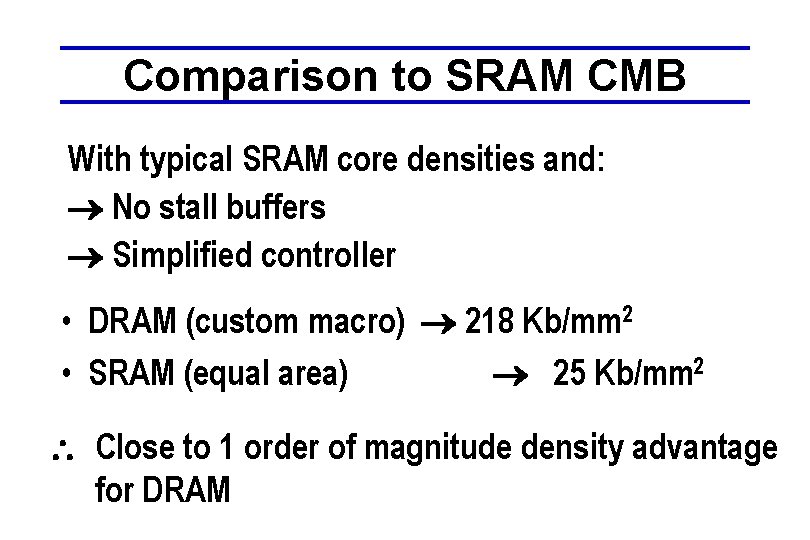
Comparison to SRAM CMB With typical SRAM core densities and: No stall buffers Simplified controller • DRAM (custom macro) 218 Kb/mm 2 • SRAM (equal area) 25 Kb/mm 2 Close to 1 order of magnitude density advantage for DRAM
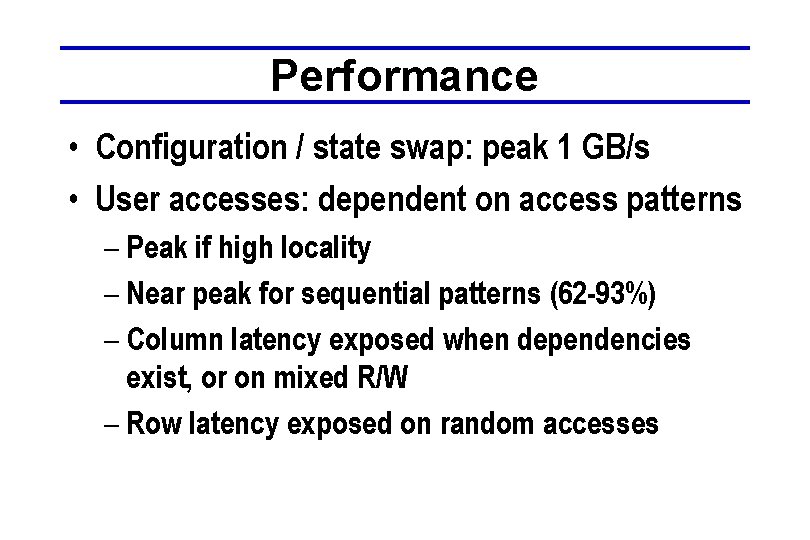
Performance • Configuration / state swap: peak 1 GB/s • User accesses: dependent on access patterns – Peak if high locality – Near peak for sequential patterns (62 -93%) – Column latency exposed when dependencies exist, or on mixed R/W – Row latency exposed on random accesses
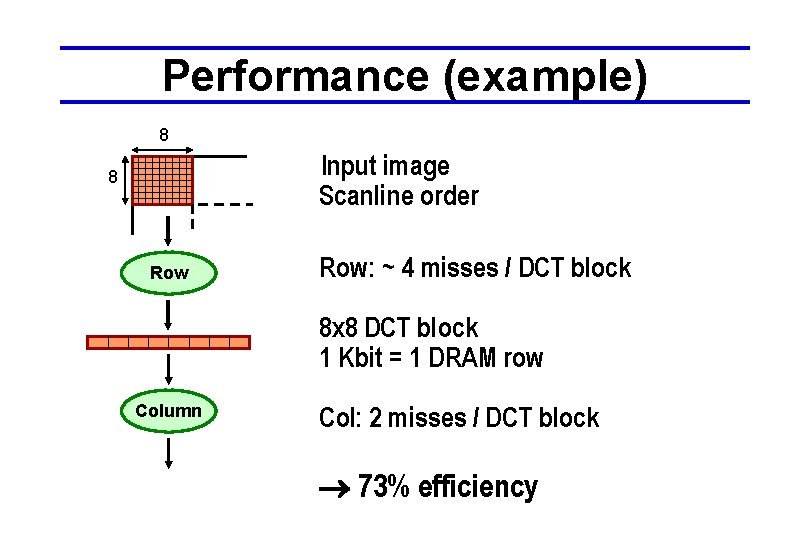
Performance (example) 8 Input image Scanline order 8 Row: ~ 4 misses / DCT block 8 x 8 DCT block 1 Kbit = 1 DRAM row Column Col: 2 misses / DCT block 73% efficiency
Refresh Overhead • 8 to 16 ms retention time expected • 2. 5% to 5. 0% bandwidth loss • Can reduce by refreshing only active part of memory • May skip refresh for short-lived data
Conclusion • Q: Is on-chip DRAM advantageous to SRAM ? • Our experience so far: – User-friendly abstraction possible – Can maintain density advantage – Effect on application performance: » Large buffer space less frequent reconfiguration » High bandwidth faster reconfiguration » Effect on individual kernels often limited by DRAM core latency
- Slides: 24