
Embedded Computer Architecture 5 SIA 0 Overview Henk
Embedded Computer Architecture 5 SIA 0 Overview Henk Corporaal www. ics. ele. tue. nl/~heco/courses/ECA h. corporaal@tue. nl TUEindhoven 2016 -2017
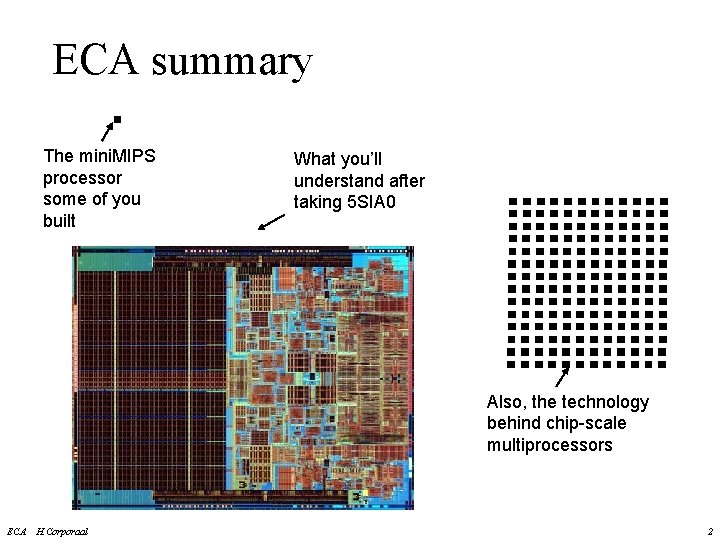
ECA summary The mini. MIPS processor some of you built What you’ll understand after taking 5 SIA 0 Also, the technology behind chip-scale multiprocessors ECA H. Corporaal 2
Course goals • Learn advanced computer architecture concepts like: – – – ILP, DLP, and Multi-issue architectures O-O-O execution Correlating branch prediction; Advanced memory hierarchy; speedup methods Energy consumption and Technology issues; etc. • Learn multi-processor architecture concepts like: ECA – – – H. Corporaal Multi-threading Topologies Synchronization Cache Coherence and Memory Consistency etc. 3
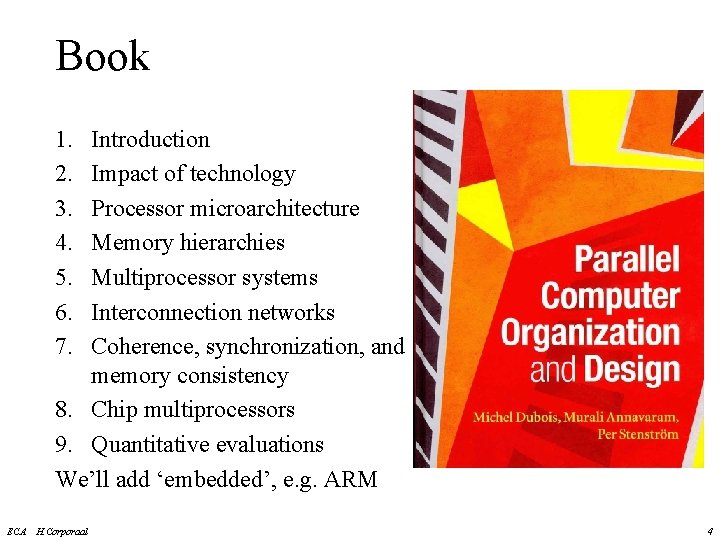
Book 1. 2. 3. 4. 5. 6. 7. Introduction Impact of technology Processor microarchitecture Memory hierarchies Multiprocessor systems Interconnection networks Coherence, synchronization, and memory consistency 8. Chip multiprocessors 9. Quantitative evaluations We’ll add ‘embedded’, e. g. ARM ECA H. Corporaal 4
Organization • Credits: – 5 SIA 0: 5 credit points (ECTS) • Weekly class meetings – Tuesdays: – Thursdays: 18. 15 -20. 00 (Aud 7) 15. 45 – 17. 30 (Aud 7) – Very advanced Labs: largely in your own time • Student literature research of TOP recent conferences – last week • Examination in end of January/early February 2017 ECA H. Corporaal 5
Practical Experience • 3 lab assignments: 1. Design and evaluation of a CGRA (Coarse Grain Reconfigurable Array) processor 2. Extreme parallel (GPU - SIMD) programming 3. Evaluation of a Multi-Core processor • Lab assistents: – Mark Wijtvliet – Luc Waeijen – Roel Jordans – Mohammad Tahghighi ECA H. Corporaal 6
Lab 1: CGRA • Co-optimization of application and architecture for a coarse grained reconfigurable architecture ECA H. Corporaal 7
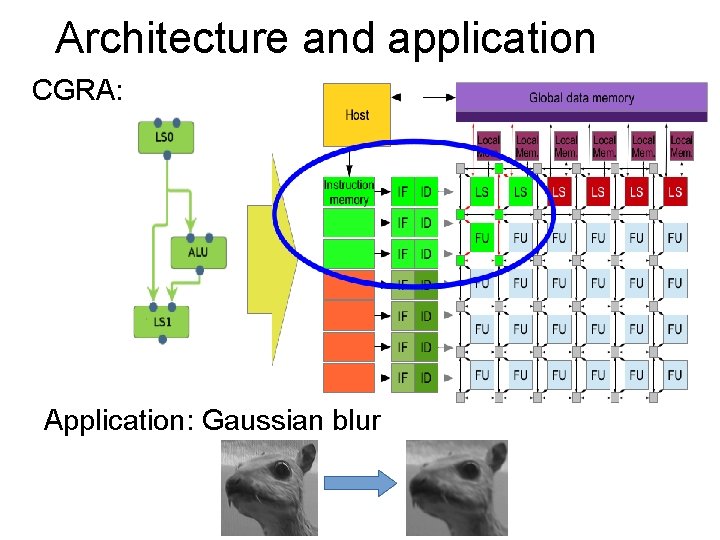
Architecture and application CGRA: Application: Gaussian blur

Your job:
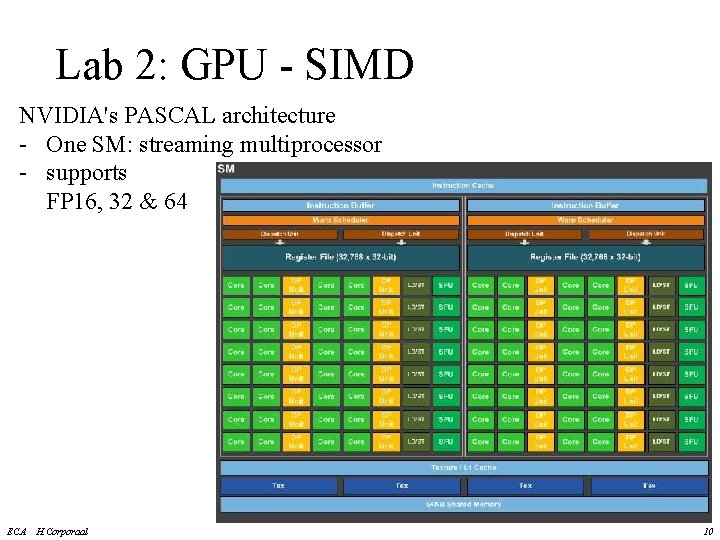
Lab 2: GPU - SIMD NVIDIA's PASCAL architecture - One SM: streaming multiprocessor - supports FP 16, 32 & 64 ECA H. Corporaal 10
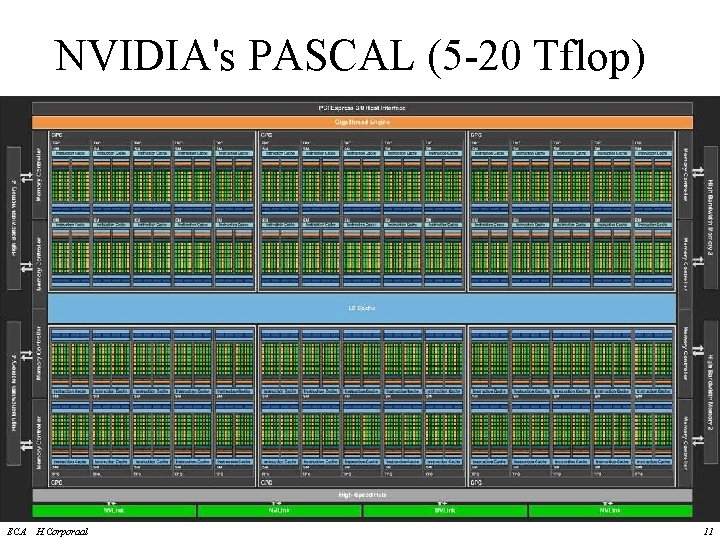
NVIDIA's PASCAL (5 -20 Tflop) ECA H. Corporaal 11
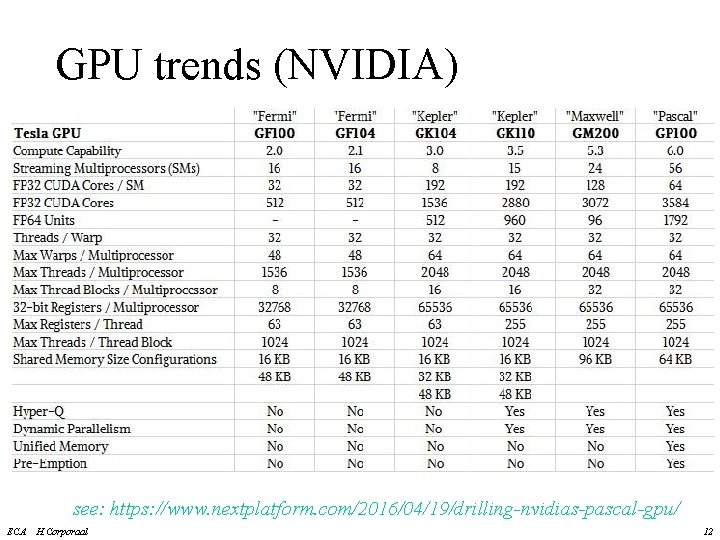
GPU trends (NVIDIA) see: https: //www. nextplatform. com/2016/04/19/drilling-nvidias-pascal-gpu/ ECA H. Corporaal 12
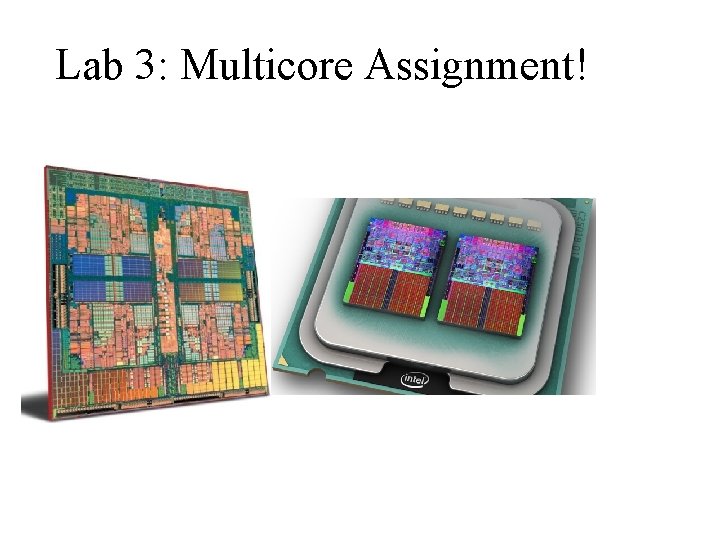
Lab 3: Multicore Assignment!
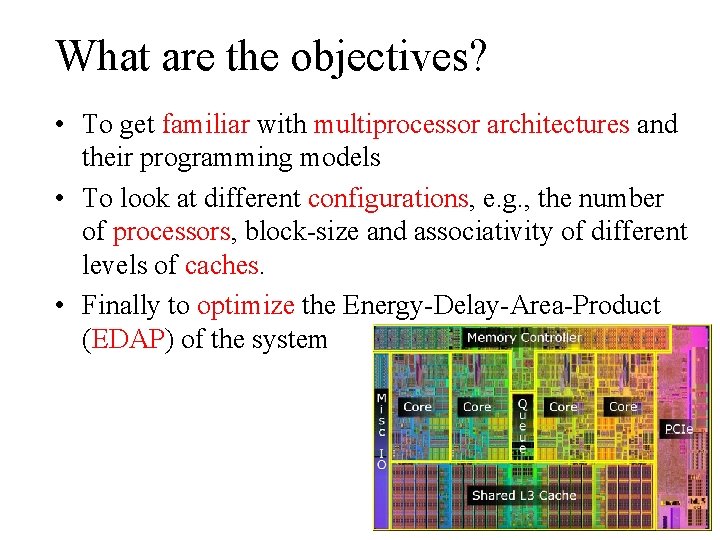
What are the objectives? • To get familiar with multiprocessor architectures and their programming models • To look at different configurations, e. g. , the number of processors, block-size and associativity of different levels of caches. • Finally to optimize the Energy-Delay-Area-Product (EDAP) of the system
What you will learn 1. How to use the GEM 5 as cycle accurate simulator to run applications 2. The impacts of different architectural parameters on performance 1. The size of different levels of caches 2. Cache Associativity 3. Applying loop transformation techniques to optimize the memory accesses 4. Applying the application partitioning technique for task level parallelism 5. Using Mc. PAT for power and area estimation
Schedule 2016 -2017 (preliminary) ECA Date 15 Nov 17 Nov Topic Introduction Technology Impact Material Ch 1 Ch 2 22 Nov CGRA and Accelerators: Mark Wijtvliet 24 Nov Processor Architectures - 1 Ch 3 29 Nov 1 Dec Processor Architectures - 2 GPU: Zhenyu Ye / Gert-Jan Ch 3 6 Dec 8 Dec Processor Architectures - 3 Processor Architectures - 4 Ch 3; ARM Ch 3 13 Dec Memory hierarchy Ch 4 CGRA assignment (deadline: Dec 8) GPU lab (deadline: Jan 9) (extended in compiler course) 15 Dec Loop transformation for Data Reuse 20 Dec 22 Dec Multiprocessor systems Ch 5 GEM 5+ Simulation: Mohammad Tahghighi + Luc Waeijen Ch 9 10 Jan 12 Jan Interconnection networks Coherence, synchr. and consistency H. Corporaal Assignments + Remarks Ch 6 Ch 7 GEM 5 multiproc. assign. (deadline: Jan 22) 16
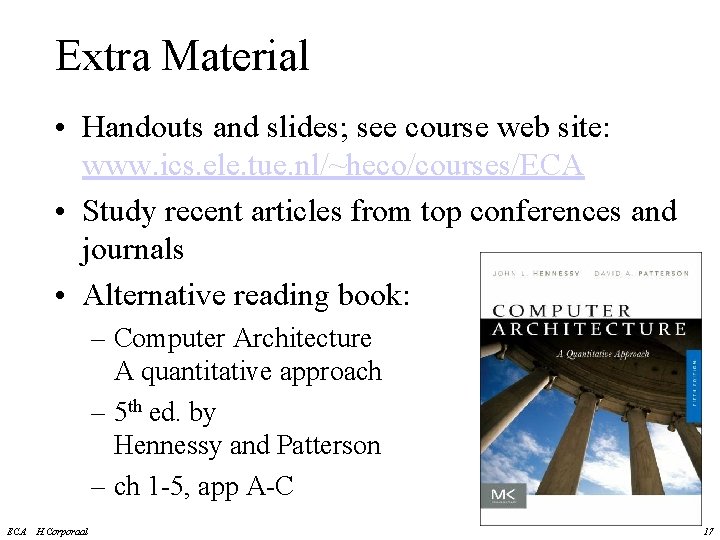
Extra Material • Handouts and slides; see course web site: www. ics. ele. tue. nl/~heco/courses/ECA • Study recent articles from top conferences and journals • Alternative reading book: – Computer Architecture A quantitative approach – 5 th ed. by Hennessy and Patterson – ch 1 -5, app A-C ECA H. Corporaal 17
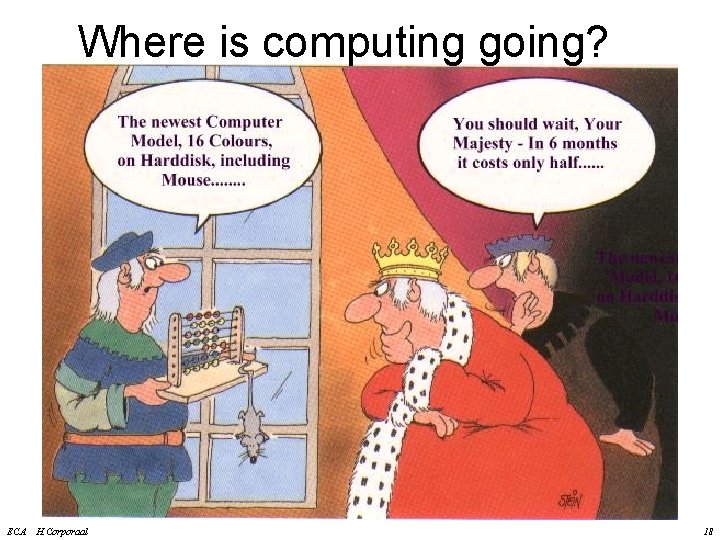
Where is computing going? ECA H. Corporaal 18
- Slides: 18