
EMail and Netiquette Identify yourself and your topic
- Slides: 6
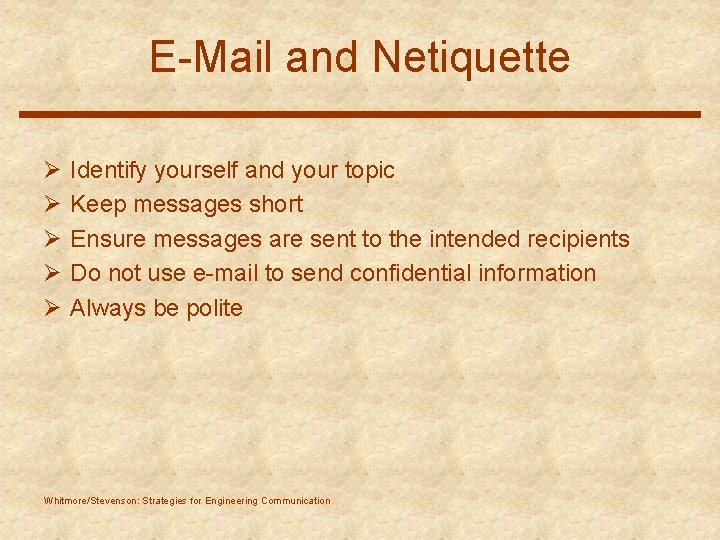
E-Mail and Netiquette Ø Ø Ø Identify yourself and your topic Keep messages short Ensure messages are sent to the intended recipients Do not use e-mail to send confidential information Always be polite Whitmore/Stevenson: Strategies for Engineering Communication
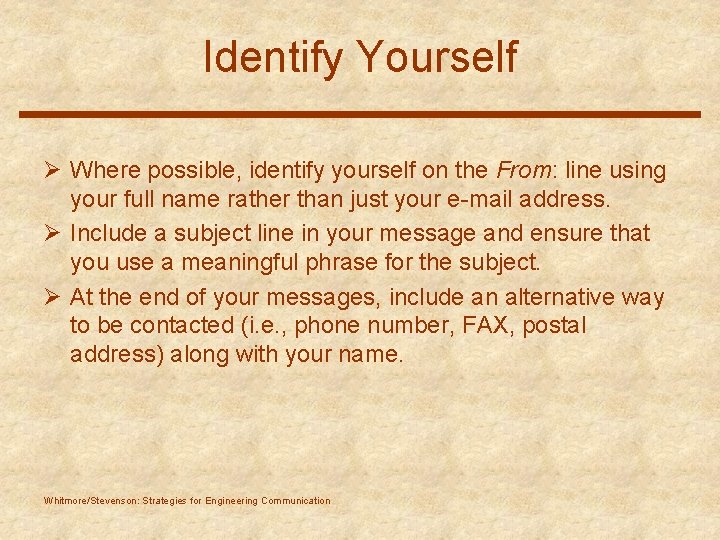
Identify Yourself Ø Where possible, identify yourself on the From: line using your full name rather than just your e-mail address. Ø Include a subject line in your message and ensure that you use a meaningful phrase for the subject. Ø At the end of your messages, include an alternative way to be contacted (i. e. , phone number, FAX, postal address) along with your name. Whitmore/Stevenson: Strategies for Engineering Communication
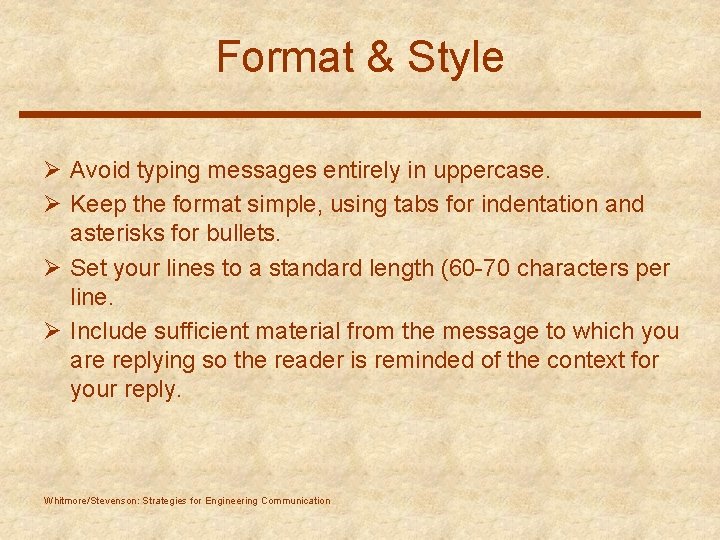
Format & Style Ø Avoid typing messages entirely in uppercase. Ø Keep the format simple, using tabs for indentation and asterisks for bullets. Ø Set your lines to a standard length (60 -70 characters per line. Ø Include sufficient material from the message to which you are replying so the reader is reminded of the context for your reply. Whitmore/Stevenson: Strategies for Engineering Communication
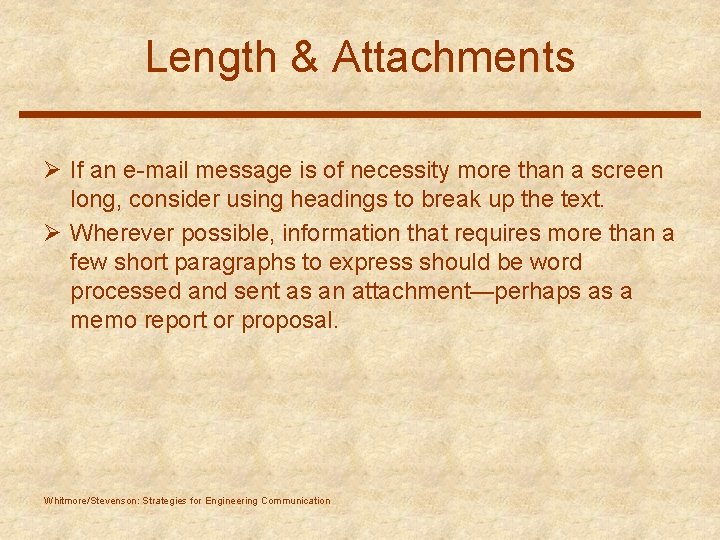
Length & Attachments Ø If an e-mail message is of necessity more than a screen long, consider using headings to break up the text. Ø Wherever possible, information that requires more than a few short paragraphs to express should be word processed and sent as an attachment—perhaps as a memo report or proposal. Whitmore/Stevenson: Strategies for Engineering Communication
E-Mail Security Ø Ensure that personal messages are sent to the correct individual and not to a mailing list. Ø Do not send confidential or personal material via e-mail unless you encrypt it because most e-mail systems are insecure. Whitmore/Stevenson: Strategies for Engineering Communication
E-Mail Tone Ø Do not publicly flame others. Ø Never send material with any potential to be offensive (i. e. , racist or sexist jokes and comments). Ø Be polite. If you are asking for something, say please. If you receive help, say thank you. Ø Where appropriate, you can use smiley faces (sometimes called emoticons) to indicate the nuances of your message: : -) : -( ; -) ; -> smiling face indicates amusement unhappy face indicates disappointment or sadness winking face indicates irony or humor mischievous face that indicates a comment is provocative Whitmore/Stevenson: Strategies for Engineering Communication