
ELIZABETHAN ENGLAND Historical context for Shakespeare FIRST A
ELIZABETHAN ENGLAND Historical context for Shakespeare
FIRST: A LESSON ABOUT LANGUAGE Old English: Soþlice on þam dagum wæs geworden gebod fram þam casere augusto. þæt eall ymbehwyrft wære tomearcod; Middle English: Forsoþe it is don, in þo daȝis a maundement wente out fro cesar august, þat al þe world shulde ben discriued, Shakespeare’s English (Early Modern): And it came to passe in those dayes, that there went out a decree from Caesar Augustus, that all the world should be taxed.

MORE ABOUT LANGUAGE The first dictionary was not produced until 1584, 20 years after Shakespeare was born. It was just a collection of 8000 words No true dictionary existed until 1755, 139 years after Shakespeare’s death. Because there was no standardization of language, Shakespeare’s spelling differs wildly from what our words look like now and sometimes even from his own spelling within the same play The Shakespeare we read has been edited to make it easier
LAST BIT ABOUT LANGUAGE, PROMISE As a language, English was considered barbaric up until Chaucer writing The Canterbury Tales in Middle English (late 1380 s) Even in Shakespeare’s time, writing in French or ancient Latin was considered more learned. English in Shakespeare’s time also would have sounded different, making syllable counting difficult occasionally
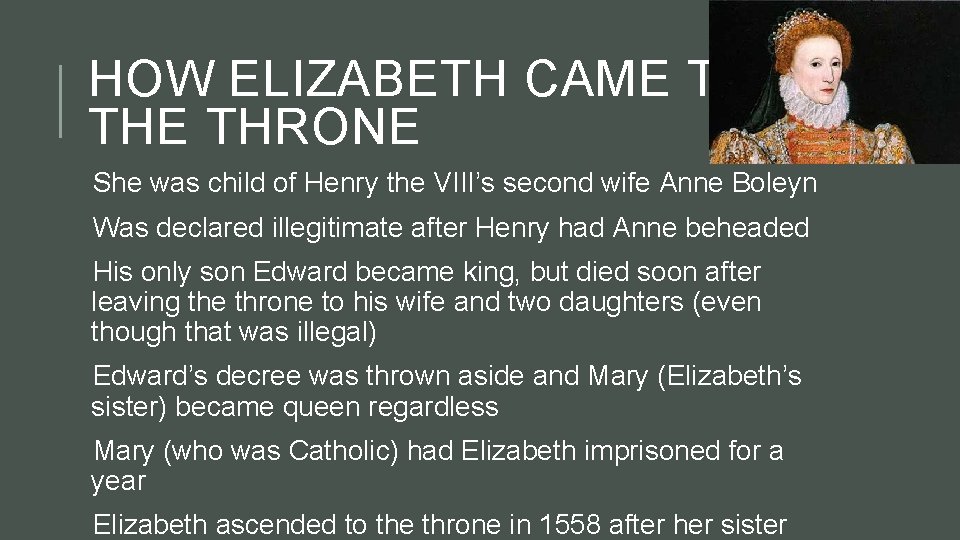
HOW ELIZABETH CAME TO THE THRONE She was child of Henry the VIII’s second wife Anne Boleyn Was declared illegitimate after Henry had Anne beheaded His only son Edward became king, but died soon after leaving the throne to his wife and two daughters (even though that was illegal) Edward’s decree was thrown aside and Mary (Elizabeth’s sister) became queen regardless Mary (who was Catholic) had Elizabeth imprisoned for a year Elizabeth ascended to the throne in 1558 after her sister
ELIZABETH’S REIGN Elizabeth is heralded as a relatively tolerant queen Unlike her sister, she avoided systematic religious persecution for the most part She was never very interested in military campaigns The central legacy of her reign was her dedication to the arts Under Elizabeth, visual art, plays, poetry and music all underwent a Renaissance With her patronage, many artists were able to complete masterpieces of literary achievement.
A NOTE ABOUT PATRONAGE Historically, artists were unable to make money creating art, because art was not created for the average man. In order to afford the down time to make art, artists would have patrons or patronesses. Patrons were members of the aristocracy who would pay the upkeep of the artist while they created art for them. As a result, almost all art was geared toward these nobles and were not created for the everyman.
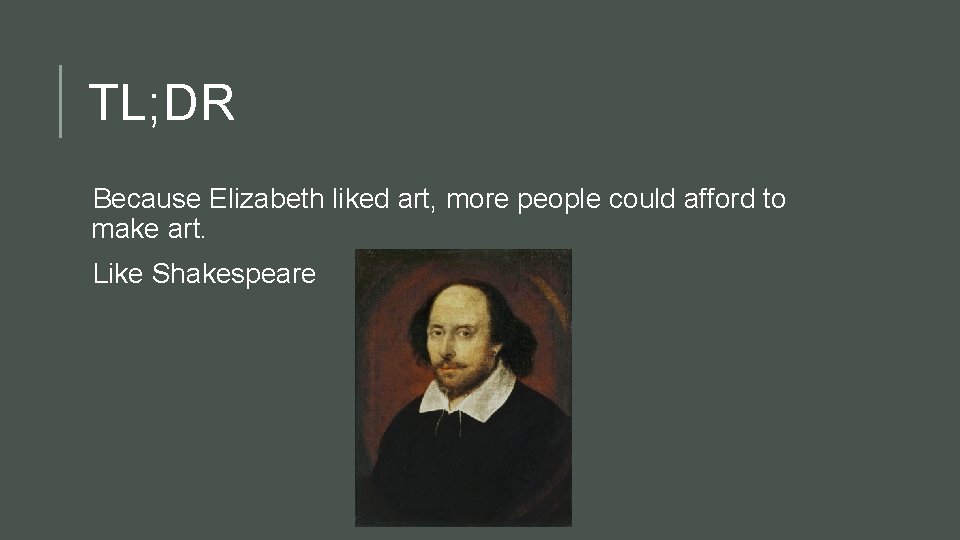
TL; DR Because Elizabeth liked art, more people could afford to make art. Like Shakespeare
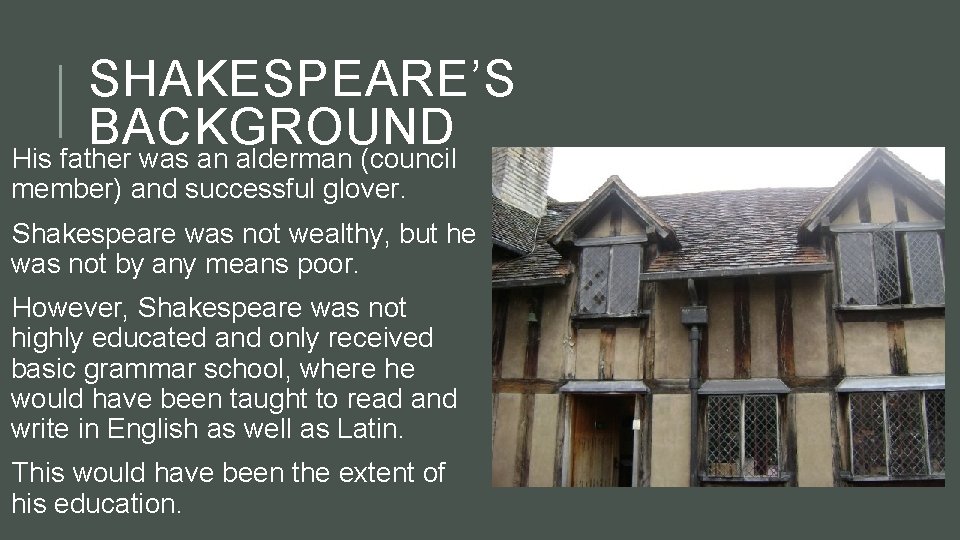
SHAKESPEARE’S BACKGROUND His father was an alderman (council member) and successful glover. Shakespeare was not wealthy, but he was not by any means poor. However, Shakespeare was not highly educated and only received basic grammar school, where he would have been taught to read and write in English as well as Latin. This would have been the extent of his education.
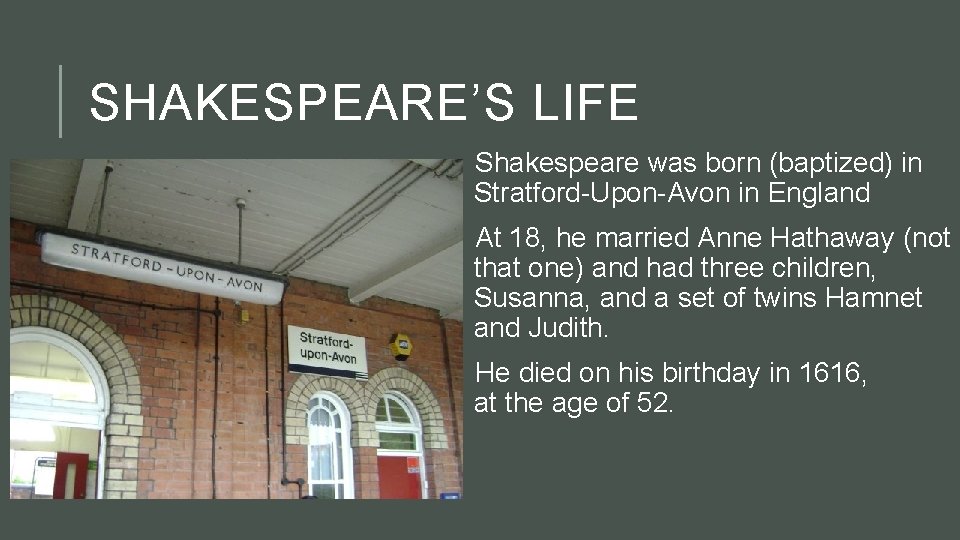
SHAKESPEARE’S LIFE Shakespeare was born (baptized) in Stratford-Upon-Avon in England At 18, he married Anne Hathaway (not that one) and had three children, Susanna, and a set of twins Hamnet and Judith. He died on his birthday in 1616, at the age of 52.
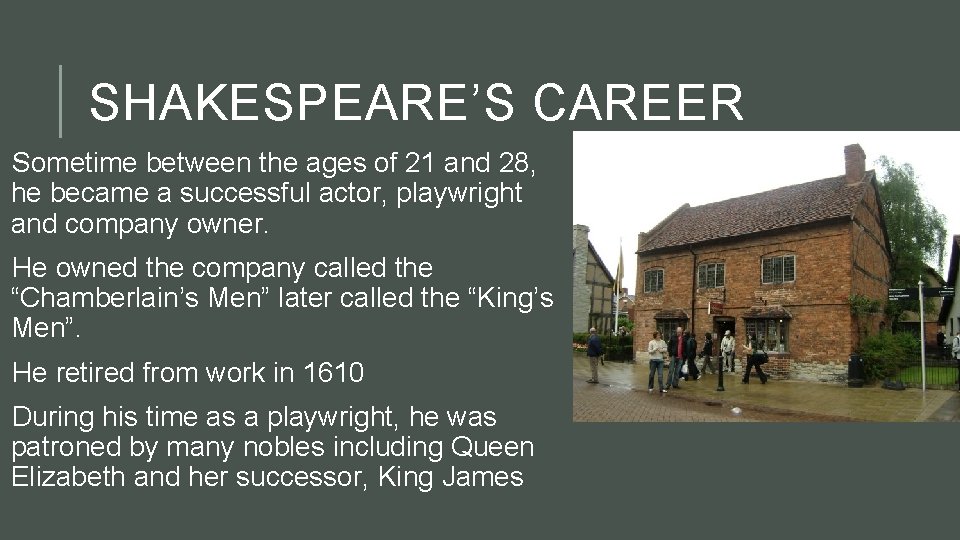
SHAKESPEARE’S CAREER Sometime between the ages of 21 and 28, he became a successful actor, playwright and company owner. He owned the company called the “Chamberlain’s Men” later called the “King’s Men”. He retired from work in 1610 During his time as a playwright, he was patroned by many nobles including Queen Elizabeth and her successor, King James
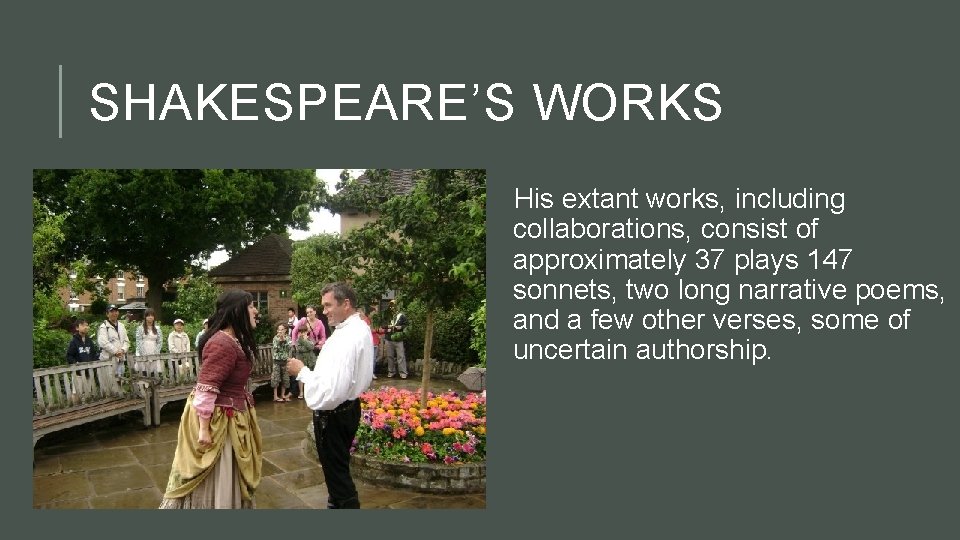
SHAKESPEARE’S WORKS His extant works, including collaborations, consist of approximately 37 plays 147 sonnets, two long narrative poems, and a few other verses, some of uncertain authorship.
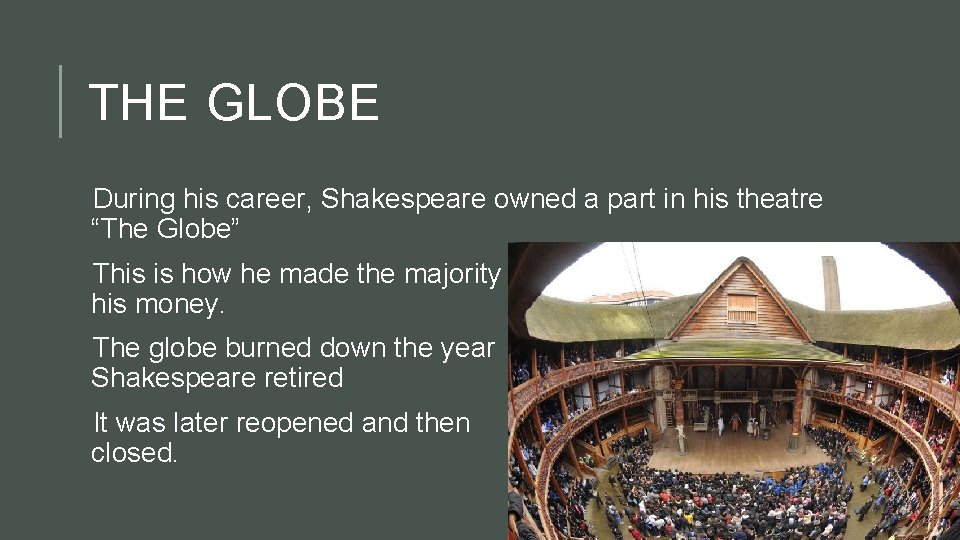
THE GLOBE During his career, Shakespeare owned a part in his theatre “The Globe” This is how he made the majority of his money. The globe burned down the year Shakespeare retired It was later reopened and then closed.
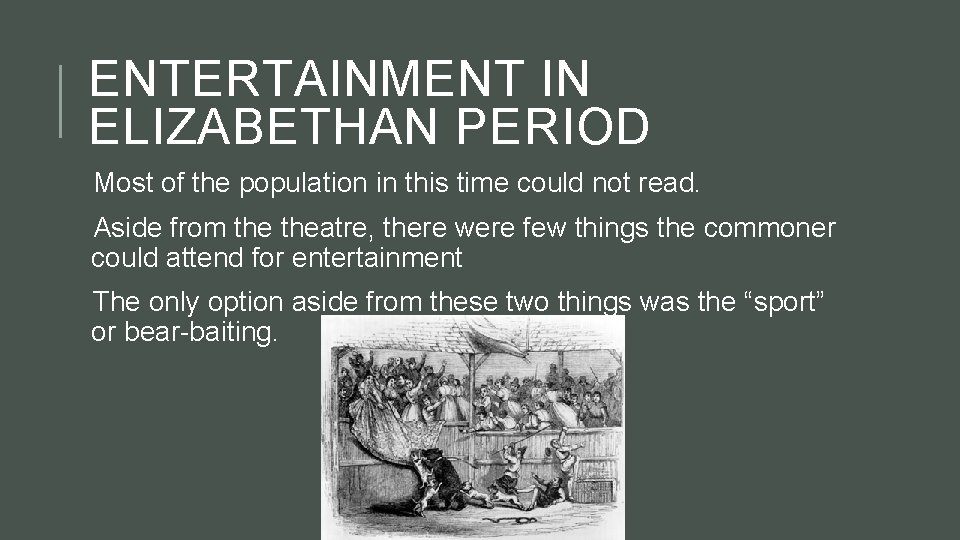
ENTERTAINMENT IN ELIZABETHAN PERIOD Most of the population in this time could not read. Aside from theatre, there were few things the commoner could attend for entertainment The only option aside from these two things was the “sport” or bear-baiting.
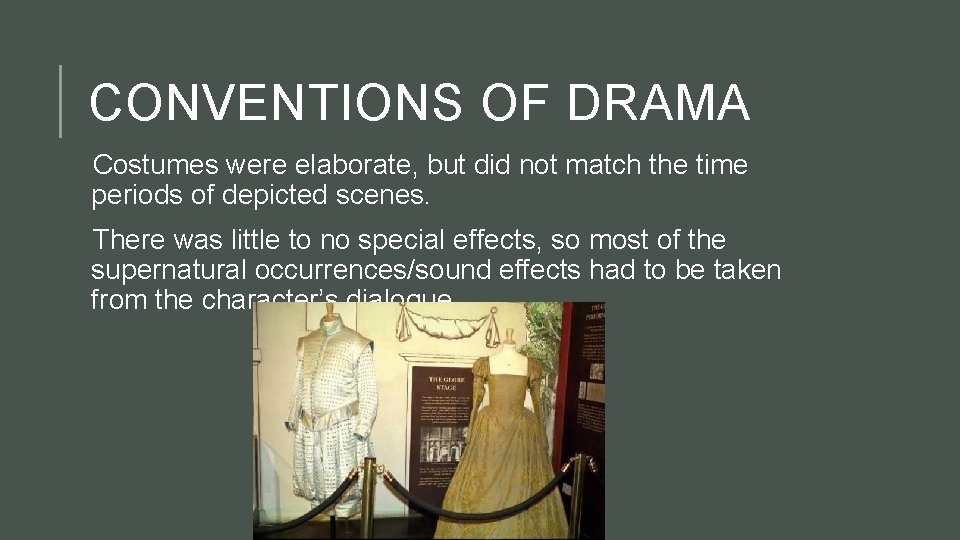
CONVENTIONS OF DRAMA Costumes were elaborate, but did not match the time periods of depicted scenes. There was little to no special effects, so most of the supernatural occurrences/sound effects had to be taken from the character’s dialogue.
CONVENTIONS OF DRAMA CONTD. The wealthy would sometimes purchase seats on the corner of the stage to show off their outfits Most theatre took place in the daylight or by candlelight Most plays had five acts, with varying scene amounts. Most plays were written in blank verse Additionally, all parts were played by men due to strict societal conventions against women on the stage.
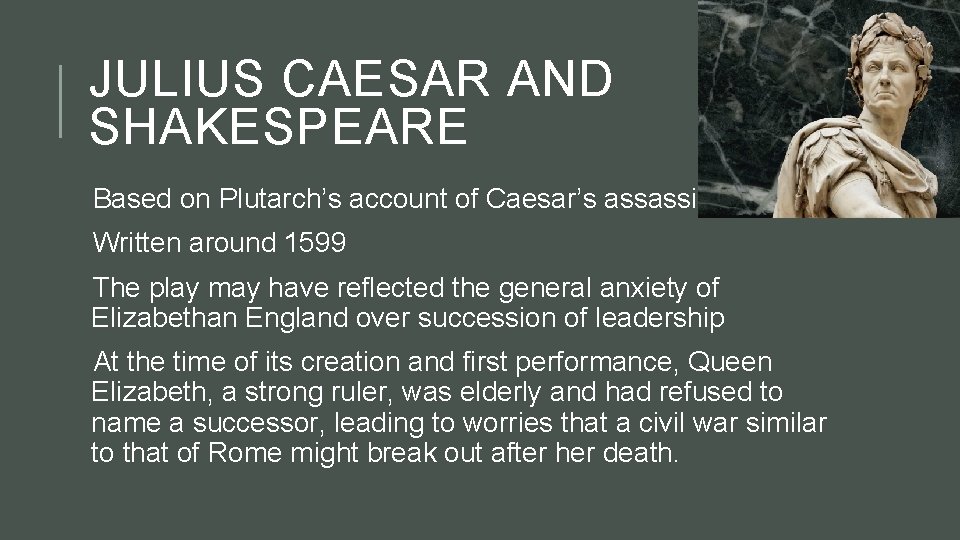
JULIUS CAESAR AND SHAKESPEARE Based on Plutarch’s account of Caesar’s assassination Written around 1599 The play may have reflected the general anxiety of Elizabethan England over succession of leadership At the time of its creation and first performance, Queen Elizabeth, a strong ruler, was elderly and had refused to name a successor, leading to worries that a civil war similar to that of Rome might break out after her death.
DEVIATIONS FROM PLUTARCH Shakespeare makes Caesar’s triumph take place on the day of the festival of Lupercal (15 February), instead of six months earlier For dramatic effect, he makes the Capital the venue of Caesar’s death rather than the Curia Pompeia Caesar’s muder, the funeral, Antony’s oration, the reading of the will and the arrival of Octavius all take place on the same day in the play. However, historically, the assassination of took place on 15 March, the will was published on 18 March, the funeral was on 20 March, and Octavius arrived only in May.
DEVIATIONS FROM PLUTARCH Shakespeare makes the. CONTD. Triumvirs meet in Rome instead of near Bononia to avoid an additional locale. He combines the two Battles of Philippi, even though there was a 20 day interval between them Shakespeare gives Caesar’s last words as “Et tu, Brute? ”. Plutarch and Suetonius each report that he said nothing, with Plutarch adding that he pulled his toga over his had when he saw Brutus among the conspiratiors, though Suetonius does record other reports that Caesar said in greek “And you, child? ” The Latin words “Et tu, Brute? ”, however, were not devised by Shakespeare for this play since they are attributed to
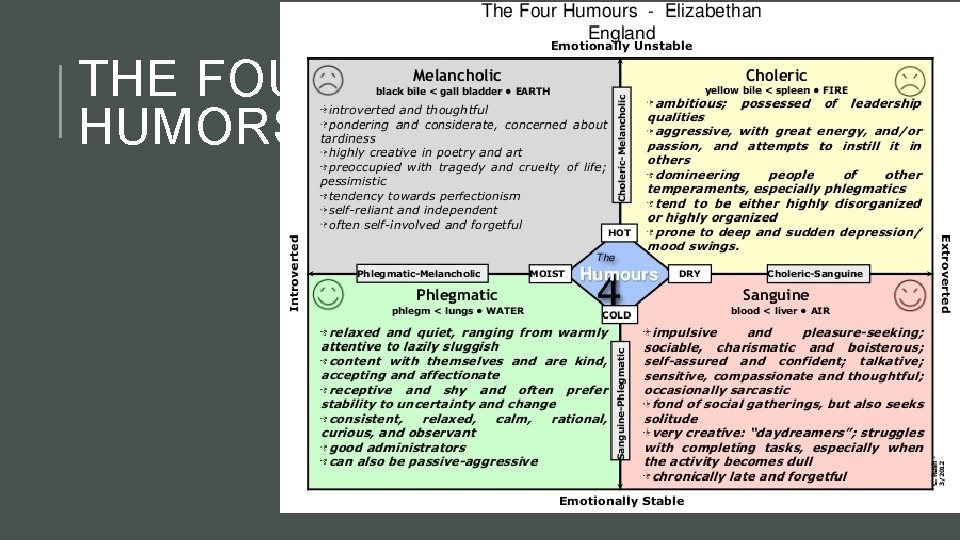
THE FOUR HUMORS
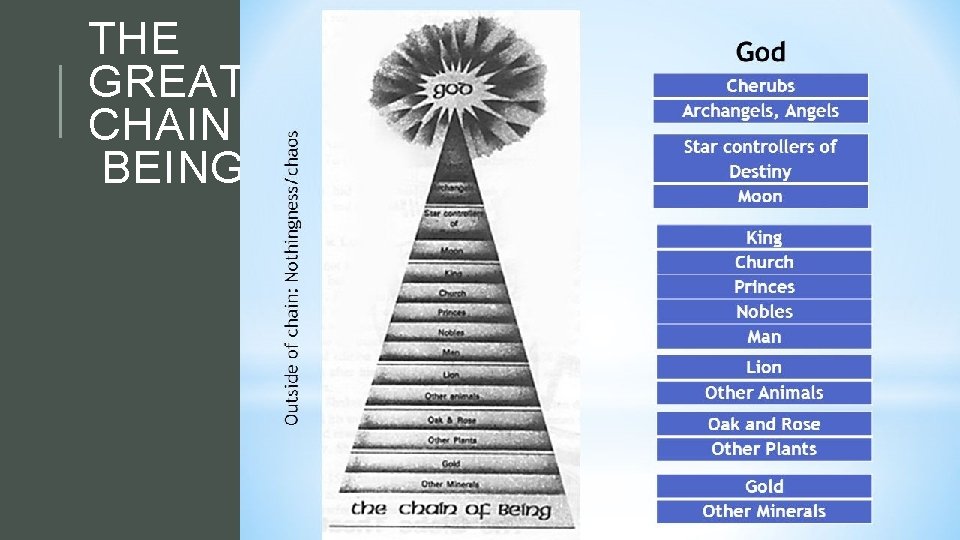
THE GREAT CHAIN OF BEING
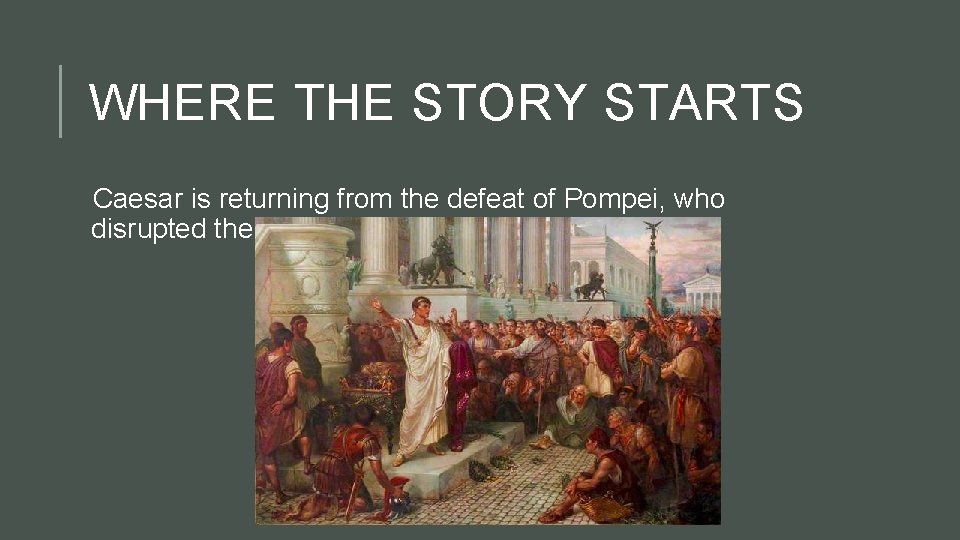
WHERE THE STORY STARTS Caesar is returning from the defeat of Pompei, who disrupted the triumvirate.
- Slides: 22